












































































Article Contents:
- What Are Decorative Door Elements and Why Are They Needed
- Types of Decorative Overlays: Materials and Styles
- Solid wood overlays
- Polyurethane overlays
- MDF Overlays
- Stylistic Directions in Interior Door Decor
- Classic style
- Country and Provence
- Baroque and Rococo
- Modern minimalist styles
- How to Choose Decorative Door Overlays: Practical Recommendations
- Step 1: Define the interior style
- Step 2: Consider Door Size and Proportions
- Step 3: Choose the Material
- Step 4: Decide on a Color Scheme
- Step 5: Calculate the Number of Elements
- Installation Technology: How to Install Decorative Overlays on a Door
- Surface Preparation
- Marking
- Adhesive Selection
- Adhesion process
- Additional fixation
- Finishing
- Combining Overlays with Other Decorative Elements
- Recessed Outlets
- Moldings
- Brackets and Consoles
- Baseboards
- Caring for Decorative Overlays
- Regular Cleaning
- Recoating
- Protection against damage
- Usage Examples: From Classic to Modern
- Formal Living Room in Classic Style
- Bedroom in Provence Style
- Study in Modern Style
- Children's room
- Where to Buy Decorative Overlays: Supplier Selection Criteria
- Assortment
- Material quality
- Carving Detailing
- Option for Custom Orders
- Delivery terms
- Consultative Support
- Decor Cost: What Determines the Price
- Material
- Carving Complexity
- Element Size
- Brand and Manufacturer
- Finishing
- Trends in Interior Door Decor
- Minimalist Decor
- Contrasting Colors
- Asymmetry
- Material Mixing
- Customization
- Frequently Asked Questions
- Can Overlays Be Installed on Any Door?
- How Long Does Installation Take?
- Can Overlays Be Removed Without Damaging the Door?
- Are Special Skills Needed for Installation?
- How to Care for Painted Overlays?
- Can Overlays Be Used on Doors in Humid Areas?
- How Much Do Decorative Overlays Cost?
- Where to buy quality overlays?
- How to combine different overlay styles?
- Can overlays be painted any color?
- Conclusion: create uniqueness with decorative overlays
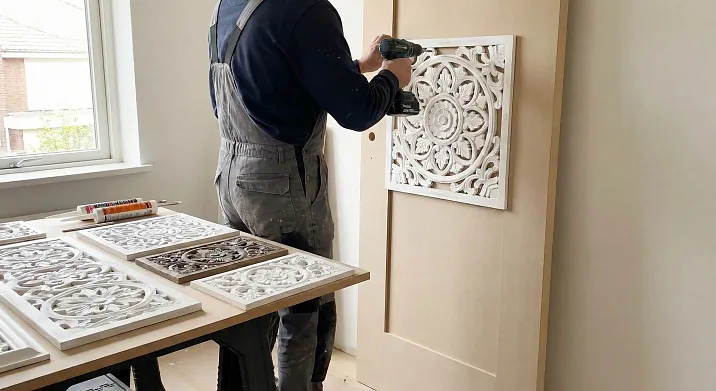
Interior doors are not just functional elements dividing space. They are a canvas for creativity, an opportunity to create a unique interior appearance, adding character and individuality to each room. Decorative overlays for interior doors transform an ordinary door panel into a true work of art, allowing the realization of the boldest design ideas without the need to order expensive custom-made products.
Why exactly do overlays become the choice of those who value beauty and practicality? Because they provide an opportunity to update the interior quickly, economically, and with minimal effort. An old, worn-out door can gain new life thanks to elegant carved decor. A simple modern panel will turn into a classic masterpiece or acquire features of modern, baroque, art deco — depending on the chosen overlay style.


What are decorative door elements and why are they needed
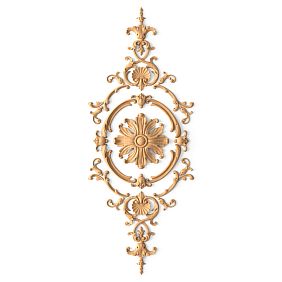
A decorative door element is an overlay carved or relief fragment made of wood, polyurethane, or MDF, which is attached to the surface of the door panel to create a three-dimensional pattern.Decorative InsertsThey can be symmetrical and asymmetrical, central and corner, large panels and miniature accents.
The functions of decorative elements are diverse. Firstly, it is aesthetic transformation. Carved ornament adds depth to the door, creates a play of light and shadow, and forms an expressive relief. Secondly, overlays help hide defects of the door panel — scratches, chips, wear. Thirdly, they allow for stylistic zoning of space: in the living room — solemn classic, in the bedroom — delicate Provence, in the study — strict geometry.
Decorating interior doors with overlays opens up limitless possibilities for interior personalization. You can choose a ready-made element from the catalog or create your own composition by combining various overlays. It is important to understand that high-quality wooden or polyurethane decor does not just decorate — it creates a sense of solidity, craftsmanship, and attention to detail.




Types of decorative overlays: materials and styles
The choice of material determines not only the appearance but also the performance characteristics of the overlays. Let's consider the main options available on the market.
Our factory also produces:



Solid wood overlays
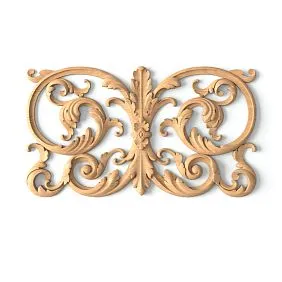
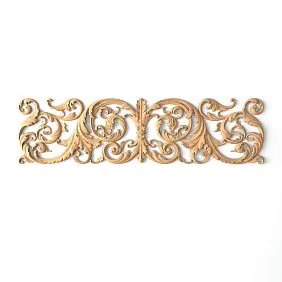
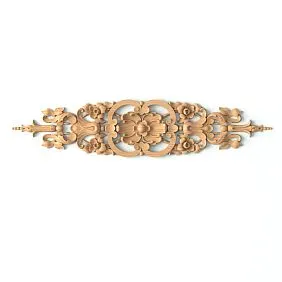
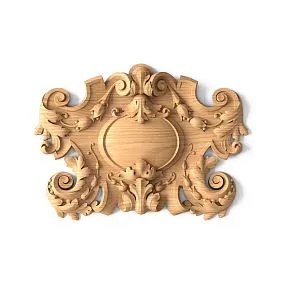
Carved overlays made of oak and beech— this is a classic of the genre, the embodiment of natural beauty and strength. Oak wood is characterized by high density, pronounced texture, and a noble shade. Beech has a uniform structure, is softer than oak, and lends itself well to carving, which allows for creating complex multi-level ornaments.
The advantages of wooden overlays are obvious. The naturalness of the material creates a healthy microclimate in the room, the wood breathes and regulates humidity. Durability is measured in decades — with proper care, carved decor from solid wood retains its original appearance for generations. The possibility of restoration is another plus: scratches are sanded, the coating is renewed, and the element looks like new.
Stylistic diversity of wooden overlays is impressive. The catalog features ornaments in baroque, classic, modern, art deco, and rustic styles. Floral motifs with acanthus leaves, grape clusters, and floral garlands create an atmosphere of luxury. Geometric patterns with clear lines and repeating rhythm emphasize modern aesthetics.
Get Consultation
Polyurethane appliqués
molded decoration made of polyurethane— a modern alternative to wood, combining aesthetics and practicality. The material is lightweight, moisture-resistant, and does not deform from temperature fluctuations. Polyurethane accurately reproduces the most complex carved forms, conveying every detail of the ornament with filigree precision.
The main advantage of polyurethane overlays is an affordable price with high quality. Installation is easier due to the low weight of the elements. The material does not rot, is not affected by fungus, and does not require complex maintenance. Polyurethane is easily painted in any color, which opens up wide possibilities for color experiments.
Polyurethane overlays are ideal for rooms with high humidity — bathrooms, kitchens, where wooden decor may suffer. They are indispensable in children's rooms, where safety and the absence of sharp edges are important. The versatility of application makes polyurethane the choice of practical homeowners.
MDF overlays
MDF is a middle option between solid wood and polyurethane. The material is a medium-density fiberboard covered with veneer or film. MDF holds its shape well, does not dry out, costs less than solid wood, but retains the feel of wooden decor thanks to the veneered coating.
MDF overlays are suitable for budget projects where it is important to achieve an impressive result without significant costs. They are easy to install, diverse in design, and available in various shades. The limitation is less durability compared to solid wood and less moisture resistance compared to polyurethane.
Stylistic directions in interior door decor
The choice of overlay style is determined by the overall interior concept. Let's consider the main directions and decorative elements characteristic of them.
Classic style
Classic — this is symmetry, proportionality, richness of ornament. For classic interiors, characteristic areoverlays from the Classic collectionwith acanthus leaves, rosettes, vignettes, cartouches. The ornament is built on floral motifs, reworked into decorative symbols.
Central symmetrical overlays are placed in the upper third of the door panel, creating a focal point. Corner elements frame the perimeter of the door, forming an expressive frame. Vertical overlays along the edges of the panel imitate pilasters, adding architectural rigor.
The color palette of classic decor is shades of natural wood, white, cream, gilded. Patination emphasizes the depth of carving, creating an effect of noble antiquity. Gilding on the protruding parts of the ornament adds luxury, turning the door into a ceremonial element of the interior.
Modern style
ModernRejects rigid symmetry, celebrates natural forms — smooth lines, asymmetrical compositions, stylized plant motifs. Characteristic depictions include irises, lilies, bindweed, dragonflies, and peacock feathers.
Art Nouveau overlays are often placed asymmetrically, creating a dynamic composition. Vertical elongated elements emphasize the door's height. The graphic quality of the relief and the shallow depth of carving create an exquisite restraint characteristic of this style.
Art Nouveau color schemes gravitate towards muted natural shades — grey-green, dusty blue, ochre, lavender. Monochromatic coloring is preferable to contrasting. A matte surface creates a noble restraint.
Baroque and Rococo
Baroque is maximalism, luxury, theatricality.decorative elementsBaroque-style overlays are distinguished by high relief, richness of detail, and complex multi-level compositions. Characteristic features include cartouches with scrolls, putti, garlands of flowers and fruits, and shells.
Rococo is a lighter version of Baroque with smaller, more delicate details. Asymmetrical rocaille, intricate ornaments, and pastoral motifs create an atmosphere of lightness and playfulness. Gilding, patina, and multi-colored painting are typical finishing techniques.
Doors in Baroque and Rococo styles become the central element of the interior, attracting the eye. A sense of proportion is important — in small spaces, an excess of decoration can create a feeling of clutter. For compact spaces, it's better to choose one or two expressive elements.
Modern minimalist styles
Minimalism, Scandinavian style, and contemporary prefer laconic decor without excessive details. Overlays in these styles have simple geometric shapes — rectangles, stripes, squares. The relief is shallow, and the ornament is restrained or absent altogether.
The function of overlays in minimalist interiors is to create subtle accents and visually structure the door leaf. Vertical slats visually increase the door's height. Horizontal moldings divide the leaf into sections, adding rhythm.
Color solution — monochrome. Overlays are painted to match the leaf or in a contrasting color — white on grey, black on white. Matte surfaces are preferable to glossy ones. The effect is achieved not through the opulence of the ornament, but through the precision of proportions and purity of lines.
How to Choose Decorative Door Overlays: Practical Recommendations
Choosing overlays requires considering many factors. Let's look at a step-by-step algorithm for selecting decor.
Step 1: Define the interior style
Overlays should match the overall style of the room. Minimalist geometric shapes are inappropriate in a classic interior, and Baroque curls are out of place in a Scandinavian one. Analyze the existing furniture, wall finishes, and ceiling decor. Overlays should fit organically into this picture, not conflict with it.
If the interior is eclectic, combining elements of different styles, choose neutral overlays that are not strictly tied to one direction. Plant motifs with a medium level of detail, symmetrical compositions with moderate ornamentation will suit most spaces.
Step 2: Consider the Door Size and Proportions
The scale of the overlays should correspond to the size of the door leaf. On a narrow door (60-70 cm), large overlays will look bulky, covering the entire surface. On a wide double-leaf door (140-180 cm), small decor will get lost, failing to create the necessary accent.
Door height also influences the choice. A standard door 200 cm high allows for a central overlay in the upper third and corner elements around the perimeter. Tall doors (250-300 cm) require vertically oriented overlays that emphasize the height.
Proportional ratio: the overlay should occupy from 15% to 40% of the door leaf area depending on the style. Classic styles allow for greater saturation with decor, minimalism — less.
Step 3: Choose the material
For living rooms with normal humidity, wooden overlays made of oak and beech are ideal. Naturalness, durability, and the possibility of restoration make solid wood the best choice for formal areas.
For bathrooms, kitchens, hallways, where fluctuations in humidity and temperature are possible, polyurethane panels are preferable. The material is not afraid of moisture, is easy to clean, and does not deform.
MDF overlays are a compromise option for budget projects. They are suitable for rooms with a stable microclimate, where there is no direct contact with water.
Step 4: Decide on the Color Solution
The color of the overlays can match the color of the door leaf, creating a monochrome volumetric composition. This solution looks exquisite and restrained. The play of light and shadow on the relief creates expressiveness without color contrast.
A contrasting color solution makes the overlays an independent accent. White overlays on a dark door, gilded on a light one, black on white — such combinations attract attention, making the door a focal point of the interior.
Patination is an intermediate option, where the main tone of the overlay matches the door, but a contrasting patina is applied into the recesses of the relief (dark on a light background or light on a dark one). This technique emphasizes the detailing of the carving, creating an antique effect.
Step 5: Calculate the Number of Elements
A typical composition for a single-leaf door includes a central overlay (one or several) and corner elements (four pieces at the corners of the leaf). For a double-leaf door, the quantity is doubled.
Complex compositions can include additional elements: vertical strips along the edges, horizontal moldings dividing the panel into sections, small accent overlays creating an ornamental pattern.
When calculating, consider symmetry. For symmetrical compositions, paired elements are necessary — left and right, top and bottom. Many manufacturers offer overlays with mirror imaging, which simplifies creating a harmonious composition.
Installation technology: how to install decorative overlays on a door
Installing overlays is a simple process that can be done independently. Let's look at a step-by-step guide.
Surface preparation
The door panel must be clean, dry, and degreased. Remove old paint, varnish, or film from the areas where overlays will be attached. If the surface is glossy, lightly sand it with fine-grit sandpaper to improve adhesive bonding.
Check the door's flatness. Significant unevenness, dents, or protrusions should be corrected with wood filler. After drying, sand the surface until smooth.
If the door will be painted, do this before installing the overlays. A painted door and overlays ready for installation is the optimal work sequence.
Marking
Determine the exact placement of each element. For symmetrical compositions, find the center of the door panel horizontally and vertically, and draw center lines with a pencil. The central overlay is positioned relative to these axes.
Corner elements are placed at an equal distance from the edges of the panel — typically 5-10 cm from the top, bottom, and side edges. Use a ruler and level to ensure marking accuracy.
Place the overlays on the door without gluing, visually assess the composition. Adjust the placement if necessary. Only after ensuring all elements are in their correct positions, proceed to fixation.
Adhesive selection
For wooden overlays, use high-moisture-resistant PVA wood glue or special mounting adhesive for wood. Polyurethane overlays are attached with mounting adhesive like "liquid nails," designed for polymer materials.
Quality adhesive provides strong bonding, leaves no marks, and sets quickly. Some adhesives allow adjusting the element's position for several minutes after application — this is convenient for precise fitting.
Adhesive application process
Apply adhesive to the back of the overlay. For small elements, spot application in several places is sufficient. Large overlays require even distribution of adhesive over the entire surface.
Place the overlay on the door according to the markings, press firmly. For even pressure, use a roller or clean cloth, smoothing the surface from the center to the edges. This removes excess adhesive and ensures tight contact.
Secure the overlay while the adhesive sets. Use painter's tape, carefully applying it around the perimeter of the overlay. An alternative is small nails or headless pins driven into inconspicuous areas of the ornament.
The adhesive setting time is specified in the manufacturer's instructions, typically 2-12 hours. Remove the fixing elements after complete drying.
Additional fixation
For heavy wooden overlays, especially those located on the lower part of the door where mechanical impacts are possible, additional fixation with screws is recommended.
Thin screws (1.5-2 mm) are screwed from the back of the door, passing through the panel and entering the body of the overlay. Pre-drill a hole slightly smaller in diameter to avoid splitting the wood.
An alternative is hidden fastening from the front side. Screws are driven into deep parts of the relief where they are not visible. After driving, the recesses are filled with filler matching the overlay color.
Final finishing
After installation, overlays can be painted, varnished, or patinated. If overlays and the door are painted the same color, apply the final coat of paint after installing all elements. This creates a monolithic composition without color boundaries.
Patination is performed as follows: overlays are painted in the base color, after drying, contrasting patina is applied with a brush into the relief recesses, excess is removed with a rag. Protruding parts remain light, recesses dark, emphasizing volume.
Matte or semi-matte varnish will protect the decor from damage, preserve color, and facilitate maintenance. Glossy varnish is suitable for classic and baroque interiors where theatricality and shine are important.
Combining overlays with other decorative elements
Door decor is not limited to overlays. A comprehensive approach includes using additional elements to create a cohesive composition.
Rosettes
decorative rose outlets— round or oval elements with symmetrical ornamentation. On doors, rosettes are placed in the upper part as a central accent. They are especially appropriate in classic and baroque interiors, where the round shape echoes ceiling rosettes under chandeliers.
Combining a central rosette and corner overlays is a classic door decoration scheme. The rosette sets the style, corner elements support the ornamental theme, creating a frame.
Moldings are linear profiles used to create framed compositions, zone walls, and frame openings. They come in various widths (from 20 to 150 mm) and relief complexity — from smooth to richly decorated.
Moldings — profiled strips that are attached around the perimeter of the door panel or divide it into sections. Moldings create a frame composition, within which overlays are placed.
Combining moldings and overlays allows creating a complex multi-level composition, imitating a paneled door. This is especially relevant for transforming a simple smooth panel into a classic paneled door without replacing the door itself.
Brackets and Consoles
Decorative bracketsare used less frequently on doors but can create an interesting effect in certain styles. Small carved brackets, placed on the sides of the door in the upper part, add architectural expressiveness.
Consoles — horizontally oriented overlays imitating architectural projections. They create a depth effect, making the door more voluminous.
Door Casings
Door casings frame the doorway from the outside. Carved casings in the same style as the overlays on the door leaf create a unified composition of the door and the opening. The ornament on the casings can repeat the motifs of the overlays or complement them.
Wide casings with rich carving transform the doorway into an architectural portal, emphasizing the importance of the room. Narrow, laconic casings create a restrained frame that does not distract attention from the main decor.
Care for Decorative Overlays
Proper care extends the service life of the decor and preserves its aesthetic qualities.
Regular cleaning
Dust and dirt are removed with a soft, dry cloth or a brush with natural bristles. Relief areas are cleaned carefully, without pressure, to avoid damaging the thin carving elements.
For polyurethane overlays, wet cleaning with a slightly damp cloth moistened in a mild soapy solution is acceptable. Afterwards, wipe dry with a clean cloth.
Wooden overlays are afraid of excess moisture. Perform wet cleaning locally, only in areas of heavy soiling, using a minimal amount of water. Wipe dry immediately.
Recoating
Varnished or painted overlays may fade or become scratched over time. Refinishing the coating restores the original appearance.
For wooden overlays: remove the old coating with fine-grit sandpaper, remove dust, apply a new layer of varnish or paint. Patination is repeated using the technology described above.
Polyurethane overlays are repainted without removing the old coating. Light sanding to improve adhesion is sufficient, then new paint is applied.
Protection against damage
Avoid impacts, scratches from sharp objects, and mechanical stress. When moving furniture, protect doors from accidental damage.
In high-traffic areas where frequent contact with the door is possible, it is recommended to coat the overlays with an additional layer of protective varnish with increased wear resistance.
Usage Examples: From Classic to Modern
Let's consider specific options for using decorative overlays in various interiors.
Formal Living Room in Classic Style
A white paneled door is complemented by a central symmetrical overlay with acanthus leaves measuring 30x40 cm in the upper third of the leaf. Four small corner elements 10x10 cm with a repeating ornament are placed in the corners.
The overlays are painted the same white as the door but are patinated with gold. The gold patina in the recesses of the relief creates a luxurious effect, emphasizing the detailing of the carving. The door harmonizes withclassic furniture, ceiling molding, and a crystal chandelier.
Bedroom in Provence Style
The door is painted a delicate lavender shade. The decor consists of an asymmetrical overlay with a floral motif—roses and lavender in an elegant composition. The overlay is placed in the upper right corner of the door, creating a slight asymmetry.
The color of the overlay is milky white with a light gray patina, imitating antiquity. This solution creates a romantic atmosphere characteristic of Provence. The door combines with vintage furniture, floral textiles, and light wooden elements.
Study in Modern Style
A dark door made of painted MDF in wenge color is decorated with vertical overlays in the style ofModernwith a plant ornament—stylized irises with long curved stems.
Two vertical overlays measuring 10x80 cm are placed symmetrically along the edges of the door leaf, creating a column effect. The color of the overlays is dark bronze, contrasting with the black background of the door. The graphic nature of the ornament and the strict verticality of the lines emphasize the business atmosphere of the study.
Children's room
A light door in a peach shade is adorned with small overlays in the shape of butterflies, flowers, and stars. The elements are placed chaotically across the entire surface of the leaf, creating a playful composition.
The overlays are painted in bright colors—yellow, blue, pink. This creates a cheerful, lively atmosphere suitable for a children's space. Polyurethane overlays are safe, easy to clean, and not afraid of children's mischief.
Where to Buy Decorative Overlays: Supplier Selection Criteria
The quality of the decor depends not only on the design but also on the manufacturer. When choosing a supplier, consider the following criteria.
Assortment
A wide selection of models, styles, and sizes allows you to find exactly the element needed for your project. The manufacturer's catalog should feature various artistic directions—from classic to modern—and various forms: central, corner, vertical, horizontal.
catalog of decorative inlaysincludes over 400 models made of oak and beech, ensuring maximum freedom of choice.
The responsible manufacturer provides complete information about the origin of the wood, drying methods, and processing. Quality and environmental certification confirm a serious approach to production.
Natural wood, European raw materials for polyurethane, and high-quality processing are factors that determine product durability. Check for compliance certificates and familiarize yourself with the production technology.
Carving detail
Clarity of relief, depth of ornament elaboration, and absence of chips and defects are signs of quality carving. Elements should have smooth edges and a smooth surface in areas not intended for relief.
Option for custom order
If ready-made models are not suitable, the ability to order exclusive decor based on your own sketch is a significant advantage. A manufacturer with its own facilities and a team of carvers can implement projects of any complexity.
Delivery terms
Convenient logistics, nationwide delivery, and the availability of pickup points in major cities simplify the purchase. Check the packaging conditions—fragile decor requires reliable protection during transportation.
Consultative support
Professional consultations help correctly select elements, calculate quantities, and choose mounting methods. Experienced specialists will answer questions about installation, finishing, and product care.
Decor cost: what determines the price
Pricing for decorative overlays is determined by many factors.
Material
Solid oak is more expensive than beech due to its greater density and the prestige of the wood species. Polyurethane is significantly cheaper than solid wood with a comparable visual effect. MDF is the most budget-friendly option.
Complexity of carving
Simple geometric shapes with shallow relief cost less than complex multi-level ornaments with many fine details. Hand carving is more expensive than machine carving.
Element size
Large overlays require more material and processing time, and therefore cost more. Decor sets that include several elements are usually cheaper than purchasing the same elements separately.
Brand and manufacturer
Well-known manufacturers with long-standing reputations set higher prices, justified by guaranteed quality. Buying directly from the manufacturer is cheaper than through intermediaries.
Final finishing
Ready-painted, varnished, or patinated products are more expensive than unfinished blanks. Complex multi-color finishing with gilding significantly increases the cost.
When planning your budget, consider not only the cost of the overlays themselves but also expenses for glue, tools, and possibly installer services. A comprehensive approach allows for cost optimization.
Trends in interior door decor
Modern design offers fresh approaches to using decorative elements.
Minimalist decor
The trend toward minimalism is evident in the use of concise overlays with simple forms. Instead of lush ornaments—clear geometric lines. Instead of many elements—one or two expressive accents.
Contrasting colors
Bold color combinations—black overlays on a white door, gold on dark blue, copper on emerald. Contrast attracts attention, making the door a focal point of the interior.
Asymmetry
Rejection of strict symmetry, characteristic of classic styles. Overlays are placed asymmetrically, creating a dynamic composition. This is especially relevant for modern eclectic interiors.
Material mixing
Combining wooden and metal elements, matte and glossy surfaces, natural textures and smooth painted areas creates interesting textural interplay.
Customization
Ordering exclusive overlays based on personal sketches is becoming increasingly popular. People want uniqueness and do not want to see the same elements in their home as their neighbors. Individual approach is the main trend.
Frequently asked questions
Can overlays be installed on any door?
Yes, overlays can be mounted on doors made of any material—solid wood, MDF, particleboard, metal. The main thing is to properly prepare the surface and choose suitable adhesive.
How long does installation take?
Installing overlays on one door takes 2–4 hours, depending on the complexity of the composition and the number of elements. Adhesive curing time is 2–12 hours.
Can overlays be removed without damaging the door?
Yes, but with limitations. Polyurethane overlays on quality adhesive can be carefully removed using a thin spatula. Wooden overlays, especially those additionally secured with screws, are more difficult to remove. Surface restoration of the door will be required after removal.
Are special skills required for installation?
Basic tool-handling skills are sufficient. The main things are care, marking accuracy, and following the instructions. Complex compositions are better entrusted to professionals.
How to care for painted overlays?
Dry or slightly damp cleaning with a soft cloth. Avoid abrasive agents and aggressive chemicals. Periodic renewal of the varnish coating preserves color and shine.
Can overlays be used on doors in damp rooms?
Polyurethane — yes, without restrictions. Wooden — only provided there is a quality moisture-protective coating. Polyurethane is preferable in bathrooms and saunas.
How much do decorative overlays cost?
Prices vary from several hundred rubles for a simple polyurethane overlay to tens of thousands for exclusive large-sized solid oak carvings. The average price for a wooden overlay is 2000-5000 rubles.
Where to buy quality overlays?
The best option is to buy directly from the manufacturer. This guarantees authenticity, quality, and an adequate price without intermediary markups.
How to combine different overlay styles?
Combination is possible in eclectic interiors but requires subtle taste. It's safer to stick to one style. If you want variety, use elements from the same manufacturer's collection — they are guaranteed to match.
Can overlays be painted any color?
Yes, both wooden and polyurethane overlays can be painted with any paints suitable for the respective materials. Experiments with color, patina, and metallic effects are possible.
Conclusion: Create uniqueness with decorative overlays
Decorating interior doors with overlays is an affordable, effective way to transform an interior without major renovation. Carved ornamentation adds nobility, individuality, and artistic value to the space. From choosing the style and material to the installation technology — each stage requires attention and thoughtfulness.
Decorative elements on the doorturn an ordinary door panel into a work of art. Symmetrical classical compositions create solemnity. Asymmetrical modern ones — artistry and freedom. Concise minimalist ones — contemporary elegance.
Company STAVROS offers a full range of solutions for decorating interior doors. Over 400 models of carved overlays made of oak and beech, collections in classic, modern, baroque, art deco styles.polyurethane panelsfor damp rooms. Possibility of custom orders based on client sketches.
Full-cycle production guarantees quality control at all stages. European raw materials, modern equipment, hand carving by master professionals. Each overlay undergoes multi-stage inspection before being shipped to the client.
Professional consultations will help select the optimal solution for your project. STAVROS specialists will explain installation nuances, recommend adhesive and finishing coatings, and calculate the required number of elements. Convenient delivery across Russia, pickup points in Moscow and St. Petersburg, transparent payment terms.
Choosedecorative elementsthat reflect your individuality. Create interiors where every detail is thought out, every element carries meaning. With STAVROS, your home will gain a unique character, and ordinary doors will become objects of admiration.


