Article Contents:
- The soul of carpentry: understanding the master from within
- Philosophy of working with wood
- Aesthetics and functionality in unity
- Respect for traditions and openness to innovations
- The master's toolkit: gifts that expand capabilities
- Hand tools: continuation of the master's soul
- Measuring tools: precision as the foundation of craftsmanship
- Power tools: power and precision of modernity
- Materials and blanks: the foundation of creativity
- Exotic wood species: inspiration from distant lands
- Stocks and semi-finished products: saving time and effort
- Finishing materials: final touches of perfection
- Education and development: investments in craftsmanship
- Carpentry literature: wisdom of generations
- Courses and masterclasses: learning from the best
- Documentary films and video courses: visual learning
- Workspace organization: comfort and efficiency
- Tool storage systems: order as the foundation of productivity
- Workplace lighting: seeing every detail
- Dust removal and ventilation: cleanliness and health
- Decorative elements and hardware: details that create perfection
- Decorative wooden elements: beauty in details
- Furniture hardware: functionality and aesthetics
- Inlay materials: luxury in details
- Technological innovations: carpentry of the future
- Digital Technologies in Carpentry
- New materials and coatings
- Personalized gifts: uniqueness in every detail
- Personalized tools and accessories
- Memorabilia and souvenirs
- Ecological aspect: responsibility toward nature
- Certified wood: care for forests
- Waste-free technologies: every shavings is valuable
- Gifts for the soul: inspiration and creativity
- Albums and catalogs of masterpieces of woodworking art
- Visiting workshops and museums: live interaction with art
- Practical advice on choosing a gift
- Determining the master's level and specialization
- Budget considerations and price categories
- Seasonality and relevance
- Frequently asked questions about gifts for woodworkers
- Which tools are best to give a woodworker?
- Is it worth giving power tools?
- What materials do woodworkers value?
- Which books are interesting for woodworkers?
- How to choose a gift for a hobbyist woodworker?
- What gifts are suitable for professional woodworkers?
- Can you give handmade gifts to a woodworker?
- Which workshop accessories will woodworkers appreciate?
- Conclusion: giving with understanding of craftsmanship
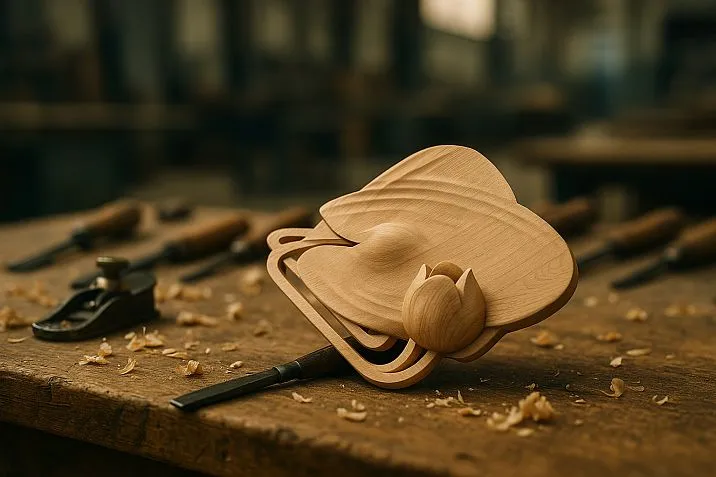
Woodworking is a special world where every day beauty is created from the noblest material of nature. Woodworkers possess a rare gift: they feel the soul of wood, understand its language, and transform simple boards into works of art. But when it comes to choosing a gift for such a person, many get lost. What to give a carpenterWho already knows their craft well? How to find a present that will truly impress the master and be useful in his work?
Woodworking is not just a profession, it is a lifestyle, a philosophy, a way of seeing the world through the prism of textures, fibers, and natural forms. Every day, such a master interacts with living material that demands respect, understanding, and skill. Therefore, a gift for a woodworker should reflect this deep connection with nature, respect for craft traditions, and understanding of the modern needs of the master.






The soul of woodworking: understanding the master from within




Philosophy of working with wood
To understand what gift will truly delight a woodworker, one must immerse oneself in the philosophy of his craft. Working with wood is a dialogue between man and nature. Every piece of wood has its own story: it remembers rain and sun, winds and the silence of forests. The master does not merely process the material—he reveals its inner beauty, unleashing the potential inherent in nature.
A true woodworker sees in every board the future product. He feels where the wood wants to bend and where it demands strict lines. This intuition is formed over years of practice, but is nourished by a constant striving for perfection. Wooden gifts Especially valued by masters precisely because they understand the effort invested in every detail.
Our factory also produces:







Aesthetics and functionality in unity
Woodworking art is unique in that beauty never compromises practicality. Every item must be not only beautiful but also functional, durable, and convenient to use. This duality requires from the master not only technical skills, but also artistic taste.
Masters value gifts in which this philosophy is reflected. The tool should not only be sharp and precise, but also beautiful and pleasant to hold. The material should not only be high quality, but also aesthetically appealing. The book should not only be informative, but also beautifully designed.
Get Consultation
Respect for traditions and openness to innovations
Carpentry is one of the oldest crafts of humanity. The basic principles of working with wood have not changed over millennia: wood still needs to be sawn, planed, joined. But technologies, tools, and materials are constantly evolving.
Modern carpenters respect traditions but are not afraid of innovations. They may use ancient Japanese joinery techniques that require no nails while simultaneously applying modern adhesives or CNC machines. Gifts reflecting this duality are especially valuable.
Master's Toolset: Gifts that Expand Possibilities
Hand Tools: Continuation of the Master's Soul
Every carpenter's arsenal includes tools that have become part of their identity. A favorite chisel, a plane that fits perfectly in the hand, a saw that cuts wood like butter — all these items hold special significance. Quality hand tools are always a desirable gift.
Japanese chisels represent the pinnacle of toolmaking art. Their blades are forged from special steels using techniques passed down from generation to generation. Such a chisel can serve for decades, retaining its sharpness and cutting precision. Every carpenter dreams of a set of quality Japanese chisels.
European planes are renowned for their precision and reliability. German and Austrian manufacturers produce tools that allow shaving wood to thicknesses of thousandths of a millimeter. Such precision opens new possibilities for fine work, enabling the creation of museum-quality items.
Measuring Tools: Precision as the Foundation of Craftsmanship
"Measure seven times, cut once" — this proverb is more relevant to carpenters than ever. Accuracy in measurements is the foundation of quality work. Modern measuring tools significantly surpass traditional rulers and set squares in precision and convenience.
Digital calipers allow measurements accurate to hundredths of a millimeter. Laser distance meters instantly determine distances, angles, and areas. Digital protractors ensure perfect accuracy when marking complex joints.
Combination measuring tools are especially valuable. A combination square with ruler and protractor, a compass with adjustable size, a marking knife with measurement scale — such tools save time and increase work precision.
Power Tools: Power and Precision of Modernity
A modern carpentry workshop is unthinkable without quality power tools. Professional circular saws, routers, planes, and sanders — all of these expand the master's capabilities, allowing faster and more precise work.
When choosing power tools, attention should be paid to the manufacturer's reputation, build quality, presence of dust extraction systems, and ergonomics. Professional tools differ from household ones not only in power, but also in precision, durability, and thoughtful design.
Battery-powered tools are especially convenient in carpentry. They provide mobility, are not tethered to outlets, and allow work in any conditions. Modern lithium-ion batteries provide long operation without recharging and quickly restore charge.
Materials and blanks: the foundation of creativity
Exotic Woods: Inspiration from Distant Lands
Each wood species has its own character, beauty, and processing peculiarities. Working with familiar local woods may eventually bore even the most passionate master. Exotic woods offer the opportunity to discover new facets of craftsmanship and create truly unique items.
Wenge, with its dark, almost black color and contrasting grain, creates dramatic, expressive pieces. This wood requires a special approach in processing — it is hard, dense, and can be temperamental in work. But the result is worth the effort: wenge pieces look luxurious and modern.
Padauk is known for its remarkable hues — from golden to dark purple. This wood has a natural luster that is enhanced by polishing. Traditionally used for musical instruments, luxury furniture, and decorative items.
Stocks and Semi-finished Products: Saving Time and Effort
A carpenter does not always want to start work with rough boards. Sometimes ready-made stocks of specific shapes, sizes, and finish quality are needed. Quality stocks allow focusing on creative aspects of work, without wasting time on routine operations.
Furniture legs Turned legs — a popular type of stock. Manufacturing turned legs requires special equipment and skills. Ready-made legs of various styles and sizes allow the carpenter to focus on other aspects of the item.
Carved elements, balusters, column capitals, decorative inlays — all these are stocks that save the master's time and allow creating complex, detailed items. Quality stocks are made from select wood and undergo careful processing.
Finishing Materials: Final Touches of Perfection
Finishing is the final stage of a carpenter's work, largely determining how the finished item is perceived. Quality varnishes, stains, oils, and waxes not only protect the wood but also highlight its beauty, creating the desired aesthetic effect.
Natural finishing materials are especially prized by modern masters. Linseed oil, beeswax, shellac — these materials have been used for wood finishing for centuries and have not lost relevance. They are eco-friendly, create a beautiful, lively surface, and are easily restorable when needed.
Modern synthetic materials offer new possibilities. Polyurethane varnishes provide exceptional coating durability. Water-based formulations dry quickly and have no odor. Special effect coatings allow creating unusual textures and colors.
Education and Development: Investments in Craftsmanship
Carpentry Literature: Wisdom of Generations
Books are a special kind of gift for any master. They not only provide new knowledge but also inspire, show different approaches to solving problems, and introduce you to colleagues' experience. Carpentry has a rich literary tradition — from medieval treatises to modern technical manuals.
Classic woodworking textbooks contain fundamental knowledge that remains relevant regardless of fashion or technological trends. Basics of working with wood, construction principles, traditional joints — all of this is essential knowledge every carpenter should know.
Modern publications cover new materials, technologies, and tools. Books on CNC machines, composite materials, modern adhesives and finishes help craftsmen stay current and embrace new possibilities.
Courses and workshops: learning from the best
Face-to-face interaction with a master cannot be replaced by any book or video lesson. Workshops and courses from recognized specialists offer invaluable experience for any carpenter. Such activities not only impart technical knowledge but also convey the philosophy of craftsmanship and the secrets of the trade.
Courses in specialized techniques are especially valuable. Japanese joinery with its unique, nail-free connections, French marquetry with its intricate inlays, German precision in furniture making — each school has its own characteristics and secrets.
International symposiums and conferences allow you to become acquainted with global trends in woodworking, new materials and technologies, and to exchange experience with colleagues from different countries.
Documentary films and video courses: visual learning
Modern masters actively use video materials for learning and development. Documentary films about great masters of the past, video courses on specialized techniques, recordings of workshops — all of this helps refine craftsmanship.
Films about traditional woodworking schools hold special value. Japanese masters who build temples without a single nail, European joiners preserving the secrets of court furniture makers, American masters working with local wood species — each tradition is unique and instructive.
Workspace organization: comfort and efficiency
Tool storage systems: order as the foundation of productivity
A well-organized workshop is the guarantee of efficient work. When every tool has its place, time spent searching is minimized, and the risk of losing or damaging expensive tools is significantly reduced.
Modern tool storage systems take into account the specifics of woodworking. Special stands for chisels protect their blades from damage and allow quick selection of the required tool. Pull-out drawers with compartments for small tools ensure order and convenient access.
Mobile storage systems are especially convenient for craftsmen working on different sites. Tool cases and toolboxes allow quickly assembling the necessary set and safely transporting it to the work site.
Workplace lighting: seeing every detail
Quality lighting is critically important for precise woodworking. Poor lighting leads to eye strain, marking errors, and poor joints. Professional workshop lights are an investment in the quality of work and the health of the craftsman.
LED technology has revolutionized workplace lighting. Modern LED lights provide bright, even light without flickering or heating. They are energy-efficient, long-lasting, and accurately reproduce the colors of wood and finishing materials.
Adjustable lights with the ability to change direction, brightness, and color temperature allow adapting lighting to specific tasks. One type of lighting is needed for fine marking, another for sanding, and a third for quality control of finishes.
Dust extraction and ventilation: cleanliness and health
Woodworking involves generating large amounts of dust, shavings, and sawdust. Additionally, many finishing materials emit harmful vapors. Dust extraction and ventilation systems are not a luxury but a necessity for the craftsman’s health.
Industrial shop vacuums are capable of handling any contamination. They are equipped with powerful motors, large dust collection bins, and fine dust filtration systems. Many models feature an automatic activation function when electric tools are in use.
Stationary dust extraction systems are connected to each machine and tool, ensuring maximum efficiency in removing dust and shavings directly at the point of generation. Such systems are especially important when working with exotic woods, whose dust may be toxic.
Decorative elements and hardware: details that create perfection
Decorative wooden elements: beauty in details
The beauty of furniture often lies in the details. Carved appliqués, panels, balusters, and capitals — all these elements transform a utilitarian object into a work of art. Wood materials for furniture include a wide range of decorative elements from various styles and eras.
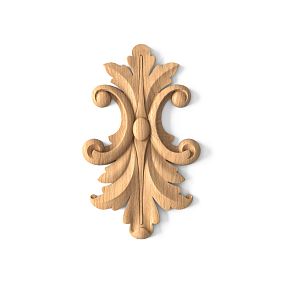
Carved rosettes are a classic decorative element used to embellish furniture, doors, and interiors. Each era created its own motifs: baroque floral ornaments, neoclassical geometric patterns, stylized forms of modernism. A collection of quality carved rosettes is a wonderful gift for a carpenter.
Balusters and posts are used in the production of staircases, furniture, and architectural elements. Turned, carved, or combined — they give products a finished, professional appearance. A set of balusters with various profiles expands the craftsman’s possibilities.
Furniture hardware: functionality and aesthetics
Quality hardware is the foundation of furniture durability and user comfort. Hinges, guides, locks, handles — all these elements must not only perform their functions but also match the overall style of the piece.
Furniture Handles Made of natural wood, they possess a special warmth and coziness. They are pleasant to the touch, harmoniously match wooden furniture, can be crafted in any styles and sizes. Forged, cast, carved handles — each type has its own features and application area.
Hidden hardware is becoming increasingly popular in modern furniture. Invisible hinges, concealed guides, magnetic locks — all this ensures clean lines and a minimalist appearance of the items.
Inlay materials: luxury in details
Inlay technique allows creating complex decorative compositions on the surface of wood using various materials. Pearl, metal, bone, colored wood species — all these materials are used to create true works of art.
Marquetry — a French inlay technique using different wood species — requires high skill and quality materials. Thin exotic wood veneers, precision cutting tools, special adhesives — all this is necessary to master this refined technique.
Inlay — an Italian inlay technique — uses contrasting wood species to create images and ornaments. This technique is less complex than marquetry, but also requires quality materials and tools.
Technological innovations: carpentry of the future
Digital technologies in carpentry
Modern technologies radically change carpentry craftsmanship. CNC machines allow creating parts of the most complex shapes with perfect precision. 3D printers open new possibilities for creating templates, fixtures, even ready-made parts from composite materials.
Furniture design software allows creating precise drawings, calculating material consumption, visualizing the finished product. Specialized CAD systems take into account the specifics of working with wood, include libraries of standard elements and joints.
Laser engravers and cutters allow creating complex ornaments, inscriptions, even photographs on the surface of wood. This technology opens new possibilities for personalizing items, creating unique decorative elements.
New materials and coatings
The development of the chemical industry leads to the emergence of new materials for carpentry. Modern adhesives provide joint strength exceeding the strength of wood itself. New coatings protect wood from moisture, ultraviolet radiation, mechanical damage.
Composite materials based on wood combine the beauty of natural wood with improved performance characteristics. They do not crack, do not deform, are not afraid of moisture, while retaining the texture and warmth of wood.
Ecological materials are becoming increasingly important. Formaldehyde-free adhesives and coatings, water-based paints, natural waxes and oils — all this meets modern requirements for safety and ecological friendliness.
Personalized gifts: uniqueness in every detail
Personalized tools and accessories
Personalization turns an ordinary tool into a special, memorable gift. Engraving the craftsman's name on a plane, chisel, or saw makes the tool truly personal. Such a gift is not only functional, but also has emotional value.
Personal tool cases with nameplates or engravings highlight the status of the craftsman. High-quality cases made of natural leather or wood not only protect tools, but also create an image of a serious professional.
Aprons with tool pockets, custom-made, take into account the specifics of a particular craftsman's work. Placement of pockets, their size, additional fastenings — all this can be adapted to individual needs.
Memorabilia and souvenirs
Items related to professional themes always find resonance with craftsmen. Miniature copies of tools, decorative compositions made of different wood species, carved panels with professional symbols — all these are gifts that will occupy a prestigious place in the workshop or at home with the carpenter.
Books on the history of carpentry with the author's autograph, limited editions of classic manuals, reprints of old drawings — such gifts are appreciated by collectors and enthusiasts of craft history.
Certificates for participation in prestigious exhibitions or competitions give the craftsman the opportunity to showcase their work to a wide audience, gain recognition from colleagues, and establish new professional contacts.
Ecological aspect: responsibility toward nature
Certified wood: care for forests
Modern carpenters are paying more attention to the ecological aspects of their work. Using wood from responsibly managed forests is an important component of sustainable development. FSC certification guarantees that forests are restored, biodiversity is preserved, and the rights of local communities are respected.
Gifts made from certified wood have special value for ecologically conscious craftsmen. This can be a set of blanks, carved elements, or even ready-made tools with wooden handles made from certified material.
Informational materials on wood certification, ecological aspects of logging, methods of determining wood origin help craftsmen make conscious material choices.
Zero-waste technologies: every shavings is valuable
Traditional carpentry has always been sufficiently waste-free — sawdust was used for heating, shavings for packaging, offcuts for small items. Modern craftsmen develop these traditions, finding new ways to use waste.
Waste processing equipment — presses for making wood pellets from sawdust, granulators for producing pellets — allows converting waste into marketable products.
Books and guides on zero-waste technologies in carpentry show how to maximize material efficiency, minimize waste, and find new uses for offcuts and shavings.
Gifts for the soul: inspiration and creativity
Albums and catalogs of master woodworking works
Visual inspiration plays a huge role in the creative process. Albums with photographs of furniture masterpieces, museum collection catalogs, books on the history of design — all of these are sources of ideas for new projects.
Especially valuable are publications devoted to the works of great masters of the past. Chippendale, Sheraton, Bannerman furniture — studying these examples enriches artistic taste and broadens professional horizons.
Modern publications on furniture design show current trends, new approaches to form and function, innovative materials and technologies.
Visiting workshops and museums: live interaction with art
Live acquaintance with the works of masters of the past and present — an invaluable experience for any carpenter. Furniture museums, folk art exhibitions, workshops of renowned woodworkers — all these are places where one can draw inspiration and acquire new knowledge.
Organized tours to sites of traditional crafts allow one to become acquainted with various schools of woodworking craftsmanship, witness unique techniques, and interact with bearers of traditions.
Participation in international exhibitions and symposiums provides the opportunity to see global trends in woodworking, become acquainted with new materials and technologies, and establish professional contacts.
Practical advice on choosing a gift
Determining the level of the master and his specialization
Before choosing a gift, it is important to understand who you are dealing with. A beginner carpenter needs basic tools and educational materials. An experienced master will appreciate high-quality specialized tools or rare materials. A seasoned professional may be interested in collectible items or innovative technologies.
Specialization also matters. A furniture maker, a woodworker, a restorer, a woodcarver — each has their own needs and preferences. Types of furniture materials differ in their characteristics and areas of application.
Budget considerations and price categories
Gifts for carpenters can have a very wide price range — from symbolic souvenirs to expensive professional tools. It is important to determine your budget and choose a gift that will correspond to both financial possibilities and the significance of the occasion.
Budget-friendly gifts (up to 5000 rubles) may include books, small tools, consumables, souvenirs. Mid-range gifts (5000–20000 rubles) — quality hand tools, blanks from valuable wood species, educational courses. Expensive gifts (over 20000 rubles) — professional power tools, premium tool sets, exotic materials.
Seasonality and relevance
Some gifts have seasonal relevance. For example, courses and masterclasses are often held at certain times of the year. New tools and equipment appear at exhibitions, which also have a certain periodicity.
The relevance of the gift is also important. Technologies are rapidly evolving, so tools and materials may become outdated. On the other hand, classic tools and techniques remain relevant for centuries.
Frequently asked questions about gifts for carpenters
What tools are best to give a carpenter?
The choice of tools depends on the level of the master and his specialization. Universal options — quality chisels, measuring instruments, sharpening systems. These tools are needed by any carpenter and will always be useful in work.
For beginner craftsmen, basic tool sets and educational kits with detailed instructions are good. Experienced masters will appreciate specialized tools for specific operations or high-quality versions of already owned tools.
Should you give power tools?
Power tools are expensive and specific gifts. Before choosing such a gift, make sure the recipient does not already have a similar tool, and that the chosen model meets their needs and preferences.
It is safer to choose a gift certificate from a specialized store, so the master can select the needed tool himself. Alternatively, you can gift accessories for existing tools — drill bits, end mills, discs.
What materials do carpenters value?
Carpenters always appreciate quality materials for their work. Exotic wood species, quality blanks, select boards — all of these are consumed in the process of work and are constantly required.
When selecting wood, pay attention to drying quality, absence of defects, and proper storage. It is better to buy a small piece of quality wood than a large volume of substandard material.
What books are interesting for carpenters?
Carpenters value both technical literature and albums with beautiful photographs of finished items. Classic carpentry manuals, books about the work of great masters, modern publications on new technologies — all of this can interest a craftsman.
Pay attention to the quality of illustrations — visual information is very important in carpentry. Books with detailed drawings and step-by-step photographs of processes are especially valuable.
How to choose a gift for a hobbyist carpenter?
Hobbyist carpenters are often more open to experimentation and learning than professionals. They may be interested in new techniques, unusual materials, and creative projects.
Good gift options for hobbyists include kits for making specific items, training courses, and books with projects for a home workshop.
What gifts are suitable for professional carpenters?
Professionals usually have all the necessary basic tools, so they may be interested in something special — collectible tools, rare materials, innovative technologies.
Professionals also value gifts that help develop their business — participation in exhibitions, training programs, marketing services.
Can you give handmade gifts to a carpenter?
Handmade gifts can be very valuable, but they require a high level of craftsmanship. Carpenters have a professional eye and will immediately appreciate the quality of work.
If you are not a woodworker yourself, it is better to order the gift from another carpenter or choose a high-quality ready-made item.
What accessories for a workshop will carpenters appreciate?
Organizing the workspace is an important aspect of effective work. Tool storage systems, quality lighting, work aids — all of this will help the craftsman work more comfortably and productively.
When choosing such gifts, consider the specific characteristics of the workshop and the craftsman's preferences. What suits one person may not suit another.
Conclusion: Giving with an understanding of craftsmanship
Choosing a gift for a carpenter is an opportunity to demonstrate understanding and respect for the noble craft of working with wood. What to give a carpenter — a question that requires understanding of the profession's specifics, the craftsman's personal preferences, and the context in which the gift is given.
Carpentry is not just a profession, but a philosophy of life, a way of seeing the world through the prism of natural materials and handmade beauty. Every day, a carpenter comes into contact with living material that demands respect, understanding, and skill. A gift for such a person should reflect this deep connection with nature and appreciation for the value of handcrafted work.
The best gifts for carpenters are those that help in professional growth, inspire new projects, ease daily work, or simply bring aesthetic pleasure. A quality tool that will last for decades, a rare wood species for a special project, a book about great masters of the past, a course on new techniques — all of this can become the foundation for creating new masterpieces.
It is important to remember that carpenters are practical people who value quality and functionality above all else. They prefer one good item over ten mediocre ones. Therefore, when choosing a gift, focus on quality rather than quantity.
The modern world offers carpenters many new opportunities — from high-tech equipment to exotic materials. At the same time, there is a growing appreciation for the value of traditional techniques and natural materials. The best gifts lie at the intersection of tradition and innovation, combining time-tested values with modern possibilities.
Personalization makes any gift special. Engraving the craftsman's name, selecting materials according to his preferences, taking into account the specifics of his work — all of this shows that the gift was chosen with understanding and care.
STAVROS Company deeply understands the needs of woodworkers, creating products that can become the perfect gift for any carpenter. Years of experience producing items from natural wood, understanding the subtleties of the craft, striving for perfection in every detail — all of this makes STAVROS a reliable choice for those seeking quality gifts for craftsmen. STAVROS products are not just items, but embodiments of respect for the traditions of carpentry, tools and materials that help craftsmen create beauty and functionality from noble wood.