












































































Article Contents:
- The Psychology of a Woodworker: Understanding the Inner World
- The Character of a True Craftsman
- Professional Values and Priorities
- Professional Tools: The Foundation of Mastery
- Hand Tools: The Master’s Hands Extended
- Measuring Instruments: Precision — the Politeness of Kings
- Power Tools: Strength and Precision
- Materials and Components: The Foundation of Creativity
- Exotic Wood Species: Inspiration from Distant Lands
- Hardware and Components: Details Make All the Difference
- Finishing Materials: Final Touches
- Books and Educational Materials: Food for the Mind
- Classic Guides: Wisdom of Generations
- Modern Technologies: A Step Toward the Future
- Albums and Catalogs: A Source of Inspiration
- Decorative Elements and Hardware
- Carved Elements: Art in Wood
- Metal Hardware: Strength and Beauty
- Inlay and Marquetry: Luxury in Details
- Workspace Organization
- Tool Storage Systems: Order — the Foundation of Efficiency
- Workshop Lighting: Seeing Details
- Ventilation and Safety: Health Above All
- Technological Innovations and New Developments
- Digital Technologies in Furniture Production
- Next-Generation Measuring Systems
- Personal and Commemorative Gifts
- Personalized Tools: The Master’s Personal Seal
- Artworks on the Theme of Craftsmanship
- Certificates and Diplomas: Recognition of Mastery
- Gifts for Business Development
- Marketing Tools: Promoting Craftsmanship
- Educational Programs: Investment in the Future
- Gifts for Relaxation and Inspiration
- Trips to Craftsmanship Heritage Sites
- Books and Films about Craft
- Frequently Asked Questions about Gifts for Cabinetmakers
- What budget should be allocated for a gift for a cabinetmaker?
- Is it worth giving tools if you don't understand the profession?
- What gifts should definitely NOT be given to a cabinetmaker?
- Can handmade gifts be given to a cabinetmaker?
- How to choose a book as a gift for a cabinetmaker?
- What modern technologies might interest a cabinetmaker?
- How to present a gift for a cabinetmaker?
- Conclusion: Give with Understanding and Respect
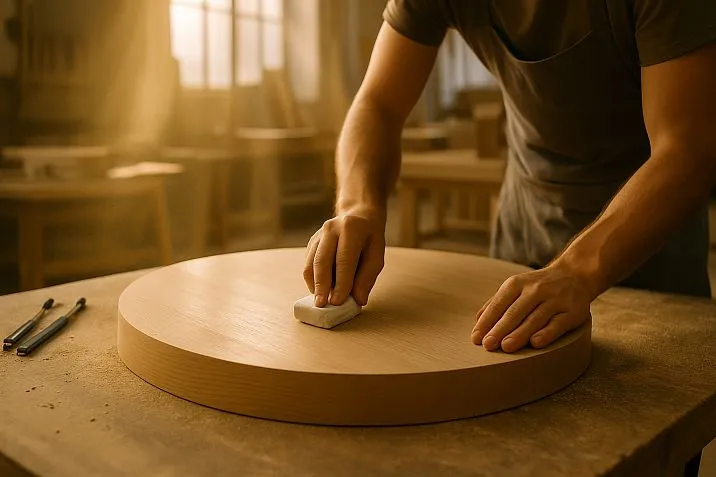
In the world of crafts, there are professions that require not only technical skills but also artistic taste, patience, and genuine love for the material. Cabinetmaking is exactly such a profession, where every day masterpieces of art are born from ordinary wooden blanks. But What to give a cabinetmakerwho has dedicated his life to creating beauty and functionality? This question concerns many who wish to show respect for craftsmanship and demonstrate understanding of the intricacies of the profession.
A cabinetmaker is not just a factory worker — he is an artist, engineer, and philosopher in one. Every item that comes out of his hands carries the imprint of individuality, skill, and soul. Therefore, a gift for such a person must be special — not merely beautiful or expensive, but with deep meaning, practical value, or emotional significance.


The Psychology of a Cabinetmaker: Understanding the Inner World




The Character of a True Craftsman
To understand what gift will truly delight a cabinetmaker, one must penetrate the psychology of this profession. Cabinetmakers are special people. They possess a unique combination of qualities: the patience of a sculptor, the precision of a watchmaker, the vision of an architect, and the hands of a surgeon.
Most cabinetmakers are naturally perfectionists. They cannot tolerate sloppiness, value quality in everything, from materials to tools. Every detail matters, every stroke must be precise. This trait of character should be considered when choosing a gift.
Cabinetmakers have a developed aesthetic sense. They see beauty in the texture of wood, in the smoothness of lines, in the harmony of proportions. Therefore, the gift must be not only functional but also beautiful, matching their conception of the beautiful.
Our factory also produces:


Professional Values and Priorities
In the value system of a cabinetmaker, quality, durability, and functionality occupy a special place. They respect things that serve for a long time without losing their properties. Disposable items and cheap imitations evoke inner repulsion in them.
Cabinetmakers value traditions, but are open to innovations. They respect traditional woodworking techniques, but are willing to adopt new technologies if they genuinely improve quality or expand creative possibilities.
For a cabinetmaker, the history and origin of an item matter. What to give a carpenter or a cabinetmaker who values traditions? Often, the ideal choice becomes items with history, vintage tools, books about masters of the past.
Get Consultation
Professional Tools: The Foundation of Mastery
Hand Tools: The Extension of the Master's Hands
High-quality hand tools are the dream of every furniture maker. Good chisels, planes, and saws become the extension of the master's hands, allowing them to bring even the boldest ideas to life with jewel-like precision.
Japanese chisels are renowned for their sharpness and durability. They are crafted using ancient technologies from high-quality steel capable of maintaining a sharp edge for months of intensive use. German planes feature perfect geometry and flawless assembly, ensuring precision down to fractions of a millimeter.
Antique tools possess a special aura. Vintage planes, chisels, and compasses carry the energy of past generations of craftsmen. They are not only functional but also serve as a link to the history of craftsmanship.
Measuring Instruments: Precision — the Politeness of Kings
Precision in furniture making is not merely a requirement but a philosophy. A millimeter can ruin an entire project, while correct measurements are the foundation of success. Therefore, quality measuring tools are always essential in a workshop.
Laser distance meters, digital calipers, precision squares — all these are tools of the modern furniture maker. They save time, increase accuracy, and reduce errors.
Combination measuring instruments deserve special attention. A square-ruler with multiple scales, a compass with adjustable size, a protractor with additional functions — such tools are especially valued by craftsmen for their versatility.
Power Tools: Power and Precision
A modern furniture workshop is unthinkable without quality power tools. Professional drills, jigsaws, routers, and sanders — all these expand the craftsman's capabilities, enabling faster and more precise work.
When choosing power tools, it is important to pay attention to the manufacturer's reputation, the reliability of the construction, and the availability of service support. Furniture makers value tools that serve for years without breakdowns or loss of performance.
Battery-powered tools are especially convenient to use. They provide mobility, are independent of outlets, and allow work in any conditions. Modern lithium-ion batteries hold a charge for a long time and recharge quickly.
Materials and Components: The Foundation of Creativity
Exotic Wood Species: Inspiration from Distant Lands
Working with common wood species eventually begins to feel routine, even for the most passionate craftsman. Exotic woods offer the opportunity to feel like a discoverer, to study new material properties, and to create truly unique pieces.
Padauk with its unique purple hue, ebony with its black color, zebrawood with its contrasting stripes — each species has its own character and requires a special approach to processing.
Exotic wood is expensive, so even a small piece of rare species becomes a precious gift. Even from a small block, one can create an elegant box, a decorative inlay, or a tool handle.
Hardware and Components: Details Make All the Difference
Quality hardware can transform ordinary furniture into a work of art. Carved legs, elegant handles, decorative inlays — all this What new-generation furniture is made of — a question customers must receive comprehensive answers to. Eco-friendliness, durability, ease of care — specific advantages speak louder than abstract 'innovation'. is truly exclusive and attractive.
Furniture makers especially value handcrafted hardware. Wrought iron hinges, carved rose petals, cast handles from noble metals — such details give products individuality and exclusivity.
Vintage hardware possesses a special charm. Antique locks, keys, brass or bronze handles are not only functional but also historical artifacts that give furniture authenticity.
Finishing Materials: Final Touches
The quality of finishing largely determines the perception of the finished product. Lacquers, stains, waxes, oils — all these materials affect the appearance and longevity of furniture.
Professional finishing materials are expensive, but they deliver exceptional results. Nitrocellulose lacquers for classic finishes, polyurethane compounds for enhanced durability, natural oils for highlighting wood grain.
Exotic finishing materials are a special category of gifts. Shellac from insect secretions, tung oil from nuts, carnauba wax from palm leaves — these materials allow achieving unique finishing effects.
Books and Educational Materials: Food for the Mind
Classic Guides: The Wisdom of Generations
In furniture making, as in any craft, the transmission of knowledge from master to apprentice is of great importance. Classic woodworking textbooks are a concentrated wisdom of generations of craftsmen.
Fundamental works on woodworking, furniture manufacturing technology, and the history of furniture styles — such books will become reference guides for any serious furniture maker. They contain not only technical data but also secrets of craftsmanship that cannot be found on the internet.
Reprints of old manuals are especially valuable. Books from the 18th-19th centuries contain descriptions of techniques that are today considered lost. Studying such sources allows craftsmen to recreate authentic furniture from historical periods.
Modern technologies: a step into the future
The furniture industry is rapidly developing. New materials, processing technologies, computer-controlled machines — all of this requires continuous learning and skill refinement.
Books on modern CNC technologies, 3D furniture modeling, and computer design help craftsmen stay current. They open new creative horizons and allow the realization of projects of any complexity.
Magazines and periodicals keep craftsmen informed about the latest trends. New tools, materials, processing techniques — all this information is critically important for professional growth.
Albums and catalogs: a source of inspiration
Visual information plays a huge role in the creative process. Albums with photographs of furniture masterpieces, museum catalogues, books on design history — all of these are sources of inspiration for creating new projects.
Especially valuable are publications devoted to the works of great masters of the past. Chippendale, Sheraton, Russian furniture masters — studying such examples enriches artistic taste and broadens professional horizons.
Decorative elements and hardware
Carved elements: art in wood
Wood carving is one of the oldest decorative-applied arts. Carved elements transform ordinary furniture into works of art, giving it individuality and exclusivity.
What to give a carpenter for a birthday or a furniture maker? A collection of high-quality carved elements will be an excellent gift. Rosettes, cartouches, column capitals, decorative inlays — all of these can be used to decorate furniture in various styles.
Carved elements made by hand are especially valuable. Each detail is unique and bears the mark of the individual carver. Such elements cannot be reproduced industrially, making them especially valuable.
Metal hardware: strength and beauty
Metal hardware plays an important role in the functionality and aesthetics of furniture. Quality hinges, locks, handles, and inlays not only ensure the reliability of the structure but also serve as important decorative elements.
Bronze and brass hardware is especially prized in classical interiors. Over time, it develops a noble patina, giving furniture an antique appearance. Such hardware is made using traditional techniques and is distinguished by high-quality craftsmanship.
Handmade wrought iron hardware — these are works of blacksmithing art. Each detail is unique, crafted by hand by an experienced master. Such hardware is ideal for furniture in country, Provence, and rustic styles.
Inlay and marquetry: luxury in details
Inlay and marquetry techniques allow creating complex decorative compositions on furniture surfaces using various materials. Mother-of-pearl, ivory (nowadays synthetic analogs), metals, colored wood species — all of these are materials for creating true masterpieces.
Ready-made inlay elements — an excellent gift for a craftsman interested in decorative techniques. Sets of wooden veneers from various species, metallic inlays, mother-of-pearl inserts — all of this allows creating unique decorative compositions.
Workshop organization
Tool storage systems: order — the foundation of efficiency
A well-organized workshop is half the success of any project. When every tool has its place, work proceeds faster and more pleasantly. Tool storage systems are not just a practical gift, but an investment in the efficiency of the craftsman’s work.
Modern storage systems allow organizing tools according to ease of use. Frequently used tools are placed in easily accessible zones, while rarely used ones are located in more distant areas.
Modular systems are especially convenient, as they allow adapting the organization of space to changing needs. Additional sections, module rearrangement, specialized compartments for specific tools — all of this ensures the flexibility of the system.
Workshop lighting: seeing details
Quality lighting is critically important for precise work. Poor lighting leads to eye fatigue, work errors, and reduced productivity. Professional workshop lights — this is a gift that the craftsman will use every day.
LED technology has revolutionized workplace lighting. Modern LED lamps provide bright, even light without flickering or heating. They are economical, long-lasting, and allow accurate color reproduction.
Adjustable lights are especially valuable in the workshop. The ability to direct light exactly where it is needed, to adjust brightness depending on the task — all of this increases comfort and work efficiency.
Ventilation and Safety: Health Comes First
Working with wood involves generating dust, emissions from finishing materials, and noise from power tools. Quality ventilation, dust extraction systems, and personal protective equipment — this is care for the craftsman's health.
Modern workshop vacuum cleaners can handle the finest wood dust. They are equipped with HEPA filters, automatic activation when tools are in use, and large dust collection bins.
Personal protective equipment must be not only effective, but also convenient to use. Modern respirators, safety glasses, and ear protection are designed with ergonomics in mind, providing reliable protection during prolonged use.
Technological Innovations and Breakthroughs
Digital technologies in furniture manufacturing
Modern technologies fundamentally transform furniture production. CNC machines, 3D printers, laser engravers — all are tools of the modern furniture maker. Familiarity with new technologies is an essential part of professional development.
Furniture design software allows creating precise drawings, calculating material consumption, and visualizing the finished product. Modern CAD systems are specifically adapted for the furniture industry.
Training courses on new technologies are an excellent gift for a craftsman striving for perfection. Online courses, seminars, and masterclasses allow acquiring new skills without interrupting primary activities.
Next-Generation Measurement Systems
Measurement accuracy is the foundation of quality furniture. Modern measurement systems provide accuracy down to microns, automatically record results, and integrate with design systems.
Laser distance meters, digital protractors, coordinate measuring machines — all are tools of the professional. They not only increase accuracy but also speed up the measurement process.
Portable measurement systems are especially convenient for on-site work. They allow precise measurements under any conditions, transfer data to design programs, and create technical drawings on-site.
Personal and commemorative gifts
Personalized Tools: The Master’s Personal Brand
Personalizing tools is not just a marketing gimmick, but a way to highlight the craftsman's individuality. Personalized chisels, engraved planes, tool sets in a personalized case — such gifts have special emotional value.
Engraving on tools can include not only the craftsman's name, but also the date, workshop logo, motto, or quote. This turns the tool into more than just a work item — it becomes a commemorative souvenir.
Personal tool cases allow organizing storage according to individual preferences. Each tool has its own place, precisely fitted to size. This is not only practical, but also aesthetically pleasing.
Artworks on the Theme of Craftsmanship
Paintings, sculptures, and photographs dedicated to furniture craftsmanship will decorate any workshop or master's home. They create an atmosphere, emphasize professional identity, and inspire creativity.
Works created by the furniture makers themselves hold special value. Carved panels, inlaid paintings, wooden sculptural compositions — this is a symbiosis of craftsmanship and art.
Photo albums featuring the master's work are a wonderful way to preserve memories of created pieces. what to give a hobby woodworker or a professional furniture maker? A beautifully designed photo album with the best works will become a source of pride and inspiration.
Certificates and Diplomas: Recognition of Craftsmanship
Professional recognition is important for any craftsman. Participation in exhibitions, contests, and receiving certificates and diplomas — all this enhances the craftsman's status and opens new opportunities.
Payment for participation in prestigious exhibitions or contests is an investment in the craftsman's professional development. Such events allow showcasing one's work, meeting colleagues, and studying new trends.
Certification courses on new technologies or materials also hold great value. They not only provide new knowledge but also officially confirm qualifications through documents.
Gifts for Business Development
Marketing Tools: Promoting Craftsmanship
In today's world, even the most talented craftsman must know how to sell their services. sell furniture Effective — this skill is becoming increasingly important for success in business.
A professional photoshoot of the craftsman's work is an investment in their future success. High-quality photos are essential for portfolios, websites, advertising materials, and participation in exhibitions.
Creating a professional website or portfolio of works helps the craftsman find new clients, demonstrate their capabilities, and build a brand. Modern technologies allow creating impressive presentations with minimal costs.
Educational Programs: Investment in the Future
Continuous learning is the key to success in any profession. Furniture making is constantly evolving, with new materials, technologies, and tools emerging. Educational programs help masters stay at the forefront of their profession.
Masterclasses by renowned masters not only provide technical knowledge but also convey the philosophy of craftsmanship and secrets of the trade that cannot be found in textbooks. Such encounters are invaluable for professional and personal development.
Courses in related specialties expand a master's capabilities. Interior design, restoration, artistic carving — all these skills complement the main profession and open up new areas of activity.
Gifts for Relaxation and Inspiration
Trips to Craft Traditions
Familiarity with furniture traditions from different countries and regions enriches masters with new ideas and techniques. Visits to places where ancient crafts are preserved, furniture museums, workshops of renowned makers — all of this are sources of inspiration and new knowledge.
Italy is renowned for its furniture traditions. Venetian masters, Florentine carvers, Milanese designers — each region has its own characteristics and secrets. Visiting workshops, museums, and exhibitions in Italy is immersion into the world of high furniture art.
Scandinavian countries are known for their functional design and mastery of woodworking. Studying Scandinavian traditions will help understand the philosophy of minimalism and learn to create beautiful and practical furniture.
Books and Films about Craft
Literature and cinema devoted to craft traditions help deepen understanding of the philosophy of craftsmanship, acquaint with the history of the profession, and find inspiration for one’s own creativity.
Biographies of great masters of the past contain not only historical facts, but also reflections on the nature of creativity, secrets of craftsmanship, and philosophical views on craft. Such books are read not only with professional interest, but also as engaging life stories.
Documentary films about contemporary masters show how traditional crafts adapt to modern conditions. They demonstrate various approaches to organizing work, using technology, and building a business.
Frequently Asked Questions about Gifts for Furniture Makers
What budget should be allocated for a gift for a furniture maker?
The budget for a gift depends on your relationship with the master and the occasion. A symbolic gift for a colleague may cost 2000–5000 rubles — this could be an interesting book, a set of specialized drill bits, or a quality chisel.
A gift for a supervisor or mentor is appropriately chosen in the range of 10,000–30,000 rubles. Here, you can consider professional power tools, a set of quality hand tools, or exotic wood species.
A gift for a close friend or relative who is a furniture maker can be of any cost, as long as it is chosen with care and understanding of the recipient’s interests.
Is it worth giving tools if you don’t understand the profession?
Choosing professional tools indeed requires certain knowledge. If you are not confident in your competence, it is better to choose one of the following approaches:
Consult with other furniture makers or sales consultants in specialized stores. Explain the level of the master for whom you are choosing a gift and your budget.
Choose a gift certificate from a specialized tool store. This will allow the master to choose exactly what he truly needs.
Focus on universal gifts: quality measuring instruments, storage systems, professional literature.
What gifts should definitely NOT be given to a furniture maker?
Avoid cheap Chinese tools of questionable quality. Furniture makers value quality and durability, so such a gift may be perceived as disrespect for the profession.
Do not give tools that the master already has, especially if you are not certain your version is superior. Every master has favorite tools to which he is accustomed.
Avoid overly specific gifts if you are unsure of the master’s preferences. For example, a system for a specific machine may be useless if the master uses different equipment.
Can you give handmade gifts to a furniture maker?
Handmade gifts can be very valuable, but require a certain level of craftsmanship from the maker. If you are engaged in any craft yourself, an item made by your own hands will be especially appreciated by a colleague.
Good examples of handmade gifts: carved photo frame, wooden jewelry box, tool stand, decorative element for the workshop.
It is important that the quality of execution meets professional standards. Cabinetmakers have a trained eye and will immediately assess the level of craftsmanship.
How to choose a book as a gift for a cabinetmaker?
When selecting professional literature, consider the level of the craftsman and his specialization. Beginners will find basic textbooks and reference guides suitable. Experienced professionals will be more interested in specialized publications on specific techniques or historical styles.
Pay attention to the quality of illustrations — visual information is extremely important in woodworking. Books with detailed drawings, step-by-step photographs of processes, and high-quality images of finished products are more valuable.
Do not forget about books on related topics: design, art history, architecture. They broaden the craftsman’s horizons and can become a source of new ideas.
What modern technologies might interest a cabinetmaker?
Modern cabinetmakers show great interest in digital technologies. Programs for 3D furniture modeling, apps for material cutting calculations, and automated design systems — all of these are tools for the modern craftsman.
Portable scanners for digitizing drawings, tablets for working with CAD programs, and high-precision digital measuring instruments are also popular.
Training courses on working with new technologies — an excellent gift for a craftsman striving for development.
How to present a gift to a cabinetmaker?
The presentation of the gift should reflect serious respect for the recipient’s profession. Use quality packaging materials and avoid overly bright or childish motifs.
A handcrafted wooden box or case will not only serve as packaging but also as an additional gift. If the gift does not fit in a box, you can wrap it in kraft paper or natural-colored fabric.
Attach a handwritten card with wishes for professional success. Personal words of appreciation and respect for the craft are valued no less than the gift itself.
Conclusion: Giving with understanding and respect
Choosing a gift for a cabinetmaker is an opportunity to demonstrate understanding and respect for the ancient and noble craft. What to gift a furniture maker for their birthday or for any other occasion — a question that requires thoughtful consideration and knowledge of the profession’s specifics.
Cabinetmakers are people who turn dreams into reality every day, creating items that serve generations. Their work requires not only technical skills, but also artistic taste, patience, and love for materials. A gift for such a craftsman should reflect an understanding of the value of his labor.
The best gifts for cabinetmakers are those that help in professional development, inspire new achievements, ease daily work, or simply bring joy. A quality tool, rare wood species, an interesting book, a training course — all of these can become the foundation for creating new masterpieces.
It is important to remember that the material value of a gift is not the main criterion of its worth. Much more important is attention to the craftsman’s personality, understanding his needs and interests, and respect for his profession. Even a modest, but carefully chosen gift can bring more joy than an expensive, but inappropriate item.
In the world of woodworking, every detail matters, and each element must be in its proper place. Similarly, a gift must precisely match the person for whom it is intended. Only then will it bring true joy and become a symbol of understanding and respect between people.
STAVROS Company understands the philosophy of woodworking, creating products that can become wonderful gifts for any craftsman. Years of experience in producing furniture elements, deep understanding of professional needs, commitment to perfection in every detail — all of this makes STAVROS a reliable partner for those who value quality and craftsmanship. STAVROS products are not just goods, but tools for creating beauty, materials for realizing dreams, elements that help craftsmen turn ordinary wood into works of art.


