Article Contents:
- Introduction
- Market Analysis and Target Audience Definition
- Modern Trends in Furniture Hardware
- Target Audience Definition
- Main Sections of the Business Plan
- 1. Project Summary
- 2. Market Analysis
- 3. Product Description and Technological Process
- 4. Marketing Strategy
- 5. Financial Plan
- 6. Organizational Structure and Management
- 7. Legal Aspects and Regulatory Framework
- Raw Material Selection and Suppliers
- Processing and assembly technologies
- Laser Cutting and CNC Machines
- Robotic Lines and Automation
- Manual Finishing and Quality Control
- Organization of Production Space
- Brand Creation and Promotion
- Online Promotion and Digital Marketing
- Offline Marketing and Trade Show Participation
- Revenue Forecasting and Cost Calculation
- Financial Flow Management
- Investor Attraction and Financing
- Forming an Effective Team
- Company Organizational Structure
- Company Registration and Legal Formalities
- Intellectual Property Protection
- Analysis of Potential Risks
- Measures to Minimize Risks
- Company Success Story
- Key Success Factors
- New Trends and Opportunities
- Scaling and Diversification Strategies
- Company Legal Formalities
- Intellectual Property Protection
- Team Building
- Effective Management
- Risk Analysis
- Risk Mitigation Measures
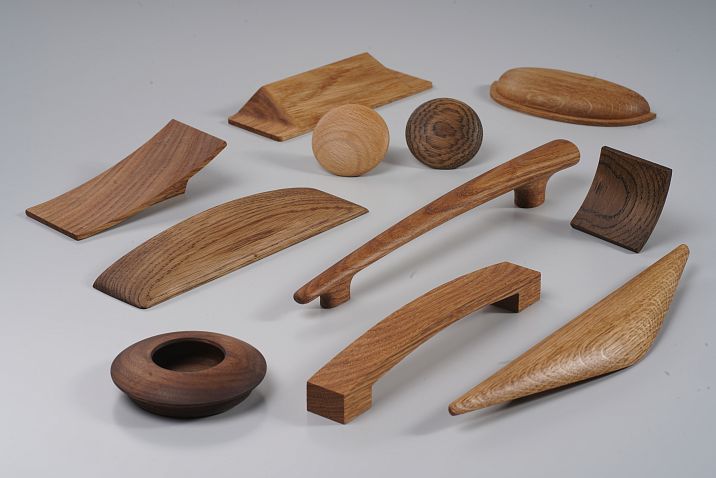
In the era of rapid technological transformations and continuous updates in consumer demands, the furniture hardware market is experiencing a true renaissance. New materials, digitalization of production, and innovative design solutions have become key drivers of success. This article, based on 50 years of experience in journalism, copywriting, SEO, and design, serves as a detailed guide for entrepreneurs and investors aiming to enter the furniture hardware business. We will examine all stages of creating, developing, and scaling a successful enterprise in this dynamic industry.
For additional information and the latest news, please visitFurniture business.


Introduction
The world of interior design and furniture manufacturing is undergoing qualitative changes. The furniture hardware market, which includes a variety of elements—from hardware for cabinets and doors to fasteners, decorative details, and assembly components for furniture—is today an indispensable part of the entire furniture industry. Products in this segment influence the aesthetic perception of interiors, their functionality, and durability, meaning that the quality and innovation of hardware directly determine the success of the final product.
In the context of global competition and rapid technological development, successful business management requires entrepreneurs to conduct in-depth market analysis, detailed planning, and continuous implementation of innovative solutions. Developing a well-structured business plan for furniture hardware not only optimizes costs but also creates a competitive advantage based on product quality, functionality, and aesthetics. This article will examine key aspects of creating a business plan, current industry trends, promotion methods, and business scaling strategies.
In particular, attention is paid to issues such as:
● Market analysis and identification of target audience;
● Raw material selection and procurement, production process specifics;
● Implementation of digital technologies and production automation;
● Marketing strategy, SEO optimization, and promotion through digital and traditional channels;
● Financial planning, revenue forecasting, and cost optimization;
● Legal aspects, licensing, and intellectual property protection;
● Organizational structure and personnel management;
● Risks and ways to minimize them;
● Scaling strategies and entry into international markets.
This material is aimed at attracting both novice entrepreneurs and experienced investors seeking new opportunities for developing furniture hardware business. It is written with a certain challenge for those who believe traditional methods no longer work, while simultaneously adopting a gentle, supportive tone for those just beginning their journey in this dynamic field.




Market Analysis and Target Audience Definition
Our factory also produces:


Modern Trends in Furniture Hardware
The world of interior design changes at an incredible pace, and furniture hardware has long ceased to be a secondary element in furniture production. Today, it represents a complex system where innovation and technological achievements play a key role. Among the main trends, we can highlight:
● Innovative materials. Development of new composites, use of high-strength alloys, as well as application of eco-friendly and renewable materials allows creating hardware with improved performance characteristics and longevity.
● Designer customization. Modern consumers demand unique solutions that highlight the individuality of interiors. Hardware becomes a designer accent element, meaning the business must focus on creating unique and customized solutions.
● Production digitization. Integration of ERP systems, use of CAD/CAM technologies, 3D modeling, and automated production lines allow significantly improving product quality and optimizing costs.
● Environmental sustainability. Growing demand for eco-safe products encourages manufacturers to adopt technologies for waste recycling, energy reduction, and use of certified materials.
Get Consultation
Target Audience Definition
To successfully run a business, it is necessary to clearly understand who the main consumers of furniture hardware are. The target audience in this segment is very diverse and includes:
● Furniture manufacturers. Large furniture factories and workshops seeking reliable suppliers of quality hardware for their products.
● Interior designers. Professionals working with custom orders, for whom exclusive and high-quality components are important.
● Construction companies and developers. Organizations involved in apartment and house finishing, requiring reliable and durable hardware for doors, cabinets, and other elements.
● Retail chains. Stores specializing in home and interior goods, which can offer ready-made solutions for interior design.
● Individual consumers. End users wishing to update their interiors independently, choosing quality and stylish hardware for furniture.
Understanding the characteristics of the target audience not only allows optimizing production but also building a marketing strategy aimed at meeting specific customer requests. Proper market segmentation is the key to successful product promotion and increasing market share.
Business Plan Structure for Furniture Hardware
Main sections of the business plan
A well-crafted business plan is a strategic document on which the entire future success of the enterprise is built. It must be detailed and include the following key sections:
1. Project Summary
This is a brief summary of the project essence, describing:
● Business objective;
● Core idea and business concept;
● Brief market overview and competitive advantages;
● Financial forecasts, including expected profitability and payback periods;
● Key success factors.
The summary should be persuasive and informative to attract potential investors and partners.
2. Market Analysis
This section includes a detailed analysis of the current situation in the furniture hardware market, which includes:
● Market trend research;
● Competitor analysis: their strengths and weaknesses, pricing, and marketing strategies;
● Target audience definition and their needs;
● SWOT analysis (strengths and weaknesses, opportunities and threats).
This analysis helps identify market niches where competitive advantage can be achieved and to plan a promotion strategy.
3. Product Description and Technological Process
Here, the product range is described in detail, including:
● Types of hardware: for doors, cabinets, kitchen furniture, office furniture, etc.;
● Product features and advantages;
● Materials and production technologies used;
● Production process stages – from raw material procurement to packaging and delivery of finished products.
In this section, it is important to show how the company will achieve high product quality and meet customer demands.
4. Marketing Strategy
The marketing section includes:
● Product promotion strategy: online and offline channels;
● Use of SEO and content marketing (e.g., integration of key phrases such as %sfurniture workshop business plan andbusiness plan for furniture production);
● Brand development plan, unique selling proposition (USP) formation, and market position strengthening;
● Marketing activity budgeting and customer acquisition forecasts.
An effective marketing strategy enables the creation of a strong brand and gaining audience trust.
5. Financial Plan
The financial section is key to understanding the economic viability of the project and includes:
● Revenue forecasts and profit calculation;
● Cost analysis: variable and fixed expenses;
● Break-even point determination;
● Investment planning and attracting external financing;
● Calculation of project payback periods.
A clear and detailed financial plan helps minimize risks and ensure sustainable business development.
6. Organizational Structure and Management
This section describes:
● Company organizational structure;
● Distribution of responsibilities among key employees;
● Personnel management and motivation system;
● Plan for attracting and developing qualified specialists.
Effective team management is the foundation of stable business operations and achieving high results.
7. Legal aspects and regulatory compliance
It is necessary to ensure compliance with all legal norms:
● Registration of the enterprise and selection of the organizational and legal form;
● Obtaining necessary licenses and quality certificates;
● Compliance with safety standards, environmental regulations, and labor protection requirements;
● Protection of intellectual property and patenting innovative solutions.
Proper legal documentation helps avoid issues with regulatory authorities and creates a reliable legal foundation for the business.
Organization of the production process
Raw material selection and suppliers
The quality of hardware directly depends on the materials used. In the furniture business, it is important to pay special attention to:
● Procurement of high-quality raw materials: metals, plastics, natural wood, composites, and textiles;
● Diversification of suppliers to avoid dependence on a single source and minimize the risk of supply disruptions;
● Strict control over incoming raw material quality through laboratory analyses and certificate verification.
Using certified raw materials ensures stable quality of the final product and increases customer trust.
Processing and assembly technologies
The production process includes several stages, each requiring the application of modern technologies:
Laser cutting and CNC machines
Using laser cutting allows for precise cuts with minimal material waste, while CNC machines ensure high speed and accuracy of processing. These technologies significantly reduce production time and improve product quality.
Robotic lines and automation
Modern robotic assembly lines help automate routine processes, reducing the likelihood of errors, increasing productivity, and ensuring consistent product quality. Automation also allows for reduced labor costs and optimized internal logistics.
Manual finishing and quality control
Despite high automation, manual finishing remains an important component, especially for exclusive and designer products. Skilled craftsmen perform finishing work, giving products individuality and uniqueness. Regular quality control at each production stage helps minimize defects and increase customer satisfaction.
Organization of the production space
Effective production facility planning includes:
● Rational distribution of equipment to ensure optimal flow of raw materials and finished products;
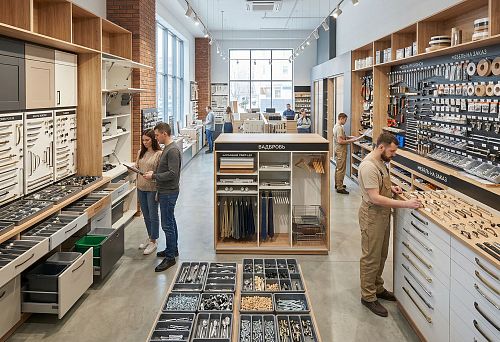
● Creation of modern warehouse facilities with automated inventory and control systems;
● Providing comfortable and safe working conditions for employees, which positively impacts productivity and work quality.
Implementing digital tools for production management, such as ERP systems, allows for real-time control of all process stages and timely response to changes in demand.
Marketing strategy for furniture hardware business
Brand creation and promotion
Brand is the face of the company, and in the furniture business, hardware quality directly affects brand reputation. To create a strong brand, it is necessary:
● Develop a unique selling proposition (USP) highlighting product innovation, quality, and ecological safety;
● Create a memorable logo and brand style associated with high quality and reliability;
● Use successful project case studies and customer reviews to build a positive image.
CompanySTAVROS is a clear example of a brand that has won consumer trust due to high-quality furniture and innovative solutions in hardware.
Online promotion and digital marketing
Digital marketing has become an indispensable part of modern business. To promote furniture and hardware, it is necessary:
● Optimize the website for search engines (SEO), integrating key phrases such asfurniture workshop business plan andbusiness plan for furniture production, which allows attracting targeted traffic.
● Maintain a blog and publish analytical articles, trend reviews, and expert interviews, which helps build an expert image and increase audience trust.
● Actively use social networks (Instagram, Facebook, Pinterest, TikTok) to demonstrate production processes, present new collections, and interact with customers.
● Conduct email marketing, send news, promotions, and special offers, maintaining continuous communication with subscribers.
Offline marketing and participation in trade shows
In addition to online promotion, offline activities play an important role:
● Participation in specialized trade shows and conferences allows not only to present products but also to establish direct contact with potential clients and partners.
● Organizing presentations, workshops, and demonstrations in shopping malls helps attract the attention of end consumers and demonstrate hardware quality in real conditions.
● Publishing advertising materials in specialized journals and catalogs helps build brand recognition and expand the audience.
An effective marketing strategy should combine online and offline methods to maximize target audience reach and build a strong brand.
Financial planning and resource management
Revenue forecasting and cost calculation
One of the key elements of a business plan for furniture hardware is detailed financial planning. It is necessary to conduct:
● Forecast revenue based on market trend analysis and demand estimates;
● Calculate all variable and fixed costs, including raw material procurement, energy resources, labor payment, production facility rental, and marketing expenses;
● Determine the break-even point, which allows understanding what sales volumes are required to cover expenses;
● Develop an investment plan for launching production and further scaling the business.
Financial flow management
Effective financial flow management is achieved through the use of modern ERP systems, which allow:
● Track all operations in real-time;
● Analyze spending efficiency and adjust the budget;
Optimize resource allocation for maximum production efficiency;
Ensure transparency of financial processes and minimize risks.
Attracting investments and financing
Scaling furniture production may require significant investments. It is important:
● Develop an attractive business plan for potential investors, demonstrating high profitability and business sustainability;
● Utilize opportunities for bank loans, subsidies, and grants to support small and medium-sized businesses;
● Attract strategic partners and business angels willing to invest in a promising enterprise.
A well-crafted financial plan allows minimizing risks and ensuring stable business development under high competition.
Organizational structure and personnel management
Forming an effective team
A key element of successful furniture production is qualified personnel. For this, it is necessary:
● Select specialists with experience in production, design, engineering, and marketing;
● Implement training and professional development programs, regularly conducting workshops and masterclasses;
● Create conditions for career growth and implement a performance-based motivation system;
● Foster a corporate culture that encourages creative approaches and innovative thinking.
Organization structure of the enterprise
An effective organizational structure should ensure:
● Clear distribution of responsibilities among departments and employees;
● Established communication processes between production, marketing, and financial departments;
● Timely decision-making at all levels;
● Use of modern information systems to monitor task completion.
A well-structured personnel management system not only optimizes work processes but also creates conditions for continuous growth and development of the enterprise.
Legal aspects and regulatory compliance
Business registration and legal formalities
Launching furniture production requires compliance with all legal regulations:
● Register the business in accordance with current legislation, choosing the appropriate organizational and legal form;
● Obtain necessary licenses and permits for business activities;
● Compliance with labor safety, health, and environmental standards;
● Draft contracts with suppliers, clients, and partners, ensuring legal protection for the business.
Intellectual Property Protection
In conditions of high competition, protection of developments, designs, and technological solutions is crucial. For this, it is necessary:
● Patent innovative technologies and unique solutions;
● Register trademarks and company logos;
● Secure copyright for design works, which allows preventing unauthorized copying and maintaining a competitive advantage.
Effective legal support helps avoid issues with regulatory authorities and ensures stable business development.
Risks and Methods of Their Minimization
Risk Analysis
Any business faces risks, and furniture production is no exception. Main risks include:
● Raw material risks. Fluctuations in material prices, supply disruptions, and raw material quality issues;
● Technological risks. Equipment breakdowns, failures in automated systems, and outdated technologies;
● Competitive risks. Increase in the number of competitors, aggressive pricing policies, and changes in consumer preferences;
● Economic and political risks. Currency fluctuations, changes in legislation, and global economic crises.
Risk mitigation measures
To successfully run a business, it is necessary to develop risk reduction strategies:
● Diversification of suppliers and raw materials, which allows reducing dependence on a single source;
● Regular equipment updates and technical maintenance to prevent failures;
● Use of insurance policies to protect material and financial flows;
● Flexible financial planning and timely response to changes in market conditions.
Effective risk management allows minimizing potential losses and ensuring business stability even under global uncertainty.
Case Studies of Successful Enterprises: Example of the Company STAVROS
Company Success Story
CompanySTAVROS is a clear example of how a well-developed furniture production business plan and properly structured manufacturing processes can lead to market leadership. Since its founding, the company has successfully integrated advanced technologies, ensured top-quality hardware and furniture, and created a unique brand valued by both domestic and international clients.
Key Factors of Success
Company SuccessSTAVROS is due to several key factors:
● Continuous introduction of innovative technologies into production.
● Strict control of raw material and finished product quality.
● Proper management of financial flows and strategic planning.
● Building a strong brand and active promotion through digital channels.
● Environmental responsibility and use of sustainable materials.
● Efficient organizational structure and qualified personnel.
These elements became the foundation for creating a successful business capable of adapting to market changes and meeting the demands of the most demanding customers.
Business Development Prospects in Furniture Hardware
New Trends and Opportunities
Furniture hardware today is not just furniture components, but an important element of interior design that determines the functionality, style, and quality of the final product. In 2025, demand for innovative solutions that meet the needs of modern consumers is expected to continue growing. Key development directions include:
● Integration of digital technologies. Using 3D modeling, virtual and augmented reality will allow customers to visualize furniture design even before its manufacture. Such technologies increase brand trust and reduce return rates.
● Product eco-friendliness. Consumers are increasingly oriented toward eco-friendly materials and sustainable production methods. Companies offering environmentally safe solutions gain additional competitive advantages.
● Personalization and customization. The ability to order products individually and adapt them to specific client needs has become an important element of successful business.
● Expanding product range and entering new market segments. Entering international markets, developing new product lines, and implementing franchise models allow significantly increasing sales volumes.
Scaling and diversification strategies
To further develop the business, it is necessary to develop scaling strategies that include:
● Expand production capacity through equipment modernization and process automation.
● Diversify product range to meet diverse market demands.
● Enter new geographic markets and establish partner networks through franchising.
● Invest in new technologies and develop innovative solutions capable of setting industry trends.
Well-craftedfurniture workshop business plan andbusiness plan for furniture production serve as reliable tools for implementing these strategies, allowing cost optimization and revenue growth.
Legal and regulatory aspects
Legal structuring of the enterprise
Launching furniture production requires compliance with all legal regulations:
● Register the enterprise and choose the organizational and legal form.
● Obtain necessary licenses, quality certificates, and permits.
● Comply with labor protection, technical safety, and environmental standards.
● Draft contracts with suppliers and clients to ensure legal protection for the business.
Intellectual Property Protection
Innovative developments and unique designs require reliable protection:
● Patent new technologies and design solutions.
● Register trademarks and logos.
● Secure copyright for original works.
These measures help prevent unauthorized copying and ensure preservation of competitive advantages.
Organizational structure and personnel management
Team formation
The success of any business depends on the qualifications and motivation of employees. For furniture production, it is important:
● Select specialists with high professionalism and work experience.
● Conduct regular training and professional development through workshops, seminars, and masterclasses.
● Implement motivation and incentive systems that ensure loyalty and drive for development.
● Create a favorable corporate culture that promotes teamwork and innovative thinking.
Effective management
The organizational structure should ensure:
● Clear distribution of responsibilities among departments.
● Systematic monitoring of task completion.
● Use modern information systems to optimize management processes.
● Continuous improvement of business processes and timely decision-making.
Effective management enables achieving high results and ensuring sustainable business development even under intense competition.
Risks and Methods of Their Minimization
Risk Analysis
Main risks in the furniture hardware business include:
● Raw material risks: price instability, supply disruptions, low-quality materials.
● Technological risks: equipment breakdowns, automation failures, outdated technologies.
● Competitive risks: increase in the number of competitors, aggressive pricing policy, changes in consumer preferences.
● Economic and political risks: currency fluctuations, legislative changes, global crises.
Risk mitigation measures
To minimize risks, it is necessary:
● Diversify suppliers and raw material sources.
● Regularly update and maintain production equipment.
● Implement systems for insuring material and financial risks.
● Conduct continuous market monitoring and promptly adjust strategy.
● Use flexible financial planning and reserve funds to cover unexpected expenses.
These measures help reduce the likelihood of significant losses and ensure stable business operation even under external instability.
Conclusion
The furniture hardware business is a complex and multifaceted field that requires entrepreneurs not only deep knowledge but also courage, innovative thinking, and strategic planning. A well-crafted business plan for furniture production is a key tool for creating a successful enterprise, enabling optimization of production processes, minimizing risks, and gaining consumer trust.
The above sections cover all aspects of running a business: from market analysis and target audience definition to legal and financial aspects, as well as personnel management and risk minimization. A comprehensive approach based on implementing modern technologies, strict quality control, and effective marketing allows not only to meet market demands but also to foster sustainable business growth under intense competition.
Experience of successful companies, such asSTAVROS, serves as a vivid example of how an innovative approach and sound management can lead to market leadership. Success in the furniture hardware business is achieved through continuous process improvement, integration of digital technologies, and active customer engagement.
The future of this industry promises to be rich with new opportunities, where sustainable development, environmental responsibility, and product customization will become key trends. Companies capable of promptly responding to changes and implementing innovative solutions will inevitably occupy leading market positions and be able to create products meeting the highest quality and design standards.
In conclusion, it should be noted that the furniture hardware business is not merely the production of components, but an entire ecosystem where each element plays an indispensable role. The success of a business depends on sound planning, strategic vision, and the ability to adapt to the constantly changing world of technology and market demands.
For all those who aspire to start or optimize production, it is extremely important to rely on proven methodologies, invest in innovations, and create conditions for continuous growth. A well-craftedfurniture workshop business plan andbusiness plan for furniture production will become a reliable tool on the path to success.
Final Recommendations
- Invest in innovative technologies.
Using modern ERP systems, digital tools, and automated lines allows optimizing production and reducing costs. - Focus on the quality of raw materials and finished products.
Strict control at all production stages and use of eco-friendly materials increase consumer trust and contribute to building a strong brand. - Develop a strong marketing and brand.
Effective promotion through digital and offline channels, active use of SEO and content marketing allow capturing the market and expanding the audience. - Conduct detailed financial planning.
Revenue forecasting, cost calculation, break-even point determination, and attracting investments are key to sustainable business development. - Form a qualified team.
Selecting, training, and motivating specialists, creating a positive corporate culture contribute to enhancing the efficiency of the enterprise. - Minimize risks.
Supplier diversification, regular equipment maintenance, insurance, and flexible financial planning help reduce the likelihood of losses and ensure business stability. - Scale your business through partnerships and innovative models.
Entering new markets, creating partner networks, and implementing franchising models contribute to expanding sales geography and increasing revenues.
Conclusion
The furniture hardware business is a dynamic and promising sector that opens wide opportunities for creativity, innovation, and steady growth for entrepreneurs. A well-crafted business plan, taking into account all aspects of production, marketing, financial planning, and management, is the foundation for successful enterprise development. Example companySTAVROS demonstrates that combining traditional manufacturing methods with modern technologies enables the creation of products meeting the highest standards and winning consumer trust both domestically and internationally.
The future of furniture hardware promises to be bright and rich with new ideas, where innovation, ecological sustainability, and product customization will become key success factors. Entrepreneurs ready to invest in development, adapt to changes, and implement modern solutions will not only enter the market but also become its leaders.
Let this material become a reliable guide for anyone aiming to realize their potential in the furniture hardware business. Using the acquired knowledge, one can create unique projects, optimize production processes, and capture the market with quality and innovative products. It is also recommended to regularly visitFurniture businessfor obtaining fresh analytical data, news, and practical recommendations.
Thus, success in the furniture hardware business is achieved through a comprehensive approach based on innovation, quality, effective management, and sound marketing. May every step on this path bring you closer to creating a thriving enterprise that becomes a benchmark of modern production and an inspiration for new generations of entrepreneurs.