Article Contents:
- Balustrades in modern architecture
- Origin and evolution of balustrades
- Cultural significance of wooden balustrades
- Materials and technologies for manufacturing wooden balustrades
- The nobility of wood: choosing material for balustrades
- Production technologies: from traditional craftsmanship to modern innovations
- Variety of Styles and Design Solutions
- Classic balustrades: timeless elegance
- Modern Interpretations: Minimalism and Functionality
- Modern Interpretations: Minimalism and Avant-Garde
- Functional features of wooden balustrades
- Safety and reliability: engineering aspects
- Ergonomics and Ease of Use
- Acoustic Properties and Microclimate
- Practical aspects of selection and installation
- How to choose the perfect balustrade for your interior
- Installation and mounting: technical nuances
- Care and maintenance: preserving beauty for years
- Ecological aspects of wooden balustrades
- Ecological sustainability and development
- Impact on health and well-being
- Economic Aspects: Investment in Beauty and Functionality
- Pricing and cost factors
- Long-term investment: value over time
- Trends and innovations in the world of wooden balustrades
- Modern design trends
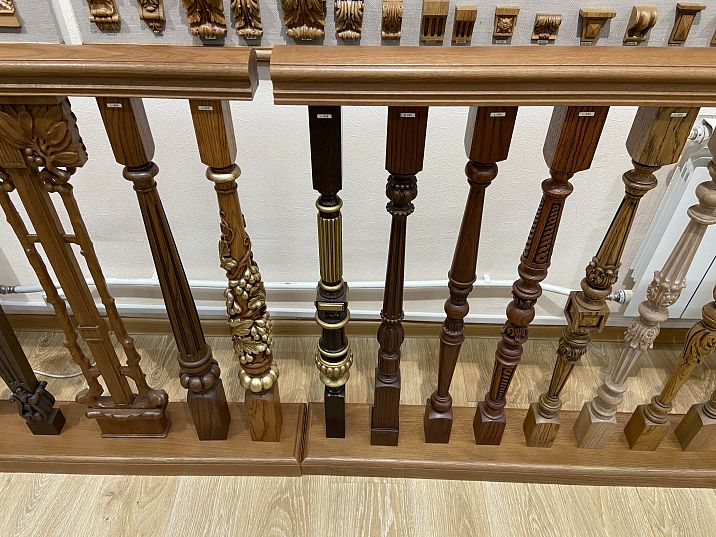
In the world of architectural elements, there are details capable of transforming any space, giving it a unique charm and elegance. Among such elements, special place is occupied by wooden balustrades – an exquisite embodiment of functionality and aesthetics, a fusion of centuries-old woodworking traditions with modern design solutions. These architectural elements do not merely enclose space – they become the central accent of the interior, demonstrating the owner’s status and impeccable taste.


History of balustrades: from antiquity to the present day




Origin and evolution of balustrades
Wooden balustrades as architectural elements have a multi-century history, tracing back to the era of antiquity. The earliest references to such structures appear in Assyrian architecture, where they were used as decorative elements of palace complexes. However, the true heyday of balustrades came during the Renaissance, when Italian masters revived and refined ancient architectural forms.
The word 'balustrade' comes from the Italian 'balaustro', meaning 'wild pomegranate'. It was precisely the shape of the pomegranate flower that inspired architects to create the characteristic shape of balusters – vertical elements forming the basis of balustrades. During the Renaissance, balustrades became an indispensable part of the architectural appearance of palaces and villas, symbolizing the wealth and high status of their owners.
In Russia wooden balustrades They gained widespread popularity in the 18th century, during the era of Peter's reforms, when European architecture was actively introduced into Russian architecture. Wooden balustrades adorned staircases of noble estates, grand entrances, and terraces, emphasizing the status and prosperity of the owners.
Our factory also produces:


Cultural significance of wooden balustrades
For centuries, wooden balustrades have served not only a practical function of enclosure, but also carried significant aesthetic and symbolic weight. Across various architectural styles – from Baroque to Classicism, from Modernism to contemporary minimalism – balustrades adapted, preserving their essence while acquiring new forms and details.
In Russian architecture, wooden balustrades became a symbol of the connection between European traditions and national wooden architecture. Master carpenters introduced elements of folk art into classical forms, creating unique examples in which the elegance of European architecture merged with the distinctiveness of Russian art.
Today wooden balustrades They are experiencing a new renaissance, becoming not merely architectural elements, but also an essential part of modern interior design solutions. They symbolize a connection to traditions, respect for history, and a striving for harmony in the design of living spaces.
Get Consultation
Materials and technologies for manufacturing wooden balustrades
Wood nobility: choosing material for balustrades
Choosing wood for making balustrades is an art requiring a deep understanding of the properties of different wood species. Each species has unique characteristics that determine not only the appearance of the finished product but also its durability, resistance to external influences, and operational qualities.
Oak is the acknowledged king among wood species for making balustrades. Its exceptional strength (hardness on the Brinell scale reaches 3.7 units) combined with its expressive texture makes oak balustrades a true work of art. Oak has high resistance to moisture (swelling coefficient only 0.23%) and mechanical damage, ensuring the longevity of the structure. The color palette of oak ranges from light golden to rich brown tones, allowing the creation of balustrades that perfectly fit various interior solutions.
Beech is another excellent material for making wooden balustrades. Its dense and uniform structure (density 650-750 kg/m³) ensures excellent workability, allowing craftsmen to create complex carved elements with exquisite precision. Beech balustrades feature an elegant light tone with a slight pinkish undertone, which may develop into a more saturated reddish hue over time, giving the items a unique charm and nobility.
Ash is a wood with an expressive texture and high strength characteristics (bending strength up to 105 MPa). Ash balustrades are distinguished by exceptional elasticity and resistance to impact loads, making them an ideal choice for stair railings in homes with an active lifestyle. The light tone of ash with characteristic wavy grain creates a sense of lightness and airiness, visually expanding the space.
Walnut is premium-class wood used to create luxurious balustrades in high-end interiors. Its rich chocolate tone with a purple undertone and complex texture make walnut balustrades true works of art. Walnut has medium density (640-660 kg/m³), providing an optimal balance of strength and workability, enabling the creation of items with fine detailing and complex profiles.
Larch is a unique species combining ease of processing with exceptional resistance to external influences. The content of resinous substances in larch wood reaches 15-20%, providing natural protection against rot and insect damage. Larch balustrades are especially suitable for use in rooms with high humidity or on open terraces, where they can serve for decades without losing their aesthetic and functional qualities.
Production technologies: from traditional craftsmanship to modern innovations
Manufacturing process wooden balustrade represents a unique combination of centuries-old woodworking traditions and modern innovative technologies. Each production stage requires highly skilled craftsmen and specialized equipment.
First stage – wood preparation. This process includes careful selection of material, drying to optimal moisture content (8-12% for interior work), and initial processing. Modern computer-controlled drying chambers allow precise control of the process to 0.1%, eliminating the possibility of deformation of finished items during operation.
Next stage – design and modeling. Modern technologies allow creating three-dimensional models of future balustrades, taking into account all architectural features of the room. Specialized software calculates optimal proportions of elements, their load-bearing characteristics, and visual harmony with the overall interior style.
Production of balusters – key stage in creating balustrades. Traditionally, balusters were handcrafted using turning methods, and this method is still used for creating exclusive items. However, modern production increasingly uses high-precision CNC (computer numerical control) machines, which ensure perfect repeatability of elements with accuracy to 0.01 mm. This is especially important when manufacturing complex balustrades, where even the slightest deviation in dimensions may disrupt the overall harmony of the structure.
Special attention is paid to the final finishing of wooden elements. Modern grinding technologies using abrasive materials of various grits (from P80 to P320) allow achieving a perfectly smooth surface while preserving the natural wood texture. Final coating is a separate art, including application of primers, stains, varnishes, or oils that not only protect the wood but also highlight its natural beauty.
Innovative technologies allow creating wooden balustrades with improved operational characteristics. For example, using special impregnations with silver nanoparticles provides antibacterial properties on the surface, while UV-curing varnishes increase resistance to fading and mechanical damage by 2-3 times compared to traditional coatings.
Variety of styles and design solutions
Classic balustrades: timeless elegance
Classical wooden balustrades are embodiments of architectural traditions tested by time. Their distinguishing features are symmetry, proportionality, and harmonious combination of functionality with decorativeness. Classic balustrades are characterized by the use of balusters with a distinctive shape resembling a vase or pomegranate flower – expanding in the middle and tapering at the base and top.
In classic style, special attention is paid to proportions. The optimal ratio of balustrade height to its length is approximately 1:7, creating a sense of stability and harmony. The distance between balusters is usually equal to half their maximum width, ensuring visual rhythm and structural integrity of the construction.
Decorative elements of classic balustrades include profiled handrails with smooth lines, decorative finials on support posts, and carved inserts between balusters. Motifs such as acanthus leaves, laurel wreaths, pearl strings, and other elements characteristic of classical architecture are often used.
Color solutions for classic balustrades are usually restrained – natural wood tones dominate, enhanced by transparent varnishes, or noble white and cream tones achieved using special paints and enamels. In more luxurious versions, partial gilding of decorative elements may be applied, creating a palace-like opulence effect.
Modern interpretations: minimalism and functionality
Modern design offers a new perspective on wooden balustrades, preserving their functionality while reinterpreting their aesthetics. Minimalist balustrades are characterized by clean lines, absence of excessive decoration, and emphasis on the natural beauty of the material.
In modern interpretations, balusters of simple geometric shapes – cylindrical, square, or rectangular in cross-section – are often used. Horizontal elements instead of traditional vertical balusters are also popular, creating a sense of space and lightness.
Innovative solutions include combined balustrades, where wooden elements are combined with metal, glass, or composite materials. For example, wooden handrails and support posts may be complemented by glass panels or thin metal rods, creating a light and modern structure that does not clutter the space.
The color palette of modern balustrades is diverse – from natural wood tones to bold contrasting solutions. Dark tinted surfaces are popular, creating a dramatic effect, as well as techniques of artificial aging, which give new items the charm of vintage pieces.
Ethnic styles offer a rich source of inspiration for creating unique wooden balustrades. Russian ornamentation with its rich carving, plant motifs, and fairy tale characters transforms a balustrade into a true piece of folk art. Characteristic elements include "kudrina" – a smooth plant ornament, "gorodki" – geometric patterns, and "teremkovaya" carving depicting fairy tale palaces and towers.
Scandinavian style offers minimalist balustrades made from light wood species with minimal decoration, but with emphasis on surface finish quality. Characteristic elements include simple geometric shapes, often with a slight tilt, creating a dynamic silhouette.
Eastern motifs introduce refined carving with arabesques, geometric patterns, and calligraphic elements into wooden balustrades. Moroccan style is characterized by the use of delicate carved panels between support posts, creating an effect of carved screens – mashrabiya.
Mediterranean style offers balustrades with motifs characteristic of the region – grapevines, olive branches, and marine elements. Artificial aging techniques are often used, creating an impression that the balustrade has been in the house for several generations.
Mediterranean style offers balustrades with motifs characteristic of the region – grapevines, olive branches, and marine elements. Artificial aging techniques are often used, creating an impression that the balustrade has been in the house for several generations.
Functional Features of Wooden Balustrades
Safety and Reliability: Engineering Aspects
Safety is the primary consideration when designing and manufacturing wooden balustrades. Modern building standards impose strict requirements on guardrail structures, especially in residential and public buildings.
The optimal height of balustrades for staircases and balconies in residential spaces is 90-100 cm, providing reliable protection against falls while maintaining an aesthetically pleasing appearance. For childcare facilities, this measurement increases to 110-120 cm, ensuring additional safety.
The distance between balusters is a critically important parameter, especially in homes with children. According to modern safety standards, this distance should not exceed 10 cm, preventing a child’s head from passing through the guardrail elements.
The structural strength of balustrades is ensured by proper load calculation and correct installation. Wooden balustrades must withstand horizontal loads of at least 50 kg/m in residential spaces and up to 100 kg/m in public buildings. To achieve these values, special fastening systems are used, including metal embedded elements that reinforce the structure.
Modern technologies allow significantly enhancing the strength characteristics of wooden balustrades. For example, using glued laminated timber instead of solid wood increases resistance to deformation by 30-40%, while applying special impregnations and protective coatings increases the structure’s durability by 2-3 times.
Ergonomics and ease of use
Ergonomics of wooden balustrades is the science and art of creating structures that are most comfortable for humans. A properly designed balustrade not only performs a protective function but also ensures comfortable use of staircases, balconies, and terraces.
The optimal shape of a balustrade handrail has an oval or rounded cross-section with a width of 5-7 cm, which perfectly matches the anatomy of the human hand and ensures a secure grip. The handrail surface should be perfectly smooth, without sharp edges or burrs, achieved through multi-stage sanding using abrasive materials of varying grit.
An important ergonomic aspect is the height of the handrail. For comfortable use by adults, the optimal height is 90-95 cm from the step or floor level. In homes where elderly residents or persons with disabilities live, it is recommended to install an additional handrail at a height of 70-75 cm.
Modern wooden balustrades may include innovative ergonomic solutions, such as built-in LED lighting integrated into the handrail or stair nosings, which enhances safety when using stairs at night. Additionally, heated handrail systems are popular, especially in regions with cold climates.
Acoustic Properties and Microclimate
Wooden balustrades possess unique acoustic properties that positively influence the sound environment of a room. Unlike metal or glass structures, wood does not create unpleasant resonant effects and helps balance the acoustics of a space.
The sound absorption coefficient of wooden structures is 0.15-0.20 in the frequency range of 500-2000 Hz, which contributes to noise reduction and creates a comfortable acoustic environment. This effect is particularly noticeable in rooms with high ceilings and large open spaces, where wooden balustrades help avoid echoes and reverberation.
The hygroscopic properties of wood are equally important, positively affecting the room’s microclimate. Wood naturally regulates air humidity, absorbing excess moisture during high humidity and releasing it during low humidity. This property is especially valuable in modern airtight buildings with mechanical ventilation, where maintaining an optimal humidity level (40-60%) is a key factor for a healthy microclimate.
Tactile sensations from contact with wooden surfaces also play an important role in the perception of space. Wood is always warm to the touch (its thermal conductivity is 350-400 times lower than that of metal), creating a sense of coziness and comfort. This factor is especially important for stair balustrades, which people interact with daily.
Practical Aspects of Selection and Installation
How to Choose the Perfect Balustrade for Your Interior
Choosing the Perfect wooden balustrades is a comprehensive process requiring consideration of numerous factors: from architectural features of the room to the personal preferences of the owner. Let’s consider key aspects that will help make the right choice.
The first step is analyzing the architectural style of the room. The balustrade should harmoniously fit into the overall interior concept, supporting its stylistic solution. For classic interiors, balustrades with intricately turned balusters of complex shapes are suitable, while for modern minimalist spaces, simple geometric forms are preferred.
It is important to consider the color palette of the interior. A wooden balustrade can either contrast with the main colors of the room, creating a striking accent, or harmonize with them, becoming an organic part of the overall design. The optimal approach is to match the balustrade’s color with other wooden elements in the interior: floors, doors, furniture.
The size of the room also influences the choice of balustrade. In small spaces, heavy structures with large elements may appear bulky and visually reduce the space. Here, lighter and more airy solutions are preferable, possibly combining wood and glass. In spacious rooms with high ceilings, monumental balustrades are appropriate, becoming a central element of the interior.
The functional purpose of the room also plays an important role. For a child’s room or a family home with young children, safety is a priority, so structures with minimal spacing between balusters and no sharp corners should be chosen. For formal spaces such as hallways or living rooms, more decorative solutions with intricate carvings and complex elements are suitable.
It is also important to consider practical aspects of operation. For high-traffic areas, it is recommended to choose wood species with high resistance to abrasion (oak, beech) and protective coatings with increased durability. For humid areas or outdoor structures, wood species with natural moisture resistance (larch, teak) or special moisture-protective treatments are required.
Correct installation of a wooden balustrade is the key to its longevity, safety, and aesthetic appearance. This process requires a professional approach and attention to numerous technical details.
The preparatory stage includes precise measurements of the installation site, taking into account all architectural features. Modern technologies allow creating a 3D model of the future structure, minimizing the risk of errors during installation. At this stage, mounting points and types of fasteners are also determined depending on the material of the base (concrete, wood, metal).
The preparatory stage includes precise measurements of the installation site, taking into account all architectural features. Modern technologies allow creating a three-dimensional model of the future structure, minimizing the risk of errors during assembly. At this stage, mounting points and types of fasteners are also determined depending on the base material (concrete, wood, metal).
There are several main methods for attaching balusters to the base and handrail:
- Dowel joint – a classic method where the baluster has dowels at both ends that fit into corresponding grooves in the handrail and base. This method ensures high strength and an aesthetically pleasing appearance without visible fasteners.
- Mounting using special metal brackets is a modern solution that significantly simplifies installation and increases the strength of the structure. The metal elements are concealed within wooden parts, preserving the design integrity.
- A combined method combining wooden dowel joints with additional reinforcement using metal elements is the optimal solution for structures with high strength requirements.
Special attention is paid during installation to the vertical alignment of balusters and the horizontal alignment of the handrail. The allowable deviation from vertical is no more than 2 mm per meter of height, ensured using modern laser levels and special installation templates.
The finishing stage of installation includes treating connection points, sanding, and applying protective coatings. To conceal fastening points and fill possible gaps, special wax pencils and putties matching the wood color are used. The final coating is applied only after complete installation, ensuring uniform color and protection of the entire structure.
Maintenance and care: preserving beauty for many years
With proper care, wooden balustrades can retain their beauty and functionality for decades. Regular maintenance not only extends the service life of the structure but also preserves its aesthetic appeal.
Daily care for wooden balustrades includes removing dust using a soft dry cloth or special anti-static wipes. It is important to avoid abrasive materials that may damage the protective coating and the wood surface.
Weekly wet cleaning is performed using slightly damp (not wet!) cloth without aggressive cleaning agents. For wooden balustrades with varnish, special furniture care products containing wax or silicone are recommended, which not only clean the surface but also create a thin protective layer.
Every half-year, a more thorough inspection and maintenance is recommended. This process includes checking all connections, tightening fasteners as needed, and treating the surface with special compounds that restore the protective layer. For balustrades with oil finish, periodic renewal of the oil protective layer is required (typically once every 1-2 years depending on usage intensity).
It is important to consider the operating conditions of the balustrade. In rooms with high humidity or significant temperature fluctuations, more frequent maintenance and the use of special protective compounds with enhanced water resistance are required. For outdoor balustrades, it is recommended to renew the protective coating annually before the rainy or snowy season.
Minor damage (scratches, scuffs) should be addressed immediately to prevent further degradation of the protective layer and moisture penetration into the wood. Special wax pencils and touch-up markers matching the balustrade color are used for this purpose.
Ecological Aspects of Wooden Balustrades
Ecological Sustainability
In the era of growing ecological awareness wooden balustrades represent an ecologically responsible choice for modern interiors. Wood is a renewable resource, and when managed properly, its harvesting does not cause irreversible damage to ecosystems.
Leading manufacturers of wooden balustrades today work exclusively with certified wood from forests managed under responsible forestry practices. FSC (Forest Stewardship Council) and PEFC (Programme for the Endorsement of Forest Certification) certificates guarantee that the wood is legally sourced, meets ecological standards, and adheres to principles of sustainable development.
The carbon footprint of wooden products is significantly lower than that of metal, plastic, or glass equivalents. The production process of wooden balustrades requires 60-70% less energy compared to metal structures of similar size. Additionally, wood naturally absorbs carbon dioxide during tree growth and continues to store carbon throughout the product’s lifespan.
Modern wood processing technologies allow minimizing production waste. Computer modeling and material cutting optimization reduce waste by 15-20% compared to traditional methods. Remaining wood waste is not discarded—it is recycled into wood panels, fuel pellets, or used for energy generation, ensuring a zero-waste production process.
The ecological nature of wooden balustrades is also evident in their potential for secondary recycling or safe disposal at the end of their service life. Unlike composite or plastic products, wooden structures can be recycled without harming the environment or naturally decompose, returning to the natural cycle.
Impact on Health and Well-being
Wooden balustrades are not only aesthetically pleasing but also positively impact the health and well-being of people living in the home. This aspect is becoming increasingly important in today’s world, where people spend up to 90% of their time indoors.
Natural wood has a unique ability to create a healthy microclimate in rooms. It naturally regulates air humidity, absorbing excess moisture during high humidity and releasing it during low humidity. This property helps maintain optimal humidity levels (40-60%), reducing the risk of respiratory diseases and allergic reactions.
Some wood species (pine, cedar, juniper) possess phytoncide properties that naturally purify air from pathogenic microorganisms. Studies show that the concentration of bacteria in air within rooms containing wooden elements is 15-20% lower than in similar rooms without wood.
The psychological and emotional impact of wooden interior elements also deserves attention. Numerous studies in eco-psychology confirm that the presence of natural wood in interiors reduces stress levels, improves concentration, and promotes better rest. Measurements show a 15-20% reduction in cortisol (stress hormone) levels among people in rooms with wooden elements compared to rooms dominated by synthetic materials.
Tactile contact with wooden surfaces also has a therapeutic effect. Touching warm, living wood texture activates tactile receptors, triggering the release of endorphins—hormones of happiness. This effect is especially important for elements that people interact with daily, such as balustrade handrails.
It is important to note that to achieve maximum positive effects, environmentally clean materials must be used for wood treatment. Modern water-based varnishes and natural oils do not emit harmful substances and preserve the wood’s ability to 'breathe,' ensuring all its beneficial properties.
Economic aspects: Investment in beauty and functionality
Pricing and cost factors
The cost of wooden balustrades depends on many factors; understanding them will help make an informed choice that aligns with both aesthetic preferences and budget constraints.
The wood species is one of the key factors affecting cost. Price ranges for different species can vary by 3-5 times. For example, balustrades made of pine or birch will be significantly more affordable than similar structures made of oak or exotic species such as merbau or wenge. The cost of a cubic meter of premium wood species can reach 150-200 thousand rubles, significantly affecting the final product price.
Design complexity and number of decorative elements also significantly affect cost. Balustrades with simple turned balusters will cost 30-40% less than structures with hand-carved decorative elements. Each additional decorative element, such as carved inserts, decorative finials, or complex handrail profiles, increases cost by 5-15%.
Size and scale of the project naturally influence the overall cost. It should be noted that the unit cost (price per linear meter) typically decreases with increased order volume due to optimized production processes and reduced proportion of fixed costs in the cost structure.
Production technology is also a key factor in pricing. Balustrades fully handcrafted by master carpenters may cost 2-3 times more than similar products produced using modern CNC equipment. However, it is important to understand that high-tech production does not necessarily mean reduced quality—modern technologies often provide more precise processing and better repeatability of elements.
The type of final finish significantly affects the final cost. Simple transparent varnishing will be much cheaper than multi-layer finishes using patina, artificial aging, or partial gilding techniques. The cost difference between various finish types can reach 50-70% of the base product price.
Additional services, such as professional installation, should also be considered when planning the budget. The cost of professional installation typically amounts to 20-30% of the balustrade's price, but it is an investment in durability and structural safety.
Long-term investment: value over time
Wooden balustrades should be viewed not merely as interior elements, but as long-term investments that not only preserve but potentially increase their value over time.
Unlike many modern materials, high-quality wooden items do not lose their appeal over time. Moreover, natural wood often develops a deeper, richer hue, and minor signs of use create a unique patina prized in antiques. The lifespan of a properly manufactured and installed wooden balustrade made from hardwoods can be 50-100 years or more, making it a truly long-term investment.
From a financial standpoint, high-quality wooden balustrades increase the market value of real estate. According to real estate market research, the presence of high-quality natural wood elements can increase property value by 5-10%. This is especially true for historic buildings and luxury real estate, where authentic wooden elements are a significant pricing factor.
It is important to note that wooden balustrades, unlike many modern materials, are restorable. Even after decades of use, they can be restored to a condition close to their original state, which is impossible for most synthetic materials. This property makes them even more attractive from a long-term investment perspective.
From an ecological standpoint, wooden balustrades also hold value in the long term. In an era of growing environmental awareness and stricter environmental regulations, natural materials are becoming increasingly sought after, potentially increasing their market value in the future.
The cultural and historical value of wooden balustrades also increases over time. Items created using traditional techniques and reflecting a specific historical period or regional style may acquire the status of cultural heritage over time, significantly enhancing their value not only materially but also culturally.
Trends and innovations in the world of wooden balustrades
Modern design trends
The world of wooden balustrades is not static—it constantly evolves, reflecting changes in architectural styles, manufacturing technologies, and consumer preferences. Let us examine the most prominent trends shaping modern balustrades.
Minimalism and clean lines continue to dominate modern design. Balustrades are becoming more streamlined, emphasizing material quality and craftsmanship rather than decorative elements. Simple geometric baluster shapes—cylindrical, square, or rectangular in cross-section, with minimal profiling—are popular.
Material mixing is one of the most noticeable trends of recent years. Wooden balustrade elements are increasingly combined with metal, glass, stone, or composite materials, creating interesting contrasts in texture and finish. Particularly popular are combinations of dark wood with matte stainless steel or wooden handrails with glass panels.
Ecological and natural materials are becoming increasingly important to consumers. This is reflected in a preference for natural finishes that highlight the natural beauty of wood, rather than dense opaque coatings. Popular are oils and waxes that protect wood while preserving its texture and tactile qualities.
Individualization and customization are another significant trend. Modern consumers increasingly reject standard solutions in favor of unique projects that reflect their personality and lifestyle. This may manifest in unusual baluster shapes, integration of personal symbols, or use of rare woods with unique textures.
Functionality and multi-purpose use of balustrades are also gaining prominence. Modern constructions may include built-in lighting, storage elements, or even integrated technological solutions such as wireless charging devices or touch controls for smart homes.
Color solutions are also evolving. While previously natural wood tones or classic white dominated, today bold color choices—deep blues, emerald, or even black balustrades—are increasingly common, becoming striking accents in neutral interiors.