Article Contents:
- Balustrades in modern architecture
- Origin and evolution
- Wooden balustrades: warmth and naturalness
- Manufacturing materials: from wood to composites
- Stone balustrades: eternal classic
- Metallic balustrades: strength and elegance
- Styles and design of balustrades: from classic to modern
- Modern composite materials
- Gothic balustrades
- Classic balustrades
- Modern minimalist balustrades
- Modern and art deco
- Functional features and safety requirements
- Ethnic and regional styles
- Normative requirements for balustrades
- Features of balustrades for different rooms
- Ergonomics and Ease of Use
- Process of selecting and purchasing a balustrade
- Defining parameters and requirements
- Choosing a supplier and manufacturer
- Custom order vs ready-made solutions
- Ordering and installation process
- Seasonal maintenance of outdoor balustrades
- Specifics of caring for different materials
- Care for Wooden Balustrades
- Care for Stone Balustrades
- Care for Metal Balustrades
- Innovations and trends in the world of balustrades
- Economic aspects of purchasing a balustrade
- Modern manufacturing technologies
- Ecological trends
- Design trends
- Smart balustrades
- Balustrades in various architectural contexts
- Factors Affecting Cost
- Cost Comparison of Different Materials
- Hidden Costs and Additional Expenses
- Long-Term Economic Efficiency
- Balustrades in private homes
- Balustrades in commercial and public buildings
- Balustrades in landscape design
- In the world of architectural design and home furnishing, there are elements capable of transforming any space, giving it a unique charm and elegance. One such element, undoubtedly, is the balustrade — a classic adornment of staircases, terraces, balconies, and other architectural structures. If you are considering whether
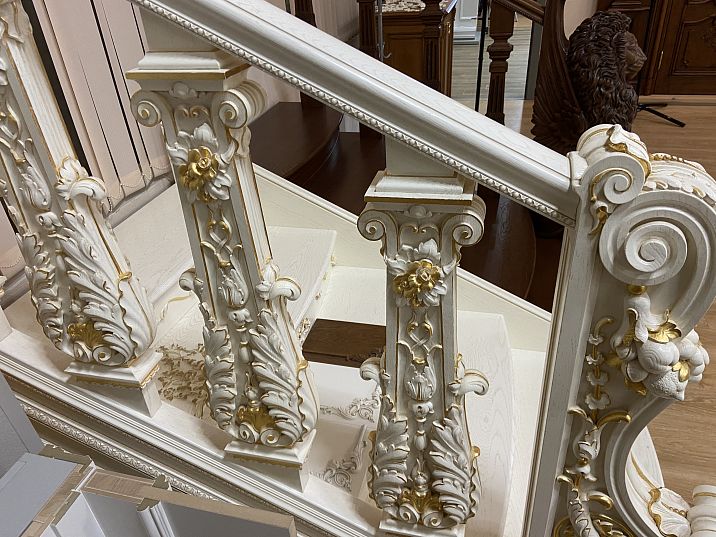
to buy a balustrade becomes your next investment in the beauty and functionality of your home, this article will be your reliable guide through the world of refined architectural solutions. Balustrade: from antiquity to the present day


History of balustrades: from antiquity to the present day
Balustrades are not just decorative elements; they are witnesses to the evolution of architectural thought, having passed through centuries and civilizations. Their history begins in antiquity, when the first craftsmen realized the need to create not only functional but also aesthetically pleasing railings.




Origin and Evolution
The word 'balustrade' comes from the Italian 'balaustro', meaning 'wild pomegranate' – the first balusters resembled the shape of the flower of this plant. The earliest mentions of balustrades date back to Assyrian architecture, where they were used as decorative elements in palaces and temples.
In ancient Greece and Rome, balustrades gained particular popularity, becoming an indispensable part of monumental structures. The Romans, in particular, used them to frame terraces and porticos, creating the impression of lightness and airiness in massive stone buildings.
The Middle Ages introduced Gothic motifs into balustrade design – more elongated forms, pointed elements, intricate carvings. However, the true heyday of balustrades came during the Renaissance and Baroque periods, when they became symbols of luxury and the high status of the owner.
Our factory also produces:


Balustrades in modern architecture
Today, when you decide becomes your next investment in the beauty and functionality of your home, this article will be your reliable guide through the world of refined architectural solutions. For your home or project, you become part of a multi-century tradition. Modern balustrades retain classical forms but have adopted new materials, manufacturing technologies, and functional capabilities.
In the 21st century, balustrades are not only a tribute to tradition but also a practical solution for ensuring safety and zoning space. They fit organically into both classical interiors and modern minimalist projects, adding character and individuality.
Get Consultation
Materials for manufacturing: from wood to composites
Choosing the material for a balustrade is one of the key factors determining not only the appearance of the structure but also its durability, cost, and maintenance requirements. The modern market offers an impressive variety of options, each with its unique advantages.
Wooden balustrades: warmth and naturalness
Wood is a traditional and, perhaps, the most popular material for making balustrades. When you decide becomes your next investment in the beauty and functionality of your home, this article will be your reliable guide through the world of refined architectural solutions. to use natural wood, you are choosing not just a railing, but a true work of art with a unique wood grain pattern and natural texture.
Advantages of wooden balustrades:
- Natural beauty and warmth
- Ecological Safety
- Wide possibilities for carving and decorative processing
- Relative ease of installation
- Possibility of restoration and updating
Various types of wood are used to make wooden balustrades, each with its own characteristics:
- Oak – symbol of strength and durability. Oak balustrades can serve for decades, retaining their original beauty and shape. This material has an expressive texture and high resistance to mechanical damage.
- Beech – dense and hard wood with a uniform structure, ideal for creating elegant and detailed balusters. Beech is easy to work with and paint, allowing for balustrades of any color and shade.
- Ash – wood with a beautiful pattern and high strength. Ash balustrades are distinguished by elegance and ability to withstand significant loads.
- Larch – a unique species combining ease of processing with high resistance to moisture and rot. Ideal choice for outdoor balustrades.
- Spruce – an affordable option for those who want to combine quality with economy. Spruce balustrades require more careful protective treatment, but with proper care, they serve long and reliably.
Stone balustrades: eternal classic
Stone – a material tested over millennia. Stone balustrades embody monumentality, status, and enduring elegance. They are ideal for exterior design, grand staircases, and terraces.
Main types of stone for balustrades:
- Marble – symbol of luxury and refinement. Marble balustrades, with their unique vein patterns, become a central element of any architectural ensemble. Especially impressive are white marble balustrades in classical interiors.
- Granite – embodiment of strength and durability. Granite balustrades are practically eternal, they are not afraid of time or weather conditions. The variety of granite shades allows selecting a balustrade to match any architectural style.
- Limestone – a softer and warmer-feeling stone. Limestone balustrades are often used in Mediterranean style, creating the atmosphere of a southern villa.
- Tufa – porous stone with a unique texture, giving balustrades a special charm and character. Tufa balustrades are especially good when combined with water elements – fountains, pools.
Metallic balustrades: strength and elegance
Metal opens practically unlimited possibilities for balustrade design. From strict geometric forms to intricate forged patterns – metallic balustrades can realize any design idea.
Types of metallic balustrades:
- Forged iron – traditional material for creating delicate, artistic balustrades. Forged balusters can have the most diverse forms – from classical to avant-garde, turning the balustrade into a true work of art.
- Stainless steel – a modern material combining strength with an elegant appearance. Stainless steel railings are often used in contemporary interiors where minimalism and functionality are valued.
- Brass and bronze – metals that impart a special luxury and nobility to railings. Over time, they acquire a noble patina, making each railing unique.
- Aluminum – a lightweight and corrosion-resistant material, ideal for outdoor railings. Aluminum railings require little maintenance and retain their attractive appearance for many years.
Modern composite materials
Technological progress has not bypassed railing production. Today, the market offers innovative composite materials combining the best qualities of traditional materials with new possibilities:
- Polyurethane railings – lightweight, moisture- and rot-resistant, they perfectly imitate wood or stone, yet are significantly cheaper and easier to install.
- Fiber-cement – a material combining the strength of concrete with ease of processing. Fiber-cement railings are resistant to atmospheric effects and require little maintenance.
- Fiberglass – a strong and lightweight material allowing the creation of railings with complex shapes. Fiberglass railings are especially popular for pool and spa area design.
Railing styles and design: from classic to modern
Choosing a railing style is an opportunity to emphasize the architectural concept of your home or create a striking accent that changes the perception of space. When you decide becomes your next investment in the beauty and functionality of your home, this article will be your reliable guide through the world of refined architectural solutions.it is important to consider not only the material, but also the stylistic solution that will harmonize with the overall design.
Classic balustrades
Classic railing style – the embodiment of elegance and proportion. Such railings are characterized by symmetrical forms, smooth lines, and meticulously crafted details.
Features of classic railings:
- Symmetrical balusters with a distinctive vase or column shape
- Heavy handrails and bases
- Clear proportions and rhythmic arrangement of elements
- Decorative elements in the form of rosettes, acanthus leaves, volutes
Classic railings fit perfectly into interiors in Baroque, Rococo, Neoclassical, and modern classical styles. They create an atmosphere of luxury and nobility, becoming a central element of architectural composition.
Gothic railings
Gothic railing style refers us to medieval architecture with its aspiration upward and complex decorative elements.
Features of Gothic railings:
- Stretched, pointed baluster shapes
- Complex carving with plant and geometric motifs
- Use of arched elements and trilobes
- Dark, saturated tones of wood or metal
Gothic railings create a dramatic, mysterious atmosphere, ideal for interiors in neo-Gothic style or for creating contrasting accents in modern spaces.
Modern and Art Deco
Railings in the modern and Art Deco styles are the embodiment of early 20th-century elegance, combining natural motifs with geometric clarity.
Features of railings in the modern style:
- Smooth, flowing lines reminiscent of plant forms
- Asymmetrical compositions
- Use of natural materials with emphasized texture
- Decorative elements in the form of flowers, leaves, stems
Balustrades in the Art Deco style:
- Geometric shapes and clean lines
- Contrasting material combinations (metal and wood, glass and stone)
- Luxurious finishes – gilding, lacquering, inlay
- Exotic motifs and ornaments
Modern minimalist balustrades
Modern balustrade design is characterized by simplicity of form, functionality, and use of innovative materials.
Features of modern balustrades:
- Simple geometric forms
- Minimal decorative elements
- Combination of different materials (metal and glass, wood and concrete)
- Neutral color solutions
Glass balustrades with minimalist fittings are especially popular, creating a sense of lightness and visually expanding the space. Such solutions are ideal for modern interiors in high-tech, minimalism, or loft styles.
Ethnic and regional styles
Balustrades can reflect the cultural traditions of various regions of the world, introducing exotic notes into the interior or exterior.
Mediterranean style:
- Light shades of stone or wood
- Simple, yet expressive forms
- Plant motifs in decoration
- Weathered effect
Eastern style:
- Complex carving with geometric patterns
- Lacy constructions
- Rich colors and gilding
- Use of inlay and mosaic
Russian style:
- Heavy wooden balusters with rich carving
- Use of traditional ornaments – solar symbols, plant motifs
- Contrasting color combinations
- Decorative metal appliqués
Functional features and safety requirements
Balustrades are not only a decorative element but also an important part of the safety system. When selecting balustrades, one must consider not only aesthetic but also functional characteristics.
Regulatory requirements for railings
In Russia, there are strict norms and standards regulating the parameters of railings and guardrails:
- The height of the railing should be at least 90 cm for residential premises and at least 110 cm for public buildings. For balconies and terraces above the second floor, the recommended height is from 110 cm.
- The distance between balusters should not exceed 10-15 cm to prevent a child from slipping between them.
- Structural strength – the railing must withstand a lateral load of no less than 30 kg/m for residential premises and 50 kg/m for public buildings.
- Resistance to corrosion and rot – especially important for outdoor railings exposed to atmospheric precipitation.
- Fire resistance – wooden railings must be treated with fire-retardant compounds, especially in public buildings.
Ergonomics and ease of use
In addition to safety, the balustrade must be convenient to use:
- The handrail shape should provide a comfortable grip. The optimal diameter for a round handrail is 4-5 cm; for rectangular shapes, there should be no sharp corners.
- Surface smoothness – the handrail and upper parts of balusters must not have burrs, roughness, or protruding elements that could cause scratches or snag clothing.
- Thermal comfort – in cold-climate regions, metal handrails on outdoor railings are recommended to be covered with thermal insulation materials.
- Visibility at night – for outdoor staircases and terraces, it is recommended to integrate lighting elements into the railing or use reflective materials.
Features of railings for different rooms
Requirements for railings vary depending on their location and purpose:
- Interior staircases – here, aesthetics, conformity to the overall interior style, and acoustic characteristics (minimizing creaks and knocks) are important.
- Balconies and terraces – key requirements: resistance to atmospheric influences, increased strength, and resistance to UV radiation.
- Swimming pools and spa zones – materials resistant to constant humidity, chlorinated water, and temperature fluctuations are required. Non-slip surfaces are preferred.
- Children's rooms and facilities – higher safety requirements: absence of sharp corners, toxic coatings, and small parts that a child might break off.
Process of selecting and purchasing railings
Purchasing railings is a responsible step requiring careful planning and analysis. When you decide becomes your next investment in the beauty and functionality of your home, this article will be your reliable guide through the world of refined architectural solutions.it is important to consider many factors, from technical specifications to aesthetic preferences.
Defining parameters and requirements
Before purchasing railings, it is necessary to clearly define:
- Dimensions and configuration – length of the railing, height, shape (straight, curved, spiral), number of turns and transitions.
- Functional purpose – for indoor or outdoor use, decorative or protective function, special operating conditions.
- Aesthetic preferences – conformity to the overall design of the room or exterior, desired decorative elements.
- Budget – determining financial capabilities, taking into account not only the cost of the railing itself, but also expenses for delivery, installation, subsequent treatment, and maintenance.
- Technical limitations – characteristics of the structure to which the railing will be attached, load-bearing capacity of the base, possibility of concealed installation.
Choosing a supplier and manufacturer
The quality of railings largely depends on the reputation and experience of the manufacturer. When choosing a supplier, pay attention to:
- Company experience – the longer the manufacturer has been on the market, the greater the likelihood that they will offer a quality product and service.
- Portfolio of completed projects – photos of finished works will help assess the quality of execution and the stylistic diversity of proposed solutions.
- Customer reviews – opinions of real buyers provide insight into the company's reliability, product quality, and service level.
- Warranty obligations – a serious manufacturer always provides a warranty for its products and clearly outlines warranty service conditions.
- Additional services – option to order custom design, professional installation, and subsequent maintenance.
Custom order vs ready-made solutions
When purchasing a balustrade, you can choose one of two paths:
Ready-made solutions:
- Lower cost
- Fast delivery times
- Opportunity to see the product before purchase
- Limited selection of designs and sizes
Custom order:
- Full compliance with your requirements and preferences
- Unique design that stands out in your interior
- Exact match to dimensions and layout of the space
- Opportunity to account for all technical installation features
- Higher cost and longer manufacturing times
Ordering and installation process
The typical process for ordering and installing a balustrade includes the following stages:
- Consultation and measurements – a specialist from the manufacturer visits the site, takes precise measurements, discusses all project details and specifics with the client.
- Design development – based on measurements and client preferences, a sketch or 3D model of the future balustrade is created, allowing you to evaluate how it will look in the interior.
- Project and cost approval – the client approves the design, materials, manufacturing timeline, and final cost.
- Manufacturing – production of all balustrade elements according to the approved project. Production time depends on the complexity of the structure and material – from several days to several weeks.
- Delivery and installation – professional installation of the balustrade at the site, taking into account all technical requirements and structural specifics.
- Final finishing – painting, varnishing, patination, or other finishing treatments (if not completed during manufacturing).
- Work acceptance – checking the quality of installation, compliance with the project, functionality, and safety of the structure.
Maintenance and care of railings
The longevity and attractive appearance of a balustrade largely depend on proper care and timely maintenance. Care requirements vary depending on the material used.
Care for wooden balustrades
Wooden balustrades require the most careful maintenance:
- Regular cleaning – remove dust with a soft cloth or vacuum cleaner with a soft attachment. For deeper cleaning, use specialized wood surface cleaners that do not contain aggressive components.
- Moisture protection – wooden balustrades should be protected from direct contact with water. If the surface gets wet, it must be immediately dried with a soft cloth.
- Protective coating renewal – depending on usage intensity and environmental conditions, it is recommended to renew the protective coating (varnish, oil, wax) every 2-5 years. Before applying a new layer, the old coating should be carefully removed.
- Protection from sunlight – direct sunlight can cause fading and cracking of wood. For outdoor balustrades, it is recommended to use products with UV filters.
- Humidity control – in rooms with wooden balustrades, it is important to maintain an optimal humidity level (40-60%) to prevent deformation and cracking of the wood.
Care for stone balustrades
Stone balustrades are durable but also require certain care:
- Regular cleaning – remove dust and dirt with a soft brush or cloth. For deeper cleaning, use specialized products for the specific type of stone.
- Protection against contamination – it is recommended to treat stone balustrades with special hydrophobic compounds that create an invisible protective film repelling water and dirt.
- Prevention of moss and lichen growth – for outdoor stone balustrades, biological contamination is an issue. Regular treatment with antiseptic compounds will help prevent their appearance.
- Restoration of chips and cracks – if damage is detected, it is recommended to immediately contact specialists for professional restoration.
Care for metal balustrades
Metal balustrades require special attention to prevent corrosion:
- Regular cleaning – remove dust and dirt with a soft cloth. For chrome and stainless steel surfaces, use specialized products free of abrasive particles.
- Protection against corrosion – for black metal balustrades, it is necessary to regularly check the integrity of the protective coating and renew it if needed.
- Polishing – to maintain the shine of metal surfaces, it is recommended to periodically polish with specialized compounds.
- Lubrication of movable elements – if the balustrade structure has movable joints, they should be periodically lubricated to prevent squeaking and sticking.
Seasonal maintenance of outdoor balustrades
Outdoor balustrades are exposed to atmospheric precipitation, temperature fluctuations, and ultraviolet radiation, therefore they require special attention:
- Spring inspection – after the winter season, carefully inspect the balustrade for damage caused by frost and temperature fluctuations.
- Summer maintenance – protection from intense sunlight, treatment of wooden elements with protective compounds.
- Autumn preparation – cleaning from fallen leaves and other plant debris that may retain moisture and promote mold and mildew growth.
- Winter protection – in regions with harsh winters, additional protection of balustrades from snow and ice is recommended. For wooden balustrades, the use of water-repellent compounds is relevant.
Innovations and trends in the world of balustrades
The world of architectural design is not standing still, and balustrades, as an important element of architectural appearance, are also subject to the influence of modern trends and technological innovations.
Modern manufacturing technologies
Innovative technologies have significantly expanded the possibilities of balustrade design and functionality:
- 3D modeling and prototyping – allows creating complex, unique baluster and decorative element shapes with high precision.
- CNC machining – computer-controlled cutting and milling processes ensure perfect repeatability of elements and enable the creation of intricate patterns.
- Laser cutting of metal – a technology that opens new horizons for creating delicate, filigree metal balustrades with incredible detail.
- New surface treatment methods – modern technologies allow creating coatings with unique properties: self-cleaning, antibacterial, aged effect, or, conversely, futuristic metallic sheen.
Ecological trends
Ecological awareness also affects balustrade production:
- Use of certified wood – more and more manufacturers are switching to wood from responsibly managed forests, certified by FSC or PEFC.
- Recycled materials – innovative balustrades can be made from recycled plastic, metal, or composite materials, reducing the product’s ecological footprint.
- Non-toxic coatings – modern varnishes, paints, and impregnations for balustrades are increasingly produced on water-based formulas, without harmful volatile compounds.
- Energy-efficient production – leading manufacturers are implementing technologies that reduce energy consumption during balustrade production.
Design Trends
Modern railing design trends reflect general directions in architecture and interior design:
- Minimalism and clean lines – simple geometric forms, absence of excessive decoration, emphasis on material and texture.
- Material mixing – combining wood and metal, glass and stone, creating contrasting yet harmonious combinations.
- Transparency and lightness – glass railings or structures with minimal vertical elements are gaining popularity, creating an open-space effect.
- Industrial aesthetics – railings made of raw metal with visible welds and rivets, combined with rough wood or concrete.
- Integrated lighting – modern railings often include built-in LED elements, creating dramatic lighting and enhancing safety.
Smart Balustrades
Smart home technologies are applied in railing construction:
- Sensory lighting – railings with built-in motion sensors that automatically activate lighting when someone approaches.
- Safety systems – railings with built-in pressure sensors that alert to excessive load or attempts to bypass the barrier.
- Thermostatic regulation – heated handrails for outdoor railings in cold-climate regions.
- Integration with smart home systems – ability to control railing lighting via smartphone or voice commands.
Economic aspects of purchasing railings
Purchasing railings is an investment requiring careful financial planning. Understanding cost structure and factors affecting price will help make the optimal choice.
Factors Affecting Cost
The price of railings is influenced by numerous factors:
- Material of manufacture – the most significant factor determining cost. From affordable pine to exotic woods, from simple metal to bronze or marble – price ranges can be enormous.
- Design complexity – the more complex the baluster shape, the more decorative elements, the higher the cost. Simple geometric forms will cost significantly less than artistic carving or forging.
- Dimensions and configuration – straight sections of railings are cheaper than curved ones. Each turn, bend, or height change increases the cost.
- Type of production – mass production is always more economical than custom orders. Choosing standard elements from a catalog will cost less than developing a unique design.
- Finishing and coating – natural oils and waxes for wooden railings cost less than multi-layered lacquer coatings. Patination, gilding, aging, and other decorative techniques significantly increase the cost.
- Additional elements – integrated lighting, decorative inserts, carved capitals, and other additional elements increase the final price.
Comparison of the cost of different materials
For clarity, we provide a comparative cost estimate for railings made of different materials (prices are per linear meter, including balusters, handrail, and base rail):
- Pine – from 3,000 to 7,000 rubles
- Beech, oak, ash – from 7,000 to 15,000 rubles
- Exotic woods – from 15,000 to 30,000 rubles
- Metal (simple forms) – from 5,000 to 10,000 rubles
- Artistic forging – from 15,000 to 50,000 rubles
- Stainless steel – from 8,000 to 20,000 rubles
- Artificial stone – from 10,000 to 25,000 rubles
- Natural stone – from 20,000 to 100,000 rubles
- Glass (with fittings) – from 12,000 to 30,000 rubles
- Composite materials – from 6,000 to 15,000 rubles
Hidden costs and additional expenses
When planning a budget for purchasing a balustrade, it is important to consider not only the cost of the structure itself, but also associated expenses:
- Delivery – especially significant for heavy stone or massive wooden structures. Delivery cost may range from 5% to 15% of the balustrade price depending on distance, weight, and dimensions. Fragile elements may require special packaging and cargo insurance, which also increases costs.
- Installation – professional installation of a balustrade is typically priced at 30-50% of the item’s cost. Complex structures, curved sections, installation at great heights, or in hard-to-reach areas may require additional expenses.
- Preparation work – prior to installing a balustrade, foundation preparation may be required: surface leveling, structural reinforcement, and creating a foundation for exterior balustrades. These works are billed separately.
- Finishing – if the balustrade is delivered without a finish, the cost of paint and application work must be considered. For wooden balustrades, this may amount to 10-20% of the item’s cost.
- Additional elements – decorative caps, plugs, connectors, fasteners are often not included in the base price and must be purchased separately.
- Maintenance and care – regular maintenance of balustrades (especially wooden or metal ones) requires expenses for specialized care products, protective coatings, and restoration services.
- Design and measurements – for non-standard structures, an individual project may be required, costing 5-10% of the balustrade price.
Long-term economic efficiency
When selecting a balustrade, it is important to evaluate not only initial costs, but also long-term economic efficiency:
- Service life – more expensive materials often provide significantly longer service life. For example, a balustrade made of oak will last 2-3 times longer than one made of pine, and stone may outlast several generations of owners.
- Maintenance costs – some materials require minimal care (stainless steel, composites), while others (wood, black metal) require regular maintenance and renewal of protective coatings.
- Resistance to damage – durable materials are less susceptible to mechanical damage, reducing repair and replacement costs.
- Impact on property value – a high-quality, aesthetically pleasing balustrade may increase the property’s market value by 1-3%, making it not just an expense, but an investment.
Balustrades in various architectural contexts
Balustrades are versatile and find application in various architectural solutions, from classical mansions to modern minimalist interiors.
Balustrades in private homes
In private homes, balustrades serve both functional and decorative roles:
- Interior staircases – balustrades create a safe and aesthetically pleasing barrier, becoming a central interior element. For classical interiors, carved wooden balusters are suitable; for modern interiors, minimalist metal or glass structures are appropriate.
- Balconies and terraces – here, balustrades not only ensure safety but also define the home’s exterior appearance. The material and style of the balustrade should harmonize with the building’s overall architecture.
- Front porch and entrance area – balustrades at the entrance to a home create the first impression of the residence and its owners. Here, more substantial, imposing structures are appropriate, emphasizing status.
- Attic floors and mezzanines – in these zones, balustrades often serve not only as barriers but also as visual spatial dividers. Light, airy structures help preserve a sense of openness.
Balustrades in commercial and public buildings
In public spaces, balustrades must combine aesthetics with heightened requirements for safety and durability:
- Shopping centers and office buildings – here, modern materials such as glass, stainless steel, and composites are often used. Design is typically minimalist, emphasizing functionality and alignment with corporate style.
- Hotels and restaurants – depending on the establishment’s concept, balustrades may be luxurious with rich decoration (for classical interiors) or ultra-modern, made from innovative materials.
- Museums and historic buildings – during the restoration of historic objects, special attention is paid to the authenticity of balustrades, ensuring they match the historical period and architectural style of the building.
- Educational and medical institutions – here, priority is given to safety, durability, and ease of maintenance. Metal or composite balustrades with minimal decorative elements are often used.
Balustrades in landscape design
In gardens and parks, balustrades become an important element of landscape architecture:
- Garden terraces and retaining walls – railings not only ensure safety on height differences but also create a clear structure in the garden space.
- Bridges and crossings – decorative railings transform functional garden elements into artistic accents.
- Water feature framing – railings around fountains, ponds, and pools create a finished composition and ensure safety.
- Grand staircases in the landscape – monumental railings emphasize the grandeur and significance of garden staircases leading to main scenic viewpoints.