Article Contents:
- History of origin and evolution of balustrades
- From ancient civilizations to our days
- Contribution of great masters
- Anatomy of a balustrade: construction and elements
- Main components of a balustrade
- Stylistic Features
- Variety of materials for manufacturing balustrades
- Traditional Materials
- Modern innovative materials
- Balustrades in various architectural styles
- Classical styles
- Modern Interpretations
- Functional significance of balustrades in modern architecture
- Safety and comfort
- Space zoning
- Architectural expressiveness
- Enhancing the status and value of the property
- Applications of balustrades in modern design
- Exterior Solutions
- Interior solutions
- Specialized Applications
- Installation technology of balustrades: from design to installation
- Preparation stage
- Installation process
- Installation specifics depending on material
- Maintenance and restoration of balustrades: preserving beauty for years
- Regular maintenance of balustrades
- Restoration of historical balustrades
- Preventive measures
- Choosing a balustrade: criteria and recommendations
- Main selection criteria
In the world of architectural decoration, there are elements that, despite their multi-century history, do not lose their relevance and continue to impress with the elegance of their forms and nobility of lines. One such element is decorative balustrade — a true gem of architectural art, capable of transforming any space, giving it a special charm and grandeur. This decorative element, originating from ancient times, is currently experiencing a true revival, becoming an indispensable part of both classical and modern interiors and exteriors.
What makes decorative balustrade so attractive to architects, designers, and property owners? Why does this decorative element, originating thousands of years ago, continue to captivate admirers of beauty in the 21st century? Let us dive into the wonderful world of balustrades, uncovering their history, construction features, variety of styles and materials, as well as secrets of proper selection and installation.


History of origin and evolution of balustrades
A journey into the past reveals amazing facts about the origin of this architectural element. The word 'balustrade' has Italian roots and comes from the term 'balaustro', which translates to 'wild pomegranate'. It was the flower of this plant, with its distinctive shape, that became the prototype for the first balusters—the main elements of a balustrade.




From ancient civilizations to our days
The earliest mentions of balustrades date back to ancient Assyria, where they were used as elegant window openings. These early examples demonstrated not only an aesthetic function but also served practical safety purposes. Assyrian craftsmen created structures that became prototypes of modern balustrades, laying the foundation for the further development of this architectural element.
The true golden age of balustrade art occurred during the Renaissance in Italy. In the late 15th century, Venetian and Veronese masters began actively applying balustrade systems in the architecture of noble palaces and mansions. Initially serving as an alternative to miniature arcades, they soon developed their own unique style and character.
A historical breakthrough was the appearance of balustrades in the famous Medici family palace—there, European architects first encountered the prototype of the modern balustrade system, which subsequently conquered the entire continent.
Our factory also produces:


Contribution of great masters
The first balusters had a characteristic middle indentation, giving them a special elegance. However, a true revolution in balustrade design was brought by the great Michelangelo, who proposed a vase-like shape for balusters. This interpretation became classical and remains to this day, confirming the genius of the Renaissance master.
Thanks to this innovative solution, decorative balustrades gained widespread popularity and by the first half of the 16th century became an indispensable part of luxurious palace complexes throughout Europe. Over time, each architectural era introduced its own modifications to balustrade design, yet the classical form proposed by Michelangelo remains the standard even in modern architecture.
Get Consultation
Anatomy of a balustrade: construction and elements
To truly appreciate the beauty and functionality decorative balustradesit is necessary to understand its construction. Despite their apparent simplicity, these are complex architectural systems where each element has its own purpose and form.
Main components of a balustrade
A classical balustrade consists of several key elements forming a unified harmonious composition:
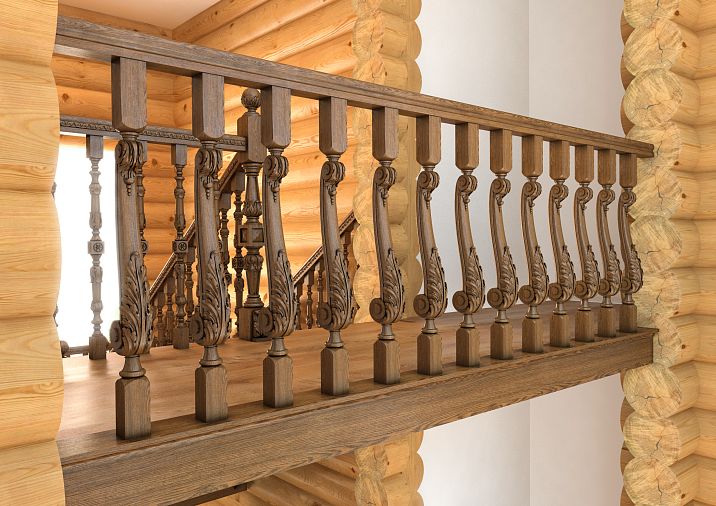
- Balusters – figurative posts, which are the main decorative elements of the structure. It is precisely they that create the characteristic silhouette of the balustrade and determine its stylistic affiliation. Balusters are mounted on newels and support handrails.
- Newels – massive supporting elements that bear the main load. They usually have a square or rectangular cross-section and are located at the beginning, end, and turns of the balustrade. Newels are often adorned with additional decoration and finials.
- Base – the lower horizontal beam connecting newels and serving as a support for balusters. In professional terminology, it is also called a tie beam.
- Handrails or rails – the upper horizontal element that secures balusters together and creates a finished appearance of the structure. Handrails ensure the convenience of using the balustrade and its safety.
- Plinth – the base of the lower part of the structure, ensuring the stability of the entire system.
A distinctive feature of balustrades is that their dimensions are closely related to human physical parameters. Unlike most architectural elements, they do not scale proportionally with building size, preserving ergonomics and functionality.
Stylistic features
Depending on the architectural style, balustrades may have various forms and proportions. However, the fundamental construction remains unchanged for centuries, indicating its perfection and functionality.
Balustrades are often adorned with additional decorative elements – obelisks, vases, sculptures. This creates a natural transition from the balustrade to the building’s wall or roof, emphasizing the architectural ensemble’s integrity.
Variety of materials for manufacturing balustrades
Choosing material for decorative balustrades is not only an aesthetic question, but also durability, practicality, and conformity to the overall style of the building. The modern market offers a wide range of materials, each with its own advantages and characteristics.
Traditional materials
For centuries, time-tested natural materials have been used to create balustrades:
- Wood – a classic choice for country houses and interiors in traditional style. Wooden balustrades bring warmth and coziness, highlighting the natural beauty of textures. Hardwood species are primarily used for their strength and durability. However, wooden balustrades require regular maintenance and protection from moisture.
- Stone – a symbol of status and longevity. Stone balustrades made of marble, granite, or limestone can last centuries, preserving their original beauty. They impart monumentality and nobility to a building, but require professional installation due to their significant weight.
- Gypsum is a material that allows creating exquisite details with fine detailing. Gypsum balustrades withstand changes in humidity and temperature, making them suitable for rooms with a special microclimate. They are lighter than stone analogs, yet retain the aesthetics and elegance of form.
- Concrete is a strong and durable material resistant to atmospheric effects. Concrete balustrades are not afraid of moisture, mechanical loads, and do not corrode. Modern technologies allow creating items from concrete that imitate expensive stone or ancient sculpture.
- Metal is a material combining strength with elegance. Metal balustrades, especially wrought iron ones, are true works of art. They can have both classic and ultra-modern designs, making them a universal solution for various architectural styles.
Modern innovative materials
With the development of technology, new materials have emerged, expanding the possibilities for creating balustrades:
- Polyurethane is a lightweight yet strong material allowing the creation of highly detailed items. Polyurethane balustrades are resistant to moisture, temperature fluctuations, and ultraviolet radiation. They are significantly lighter than stone or concrete analogs, simplifying their installation.
- Artificial stone is a material imitating natural stone but with less weight and higher resistance to external influences. Balustrades made of artificial stone are virtually indistinguishable from natural ones, yet more affordable in price.
- Composite materials are innovative developments combining the best properties of various materials. They possess high strength, resistance to atmospheric effects, and require no special maintenance.
The choice of material for balustrades should be made considering climatic conditions, architectural style of the building, and personal preferences. Each material has its own installation and usage characteristics that must be considered during design.
Balustrades in various architectural styles
The architectural style of the building largely determines the design decorative balustrades. Over centuries, each era has brought its distinctive features to the design of this element, creating unique samples reflecting the spirit of the time.
Classic styles
- Romanesque style is characterized by massiveness and solidity. Balustrades from this period feature simple geometric forms, minimal decoration, and monumentality. Balusters often have the shape of low columns with simplified ornamentation.
- Gothic style introduced verticality and delicacy into balustrade design. Balusters become thinner and more elegant, with pointed arches and complex geometric ornamentation appearing. Gothic balustrades create an impression of lightness and airiness, despite using heavy materials.
- Renaissance revived interest in ancient forms and proportions. Balustrades from this period are characterized by harmonious combinations of elements, symmetry, and balance. It was during the Renaissance that the classical baluster shape in the form of a vase, proposed by Michelangelo, emerged.
- Baroque introduced opulence, dynamism, and theatricality into balustrade design. Balusters acquire complex forms with abundant decorative elements, volutes, and plant motifs. Baroque balustrades create an impression of movement and emotional intensity.
- Rococo further complicated balustrade forms, adding asymmetry and refined decoration. Balusters of this style are often adorned with floral garlands, shells, and other natural motifs. Rococo prefers elegant, refined forms and light pastel shades.
- Neoclassicism returned to ancient ideals of simplicity and harmony. Balustrades from this period are characterized by strict lines, restrained decoration, and precise proportions. Neoclassicism prefers clear geometric forms and symmetrical compositions.
Modern interpretations
- Modernism introduced organic, flowing lines and natural motifs into balustrade design. Balusters of this style may have asymmetrical shapes resembling plant stems or animal silhouettes. Modernism rejects historical references in favor of innovative solutions.
- Art Deco combines geometric clarity with luxurious materials. Balustrades of this style are characterized by minimalist forms, contrasting color schemes, and use of expensive finishing materials. Art Deco prefers symmetry and rhythmic repetition of elements.
- Minimalism reduces balustrade design to basic geometric forms, rejecting excessive decoration. Balusters may have the shape of simple cylinders or parallelepipeds, creating clean, minimalist lines. Minimalist balustrades are often made of glass, metal, or concrete.
- High-tech uses industrial materials and technological solutions. Balustrades of this style may be made of glass, stainless steel, or composite materials, creating a ultra-modern image. High-tech prefers functionality and technology.
- Eco-style returns to natural materials and organic forms. Balustrades in this direction are often made of untreated wood, stone, or other natural materials, emphasizing connection with nature. Eco-style strives for ecological sustainability and sustainable development.
The choice of balustrade style should correspond to the overall architectural concept of the building, creating a harmonious, unified image. Modern technologies allow combining traditional forms with innovative materials, creating unique design solutions.
Functional significance of balustrades in modern architecture
Beyond its obvious decorative function, decorative balustrade it performs several important practical tasks, making it not just decoration, but a functional architectural element.
Safety and comfort
The primary function of a balustrade is to ensure safety. Installed on staircases, balconies, terraces, or platforms, it prevents falls from height, creating a reliable barrier. This function is especially important in homes where there are children or elderly people.
A balustrade serves as support when ascending or descending stairs, providing additional stability and comfort during movement. Properly designed handrails are at an optimal height for easy gripping, making stair use safer.
Space zoning
In modern architecture, balustrades are often used to visually divide space without creating solid walls. This preserves the feeling of openness and lightness while clearly defining functional zones.
This solution is especially effective in spacious rooms with high ceilings, where a balustrade can serve as an elegant boundary between the living room and dining area, or the hall and living zone. In landscape design, balustrades are used to highlight different levels of a garden or terrace.
Architectural expressiveness
A balustrade is a powerful tool of architectural expressiveness, capable of emphasizing the style of a building and giving it individuality. It creates a rhythmic structure that enlivens the facade and adds dynamism.
In modern architecture, balustrades are often used to create contrast between the strict geometric forms of the main building volume and elegant, detailed decorative elements. This softens the visual perception of massive structures and adds elegance.
Increase in status and property value
Presence of quality decorative balustrades significantly increases the status of the building and, consequently, its market value. This architectural element is associated with luxury, solidity, and good taste of the owner.
This effect is especially noticeable in suburban real estate, where balustrades decorating terraces, balconies, or entrance areas create a palace-like architectural impression and emphasize the prestige of the property.
Areas of application of balustrades in modern design
Universality and aesthetic appeal decorative balustrades make it in demand in various fields of architecture and design. Let's consider the main areas of application of this element in the modern world.
Exterior solutions
- Facade decoration – balustrades are used to decorate building facades, emphasizing their architectural style and creating an expressive silhouette. They can be placed on cornices, attic levels, or parapets, giving the building a finished look.
- Terraces and verandas – balustrades serve as elegant barriers for open spaces, ensuring safety and creating a cozy atmosphere. They protect against falls from height while maintaining openness and visual connection with the surrounding landscape.
- Balconies and loggias – balustrades give these building elements elegance and individuality. They can either continue the overall facade style or serve as a contrasting accent, drawing attention.
- Entrance areas – balustrades framing the porch or grand staircase create a ceremonial atmosphere and emphasize the status of the building. They form the first impression of the house and its owners.
- Landscape design – balustrades are used to decorate garden bridges, gazebos, rotundas, and resting areas. They blend naturally into the surrounding environment, creating harmonious compositions.
Interior solutions
- Staircases – balustrades are an essential part of grand staircases, giving them a ceremonial and elegant appearance. They ensure safety during ascent and descent while also serving as an important decorative element.
- Antresols and galleries – balustrades create a safe barrier for upper levels in multi-level spaces. They maintain visual connection between floors without disrupting the unity of the space.
- Space zoning – balustrades are used to elegantly divide space into functional zones without erecting solid walls. This preserves the feeling of openness and lightness in the interior.
- Furniture decoration – miniature balustrades are used in furniture design as elements of chair backs, footrests, or headboards. They add elegance and classic charm to interior items.
- Decorative niches and shelves – balustrades can serve as barriers for open shelves or decorative niches, creating an eye-catching accent in the interior. They protect items from falling while simultaneously highlighting their value.
Specialized applications
- Swimming pools and spa zones – balustrades made of moisture-resistant materials are used to enclose pools and jacuzzis. They ensure safety and create an atmosphere of luxury and relaxation.
- Public buildings – in theaters, museums, and libraries, balustrades serve not only as functional elements but also emphasize the solemnity and significance of the space.
- Restoration work – when restoring historical buildings, balustrades are recreated with maximum accuracy, preserving the authenticity of the architectural appearance.
The variety of applications for balustrades demonstrates their versatility and enduring relevance in modern design. This architectural element successfully adapts to different styles and functional requirements while maintaining its aesthetic appeal.
Balustrade Installation Technology: From Design to Installation
Installation decorative balustrades This is a complex technological process requiring a professional approach and attention to detail. Proper installation ensures not only aesthetic appeal but also safety and longevity of the structure.
Preparation Stage
Before beginning installation work, thorough preparation is required:
- Design – development of a detailed balustrade project taking into account the architectural features of the building, functional requirements, and aesthetic preferences. At this stage, the dimensions, shape, material, and style of the future structure are determined.
- Surface Preparation – ensuring a flat horizontal surface for installing the balustrade. If necessary, the base is leveled, the foundation is reinforced, or a special support structure is created.
- Tool and Material Preparation – gathering all necessary items for installation: adhesive compounds, fasteners, marking and installation tools. It is important to use high-quality materials suitable for the type of balustrade and operating conditions.
Installation Process
Balustrade installation is carried out in stages, following a technological sequence:
- Marking and Planning – begins with laying out the bases, balusters, and handrails "dry". This allows visually assessing the future structure and making necessary adjustments. At this stage, the bases are fitted with equal spacing between newels.
- Base Installation – balustrade bases are laid on wooden guide strips at least 5 mm high. Holes are drilled for vertical stainless steel pins with a diameter of 10-12 mm. The holes should have a diameter of 16-18 mm and a depth of approximately 40 mm in the components and 40-60 mm in the foundation.
- Newel and Baluster Installation – after installing the bases, holes for balusters and newels are marked. Holes are drilled along the longitudinal axis of the base, ensuring even spacing of balusters between newels. The recommended distance between baluster axes is 250-300 mm. Holes are filled with adhesive compound, after which balusters and newels are installed.
- Handrail Installation – it is recommended to begin installing handrails no earlier than 20-30 minutes after installing balusters. Handrails are connected using pins 60-80 mm long and 10-12 mm in cross-section, ensuring structural strength and integrity.
- Final Processing – after completing installation, the surface is cleaned of excess adhesive and other contaminants. If necessary, sanding, priming, and painting the balustrade according to the project are performed.
Installation Features Depending on Material
The installation technology of balustrades significantly depends on the material from which they are made:
- Wooden balustrades require special attention to protection against moisture and temperature fluctuations. It is necessary to provide compensatory gaps for natural expansion and contraction of wood. All wooden elements must be treated with protective compounds before installation.
- Stone and concrete balustrades are significantly heavier, requiring the creation of a strong foundation or support structure. Installation of such balustrades is often performed using special equipment for lifting and moving heavy elements.
- Gypsum balustrades are lighter but require careful handling due to the fragility of the material. They are installed using special adhesive compounds that provide secure fixation without damaging the items.
- Metallic balustrades often require welding work or special fastening systems. It is important to provide corrosion protection, especially at joints and contact points with other materials.
- Polyurethane and composite balustrades are installed using special adhesive compounds that ensure strong bonding with the base and between elements. These materials are lightweight and easy to process, simplifying the installation process.
Proper balustrade installation is the key to its longevity, safety, and aesthetic appeal. Therefore, it is recommended to entrust this work to professionals with experience and necessary skills.
Balustrade Care and Restoration: Preserving Beauty for Years
Like any architectural element, decorative balustrade it requires regular maintenance and periodic restoration to preserve its original appearance and functional qualities. Proper care significantly extends the service life of the structure and maintains its aesthetic appeal.
Regular Balustrade Maintenance
Care methods for balustrades depend on the material from which they are made:
- Wooden balustrades require regular treatment with protective compounds – varnish, oil, or paint. This prevents moisture penetration, mold growth, and wood rot. It is recommended to renew the protective coating every 2-3 years, and more frequently in high-humidity conditions.
- Stone and concrete balustrades require periodic cleaning of contaminants and treatment with hydrophobic compounds to prevent moisture penetration and salt formation. Special attention should be paid to joints between elements, which may deteriorate under atmospheric conditions.
- Gypsum balustrades in interiors require gentle cleaning of dust using a soft brush or vacuum cleaner with a soft attachment. For removing contaminants, a weak soapy solution can be used, avoiding excessive wetting.
- Metallic balustrades require protection against corrosion. Regular inspection of the protective coating's integrity and timely repair of damage prevent rust formation. Cleaning of metallic surfaces uses specialized agents free of abrasive particles.
- Polyurethane and composite balustrades require minimal maintenance—periodic cleaning of dust and contaminants using soft cloth and non-aggressive cleaning agents is sufficient.
Restoration of historical balustrades
Restoration of historic balustrades is a complex process requiring special knowledge and skills. The main stages of restoration work include:
- Research and documentation – studying historical materials, photographing the current condition, identifying original materials and manufacturing techniques.
- Cleaning – careful removal of contaminants, old paint layers, and other deposits while preserving historical patina and original material texture.
- Strengthening – conservation of deteriorating areas, treatment with special compounds to prevent further degradation.
- Replacement of missing elements – fabrication and installation of missing components with maximum conformity to the original in shape, size, and material.
- Protective treatment – application of special compounds protecting the material from atmospheric effects and biological damage.
Restoration of historical balustrades should be carried out in accordance with the principle of minimal intervention and maximum preservation of original elements. This ensures the preservation of the historical value and authenticity of the architectural monument.
Preventive measures
To prevent serious damage to balustrades, it is recommended to conduct regular preventive inspections:
- Seasonal inspections – inspection of the structure before the start of the winter season and after its completion to identify possible damage from water freezing in cracks and joints.
- Monitoring of fasteners – checking the reliability of attachment of balusters, railings, and other structural elements.
- Monitoring of deformations – observation of possible displacements or tilts of balustrade elements, which may indicate problems with the foundation or supporting structure.
- Timely repairs – immediate elimination of even minor damage prevents its progression and more serious problems in the future.
Proper care and timely restoration allow maintaining the beauty and functionality of balustrades for many decades, and in the case of historical objects – for centuries.
Balustrade selection: criteria and recommendations
– a responsible step requiring consideration of multiple factors. A properly selected balustrade harmoniously integrates into the architectural ensemble, emphasizes the building’s style, and ensures necessary functionality. decorative balustrades A responsible step requiring consideration of multiple factors. A properly selected balustrade harmoniously integrates into the architectural ensemble, emphasizes the building's style, and ensures necessary functionality.
Main selection criteria
- Architectural style compatibility – the balustrade should harmonize with the overall style of the building or interior. Classical forms suit traditional architecture, while modern interpretations better match minimalist or avant-garde solutions.
- Functional purpose – for staircases, balconies, and terraces, structural strength and safety are crucial, whereas for decorative facade elements, aesthetic qualities take precedence.
- Material of manufacture – material selection depends on operating conditions, budget, and desired visual effect. For exteriors, moisture- and frost-resistant materials are preferred; for interiors, eco-friendly and aesthetically pleasing materials are suitable.
Proportions and dimensions – the balustrade must have correct proportions matching the building’s scale and ergonomic requirements. Height of railings, spacing between balusters, and dimensions of handrails – all these parameters affect safety and visual perception of the structure.
Durability and ease of maintenance – it is important to consider how resistant the selected material and construction are to external influences and how often they require servicing. For outdoor balustrades, resistance to atmospheric precipitation, temperature fluctuations, and ultraviolet radiation is especially important.
Safety – particularly critical for balustrades used as barriers for staircases and balconies. The structure must withstand specified loads and comply with construction standards. The spacing between balusters must not exceed established safety standards, especially if there are children in the house.
Cost and budget – an important factor influencing material selection and construction complexity. It is necessary to find an optimal price-to-quality ratio, considering the durability of materials and their long-term maintenance costs.