Article Contents:
- Functional Purpose and Architectural Role of Balusters
- Materials of Manufacture: From Classic to Innovations
- Wooden Balusters: Traditions and Modernity
- Alternative Materials: Expanding Possibilities
- Stylistic Directions and Design Solutions
- Classic forms: eternal elegance
- Modern Interpretations: Minimalism and Functionality
- Author's Solutions: Individuality and Creativity
- Technical Aspects of Selection and Installation
- Calculation of quantity and placement
- Methods of mounting and installation
- Regional Characteristics of the Baluster Market in Novosibirsk
- Pricing Policy and Accessibility
- Production Technologies and Manufacturing Quality
- Modern equipment and precision processing
- Quality Control and Production Standards
- Trends and innovations
- Ecological aspects and sustainable development
- Digital technologies in design and production
- Features of operation and maintenance
- Care rules for wooden balusters
- Prevention and Repair
- Integration into various architectural styles
- Classic Interiors: Harmony of Traditions
- Modern Styles: Functionality and Aesthetics
- Economic Aspects and Investment Appeal
- Price-to-Quality Ratio
- Impact on property value
- Industry Development Prospects
- Technological Innovations
- Changes in consumer preferences
- Conclusion
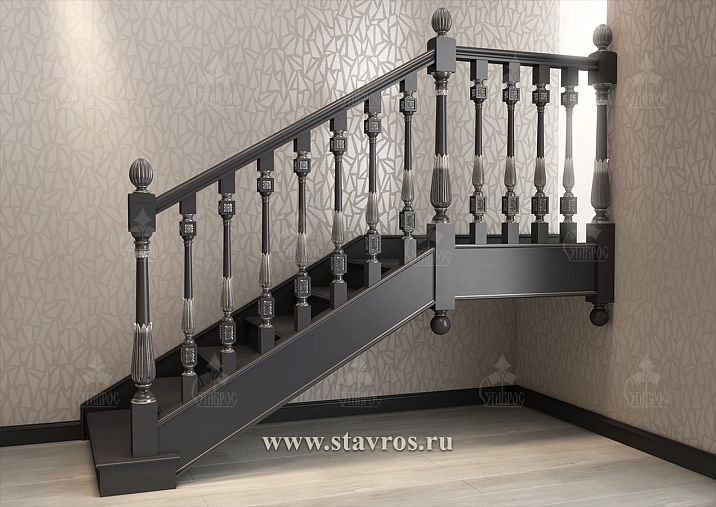
When it comes to creating stair constructions capable of transforming the interior and ensuring maximum safety, balusters novosibirsk they become a key element of the architectural solution. These vertical support posts are not merely a functional detail, but a true work of art capable of radically changing the perception of space.
In the modern world of architectural solutions, balusters perform a dual function: they provide structural support for stair railings and create a unique aesthetic image. Their value is difficult to overestimate, as it is precisely these elements that form the first impression of the staircase and set the tone for the entire interior.


Functional Purpose and Architectural Role of Balusters
Balusters are vertical support elements installed between stair treads and the handrail. Their primary task is to create a reliable barrier, preventing falls and ensuring safe movement along the stairs. However, modern balusters far exceed simple functionality.
The architectural role of these elements cannot be underestimated. They become a connecting link between different levels of the room, creating visual unity and harmony. Properly selected balusters can visually expand the space, add lightness to it, or, conversely, create a sense of monumentality and solidity.
The standard height of balusters is 900 millimeters, which corresponds to ergonomic requirements and ensures comfortable use of the stairs by people of different heights. The distance between adjacent elements usually varies from 100 to 150 millimeters, guaranteeing safety even for small children.




Materials of manufacture: from classics to innovations
Our factory also produces:


Wooden Balusters: Traditions and Modernity
Wood remains the most popular material for manufacturing balusters due to its unique properties. Natural wood possesses excellent aesthetic characteristics, is easy to process, and allows creating elements of any complexity and configuration.
Among the most popular wood species are oak, beech, ash, and pine. Oak balusters are distinguished by exceptional strength and durability; their texture creates a sense of reliability and respectability. Beech attracts with its light color and expressive wood grain pattern, while ash is characterized by uniform structure and excellent technological properties.
Modern wood processing technologies allow creating balusters with various finishes: from natural oil-based coatings to tinted and lacquered surfaces. This opens up limitless possibilities for integrating stair elements into any interior style.
Get Consultation
Alternative Materials: Expanding Possibilities
In addition to traditional wood, the modern market offers balusters made from various materials. Metal constructions made of stainless steel or wrought iron bring a note of modernity or classic elegance, respectively, to the interior.
Composite materials such as wood-plastic composite (WPC) combine the advantages of natural wood and synthetic materials. They exhibit high resistance to moisture, temperature fluctuations, and mechanical impacts while maintaining an attractive appearance.
Glass and stone balusters represent exclusive solutions for special architectural projects. They are capable of creating a unique atmosphere of luxury and sophistication, especially when combined with appropriate lighting.
Stylistic directions and design solutions
Classic forms: eternal elegance
Classic balusters are characterized by symmetrical forms, smooth lines, and traditional proportions. They are often adorned with carved elements that create play of light and shadow on the surface. Such balusters are ideally suited for interiors in the classical, baroque, or neoclassical styles.
A feature of classic balusters is their versatility. They fit organically into both luxurious mansions and modest country houses, adding nobility and refinement. Traditional forms have stood the test of time and never go out of style.
Modern interpretations: minimalism and functionality
Modern baluster design tends toward minimalism and functionality. Straight lines, geometric shapes, and minimal decorative elements characterize this style. Such balusters are perfect for interiors in high-tech, minimalist, or Scandinavian styles.
Innovative design approaches allow creating balusters with integrated lighting, adding additional functionality to the staircase and creating striking lighting accents in the interior.
Author's Solutions: Individuality and Creativity
For those seeking uniqueness, it is possible to order custom balusters according to an individual project. Such elements may include carved ornaments, inlays, unusual shapes, or combinations of different materials.
Custom balusters become true works of art, capable of transforming an ordinary staircase into a focal point of interior design. They reflect the owner's individuality and create a unique atmosphere in the home.
Technical aspects of selection and installation
Calculation of quantity and placement
Correct calculation of the number of balusters is a critically important aspect of staircase railing design. The primary parameter is the distance between adjacent elements, which should not exceed 150 millimeters to ensure children's safety.
When calculating, the total length of the staircase run, the number of steps, and the staircase configuration are taken into account. Special calculation methods are applied for spiral staircases, taking into account the turning radius and the angle of step inclination.
Baluster placement can be arranged according to various schemes: one per step, two on wide steps, or with uniform spacing regardless of step positioning. The choice of scheme depends on the staircase's structural features and aesthetic preferences.
Methods of mounting and installation
The reliability of baluster mounting determines the safety of the entire staircase structure. There are several main mounting methods, each with its own advantages and areas of application.
Mounting at the step end is the most common method. The baluster is secured using dowels, self-tapping screws, or special fasteners. This method ensures high connection strength and allows easy replacement of damaged elements.
Mounting to the baluster rail is a more complex but also more aesthetic method. The baluster rail is a horizontal plank to which all balusters are attached. This solution allows creating a perfectly straight railing line and simplifies the installation process.
Inlaid mounting is used to create the strongest connection. The baluster is partially embedded into the step and handrail, ensuring exceptional structural reliability. However, this method requires high manufacturing precision and professional installation skills.
Regional characteristics of the baluster market in Novosibirsk
The Novosibirsk baluster market is characterized by high competition and a wide range of offerings. Local manufacturers actively develop their own production capacities, enabling them to offer quality products at competitive prices.
Regional climatic conditions impose certain requirements on materials and manufacturing technologies. Sharp temperature fluctuations and high humidity during certain periods of the year require the use of special protective coatings and stabilized wood.
Consumers in Novosibirsk are increasingly interested in eco-friendly materials and energy-efficient production technologies. This encourages local manufacturers to adopt innovative solutions and improve product quality.
Pricing policy and accessibility
Cost balusters in Novosibirsk Prices vary widely depending on the material, complexity of processing, and order volume. Simple pine wooden balusters may cost from 200 rubles each, while exclusive items made from valuable wood with artistic carving can reach several thousand rubles.
Wholesale purchases allow significantly reducing the cost per unit. Many manufacturers offer flexible discount systems for large orders, making quality balusters accessible to a broad range of consumers.
Seasonal demand also affects pricing. Peak periods coincide with the spring-summer season, when construction and renovation of country homes become active. Prices may be more attractive during winter months.
Production technologies and manufacturing quality
Modern equipment and precision processing
The quality of modern balusters is largely determined by the level of technological equipment in production. CNC machines allow achieving the highest precision in processing and reproducibility of geometric parameters.
Latest-generation turning machines are capable of creating complex profiles with perfect symmetry and surface smoothness. This is especially important for classical balusters with numerous decorative elements, where even minor deviations can spoil the overall impression.
Milling centers enable the creation of unique custom shapes and ornaments. Three-dimensional modeling allows pre-visualizing the result and making necessary adjustments before production begins.
Quality control and production standards
Modern baluster manufacturers pay special attention to quality control systems. Each stage of the production process is carefully checked, starting from raw material selection and ending with the final finishing of finished products.
Wood moisture is controlled using special instruments, ensuring the geometric stability of finished products during operation. Proper wood drying prevents cracking, deformation, and other defects.
The quality of protective-decorative coatings is tested on special samples. Testing includes checking adhesion, resistance to abrasion, moisture, and ultraviolet radiation.
Trends in development and innovation
Ecological aspects and sustainable development
The modern baluster manufacturing industry increasingly focuses on ecological aspects of production. Using wood from sustainably managed forests, applying eco-friendly coatings, and minimizing production waste are becoming important competitive advantages.
FSC (Forest Stewardship Council) certification guarantees that the wood originates from responsibly managed forests. Consumers are increasingly paying attention to the presence of such certificates when selecting products.
Developing biodegradable protective coatings and using renewable energy sources in the production process reflect global trends toward sustainable development.
Digital technologies in design and production
The introduction of digital technologies fundamentally changes approaches to baluster design and production. Computer-aided design (CAD) systems allow creating accurate three-dimensional models of future products and optimizing production processes.
Virtual and augmented reality technologies allow clients to see how selected balusters will look in their interiors even before manufacturing. This significantly simplifies decision-making and reduces the risk of errors.
Integrating production equipment into a single digital ecosystem ensures full traceability of the production process and enables prompt adjustments to technological parameters.
Features of operation and maintenance
Care Instructions for Wooden Balusters
Proper care of wooden balusters ensures their longevity and maintains an attractive appearance for many years. Regular cleaning from dust and dirt should be performed using soft materials and specialized wood care products.
Periodic renewal of protective-decorative coatings is necessary to maintain protective properties and aesthetic characteristics. The frequency of renewal depends on the intensity of use and environmental conditions.
Controlling humidity in a room plays an important role in preserving the stability of geometric dimensions of wooden elements. Sudden fluctuations in humidity may lead to deformations and cracking.
Prevention and repair
Regular inspection of balusters allows timely detection of signs of wear or damage. Minor scratches and abrasions can be addressed using specialized restorative compounds and local touch-ups.
In case of more serious damage, it is recommended to consult professionals for professional repair. Attempting to repair complex damages independently may worsen the condition of the item.
Replacement of individual balusters may be required in case of critical damage. It is important to ensure exact correspondence of new elements with existing ones in terms of size, shape, and color.
Integration into various architectural styles
Classic interiors: harmony of traditions
In classical interiors Novosibirsk balusters They serve as a connecting element between various architectural details. They should harmonize with cornices, pilasters, friezes, and other decorative elements.
The proportions of classical balusters are based on the canons of ancient architecture, ensuring their universal compatibility with traditional styles. Using the order-based system of proportions creates a sense of harmony and completeness of composition.
The color palette of classical balusters typically leans toward natural wood tones or noble tinted finishes. Gold leafing and patination may be used to create an especially grand atmosphere.
Modern styles: functionality and aesthetics
In modern interiors, balusters should combine functionality with minimalist aesthetics. Clean lines, minimal decorative elements, and emphasis on material quality and finish characterize this approach.
Integration of modern technologies, such as built-in lighting or sensor elements, allows creating balusters that meet smart home requirements. Such solutions are especially relevant for high-tech interiors.
Combining different materials opens new opportunities for creating unique design solutions. Combining wood with metal, glass, or composite materials allows achieving interesting visual effects.
Economic Aspects and Investment Attractiveness
Price-to-quality ratio
Investing in quality balusters represents a long-term investment in home comfort and safety. High-quality items made from premium wood with professional finishing serve for decades, preserving their functional and aesthetic characteristics.
Savings on quality balusters may lead to the need for premature replacement, which ultimately costs more than initial investment in quality products. Moreover, low-quality balusters may pose a safety hazard to users of staircases.
Choosing the right supplier and manufacturer plays a key role in ensuring optimal price-quality ratio. Company reputation, presence of quality certificates, and warranty obligations should be considered when making a purchase decision.
Impact on property value
Quality balusters and stair railings significantly influence the overall perception of interior and can substantially increase the property's market value. Potential buyers pay special attention to the quality and aesthetics of stair structures as an indicator of the overall home finishing level.
Exclusive custom balusters can become a unique selling proposition when selling real estate. They create a memorable impression and distinguish the property among similar offerings on the market.
Investments in quality stair elements pay off not only through increased property value, but also through improved quality of life for owners. A beautiful and safe staircase creates positive emotions and enhances daily comfort.
Industry Development Prospects
Technological Innovations
The development of additive technologies opens new possibilities for producing balusters with complex shapes. 3D printing allows creating prototypes and small-batch items with unique characteristics unattainable through traditional processing methods.
Nanotechnologies in protective coatings promise revolutionary changes in the durability and functionality of balusters. Self-cleaning, antibacterial, and superhydrophobic coatings may radically change maintenance and usage requirements.
Integration of the Internet of Things (IoT) into building elements opens opportunities for creating intelligent stair systems with features such as state monitoring, automatic lighting, and even warnings about potential hazards.
Changes in consumer preferences
Growing attention to eco-friendliness and sustainable development forms new requirements for materials and production technologies. Consumers increasingly choose products produced with minimal environmental impact.
Personalization and customization are becoming important trends in the field of architectural elements. Consumers seek uniqueness and are willing to pay a premium for exclusive solutions reflecting their personality and lifestyle.
Digitalization of the purchasing process changes the ways of interacting with customers. Virtual showrooms, online configurators, and augmented reality are becoming standard sales tools in the industry.
Conclusion
The world of balusters represents a remarkable combination of functionality, aesthetics, and craftsmanship. These architectural elements, which appear simple at first glance, actually embody centuries of building art traditions and modern technological achievements.
quality Balusters for staircases in Novosibirsk Requires a comprehensive approach that takes into account not only aesthetic preferences but also technical requirements, operating conditions, and long-term usage prospects. Properly selected and professionally installed balusters serve not only as a guarantee of safety but also as a source of daily aesthetic pleasure.
The modern market offers a wide range of solutions for any architectural tasks and budgetary possibilities. From simple functional elements to exclusive works of art — everyone can find balusters perfectly matching their needs and aesthetic vision.
Investments in quality stair elements pay off multiple times through increased comfort, safety, and property value. They form the basis for creating a unique architectural image of a home and become a source of pride for owners for many years.