Article Contents:
- Anatomy of Wood Joinery: Understanding the Basics
- Physics of Wood in the Context of Joinery
- Grain Direction and Connection Strength
- Classification of Mounting Methods
- Traditional joinery
- Modern metal systems
- Adhesive technologies
- Preparation Operations: Foundation of Quality Joinery
- Wood Conditioning
- Surface Treatment
- Joinery Technology Processes
- Through Joinery: Maximum Durability
- Hidden Joinery: Aesthetics and Functionality
- Corner Joinery: Solving Complex Tasks
- Specialized Fastening Systems
- Adjustable Connectors
- Quick-release systems
- Quality Control and Testing
- Geometric parameters
- Strength Testing
- Features of Joining Different Wood Species
- Coniferous species: pine, spruce, larch
- Hardwood species: oak, beech, ash
- Exotic Woods: Specifics of Working with Them
- Protection and final finishing
- Antiseptic Treatment
- Coating finishes
- Typical mistakes and their prevention
- Planning mistakes
- Technological violations
- Operational errors
- Innovative technologies
- Composite Fastening Elements
- Digital control technologies
- Economic Aspects
- Cost of various methods
- Pricing factors
- Development prospects
- New Materials
- Process Automation
- Conclusion
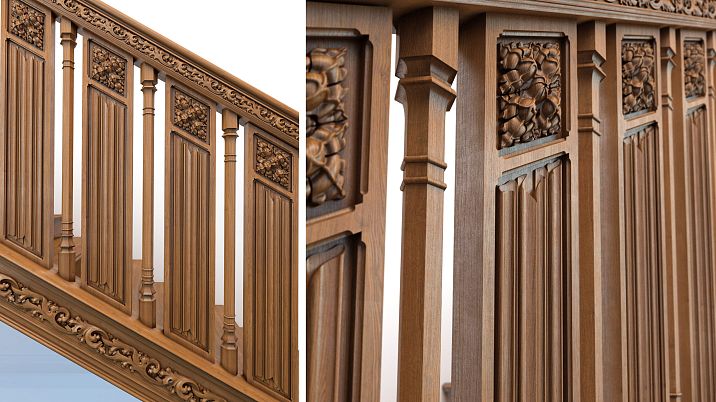
Imagine a staircase without balusters — a cold, faceless structure, devoid of soul and character. Now add elegant wooden posts, each like a string on an architectural harp. Instantly, the space transforms, gaining rhythm and harmony. Baluster mounting This is not just a technical process, it is the art of creating reliable connections that will serve for decades, preserving the original beauty of the natural material.
Every master knows: the quality of wooden baluster joinery determines not only the aesthetics of the staircase but also the safety of everyone who will use it. A poorly installed baluster can become a cause of injury, while a weak connection can be a source of constant worry. That is why a professional approach to joining wooden elements requires deep knowledge of materials, understanding of loads, and mastery of various installation techniques.


Anatomy of Wood Joinery: Understanding the Basics




Physics of Wood in the Context of Joinery
Wood is a living material that continues to 'breathe' even after processing. Air humidity, temperature fluctuations, mechanical loads — all this affects the geometry of wooden elements. Joining balusters made of wood must take these features into account, ensuring not only initial strength but also the stability of the connection throughout the entire service life.
The linear expansion coefficient of different wood species varies from 3 to 6 millimeters per meter for a 10% change in moisture content. This means that a baluster 900 millimeters long may change its dimensions by 2-5 millimeters depending on seasonal moisture fluctuations. Quality joinery must compensate for these changes without weakening the connection.
Our factory also produces:


Grain Direction and Connection Strength
The structure of wood determines optimal joining methods. Wood fibers have different strengths in longitudinal and transverse directions. Compressive strength along the grain is 8-10 times higher than across it. This fundamental property of wood must be considered when selecting the type of fastener and its installation direction.
End joinery, where the fastener enters the baluster end parallel to the grain, provides maximum connection strength. Side joinery, perpendicular to the grain, requires special techniques to prevent splitting the wood.
Get Consultation
Classification of Mounting Methods
Traditional joinery
Dowel joinery — a classic of woodworking, tested over centuries. Wooden cylindrical dowels with a diameter of 8-12 millimeters create a strong and aesthetically pleasing connection. Dowels are made from hardwoods — oak, beech, ash — and provide reliable fixation of elements.
Installing dowels requires high precision. Holes are drilled strictly perpendicular to the surface with a tolerance of no more than 1 degree. The depth of the holes should be half the length of the dowel plus 2-3 millimeters for placing glue. High-quality woodworking glue (PVA or polyurethane) provides additional connection strength.
Modern metal systems
Threaded rods represent an evolution of traditional joining methods. Steel rods with a diameter of 8-10 millimeters and metric threads provide exceptional connection strength. The length of the rods varies from 80 to 150 millimeters depending on the thickness of the joined elements.
Screw rods with combined threads — an innovative solution for joining wooden balusters. One part of the rod has a metric thread for attaching to the base, while the other has a self-tapping thread for screwing into the wood. This system allows height adjustment and enables disassembly without damaging the elements.
Adhesive technologies
Modern adhesive compositions open new possibilities for joining wooden elements. Polyurethane adhesives provide water-resistant connections that are resistant to temperature and humidity fluctuations. Epoxy compositions create connections whose strength exceeds the strength of the wood itself.
Adhesive bonding is especially effective when combined with mechanical connections. The adhesive fills microscopic surface irregularities, creating uniform load distribution and preventing stress concentration at individual points.
Preparation Operations: Foundation of Quality Fastening
Wood Conditioning
Before starting work, all wooden elements must undergo acclimatization under future operating conditions. Balusters must remain in the room for at least 7-10 days at a temperature of 18-22°C and relative humidity of 45-65%. This allows the wood to reach equilibrium moisture content and minimize subsequent deformations.
Moisture content is controlled using an electronic hygrometer. The optimal moisture content for wood in interior applications is 8-12%. Exceeding this value may result in shrinkage of elements after installation and weakening of connections.
Surface processing
Surface quality directly affects connection strength. Baluster ends are sanded to a smooth finish using 220-320 grit sandpaper. The surface must be clean, free of oil, wax, or other contaminants that may impair adhesive bonding.
Special attention is paid to end perpendicularity. Deviation from a right angle exceeding 1 degree results in poor element fit and weakened connections. A precision square or specialized measuring instruments are used for control.
Fastening Technology Processes
Through Fastening: Maximum Reliability
Through mounting provides the highest strength connection for wooden balusters. The fastener passes through the entire thickness of the base and is secured from the opposite side. This method is especially effective when fastening to wooden treads of 40-50 millimeters thickness.
The process begins with precise marking of installation locations. The distance between baluster axes must not exceed 120 millimeters — a requirement dictated by safety considerations. Holes are drilled from the tread’s front face using a drill bit 1 millimeter smaller than the fastener’s diameter.
From the installation side, the baluster hole is reamed to match the outer diameter of the thread. This ensures a tight fit for the fastener and prevents it from rotating. The threaded rod is installed from below the tread, a thin layer of adhesive is applied to it, and then the baluster is fitted.
Hidden Fastening: Aesthetics and Functionality
Hidden mounting allows complete concealment of fastening elements, preserving the natural beauty of the wood. This method requires high precision but ensures an excellent finished appearance of the structure.
A blind hole 15-20 millimeters deep is drilled into the base. The hole diameter must exactly match the fastener’s diameter. A corresponding hole 25-30 millimeters deep is drilled into the baluster’s end. The critical accuracy of hole axis alignment is essential for proper installation.
The fastener is installed into the base using a medium-strength threaded fixator. This ensures secure fixation while retaining the possibility of disassembly if necessary. The baluster is fitted onto the protruding part of the fastener with adhesive applied to its end beforehand.
Angular Fastening: Solution for Complex Tasks
When installing balusters on inclined surfaces, angular fastening is used. The bottom end of the baluster is beveled at an angle matching the incline of the stair tread. The accuracy of the angle determines the quality of the element’s fit to the base.
The bevel angle is calculated based on the staircase’s geometric parameters. For standard staircases with a 30-35 degree incline, the baluster’s end is beveled at 30-35 degrees relative to the vertical axis. The beveling is performed using a dado saw with precision to 0.5 degrees.
Specialized Fastening Systems
Adjustable Connectors
Modern industry offers specialized fastening systems for wooden balusters. Adjustable connectors allow compensation for manufacturing inaccuracies and provide the ability to precisely adjust the position of each element.
The construction of an adjustable connector includes a threaded bushing installed in the base and a mating part with vertical adjustment capability. The adjustment range is typically 10-15 millimeters, sufficient to compensate for most inaccuracies.
Quick-release systems
Quick-release fasteners are finding increasingly widespread use in modern construction. They allow easy removal of individual elements for repair, replacement, or maintenance without compromising the integrity of the entire structure.
The principle of operation is based on the use of special locking mechanisms. The baluster is secured by rotating it a quarter turn or pressing the locking element. Such systems are especially valuable in commercial facilities where regular maintenance of stair structures is required.
Quality control and testing
Geometric Parameters
The quality of wooden baluster fastening is evaluated according to strict criteria. Vertical alignment is controlled using a precision plumb bob or laser level. The allowable deviation from verticality must not exceed 2 millimeters per meter of baluster height.
Distances between axes of adjacent balusters are measured to within 1 millimeter. Deviations exceeding 3 millimeters from the design value require correction. The height of installation of all balusters must be uniform with a tolerance of no more than 2 millimeters.
Strength tests
Each connection undergoes strength testing. A horizontal load of 50 kilograms is applied to the baluster at a height of 900 millimeters from the base. The element must not show visible deformations or signs of connection weakening.
Dynamic tests include cyclic loading at a frequency of 1 Hz and an amplitude of 25 kilograms. The number of cycles is at least 1000. This simulates long-term use under intensive stair traffic conditions.
Features of Fastening Different Wood Species
Coniferous species: pine, spruce, larch
Coniferous species have relatively soft wood and a distinct grain. Fastening balusters made of coniferous wood requires special attention to prevent splitting. Pre-drilling holes is mandatory even for small-diameter self-tapping screws.
Larch occupies a special place among coniferous species due to its high density and natural resistance to moisture. Fastening larch balusters can be done using all the described methods without additional restrictions. The resinous nature of the wood requires careful cleaning of surfaces before applying adhesive.
Hardwood species: oak, beech, ash
Hardwood species provide maximum joint strength but require a special approach to processing. High wood density makes drilling difficult and may cause drill bit overheating. Using sharp tools and moderate speeds is a mandatory condition for quality work.
Oak contains tannins that may react with metal fasteners. To prevent corrosion, stainless steel or galvanized fasteners are recommended. Pre-treating metal elements with protective compounds extends the service life of the joint.
Exotic Species: Working Characteristics
Exotic wood species — teak, mahogany, wenge — have unique properties that must be considered during fastening. High oil content in some species may hinder adhesive bonding. Pre-cleaning surfaces with a solvent improves glue bonding quality.
Some exotic species contain silicon, which quickly dulls cutting tools. Using carbide drills and saws is a necessary condition for effective work. The high cost of material requires special care and precision in performing all operations.
Protection and Final Treatment
Antiseptic treatment
Protection of wood from biological damage is a crucial aspect of the longevity of wooden baluster fastenings. Modern deep-penetrating antiseptics provide reliable protection against fungi, mold, and wood-boring insects for up to 25 years.
Treatment is carried out in two stages: preliminary impregnation of all elements before assembly and final treatment of the assembled structure. Special attention is paid to baluster ends and joint areas, where wood is most vulnerable to moisture and microorganism penetration.
Paint and varnish coatings
Quality coating not only protects wood from external influences but also highlights its natural beauty. The choice of coating type depends on the operating conditions and aesthetic preferences.
Polyurethane varnishes provide maximum resistance to mechanical impacts and moisture. They form a strong, flexible film that does not crack under wood deformation. Nitrocellulose varnishes dry quickly and are easy to repair, but are less resistant to moisture.
Oil-based coatings penetrate into the wood structure, emphasizing its grain and creating a natural appearance. They require regular renewal but can be easily restored without complete removal of the old coating.
Typical Errors and Their Prevention
Planning errors
Insufficient planning is the main cause of problems when fastening wooden balusters. Lack of a detailed project leads to errors in material calculations, incorrect selection of fastening systems, and violation of the technological sequence of work.
Ignoring wood properties when selecting a fastening method may lead to premature failure of joints. Each species requires an individual approach based on its physical and mechanical characteristics.
Technological violations
Violation of drilling technology is a common cause of defects when fastening wooden balusters. Using dull tools results in chipping and uneven hole edges. Exceeding recommended speeds causes overheating and burning of the wood.
Incorrect glue dosage also affects joint quality. Insufficient glue leads to weak joints, while excess causes squeezing out and surface contamination. Optimal glue amount ensures a thin, uniform film without voids or runs.
Errors in Operation
Premature loading of fresh joints may lead to their weakening. Full strength of glued joints is achieved 24-48 hours after assembly. During this time, the structure must be protected from mechanical impacts.
Failure to observe climatic conditions during assembly affects joint quality. Optimal temperature for working with adhesives is 18-25°C with relative humidity of 45-65%. Deviations from these parameters may result in incomplete curing of the adhesive or defects in the coating.
Innovative technologies
Composite fasteners
The development of materials science has led to the emergence of composite fastening elements for wooden structures. Glass and carbon fiber rods have high strength at minimal weight. They are resistant to corrosion and have a coefficient of thermal expansion close to that of wood.
Composite fastening elements are especially effective in aggressive environments where metal fasteners quickly fail. Their use ensures long-term joint durability under conditions of high humidity or chemical exposure.
Digital Quality Control Systems
Modern quality control systems include digital measuring instruments and software for data analysis. Laser scanners allow precise control of installed element geometry down to fractions of a millimeter.
Real-time deformation monitoring systems help identify problems at an early stage. Sensors embedded in the structure transmit data on loads and deformations to a central computer for analysis and prediction.
Economic Aspects
Cost of various methods
The economic efficiency of various baluster fastening methods varies widely. Simple methods using self-tapping screws cost 150-200 rubles per fastening point including materials and labor. Premium technologies with composite fastening elements may cost 800-1200 rubles per joint.
Long-term economic efficiency often justifies the use of more expensive technologies. A quality joint lasts for decades without requiring repair, whereas cheap solutions may require replacement within 5-7 years of operation.
Pricing Factors
The cost of fastening is determined by multiple factors: construction complexity, type of materials used, requirements for finish quality, and time to complete the work. Custom projects always cost more than standard solutions due to the need to develop special technologies.
The qualifications of the workers significantly affect the cost of the work. Master craftsmen charge 2-3 times more than novice specialists, but the quality of their work justifies these costs.
Development Prospects
New materials
The development of nanotechnology opens new possibilities for creating fastening systems with unique properties. Nanostructured coatings provide ultra-high corrosion resistance at minimal thickness. Smart materials with shape memory can automatically compensate for structural deformations.
Biodegradable composites based on natural fibers offer an environmentally friendly alternative to traditional materials. They have sufficient strength for most applications and fully degrade in natural conditions after their service life ends.
Automation of processes
Robotized systems for attaching wooden balusters are already in use in mass production. They ensure high precision and repeatability of operations while reducing labor costs. Artificial intelligence optimizes processing parameters for each specific item.
Augmented reality systems assist installers in performing complex operations. Virtual hints overlaid on the real image show exact locations for fasteners and the sequence of operations.
Conclusion
Baluster mounting This is a complex engineering task requiring deep knowledge of materials, understanding of loads, and proficiency in modern technologies. Each connection must ensure not only initial strength but also long-term stability under variable loads and climatic influences.
The correct choice of fastening method depends on multiple factors: wood species, operating conditions, aesthetic requirements, and project budget. Modern technologies offer solutions for any task — from simple residential staircases to complex architectural structures.
Investments in quality fastening pay off through the longevity and reliability of the structure. Cutting costs on materials or violating technology inevitably leads to premature failure and costly repairs.
The future of the industry is linked to the development of new materials, automation of processes, and implementation of digital control technologies. These innovations will enable the creation of even more reliable and durable connections while reducing labor costs and improving quality.
For many years, STAVROS has remained a leader in the production of high-quality wooden products and the development of innovative fastening technologies. Rich experience, modern equipment, and deep knowledge of wood properties enable STAVROS to offer optimal solutions for any project. Choosing STAVROS means you receive not only high-quality materials but also professional support at every stage of project implementation.