Article Contents:
- Natural uniqueness: what makes buckthorn a special material
- Technological advantages: why masters choose buckthorn
- Workability: from rough stock to masterpiece
- Gluing and joints: reliability for decades
- Aesthetic qualities: beauty in every detail
- Texture: natural harmony
- Toning possibilities: from classic to avant-garde
- Practical characteristics: reliability proven over time
- Strength and durability
- Operating features
- Design solutions: styles and directions
- Classical styles
- Modern directions
- Manufacturing technologies: from rough stock to finished product
- Material preparation
- Mechanical processing
- Final finishing
- Installation and Mounting: Professional Secrets
- Preparatory work
- Mounting methods
- Quality Control
- Care and maintenance: Preserving beauty for years
- Regular maintenance
- Periodic maintenance
- Economic Aspects: Investment in Quality
- Pricing factors
- Long-Term Savings
- Comparison with Other Materials
- Advantages over coniferous species
- Comparison with oak
- Features compared to ash
- Conclusion
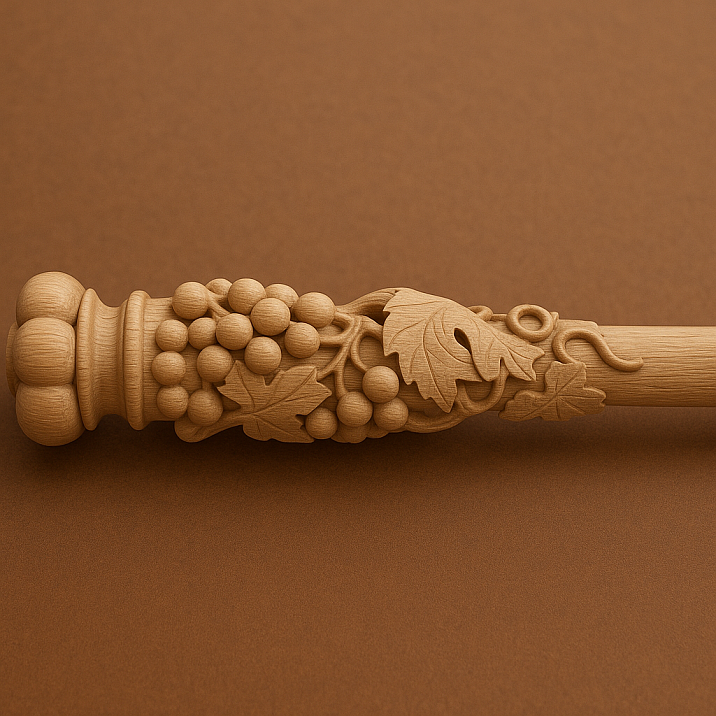
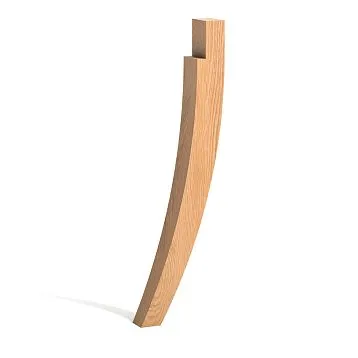
There are materials that seem to have been created by nature to become works of art in the hands of a master. Beech balusters — a striking example. This European tree species possesses a unique combination of strength, flexibility, and aesthetic appeal, making it the ideal choice for creating refined staircase railings.
When you first touch a polished buckthorn baluster, you immediately feel its special warmth and smoothness. The fine-grained structure of the wood creates tactile sensations that are impossible to confuse with anything else. Each fiber seems imbued with the history of European forests, where these majestic trees grew for centuries.
In the world of modern interior design, buckthorn balusters occupy a special place. They can seamlessly fit into both classic country house interiors and modern minimalist city apartment settings. The secret to this versatility lies in buckthorn’s remarkable ability to take on any shade during toning while preserving its distinctive texture.


Natural uniqueness: what makes buckthorn a special material
European buckthorn is not just wood—it is a living history of the continent, captured in its annual rings. Growing in the temperate climate of Central and Western Europe, buckthorn forests have formed over millennia, creating wood with exceptional characteristics.
The density of buckthorn wood is 680 kilograms per cubic meter at standard moisture content of 12%. This makes it one of the densest among European hardwoods, providing balusters with exceptional strength and durability. At the same time, the material remains sufficiently flexible to create complex decorative shapes.
The structural features of buckthorn are impressive for their harmony. Small pores are evenly distributed throughout the wood’s thickness, creating a uniform texture without abrupt transitions. The heartwood rays, visible as shiny stripes on radial cuts and as characteristic kidney-shaped patterns on tangential cuts, form a unique pattern on each baluster.
The natural color palette of buckthorn ranges from soft cream to pinkish-brown tones. Young wood has light tones with a slight yellowish tint, while mature wood develops more saturated pink hues. Especially prized is steamed buckthorn, which, after thermal treatment, acquires a uniform reddish-brown color.
The mechanical properties of buckthorn wood impress even experienced masters. The compressive strength along the grain reaches 62 MPa, comparable to oak. At the same time, buckthorn has an outstanding ability to bend—precisely why it is so valued by manufacturers of bent furniture.




Technological advantages: why masters choose buckthorn
Working with buckthorn wood is a true pleasure for any master. The material possesses a unique combination of properties that make it ideal for manufacturing balusters of the most complex shapes.
Our factory also produces:


Workability: from rough stock to masterpiece
Turning buckthorn wood poses no difficulties even for novice craftsmen. The wood cuts easily, does not splinter, and does not leave marks. The cutters leave a clean, smooth surface that requires minimal subsequent finishing. This is especially important when manufacturing balusters with complex profiles and numerous decorative elements.
Milling buckthorn blanks allows creating elements with jewel-like precision. The material does not tear even when machined against the grain, which is critically important for creating quality mortises and tenons. Modern CNC machines are capable of producing from buckthorn balusters of incredible complexity and beauty.
Sanding buckthorn surfaces is a fast and effective process. The fine-grained structure of the wood allows achieving ideal smoothness even with medium-grit abrasives. Final finishing with 320-400 grit abrasive imparts a silk-like smoothness that is pleasant to feel by touch.
Get Consultation
Gluing and joints: reliability for decades
Beech joints are exceptionally strong. The porous structure of the wood allows the glue to penetrate deeply, creating bonds that are often stronger than the wood itself. This is especially important when manufacturing composite balusters or when extending the length of stock pieces.
Mechanical joints — dowels, mortises, and tenons — hold exceptionally well in beech wood. The material does not crack when driving dowels or screwing in self-tapping screws, significantly simplifying the assembly of stair railings.
Metal fasteners hold securely in beech due to the wood's optimal density. At the same time, the material is not so hard as to require pre-drilling all holes, as is the case with oak.
Aesthetic qualities: beauty in every detail
The visual appeal of beech balusters is the result of multiple factors, each contributing to an overall impression of elegance and sophistication.
Texture: natural harmony
The growth rings in beech wood are softly and delicately expressed, creating a barely noticeable yet very elegant pattern. Unlike contrasting species such as ash or oak, beech displays restrained elegance that never tires or goes out of fashion.
Heartwood rays form a characteristic "spotted" texture, especially noticeable on radial cuts. These natural inclusions create play of light and shadow on the baluster surfaces, giving them liveliness and dynamism.
The uniformity of the structure allows for creating balusters with predictable and stable appearance. This is especially important when manufacturing sets of multiple elements — all balusters will look harmonious, without sharp differences in color or texture.
Staining possibilities: from classic to avant-garde
The natural color of beech is beautiful on its own, but the material's true potential is revealed through staining. The light, almost white wood serves as an ideal base for any color solution.
Classic shades — from golden oak to rich walnut — are easily achieved using water-based or spirit-based stains. The uniform porosity of beech ensures even staining without streaks or blotches.
Modern solutions include staining in gray, black, or even colored tones. Thanks to its neutral base, beech accepts any color beautifully while retaining its characteristic texture.
Steam treatment — a traditional European technology that allows achieving an even reddish-brown tone without using chemical dyes. Such beech is especially prized in classic interiors.
Practical characteristics: reliability proven over time
Choosing Beech balusters For your home, it is important to understand their operational characteristics and behavior under various conditions.
Strength and Durability
The mechanical strength of beech balusters is comparable to oak, but the material is less prone to cracking. The bending strength is 120 MPa, which is more than sufficient for any stair load.
The impact toughness of beech is 0.96 J/cm², ensuring resistance to accidental impacts and mechanical stress. Balusters do not chip under minor damage and are easily repairable locally.
The material's wear resistance is high due to its dense structure. The surface of balusters retains its original smoothness for a long time even under intensive stair use.
Dimensional stability is one of beech's main advantages. The shrinkage coefficient is 0.47, which is less than that of oak. This means beech balusters are less prone to deformation when humidity changes.
Operating Features
Beech's moisture resistance requires special attention. The material actively absorbs moisture from the surrounding air, so it needs quality protective treatment. Properly treated beech balusters serve excellently in ordinary living spaces.
Beech's biological resistance is moderate — the material belongs to the group of medium-resistance species. However, when used in dry indoor spaces, problems with biological damage are practically eliminated.
High temperature stability. Beech withstands temperature fluctuations within room conditions well, without deformation or cracking.
Design solutions: styles and directions
Beech's versatility as a baluster material is demonstrated by its ability to adapt to any stylistic solution.
Classic styles
Baroque and Rococo find in beech the ideal partner for realizing complex decorative forms. The material's plasticity allows creating balusters with numerous fine details — moldings, fluting, rosettes, and other elements.
Neoclassicism values beech for its ability to take on strict, geometrically correct forms. The material allows creating balusters with sharp edges and acute angles, characteristic of this style.
Classicism uses the natural beauty of beech wood, emphasizing its noble simplicity. Beech balusters in the classical style are distinguished by restrained elegance and flawless proportions.
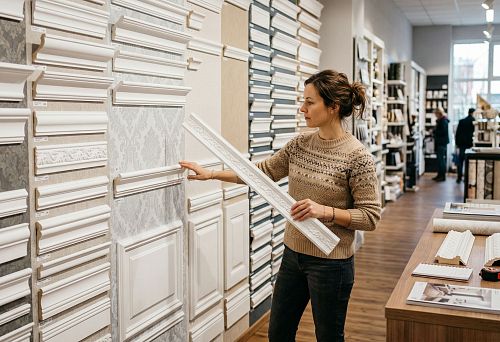
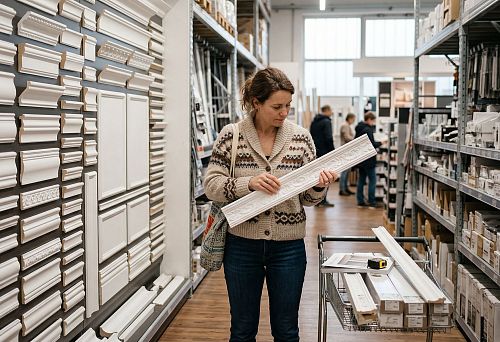
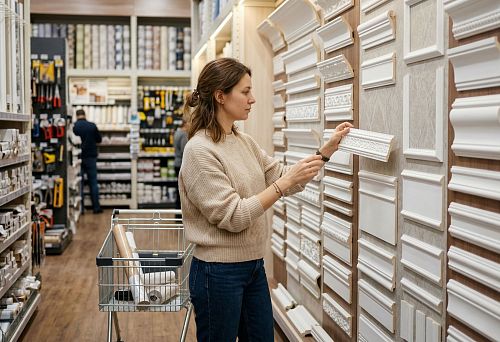
Modern interior styles also use oak skirting boards, but in a different interpretation. Minimalism prefers simple rectangular profiles without decorative elements. Smooth surfaces with matte finish create a sense of strictness and elegance.
Minimalism values beech for its ability to create clean, minimalist forms. Simple geometric balusters made of light beech fit perfectly into modern interiors.
Scandinavian style finds in beech the embodiment of its principles — naturalness, functionality, comfort. Light beech balusters create an atmosphere of northern restraint and coziness.
Eco-style uses the natural beauty of beech, emphasizing its origin in nature. Balusters with minimal processing, coated with transparent oils, showcase the full beauty of natural wood.
Manufacturing Technologies: from blank to finished product
The process of creating high-quality beech balusters involves numerous technological operations, each of which affects the final result.
Material Preparation
Wood drying is a critically important stage. Beech must be dried to a moisture content of 8-12% in special chambers with controlled conditions. Improper drying may lead to internal stresses and subsequent cracking of the finished product.
Blank selection is performed with great care. Only healthy wood without knots, cracks, or other defects is used for balusters. The grain direction must be strictly longitudinal to ensure maximum strength.
Blanks are acclimatized in the production facility for at least 48 hours. This allows the wood to reach equilibrium moisture content and prevents deformation during processing.
Mechanical processing
Rough processing includes cutting blanks to size and preliminary planing. At this stage, the basic dimensions of future balusters are formed with allowances for subsequent processing.
Turning is the main shaping process. Modern turning machines with copying devices ensure identical balusters in each batch. Cutting speed is individually adjusted for each profile.
Milling is used to create complex elements not achievable through turning. Multi-axis milling centers allow creating balusters with flat faces, grooves, and relief patterns.
Hand finishing includes smoothing transitions, sanding hard-to-reach areas, and final dimension adjustment. Experienced craftsmen are able to perfect each baluster.
Final finishing
Sanding is performed in several stages with gradually decreasing abrasive grit. Final sanding with 320-400 grit abrasive imparts an ideal smoothness to the surface.
Dust removal is performed using compressed air or special cloths. The quality of subsequent finishing directly depends on surface cleanliness.
Sealing improves adhesion of finish coatings and equalizes the wood’s absorption capacity. Special sealers are used for beech, taking into account the species’ characteristics.
Installation and mounting: professional secrets
Correct installation of beech balusters requires understanding the material’s properties and adherence to proven technologies.
Preparation Work
Balusters must be acclimatized in the installation room for at least 72 hours. This is especially important for beech, which actively reacts to changes in humidity.
Dimensional inspection includes checking height, diameters, and end perpendicularity. Any deviations must be corrected before installation begins.
Installation marking is performed using a laser level and special templates. The accuracy of marking determines the quality of the entire structure.
Methods of mounting
Screwed connection ensures maximum strength. A metal screw M6 or M8 is screwed into the baluster’s end to a depth of 40-50 mm and secured in the base using adhesive.
Dowel connection uses wooden dowels with a diameter of 10-12 mm. This method ensures an environmentally clean connection and allows for disassembly.
Angled screws provide a quick connection method suitable for temporary structures. Four screws 80-90 mm long are screwed in at an angle of 30-40 degrees.
Quality control
Each baluster’s verticality is checked using a plumb bob or laser level. Deviations exceeding 2 mm are not permitted.
Uniformity of distances between balusters is controlled using a tape measure. All gaps must be equal.
Strength of connections is checked by gentle shaking. Any movement indicates poor installation.
Care and Maintenance: Preserving Beauty for Years
Beech balusters retain their beauty and functionality for decades with proper care.
Regular Maintenance
Dry cleaning is performed using soft cloth or special cloths. Dust is removed with motions along the wood grain.
Wet cleaning is performed using slightly damp cloth with special wood cleaning agents. Excess moisture is not permitted.
Humidity in the room must be maintained at 45-65%. Sudden humidity fluctuations may lead to deformation.
Periodic maintenance
Finish renewal is required every 3-5 years depending on usage intensity. Lacquer finishes are renewed less frequently, while oil-based finishes require more frequent renewal.
Damage repair must be performed immediately. Minor scratches are removed using polishing pastes; deep scratches require partial resanding.
Preventive inspections allow identifying problems at an early stage and preventing serious damage.
Economic aspects: investment in quality
Cost beech balusters reflects high material quality and complex processing.
Pricing Factors
Profile complexity is the main factor affecting cost. Simple cylindrical balusters are significantly cheaper than intricately carved items with complex shapes.
Material quality includes wood grade, drying method, and absence of defects. Higher grade costs more but ensures flawless appearance.
Order volume affects the price per unit. Large batches are cheaper due to savings from equipment setup.
Urgency of manufacturing may increase cost by 20-30%. Standard lead times are 2-3 weeks.
Long-term savings
The longevity of beech balusters ensures long-term cost savings. Quality items last 30-50 years without replacement.
Repairability allows restoring damaged elements without full replacement. Local repairs are much cheaper.
Increased property value — quality beech balusters enhance a home’s appeal on the market.
Comparison with Other Materials
Beech holds a special place among materials for baluster production, combining the best qualities of various species.
Advantages over coniferous species
Beech strength is 2-3 times higher than that of pine or spruce. This ensures greater durability and structural reliability.
Dimensional stability is significantly better. Beech balusters deform less with changes in humidity.
Surface quality after processing is incomparably higher. Fine-grained structure allows achieving perfect smoothness.
Comparison with oak
Beech is easier to process due to lower hardness. This reduces tool wear and simplifies manufacturing.
Beech balusters cost less than oak ones at comparable quality. This makes beech a more accessible material.
Beech’s stainability surpasses oak. Light-colored wood takes on any shade more easily.
Features compared to ash
Beech’s structural uniformity is higher. This ensures more predictable results during processing.
Beech is less prone to cracking. The material is more stable during drying and use.
Decorative possibilities are broader due to the neutral texture that does not conflict with various styles.
Conclusion
Beech balusters represent the ideal combination of European quality, aesthetic appeal, and practicality. This material, proven over time in the most demanding European interiors, is now available to Russian consumers.
Choosing beech balusters is investing in the longevity, beauty, and comfort of your home. Every detail crafted from this noble wood carries a piece of European culture and craftsmanship tradition.
Modern processing technologies allow us to unlock all potential of beech, creating items that meet the most demanding requirements. From simple, minimalist forms to intricate carved compositions — beech can realize any design concept.
Properly manufactured and installed beech balusters will become a home decoration for many decades. Their warm, pleasant-to-touch surface will daily remind you of the right choice you made.
Investments in quality beech balusters pay off not only in longevity and beauty, but also in increased overall property value. A home with quality wooden elements will always be valued higher on the market.
For many years, STAVROS has specialized in creating exclusive items from natural wood. Our masters are skilled in beech processing technologies and are ready to create balusters of any complexity. We understand that each project is unique, and we approach our work with maximum attention to detail, ensuring a result that exceeds your expectations.