Article Contents:
- Historical Excursion: Balusters Through the Centuries
- Historical Excursion: Balusters Through the Centuries
- Role of Balusters in Modern Interior Design
- Variety of Balusters: Materials, Forms, Styles
- Materials of Manufacture: From Wood to Glass
- Forms and Configurations: From Classicism to Avant-Garde
- Stylistic Solutions: Choosing Balusters to Match Your Interior
- Where to Buy Balusters: Market Overview and Recommendations
- Specialized Stores: Advantages of a Professional Approach
- Construction Hypermarkets: Accessibility and Wide Selection
- Online Stores: Convenience and Time Savings
- Custom Manufacturers: Exclusive Solutions
- Criteria for Choosing a Seller: What to Pay Attention To
- Technical Aspects of Choosing Balusters
- Dimensions and Proportions: Important Parameters for Safety
- Loads and Strength: Calculations for Longevity
- Installation and Mounting: From Theory to Practice
- Economic Aspects of Choosing Balusters
- Price Range: From Budget to Premium Solutions
- Price-to-Quality Ratio: What You Can and Cannot Save On
- Calculating Required Quantity and Order Configuration
- Maintenance and Operation: Extending the Lifespan of Balusters
- Care Specifics for Different Materials
- Restoration and Renewal: A Second Life for the Staircase
- Replacing Damaged Elements: When Restoration Is Not Possible
- Creative Ideas for Using Balusters in Interior Design
- Non-Standard Applications: From Furniture to Decor
- Balusters in Various Interior Styles: From Classic to High-Tech
- Designer Solutions: Inspirational Examples
- Conclusion: Choosing balusters wisely
where to buy balusters that will become not just functional details, but true ornaments of your home? Let's explore this question, diving into the amazing world of staircase architecture.What makes stair railings not just functional elements, but true decor for your home? Let's explore this question by diving into the amazing world of staircase architecture.


Balusters: from history to modernity
Before deciding, that will become not just functional details, but true ornaments of your home? Let's explore this question, diving into the amazing world of staircase architecture. For your home, it's worth getting acquainted with the history of these architectural elements and understanding their significance in modern design.




Historical excursion: balusters through the centuries
The word 'baluster' comes from the Italian 'balaustro', meaning 'wild pomegranate'. The first balusters, appearing in Renaissance architecture, resembled the shape of a pomegranate flower. However, similar elements were used even in ancient Assyria and Babylon, where they adorned palaces and temples.
In the Renaissance, balusters experience a true flowering. Great Italian architects such as Bramante and Palladio actively used them in their projects. Balustrades (railings made of balusters) become an indispensable part of palaces, villas, and public buildings.
Baroque and Rococo introduce opulence and extravagance into baluster design. They are adorned with intricate carved patterns, gilding, and inlays. Classicism, on the contrary, returns balusters to strictness and simplicity of form, inspired by ancient models.
In the Victorian era, balusters become a mandatory element of residential architecture. Even in middle-class homes, staircases are adorned with carved wooden balusters, demonstrating the status and taste of the owners.
Modernism and Art Deco experiment with forms and materials. Metal balusters with smooth, flowing lines, glass, and combined variants appear.
Today, balusters are experiencing a new rebirth. Modern technologies allow creating them from various materials, experimenting with forms and textures, combining tradition and innovation.
Our factory also produces:


Role of balusters in modern interior design
In modern design, balusters perform not only a functional, but also an important aesthetic role:
- Create an architectural accent. A staircase with beautiful balusters becomes a central element of the interior, attracting attention and setting the tone for the entire space.
- Highlight the style. The shape, material, and finish of balusters can either support the overall interior style or create an interesting contrast. Classic, finely carved wooden balusters will fit perfectly into a traditional interior, minimalist metal ones into a modern one, and combinations of materials can become a distinctive feature of an eclectic space.
- Zone space. In open floor plans, balustrades with balusters are often used to visually separate functional zones without erecting walls.
- Create play of light and shadow. This is especially noticeable when using delicate metal or carved wooden balusters, which cast expressive shadows under certain lighting conditions.
- Demonstrate the status and taste of the owner. High-quality, skillfully crafted balusters made of precious wood or with artistic forging have always been a sign of prestige and good taste.
Get Consultation
Variety of balusters: materials, forms, styles
Before deciding, that will become not just functional details, but true ornaments of your home? Let's explore this question, diving into the amazing world of staircase architecture.it is important to understand their variety and choose a variant that perfectly suits your interior.
Materials of manufacture: from wood to glass
Wooden balusters - classic and most common option. Their advantages:
- Naturalness and eco-friendliness
- Warm, pleasant to the touch surface
- Wide possibilities for carving and decorative processing
- Ability to match the color of flooring and other wooden interior elements
- Durability with proper care (the service life of quality wooden balusters can exceed 50 years)
For making wooden balusters, various types of wood are used:
- Oak - distinguished by high strength, beautiful texture, and durability (density 700-800 kg/m³)
- Beech - a hard wood with uniform structure, well-suited for turning (density 650-750 kg/m³)
- Ash - a strong, elastic material with a distinctive texture (density 650-750 kg/m³)
- Spruce - an affordable material with a characteristic ring pattern (density 400-500 kg/m³)
- Larch - distinguished by high resistance to moisture and decay (density 550-700 kg/m³)
- Exotic woods (redwood, wenge, merbau) - used to create exclusive, luxurious staircases
Metallic balusters are becoming increasingly popular due to their unique properties:
- Exceptional strength and durability
- Ability to create complex, intricate designs
- Modern, stylish appearance
- Resistance to moisture and temperature fluctuations
- Variety of finishes (chrome, bronze, patina, powder coating)
Metallic balusters are made from:
- Steels - strong, affordable material (density around 7850 kg/m³)
- Stainless steel - resistant to corrosion, has a modern look (density 7700-8000 kg/m³)
- Wrought iron - allows for creating unique artistic pieces
- Aluminum - lightweight material, resistant to corrosion (density 2700 kg/m³)
- Brass - alloy with a noble golden hue (density 8400-8700 kg/m³)
Glass balusters - a modern solution for minimalist and high-tech interiors:
- Visual lightness, creating an effect of a 'floating' staircase
- Light transmission, which is especially important in small spaces
- Ability to use various types of glass (clear, frosted, tinted, patterned)
- Safety (uses tempered glass 10-12 mm thick or triplex)
- Ease of maintenance
Combined balusters combine different materials:
- Wood and metal - classic combination, where wooden elements are complemented by metal inserts
- Metal and glass - modern solution, where a metal frame is complemented by glass panels
- Stone and metal - luxurious combination for classic interiors
Polymer balusters - a modern alternative to traditional materials:
- Lightweight (density 900-1200 kg/m³)
- Resistance to moisture and temperature fluctuations
- Ease of installation
- Affordable price
- Ability to imitate various materials (wood, stone, metal)
Shapes and configurations: from classic to avant-garde
The shape of balusters largely determines the style of the staircase and its harmony with the overall interior design:
Classic turned balusters have a symmetrical shape with a characteristic expansion in the middle (urn-shaped). They can be:
- Simple, with minimal decorative elements
- Complex, with numerous transitions, grooves, and protrusions
- With square, rectangular, or multi-faceted bases
- With circular cross-section throughout the length
Straight balusters have the shape of posts with constant cross-section:
- Square (section sizes typically 40×40, 50×50, 60×60 mm)
- Rectangular (typical sizes 30×50, 40×60 mm)
- Round (diameter 40-60 mm)
- Multi-faceted
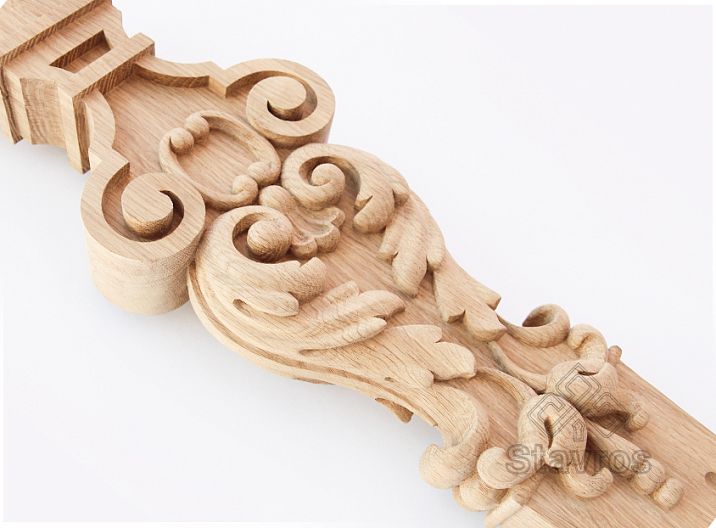
Carved decorative balusters are adorned with various decorative elements:
- Plant motifs (leaves, flowers, grapevines)
- Geometric patterns
- Animal motifs
- Architectural elements
Wrought metal balusters can have the most diverse shapes:
- Spiral-shaped
- With plant motifs
- With geometric patterns
- With abstract forms
Modern designer balusters often deviate from traditional forms:
- Slanted
- Curved
- Asymmetric
- With non-standard cross-section
Stylistic solutions: selecting balusters to match the interior
The choice of balusters should correspond to the overall interior style:
Classic style implies the use of:
- Symmetrical turned wooden balusters from precious wood species
- Wrought iron balusters with plant motifs
- Marble or plaster balusters for especially luxurious interiors
Neoclassicism allows for more restrained options:
- Minimalist turned balusters with little decoration
- Combination of wood and metal
- Balusters with simple geometric forms
Country and Provence lean towards:
- Simple wooden balusters with a light patina
- Balusters with an aged effect
- Wooden elements painted in white or pastel tones
Modern style prefers:
- Straight balusters of simple forms
- Metallic or glass elements
- Combined Solutions
Minimalism and high-tech choose:
- Glass panels instead of traditional balusters
- Thin metal posts
- Horizontal elements instead of vertical ones
Loft leans towards:
- Rough metallic balusters
- Industrial elements (pipes, reinforcement)
- Unfinished wood combined with metal
Art Deco prefers:
- Geometric shapes
- Contrasting material combinations
- Elements with metallic sheen
Where to buy balusters: market overview and recommendations
Once you have decided on the material, shape, and style of balusters, a natural question arises: that will become not just functional details, but true ornaments of your home? Let's explore this question, diving into the amazing world of staircase architecture.which will perfectly suit your interior? Let's consider the main options with their advantages and disadvantages.
Specialized stores: advantages of a professional approach
Specialized stores, such as the company "Stavros", offer a wide range balusters for staircases of different types, materials, and designs. Their advantages:
- Professional consultation. Experienced specialists will help you select balusters perfectly matching your requirements, interior style, and staircase construction features.
- Guaranteed quality. Specialized stores value their reputation and offer only certified products from trusted manufacturers.
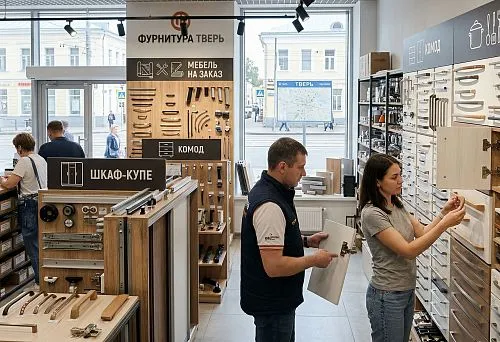
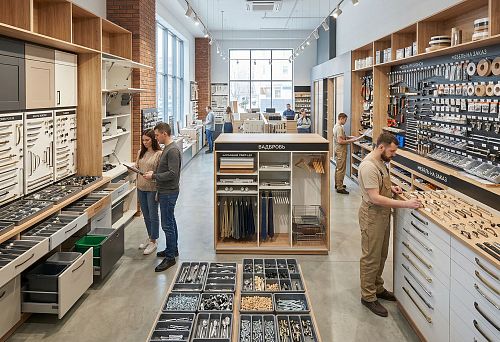
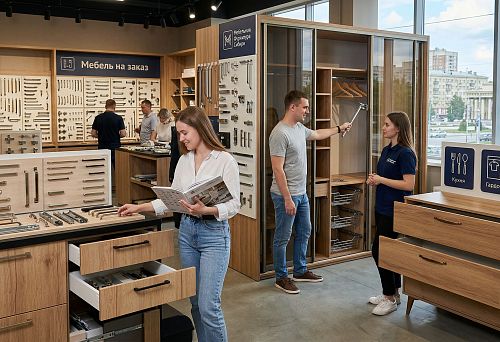
- Ability to see samples in person. Showrooms display samples of various balusters, allowing you to assess their appearance, material quality, and finish.
- Comprehensive solutions. In addition to balusters, you can purchase all necessary staircase components (handrails, treads, risers, stringers) in a unified style and compatible materials.
- Additional services. Many specialized stores offer services including design, custom manufacturing, delivery, and installation of staircases.
In the company "Stavros" there is a rich assortment of solid wood balusters of various wood species (oak, beech, ash, pine). Each item features high-quality processing, precise geometric dimensions, and an aesthetically pleasing appearance.
Construction hypermarkets: accessibility and wide selection
Large construction hypermarkets (Leroy Merlin, OBI, Castorama) also offer balusters of various types. Their advantages:
- Accessibility. Stores are located in most major cities, often operate on weekends, and have convenient operating hours.
- Wide range of complementary products. Here you can purchase not only balusters but also all necessary materials for installing and finishing the staircase.
- Regular promotions and discounts. Large chains often hold sales and special offers.
- Return policy. If the item does not suit you, it is usually possible to return it within a certain period.
However, it should be noted that the selection of balusters in construction hypermarkets is usually limited to standard models, and the quality of consultation may be inferior to specialized stores.
Online stores: convenience and time-saving
For those who value their time and prefer to shop from home, online stores will be an excellent solution:
- Convenient selection. Catalogs with detailed descriptions, photos, and technical specifications allow you to compare different models.
- Time-saving. There is no need to visit stores — all purchases are made in a few clicks.
- Home delivery. Ordered balusters will be delivered to the specified address at a convenient time.
- Wide geographic coverage. You can order items not available in local stores.
Company "Stavros" offers a convenient online catalog where you can select and order balusters with delivery. The website features photos of the items, their dimensions, materials used, and other technical specifications.
Custom manufacturers: exclusive solutions
If you did not find balusters in the ready-made assortment that match your vision of the ideal staircase, you can contact manufacturers who produce items to order:
- Uniqueness. You receive exclusive balusters that no one else has.
- Exact compliance with requirements. Items are manufactured taking into account all your preferences and specific features of the staircase.
- High quality. Masters specializing in baluster production usually have high qualifications and use quality materials.
- Ability to implement complex design solutions. Experienced masters can bring the most daring ideas to life.
However, it should be noted that custom baluster production usually costs more and takes more time than purchasing ready-made items.
Criteria for choosing a seller: what to pay attention to
When choosing a place, that will become not just functional details, but true ornaments of your home? Let's explore this question, diving into the amazing world of staircase architecture.pay attention to the following criteria:
- Reputation and experience. Prefer companies with a good reputation and long-standing experience in the market.
- Assortment. A wide selection of balusters of various types, materials, and designs will allow you to find the optimal option.
- Product quality. Pay attention to the quality of materials, precision of processing, and presence of certificates.
- Prices and payment terms. Compare prices among different sellers, clarify the possibility of installment payments or discounts for bulk orders.
- Additional services. Find out if the company offers delivery, installation, and warranty service.
- Customer reviews. Study reviews from other buyers to form an objective opinion about the seller.
Technical aspects of baluster selection
In addition to aesthetic characteristics, when selecting balusters, it is necessary to consider technical aspects that ensure the safety, durability, and functionality of the staircase.
Dimensions and proportions: important parameters for safety
Baluster dimensions must comply with certain safety and ergonomics standards:
- Baluster height is usually 900-1000 mm from the step level to the top surface of the handrail. This is sufficient to prevent accidental falls, yet does not create a sense of enclosure.
- The distance between balusters is a critically important safety parameter, especially if there are small children in the house. According to building codes, this distance should not exceed 100 mm to prevent a child from slipping between balusters.
- Baluster thickness depends on the material and design:
- Wooden turned balusters usually have a diameter of 40-60 mm at their thinnest part
- Square wooden balusters - cross-section 40×40 or 50×50 mm
- Metal balusters can be thinner (from 12 mm) due to the high strength of metal
- The length of balusters is calculated individually for each staircase, taking into account the height of the steps, the slope of the flight, and the structure of the railing.
- Proportions are important not only aesthetically but also practically. Too thin balusters may be insufficiently strong, while overly heavy ones may visually weigh down the staircase and impede movement.
Loads and strength: calculations for longevity
Balusters must withstand certain loads to ensure safety during staircase use:
- The horizontal load on the staircase railing (including balusters) should be at least 0.3 kN/m (approximately 30 kg per linear meter) for residential buildings and at least 0.8 kN/m for public buildings.
- The strength of the baluster material must meet these requirements:
- Hardwood (oak, beech, ash) has a bending strength of 90-110 MPa
- Spruce - about 80 MPa
- Steel - 370-450 MPa
- Aluminum alloys - 150-300 MPa
- The method of attaching balusters also affects the overall strength of the structure. Balusters can be attached:
- To treads and handrail (most common option)
- To stringer and handrail
- To special base (baluster support) and handrail
- The calculation of the number of balusters is performed taking into account safety requirements and structural features of the staircase. Usually, 2-3 balusters are required per step.
Installation and mounting: from theory to practice
Correct baluster installation is the key to staircase safety and longevity:
- Preparatory work:
- Accurate measurements
- Marking baluster installation locations
- Preparing tools and materials
- Ways to mount wooden balusters:
- On peg (the baluster has a peg that is inserted into a hole in the tread and handrail)
- On dowel (wooden dowels are inserted into the ends of the baluster and at the mounting points)
- On self-tapping screws with subsequent concealment of mounting points
- To special fastening elements (e.g., "screws")
- Mounting metal balusters:
- By welding (for steel balusters)
- On threaded connections
- To special fastening elements (flanges, "sleeves")
- Installation of glass panels:
- In special profiles
- On point fasteners
- On clamping elements
- Final finishing:
- Sanding wooden balusters
- application of protective coatings
- Painting or varnishing
Company "Stavros" offers not only to buy balustersbut also professional consultation on their installation. Company specialists will help calculate the required number of balusters, select the optimal mounting method, and provide installation recommendations.
Economic aspects of baluster selection
When choosing, that will become not just functional details, but true ornaments of your home? Let's explore this question, diving into the amazing world of staircase architecture.When considering them, it is important to take into account not only their appearance and technical characteristics, but also economic aspects.
Price range: from budget to premium solutions
The cost of balusters may vary significantly depending on the material, design complexity, manufacturer, and other factors:
- Wooden balusters:
- From pine: 300-800 rubles per piece
- From beech: 700-1500 rubles per piece
- From oak: 1000-2500 rubles per piece
- From exotic species: from 2000 rubles per piece
- Carved, with artistic finish: from 2500 rubles per piece
- Metallic balusters:
- Simple steel: 500-1200 rubles per piece
- From stainless steel: 1000-2500 rubles per piece
- Wrought: 1500-5000 rubles per piece
- With artistic forging: from 3000 rubles per piece
- Glass elements:
- Standard glass panels: 2000-5000 rubles per sq. m
- Decorative, with engraving or pattern: from 5000 rubles per sq. m
- Combined balusters:
- Wood with metal inserts: 1000-2500 rubles per piece
- Metal with glass elements: 1500-3500 rubles per piece
- Polymer balusters:
- Simple models: 300-700 rubles per piece
- With wood or stone imitation: 500-1200 rubles per piece
When calculating the total cost, it is necessary to consider that a standard staircase in a two-story house requires 20-40 balusters (depending on the staircase construction and spacing between balusters).
Price-to-quality ratio: what you can and cannot save on
When choosing balusters, it is important to find the optimal price-to-quality ratio:
- What you cannot save on:
- Material quality — this affects the safety and longevity of the staircase
- Manufacturing accuracy — inaccurate dimensions will cause problems during installation
- Surface finish quality — this affects the appearance and tactile feel
- Reliability of fastening elements - this determines the safety of the structure
- Where you can optimize expenses:
- Choosing a more affordable wood species and staining it instead of expensive exotic species
- Using standard models instead of exclusive designer solutions
- DIY installation (if you have the appropriate skills)
- Purchasing balusters during seasonal sales or special offers
- Long-term savings:
- Investments in high-quality balusters made of strong materials pay off due to their longevity
- Classic design remains relevant for decades, eliminating the need for replacement due to outdated style
- Quality balusters increase property value when selling
Calculation of required quantity and order configuration
Before to buy balusters, it is important to correctly calculate their required quantity:
- Measuring the railing length. Measure the total length of the staircase railing, including horizontal sections on landings.
- Determining the installation spacing. The baluster installation spacing (distance between centers) is typically 120-150 mm to ensure safety.
- Calculation of balusters. Divide the total fence length by the installation spacing and add 1 (for the first baluster). For example, for a 6-meter fence with 150 mm spacing, you will need: 6000 ÷ 150 + 1 = 41 balusters.
- Consideration of structural features. If the staircase has turns, curves, or other features, the calculation may require adjustment.
- Safety margin for defects or damage. It is recommended to order 5-10% more balusters than the calculation indicates.
When ordering, do not forget about additional components:
- Handrails (rails)
- Starting posts
- Turning elements
- Caps and decorative elements
- Fastening materials
Company "Stavros" offers comprehensive solutions for staircases, including all necessary elements, executed in a unified style and made from compatible materials. Company specialists will help correctly calculate the quantity balusters for staircase and select all necessary components.
Maintenance and operation: extending the life of balusters
Proper care of balusters will help maintain their attractive appearance and functionality for many years.
Care specifics for different materials
Each material requires a specific care approach:
Wooden balusters:
- Regular cleaning from dust using a soft dry cloth or special brush.
- Periodic application of wood polish (1-2 times per year) to maintain shine and protect the surface.
- Protection from moisture - wipe wet marks immediately after they appear.
- Renew protective coating (varnish, oil, wax) every 3-5 years or as needed.
- Avoid direct sunlight, which may cause fading and cracking of the wood.
Metallic balusters:
- Remove dust with soft cloth or slightly damp sponge.
- Clean fingerprints and dirt with special metal cleaning agents.
- For stainless steel - periodic polishing with special compounds to maintain shine.
- For painted metal surfaces - gentle cleaning without abrasive materials.
- For wrought elements with patina - only dry cleaning without chemical agents.
Glass elements:
- Regular cleaning with ammonia-free glass cleaning agents.
- Remove fingerprints with microfiber cloth.
- Avoid impacts and mechanical damage that may cause cracks or chips.
Polymer balusters:
- Clean with a damp cloth and mild detergent.
- Avoid abrasive materials and aggressive chemical agents.
- Protection against prolonged exposure to direct sunlight, which may cause fading.
Restoration and renewal: a new life for the staircase
Even high-quality balusters may lose their attractive appearance over time. Restoration will restore their original beauty:
For wooden balusters:
- Sanding to remove old finish and damaged wood layers.
- Repairing defects (cracks, chips) using wood putty.
- Staining to refresh or change color.
- Applying protective coating - varnish, oil, or wax.
For metal balusters:
- Removing rust and old paint mechanically or chemically.
- Priming to prevent corrosion.
- Painting or applying decorative coatings.
- Polishing to restore shine (for chrome or stainless steel surfaces).
For composite balusters:
- Disassembly (if possible) for individual treatment of each material.
- Restoration of each element using appropriate methods.
- Reassembly with replacement of damaged fasteners.
Replacement of damaged elements: when restoration is not possible
In some cases, restoration is impossible or economically unfeasible, and replacement of damaged balusters is required:
- Assessment of condition - determine which balusters require replacement.
- Selecting similar elements - it is important to find balusters that closely match existing ones in size, shape, and material.
- Dismantling damaged balusters:
- For wooden balusters with dowels - careful removal from mortises
- For balusters with screws - unscrewing fasteners
- For glued-in balusters - may require cutting followed by drilling out remnants
- Installing new balusters following proper mounting techniques.
- Final finishing - staining, varnishing, or painting to ensure a uniform appearance of the entire railing.
If you have decided to replace damaged balusters, the company 'Stavros' will help select and purchase balustersA wide variety allows finding suitable options even for non-standard staircases.
Creative ideas for using balusters in interior design
Balusters are versatile elements that can be used not only for staircases but also for creating other interesting interior details.
Non-standard applications: from furniture to decor
With imagination, one can find numerous non-standard ways to use balusters:
- Furniture legs - turned balusters can become elegant legs for tables, chairs, armchairs, and consoles.
- Shelf supports - horizontally mounted balusters on the wall create original brackets for shelves.
- Bed frame - large balusters can be used as corner posts or decorative headboard elements.
- Desk lamps - hollow balusters can be transformed into original lamp bases by running electrical wiring inside.
- Curtain valances - wooden balusters cut along their length become decorative elements for valances.
- Hooks and hangers - small balusters mounted on the wall become stylish hooks for clothes.
- Canopies - tall balusters at the corners of the bed can serve as supports for canopies.
- Decorative columns - large balusters are used as decorative columns for space zoning.
Balusters in various interior styles: from classic to high-tech
Balusters can become a key element highlighting the interior style:
Classic style:
- Symmetrical turned balusters in dark wood
- White lacquered balusters with gold accents
- Wrought iron balusters with botanical motifs
Provence and country:
- Simple wooden balusters with a weathered effect
- Balusters painted in white or pastel tones
- Rough, as if hand-carved elements
Scandinavian style:
- Minimalist white balusters with simple shapes
- Combination of light wood and white metal
- Minimalist wooden posts
Loft:
- Industrial metal balusters
- Combination of raw wood and black metal
- Tubes and structural steel instead of traditional balusters
High-tech:
- Chrome-plated metal posts
- Glass panels instead of traditional balusters
- Cable railing systems
Art Deco:
- Geometric shapes with clear lines
- Contrasting material combinations
- Elements with metallic sheen (brass, bronze)
Designer solutions: inspiring examples
Let's consider several inspiring examples of baluster use in modern interiors:
- Contrasting staircase - black metal balusters on a white background create a graphic, expressive look, becoming the central element of a minimalist interior.
- Light installation - transparent glass balusters with built-in LED lighting transform the staircase into a true work of art, changeable in color by the owner's wish.
- Ecological style - unprocessed wooden balusters with irregular shapes, preserving the natural texture and form of wood, create a sense of closeness to nature.
- Artistic forging - forged balusters with a unique designer pattern turn the staircase into a true sculptural composition.
- Historical replicas - exact copies of balusters from historic buildings allow recreating the atmosphere of a specific era.
- Color accents - bright colored inserts in neutral balusters create a playful, dynamic mood.
- Ethnic motifs - balusters with carvings reflecting national ornaments and traditions add cultural depth and uniqueness to the interior.
Conclusion: choosing balusters wisely
Balusters are not just functional elements of stair railings, but important architectural details capable of transforming the interior, giving it individuality and style. Choosing the right balusters requires careful consideration and taking into account numerous factors—from interior style to safety requirements.
Once you have decided on the material, shape, and design of the balusters, you face the question: that will become not just functional details, but true ornaments of your home? Let's explore this question, diving into the amazing world of staircase architecture.Which ones will perfectly suit your home? The company "Stavros" offers a wide range of high-quality balusters made from various materials, professional consultation, and additional services that will make the selection and installation process as comfortable as possible.
Investing in quality balusters is an investment in the beauty, safety, and comfort of your home for many years to come. Choose wisely, considering not only current trends but also long-term prospects. Remember that properly selected balusters will become not just a functional element, but a true decoration of your interior, highlighting your taste and individuality.
Create unique, stylish staircases using balusters, experiment with shapes and materials, combine tradition and modernity - and your home will become a true reflection of your personality and taste.