Article Contents:
- Functional role of balusters in staircase construction
- Ensuring safety and protection against falls
- Structural support for handrails and reinforcement of construction
- Ergonomics and ease of staircase use
- Aesthetic role of balusters in interior design
- Balusters as a design accent element
- Creating stylistic unity and harmony in space
- Influence on spatial perception and lighting effects
- Variety of materials for baluster manufacturing
- Wooden balusters: classicism and natural beauty
- Metallic balusters: strength and modern style
- Glass balusters: lightness and modernity
- Combined solutions: play of contrasts and textures
- Stylistic solutions and design ideas
- Classic balusters: timeless elegance
- Modern Minimalist Solutions
- Rustic and country style: warmth and coziness
- Industrial style and loft: brutality and functionality
- Ethnic and exotic styles: vibrant individuality
- Technical aspects of baluster selection and installation
- Safety standards and regulatory requirements
- Calculation of baluster quantity and dimensions
- Methods of mounting and installation
- Maintenance and care of different types of balusters
- Innovative Solutions and Modern Trends
- New materials and production technologies
- Integration of lighting and smart technologies
- Ecological sustainability and development
- Practical recommendations for selecting balusters
- Assessment of home style and architecture
- Consideration of practical aspects of operation
- Balance between aesthetics and functionality
- Collaboration with professionals
- Conclusion: Creating a unique staircase with balusters
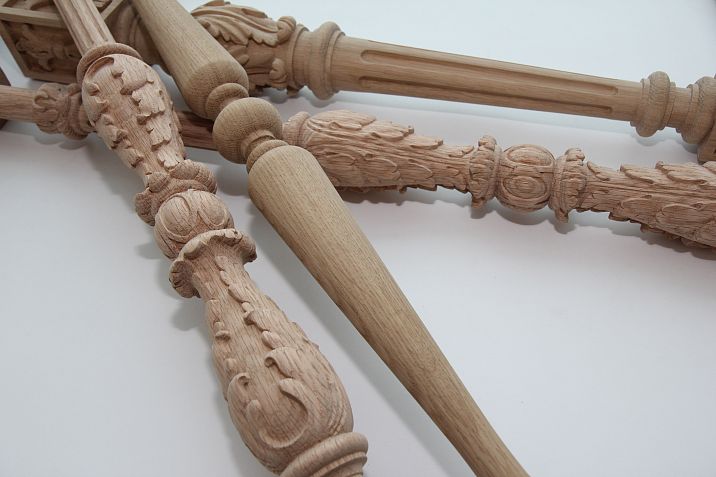
Creating the ideal staircase in a home is not just a construction process, but a true art, where every detail matters. At the heart of this art lie Balusters for staircase elements that simultaneously serve a functional role and become a key decorative accent of the entire structure. These elegant vertical posts, supporting the handrails, can transform an ordinary staircase into a work of art, give the interior a unique character, and become the signature of your home.
The art of creating balusters dates back to ancient times. The first images of these architectural elements were found on Assyrian reliefs, and they gained particular popularity during the Renaissance thanks to Italian masters, among whom was the legendary Michelangelo. Since then, balusters have become an indispensable part of humanity's architectural heritage, evolving alongside changes in styles and technologies.
Modern Balusters for staircase This is a unique combination of tradition and innovation, functionality and aesthetics. They not only ensure the safety and reliability of the structure, but also become a central design element capable of setting the tone for the entire interior. From classic carved forms to modern geometric solutions — the variety of styles and materials allows you to realize any design idea and create a staircase that will delight the eye for many years.


Functional significance of balusters in staircase construction
Despite their apparent decorative nature, Balusters for staircase they perform a number of critical functions without which a safe and reliable structure cannot be imagined. Understanding these functions helps appreciate the true value of this element and approach its selection with maximum responsibility.




Ensuring safety and protection against falls
The primary function of balusters is to create a reliable barrier preventing falls from the staircase. This is especially important in homes with children or elderly people. According to building codes, the distance between adjacent balusters must not exceed 15 cm — this prevents a child from slipping between them. The height of balusters is also regulated and must be at least 90 cm from the step level. These parameters are not arbitrary — they have been proven over many years of practice and ensure an optimal level of safety when using the staircase.
Properly installed balusters create a continuous barrier along the entire length of the staircase run, closing the space between the handrails and steps. This allows one to confidently lean on the handrails when ascending or descending, without fear of losing balance or slipping.
Our factory also produces:


Structural support of handrails and reinforcement of the structure
The second most important function of balusters is to ensure the structural integrity of the entire staircase railing. They serve as supports for the handrails, evenly distributing the load along the entire length of the staircase. Without sufficient numbers of balusters, the handrails could sag or even break under lateral loads.
Balusters create a rigid connection between the upper and lower parts of the railing, preventing the structure from loosening under intensive use. This is especially important for wooden staircases, where over time deformations may occur due to material shrinkage or changes in humidity.
Get Consultation
Ergonomics and ease of staircase use
Thoughtfully designed balusters contribute to comfortable and safe movement along the staircase. They create visual markers that help assess the distance and height of steps, which is especially important when descending. In addition, they form a psychological sense of security, allowing a person to feel confident even on steep or high staircases.
The placement and shape of balusters can affect the ease of gripping the handrails, which is especially important for people with limited mobility or the elderly. Properly selected balusters make using the staircase not only safe but also comfortable for all family members.
Aesthetic role of balusters in interior design
In addition to their functional load, Balusters for staircase they play a key role in shaping the aesthetic appearance of the entire room. The staircase often becomes the central element of the interior, and balusters — its most noticeable and expressive part.
Balusters as a design accent
Due to their placement and repeating rhythmic pattern, balusters inevitably attract attention and become an important accent in the space. Their shape, material, and finish can either support the overall interior style or create a striking contrast, becoming an independent artistic statement.
In classic interiors, elegant carved balusters with rich ornamentation emphasize the status and respectability of the home. In modern spaces, minimalist geometric forms or unusual materials of balusters can become a key element, defining the character of the entire room.
Creating stylistic unity and harmony in the space
Thoughtfully selected balusters help create a cohesive and harmonious interior image. They can echo with other decorative elements — furniture, door casings, cornices — creating a unified visual language of the space.
The role of balusters in creating stylistic unity is especially important in open-plan homes, where the staircase is visible from different zones. In such cases, balusters become a connecting element, unifying various functional spaces into a single whole.
Influence on the perception of space and lighting effects
The configuration and placement of balusters can significantly influence the perception of space. Heavy, closely spaced balusters create a sense of solidity and security, but may visually weigh down the interior. Light, openwork constructions with larger gaps, on the contrary, give the space a sense of airiness and lightness.
Balusters create a special effect when combined with natural or artificial lighting. Light passing through them forms expressive shadows and light patterns, adding depth and dynamism to the interior. This effect can be enhanced by using directional lighting or placing the staircase near windows.
Variety of materials for manufacturing balusters
Choosing the material for balusters is one of the key decisions that determine both the appearance and operational characteristics of the staircase. Each material has its unique properties, advantages, and application specifics.
Wooden balusters: classic and natural beauty
Wood remains the most popular material for making balusters due to its versatility, eco-friendliness, and aesthetic appeal. Wooden balusters fit organically into any interior — from classic to modern — creating an atmosphere of warmth and coziness.
For making balusters, various types of wood are used, each with its own characteristics:
Oak is one of the strongest and most durable materials. Oak balusters are characterized by high wear resistance, resistance to mechanical damage, and striking texture. They will serve for decades, maintaining their original appearance, and become a true heritage for future generations.
Beech is a dense and hard wood with a uniform structure that is easy to process and sand. Beech balusters have a smooth surface and elegant appearance, take stain and varnish well. However, they require protection from moisture, as beech wood is susceptible to rot.
Ash has a beautiful natural texture and high resistance to rot. Ash wood is easily bent, allowing for the creation of balusters with complex shapes. This material is especially valued for its combination of strength and elasticity.
Spruce is an affordable and easy-to-process material. Spruce balusters are distinguished by their democratic price and wide range of finishing options. With proper treatment using protective compounds, they can serve for many years while maintaining an attractive appearance.
Larch has high density and natural resistance to moisture and rot. Larch balusters are especially suitable for homes with high humidity or for outdoor staircases.
Wooden balusters can be turned (with a round cross-section) or milled (with square or rectangular cross-section), with or without carving. They are easily painted, stained, or varnished, allowing for diverse decorative effects and color matching with other interior elements.
Metallic balusters: strength and modern style
Metallic balusters are becoming increasingly popular due to their strength, durability, and variety of design solutions. They can be made from various metals:
Wrought iron — a traditional material for making balusters with rich decorative possibilities. Wrought iron balusters can have complex patterns and ornaments, giving the staircase a luxurious, aristocratic look.
Stainless steel — a modern material characterized by high strength, corrosion resistance, and minimal maintenance requirements. Stainless steel balusters have a minimalist, technological look and pair well with other modern materials — glass, concrete, wood.
Brass and bronze — give balusters a noble, luxurious appearance. These materials develop a beautiful patina over time, which only enhances their aesthetic value.
Aluminum — a lightweight and inexpensive material that, nevertheless, provides sufficient strength and durability. Aluminum balusters can imitate more expensive materials thanks to various coatings and finishes.
Metallic balusters can have both traditional forms and modern minimalist solutions. They pair well with wooden staircase elements, creating interesting contrasts in texture and materials.
Glass balusters: lightness and modernity
Glass balusters — a modern solution that creates an effect of lightness and airiness. They are especially suitable for small rooms where it is important to preserve the sense of space and not visually overload the interior.
Glass balusters are made from tempered or triplex glass, ensuring the necessary strength and safety. Glass can be transparent, matte, tinted, or decorated — with sandblasted patterns, photo printing, or engraving.
Glass balusters are typically mounted using special metal clamps or embedded into grooves in steps and handrails. They require minimal maintenance — simply wipe them periodically to remove dust and fingerprints.
Combined solutions: play of contrasts and textures
Modern designers often use combinations of different materials to create unique, expressive balusters. Popular combinations include wood and metal, glass and stainless steel, stone and wood.
Combined balusters allow playing with contrasts of textures and finishes, creating visually interesting compositions. They can combine traditional and modern elements, forming a unique, individual staircase style.
Stylistic solutions and design ideas
The choice of baluster style should harmonize with the overall interior design and architecture of the house. Let's consider the main stylistic directions and corresponding types of balusters.
Classic balusters: timeless elegance
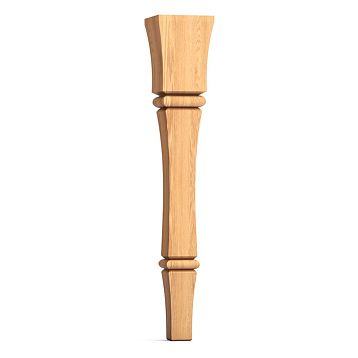
Classic baluster style is characterized by symmetrical, proportional forms, often with carving elements and decorative details. Such balusters usually have a thickening in the middle (so-called "buckle") and taper toward the top and bottom.
Classic balusters typically use noble wood species — oak, walnut, mahogany — as well as wrought iron with ornate patterns. They often have complex shapes with numerous decorative elements — fluting, grooves, acanthus leaves, volutes.
Classic balusters are ideally suited for traditional interiors, colonial, Victorian, or neoclassical style homes. They create an atmosphere of luxury, respectability, and timeless elegance.
Modern minimalist solutions
In modern interiors, popular are minimalist, geometrically simple balusters with clean lines and minimal decorative elements. These may be straight metal or wooden rods, flat glass panels, thin cables or strings.
Minimalist balusters are often made of stainless steel, aluminum, tempered glass, or light-colored wood with natural finish. They create a sense of lightness, airiness, and visually expand the space.
Such balusters pair well with modern furniture and finishes, emphasizing the purity of lines and functionality of modern design.
Rustic and country style: warmth and coziness
Balusters in rustic or country style are characterized by simple forms, natural materials, and a sense of handcrafted work. These may be roughly processed wooden posts retaining the natural wood texture, or simple turned shapes without excessive decoration.
For such balusters, solid wood with visible grain—such as pine, cedar, or oak—is typically used, often with an aged or patina effect. In country style, white or pastel shades are popular, while in rustic style, natural wood tones or dark stain are preferred.
Balusters in rustic style create an atmosphere of warmth, coziness, and connection to nature. They are ideal for country homes, chalets, or countryside-style cottages.
Industrial style and loft: brutality and functionality
In loft or industrial style interiors, balusters are often made of raw metal, pipes, rods, or cables. They may have an intentionally rough, 'industrial' appearance with visible welds, rivets, or bolts.
Combinations of metal and rough wood are popular, creating an 'industrial chic' effect. The color palette is usually limited to natural metal tones—black, gray, or rust-brown.
Such balusters emphasize the rugged, masculine character of loft interiors and pair well with brick walls, concrete surfaces, and exposed utilities.
Ethnic and exotic styles: vibrant individuality
Balusters can reflect various ethnic and cultural traditions—from Eastern opulence to Scandinavian minimalism. For example, in Moroccan style, intricate carved balusters with geometric patterns are popular, while in Japanese style, minimalist wooden elements with characteristic joints (without nails or screws) are favored.
Exotic wood species, hand-carved details, unusual shapes, and ornamentation allow for creating unique, memorable balusters that become true works of art and central elements of interior design.
Technical aspects of baluster selection and installation
In addition to aesthetic considerations, when selecting balusters, it is necessary to consider several technical parameters that ensure the safety, durability, and functionality of the staircase.
Safety standards and regulatory requirements
When designing and installing balusters, it is necessary to comply with building codes and regulations that govern their dimensions and placement:
- The distance between adjacent balusters should not exceed 15 cm to prevent a child from slipping between them.
- The height of the railing from the stair level should be at least 90 cm for residential buildings and 100–110 cm for public buildings.
- Balusters must withstand a horizontal load of at least 30 kg/m applied to the top of the railing.
- The construction must be vibration-resistant and free of sharp edges or protruding elements that could cause injury.
Complying with these requirements not only ensures safety but is also a mandatory condition for handing over a building for use or conducting renovation work.
Calculating the quantity and dimensions of balusters
Correct calculation of the quantity and dimensions of balusters is an important stage in staircase design. For this, it is necessary to know:
- The total length of the stair run or section where balusters will be installed.
- The height from the treads to the top line of the railing.
- The maximum allowable distance between balusters (usually 15 cm).
- The thickness of the balusters and the method of their attachment.
Based on these data, the required number of balusters and their exact dimensions are calculated. It is important to note that the first and last balusters are typically replaced with heavier support posts that provide rigidity to the entire structure.
To calculate the number of balusters, you can use the formula:
N = (L - d) / (d + s) + 1, where:
- N - number of balusters;
- L - length of the railing section;
- d - thickness of the baluster;
- s - distance between balusters.
Methods of mounting and installation
There are several ways to mount balusters, the choice of which depends on the material, staircase construction, and design solution:
Mounting in grooves - balusters are inserted into special grooves milled into steps and handrails. This method ensures secure fixation and an elegant appearance, but requires high precision in manufacturing all elements.
Mounting on a baluster rail - balusters are mounted on a special guide board (baluster rail), which is attached to the side of the steps or to the floor. This method simplifies installation and allows adjusting the position of balusters.
Mounting with dowels and glue - balusters are secured using wooden dowels (for wooden balusters) or metal pins inserted into pre-drilled holes and additionally fixed with glue.
Mounting with metal brackets - used for metal or glass balusters. Brackets are mounted to steps or side elements of the staircase, and then balusters are fixed to them.
Through mounting - balusters pass through steps and are secured to lower structural elements. This method ensures maximum strength, but requires precise calculation and complex installation.
When choosing a mounting method, it is necessary to consider not only aesthetic considerations, but also the strength of the connection, the possibility of replacing individual elements in case of damage, as well as the specific operating conditions of the staircase.
Care and maintenance of different types of balusters
Durability and attractive appearance of balusters largely depend on proper care and maintenance:
Wooden balusters require periodic treatment with protective compounds - varnish, oil, wax. This prevents wood from drying out, protects against moisture, ultraviolet radiation, and mechanical damage. It is recommended to perform such treatment every 2-3 years or more frequently if the staircase is in an area of intensive use.
Metal balusters made of black metal require protection against corrosion - they should be periodically checked for rust and treated with anti-corrosion compounds if necessary. Balusters made of stainless steel or brass require regular wiping to remove dust and fingerprints.
Glass balusters require regular cleaning from dust and dirt using special glass cleaning agents. It is important to check the reliability of fastenings and the absence of cracks or chips that may reduce the strength of the glass.
Regardless of the material, all balusters require periodic inspection of the reliability of fastenings. Loose elements should be immediately secured to prevent further weakening of the structure and potential injuries.
Innovative solutions and modern trends
The world of design and architecture is constantly evolving, and in the field of baluster design, new ideas, materials, and technologies are continuously emerging.
New materials and manufacturing technologies
The modern industry offers innovative materials for manufacturing balusters that combine aesthetic appeal with improved performance characteristics:
Wood-polymer composite (WPC) - a material combining wood fibers and polymer binders. WPC balusters have the appearance of natural wood but exhibit enhanced moisture resistance, do not rot, do not require painting, and require no special maintenance.
Fiber-cement - a composite material based on cement, reinforced with fibers. Fiber-cement balusters can imitate various materials - from wood to stone - while being non-combustible, resistant to atmospheric effects, and biological damage.
Acrylic stone - an artificial material based on acrylic resins and mineral fillers. Acrylic stone balusters can have any shape and color, are strong, hygienic, and easily restorable in case of damage.
3D printing allows creating balusters of complex shapes from various polymer materials. This technology opens new possibilities for individual design and enables the realization of the most daring ideas.
Integration of lighting and smart technologies
Modern balusters can be not only a railing element, but also part of a lighting system and "smart home":
Integrated LED lighting - LED elements can be integrated into balusters made of transparent or semi-transparent materials (glass, acrylic, certain types of plastic), creating an attractive staircase lighting effect. This solution is not only decorative but also functional - it ensures safe movement during nighttime.
Sensory elements - balusters can be equipped with motion sensors that automatically turn on lighting when a person approaches the staircase.
Integration with "smart home" systems - baluster lighting can be linked to the home's overall lighting, security, and climate control system, enabling the creation of various lighting scenarios based on time of day, presence of people, and other factors.
Ecological Sustainability
Modern trends in design and construction place great emphasis on eco-friendliness and sustainable development, which is reflected in baluster production:
Use of certified wood from renewable sources, harvested in accordance with sustainable forestry principles (FSC certification).
Use of recycled materials - for example, balusters made from recycled aluminum or plastic, which reduces environmental impact.
Non-toxic finishing materials - water-based paints, varnishes, and stains free of harmful volatile compounds and safe for human health and the environment.
Durability and recyclability - modern balusters are designed with long service life and recyclability in mind, aligning with circular economy principles.
Practical recommendations for choosing balusters
Choosing balusters for a staircase is a responsible process requiring consideration of multiple factors. Here are some practical recommendations to help make the right choice.
Assessment of home style and architecture
First and foremost, balusters should harmonize with the overall style and architecture of the home. Consider the following correspondences:
- For classic interiors, choose turned wooden balusters with carved details or wrought metal balusters with ornate patterns.
- In modern minimalist spaces, it is better to use simple forms made of glass, metal, or light wood with clean lines.
- For country or rustic-style homes, choose natural wood balusters with visible grain, possibly with an aged finish.
- In loft or industrial-style interiors, metal balusters with an "industrial" character - pipes, rods, cables - are appropriate.
It is also important to consider other decorative elements and furniture in the home - doors, window frames, cabinet facades. Balusters should match them in style, material, or color palette, creating a unified harmonious look.
Consideration of practical aspects of operation
When selecting balusters, it is necessary to consider the conditions in which they will be used:
- For homes with young children or pets, it is better to choose strong, durable balusters resistant to mechanical impacts with minimal spacing between them.
- In rooms with high humidity (e.g., near a pool or in a bathroom), materials resistant to moisture are preferred - stainless steel, specially treated wood, glass.
- For outdoor staircases, choose materials resistant to atmospheric conditions - spruce, thermowood, stainless steel, stone.
- In areas with heavy traffic (e.g., offices or public buildings), especially strong and wear-resistant balusters capable of withstanding significant loads are required.
It is also worth considering the maintenance requirements of different materials and choosing those that match your capabilities and preferences regarding upkeep.
Balance between aesthetics and functionality
Ideal balusters should combine aesthetic appeal with practicality and functionality. Here are some tips for achieving this balance:
- Choose baluster shapes that are not only beautiful but also convenient to use - without sharp corners, protruding elements, or complex-to-clean dust-prone details.
- Keep in mind that overly heavy or visually bulky balusters may overwhelm the space, especially in small rooms.
- Remember that very thin or delicate balusters, although they may look elegant, may not provide sufficient strength and safety.
- Consider combining different materials or shapes to create a unique design that is both functional and aesthetically pleasing.
Collaboration with professionals
To achieve the best results, it is recommended to collaborate with professional designers and baluster manufacturers:
- A professional designer will help select balusters that perfectly fit your home's interior and meet your functional requirements.
- An experienced manufacturer ensures high-quality production and precise compliance of balusters with technical requirements and safety standards.
- Qualified installers guarantee correct installation, which largely determines the longevity and safety of the entire structure.
Do not skimp on specialist consultations— their experience and knowledge will help avoid mistakes and create a staircase that will delight you for many years.
Conclusion: Creating a unique staircase with balusters
Balusters for staircase Balusters are not just a functional element, but also an important part of your home’s design, capable of transforming the space and creating a unique atmosphere. Properly selected balusters become an accent element of interior design, reflecting your taste and lifestyle.
The modern market offers a vast variety of baluster materials, shapes, and styles, allowing you to realize any design ideas—from classic elegance to avant-garde experiments. However, it is important to remember that balusters must not only please the eye but also ensure safety and comfort when using the staircase.
When choosing balusters, pay attention to their compatibility with the overall interior style, quality of materials and manufacturing, functionality, and ease of use. Do not hesitate to experiment with shapes and materials, but always maintain a balance between aesthetics and practicality.
STAVROS Company offers a wide range of high-quality balusters made from various materials, crafted with impeccable skill and attention to detail. Professional consultants will help you choose the ideal balusters that will become a decoration of your home and serve for many years, preserving their beauty and functionality.
Investing in quality balusters means investing in the beauty, safety, and comfort of your home. Let your staircase become not just a means of moving between floors, but a work of art that impresses guests and delights you every day.