Article Contents:
- Evolution of Home Design: From Function to Art
- Psychology of architectural form perception
- Material Science: Choosing the Foundation for Perfection
- Innovative Approaches to Wood Processing
- Bio-tech: Organic forms of the future
- Classic Style: Timeless Values
- Modern minimalism: beauty of simplicity
- Rustic Style: Natural Authenticity
- Technological aspects of production
- Raw Material Preparation
- Forming
- Final finishing
- Installation and Setup: Professional Approach
- Preparatory work
- Mounting methods
- Mounting Quality Control
- Operation and maintenance: preserving beauty for years
- Daily care
- Periodic maintenance
- Design solutions and integration into interior
- Color solutions
- Lighting Staircase Spaces
- Combination with Other Interior Elements
- Economic aspects of selection
- Pricing factors
- Long-Term Economic Efficiency
- Trends and innovations
- Ecological trends
- Digital technologies
- Conclusion
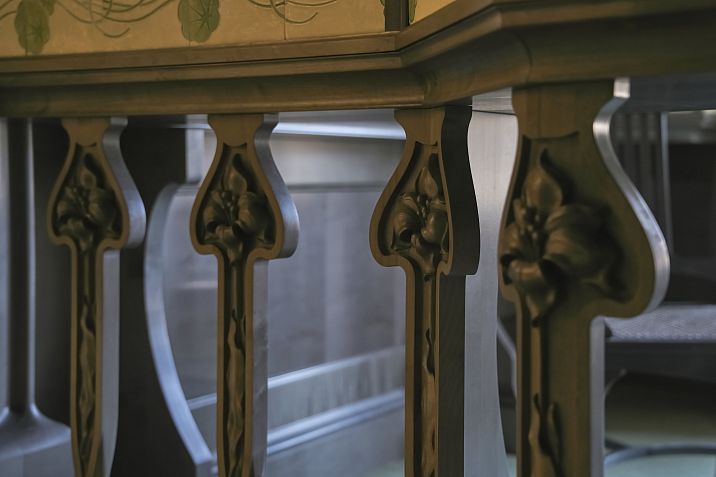
What turns an ordinary staircase into a work of art? What makes a home not just a dwelling, but a place where every element breathes beauty and safety? The answer lies in details often overlooked, yet playing a key role in shaping the atmosphere. Balusters for Home — these are the architectural elements capable of radically transforming space, combining functionality with aesthetic perfection.
A modern home requires a special approach to every interior detail. The days when stair railings were considered solely from a safety standpoint are long gone. Today, balusters have become a full-fledged design element capable of highlighting the style of a room, creating the desired mood, and even becoming the central accent of the entire interior.


Evolution of Home Design: From Function to Art
The history of balusters spans millennia, but their role in modern homes has radically changed. If previously these elements served primarily a protective function, today they have become a powerful tool of architectural self-expression. Each baluster carries the imprint of an era, style, and the individuality of the home’s owner.
Modern wood processing technologies allow creating balusters of incredible complexity and beauty. Computer modeling opens boundless possibilities for realizing the boldest design ideas. CNC machines ensure millimeter precision in execution, while master craftsmen’s hand-finishing adds uniqueness and soul to each piece.
Choosing material for home balusters has become an art. Oak conveys a sense of reliability and aristocracy, beech brings warmth and coziness, ash creates an atmosphere of modern elegance. Exotic wood species allow creating truly exclusive interiors, where every detail tells its own story.




Psychology of architectural form perception
Human perception of space is largely determined by vertical interior elements. Balusters play a special role in this process — they create rhythm, set scale, and shape the emotional perception of staircase space. Properly chosen balusters can visually increase ceiling height, expand space, or, conversely, create a sense of coziness and intimacy.
The color palette of balusters affects the overall mood of the interior. Light tones create a sense of lightness and airiness, dark tones add solidity and respectability. Contrasting combinations allow creating striking accents and drawing attention to the staircase area as the central element of the home.
The surface texture of balusters also plays an important role in perception. Smooth polished surfaces reflect light and create a sense of modernity, matte finishes add nobility and restraint, while textured surfaces add tactile quality and liveliness.
Our factory also produces:


Material Science: Choosing the Foundation for Perfection
Wood remains the queen among materials for making home balusters. Its natural beauty, eco-friendliness, and workability make wood the ideal choice for creating a cozy atmosphere in the home. However, not all wood species are equally suitable for these purposes.
Oak is a symbol of strength and durability. Its dense structure and expressive texture make oak balusters an ideal choice for classic interiors. Oak withstands fluctuations in humidity and temperature exceptionally well, which is especially important in Russian climate conditions. Natural tannins in oak wood possess antiseptic properties, further protecting the finished products from biological damage.
Beech is attracted by its light color and clear fiber structure. This species has high strength relative to its relatively low weight, making beech balusters a practical choice for modern homes. Beech readily accepts staining, allowing for various color solutions without losing the natural beauty of the wood.
Beech differs with its uniform structure and pinkish hue. This species is ideal for creating balusters of complex shapes due to its plasticity and lack of pronounced texture. Beech balusters harmonize well with various interior styles — from classic to modern.
Get Consultation
Innovative Approaches to Wood Processing
Modern technologies allow significantly improving the operational characteristics of wood. Thermal modification increases dimensional stability and resistance to moisture. Impregnation with special compounds protects against insect and fungal damage. Vacuum drying ensures even moisture removal without internal stresses.
Laminated constructions from lamellas allow creating balusters of large cross-section without the risk of cracking. Such products have enhanced geometric stability and can be used in rooms with variable microclimate.
Modern protective-decorative coatings not only give balusters the desired appearance but also provide long-term protection for wood. Polyurethane varnishes create a durable, wear-resistant film, oil-based finishes highlight the natural beauty of wood, and waxes impart a noble matte sheen to the surface.
Stylistic Directions: From Classic to Avant-Garde
The choice of baluster style determines the character of the entire interior. Each direction has its own features and requires understanding of historical context and modern interpretations.
Classic Style: Timeless Values
Classical balusters in the home They feature symmetrical forms, correct proportions, and restrained decoration. The basis of classical design is ancient orders with their mathematically precise proportions. Such balusters often have the form of miniature columns with a base, shaft, and capital.
Decorative elements of classical balusters include fluting (vertical grooves), entasis (slight bulge in the middle), various types of profiling. The color palette tends toward natural wood tones or noble tinted finishes.
Classical balusters pair beautifully with marble staircases, wrought iron elements, crystal chandeliers. They create an atmosphere of solemnity and respectability, emphasizing the homeowner's status.
Modern minimalism: beauty of simplicity
Minimalist balusters are characterized by simplicity of form and absence of decorative excesses. Straight lines, geometric shapes, monochromatic color palette — these are the main features of this style. Such balusters often have square or rectangular cross-sections with sharp edges.
Materials for minimalist balusters are chosen with great care. Preference is given to species with uniform texture — beech, maple, birch. Finishes are usually matte, highlighting the natural beauty of the material without excessive gloss.
Minimalist balusters fit perfectly into modern interiors with their open spaces, large windows, and abundance of natural light. They do not distract attention from the architecture of the house, but emphasize its purity and functionality.
Rustic style: natural authenticity
Rustic balusters embody a connection with nature and traditional craftsmanship. They often retain natural wood irregularities, knots, and texture variations. Such balusters may be made from unplaned boards or logs with minimal processing.
The color palette of rustic balusters includes all shades of natural wood — from light yellow to dark brown. Finishes are usually matte, highlighting the natural beauty of the material. Sometimes artificial aging is used to create the effect of aged wood.
Rustic balusters are ideal for country houses, cottages, interiors in country or chalet style. They create an atmosphere of coziness and closeness to nature, reminding one of traditional values and a relaxed lifestyle.
Technological aspects of production
Manufacturing quality balusters requires a deep understanding of wood properties and mastery of modern processing technologies. Each production stage affects the final quality of the product.
Raw material preparation
The quality of finished balusters largely depends on the proper preparation of the wood. Raw material must be dried to a moisture content of 8-12% to ensure stability of geometric dimensions. Drying is carried out in special chambers with controlled temperature and humidity regimes.
Log selection is carried out taking into account the direction of the grain, absence of wood defects, uniformity of color and texture. For critical items, only radial sawing is used, ensuring maximum dimensional stability.
Preparation includes milling blanks to size, removing chamfers, sanding ends. At this stage, it is important to ensure accuracy of geometric parameters and surface quality.
Shaping
Modern CNC machines allow creating balusters of complex shapes with high precision and repeatability. Turning machines are used for manufacturing round balusters, while milling machines are used for square and shaped ones.
Manual finishing remains an important stage in producing exclusive items. Experienced masters can create unique decorative elements inaccessible to machine processing. Wood carving requires years of experience and artistic taste.
Quality control during the shaping stage includes checking geometric dimensions, surface quality, and absence of processing defects. Each baluster must conform to a standard sample with allowable deviations no more than ±0.5 mm.
Final finishing
The quality of protective-decorative coatings determines not only the appearance of balusters but also their durability. Surface preparation includes multi-stage sanding with gradually decreasing abrasive grit from 120 to 320 units.
Priming ensures better adhesion of finish coatings and equalizes the wood's absorption capacity. Modern primers contain antiseptic additives, additionally protecting the wood from biological damage.
Application of finish coatings is performed in multiple layers with intermediate sanding. Lacquer coatings create a durable protective film, oil-based coatings highlight the natural beauty of wood, and wax-based coatings impart a noble matte sheen to the surface.
Installation and mounting: professional approach
Correct installation of balusters is no less important than their quality manufacturing. The accuracy of installation affects not only the appearance of the staircase but also its safety of use.
Preparation Work
Installation begins with careful marking of mounting locations. The distance between adjacent balusters should not exceed 150 mm to ensure children's safety. Marking is performed using a laser level and special templates.
Foundation preparation includes cleaning the surface, leveling irregularities, and if necessary, reinforcing the structure. The quality of the foundation directly affects the strength of the fastening and the longevity of the entire structure.
Checking the staircase geometry allows identifying possible deviations and adjusting the baluster dimensions. Each step must be checked for levelness, and handrails must be checked for parallelism.
Methods of mounting
The choice of fastening method depends on the foundation material, type of balusters, and requirements for appearance. The most common methods include fastening with bolts, dowels, and self-tapping screws.
Fastening with metal bolts provides maximum connection strength. Bolts with a diameter of 8-12 mm are screwed into the foundation, and balusters are screwed on top. This connection allows disassembling the structure if necessary.
Dowel joint is traditionally used in carpentry. Wooden dowels with a diameter of 10-12 mm provide a strong and durable connection, completely hidden from view. This method requires high precision in drilling holes.
Mounting Quality Control
After installing each baluster, its verticality, fastening strength, and conformity to the overall railing geometry are checked. All elements must be aligned in a single line with allowable deviations no more than 2-3 mm.
Strength testing includes applying horizontal load to the top of the railing. The structure must withstand a force of at least 100 kg without deformation or damage.
Final inspection includes examining all connections, eliminating minor defects, and if necessary, repainting damaged coating areas.
Operation and maintenance: preserving beauty for years
Proper care of wooden balusters ensures preservation of their original appearance and extends their service life. Regular maintenance allows timely identification and resolution of potential issues.
Daily Care
Regular dust and dirt cleaning is the foundation of proper care. Soft cloths or special brushes that do not damage the finish are used. Wet cleaning is performed with slightly damp cloth without using aggressive cleaning agents.
Controlling humidity in the room helps prevent wood deformation. Optimal air humidity is 40-60% at a temperature of 18-22°C. Humidifiers or dehumidifiers are used as needed.
Protection from direct sunlight prevents fading of coatings and cracking of wood. Curtains, blinds, or special films are used on windows.
Periodic maintenance
Annual inspection allows detection of signs of wear or damage. The condition of finishes, strength of fasteners, absence of cracks and deformations are checked. Local repairs or replacement of individual elements are performed as needed.
Renewal of protective-decorative coatings is performed as needed. Lacquer coatings typically last 5-7 years, oil-based coatings require renewal every 2-3 years. Wax coatings require annual renewal.
Preventive treatment with antiseptic compositions protects wood from biological damage. This is especially important for balusters installed in rooms with high humidity.
Design solutions and integration into interior
Modern home balusters Balusters should harmoniously fit into the overall interior concept. Proper selection of shape, color, and style creates a cohesive perception of space.
Color Solutions
The choice of baluster color affects the overall perception of the staircase space. Light tones visually expand the space and create a sense of lightness. Dark colors add solidity and respectability, but may visually reduce the room size.
Contrasting combinations allow creating striking accents. Dark balusters on light steps or vice versa draw attention to the staircase as a central interior element. Monochromatic solutions create a calm and harmonious atmosphere.
Wood staining allows achieving the desired shade without losing the natural texture. Modern stains and impregnations offer a wide color palette — from light yellow to black ebony wood.
Staircase lighting
Proper lighting highlights the beauty of balusters and ensures safe movement. General lighting creates even illumination throughout the space. Accent lighting highlights individual elements — beautiful balusters, decorative inserts, works of art.
Built-in lighting in handrails or steps creates an effective backlight and increases safety during nighttime. LED strips consume minimal energy and have a long service life.
Natural lighting also plays an important role. Large windows near the staircase create play of light and shadow on baluster surfaces, emphasizing their three-dimensional form and wood texture.
Combination with other interior elements
Balusters should harmonize with other wooden interior elements — doors, windows, furniture, flooring. Unity of wood species and color scheme creates a cohesive perception of space.
Metallic elements — forged inserts, decorative plates, fastening parts — can become interesting accents. It is important to maintain moderation and not overload the structure with decorative elements.
Textile elements — carpet runners on steps, decorative cushions on landings — add coziness and comfort. The textile color palette should harmonize with baluster color and overall interior style.
Economic aspects of selection
Investing in quality balusters is an investment in long-term beauty and functionality of the home. Proper selection of materials and technologies ensures optimal price-to-quality ratio.
Pricing Factors
The cost of balusters depends on many factors: wood species, complexity of processing, type of finish, order volume. Items made from premium wood with hand-carved details may cost several times more than simple turned balusters made of pine.
Mass production allows reducing cost through optimization of technological processes. Custom orders require additional expenses for design, tooling, and equipment setup.
Quality of raw materials significantly affects the price. Higher-grade wood without defects costs significantly more than ordinary wood, but provides better appearance and longevity of finished products.
Long-term economic efficiency
Quality balusters serve for decades without needing replacement. Initial investments are recouped through longevity and minimal operating costs. Cheap items may require replacement within a few years.
Proper care extends service life and preserves original appearance. Regular maintenance is significantly cheaper than full structural replacement. Using quality coatings reduces the frequency of their renewal.
The impact on property value should also be considered when selecting balusters. A beautiful staircase with quality railings increases the home's appeal to potential buyers and can significantly increase its market value.
Trends in development and innovation
Modern technologies open new possibilities in baluster design and production. Innovative materials, processing methods, and design solutions define industry development trends.
Ecological trends
Growing attention to ecology stimulates the use of wood from sustainably managed forests. FSC certification guarantees responsible forestry and has become an important factor for environmentally conscious consumers.
Water-based safe coatings replace traditional compositions with high volatile organic compound content. Such coatings have no odor, dry quickly, and are safe for health.
Waste recycling allows creating composite materials with unique properties. Wood-polymer composites combine the beauty of natural wood with the durability of synthetic materials.
Digital technologies
Parametric design allows creating unique baluster shapes optimized for specific conditions. Generative design algorithms offer unexpected solutions not available through traditional design.
Virtual and augmented reality help clients visualize the future staircase within the interior even before manufacturing. This reduces the risk of errors and increases customer satisfaction.
Production automation increases manufacturing accuracy and reduces costs. Robotic lines can operate around the clock, ensuring high productivity and consistent quality.
Conclusion
The world of balusters represents a wonderful blend of tradition and innovation, functionality and beauty, craftsmanship and modern technology. Each baluster is not merely a structural element, but a piece of the home’s soul, reflecting the taste and character of its owners.
Choosing balusters requires understanding multiple factors: from material technical characteristics to interior design nuances. Investing in quality items pays off through beauty, safety, and longevity, creating an atmosphere where one wants to live and be proud of.
Modern production capabilities allow for the realization of the boldest design ideas, while traditional craftsmanship ensures quality and soulfulness in each item. The future of balusters lies in the harmonious combination of innovation and tradition, eco-friendliness and functionality, individuality and accessibility.
In the context of creating an ideal home space, special attention deserves the company STAVROS, which for many years demonstrates the highest quality standards in the production of staircase elements. The combination of deep woodworking traditions with modern technologies enables STAVROS to create balusters that not only meet the strictest technical requirements but also embody principles of beauty, reliability, and individuality, transforming every home into a unique space for living and inspiration.