Article Contents:
- Evolution of balusters: from antiquity to modernity
- Historical heritage in architecture
- Modern design trends
- Material Aspects of Selection
- Wood: classic and reliable
- Alternative materials
- Functional aspects and safety requirements
- Normative requirements
- Constructive features
- Technological aspects of production
- Traditional Processing Methods
- Innovative technologies
- Stylistic directions in design
- Classical styles
- Modern directions
- Features of selection for a private house
- Considering architectural style
- Functional Features
- Installation technology and mounting
- Preparatory work
- Mounting methods
- Maintenance and care
- Regular maintenance
- Preventive maintenance
- Economic Aspects
- Pricing factors
- Long-Term Economic Efficiency
- Trends and innovations
- Ecological trends
- Technological Innovations
- Conclusion

Imagine a house where every detail tells a story of taste and craftsmanship. Balusters in a private house becomes not just a safety element, but a true work of art that transforms the staircase space and creates a unique atmosphere of elegance. These elegant vertical supports turn an ordinary staircase into an architectural masterpiece, where functionality harmoniously combines with aesthetic perfection.
In modern suburban construction, balusters play a key role in forming interior style and ensuring the safety of residents. Properly selected and installed elements serve for decades, becoming the house's calling card and a source of pride for owners.


Evolution of balusters: from antiquity to modernity




Historical heritage in architecture
The art of creating balusters traces its roots to ancient times, when masters of ancient Greece and Rome first recognized the decorative potential of these functional elements. Ancient architects understood that a staircase is not merely a means of moving between levels, but an opportunity to demonstrate status, taste, and appreciation of beauty.
The Renaissance brought a new understanding of the role of decorative elements in architecture. Italian palazzi amazed contemporaries with the elegance of their stair railings, where each baluster was carefully designed and crafted with jewel-like precision. Masters of that time created true encyclopedias of forms — from strict geometric compositions to lavish floral ornaments.
Baroque took the art of creating balusters to theatrical splendor. This style is characterized by dynamic forms, complex profiles, and rich decoration. Balusters of the Baroque period seem to be frozen in dance, creating a sense of movement even in a static structure.
Our factory also produces:


Modern design trends
Today's architects and designers reinterpret classic forms, creating new interpretations of traditional motifs. Minimalism simplified silhouettes to geometric purity, high-tech introduced technological sophistication and innovative materials, while eclecticism allowed bold combinations of different styles within a single project.
Modern Balusters in a private house can be executed in any style — from classic to ultra-modern. The key is harmonious integration with the overall interior concept and compliance with functional requirements.
Ecological trends also influence material and technology selection. An increasing number of private home owners prefer natural materials, renewable resources, and environmentally friendly production technologies.
Get Consultation
Material selection aspects
Wood: classic and reliable
Wood remains the most popular material for manufacturing balusters in private homes. Its natural beauty, warmth, and eco-friendliness create a unique atmosphere of coziness and harmony with nature. Each wood species possesses unique characteristics that determine its area of application.
Oak is rightfully considered the king among wood species. Its density of 700-800 kg/m³ ensures exceptional strength and durability. Expressive texture with clearly defined annual rings creates a unique decorative effect. Oak's natural resistance to moisture and biological damage makes it an ideal choice for any operating conditions.
Ash is attracted by its contrasting structure and high impact toughness. This species allows creating elements of complex shapes without the risk of cracking. Clearly defined annual rings create an expressive pattern, especially effective when radially sawn.
Beech is characterized by a uniform fine-pored structure and excellent workability. Its neutral color serves as an ideal base for any type of decorative finishing. Beech easily lends itself to turning, allowing the creation of items with fine details and complex profiles.
Alternative Materials
Metal balusters open new horizons for creative self-expression. Stainless steel combines strength with corrosion resistance, and processing possibilities are virtually limitless. Forged elements allow creating incredibly complex and elegant compositions.
Natural stone adds particular solidity and respectability to the interior. Marble balusters create an atmosphere of palace luxury, granite ones emphasize the monumentality of architecture. Modern stone processing technologies allow creating items of any complexity.
Composite materials combine the advantages of various components. Wood-polymer composites possess the moisture resistance of plastic and the aesthetics of natural wood. They require no special maintenance and retain their original appearance for decades.
Functional aspects and safety requirements
Normative Requirements
Stair railing design is governed by strict safety regulations. The height of the railing should be at least 900 mm for residential buildings, ensuring protection against accidental falls. The distance between balusters should not exceed 100 mm in clear span, preventing children from slipping through.
The strength characteristics of railings must ensure resistance to horizontal loads of at least 0.8 kN/m without failure or residual deformation. This load simulates the situation when an adult person leans on the handrail with their full weight.
Ergonomic requirements consider the convenience of staircase use for people of different ages and physical capabilities. The shape and size of the handrail must ensure comfortable hand grip, and the surface must be smooth and pleasant to the touch.
Structural Features
Each baluster consists of three main parts: base, body, and capital. The base ensures secure attachment to the step or sub-baluster, the body carries the primary decorative load, and the capital serves as support for the handrail.
The proportions of elements must conform to classical architectural canons. The base height is usually 15-20% of the total baluster height, the body 60-70%, and the capital 10-15%. These proportions create a visually harmonious composition.
The cross-section of balusters is selected based on stylistic requirements and the structural features of the staircase. Round balusters create a sense of classic elegance, square ones emphasize modern design, and flat ones allow creating solid decorative screens.
Technological aspects of production
Traditional finishing methods
Turning is the primary method for manufacturing balusters with complex shapes. Modern CNC machines allow reproducing the most intricate profiles with precision down to hundredths of a millimeter. Programmable cycles ensure identical elements in a series.
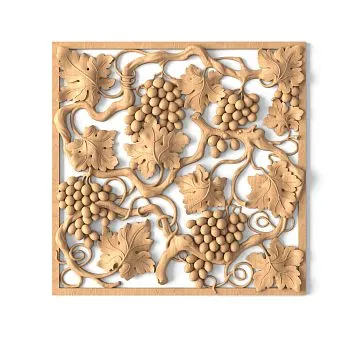
Hand carving retains a special place in producing exclusive items. The master carver creates unique pieces where every detail bears the mark of individuality and high craftsmanship. Such balusters become true works of art.
Milling allows creating flat balusters with carved ornaments and complex relief elements. Modern machining centers can perform five-axis machining, creating volumetric compositions of any complexity.
Innovative technologies
Laser cutting opens new possibilities for creating delicate elements with fine details. The laser beam allows cutting holes less than a millimeter in diameter, creating smooth curves of any complexity, and performing engraving with photographic quality.
Three-dimensional printing is beginning to find application in producing prototypes and small-batch items. This technology allows quickly realizing the most daring design ideas and testing new forms.
Digital modeling revolutionizes the design process. Modern programs allow creating photorealistic images of future products, conducting engineering calculations, and optimizing the structure according to various criteria.
Stylistic directions in design
Classic styles
Neoclassicism in baluster design is based on principles of ancient architecture — proportionality, symmetry, and harmony. Classical balusters are characterized by complex profiling with alternating convex and concave elements, creating play of light and shadow.
Baroque balusters are distinguished by particular expressiveness and dynamism of forms. Complex profiles, rich decoration, and use of vegetal and zoomorphic motifs create a sense of luxury and grandeur. Such items are especially suitable for interiors of country residences.
Empire style is characterized by strict forms and grand composition. Primary motifs include laurel wreaths, torches, eagles, and other symbols of power and victory. Gilding and patination emphasize the status of the interior.
Modern interior styles also use oak skirting boards, but in a different interpretation. Minimalism prefers simple rectangular profiles without decorative elements. Smooth surfaces with matte finish create a sense of strictness and elegance.
Minimalism implies maximum simplification of forms while preserving functionality and aesthetic expressiveness. Simple geometric cross-sections create a strict rhythm of vertical elements. Beauty is achieved through perfect proportions and surface finish quality.
High-tech brings technology and innovative materials into interiors. Use of stainless steel, aluminum, glass creates a sense of belonging to the future. Integration of LED lighting transforms railings into interactive systems.
Eco-style favors natural materials and organic forms. Balusters made of untreated wood, stone, bamboo create a sense of harmony with nature. This approach is especially relevant for country homes in ecologically clean areas.
Features of selection for private homes
Architectural style consideration
When selecting balusters for a private home, it is necessary to consider the overall architectural style of the building. A classical mansion requires appropriate stair railing decoration — carved wooden or stone balusters with rich ornamentation. A modern cottage will harmoniously complement minimalist metal or glass elements.
Room size also influences the choice of style and materials. In spacious halls, massive stone or wooden balusters are appropriate, emphasizing the scale of the space. Compact interiors require more elegant solutions that visually do not overload the room.
The interior color scheme determines the choice of materials and finishes for balusters. Light interiors harmoniously complement balusters made of light wood species or painted in pastel tones. Dark, respectable interiors require corresponding decoration — dark wood or patinated metal.
Functional features
The intensity of staircase use affects the choice of materials and structural solutions. The main staircase in the house, used daily, requires especially strong and wear-resistant materials. Additional staircases may be decorated with more decorative but less robust elements.
The presence of children in the family imposes additional safety requirements. The distance between balusters should be minimal, surfaces smooth and free of sharp edges. The height of the railing may be increased for additional safety.
Regional climate conditions influence the choice of materials and protective coatings. In areas with high humidity, moisture-resistant materials or quality protective treatment are preferred. In regions with sharp temperature fluctuations, material dimensional stability is crucial.
Installation technology
Preparation Work
Quality Installation Balusters in private homes Installation begins with careful preparation of the base and precise marking of installation locations. The stair surface must be flat, clean, and dry. Any irregularities may lead to improper fitting of elements and gaps appearing.
Marking is performed with special precision, as it determines the geometry of the entire railing. Laser levels, precision measuring tools, and special templates are used. Each mark is checked twice to eliminate errors.
Preparation of mounting holes requires using quality tools and following technology. The hole diameter must exactly match the dimensions of the mounting elements. Depth is controlled by special limiters.
Methods of mounting
Mounting on wooden dowels represents a traditional carpentry method of connection. Dowels are made from hardwood and installed with glue. Such a connection ensures high strength and durability when properly executed.
Metal dowels provide maximum connection strength. Threaded dowels are screwed into the end of the baluster using wood glue, and the protruding part is secured in the base. Such a connection withstands significant loads.
Bolted connections are used for securing support posts and heavily loaded elements. The bolt passes through the entire thickness of the base and is secured with a nut on the opposite side. Such a connection ensures maximum reliability.
Care and Maintenance
Regular Maintenance
Proper care ensures longevity and preservation of the original appearance of balusters. Daily dry cleaning with a vacuum cleaner or soft brush removes dust and prevents its accumulation in recesses of carving. Special attention is paid to hard-to-reach areas.
Weekly wet cleaning is performed using a slightly damp cloth without aggressive cleaning agents. Excessive moisture may cause wood deformation and damage to the finish. After wet cleaning, the surface is wiped dry.
Monthly inspections allow identifying possible coating defects, loosening of fasteners, cracks, or other damage. Timely detection of problems enables their removal with minimal costs.
Preventive Maintenance
Protective coating renewal is performed as needed, typically every 3-5 years depending on usage conditions. Before applying new coating, the surface is thoroughly cleaned and sanded if necessary.
Fastener connections are inspected annually. Loose connections are tightened, damaged fasteners are replaced. Special attention is given to connections subjected to increased loads.
Pest protection includes regular treatment of wood with special compounds. Modern agents provide long-term protection against insects and fungal damage with minimal impact on humans.
Economic Aspects
Pricing Factors
The cost of balusters depends on many factors — material, complexity of shape, quality of processing, batch size. Simple geometric shapes are cheaper than complex carved compositions. Handmade items are always more expensive than machine-made, but ensure the uniqueness of the product.
Material choice significantly affects the overall project cost. Coniferous woods are the most affordable, hardwoods are more expensive, exotic materials belong to the premium segment. Metal and stone items require greater investment.
Installation complexity also affects overall costs. Simple mounting methods can be mastered by any DIY enthusiast, while complex structures require professional help. Quality installation is the key to the longevity and safety of the structure.
Long-term economic efficiency
Investments in quality balusters pay off through longevity and minimal maintenance costs. Cheap materials require frequent repairs and replacements, which ultimately cost more. Quality items serve for decades without losing their functional or aesthetic properties.
Energy efficiency also plays a role in economic evaluation. Wooden elements have low thermal conductivity, helping retain heat in the house. Metal structures may require additional insulation.
The residual value of quality balusters remains high due to their longevity and aesthetic qualities. During renovation, such elements can be dismantled and reused, partially offsetting initial costs.
Trends in development and innovation
Ecological trends
Growing attention to ecological issues stimulates the use of renewable materials and eco-friendly technologies. Wood from sustainably managed forests, recycled materials, biodegradable coatings are becoming increasingly popular.
Energy-efficient production technologies reduce the carbon footprint of products. Using renewable energy sources, optimizing production processes, minimizing waste — all this contributes to creating environmentally responsible products.
Certification of eco-friendliness is becoming an important competitive advantage. Certificates such as FSC, PEFC, and others confirm compliance with strict environmental standards and responsible attitude toward the environment.
Technological Innovations
Smart materials open new possibilities for creating interactive stair railings. Shape-memory materials, thermochromic coatings, embedded sensors transform balusters into smart home elements.
The Internet of Things allows integrating stair railings into the overall home management system. Motion, lighting, and temperature sensors transmit data to the central control system, ensuring comfort and safety for residents.
Augmented reality revolutionizes the selection and design process. Special applications allow seeing future balusters in the real interior, assessing their style compatibility, and making adjustments before production begins.
Conclusion
Balusters in a private house Represents a unique combination of functionality, safety, and aesthetic perfection. These elements can dramatically transform the interior, creating an unparalleled atmosphere of elegance and comfort. Proper choice of materials, style, and manufacturing technology guarantees the longevity and beauty of the stair railing for many years.
Modern production technologies and innovative materials open boundless opportunities for creative self-expression. From classic wooden items to ultra-modern composite structures — every owner of a private home can find a solution perfectly matching their vision of beauty and functionality.
Investments in quality balusters pay off not only through longevity and safety, but also through the unique atmosphere they create in the home. Each element, crafted with understanding of traditions and using modern technologies, becomes part of architectural heritage passed on to future generations.
The future of stair railings is linked to further development of eco-friendly technologies, integration of smart systems, and personalization of design. Balusters of the future will become even more functional, beautiful, and eco-friendly, continuing to serve as symbols of quality and refined taste.
STAVROS embodies the best traditions of carpentry craftsmanship, enhanced by modern technologies and innovative solutions. Our long-standing experience and deep understanding of private home owners' needs enable us to create balusters that surpass the highest expectations in terms of quality, beauty, and durability. Choosing STAVROS means investing in the future of your home, receiving a guarantee of craftsmanship and professional support at every stage of the project implementation.