Article Contents:
- Anatomy of perfection: what makes a baluster ideal
- Wood species: character in every fiber
- Oak — the aristocrat among materials
- Ash — flexibility and expressiveness
- Beech — versatility and practicality
- Spruce — democratic beauty
- Manufacturing technologies: from traditions to innovations
- Turning — the classical art of form
- Milling — technology for complex shapes
- Carving — pinnacle of craftsmanship
- Bio-tech: Organic forms of the future
- Classicism — eternal harmony of proportions
- Baroque — theatrical luxury
- Modernism — Natural Organicism
- Modern minimalism — beauty of simplicity
- Selection Criteria: How to Avoid Buying Mistakes
- Installation and Mounting: Technical Aspects
- Ways to Attach to Steps
- Mounting to railings
- Processing and protection: extending the life of products
- Preparation operations
- Protective Coatings
- Economic Aspects: Investment in Quality
- Pricing
- Price-to-Quality Ratio
- Trends and Innovations: Looking to the Future
- Ecological Aspects
- Technological Innovations
- Care and maintenance: preserving beauty for years
- Regular maintenance
- Preventive Maintenance
- Conclusion
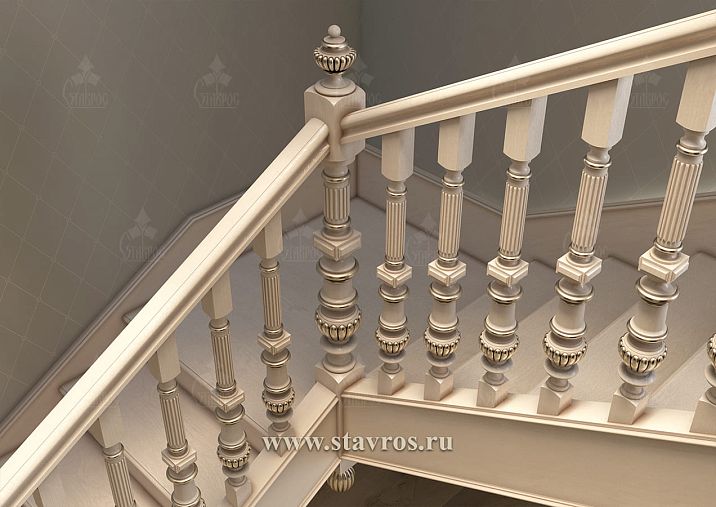
Imagine a staircase without balusters — a bare, unwelcoming structure, devoid of soul and elegance. That is why the questionbuy wooden balusters for stairsbecomes crucial for anyone who aims to create not just a functional structure, but a true architectural masterpiece in their home. These elegant vertical supports transform an ordinary staircase into a work of art, combining safety with unique aesthetics.
Wooden balusters are not just structural elements — they are embodiments of craftsmanship, traditions, and modern technologies. Each baluster tells its own story: from selecting the wood to the final finishing, from classic forms to avant-garde solutions. In a world where mass production often strips items of individuality, high-quality wooden balusters remain bastions of artisanal craftsmanship and artistic taste.


Anatomy of perfection: what makes a baluster ideal
Each wooden baluster consists of three main elements, each playing its own role in the overall symphony of the structure. The base — this is the foundation of stability, the point of attachment to the step or sub-baluster. Its dimensions and shape determine the reliability of the entire structure. The central part — the artistic heart of the baluster, where the craftsman embodies their creative ideas, creating unique profiles and decorative elements. The top support — the connecting link with the handrails, ensuring the integrity of the railing.
The standard height of wooden balusters is 900 millimeters, which corresponds to ergonomic requirements and provides a comfortable railing height for most people. However, this parameter may vary depending on the architectural features of the project and the individual preferences of the client. The diameter of balusters is usually in the range of 40 to 80 millimeters, ensuring an optimal combination of strength and visual lightness.
The distance between balusters — a critically important parameter affecting both safety and aesthetic perception. Building codes establish a maximum gap of 150 millimeters to prevent children from slipping. From a design perspective, the optimal distance is 100–120 millimeters, creating a harmonious visual rhythm and ensuring sufficient railing density.




Wood Species: Character in Every Fiber
Our factory also produces:


Oak — the aristocrat among materials
Oak balusters embody nobility and centuries-old wisdom. The density of oak, reaching 700–800 kg/m³, ensures exceptional strength and longevity. Natural tannins provide inherent protection against moisture and biological damage, making oak balusters virtually eternal. The color palette ranges from light golden to rich brown tones, and over time, the wood develops a noble patina that only enhances its beauty.
Balusters made of black oak hold special value — a material that spent centuries underwater, acquiring a unique dark hue and incomparable texture. Such items become true gems of interior design, highlighting the status and refined taste of the owner.
Get Consultation
Ash — flexibility and expressiveness
Ash balusters attract with their plasticity and expressive texture. The density of ash, 650–750 kg/m³, ensures an excellent combination of strength and workability. The fibrous structure allows creating items with thin cross-sections without the risk of cracking, which is especially valued when manufacturing delicate decorative elements.
The natural grain of ash, with its characteristic wavy lines, creates a unique play of light and shadow on the surface of the baluster. Light tones of the wood harmonize beautifully with modern interiors, adding warmth and coziness.
Beech — Universality and Practicality
Beech balusters represent an ideal combination of quality and affordability. The density of 650–700 kg/m³ and uniform structure ensure even processing along the entire length of the blank. Beech is easily stained and painted, expanding design possibilities and allowing imitation of valuable wood species.
The uniform texture of beech makes it an ideal material for creating balusters with complex profiles, where precision and line purity are crucial. Beech balusters are perfect for classic interiors, where restrained elegance is prized.
Spruce — Democratic Beauty
Spruce balusters are the choice of those who appreciate the natural beauty of wood and aim for reasonable economy. The resinous structure provides natural protection against moisture and insects, and the relatively low density of 400–500 kg/m³ simplifies processing and reduces the overall weight of the structure.
The characteristic pattern of annual rings creates a unique texture, especially effective under transparent lacquers. Spruce balusters are ideal for country houses and cottages, where harmony with the natural surroundings is important.
Manufacturing technologies: from traditions to innovations
Turning — the classical art of form
Turned balusters represent the most traditional type of products made on lathe machines. The process begins with careful selection of blanks — each block is checked for the absence of knots, cracks, and other defects. The moisture content of the wood should be 8–12%, ensuring dimensional stability of the finished product.
CNC turning machines allow achieving perfect repeatability of shapes and high productivity. Computer control ensures processing accuracy down to fractions of a millimeter, which is critical for creating baluster sets with identical parameters.
Modern CNC turning machines allow achieving perfect repeatability of shapes and high productivity. Computer control ensures processing accuracy down to fractions of a millimeter, which is critical for creating baluster sets with identical parameters.
Milling — technology of complex shapes
Milled balusters feature more complex geometry and a greater variety of decorative elements. Modern CNC milling machines open up boundless creative possibilities — helical grooves, longitudinal channels, complex profiles become accessible thanks to computer control.
The process begins with creating a 3D model in specialized software. The designer can experiment with shapes, create unique compositions, model various decorative variants. The finished model is automatically converted into a control program for the machine.
Carving — The Peak of Craftsmanship
Carved wooden balusters are true works of art. Their creation requires years of experience, artistic talent, and deep understanding of wood properties. Each carved baluster is unique and bears the mark of the craftsman’s individuality.
Traditional motifs include plant ornaments — grapevines, oak leaves, roses. Geometric patterns create a strict rhythm and emphasize the architectural function of balusters. Complex compositions with figures of animals, birds, mythological creatures require the highest level of craftsmanship and are used in exclusive projects.
Stylistic Directions: From Classic to Avant-Garde
Neoclassicism — eternal harmony of proportions
Classic wooden balusters are based on ancient models, adapted to modern requirements. Their proportions follow the principles of the golden section, creating a sense of harmony and perfection. The main elements are the base, shaft, and capital, repeating the structure of an architectural column.
Decorative elements include coves — vertical grooves, astragals — convex moldings, various profiled bands. Their combination creates a rich play of light and shadow, giving the baluster volume and expressiveness.
Baroque — theatrical luxury
Baroque balusters impress with their opulence and decoration. Complex curved forms, abundance of carved decoration, dynamic compositions make each baluster a work of art. Characteristic elements include spiral volutes, plant ornaments, mascarons, cartouches.
The surface may be adorned with gilding, patination, or other decorative finishes, enhancing the effect of luxury. Baroque balusters are ideally suited for interiors where theatricality and grandeur are valued.
Modern — natural organicism
The modern style brought a new understanding of beauty to baluster design, based on imitation of natural forms. Balusters often imitate plant stems, tree branches, flower buds. Asymmetric compositions, smooth transitions of forms, absence of straight lines create a sense of organic and natural aesthetics.
Modern minimalism — beauty of simplicity
Minimalist balusters are characterized by extreme simplicity of forms and absence of decorative excesses. Their beauty lies in perfect proportions, quality surface finish, and harmonious integration with the overall interior design. Simple geometric shapes — cylinders, prisms, cones — become the basis of composition.
Selection criteria: how to avoid buying mistakes
When selecting wooden balusters, numerous factors must be considered, each affecting the final result. The interior style determines the overall concept — classical balusters are unsuitable for ultra-modern lofts, while minimalist forms would be inappropriate in a baroque interior.
Operating conditions dictate requirements for material and processing. For humid areas, wood species with natural moisture resistance or special protective treatment are preferred. The intensity of staircase use determines requirements for strength and durability.
Project budget influences the choice of wood species and complexity of processing. It is important to find the optimal price-to-quality ratio, considering long-term usage prospects. Cheap items may require replacement within a few years, while quality balusters will last for decades.
Staircase dimensions determine the number of required balusters and their proportions. For narrow staircases, more elegant forms are suitable, while wide staircases require more substantial constructions. Ceiling height affects overall proportions and may require adjustment of standard sizes.
Installation and mounting: technical aspects
Ways of mounting to steps
Secure attachment of balusters to treads is the guarantee of the entire structure’s safety. Attachment using bolts is the most common method. A hole with a diameter of 8–10 mm is drilled at the bottom of the baluster, into which a metal bolt of 80–100 mm length is inserted. A corresponding hole is made in the tread or underbaluster.
Attachment using wooden dowels — a traditional method using exclusively natural materials. Dowels are made from hardwood and inserted into the connected parts. This method is especially popular during the restoration of historical objects.
Attachment using screws — the simplest and fastest installation method. The screw is screwed into the tread so that its threaded part protrudes 15–20 mm above the surface. The baluster is screwed onto the screw through a previously drilled hole.
Mounting to handrails
The upper part of balusters is attached to handrails in various ways. When using bolts or dowels, precise positioning is essential to ensure balusters stand strictly vertically. When attaching to handrails of complex shapes, individual fitting of each baluster may be required.
For inclined sections of the staircase, the upper part of the baluster is cut at the corresponding angle to ensure tight fitting against the inclined surface of the handrail. The cutting angle must exactly match the angle of the staircase’s incline.
Processing and protection: extending the life of the items
Preparation operations
Quality surface processing is the foundation of the longevity of wooden balusters. The process begins with careful sanding, performed in several stages with gradually decreasing abrasive grit. Initial sanding with P120-P150 abrasive removes traces of mechanical processing and levels the surface.
Intermediate sanding with P180-P220 abrasive removes minor scratches and prepares the surface for final finishing. Special attention is paid to processing complex profiles and hard-to-reach areas, for which specialized abrasive materials and tools are used.
Final sanding is performed with P240-P320 abrasive and imparts the surface with ideal smoothness. At this stage, it is important not to overheat the wood, as high temperatures may cause changes in color and material structure.
Protective coatings
The choice of protective coating depends on operating conditions and desired appearance. Transparent varnishes preserve the natural beauty of wood, highlighting its texture and color. Polyurethane varnishes provide maximum protection against mechanical damage and moisture; their high hardness makes them ideal for heavily used staircases.
Alkyd varnishes are characterized by good penetration and create an elastic coating that does not crack when the wood expands or contracts. They are especially suitable for balusters made from coniferous species.
Wooden balusters create natural protection by penetrating deeply into the wood structure. They highlight the material's natural beauty and create a pleasant-to-touch surface. Wax coatings provide additional protection and give the surface a noble matte sheen.
Economic aspects: investment in quality
Pricing
The cost of wooden balusters consists of several components. Material costs include the price of wood, which varies depending on the species — from affordable pine to premium oak. Labor costs depend on the complexity of the item and the level of production automation.
Simple turned balusters are cheaper than carved or milled ones. Handwork is always valued higher than machine processing, which affects the final price. Order volume also affects the price — large batches allow optimizing production processes and reducing cost.
Price-to-quality ratio
When choosing buy wooden balusters for stairs When choosing wisely, it is important to find the optimal price-to-quality ratio. Cheap items made from low-quality wood may need replacement within a few years, whereas quality balusters will last for decades.
The right choice is an investment in the longevity and beauty of the interior. Quality balusters not only perform their primary function but also become an important design element, increasing the property's value.
Trends and innovations: Looking to the future
Ecological aspects
Modern trends in the production of wooden balusters increasingly focus on eco-friendliness and sustainable development. Using wood from responsibly managed forests, certified under FSC standards, is becoming a mandatory requirement for conscientious manufacturers.
Zero-waste technologies allow using all wood processing by-products. Sawdust and shavings are used to produce fuel briquettes, while small offcuts are used to make mosaic elements and souvenirs.
Technological Innovations
The development of digital technologies fundamentally changes approaches to designing and producing wooden balusters. 3D modeling allows creating complex shapes and visualizing results even during the design stage. CNC machines ensure perfect accuracy and repeatability of products.
Laser engraving opens new possibilities for creating delicate patterns and personalizing items. Nanotechnologies in protective coatings provide a fundamentally new level of wood protection.
Maintenance and care: preserving beauty for years
Regular Maintenance
Wooden balusters require regular but simple maintenance to preserve their beauty and functionality. Daily cleaning involves removing dust with a soft cloth or specialized wood care products. It is important to avoid using aggressive cleaning agents that may damage the varnish coating.
Wet cleaning should be done with special care. Excessive moisture may cause wood deformation and stains on the varnished surface. It is recommended to use a slightly damp cloth and immediately dry the surface thoroughly.
Preventive maintenance
Timely detection and removal of minor defects prevent them from developing into serious problems. Minor scratches can be removed by local sanding and repainting. More serious damage requires professional intervention.
Periodic renewal of protective coatings extends the lifespan of balusters and maintains their original appearance. The frequency of renewal depends on the intensity of use and environmental conditions.
Conclusion
Choosing and purchasing wooden balusters for stairs is a decision that affects not only safety but also the overall perception of the interior. Quality balusters transform an ordinary staircase into an architectural element that emphasizes the style and status of the home. Proper selection of wood species, processing style, and mounting method ensures durability and aesthetic appeal of the structure.
Modern production technologies allow creating products of the highest quality, combining traditional wood beauty with innovative solutions in processing and protection. However, it is important to remember that buy wooden baluster for stairs — it is not just purchasing a functional element, but an investment in beauty, comfort, and home safety.
The future of the industry is linked to further development of eco-friendly technologies, adoption of digital solutions, and expansion of product customization options. Growing demand for quality items made from natural materials creates favorable conditions for the development of wooden baluster production.
Investments in quality wooden balusters pay off not only financially, but also in daily enjoyment of admiring beauty, pride in one’s home, and confidence in its reliability and safety. Each baluster is a small work of art that turns a home into more than just a place to live — into a true home in the fullest sense of the word.
STAVROS Company leads in the production of high-quality solid wood products, including balusters for stairs of various styles and purposes. Years of experience, modern technological equipment, and a team of professional craftsmen enable STAVROS to create products distinguished by flawless quality, durability, and aesthetic perfection. Each STAVROS baluster is the result of careful material selection, application of advanced processing technologies, and strict quality control at every production stage, making STAVROS products a benchmark in their field and a reliable choice for the most demanding customers.