Article Contents:
- Evolution of molding: from frame workshops to architectural masterpieces
- Psychology of perception of decorative elements
- Technological wonder of MDF: material ahead of its time
- Microstructure: looking into the future of materials
- Geometry of perfection: profiles for any task
- Dimensional scale: from miniature to monumental
- Art of painting: color as the language of design
- Modern Coating Systems
- Installation solutions: reliability for decades
- Professional secrets of quality installation
- Neoclassicism: return to origins
- Avant-garde solutions in modern design
- Functional capabilities of modern moldings
- Integration with life support systems
- Economic efficiency: investment in beauty
- Comparative analysis of materials
- Innovative Manufacturing Technologies
- Ecological innovations
- Regional application specifics
- Adaptation to local traditions
- Market development trends
- Influence of Global Trends
- Frequently Asked Questions
- Conclusion
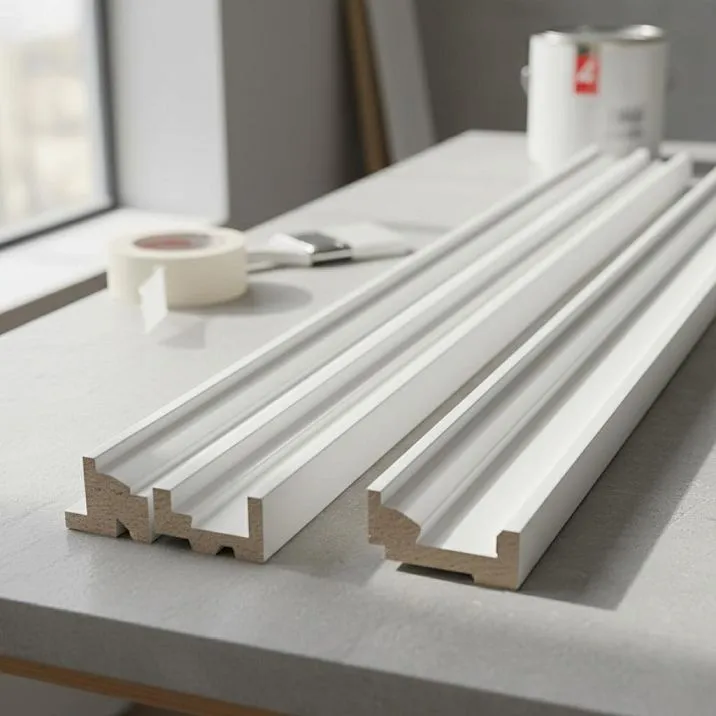
True beauty lies in the details — this truth is known by anyone who has ever encountered the creation of a truly exquisite interior. MDF cornice for painting It became that very element capable of transforming the most ordinary space into a work of architectural art. But what makes this material so special? Why do designers from around the world choose MDF molding to realize their boldest ideas?
The answer lies on the surface, yet simultaneously hidden within the depths of modern manufacturing technologies. MDF molding is a symbiosis of traditional craftsmanship and innovative solutions, where every millimeter of the profile is precisely calibrated with mathematical accuracy, and decorative possibilities are limited only by the master's imagination.
In the world of mass production, where individuality has become a luxury, MDF molding for painting provides a unique opportunity to create something truly special. It is not merely a decorative element — it is an instrument of self-expression, capable of telling a story through shapes and colors.



Evolution of molding: from frame workshops to architectural masterpieces
The history of molding spans centuries, but its role in interior design has undergone a radical transformation over the past decades. If previously molding was perceived exclusively as framing for paintings and mirrors, today it has become a full-fledged participant in architectural composition.
Modern designers use molding for zoning spaces, creating accent walls, framing niches and openings. Moldings for painting In a broad sense, it has become a universal tool for interior design.
What has changed radically is the materials and technologies. If traditional moldings were exclusively made of wood or plaster, the emergence of MDF brought about a true revolution. This material combines the best qualities of natural wood with the advantages of modern composites.




Psychology of Perception of Decorative Elements
Do you know that correctly placed molding can radically change the perception of space? This is not magic, but pure science — neuroaesthetics studies how our brain reacts to various visual elements.
Horizontal molding lines expand space, creating an illusion of greater room width. Vertical elements draw the gaze upward, visually increasing ceiling height. Diagonal compositions add dynamism and energy.
The color of molding plays no less important a role. Light shades create a sense of lightness and airiness, dark shades add solidity and depth. Contrasting solutions transform molding into an accent element capable of becoming the focal point of a composition.
Our factory also produces:


Technological wonder of MDF: material ahead of its time
Delving into the world of MDF manufacturing technologies, we encounter processes worthy of a science-fiction film. Wood fibers measuring only 0.1–3 mm are subjected to temperatures of 200–240°C and pressures up to 50 MPa. These conditions are comparable to those existing several kilometers underground!
The result is breathtaking: a material with density up to 900 kg/m³, exceeding the indicators of many natural wood species. At the same time, MDF retains all the positive properties of wood: warmth to the touch, ability to mechanical processing, ecological compatibility.
But the main advantage is stability. The linear expansion coefficient of MDF is only 0.02–0.03% per percent change in humidity. For comparison: natural wood can change dimensions up to 5–8 times more!
Get Consultation
Microstructure: A Look at the Future of Materials
If we could see the structure of the MDF molding under a powerful microscope, we would witness a remarkable scene. Billions of wood fibers, perfectly aligned and connected by polymer bridges, form a strength network that rivals aerospace composite materials.
This microstructure provides unique mechanical properties: bending strength up to 40 MPa, elastic modulus 4000 MPa. A molding made from such material can withstand significant loads while maintaining its ideal geometry for decades.
The surface of MDF has ideal uniformity with roughness Ra = 0.8–1.2 μm — an optimal indicator for adhesion of coatings. Paint does not merely lie on the surface, but literally integrates with the top layer of the material.
Geometry of perfection: profiles for any task
Modern milling technologies allow creating moldings of the most complex profiles. From classic rectangular cross-sections to sophisticated curved forms — possibilities are limited only by the designer’s imagination.
Simple geometric profiles are ideal for minimalist interiors. Clear lines emphasize the architectural logic of space, creating a sense of order and structure. Paintable wall molding Such an element becomes an unnoticed yet important part of the overall composition.
Decorative profiles with grooves, protrusions, and complex curves recreate the atmosphere of classical styles. Each profile element creates a unique play of light and shadow, adding volume and expressiveness to the space.
Dimensional range: from miniature to monumental
The width of modern MDF moldings varies from modest 20 mm to impressive 200 mm and more. Each size finds its application depending on the scale of the task and the interior’s characteristics.
Narrow moldings 20–40 mm are ideal for creating delicate accents. They do not overload the space but add structure and completeness. Particularly effective in small rooms, where every element must be carefully considered.
Wide moldings over 100 mm create monumental compositions capable of radically altering the perception of space. MDF for Painting to Buy In such an execution, it means obtaining a tool for creating truly impressive interiors.
The art of painting: color as a design language
The white base of the MDF molding is a clean canvas for the artist. The neutral surface does not distort color rendition, allowing you to achieve exactly the shade intended by the designer. This is critically important when working with expensive decorative paints or when precise color matching is required.
Preparation for painting requires special attention to detail. The MDF surface must be absolutely clean and slightly matte to improve adhesion. Light sanding with P280–P320 grit sandpaper creates the micro-roughness necessary for strong bonding of primer to the base.
Priming is not just a preparatory operation, but a crucial stage determining the quality of the final result. Special primers for MDF create a barrier layer that prevents fuzz lifting and ensures evenness of the final coating.
Modern coating systems
Water-emulsion paints have gained popularity due to their eco-friendliness and ease of application. The absence of solvents eliminates unpleasant odors, and drying time is only 2–4 hours. Matte finishes conceal minor surface defects, creating a noble, understated appearance.
Acrylic enamels provide a more durable and wear-resistant finish. They are ideal for moldings in high-traffic areas — hallways, children’s rooms, commercial spaces. Semi-gloss surfaces are easy to clean and retain their original appearance for a long time.
Decorative finishes open up boundless creative possibilities. Metallic effects transform an ordinary molding into a luxury element. Patina creates an effect of noble antiquity. Crackle finishes imitate cracks in ancient artworks.
Installation solutions: reliability for decades
Installing an MDF molding requires a professional approach and understanding of the material’s characteristics. Unlike natural wood, MDF does not have a directional fiber structure, which significantly simplifies processing and eliminates the risk of cracking along fibers.
Mounting to the wall is done in several ways depending on the molding’s size and usage conditions. Adhesive bonding is suitable for lightweight profiles on flat surfaces. Modern polyurethane adhesives create bonds stronger than the material itself.
Mechanical mounting with self-tapping screws is used for heavy profiles or uneven surfaces. Screw heads are recessed into the material and masked with putty, making the fasteners invisible after painting.
Professional secrets of quality installation
Material acclimatization is the first rule of professional installation. MDF moldings must remain in the installation space for at least 48 hours to equalize moisture with the surrounding environment. This prevents deformation after installation.
Precise marking is the key to the success of the entire project. Using a laser level ensures perfect horizontal or vertical alignment of installation lines. Even minor deviations become noticeable after completion of work.
Joint processing requires special skill. Corner joints are made at an exact 45° angle, and joint areas are sanded with fine-grit sandpaper to ensure smooth transitions.
Stylistic directions: from classicism to futurism
Classic interior style is unthinkable without elegant moldings with traditional profiles. Symmetrical compositions, precise proportions, noble shades — all of this creates the atmosphere of aristocratic mansions. MDF baseboards for painting They complement the composition, creating a unified style.
Modern styles require a different approach to using moldings. Minimalism prefers simple geometric shapes in neutral colors. Loft uses moldings as industrial elements, emphasizing the architectural structure of the building.
Scandinavian style values simplicity and functionality. Moldings are painted in light tones, creating a sense of purity and airiness. High-tech experiments with unusual shapes and metallic finishes.
Avant-garde solutions in modern design
Modern designers are not afraid to experiment with the shape and color of moldings. Asymmetric compositions break conventional stereotypes, creating dynamic, energetic interiors. Bright colors transform moldings from background elements into accent details.
Integration of technologies opens new horizons. LED lighting embedded in moldings creates architectural lighting effects. MDF rails for painting in combination with moldings allows creating complex multi-level compositions.
Functional capabilities of modern moldings
Modern molding is not only a decorative element but also a functional part of interior design. Special profiles allow concealing utilities — electrical wiring, low-voltage cables, pipes of small diameter. This is especially relevant in the era of 'smart homes,' where the number of cables is constantly increasing.
Acoustic properties of moldings also deserve attention. Properly placed elements can improve the acoustic characteristics of a room, creating additional reflective or sound-absorbing surfaces.
Space zoning is another important function of modern moldings. They allow visually dividing functional zones without erecting physical partitions, which is especially valuable in small apartments.
Integration with life-support systems
The development of 'smart home' technologies opens new opportunities for integrating moldings with engineering systems. Motion, temperature, and lighting sensors can be discreetly embedded into decorative elements.
Climate control systems also find application in moldings. Micro-ventilation channels ensure air circulation, preventing condensation and mold formation in problematic areas.
MDF Skirting Board in combination with moldings creates a complete system of decorative elements capable of solving numerous practical tasks.
Economic efficiency: investment in beauty
Analysis of the cost of ownership of MDF moldings shows their high economic efficiency. Initial costs are quickly recouped due to the durability of the material and minimal operating expenses.
The service life of quality MDF moldings is 20-30 years with proper installation and use. This is 3-4 times longer than plastic analogs and comparable to natural wood products.
The ability to repaint multiple times turns moldings into a long-term investment. Changing the interior color concept does not require replacing decorative elements — it is sufficient to repaint them in new colors.
Material comparison analysis
Natural wood surpasses MDF in prestige, but significantly lags behind in dimensional stability and ease of processing. The need for special drying, protective impregnation, and regular maintenance makes wooden moldings more costly.
Polyurethane moldings have excellent moisture resistance, but are limited in decorative and repair possibilities. A damaged element requires complete replacement, whereas MDF is easily restorable.
Plastic moldings are the cheapest, but unable to create a sense of naturalness and warmth. Their application is limited to budget projects with low aesthetic requirements.
Innovative Production Technologies
Modern MDF molding production uses the most advanced technologies. CNC machines ensure processing accuracy with tolerances of ±0.1 mm. This allows creating elements of complex geometry with ideal surfaces.
Laser milling opens new possibilities for creating unique profiles. The laser beam can create details as thin as a hair, inaccessible to mechanical processing. MDF Furniture Details are produced using these advanced technologies.
3D modeling allows creating virtual prototypes of moldings before production begins. The client can see the result even at the design stage and make necessary adjustments.
Ecological Innovations
The development of 'green' technologies also affects MDF production. The use of binders based on natural polymers completely eliminates formaldehyde emissions. Such materials receive an E0 ecological class and can be used in children's facilities.
Waste recycling has become an integral part of the production process. Shavings and sawdust are used to manufacture fuel briquettes, creating a closed production cycle.
Forest restoration programs ensure the sustainability of the raw material base. Each felled tree is replaced by several saplings, guaranteeing the preservation of forest resources for future generations.
Regional application specifics
Russian climatic conditions impose special requirements on building materials. Large temperature and humidity fluctuations require moldings to have exceptional dimensional stability.
MDF moldings are excellently adapted to Russian conditions. Low thermal expansion coefficient ensures stability at temperatures from -40°C to +60°C, covering the entire range of Russian climatic zones.
In northern regions, special attention is paid to the thermal insulation properties of moldings. Air cavities in complex profiles create an additional thermal barrier, reducing heat loss through walls.
Adaptation to local traditions
Each region has its own architectural traditions, reflected in interior design. Northern regions prefer massive, sturdy forms, while southern regions favor more elegant and decorative styles.
Manufacturers take these features into account, creating special collections for different regions. This allows preserving local character while using modern materials and technologies.
Market Development Trends
The market for decorative interior elements is dynamically developing, responding to changing consumer needs. The main trend is personalization. People want unique interiors that reflect their individuality.
Digitalization of production allows executing individual orders without significant cost increase. CAD/CAM systems enable rapid transition from idea to finished product.
Consumer ecological awareness stimulates the development of "green" technologies. Manufacturers invest in developing eco-friendly materials and processes.
Influence of Global Trends
Globalization leads to standardization of design trends, but simultaneously, there is growing demand for preserving cultural identity. MDF moldings allow implementing both international and national stylistic solutions.
Urbanization changes requirements for interior solutions. Small-apartment spaces require special approaches to decoration, where each element must be both functional and aesthetically appealing.
Frequently asked questions
Can MDF moldings be used in humid areas?
Yes, provided they are properly treated with waterproofing. Special water-resistant primers and paints create a reliable barrier protecting the material from moisture. In bathrooms and kitchens, it is also recommended to seal all joints.
How many layers of paint are needed for MDF molding?
The optimal amount is two paint layers after priming. The first layer creates a base coat, the second ensures even color and necessary coverage. In some cases, a third layer may be needed to achieve the ideal result.
What is the maximum length of molding without joints?
The standard length of MDF sheets is 2.8 meters, which determines the maximum length of molding. If a longer length is needed, joints are placed in less noticeable areas and carefully processed to create seamless connections.
Is special equipment required for processing MDF moldings?
MDF is well processed with standard woodworking tools. For cutting, use a saw with fine teeth; for drilling, use wood drill bits. It is important to use sharp tools to achieve clean cuts without chipping.
How long does paint take to dry on MDF molding?
Drying time depends on the type of paint and environmental conditions. Water-based emulsions dry in 2-4 hours, acrylic enamels in 4-6 hours. Full curing of the coating takes 24-48 hours.
Can damaged sections of molding be repaired?
Yes, MDF is very suitable for local repairs. Small chips and scratches are filled with wood putty, then sanded and repainted. In case of serious damage, individual sections may be replaced.
Does the molding profile affect installation complexity?
Complex profiles require more careful joint fitting, but there are no fundamental differences in installation technology. The key is accurate marking and careful execution of corner joints. Professional installation guarantees excellent results regardless of profile complexity.
Conclusion
MDF molding for painting represents an ideal combination of traditional aesthetics and modern technologies. This material opens up limitless opportunities for creative self-expression, allowing the creation of interiors of any complexity and stylistic direction.
Modern MDF technical characteristics ensure the longevity and stability of products, while the ability to repaint multiple times guarantees the design solution remains current for many years. The economic efficiency of using MDF moldings becomes evident when calculating the total cost of ownership.
The ecological safety of the material is confirmed by appropriate certificates, making it suitable for use in any type of room, including children's rooms and medical facilities. Development of "green" technologies ensures compliance with sustainable development principles.
Ease of installation and processing makes MDF moldings accessible both for professional craftsmen and for hobbyists engaging in DIY projects. A wide range of profiles and sizes ensures optimal solutions for any design task.
Innovative production technologies continuously expand the application possibilities of MDF moldings. Integration with modern engineering systems, development of individual production, emergence of new coating types — all this makes the material's future especially promising.
Modern interior design trends emphasize the importance of details in creating a harmonious space. MDF molding for painting perfectly meets these requirements, providing designers with a universal tool to realize the most daring ideas.
Development of digital design and production technologies makes individual solutions increasingly accessible. Anyone can become a designer of their own space, using MDF moldings as a basis for creative experiments.
STAVROS, leading the Russian market for decorative interior elements, offers the widest range of high-quality MDF moldings. Decades of industry experience, use of advanced production technologies, and strict quality control at every stage of production make STAVROS products a benchmark in their field.
The STAVROS team of professionals provides full-cycle project support for any complexity — from initial consultation to select optimal solutions until post-sale technical support. In-house production enables rapid order fulfillment, while an extensive dealer network ensures product availability throughout all regions of Russia.
Individual approach to each client, willingness to fulfill non-standard orders, and continuous assortment development make STAVROS a reliable partner for architects, designers, and anyone who values quality and beauty in details. A flexible discount system and special offers for loyal clients ensure maximum economic efficiency of cooperation.
Choosing STAVROS's MDF paintable profiles means investing in quality, durability, and limitless creative self-expression. Create the interior of your dreams with products that will serve as the foundation for realizing your boldest design ideas and delight you with flawless execution for many years.