Article Contents:
- History of Wooden Molding: From Palaces to Workshops
- What is Wooden Molding: Construction and Terminology
- Why Choose Wooden Molding Over Plastic or Metal
- Types of Wooden Molding Strips: Complete Profile Overview
- Simple Flat Profiles: Honest Geometry
- Classical Profiles with Ogee and Astragal
- Wide Profiles with Cassette: The Triumph of Depth
- Carved and Ornamental Profiles: Maximum Decorativeness
- Narrow and Minimalist Profiles: For Contemporary Art
- Wood Species for Wooden Molding
- How to Choose Molding for a Painting: Decision-Making Algorithm
- First Decision: Painting Size and Frame Proportions
- Second Decision: Style and Technique of the Work
- Third Decision: Frame Color Relative to the Work and Wall
- Fourth Decision: Mat
- DIY Frame Making from Wooden Molding Strips
- What You'll Need
- Calculating Required Length
- Step-by-Step Process
- Common Mistakes in DIY Making
- Wooden Molding Strips vs. Ready-Made Frames: Which is Better
- Wooden Molding in Interior Design: Not Just for Picture Frames
- Decorative Wall Paneling
- Mirror Framing
- Door Leaf Embellishment
- Frames for Photographs, Diplomas, and Documents
- About STAVROS: Wood as Philosophy and Craftsmanship
- FAQ: Answers to the Most Popular Questions

Artists have known this for a long time, and interior designers repeat it like a mantra: a painting without a frame is an unfinished conversation. An image thrown on a wall without framing loses 30% of its impact. It is the frame that serves as the boundary between the world of the painting and the world of the room, an architectural portal through which the viewer enters the space of the painting. And the foundation of this portal is alwayspicture molding— a profiled strip from which the frame is assembled.
The word 'baguette' came to us from the French language: baguette — a stick, a rod. In architecture, it is a small molding; in baking — a long loaf with a crispy crust; and in decorative art — a profiled strip for framing. It was the French masters of the 17th–18th centuries who turned picture framing into a separate art form, developing hundreds of profiles for wooden baguettes — from strict classical to lush baroque.
Today, wooden baguette is experiencing its rebirth. After decades of plastic, aluminum, and photopolymer imitations, genuine wood is returning to framers' workshops, into the hands of painting enthusiasts, and onto the walls of homes of people who value material honesty. Natural wooden baguette for paintings is not a retro whim: it is a solution that works flawlessly in any era.



History of wooden baguette: from palaces to workshops
The picture frame did not appear immediately. In medieval painting, the image and the frame were a single entity: altar images were created directly on wooden structures with carved frames. The concept of a separate, independent frame made from baguette strips arose during the Renaissance, when painting transitioned to canvas and separated from wall architecture.
The first baguettes were hand-carved from wood and gilded with gold leaf. This was an expensive, labor-intensive process. In the 17th century, French masters began to systematize profiles: standard shapes appeared — ovolo, cavetto, fillet, astragal — from which various frames were combined. During the era of Louis XIV, the picture frame itself became a work of art: gilded profiles with acanthus leaves and cartouches sometimes weighed more than the canvas with the painting.
In the 19th century, the production of wooden baguette was mechanized — lathes and milling machines allowed for the creation of complex profiles by thousands of meters per day. This democratized frame design: paintings received frames not only in palaces but also in middle-class homes.
In the 20th century, wood faced competition from metal, plastic, and plaster. But each of these materials has its limitations. And in the 21st century, solid wood has once again taken its place as the benchmark material for framing paintings, graphics, photographs, and art objects.




What is a wooden baguette: construction and terminology
Before discussing selection and application, let's understand the construction.Wooden Picture Frame— is a profiled strip with an L-shaped or more complex cross-section, in which several functional zones can be distinguished.
Face — the outer vertical wall of the frame, facing the viewer. This is the face of the frame, its decorative surface. The entire profile is concentrated on the face: smooth, with a bevel, with carved ornamentation, with an ovolo or astragal.
Shelf (profile) — the inclined or horizontal upper part of the baguette, smoothly transitioning from the face to the inner edge. It is the shelf that creates the width of the frame and its three-dimensionality. A flat shelf — strict and laconic. An inclined concave shelf (cassetta) — classic baroque, creating depth and shadow. An inclined convex shelf (spoon) — an expressive accent.
Rebate (groove) — the recess on the inner side of the baguette into which the canvas or cardboard with the image is inserted. Rebate depth — 5–15 mm, width — from 3 mm. The rebate must precisely match the thickness of the inserted image: too narrow — the canvas won't fit; too wide — the image will wobble.
Working surface — the back side of the strip, which is invisible after frame assembly. Here, connecting corners and hanging wire are attached.
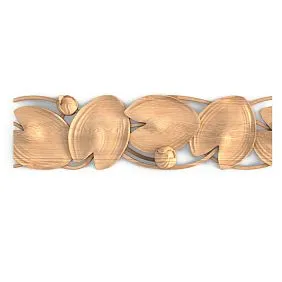
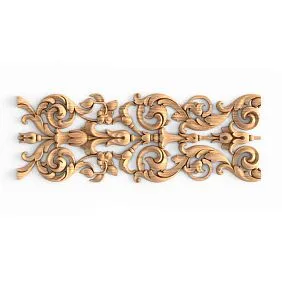
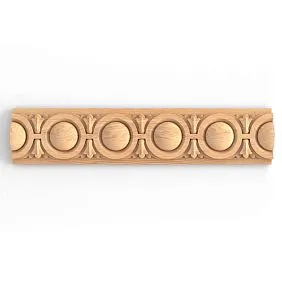
Our factory also produces:



Why choose wooden, not plastic or metal baguette
This question is asked by everyone who compares prices. Plastic baguette is 3–5 times cheaper. Aluminum — very precise in geometry. Polyurethane — lightweight and with detailed relief. So why wood?
First — tactility and visual honesty. Real wood has a texture that cannot be fully reproduced in other materials. In a gallery or private home setting, where genuine works of art reside, framing made from solid wood creates a context of respect for the work.
Second — repairability. A wooden baguette can be restored: fill a chip, repaint, apply a new coat of oil. Damaged plastic — goes to disposal.
Third — durability with proper care. Well-dried beech baguette under varnish or oil lasts for decades without deformation. Plastic ages, fades, cracks from ultraviolet light.
Fourth — ecological reputation. In an interior where material purity is important — natural wood, natural fibers, natural finishes — a plastic frame creates dissonance.
Get Consultation
Types of wooden baguette strips: a complete overview of profiles
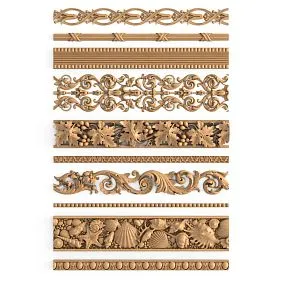
CatalogSTAVROS wooden baguetteincludes over thirty models — and behind each lies its own logic of form, its own aesthetic program, its own context of application. Let's examine the main types.
Simple flat profiles: honest geometry
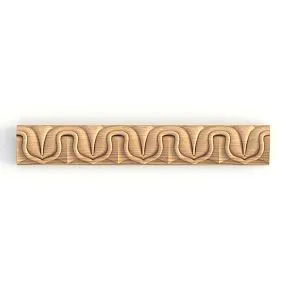
Flat baguette with a minimal profile — rectangular cross-section without decorative elements or with a slight bevel on the outer edge.Wooden Molding K-034andK-125— are representatives of this type. Laconic, universal, without pretensions to decorativeness.
Such baguette is the perfect framing for contemporary painting, graphics, photographs, posters. It does not compete with the image — only indicates its boundary. Especially good in black or white paint: a black narrow frame on a white wall — a classic of gallery design.
Width: 15–40 mm. Profile height: 10–20 mm. Rebate depth: 5–10 mm.
Classical profiles with ovolo and astragal
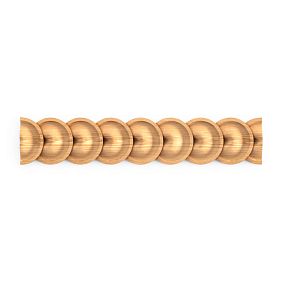
The classic baguette is a system of profiles developed by the architects of ancient Rome and passed down to us through the Renaissance and Baroque periods. The ovolo (quarter-round groove), astragal (small bead with a fillet), and cyma reversa (S-shaped profile) are the building blocks of a classic frame.
Wooden Molding K-006— an elegant classic profile with an ovolo.K-016— wider, with a more developed system of profiles. These models work in the context of a classic interior: alongsidewooden moldingson walls,wooden cornicesanddoor casingsmade from solid wood of a single species.
When stained dark walnut or gilded, such a profile recreates the look of frames from old European galleries—not as a copy, but as a continuation of the tradition.
Wide profiles with a cove: the triumph of depth
The cove is the concave surface between the outer edge and the inner lip. This is a classic Baroque technique: the deep shadow formed in the cove visually distances the painting from the viewer, creating an illusion of space between the frame and the canvas. The painting appears recessed into the frame, and this effect enhances its monumentality.
Wooden Molding K-011— a wide profile with a developed cove. The width of a frame made from this baguette is 60–80 mm. This is already a monumental framing, suitable for large-scale paintings, portraits, religious icons, and historical works.
K-002 and K-004— similar profiles with different cove and edge solutions. Each carries a slightly different character: one more solemn, the other more intimate.
Carved and ornamental profiles: maximum decorativeness
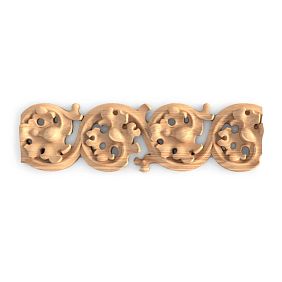
Carved profiles are the top tier of wooden baguettes. The front surface features a milled relief: floral ornamentation, geometric motifs, rhythmic repetition.K-070— a profile with ornamental relief, reproducing motifs of French Baroque.K-009— a large carved profile with a deep floral motif.
Such a baguette is suitable for framing significant artworks: oil paintings, iconography, formal portraits. Alongsidewooden decorative overlayson furniture and walls, an ornamental baguette creates a unified decorative language—a space where every detail converses with the others.
K-104— a representative profile of the highest category with detailed ornamentation. This is already a status choice: for framing paintings in a collection, for gallery spaces, for a formal study.
Narrow and minimalist profiles: for contemporary art
Contemporary painting, abstraction, watercolor, photography—these works often require minimal framing that does not compete with the image.K-034 and K-125with a width of 15–25 mm are the perfect choice in this case. Wood under matte oil creates a warm, neutral context without decorative ambitions.
A special technique for contemporary interiors: a narrow natural beech baguette without a finish or under clear oil on a wall with a concrete texture or white plaster. The warmth of wood and the coolness of a mineral background—this dialogue of materials makes the wall interesting.
Wood species for wooden baguettes
The wood species affects three parameters: appearance, workability, durability.
Beech is the primary species in the production of STAVROS wooden baguettes. Its fine-grained structure without large pores allows milling thin profile details without chipping. Color—light beige. Under clear oil—warm, neutral. Under stain, it takes any shade evenly. Under white enamel—perfectly smooth. Accepts gilding and bronze powder well.
Oak is for those who value expressive texture. An oak baguette under clear oil is lively, voluminous, with character. Looks good in interiors where wood is the main material: alongsideoak staircase balusters, oakwith matching legsand oaktrimOak molding in such an environment is the closing element of a unified system.
Pine is an affordable option for a dacha, a country house, or budget decorative work. The softness of pine means that thin details of carved profiles may have tears—therefore, pine is less preferable for carved profiles.
How to choose a picture frame: decision-making algorithm
Choosing a frame molding is not intuition. It is a sequence of decisions, each of which influences the next.
First decision: painting size and frame proportions
There is a long-tested rule of proportions: the width of the frame should be proportionate to the size of the painting. For small works (up to 40×60 cm)—frame width 20–40 mm. For medium works (50×70 — 80×100 cm)—40–70 mm. For large works (from 100×120 cm)—60–100 mm or more.
A frame that is too thin on a large painting makes it visually unstable—like a signature written too small under a large text. A frame that is too wide on a small work overwhelms the image—the painting drowns.
Second decision: style and technique of the work
This is the most important decision. The frame should complement the work, not compete with it.
| Type of work | Recommended profile | Frame width | Finish |
|---|---|---|---|
| Contemporary painting, abstraction | Narrow flat | 15–30 mm | Oil, matte paint |
| Watercolor, pastel | Light classic | 25–50 mm | Toning, white enamel |
| 19th-century oil painting | Cassetta or carved | 50–80 mm | Gilding, dark toning |
| Photography, print | Flat minimalist | 15–25 mm | Natural oil, black paint |
| Icon | Wide carved | 40–70 mm | Gilding, stained color |
| Children's drawing | Any light | 20–35 mm | Bright paint or natural wood |
Third solution: frame color relative to the artwork and wall
Three classic scenarios. Frame in the tone of the painting's dominant color — the frame dissolves into the artwork, emphasizing it. Frame in a color contrasting with the wall background — the frame acts as an architectural element, accentuating the painting itself. Neutral frame (natural wood, white, black) — a universal choice that works in most situations.
Fourth solution: mat
A mat — a cardboard spacer between the image and the inner edge of the frame — is a separate framing tool. A white mat adds air around the image, creating distance between the artwork and the frame. A colored mat is an independent decorative technique. A double mat is an enhanced classic option.
When using a mat, the overall framing width (frame + mat) can be quite significant — take this into account when choosing the size of the molding strip.
Making a frame from wooden molding yourself
Making a frame from wooden molding yourself is a task that anyone with basic woodworking skills can handle. A picture frame is just four pieces of molding joined at right angles. The main things are saw precision and the right tools.
What you'll need
Tools: miter saw (must have a precise 45° angle stop), tape measure and pencil, square, workbench or flat surface, corner clamps for gluing, hammer for finish nails.
Materials: wooden molding of the required length (with a 15–20% allowance for trimming and mistakes), high-strength PVA wood glue, corner braces for frames (V-shaped metal fasteners) or 1.2×20 mm finish nails, wood filler for sealing corners, 150 and 220 grit sandpaper, finish coating.
Calculating the required length
This is a fundamentally important point where beginners most often make mistakes. The inner frame size (rebate) must match the size of the artwork. But you need to cut the molding strip according to the outer size. Formula:
Length of molding for the horizontal side = width of the picture + 2 × width of the frame (measured from the inner to the outer edge).
Length of molding for the vertical side = height of the picture + 2 × width of the frame.
When cutting at a 45° miter, the length of the molding along the outer edge equals the calculated length. Along the inner edge (along the rebate) — it is 2 frame widths less. Check both dimensions during fitting.
Step-by-step process
Step one: marking and cutting. Mark the start and end points of each piece on the molding. Cut at 45°. Check: the four pieces should form a rectangle without gaps at the corners.
Step two: dry fitting. Assemble the frame on a flat surface without glue. Check with a square: all four corners must be exactly 90°. If there is a deviation — check the cut. Small gaps up to 0.5 mm will be closed by the glue. Larger ones — recut.
Step three: gluing. Apply PVA wood glue to both surfaces of each joint, wait 2–3 minutes, and assemble the frame in corner clamps. Tighten the clamps evenly. Check the frame diagonals: they should be equal (this means the rectangle is not skewed). Leave for 2–4 hours.
Step four: additional fastening. For reliability, drive a V-shaped corner brace into each corner on the back side using a special gun or two finish nails at an angle. This is insurance: no matter how strong the glue is, the corners may not withstand if the frame falls.
Step five: finishing. Fill the corners on the front side, sand, apply the finish coating. If you want gilding — prime with acrylic primer, sand with 320 grit, apply bronze powder or gold leaf using the mordant gilding technique.
Common mistakes when making it yourself
The cut angle is slightly off from 45° — and a gap forms in the corner joint. Check the saw each time with a calibration square. Unequal frame diagonals — the frame is skewed. The artwork will be difficult to insert, the glass may crack during insertion. Too thin a layer of glue — the corner will come apart at the first impact. Mismatch between the rebate size and the artwork — the artwork either won't fit or will be loose. Measure the rebate, not the outer frame size.
Wooden molding strips and ready-made frames: which is better
There is no single answer to this question — only context.
Ready-made frames are convenient when you need to quickly frame a work of standard size.Wooden carved frames STAVROS— are finished products with refined design, produced on professional equipment. A mirror frameRM-052orRM-026— is an independent artistic object that frames not only the mirror but also the wall around it.
Wooden picture frame molding is needed when the size is non-standard, when you need to frame several works in a unified style, when you want to control every parameter yourself.Buy wooden picture frame moldingin the required length — and make frames precisely for your works.
Professional framers typically work with both options: ready-made frames — for urgent or standard tasks, molding — for individual projects.
Wooden picture frame molding in interior design: not just frames for paintings
When talking about wooden picture frame molding, many think exclusively of paintings. Meanwhile, the application of this material is significantly broader.
Decorative wall paneling
Wooden picture frame molding is an excellent material for creating rectangular panels on walls. Frames made from molding, glued to the wall according to markings, divide the plane into sections, creating the effect of classic panels. This is significantly cheaper than milled moldings and easier to install. Next towooden skirting boardbelow andwith wooden cornicesabove, such frames form a full-fledged panel zone for a classic interior.
Framing mirrors
A mirror without a frame is a functional item. A mirror in a wooden picture frame molding is an interior design element. A self-made frame fromwooden moldingwill cost significantly less than a ready-made frame, while you fully control the size and color.
Decorating door panels
Strips of wooden picture frame molding, glued along the contour of rectangular sections of a door panel, create an imitation of a paneled door. A smooth MDF door turns into a classic multi-panel one in a few hours of work — without replacing the panel, without major expenses. This technique is used in restoration and designer renovations.
Frames for photographs, diplomas, and documents
Wooden picture frame molding allows creating frames for any formats — including non-standard ones: panoramic photographs, A3 and A2 format diplomas, children's drawings in non-standard formats. A gallery wall of works in frames made from the same molding is a powerful design technique.
About STAVROS: wood as philosophy and craftsmanship
Wooden picture frame molding is a small product. But behind every linear meter lies a production culture that has been formed over twenty-plus years.
The company STAVROS was founded by artists Andrey Ragozin and Evgeny Tsapko in 2002 in St. Petersburg. From the first days, it operated not as a construction supplier, but as a workshop of artists who understand wood not only as a material but also as a language. The restoration of the Konstantinovsky Palace in Strelna, the Hermitage, the Alexander Palace — these are the first major projects where STAVROS's work was deemed worthy of the highest standards.
Today STAVROS produces over 30 models of wooden picture frame molding from selected beech and oak, as well as a full range of related products:Mirror Frames, Moldings, decorative molding, applique. Own drying chambers ensure material humidity of 8–14% — the optimum for stable geometry. Production operates under constant control: workshop temperature 20–24°C, air humidity not below 40%.
Buy wooden picture frame molding for paintingswith delivery across Russia and CIS countries, with pickup from showrooms in Moscow and St. Petersburg, from one linear meter — in the STAVROS catalog. Here, every strip is honest wood, precise profile, and production with soul.
FAQ: answers to the most popular questions
How does a wooden strip differ from wooden picture frame molding?
Strip is a general term for any small-section wooden linear product. Wooden picture frame molding is a type of strip with an L-shaped cross-section, including a rabbet for inserting an image. Not every strip is molding, but every molding is a strip.
How to calculate how many linear meters of strip are needed for a frame?
Frame perimeter = 2 × (width + height of the painting) + 8 × frame width (to compensate for miter joints). Add 15–20% reserve for errors and trimming. Example: for a 50×70 cm painting, frame 40 mm — perimeter = 2 × (50+70) + 8 × 4 = 240 + 32 = 272 cm + 20% reserve ≈ 330 cm ≈ 3.3 linear meters.
What glue to use for gluing frame corners?
High-strength woodworking PVA is the best choice. Applied to both surfaces, left for 2–3 minutes until it reaches a stringy condition, then pressed. Setting time 4 hours, full strength 24 hours. Alternative — two-component epoxy glue for maximum strength.
Can you paint a wooden molding gold yourself?
Yes. Process: acrylic primer in 2 coats → sanding with 320 grit → acrylic medium (mordant) → application of gold leaf or metallic powder → finishing varnish. To imitate patinated gold — after applying the gold, wipe dark glazing paint into the recesses of the profile and wipe off from the raised parts.
How to insert a canvas into a ready-made frame?
The canvas on a stretcher is inserted into the frame from the back: place the frame face down, insert the canvas into the rebate. If the canvas is on a stretcher — its depth must match the depth of the rebate. For securing, use Z-clips (flange staples), which hook one end onto the back edge of the stretcher and the other onto the back plane of the frame.
Is glass needed in a frame for an oil painting?
No. Oil painting is not protected with glass — it needs to 'breathe'. Glass is placed in frames for watercolors, pastels, graphics, photographs, and any works on paper. For oils — only a frame without glass.
How to choose molding for an icon?
An icon is traditionally framed in a wide, richly profiled molding with gilding or in a dark stained version. Frame width — at least 40–60 mm. Profile — with a cassette or ornamental. The inner edge (closest to the image) is often made red or dark. We recommend K-009 or K-070 — wide ornamental profiles that create a fitting appearance.
How to store wooden molding before making a frame?
Horizontally, on a flat surface or suspended by the ends. Never vertically — under its own weight, a long strip sags and acquires a curvature that can no longer be corrected. Storage conditions: temperature 18–22°C, air humidity 40–60%.