Article Contents:
- Philosophy of unfinished molding: freedom of creative choice
- Why masters choose unprocessed wood
- Economic advantages of unprocessed material
- Wood species: choosing the base for creativity
- Spruce: a universal material for beginners
- Linden: premium choice for carved work
- Oak: the aristocracy of molding
- Technological aspects of choosing unfinished molding
- Understanding profiles and their functionality
- Quality characteristics of wood
- Application areas: from classic frames to modern decor
- Framing Artworks
- Architectural decor and moldings
- Restoration and styling in antique style
- Processing and decorating techniques
- Surface preparation: the foundation of quality results
- Priming: Creating the Ideal Base
- Painting: realizing creative vision
- Tools and materials: arsenal of a home craftsman
- Basic toolset
- Consumables and their selection
- Safety and organization of the workspace
- Economic aspects: calculating cost-effectiveness
- Comparison of costs of ready-made and DIY solutions
- Time investment and its optimization
- Long-term perspective and return on investment
- Modern Trends and Innovations
- Ecology as a priority
- Technological innovations in finishing materials
- Integration with smart technologies
- Practical tips for choosing and purchasing
- Quality criteria for unfinished molding
- Calculating Required Material Quantity
- Storage and transportation conditions
- Conclusion

Everyone who has ever held a painter's brush or admired masterpieces in museum halls knows: a frame is not just a border. It is an extension of the artwork, its voice, its character. And unfinished wooden molding means acquiring the foundation for creating your own masterpiece of decorative art.
Imagine: in your hands is a piece of natural wood, untouched by paint, not hidden under layers of varnish. Its surface breathes naturalness, the texture tells the story of the tree's growth, and the aroma of wood fills the workshop with an irreplaceable atmosphere of creativity. This is exactly how unfinished wooden molding appears before us — a clean canvas for realizing the boldest design ideas.





Philosophy of the uncolored baguette: freedom of creative choice




Why masters choose unfinished wood
There is a deep understanding among professional picture framers and decorative artists: working with uncolored material means gaining absolute creative freedom. When you purchase a pre-colored profile, you are buying someone else's interpretation of beauty. But by choosing natural, uncolored picture frame molding, you become a co-creator of a unique decorative element.
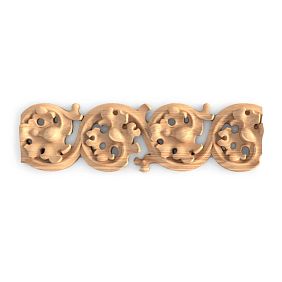
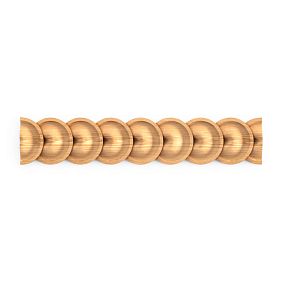
Wooden trim In its original form, it allows you to feel the character of the wood species, assess the quality of processing, and understand the material's potential. Pine will reveal its resinous soul, oak will demonstrate noble hardness, and linden will show soft malleability to the master's chisel.
Unfinished picture frame molding is an investment in individuality. No one else will be able to replicate your exact color solution, your technique of applying finishes, your vision of the final result. It is a path from mass-produced items to exclusive, one-of-a-kind creations.
Our factory also produces:




Economic advantages of unfinished material
The financial aspect also plays an important role in choosing unfinished picture frame molding. The cost of pre-colored profiles includes not only the price of the wood and processing, but also expensive coating, drying, and packaging processes. The manufacturer includes in the price their artistic decisions, marketing expenses, and risks of defects during coloring.
By purchasing natural picture frame molding without finish, you pay exclusively for high-quality wood and precise geometric processing of the profile. Everything else — paints, varnishes, patinas, gilding — remains at your discretion and budget. The possibility of a phased approach to final finishing allows you to distribute expenses over time and choose materials precisely according to specific tasks.
Moreover, working with unfinished picture frame molding allows you to correct mistakes, change the concept, or adapt the color solution to a changed interior. Admit it, repainting an already finished frame is significantly more difficult than initially creating a finish according to your own design.
Get Consultation
Wood species: choosing the basis for creativity
Pine: a universal material for beginners
Pine is rightfully considered the most popular material for making picture frame molding. This coniferous species has an ideal combination of accessibility, workability, and aesthetic qualities. Light-colored wood with a distinct pattern of annual rings creates a natural base for any type of decorative finish.
The softness of pine wood allows it to be easily processed using both hand and electric tools. Carving pine is accessible even to beginners, and mistakes can be easily corrected by sanding. The low density of the material ensures excellent adhesion with various types of paints, primers, and varnishes.
A distinctive feature of pine is the presence of resinous areas, which may appear over time as characteristic dark spots. However, with proper surface preparation — degreasing and priming — this feature becomes an additional advantage, creating a unique living texture.
Linden: a premium choice for carved work
Linden is a material for true connoisseurs of picture frame art. Its wood has exceptional uniformity of structure, making it ideal for delicate carving and complex profile shapes. The absence of a pronounced grain allows for clean color solutions without interference from the natural wood pattern.
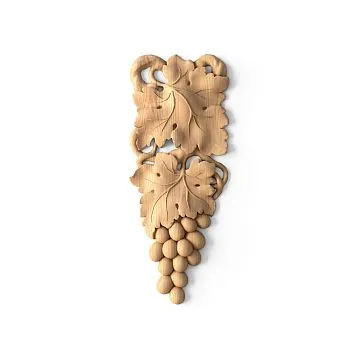
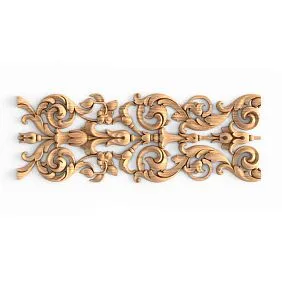
The softness of linden surpasses even pine, requiring special care during processing, but it opens up boundless possibilities for artistic carving. Solid wood carved trim It is often made from linden due to the wood's ability to convey the finest details of ornamentation.
The color of unfinished linden ranges from almost white to soft cream, creating an ideal base for light interior solutions. At the same time, the material accepts any type of toning beautifully, allowing it to imitate more expensive wood species or create imaginative color effects.
Oak: the aristocracy of picture frame art
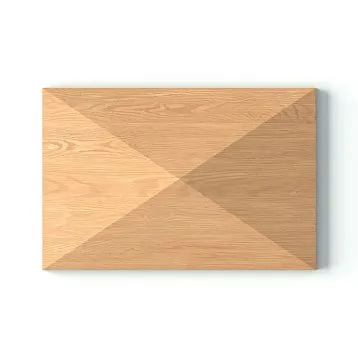
Solid Oak Products They represent the pinnacle of picture frame art. Hard wood with a distinct beautiful grain requires professional processing skills, but the result exceeds all expectations. The natural pattern of oak fibers is decoration in itself, and the strength of the material guarantees the longevity of the finished product.
Unfinished oak picture frame molding opens up special opportunities for creating exclusive frames. The technique of brushing allows highlighting the natural texture, creating a tactile, three-dimensional surface. Oak's staining with various compositions provides a rich palette of tones, from golden to nearly black.
The high density of oak wood requires special approaches to processing, but it ensures exceptional geometric stability of the finished product. Oak frames do not warp due to humidity changes, do not crack over time, and can withstand significant loads.
Technological aspects of choosing unfinished picture frame molding
Understanding profiles and their functionality
The geometry of the picture frame molding profile determines not only the appearance of the future frame, but also its functional capabilities. Simple rectangular cross-sections are suitable for modern minimalist solutions, while complex multi-level profiles create a play of light and shadow, adding depth and richness to the composition.
A classic profile with a rebate — an indentation for installing glass and a picture — requires precise calculation of dimensions when ordering. The depth of the rebate must correspond to the thickness of the package (glass + picture + backing), and the width must ensure secure fixation without compressing the materials.
Modern designer profiles may include hidden channels for LED lighting, special grooves for mounting systems, and integrated elements for hanging. When choosing such molding, it is important to consider compatibility with the planned framing and mounting system.
Quality characteristics of wood
Moisture content of wood is a critically important parameter for unfinished picture frame molding. Material with moisture content above 12% will continue to dry after installation, leading to deformations, cracks, and disruption of the frame's geometry. Quality manufacturers invariably indicate this parameter in the technical specifications of their products.
The grade of wood determines the number of allowable natural defects — knots, resin pockets, irregularities in texture. For premium-grade molding, only healthy, fused knots with a diameter of no more than 10 mm are permitted, whereas second-grade material may have more noticeable defects, which, however, are easily concealed by painting.
The accuracy of geometric dimensions is especially important for molding intended for creating frames of standard sizes. Deviations of several millimeters may lead to problems with corner alignment or mismatch with glass and frame sizes.
Applications: from classic frames to modern decor
Artwork framing
The classic use of wooden molding — creating frames for paintings, engravings, photographs — remains relevant today. Unfinished material allows creating framing perfectly suited to a specific artwork. Watercolors require light, airy frames in light tones, while oil painting demands heavier, more substantial framing.
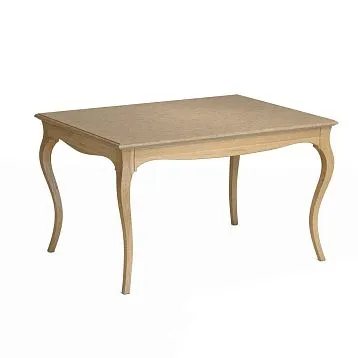
Classical furniture and interior items Often include elements made of molding — mirror frames, decorative panels, niche framing. The ability to create finishes precisely matching the main furniture makes unfinished molding indispensable for restoring antique items or creating stylistically unified interior compositions.
Modern interior design trends include using molding to create decorative wall panels, framing door and window openings, and highlighting functional zones within a room. In these cases, the ability to precisely match color and finish becomes a decisive factor in the success of the design solution.
Architectural decoration and moldings
Using molding as architectural decoration opens up wide possibilities for creating unique interior solutions. Ceiling moldings, wall panels, decorative friezes — all these elements can be created using unfinished wooden molding.
The ability to create seamless finishes over large areas is especially important. When using pre-painted material, joints between individual elements often remain noticeable due to differences in shade or factory finish texture. Hand-painting an already assembled structure allows creating a visually monolithic surface.
Modern Furniture Actively uses molding elements to create decorative accents, functional elements, and visual lightening of massive forms. Unfinished material allows precise color matching with the main furniture or creating contrasting combinations.
Restoration and antique styling
Restoration of old frames and creation of antique-style items — a special application area for unfinished molding. Authentic techniques of painting, patination, and gilding require special preparation of the base, which is impossible when working with pre-finished coatings.
The crackle technique — creating an effect of aged, cracked paint — can only be implemented on a specially prepared base. Multi-layer coatings with intermediate sanding, sgraffito, and grisaille techniques require full control over every stage of the final finish application.
Imitating various materials — marble, bronze, gold leaf, mother-of-pearl — is achieved through complex multi-step application of special compounds. The quality of the final result directly depends on the quality of base preparation and is impossible when using pre-painted materials.
Processing and decorating techniques
Surface Preparation: The Foundation of Quality Result
Any work with unfinished molding begins with careful surface preparation. Even the highest quality wood requires additional treatment before applying the final finish. The first stage — sanding the surface with abrasive materials of varying grit.
Initial treatment with coarse abrasives (grit 80-120) allows removing traces of machine processing, minor defects, and irregularities. Gradually reducing grit to 220-320 creates an ideally smooth surface ready for primer application.
Surface degreasing is especially important when working with resinous wood species. Solvents remove natural oils and resins that may hinder adhesion of coatings or appear as stains on the finished surface. For these purposes, special compounds or common alcohol-based solvents are used.
Priming: creating the ideal base
Priming unfinished molding performs several critically important functions. It equalizes the absorption capacity of different wood areas, prevents resin and tannin substances from penetrating the final finish, and ensures reliable adhesion between wood and paint.
The choice of primer type depends on the wood species and planned final finish. Alkyd primers are universal and suitable for most applications, acrylic primers dry quickly and have low odor, shellac primers are indispensable when working with problematic wood species containing active tannins.
Primer application technique requires special attention to even coverage and avoiding drips. Brushes work along the grain of the wood, carefully blending the material. Rollers provide more even application on large areas but require subsequent brushwork to eliminate the texture of the roller fibers.
Painting: realizing the creative vision
Direct painting — the final stage determining the appearance of the finished item. Paint selection depends on the frame’s operating conditions, decorative requirements, and project budget. Oil paints provide maximum coverage and color depth, acrylics dry quickly and have no odor, alkyd enamels create especially durable finishes.
Paint application technique can dramatically alter the appearance of the same material. Smooth glossy finishes are achieved through methodical application of thin layers with intermediate sanding. Textured surfaces are obtained using special brushes, sponges, stencils. Gradient transitions are created using dry brush or airbrush techniques.
Patination — a special technique of artificial aging of the surface. A dark compound is applied over the base color and partially removed, remaining in the recesses of the profile to simulate natural dirt accumulated over years of use. High-quality patina creates an authentic antique frame effect.
Tools and materials: the home craftsman’s arsenal
Basic tool set
Working with unfinished molding does not require professional carpentry equipment, but a certain set of tools is necessary to achieve a quality result. The core of the arsenal — a quality miter saw or miter gauge for precise corner cutting. Accuracy of 45-degree cuts is critically important for tight frame corner joints.
A sander significantly speeds up surface preparation, but can be replaced with hand sanding blocks when working with small material volumes. Eccentric sanders provide high-quality surfaces without risk of scratches along the grain.
Brushes of various sizes and types — the primary tool for applying finishes. Natural bristles are better suited for oil and alkyd compounds, synthetic brushes are optimal for working with acrylic materials. Short-pile rollers speed up work on large areas.
Consumables and their selection
The range of materials for processing unfinished molding is impressive in variety. Sanding materials are available both as traditional sandpaper and modern abrasive discs and fiber discs. Each type has its advantages and optimal application area.
Primers differ not only in chemical composition but also in specialization. Universal primers are suitable for most applications, but specialized primers provide better results under specific conditions. Isolating primers block the release of resins and tannins, while adhesive primers improve adhesion to problematic surfaces.
Finish materials — paints, varnishes, waxes, oils — are selected based on requirements for appearance and performance characteristics. Matte finishes conceal minor surface defects, while glossy finishes highlight the quality of surface preparation and create a depth of color effect.
Safety and Work Area Organization
Working with wood dust, solvents, and coatings requires adherence to safety rules. Respirators protect the respiratory tract from dust and solvent vapors, safety goggles prevent materials from entering the eyes, and gloves protect the hands from aggressive substances.
Ventilation of the work area is critically important when working with materials containing solvents. Natural ventilation may be insufficient, especially in winter when windows cannot be opened. Forced exhaust or local extractors ensure safe working conditions.
Work area organization affects both the quality of the result and the safety of the process. Good lighting allows for monitoring the quality of surface treatment, stable stands prevent damage to materials, and proper storage of tools and materials reduce the risk of accidents.
Economic Aspects: Cost-Benefit Analysis
Comparison of Costs of Ready-Made and DIY Solutions
The economic advantage of purchasing unfinished molding becomes evident when comparing the total cost of a ready-made frame with making it yourself. The price of a ready-made item includes not only material costs but also labor costs, workshop overheads, and retail markup.
unfinished wooden molding At a price of 30-50% of the cost of a ready-made painted equivalent. Adding the cost of consumables — primers, paints, varnishes — total expenses rarely exceed 70% of the ready-made item's price, while the result's quality is often higher due to an individual approach to each stage of work.
The savings become especially significant when manufacturing a series of identical frames. The cost of preparatory operations — purchasing tools, studying the technology, selecting materials — is distributed across the entire volume of work, reducing the cost per item.
Time Costs and Their Optimization
The time required to manufacture a frame from unfinished molding depends on the profile complexity, finish quality requirements, and the craftsman's experience. A simple rectangular frame with a single-color finish can be completed in one day, including material drying time.
Complex decorative finishes require significantly more time. Multi-layer painting with intermediate sanding, patination, and gilding may take a week or more. However, the result justifies the time invested, especially considering the impossibility of purchasing a comparable ready-made item.
Time optimization is achieved through proper process organization. Parallel processing of multiple items, using fast-drying materials, and employing specialized tools significantly reduce total manufacturing time without compromising quality.
Long-Term Perspective and Return on Investment
Investments in tools and mastering the technology of working with unfinished molding pay off after manufacturing 3-5 medium-sized frames. Further use of skills and tools brings pure economic savings without additional capital expenditures.
The possibility of repairing and updating manufactured frames adds economic attractiveness to DIY production. Scratches, chips, or changes in interior color schemes do not require purchasing new frames — a local repair or full repaint is sufficient.
Accumulated experience opens opportunities for additional income. Manufacturing custom frames can become an additional source of income, especially in small towns where specialized molding workshops are absent.
Modern trends and innovations
Ecological priority
Modern interior design trends increasingly emphasize the ecological properties of materials used. Unfinished wooden molding fully meets these requirements, especially when using water-based finishes.
The ability to choose coatings with minimal volatile organic compound content makes DIY finishing preferable from an ecological standpoint. Manufacturers of ready-made items often use more aggressive compositions to accelerate production cycles.
Certification of wood according to sustainable forestry standards is becoming an important factor in selection. Purchasing unfinished molding allows tracking the material's origin and verifying its compliance with ecological standards.
Technological Innovations in Finishing Materials
The chemical industry continuously offers new solutions for wood finishing. Nanocomposite coatings provide unprecedented resistance to mechanical damage and UV exposure. Self-healing coatings automatically repair minor scratches.
New-generation water-based materials match traditional solvent-based compositions in performance but offer significant advantages in terms of ecology and ease of use. The absence of odor allows working in residential spaces without health risks.
Specialized compositions for various decorative effects are constantly being added to the range. Metallic-effect paints, pearlescent finishes, thermochromic compositions that change color depending on temperature open new possibilities for creative self-expression.
Integration with smart technologies
Modern interiors increasingly include smart technology elements. Frames with integrated LED lighting that changes color and intensity via smartphone commands are no longer science fiction. Unfinished molding with pre-embedded channels for wiring allows creating such solutions independently.
Motion sensors built into the frame can automatically turn on artwork lighting when viewers approach. Climate sensors monitor the storage conditions of valuable paintings and transmit data to the smart home system.
3D printing capabilities open new horizons for creating unique decorative elements. Printed components can be integrated into traditional wooden molding, creating previously impossible shapes and textures.
Practical tips for choosing and purchasing
Quality Criteria for Unfinished Molding
When selecting an uncolored wooden molding, primary attention should be paid to the quality of the wood and the accuracy of the profile processing. The surface should be smooth, free of scratches and marks from faulty tools. The profile geometry must correspond to the stated dimensions with a tolerance of no more than ±0.5 mm.
The wood moisture content must not exceed 12%. Exceeding this value may lead to deformation after finishing. Quality manufacturers invariably indicate the moisture content in accompanying documentation and guarantee dimensional stability.
The grade of wood determines the number of allowable natural defects. For demanding applications, choose first-grade material; for less demanding tasks, second-grade material is acceptable with subsequent filling of defects.
Calculating the required amount of material
Calculating the required amount of molding should consider not only the perimeter of the frames being made but also technological losses from cutting angles, possible defects, and a reserve for future repairs. The standard delivery length of molding is 2.5–3 meters, which should be considered when planning cuts.
For a 50x70 cm frame, at least 2.4 meters of molding is required. Adding technological losses from cutting angles (typically 20–30 cm per frame) and a small reserve, you should order at least 3 meters of material. When manufacturing multiple frames simultaneously, relative losses are reduced.
Complex profiles require more material due to a higher risk of chipping during cutting. Molding with deep grooves and sharp edges is especially sensitive to the quality of cutting tools and requires more careful handling.
Storage and Transportation Conditions
Uncolored wooden molding requires special storage conditions to maintain quality. Air humidity should be stable, within 40–60%. Sudden fluctuations in humidity may cause profile deformation, cracking, and changes in geometric dimensions.
Molding should be stored horizontally on a flat surface. Vertical storage of long profiles may cause sagging under their own weight. When stacking in piles, use spacers between layers to ensure ventilation.
Transporting molding requires protection against mechanical damage. The corners and edges of the profile are particularly susceptible to chipping and dents. Packaging in protective film or cardboard prevents damage during transport and unloading.
Conclusion
unfinished wooden molding This is a solution for those who value individuality, quality, and the opportunity for creative self-expression. In a world of standardized solutions and mass production, uncolored molding remains an island of freedom for artists, designers, and anyone unwilling to compromise with the limitations of ready-made products.
The economic advantages of processing molding yourself are obvious, but the main value lies in the ability to create unique items fully matching individual requirements and tastes. From classic gilded frames to ultra-modern minimalist solutions — all of this becomes accessible thanks to working with uncolored material.
Technologies and materials are constantly improving, opening new possibilities for creativity. Eco-friendly coatings, innovative decorative effects, integration with modern technologies — all of this makes working with uncolored molding not only practical but also an engaging activity.
It is important to remember that the quality of the final result directly depends on the quality of the raw material. Choosing a proven supplier, paying attention to details when purchasing, and following processing technology — this is the foundation of success in creating truly high-quality and beautiful items.
The modern market offers a wide variety of uncolored molding in different species, profiles, and price categories. This allows everyone to find the optimal solution for their tasks, whether creating a single frame for a family photo or organizing a serial production of exclusive items.
Skill comes with experience, but even the first projects with uncolored molding will bring satisfaction from creating something unique by your own hands. Each frame will carry the imprint of your individuality, reflect your taste and craftsmanship.
STAVROS continues the traditions of high-quality production of solid wood items, offering a wide range of uncolored molding and decorative elements for the most demanding clients. Years of experience, modern equipment, and unwavering commitment to quality make STAVROS a reliable partner for professionals and hobbyists. STAVROS understands the importance of an individual approach to each project and is ready to offer solutions for the most complex creative tasks, ensuring consistently high product and service quality.