Article Contents:
- Principle of visual support for architecture
- Wooden cornice as an element of authenticity
- Polyurethane facade decoration - protection and expressiveness
- Aesthetics of tradition and technology in the exterior
- Modern solutions STAVROS
- Questions and Answers
- Conclusion - a facade with character and soul
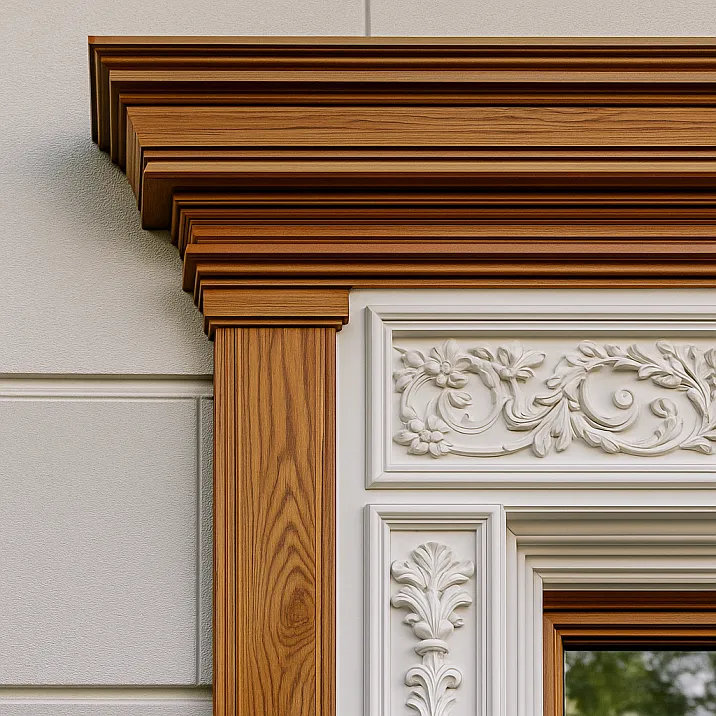
The facade of a house is its face, an architectural business card, the first impression the building makes on the viewer.wooden corniceandFacade decoration made of polyurethane— two architectural tools working to create the expressiveness of the exterior. A massive cornice made of natural wood crowns the facade, creating the roof's finish, protecting walls from precipitation, adding natural aristocracy. Polyurethane elements — window casings, pilasters, moldings, friezes — form the architectural structure of walls, create rhythm, proportions, stylistic definiteness. Together, they transform a simple building box into an architectural work, where the traditional warmth of wood meets the technologically practical nature of modern materials.
The philosophy of combining natural and synthetic materials on the facade traces its roots to the evolution of construction technologies. Wooden architecture for centuries used carved cornices, friezes, and window sills as both functional and decorative elements. Modern materials have expanded possibilities — polyurethane allows reproducing the most complex classical forms, resistant to any weather conditions. Combining traditional wood in key zones with practical polyurethane elsewhere creates a balance of authenticity and durability, prestige and reasonable costs.


Principle of visual support for architecture
Visual support for architecture through decorative elements is based on strengthening the constructive logic of the building. Even when elements are purely decorative, they must create the impression of constructive necessity, architectural appropriateness. The cornice under the roof is perceived as an element supporting the roof overhang, protecting the walls. Pilasters at the corners of the building are read as reinforcement, constructive pillars. This illusory constructiveness creates psychological comfort.
Horizontal lines of cornices, belts, friezes create visual division of the facade, organize perception. Without horizontal division, the facade is perceived as a monolithic flat wall, dull and monotonous. The cornice under the roof, the intermediate belt at the floor level, the foundation belt at the base — this system of horizontals divides the facade into zones, creates scale, proportions.
Vertical elements — pilasters, corner elements, vertical moldings between windows — create rhythm, divide the extended facade into sections. Regular placement of vertical elements forms a classical order rhythm. A house with pilasters spaced evenly is perceived as architecturally organized and thoughtfully designed.
Accentuating the entrance zone through concentration of decoration creates visual hierarchy. The main entrance receives a portal with columns or pilasters, a pediment, rich framing. Side and rear facades are decorated more modestly. This gradation emphasizes the functional importance of various parts of the building.
Window framing transforms functional openings into architectural elements. Window casings with sills, decorative keystone stones, window cornices create a rhythmic structure of the facade. Windows become not just holes in the wall, but organized compositional elements.
Building corners require visual reinforcement. Corner pilasters, rusticated stones, decorative overlays emphasize the edges of volume, making it readable. A building without accentuated corners appears blurred, lacking clear geometry.
The foundation zone — transition from foundation to walls — is visually reinforced through rustication, foundation belt, distinct finish. This creates a visual foundation of the building, the base of the architectural composition. Psychologically heavy base at the bottom corresponds to our experience of gravity.
Finishing the facade with a cornice under the roof is critically important. A facade without a cornice is perceived as cut off, unfinished. The cornice creates an architectural crown, logical completion of the wall. The width of the cornice, complexity of profile determine the status of the building — from modest residential house to prestigious mansion.
Symmetry creates classical grandeur. Symmetrical placement of windows, decorative elements relative to the central axis forms parade-like, representative character. Asymmetry adds liveliness, modernity, but requires a delicate sense of balance.
Proportions of elements determine harmony. Golden section, classical ratios 2:3, 3:5 create visually pleasing proportions. Windows, decoration, distances between elements, designed according to these ratios, are perceived as harmonious even by those who do not know the mathematics of beauty.
Scale of decoration corresponds to the size of the building. On a small house, massive cornices and large decorative elements look inappropriate. On a large mansion, delicate decoration fades. Correct scale creates harmony between decoration and architecture.
Color support for architecture enhances perception. Contrasting coloring of decorative elements — white decoration on colored walls — emphasizes architectural structure. Monochromatic solution — decoration in wall color — creates delicate play of relief and shadows.




Wooden cornice as an element of authenticity
Wooden cornice on the facade — direct reference to traditions of wooden architecture, sign of respect for architectural heritage. In Russian, Scandinavian, and Alpine traditions, a cornice made of solid wood was a mandatory element of any house. It protected the upper part of walls from water dripping from the roof, created architectural completion of the facade, served as a base for carved decoration.
Natural authenticity of wood creates a connection to traditions that cannot be imitated by synthetics. Texture of wood with annual rings, natural color variations, scent of wood — all this creates a sense of authenticity, real material with history. A house with a wooden cornice is perceived as built with respect for traditions.
Massiveness of the wooden cornice creates visual weight. A cornice made of timber with cross-section 150x200 mm or 200x250 mm — is a serious architectural element, noticeable from afar. Its shadow on the facade, especially in oblique rays of morning or evening sun, creates an expressive shadow relief.
Functionality of the wooden cornice is no less important than aesthetics. Projecting from the wall by 40-80 cm, the cornice creates protection from precipitation. Water runs off the roof, falls from the cornice onto the apron, not seeping onto the walls. This extends the life of facade cladding, protects against moisture and mold.
Ventilation function of the cornice is ensured by sheathing with ventilation openings. Air circulates under the roof, removing moisture, preventing condensation. A properly designed cornice — is not just a decorative element, but part of the roof ventilation system.
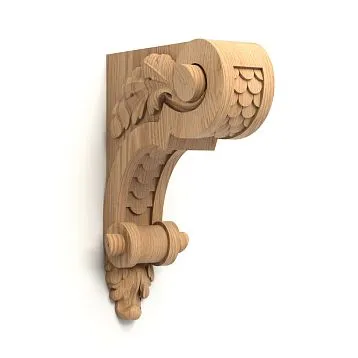
The carved cornice decoration creates artistic value. Carved corbels supporting the cornice transform a structural element into a work of art. The carved cornice soffit — the fascia — creates a lacy roof edge. The ends of the cornice boards are adorned with carved appliqués.
Wood species for cornices are selected based on durability and aesthetics. Larch is the optimal choice due to its natural resistance to rot. The resinous nature of larch repels insects and protects against fungi. Oak is the benchmark for strength, but requires quality protective treatment. Cedar is aromatic, beautiful, and expensive. Pine is affordable but requires enhanced protection.
Protective treatment is critical for the longevity of wooden cornices. Deep pressure impregnation with antiseptics protects the wood from within. Facade oils or UV-filtered lacquers create a surface barrier. Regular renewal every 3-5 years extends the cornice’s life by decades.
Color treatment expands design possibilities. The natural wood color under transparent coating showcases the beauty of the species. Staining with stains creates darker, more saturated tones. Painting with opaque paints in white, gray, traditional northern house colors — red, green — creates a vivid folk aesthetic.
Installing a wooden cornice requires professionalism. The cornice is attached to rafter ends via a special system of corbels or consoles. Accurate geometry — horizontal alignment and straight lines — is essential. Board joints are made with a 45-degree mitre or vertical joints with caps. Quality installation determines not only appearance but functionality.
Coordination with roofing material must be thoughtfully planned. A wooden cornice harmonizes with natural tile, wooden shingles, or copper roofing. With modern materials — metal roofing, profiled sheeting — it creates a contrast between tradition and technology. Roof and cornice colors are coordinated — dark roofing with natural wood cornice, light roofing with painted cornice.
The service life of a properly installed wooden cornice is measured in decades. Historic buildings with original wooden cornices from the 18th-19th centuries prove that with careful maintenance, wood can serve for centuries. Regular inspection, timely coating renewal, and local repair of damage ensure longevity.
Our factory also produces:


Polyurethane facade decoration — protection and expressiveness
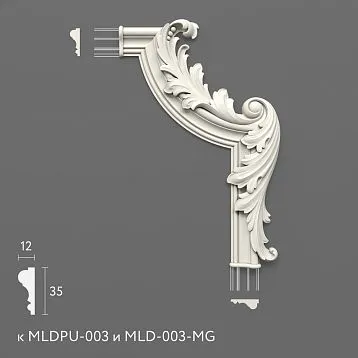
facade decoration made of polyurethaneRevolutionized architectural decoration possibilities. What once required stonemason or plasterer-carving work is now accessible thanks to polyurethane elements. Window casings, pilasters, moldings, rusts, keystone stones, balustrades — the entire arsenal of classical architecture is reproduced in a lightweight, durable, affordable material.
Lightweight — the main advantage of polyurethane. A 150x100 cm window casing weighs 2-3 kg compared to 20-30 kg of stone or gypsum analogs. This simplifies installation, eliminates the need for wall reinforcement, and allows decorating even lightweight frame structures. One person can install an element that would require a crew in stone.
Polyurethane’s water resistance is absolute. The material does not absorb water, does not swell, does not deform from moisture. A facade constantly exposed to rain, snow, and fog requires water-resistant materials.polyurethane facade moldingEnsures decorative appeal without the risk of damage from moisture.
Freeze resistance is crucial for the Russian climate. Polyurethane withstands hundreds of freeze-thaw cycles without losing properties. Water on the surface does not penetrate, does not freeze inside, does not create destructive stresses. This is critical for regions with harsh winters.
Impact resistance exceeds gypsum and polystyrene. Polyurethane is elastic and withstands mechanical impacts — hail, falling branches, accidental hits during facade maintenance. Polystyrene crumbles on impact, gypsum cracks, polyurethane absorbs the impact.
Detail reproduction accuracy is phenomenal. Casting in molds ensures perfect repetition of each ornamental element. Complex classical profiles, fine lines, small details are reproduced with millimeter precision. Visually, polyurethane decoration is indistinguishable from stone or gypsum.
Variety of elements is impressive. Manufacturers offer thousands of models — from minimalist moldings to lavish baroque compositions. Casings of all styles and sizes. Pilasters with bases and capitals of classical orders. Rusts for corner and foundation decoration. Keystone stones for windows. Balustrades for balconies. Full arsenal of classical architecture.
Installation is simple and accessible. Elements are glued with special polyurethane adhesive or mounting foam. Additional fastening with self-tapping screws after pre-drilling. Joints are filled with sealant and sanded. After painting, joints become invisible. The technology does not require high qualification.
Painting creates the final appearance. Polyurethane accepts any facade paints — acrylic, silicone. Basic white painting creates a classic look. Painting to match wall color integrates decoration into the facade plane — visible only by relief. Patination creates a weathered stone or antique effect.
Cost is democratic. A facade decoration kit for a house — casings for all windows, pilasters at corners, moldings, foundation band — costs 150,000–300,000 rubles. An equivalent natural stone decoration would cost 1–2 million. Savings are tenfold for visually identical results.
Manufacturers claim a service life of 25–30 years. Practice shows that with proper installation and regular repainting, polyurethane decoration lasts 40–50 years. The only maintenance — repainting every 7–10 years to refresh UV protection.
Ecological safety of modern polyurethane is high. The material is inert, does not emit harmful substances, is safe for humans and the environment. Certified for residential construction. Environmental concerns relevant to older polyurethane types are irrelevant for modern formulations.
Repairability — a polyurethane advantage. A damaged element is easily removed and replaced with a new one. Cracks are filled with putty and painted. Local repair does not require dismantling the entire decorative system. This is vastly simpler than restoring stone or gypsum decoration.
Get Consultation
Aesthetic of tradition and technology in the exterior
Combinationwooden corniceandArchitectural decoration from polyurethaneCreates a multi-layered aesthetic where tradition and technology mutually reinforce each other. Wood brings authenticity, natural warmth, and connection to the history of wooden architecture. Polyurethane adds architectural expressiveness, classical forms, and practicality. The result — a facade with character, where each material performs its role.
Visual material distribution is based on the principle: wood where authenticity and prestige matter, polyurethane where durability and economy matter. The cornice under the roof — the most prominent finishing element — is made of wood, creating a natural accent. The rest of the decoration — window casings, pilasters, moldings — is made of polyurethane, ensuring architectural expressiveness at reasonable costs.
Stylistic unity is ensured by selecting appropriate profiles. A classic carved wooden cornice requires classic polyurethane elements — with Ionic capitals, scrolled details, traditional ornaments. A simple, minimalist wooden cornice harmonizes with minimalist polyurethane moldings. Stylistic dissonance — a baroque cornice with minimalist decoration — destroys harmony.
Proportional correspondence is critical for visual balance. A massive wooden cornice 60–80 cm wide requires large polyurethane elements — casings 15–20 cm wide, pilasters 30–40 cm wide. A delicate cornice 30–40 cm wide harmonizes with elegant decoration — casings 10–12 cm, thin moldings. Proportionality creates a sense of thoughtful design.
Color coordination unifies different materials. Classic solution — natural wood cornice with white polyurethane decoration. This contrast between natural warmth and artificial coolness has been proven over centuries. Alternative — painting the cornice and decoration in a single color, creating a monochromatic composition. Third option — tinting polyurethane to match the wood color, maximally integrating materials.
Regional traditions define the character of combinations. In northern regions of Russia, traditional massive wooden cornices with carving and white or bright (red, green) polyurethane decoration are common. In southern regions — lighter cornices and abundant polyurethane molding imitating Mediterranean architecture. Alpine style uses massive wooden cornices with geometric polyurethane decoration.
Functional integration enhances practicality. A wooden cornice with sub-fascia creates a ventilated system under the roof. Polyurethane window casings provide sealing of installation joints and protection against air leakage. Both materials serve not only aesthetics but also the functionality of the facade.
Seasonal changes affect materials differently. Wood changes hue due to sun exposure, acquiring a noble patina of time. Polyurethane remains unchanged for decades. This difference creates an interesting dynamic — living wood ages beautifully, while polyurethane retains its original appearance.
The economic efficiency of the combination is obvious. Using expensive wood only for the cornice instead of full wooden facade cladding saves hundreds of thousands of rubles.Polyurethane house decorationcovers other decorative needs affordably. This allows creating expressive facades even with a limited budget.
Historical continuity is created through the wooden cornice. Even on a modern house made of brick or gas concrete, a wooden cornice refers to the traditions of wooden architecture. Polyurethane decoration can reproduce historical styles — classicism, baroque, modernism. The combination creates a house with history, even if built yesterday.
Project individuality is guaranteed by the combination of elements. A carved wooden cornice is ordered according to an individual sketch. Polyurethane decoration is chosen from thousands of models. The combination of colors, proportions, styles creates a unique facade, unlike standard projects.
Long-term relevance is ensured by classic forms. A wooden cornice is an architectural element with a thousand-year history. Classic polyurethane decoration reproduces time-tested forms. Such a facade will not become outdated within 5-10 years, unlike trendy solutions.
Modern STAVROS Solutions
STAVROS Company offers a comprehensive approach to facade decoration, where wooden cornices and polyurethane moldings work in a harmonious ensemble. Design begins with analyzing the building’s architecture, the client’s stylistic preferences, regional climatic conditions, and budget constraints. The result is an individual solution where each material is used optimally.
STAVROS wooden cornices are made from selected wood — larch, oak, cedar. Standard profiles and custom-made according to individual sketches. Carved elements are produced on CNC machines or by hand by master carvers. Deep protective treatment — impregnation with antiseptics, facade oil coating — ensures longevity.
Polyurethane decoration is presented by thousands of models from leading European manufacturers. Casings of all styles and sizes — from minimalist 8 cm wide to lavish 25 cm. Pilasters with bases and capitals of Doric, Ionic, Corinthian orders. Moldings, friezes, rusts, keystone, balustrades. Full assortment for any stylistic solution.
3D visualization design allows the client to see the result before work begins. The designer creates a facade model with various decoration options. Variants can be compared, details adjusted, and the optimal solution chosen. Visualization eliminates surprises and guarantees alignment with expectations.
Project kit includes all necessary elements with precise quantity calculation. Wooden cornice trim, brackets, sub-fascia. Polyurethane elements — casings for each window, pilasters, moldings, decorative overlays. Fasteners, glue, sealants, paints. The client receives a complete kit for implementation.
Professional installation by STAVROS crews guarantees quality. Installers with 10-15 years of experience know all nuances of working with wood and polyurethane. Precise geometry, sealed joints, correct fastening — all performed according to technology. 2-year warranty on installation work.
Coordination with roofers and facade specialists ensures integration of decoration into the overall facade system. The wooden cornice is installed synchronously with the roof. Polyurethane decoration is installed after facade finishing but before final painting. Coordination of stages is critical for quality.
Service maintenance includes consultations on care, supply of materials for coating renewal, and repair work. Five years after installation, STAVROS reminds clients about the need to renew the protective coating of the cornice, offering professional treatment services. Client care does not end after project completion.
Material warranties are provided by manufacturers. Wooden cornice — 5-year warranty with proper care instructions. Polyurethane decoration — 10-year manufacturer warranty. These warranties ensure confidence in the longevity of the investment.
Pricing is transparent and clear. Cost of wooden cornice — 2000–5000 rubles per linear meter depending on species and complexity. Polyurethane decoration — casing 2000–6000 rubles per unit, pilaster 5000–15000 rubles. Installation — 30–50% of material cost. For a typical 150 sq.m. house, total facade decoration cost is 300,000–600,000 rubles.
Portfolio of completed projects demonstrates diverse solutions. Classic mansion with a massive carved cornice and lavish polyurethane decoration. Modern house with a minimalist cornice and minimalist moldings. Alpine chalet with a wide wooden cornice and geometric decoration. Each project is unique, reflecting the owner’s taste.
Consultative support helps make the right decisions. STAVROS specialists answer questions, explain technical nuances, and propose optimal options. Consultations are free and help clients navigate the variety of possibilities.
Collaboration with architects and designers expands possibilities. STAVROS provides professionals with catalogs, technical documentation, material samples, and custom design options. Joint projects create facades of the highest level.
Questions and answers
Why combine a wooden cornice with polyurethane decoration, rather than using everything from one material?
Combination optimizes the balance of aesthetics, practicality, and cost. Wooden cornice in the key zone — facade finish — creates prestige, authenticity, and connection to traditions. Full wooden facade would cost millions. Polyurethane decoration on other zones ensures architectural expressiveness, durability, and moisture resistance at reasonable prices. Full polyurethane would deprive the facade of the natural warmth of wood. Combination — optimal compromise.
How long does polyurethane decoration last on a facade in Russian climate?
With proper installation and regular painting — 40–50 years. Manufacturers guarantee 25–30 years, but practice shows greater longevity. Critical: quality installation with sealed joints, initial painting immediately after installation, repainting every 7–10 years. Main enemy — UV radiation, destroying unprotected polyurethane. Paint with UV filter solves the problem.
Can a wooden cornice be installed on a stone or brick house?
Yes, and it is necessary to create expressiveness. Wooden cornice combines beautifully with any wall material — brick, gas concrete, plaster. It creates an interesting material contrast. It is mounted via bracket or console systems to the top of the wall or rafter ends. Proper waterproofing of the cornice and wall joint is essential. The technology is proven, no problems.
What care is required for a wooden cornice?
Minimal, but regular. Annual inspection — check for damage or coating peeling. Cleaning with soft brush or water jet. Every 3–5 years, renew protective coating — light sanding and application of fresh oil or lacquer. This takes one day of work but extends the cornice’s life by decades. Without care, wood darkens and may begin to rot.
How much more expensive is a facade with decoration compared to plain plaster?
For a 150 sq.m. house: plain plaster - 300,000–500,000 rubles. Plaster + full decoration (cornice, window casings, pilasters, moldings) - 600,000–900,000 rubles. Price increase by 1.5–2 times. But the result is incomparable - instead of a faceless box, a house with character, architectural expressiveness, individuality. Decoration also increases the house’s market value by 15–20%.
Can polyurethane decoration, imitating wood, be used instead of real cornice?
Yes, but the effect is not the same. Polyurethane imitation of wood looks visually similar from afar, but up close, the imitation is visible. The absence of natural texture, uniform color, plastic sheen reveals the synthetic nature. Real wood creates authenticity that cannot be imitated. If the budget is limited, it’s better to use a wooden cornice + polyurethane decoration in its own form, rather than everything made of polyurethane imitating wood.
How to choose decoration style for a modern house?
For modern architecture, a minimalist interpretation of classic style is suitable. A simple wooden cornice without carving or with delicate geometric carving. Polyurethane decoration with simple forms - rectangular window casings, flat moldings without ornament. Colors are restrained - natural wood, white, gray. Avoid ornate Baroque moldings - they clash with modern architecture.
Is permission required to install decoration on the facade?
In a private house on your own plot - usually not, as decoration does not change the building’s structure. However, in historical zones or protected areas, there may be restrictions - check with the architectural department of the administration. In a multi-apartment building, facade changes require approval from the managing company and neighbors. On architectural monuments - mandatory approval from heritage protection authorities.
What errors are most commonly made when combining wood and polyurethane on the facade?
Disproportion - a heavy cornice with small decoration or vice versa. Stylistic dissonance - a classic carved cornice with minimalist moldings. Color chaos - several mismatched colors. Over-decorating - excessive elements. Cutting corners on installation - crooked lines, gaps at joints spoil the impression. Professional design by STAVROS eliminates these errors.
Can decoration be added to an already built house?
Yes, and this is a common practice. Many build a simple box first, then add decoration. Polyurethane elements can be mounted on any facade finish - plaster, siding, even wooden cladding. A wooden cornice requires a strong base - top of the wall or rafter ends. The key is correct sequence: first, facade finish, then decoration, final painting unifies everything.
Conclusion - a facade with character and soul
Combinationwooden corniceandpolyurethane moldings on the facadecreates architecture with character, where tradition meets technology, natural meets man-made, prestige meets practicality. A massive wooden cornice crowns the building, creating a natural accent, authenticity, connection to the traditions of wooden architecture.Outdoor facade decoration using polyurethaneforms the architectural structure of walls - window casings, pilasters, moldings, rusts - ensuring expressiveness, durability, accessibility.
Visual support of architecture through decorative elements transforms a simple box into a work of art. Horizontal lines of cornices and bands divide the facade, creating proportions. Vertical pilasters and moldings form rhythm. Framing windows, accenting corners, highlighting the entrance area organize perception, creating visual hierarchy.
A wooden cornice brings authenticity that cannot be imitated. The natural texture of wood, the smell of wood, massiveness, protective function - all this creates a connection with architectural heritage. Carved cornice decoration transforms a functional element into an artistic one. Proper protective treatment ensures durability for decades.
Polyurethane decoration solves tasks unattainable with traditional materials. Lightness, water resistance, frost resistance, impact resistance, precision of details, variety of forms, ease of installation, accessibility - a complex set of advantages makes polyurethane the optimal material for facade decoration. Visually, it reproduces stone, plaster, creating an illusion of expensive materials.
The aesthetics of tradition and technology create multi-layered effects, where each material performs its own role. Visual distribution, stylistic unity, scale correspondence, color coordination - principles of harmonious combination. Result - a facade where traditional wood and modern polyurethane mutually enhance each other’s expressiveness.
Economic efficiency is obvious. Using wood only for cornices instead of full wooden cladding saves hundreds of thousands.polyurethane facade moldingcovers other decorative needs affordably. This allows creating expressive facades with natural accents within a reasonable budget.
The durability of both materials is measured in decades. A wooden cornice, with proper care, lasts 50–100 years. Polyurethane decoration - 40–50 years. Regular maintenance - repainting, local repairs - extends lifespan.