Article Contents:
- Philosophy of Adaptive Minimalism: Space as a Constructor
- Hidden Functions: The Art of Being Unobtrusive
- Modularity: Constructor for Adults
- Transformable Spaces: One Room — Multiple Functions
- Wooden Accents: Warmth in a Minimalist Interior
- Color Palette of Adaptive Minimalism
- Materials of Adaptive Minimalism
- Lighting in Adaptive Spaces
- Zoning Without Walls
- Practical Solutions for Small Apartments
- Technologies in Adaptive Minimalism
- Psychology of Adaptive Space
- Frequently Asked Questions About Adaptive Minimalism
- Conclusion: Create an Adaptive Space with STAVROS

Minimalism is no longer sterile. In 2026, it becomes adaptive — flexible, functional, capable of changing alongside the needs of its inhabitants. Space is no longer static: walls move, furniture transforms, functions hide and reveal themselves as needed. Yet, despite its technological sophistication, the interior remains human thanks to wooden accents — warm, tactile, natural.Slatted Partitionscreate zoning without isolation,furniture legsensure mobility of structures,Wooden baseboardadd completeness even to the most minimalist spaces. Adaptive minimalism is not about rejecting things, but about mastering space to make it multifunctional and comfortable.




Philosophy of Adaptive Minimalism: Space as a Constructor
Adaptive minimalism is the answer to the main challenge of modern life: spaces are becoming smaller, yet they need to accommodate more functions. A one-room apartment must simultaneously serve as a living room, bedroom, office, gym, and workshop. Traditional minimalism proposed simply removing everything unnecessary. Adaptive minimalism goes further — it creates systems that allow one space to perform different roles at different times.
The key idea is transformation. In the morning, your apartment is a home office with a desk and shelves. In the evening, it’s a living room with a sofa and media zone. At night, it’s a bedroom with a full-sized bed. All of this happens without major renovations, without extra effort, thanks to thoughtfully designed storage systems, transformable furniture, and modular constructions.
Why adaptability is becoming the main value? The world changes quickly. People often move, change jobs, reassess their lifestyles. The interior must be ready for these changes. Modular furniture is easy to move and reconfigure.Slatted Partitionsallow for quick zoning changes. Hidden storage systems free space from visual clutter.
But adaptive minimalism is not cold technology. Wood plays a key role here, adding warmth, naturalness, and tactility.Wooden planksused for partitions, create soft zoning, allowing light and air to pass through.Furniture legs made of woodmake movable furniture more human.Wooden Skirting Boardsadd completeness to minimalist interiors.




Hidden Functions: The Art of Being Unobtrusive
In adaptive minimalism, everything important is hidden from view. Storage systems are built into walls, furniture transforms with one movement, technologies operate unnoticed. This creates visual purity that does not become emptiness — simply everything is in its place, behind closed facades.
Hidden storage is the foundation of adaptive minimalism. Cabinets are integrated into walls so they are not visible. The bed rises vertically, freeing up space for a work area. The table folds and tucks away into a niche. Stairs have drawers built into the steps. Every centimeter of space is used rationally, but visually, the interior appears spacious and open.
Hidden technology is also important. Kitchen appliances are integrated into the facade — refrigerator, dishwasher, oven do not stand out from the general row. The TV hides behind sliding panels or is embedded in a mirror. The audio system is inconspicuous — speakers are built into the ceiling or walls. This creates clean lines and allows focus on the space, rather than on technology.
Wooden elements in hidden systems play an important role. Cabinet facades made of natural wood create a warm background.Wooden panelscan hide entire storage systems while remaining visually part of the wall.Wooden baseboardcan have a hidden cable channel, combining aesthetics and functionality.
Our factory also produces:



Modularity: a kit for adults
Modularity is the principle that makes adaptive minimalism truly flexible. Instead of bulky, fixed furniture items, modular systems are used that can be reconfigured depending on the task. The sofa is assembled from separate blocks — today it’s an angular composition, tomorrow a linear one, the day after that — two separate seats. The shelving unit consists of modules of different heights and widths that can be rearranged, added to, or removed.
Modular storage systems are especially popular in adaptive minimalism. Open shelves can be supplemented with closed modules with doors. Drawers of different depths allow storing different types of items. Hooks, shelves, baskets can be combined depending on needs. This flexibility makes the system relevant for many years — it can be adapted to changes in lifestyle.
furniture legsplay a key role in modular systems. They ensure mobility — modules are easily moved, rearranged, and reconfigured.furniture legsmade of wood add visual lightness — furniture seems to float above the floor, creating a sense of space.Furniture supportcan be adjustable in height, allowing furniture to be adapted to different situations.
Modular partitions — another important element of adaptive minimalism.Slatted partitionmade of wood can be stationary or mobile. It creates zoning without blocking light and air. The slats can be vertical or horizontal, dense or sparse, creating different levels of privacy. Importantly, such a partition is easily dismantled or moved, allowing the layout to be changed without construction work.
Get Consultation
Transformable spaces: one room — multiple functions
Transformable spaces are the heart of adaptive minimalism. They allow one room to perform multiple functions, quickly changing according to needs. This is especially relevant for small apartments, where every square meter counts.
A classic example is the transformable table. In the morning, it’s a compact console against the wall. When unfolded, it becomes a dining table for 6-8 people. After dinner, it folds back up, freeing up space.Legs for tablesmade of wood provide stability in any configuration and add visual lightness.
A transformable bed is another popular solution. During the day, it rises vertically and hides inside a cabinet, freeing up space for a living or work area. Some models have an integrated table or sofa that appears when the bed is raised. This allows a studio of 30 square meters to function as a full two-room apartment.
Sliding partitions create a flexible layout. During the day, the space is open — kitchen, dining, and living areas are combined. In the evening, the partitions close, creating private zones.Slatted partitions made of wood— this is a softer solution that zones without fully isolating. They allow light to pass through, maintain visual connection between zones, but create a sense of separation.
Platforms with retractable elements — an inventive solution for small spaces. Under the platform, a bed on wheels hides, which rolls out at night. Or retractable drawers for storage. The platform itself can be a workspace, a relaxation zone, or a play area.Wooden baseboardbeautifully finishes the transition to the platform, creating architectural completeness.
Wooden accents: warmth in a minimalist interior
Wood in adaptive minimalism is not decoration, but a functional element that adds warmth and humanity to a technological space. Without wood, minimalism risks becoming cold and lifeless. With wood, it gains soul, becoming cozy and comfortable.
Wooden planks— one of the most popular elements of adaptive minimalism. They create visual rhythm, add texture, and zone the space.Decorative wooden stripcan be used to finish walls, creating an accent surface.wooden planks on the wallin vertical orientation visually raise the ceiling, in horizontal — expand the space.
Slatted partition— a functional and aesthetic zoning element. It divides space into zones without creating isolation. Light passes through the slats, preserving the feeling of openness. At the same time, it creates a visual boundary that psychologically marks different functional zones.Wooden boards in interiorof adaptive minimalism are often used to separate the sleeping area from the living room, the kitchen from the dining area, the workspace from the relaxation zone.
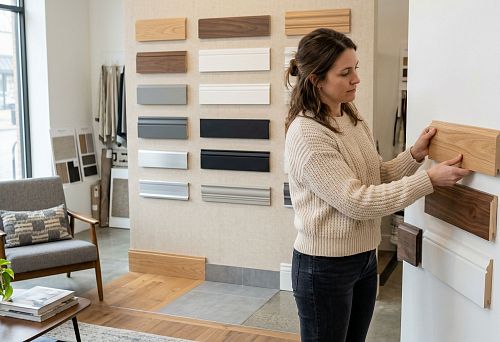
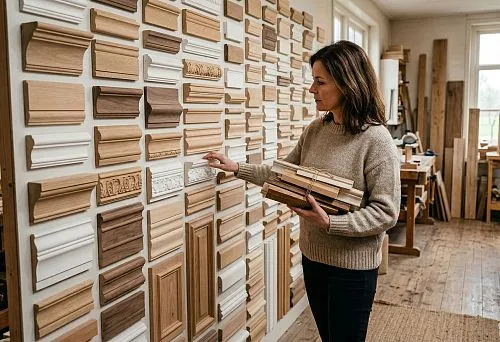
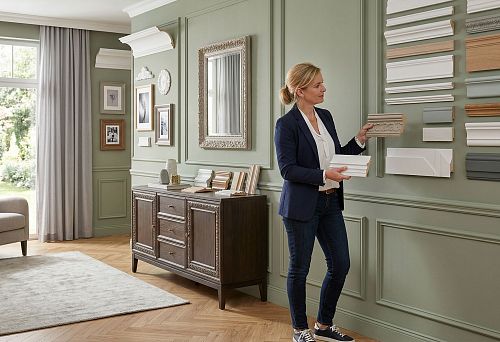
Wooden baseboardIn a minimalist interior — this is not just a utilitarian element covering the junction between wall and floor. It is an architectural detail that adds completeness and elegance.wooden skirting board purchaseAvailable in various heights — from concise 6–8 cm to more expressive 10–15 cm.wooden baseboards for floorMade from oak, beech, or ash, they create a natural, warm accent.
wooden baseboards for flooringIn adaptive minimalism, they are often tinted to match the walls, creating a seamless transition effect. Or, conversely, they contrast with the walls, emphasizing the geometry of the space.and paint it to the desired shade — standard practice in modern design. It is important to use special wood finishes that allow the material to breathe.With a technological cable channel — a practical solution that hides wires and preserves clean lines.
Furniture legs made of woodThey add naturalness to modular furniture.buy furniture legsAvailable in various shapes — from simple cylindrical to intricately detailed with decorative elements. Wooden legs create a visual connection between different furniture pieces, unifying them into a single composition.Furniture legsLight-colored wood suits Scandinavian minimalism; dark wood suits more dramatic interiors.
Color Palette of Adaptive Minimalism
The color palette of adaptive minimalism is calm, natural, and non-distracting. The base consists of neutral shades: white, beige, gray, light brown. They create a sense of space, light, and purity. Against this backdrop, wooden elements become natural accents, adding warmth without disrupting the overall harmony.
White — the main color of adaptive minimalism. It visually expands space, reflects light, and creates a sense of cleanliness and freshness. But this is not sterile hospital white — it’s warm tones: milk, ivory, pearl. They are softer, cozier, and more human.
Beige and sandy tones add warmth. These shades are close to natural wood, so wooden elements fit organically into such a palette.Wooden baseboardNatural wood tone beautifully contrasts with beige walls, creating a soft frame.
Gray — a universal background for adaptive minimalism. It can be warm (with beige undertones) or cool (with blue undertones). Gray walls create a neutral background on which wooden accents appear especially expressive.Slatted partitionNatural wood on a gray wall — a classic combination of adaptive minimalism.
Natural wood tones — from light ash to dark walnut — create primary accents. Wood adds color variety while remaining within the natural palette. It’s important not to mix too many different wood tones — better to choose one or two main tones and use them across all wooden elements.
Accent colors in adaptive minimalism are used very sparingly. These may be muted natural shades — terracotta, olive, dusty blue — appearing in textiles or small decorative items. Bright colors are almost never used to avoid disrupting the calm atmosphere.
Materials of Adaptive Minimalism
Materials in adaptive minimalism are chosen based on two criteria: functionality and naturalness. They must be practical, durable, and easy to maintain. And at the same time — natural, eco-friendly, and pleasant to the touch.
Wood — the main material for wooden accents.Wooden planksMade from solid oak, beech, or ash, they create sturdy partitions.Wooden Skirting BoardsMade from natural solid wood, they serve for decades.wooden furniture legsThey withstand heavy loads. Wood is treated with oil or wax, preserving its natural texture and pleasant tactile qualities.
Metal is used for functional elements — furniture frames, guides for transformable systems, hardware. In adaptive minimalism, matte finishes are preferred — black, graphite, bronze metal. Shiny chrome is less popular, as it creates an overly technological appearance.
Glass adds lightness and transparency. Glass partitions zone areas without blocking light. Glass cabinet fronts allow you to see the contents without opening doors. Frosted glass creates privacy while maintaining light transmission.
Textiles in adaptive minimalism are natural — linen, cotton, wool. They add softness and coziness to a technological space. Colors are calm, textures are natural. Textiles are used sparingly — curtains, cushions, throw, rug — but these elements are important for creating a comfortable atmosphere.
Lighting in adaptive spaces
Lighting in adaptive minimalism is multi-level and flexible. It must adapt to different usage scenarios of the space — work, dining, evening relaxation, sleep. Lighting scenes change with one touch, creating the desired atmosphere.
General lighting creates basic visibility. This may be recessed ceiling lights evenly distributed across the area. Or linear lights integrated into the ceiling. It’s important that general lighting is soft, diffused, and does not create harsh shadows.
Local lighting highlights functional zones. Over a desk — a desk lamp or pendant light. Over a dining table — a chandelier at adjustable height. In a reading zone — a floor lamp with directional light. Local lighting allows you to turn on light only where it’s needed, saving energy and creating a cozy atmosphere.
Accent lighting highlights architectural elements and materials.Slatted partitionwith side lighting creates a dramatic play of light and shadow.Wooden panelswith contour lighting appear to float in space. LED strip behindbaseboardcreates a soft glow at floor level, especially pleasant in the evening.
Smart lighting is an essential part of adaptive minimalism. It is controlled via smartphone or voice, automatically adjusts to the time of day, remembers scenarios. In the morning, the light is bright and cool, stimulating activity. In the evening, it is warm and dim, setting the mood for relaxation. This flexibility makes lighting truly adaptive.
Zoning without walls
Zoning in adaptive minimalism occurs without permanent partitions. This allows preserving the openness of the space, natural lighting, and a sense of spaciousness. At the same time, functional zones are clearly defined and psychologically separated from each other.
Slatted Partitions— the most popular zoning tool in adaptive minimalism. They create a visual boundary without blocking light and air.Wooden slat partitioncan be stationary or mobile on wheels. The slats are arranged vertically or horizontally, often or rarely, creating different levels of privacy.
Platforms create both physical and visual separation. The bedroom zone raised by 20–30 cm psychologically separates it from the rest of the space. The dining area on a platform becomes more intimate and cozy. Platforms can also conceal storage systems, increasing functionality.
Furniture as zoning — a classic technique that works exceptionally well in adaptive minimalism. A shelf between the living room and bedroom creates a boundary while remaining functional on both sides. A sofa oriented with its back to the kitchen marks the living room zone.Mobile furniture on legseasily movable, allowing zoning to be changed as needed.
Color and material zoning works more subtly. Different floor coverings indicate different zones — tiles in the kitchen, wood in the living room, carpet in the bedroom zone.Wooden baseboardcan be different colors in different zones, creating visual separation. Accent wall withwooden plankshighlights one zone from the overall space.
Practical solutions for small apartments
Adaptive minimalism is especially relevant for small apartments, where every square meter must work as efficiently as possible. Here are several practical solutions that make small spaces functional and comfortable.
Vertical storage utilizes the height of the room. Wardrobes reaching the ceiling hold more items and visually raise the ceiling. Open shelves create lightness, while closed ones hide visual clutter. It’s important to use upper shelves for infrequently used items and lower ones for everyday use.
Built-in furniture saves space. A wardrobe in a niche doesn’t protrude into the room. A table integrated into the windowsill uses an area that is usually empty. A bed in a recess creates a cozy sleeping zone without occupying a separate room.
Foldable furniture appears only when needed. A foldable kitchen table unfolds during cooking or eating. Foldable chairs are stored in a cabinet and retrieved for guests. This saves space in daily life.
Modular furniture on mobile supportseasily movable and reconfigurable.furniture legswith wheels allow shifting cabinets, tables, shelves with one movement. This enables quickly changing the layout to meet current needs.
Mirrors visually expand the space. A large mirror covering an entire wall doubles the visible volume of the room. Mirrored cabinet fronts conceal storage systems, creating an illusion of depth. It’s important to position mirrors correctly so they reflect light and beautiful views, not chaos.
Technologies in adaptive minimalism
Technologies in adaptive minimalism are present but do not dominate. They are hidden, operate unnoticed, simplify life, and do not draw attention. This is the philosophy of 'invisible technology,' where a smart home does not showcase its capabilities but simply makes the space more comfortable.
Smart lighting adapts automatically. Motion sensors turn on lights in bathrooms and closets. Lighting scenes change depending on the time of day. Brightness is adjusted via voice or smartphone. Meanwhile, the light fixtures themselves appear as minimalist, not drawing attention.
Climate control maintains comfortable temperature and humidity. The ventilation system operates silently. The air conditioner is built into the ceiling or hidden behind a decorative panel. Control is automatic or via an app.
Smart storage systems help organize things. Drawers with electric motors open with a light touch. Cabinets with lighting show their contents. Item tracking systems remind you where things are.
Acoustics are integrated into the space. Speakers are embedded in the ceiling or walls. Sound is evenly distributed throughout the room. Music is controlled by voice or gestures. The technology is completely invisible — no wires, speakers, or remotes.
Psychology of adaptive space
Adaptive minimalism affects the psychological state of residents. Clean lines, order, and flexible space create a sense of control over one’s life. The ability to quickly change the configuration of space provides freedom, reduces stress, and increases comfort.
Visual clarity reduces cognitive load. When there are few objects around, the brain expends less energy processing visual information. This creates a sense of calm, helps focus, and improves sleep quality.
Flexibility of space creates a sense of control. A person can adapt the interior to current needs, mood, or situation. This is psychologically comfortable — you control the space, not the other way around.
Natural materials, especially wood, create a connection with nature. Touchingwooden elements— is tactilely pleasant. Seeingwooden strips— visually calming. This is especially important in urban environments, where contact with nature is minimal.
Hidden storage creates order that psychologically liberates. When everything is in its place and not visible to the eye, it’s easier to relax, breathe more easily, and live more comfortably.
Frequently Asked Questions about Adaptive Minimalism
How does adaptive minimalism differ from regular minimalism?
Regular minimalism focuses on eliminating excess — the fewer things, the better. Adaptive minimalism goes further — it creates systems that allow one space to perform multiple functions. The key is not the number of items, but the flexibility of their use, the possibility of transformation, and modularity.
Is adaptive minimalism suitable for large apartments?
Yes, although it is especially relevant for small spaces. In large apartments, adaptive minimalism allows efficient use of space, creating flexible multifunctional zones. For example, a large living room can transform into a home theater, dance hall, or playroom thanks to modular furniture andmobile partitions.
Is it expensive to furnish an interior in the style of adaptive minimalism?
The cost depends on the chosen solutions. Transformable furniture and smart systems may be expensive, but they are justified by functionality. Meanwhile, the minimalist approach itself saves money — less furniture, less decor, fewer items. Wooden elements —rails, Baseboards, furniture legs— are affordable and durable.
How to care for wooden elements in adaptive minimalism?
Wooden planks, BaseboardsandFurniture legsThey require minimal care. Regularly wipe them with a dry or slightly damp cloth. Periodically (once a year) renew the finish with oil or wax. Avoid aggressive cleaning agents and excess moisture.
Can adaptive minimalism be created without a professional designer?
Yes, the basic principles of adaptive minimalism can be implemented independently. Start by decluttering, choose a neutral color palette, installa slatted partitionfor zoning, addwooden accents. For complex transformable systems, professional assistance may be required.
Is it comfortable to live in a minimalist interior with children?
Adaptive minimalism can be very comfortable for families with children. Modular storage systems easily adapt to children’s items. Transformable furniture grows with the child. Easy-to-clean surfaces simplify cleaning. It is important to provide sufficient storage space for toys and create a dedicated children’s zone.
How to add personality to a minimalist interior?
Wooden accents — the first way to personalize. Choose the wood species that resonates with you.Oak planksCreate a classic atmosphere, ash — Scandinavian lightness. Add a few meaningful items — your favorite painting, a collection, a plant. In minimalism, every item matters, so even small details create individuality.
Is adaptive minimalism relevant for office spaces?
Very relevant. Offices of the future are flexible spaces that quickly adapt to different tasks.Slatted PartitionsCreate negotiation zones. Modular furniture transforms space for different work formats. Wooden accents make the office more human and comfortable.
Conclusion: Create an adaptive space with STAVROS
Adaptive minimalism in 2026 is a philosophy of flexible space that evolves with your life. It’s not a rejection of comfort, but the ability to create multifunctional interiors that remain clean, bright, and spacious. Wooden accents add warmth and naturalness to technological solutions, making the space truly human.
The company STAVROS offers all the necessary elements to create interiors in the style of adaptive minimalism.Wooden planksMade from solid oak, beech, and ash — an ideal solution for zoning space. They create light partitions that do not block light but clearly define functional zones.
Furniture legs made of woodEnsure the mobility of modular furniture.buy furniture legsAvailable in various shapes and sizes — for tables, chairs, sideboards, sofas. Wooden legs add visual lightness, creating the impression of floating furniture that does not overload the space.
Wooden Skirting BoardsComplete a minimalist interior, adding architectural precision.Wooden baseboardMade from natural solid wood, they serve for decades, preserving beauty and functionality. STAVROS offers skirting boards of various heights and profiles — from sleek modern to more classic options.
We use only premium-grade wood. Each item undergoes careful quality control. Modern manufacturing technologies allow us to create elements with high precision while preserving the natural beauty of wood. We are ready to fulfill custom orders to your specifications, creating solutions perfectly suited to your space.
In the STAVROS catalog, you will also findWooden cornices, Moldings, balusters, Furniture Handlesand many other elements for creating harmonious interiors. We offer delivery throughout Moscow, St. Petersburg, and all of Russia, consultative support, and assistance with material calculations.
Create an adaptive space that lives with you, adapts to your needs, remains clean and bright thanks to minimalism, warm and cozy thanks to wood. Choose flexibility, choose functionality, choose naturalness — choose STAVROS.