Article Contents:
- What Are 3D Slatted Panels: Three Meanings of One Term
- First Meaning: Panels with a Relief Slat Profile
- Second Meaning: Modular 3D Panels of Slatted Type
- Third Meaning: Slatted Structures with a Spatial Effect
- Where Volumetric Finishing Is Appropriate: The Logic of Space
- Perception Distance: Near, Middle, and Far Zones
- Surface Role: Accent or Background
- Molded Decor Next to 3D Slatted Panels: When It Works
- Principle of separation of environments: each element in its own space
- What decorative molding is compatible with a 3D rail surface
- Balance of volume, light, and perception distance: the triangle of the correct solution
- Light activates the relief
- Distance determines the optimal scale of volume
- Volume and room size
- Where the interior starts to scream, not work: anatomy of a failure
- First mistake: volume everywhere
- Second mistake: 3D panels as 'wallpaper'
- Third mistake: conflict of scales
- Mistake four: 'expensive' material on an unprepared base
- Mistake five: stylistic break without logic
- Usage scenarios: living room, hall, commercial space
- Living room: one accent, everything else is support
- TV zone: volume as a frame, not a background
- Hall and entrance: volume as a first impression
- Commercial space: scale and distance
- 3D panel material and its influence on the character of the volume
- Solid wood: living volume
- MDF for painting: geometric volume
- Soft and flexible slatted panels: volume on non-standard surfaces
- Color as a tool for managing volume
- Monochrome enhances form
- Contrasting background reveals individual slats
- Uniform color with molding creates architectural unity
- STAVROS: manufacturing that understands volume
- FAQ: Answers to the Most Popular Questions

Volume is not decoration. Volume is an architectural tool. And like any tool, it can build a masterpiece, or it can shatter a space to pieces. The difference between an interior that impresses and an interior that screams is the difference between managing volume and its chaotic accumulation.
3D slatted panels and molded decor have become some of the most popular solutions in recent years — and simultaneously some of the most frequently misapplied. Photos on social media create the illusion: 'this is what looks cool.' People buy, install, receive — and realize something is wrong. The volume is there. The wow effect is there. But the space doesn't work.
This article is for those who want to understand why this happens and learn to apply three-dimensional solutions in interiors with surgical precision.


What are 3D slatted panels: three meanings of one term
Before delving into applications, we need to understand the term. The phrase '3D slatted panels' in search queries and stores refers to several fundamentally different products, united only by the word 'volumetric'. Confusion between them is the source of much disappointment.




First meaning: panels with a slat relief profile
These areSlatted wall panelspanels in which each individual slat has an asymmetrical or multi-level profile. Unlike a simple rectangular slat, the relief profile creates a play of shadows on the panel's surface. The slat end is beveled, stepped, or wavy. When there are many such slats, the surface acquires a lively, 'breathing' character.
This is the most delicate of the three options. The volume here is subtle: the relief depth is 10–25 mm, perceived as a textured surface, not as a three-dimensional structure. This option is the most versatile in application: it works in residential and commercial spaces, in classic and modern styles.
Our factory also produces:


Second meaning: modular 3D panels of the slatted type
These are square or rectangular modules that, when joined, create a three-dimensional geometric pattern—zigzag, chevron, herringbone, diamond mesh. Each module is an independent element installed at a specific angle to the wall plane. When modules are assembled into a system, the surface acquires a true three-dimensional character with a relief depth from 30 to 80 mm.
slatted modular wall panelPanels of this type are a powerful accent tool. One wall in a room, completely covered with such a modular pattern, is a central architectural statement. But precisely for this reason, the scale of application should be limited.
Get Consultation
Third meaning: slatted constructions with a spatial effect
These are installations of slats mounted at different angles, with different projections from the wall, forming a three-dimensional structure. The slats may be fixed not on the wall plane but on a bracket system, creating a 'cloud' of wooden elements. The relief depth is from 10 to 150 mm, the space behind the slats is visible and often backlit.
This is the most radical option, requiring maximum design caution. Use in residential spaces — only on one local area. In commercial spaces — as an art object or zoning screen.
Understanding these three values is the first step to proper application.Types of slat panelsare diverse, and choosing a specific type for a specific task determines everything else.
Where volumetric finishing is appropriate: the logic of space
The question 'where to apply 3D slatted panels' is inseparable from the question 'how a person perceives space'. The perception of a three-dimensional surface fundamentally depends on distance.
Perception distance: near, middle, far zones
Near zone (up to 1.5 meters) — this is the zone of tactile interaction. A person sees the surface up close, can touch it. In this zone, fine relief (10–25 mm) is perceived most fully: the wood texture is visible, the micro-levels of the profile are visible, the hand feels the protrusions and depressions. Large relief (50+ mm) in the near zone is perceived as a fragment, not as a whole — the pattern is lost.
Middle zone (1.5–4 meters) — this is the zone of main visual perception in a residential space. It is from this distance that a person perceives the wall as a whole. Relief of 20–50 mm works well here: it creates volume, shadows, depth — but does not overwhelm.
Far zone (4+ meters) — typical for large commercial spaces: halls, restaurants, lobbies. From a great distance, fine relief 'blurs' and is lost. Only large forms work — deep relief of 60–150 mm or a contrasting pattern.
Applied to residential apartments: in a standard room of 20–25 m², there is no far zone. Therefore, large relief of spatial slatted structures for housing is a risky choice.Decorative slatted wall panelswith subtle or medium relief — the optimal scale for a living space.
Surface role: accent or background
A volumetric slatted panel should never be a background. This is a contradiction in terms: a background is neutral, volume is active. If 3D slatted panels cover all four walls in a room, the volume becomes a 'background' by necessity, and the space turns into an oppressive shell.
The rule of one accent wall is not outdated advice from old magazines. It is a psychophysiological law: human vision works better when it has a 'point of rest' — a neutral surface on which the gaze can rest. Three neutral walls plus one accent wall — this is a balanced system.
Slatted panels in interior designwith a 3D effect on the accent wall and smooth or textured (but not volumetric) surfaces on the others — this is a functional system. This is not caution, it is literacy.
Molded decor next to 3D slatted panels: when it works
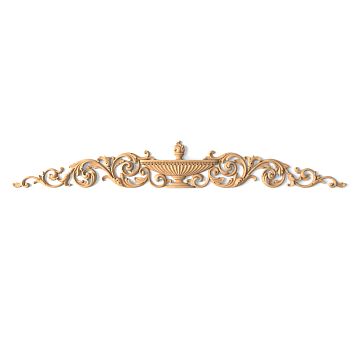
Relief Decorationmade of polyurethane — these are relief overlays, ornaments, medallions, pilasters, capitals, decorative panels. All of them add volume to a plane. The question: how to add relief molded decor to a space that already has a volumetric slatted surface?
The answer is through the principle of separating mediums.
Principle of separating mediums: each element in its own space
The volumetric slatted panel occupies a specific zone of the wall. Molded decor occupies another zone — or another surface. They do not meet in direct contact. Between them is a neutral surface: painted plaster, white MDF, smooth wallpaper.
Example: in the living room, an accent wall behind the sofa is finished with3D slatted panels. The opposite wall is smooth, with decorative polyurethane overlays in the form of a light geometric pattern. The ceiling is simple, with a cornice around the perimeter. Both volumetric systems exist in different planes and do not see each other when the gaze is focused on one of them.
It works. It's not 'everything at once' — it's 'each in its place'.
WhatDecorative stucco is compatible with a 3D slatted surface
Not all molded decor is equally applicable in the context of slatted finishing. Let's break it down by types:
Corner overlays and pilasters. Vertical elements that frame the corners and edges of panels are one of the most organic options. They frame the boundary of the slatted zone, visually completing it. At the same time, they themselves are in the transition zone, not on the slatted surface. A relief corner pilaster made of polyurethane next toslatted wall panels is an architectural framing that elevates the status of the entire composition.
Horizontal moldings and borders. They delineate zones by height: the slatted lower part of the wall and the smooth upper part, separated by a horizontal polyurethane molding. This is a classic 'panel' wall design that never goes out of style because it is based on proportion, not fashion. The molding here is not a decoration, but an architectural division.
Medallions and ornamental overlays. Large decorative elements with rich relief. On a smooth wall — they work. On a slatted surface — they compete with the rhythm of the slats and lose: the relief of the medallion 'drowns' in the slatted rhythm. Application: only on smooth sections of the wall, separated from slatted zones.
Decorative plaster panels. Ornamental panels — a frame with a relief central element — are appropriate as an independent accent on a neutral wall. Combination with a slatted surface: the panel is mounted on a smooth wall opposite the slatted accent wall.
Balance of volume, light, and perception distance: the triangle of the correct solution
Volume without light is dead. Every sculptor knows this: the same form looks completely different under different lighting. The same rule applies in interior design.
Light activates relief
Side directional light is the best friend of any volumetric finish. It glides across the surface at an acute angle, creating elongated shadows from each protrusion. The relief gains depth, the volume gains a sense of weight.
Direct overhead light is the enemy of relief. It 'kills' shadows, flattens the surface, makes it two-dimensional. This is precisely whySlatted panels with lighting— is a solution where light is specifically directed along or at an angle to the slat surface.
molding decoration photosalways looks better in photos with side lighting — precisely because the relief is revealed. In an interior, this means: placing light sources above or to the side of decorative plaster elements is not an option, but a requirement.
Distance determines the optimal scale of volume
The already discussed principle of three zones leads to specific numbers:
| Perception distance | Optimal relief depth | Type of decor |
|---|---|---|
| Up to 1.5 m | 5–20 mm | Textured slat profile, fine stucco ornament |
| 1.5–4 m | 20–60 mm | Modular 3D panels, medium-height moldings |
| 4+ m | 60–150 mm | Spatial slat structures, large stucco |
Use this table when designing: start from the actual distance from which the wall will be perceived, not from how the panel looks in a store photo.
Volume and room size
Small rooms are a special case. It might seem that 3D slat panels in a small room would add character. In practice: a volumetric surface in a cramped space physically 'brings' the wall closer. The room feels smaller and oppressive.
For rooms up to 15 m² — only shallow relief (up to 15 mm) or completely avoiding volumetric panels in favor of textured ones.Wooden slat panelswith a simple rectangular profile will provide the desired character without losing space.
For rooms of 20–35 m² — moderate volume on one accent wall. For large spaces from 40 m² — you can afford deeper relief and more complex structures.
Where the interior starts screaming instead of working: anatomy of a failure
This is the most important section. Not because you need to scare, but because understanding mistakes is the shortest path to avoiding them.
First mistake: volume everywhere
3D slatted panels on all walls plus stucco decor on the ceiling plus volumetric tiles on the floor. Each element on its own could be good. Together — they create an interior you want to escape from. There's not a single neutral surface. No rest for the eyes. There's only a battle of elements for attention.
Diagnosis: lack of hierarchy. Treatment: leave volume on only one surface. Everything else — neutral.
Second mistake: 3D panels as 'wallpaper'
Modular 3D slatted panels cover the wall from baseboard to ceiling — the entire area, without limitations, without a frame, without neutral areas. This is borrowing wallpaper logic applied to a volumetric material. Wallpaper can cover the entire wall — because they're essentially flat. Volumetric material covering the entire wall turns into 'volumetric wallpaper' — and this is psychologically uncomfortable.
Treatment: limit the slatted area by height (to the middle of the wall or 2/3 height) or by width (only the central part of the wall, framed by pilasters).
Third mistake: scale conflict
MDF slatted panelwith slat spacing of 30 mm next to a large molded overlay 25×25 cm. The fine dense rhythm and the large separate ornament create a scale conflict. Neither the fine rhythm is perceived as a whole (the large ornament interrupts it), nor does the large element read as an accent (the fine rhythm blurs it).
Solution: either large molded decor + large slat spacing (80–120 mm) + plenty of neutral space between them. Or fine slat spacing + minimal geometric molding instead of ornamental plasterwork.
Fourth mistake: 'expensive' material on an unprepared substrate
3D slatted panels made of solid oak are mounted on an uneven wall without leveling. Polyurethane molded overlays are glued onto untreated plaster without primer. Technical errors turn expensive materials into a cheap result. Peeling overlays, deformation of the slatted pattern, 'waves' on the volumetric surface — all are consequences of skimping on preparation.
How to install slatted panelsto the wall correctly is not just a question of tools and screws. It's a question of substrate preparation: leveling, battening, priming. Without proper preparation, the volume 'drifts'.
Fifth mistake: stylistic disjunction without logic
Ultra-modern 3D slatted panels made of metal profile next to classical plasterwork in the spirit of the 19th century. There is not a single transitional element that would connect the two different stylistic languages. This is not eclecticism — it's chaos.
Eclecticism works when there is a rule of combination. No rule — no result.
Application scenarios: living room, hallway, commercial space
Theory gains meaning in specific scenarios. Let's examine three of the most typical contexts for applying 3D slatted panels and molded decor.
Living room: one accent, everything else is support
The purpose of the living room is to be a space where it's comfortable to spend a long time. This means: not too many visual stimuli, not too little character.
Working scenario for the living room:
-
Accent wall behind the sofa:3D slatted panelswood with a relief profile. The height of the panel is up to the top line of the sofa back (140–160 cm from the floor). Above that — a smooth surface.
-
Horizontal polyurethane molding along the line of the panel's upper edge — a zone divider.
-
The other three walls — painted in a neutral tone, without volumetric elements.
-
Ceiling — a simple cornice around the perimeter, no stucco in the areas above the slatted wall.
-
Side directional lighting on the accent wall — emphasizes the relief of the slats.
Why this works: one volumetric accent, a clear boundary of the volumetric zone, a neutral background on everything else, lighting activates the relief.
Slatted panels in the living room interiorIn this scenario, they create a character without aggression—exactly what's needed for a long-stay space.
TV zone: volume as framing, not background
A separate scenario for the TV wall. This is one of the most popular application zones and one of the most frequently redesigned—because the first solution turns out to be wrong.
Typical mistake: 3D slatted panels cover the entire TV wall from floor to ceiling, with the TV simply hung on top. Problem: the volumetric pattern of the slats competes with the image on the screen. When the TV is off—the wall looks beautiful. When it's on—the slats 'steal' peripheral vision.
Correct solution: slatted panels create a frame around the TV zone, not a background behind the TV. A niche made of slats around the perimeter of the screen, with a dark or neutral surface inside the niche itself. The TV on a neutral background, slats around the perimeter as architectural framing.
TV area with slatted panels—a strong solution when placed correctly. Decorative molding in this scenario: only along the top line of the niche—a horizontal molding. No ornamental overlays on the sides of the screen.
Hall and entrance: volume as the first impression
The hall is the first thing a person sees when entering a space. This is precisely where volumetric finishing has the greatest psychological effect: it forms the first impression. But this is also where the risk of overload is strongest: the hall is small, volume feels oppressive.
A competent scenario for the hall:
-
The end wall at the back of the hall (the one visible immediately upon entry)—3D slatted panelwith a subtle relief, running the full height.
-
Side walls are smooth or finished with a thin textured plaster.
-
If the hallway is sufficiently high (from 2.8 m) — polyurethane pilasters on the vertical edges of the slatted wall, framing it as an architectural portal.
-
No ornamental overlays in a narrow hallway.
Slatted panels in the hallway interiorcreate the effect of an 'architectural portal' at the entrance — the space feels well-considered from the very first step.
Commercial space: scale and distance
In a restaurant, cafe, boutique hotel, or office reception — the perception distances are different, the audience is different, the task is different. Here, 3D slatted panels and molded decor work to build the brand: the space must be memorable, must be associated with a specific character.
In commercial space, a bolder scale of volume is permissible:
-
Spatial slatted constructions with a depth of 80–150 mm — as zoning screens or decorative partitions.
-
LargeDecorative stuccoon facade surfaces — works for long viewing distances.
-
Combination of slatted screen and molded ornament on the reception desk — provided there is clear proportional correspondence.
Slatted Façade Panelsin commercial spaces — both outside and inside — create an architectural character that reads from a distance.
Fundamental difference from residential spaces: commercial spaces are visited, not lived in. This means a higher level of visual stimulation is acceptable — but not infinite.
Material of 3D panel and its influence on the character of the volume
Not only form determines volume perception. The material from which the slatted panel is made fundamentally changes the character of the three-dimensional effect.
Tree array: living volume
Solid oak slat panelswith a volumetric profile — this is the most organic version of the 3D effect. The natural wood texture and three-dimensional profile work in synergy: the relief emphasizes the direction of the grain, shadows from the profile create an effect of natural relief, like tree bark or a trunk cross-section.
Solid slat with a relief profile is heavier, more expensive, requires more carefulinstallation of slatted panelson the correct lathing. But the result is volume that is perceived as natural and 'honest'.
MDF for painting: geometric volume
paintable slatted wall panelsMDF with a 3D profile is the perfect option for creating a purely geometric volume. Monochrome painting (white, anthracite, dark green) on textured MDF creates a sculptural effect: only form, no texture. This is a modern, strict option.
Polyurethane stucco decor next to monochrome MDF relief: choose from the same style—geometric overlays without ornament, clean lines. Classic leaf ornament on a strict MDF background is a stylistic conflict.
Soft and flexible slatted panels: volume on non-standard surfaces
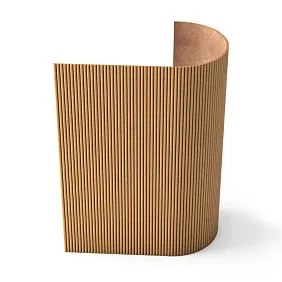
soft slat panelsallow mounting a slatted rhythm on curved surfaces: columns, arches, niches with a radius. This opens up scenarios unavailable for rigid panels: volumetric slatted surface on a cylindrical element, framing an arched opening in a slatted rhythm.
In combination withwith molded decorationon a curved surface, stucco requires a flexible profile or specially made elements for the radius. Standard flat polyurethane overlays on a cylindrical surface will create an uneven gap—technically and visually unacceptable.
Color as a tool for managing volume
Color in the context of 3D slatted panels and stucco decor is discussed less than form. And in vain—because color fundamentally changes the perception of volume.
Monochrome enhances form
When the slats and the background between them are painted the same color, the form reads cleanly. There is no color contrast, only light contrast: shadows from the relief. Such a monochrome volume is the most architectural, the most 'sculptural'.
Paintable lath panels— an excellent material for monochrome 3D: the smooth MDF surface takes paint evenly, the profile's relief is read through the play of shadows.
A contrasting background reveals individual slats.
Dark background + light slats = each slat reads separately. This enhances the rhythm but weakens the sense of volume. The effect is graphic, almost 2D, despite the real relief. Suitable for a laconic modern interior where rhythm is important, not sculpturality.
A unified color with moldings creates architectural unity.
If slats, background, moldings, and polyurethane overlays are painted the same color, the space is perceived as a holistic architectural environment. This is a technique of expensive interiors: everything is white, or everything is gray, or everything is sage green — the form works, the color does not distract.Decorative stucco— in this scenario becomes part of a unified surface, not a glued-on decoration.
STAVROS: manufacturing that understands volume
STAVROS is not just a materials supplier. It is a manufacturer that deeply understands howRelief Decoration, moldings, pilasters, and decorative polyurethane overlays work in real space — next to slatted surfaces, next to light, next to other materials.
The STAVROS decorative molding line covers the entire spectrum: from thin geometric overlays for modern minimalist interiors to rich ornamental elements for classic spaces. STAVROS polyurethane products feature precise geometry, stable dimensions, and a perfectly smooth surface for painting—which is critically important when used alongside sharp geometric slatted surfaces.
slatted panels for wallsSTAVROS products are made from natural solid wood and high-quality MDF with diverse profiles—including volumetric ones that create a 3D effect without additional structural tricks. This is a systematic approach: slats and molding from the same hands, the same manufacturer, with an understanding of how they work together.
If you want to create an interior with volume that works, not shouts — STAVROS will provide both materials and an understanding of how exactly to apply them.
FAQ: answers to the most popular questions
Can 3D slatted panels and classic molding be combined in one room?
Yes, provided the principle of separating zones is observed. 3D slatted panels go on one accent surface, classic molding on another surface with a neutral background between them. Direct adjacency of the two systems without a neutral zone is a stylistic conflict.
What depth of relief for 3D slatted panels is optimal for a standard apartment?
For rooms up to 25 m²—relief of 15–30 mm. For rooms 25–40 m²—up to 50 mm. Deeper relief is appropriate in larger spaces or commercial facilities with a viewing distance of more than 4 meters.
Is a special base required for installing 3D slatted panels?
Absolutely. Volumetric panels require a flat, sturdy base—battens or a leveled wall. An uneven base 'breaks' the geometry of the relief. Details on preparation are in the article aboutHow to install slatted panels.
How to choose molding overlays that will suit 3D slatted panels?
Main principle: the scale of the overlay should be proportional to the step of the slat rhythm. Ornamental overlays suit a large step (80–120 mm). For a small step (30–50 mm) — only simple geometric moldings without complex ornamentation.
Can 3D slat panels made of MDF be painted in dark colors?
Yes. Dark monochrome painting enhances the sculptural effect: shadows from the relief become deeper, the volume reads more expressively. Condition: high-quality primer and use of paint without adding a siccative, which can give a matte finish with a 'whitish' tint on a dark background.
Which lighting fixtures best emphasize the relief of 3D slat panels?
Directional spotlights with adjustable tilt angle, placed at a 30–45° angle to the panel surface. LED strip in the gaps between the slats gives uniform glow but does not create volumetric shadows. Combination: perimeter LED strip for background glow + spotlights for accent directional lighting.