












































































Wine Cellar Design Idea V-003

Wine Cellar Design Idea V-003
Get Consultation
We will help you implement the project
Measurements
You send us furniture, interior, and preferences dimensions
Design
Our specialists will create a project (paid service, from 2000 rub.)
Kitting
After project approval, you receive a specification
Implementation
We will select partners in your city for painting and mounting decor
You may also be interested in


Frequently asked questions
Our showrooms are located in Saint Petersburg and Moscow. Production is located in Saint Petersburg.
Moscow contacts: https://www.stavros.ru/contacts_all/?tab=msk
Contacts of Saint Petersburg: https://www.stavros.ru/contacts_all/?tab=spb
- Send request by email [email protected]
- Write to us at Telegram
- Write to us at WhatsApp
- Order by phone +7 (800) 555-46-75
- Visit our showroom in Saint Petersburg and Moscow
Yes, we ship orders throughout Russia and to CIS countries.
We cooperate with transportation companies such as СДЭК and DPD.
You can also arrange pickup of your order through any convenient transportation company for you.
Delivery cost depends on the size, weight of the item, and delivery address.
When placing an order, the delivery cost is calculated automatically and displayed as a separate line on our website.
Prices and availability of items on the website are always current. Data is updated daily.
Note: items in stock are stored on the warehouse in unpolished form and shipped within 3 working days.
If the item is not in stock, average production time: 5–10 working days.
This is the quality of polishing of the items.
Standard — machine polishing, at a more attractive price.
Prestige — detailed hand polishing, items do not require further work.
More details: https://www.stavros.ru/information/kachestvo/
This is the type of veneer of the items.
Under enamel: produced by gluing wooden laminates without color and texture matching. Contrast tonal and textural differences are noticeable. This blank should be chosen if the item is intended for opaque coating.
Under tinting: produced by gluing wooden laminates with color and texture matching. Tonal and textural differences may occur. This blank should be chosen if the item is intended for semi-transparent finish.
More details: https://www.stavros.ru/information/kachestvo/
Beech — dense, non-porous wood, most often used for items covered with enamel.
Oak — dense, porous wood with clearly visible natural grain. Due to its strength and decorative properties, it is often used in items with semi-transparent coating, highlighting the wood pattern.
Custom-made, if non-standard items are required, we can produce products from other types of wood, including blanks provided by the customer, manufactured according to our technical specifications.
All our furniture legs can withstand a vertical load of at least 100 kg.
Average production time for custom-made items: 5–10 working days.
Most items are stored on the warehouse in unpolished form. We need time to polish and pack orders.
Yes, we manufacture non-standard items according to individual projects, but we only accept orders with a minimum quantity.
We can manufacture items of the desired size, but we only work with bulk orders. For details, please consult the sales department manager.
Yes, some of our products can be used outdoors. For example, polyurethane items, as well as carved door casings made of pine.
Other items are produced to order using PUR glue, if minimum quantity is available. No warranty is provided for such products, as outdoor conditions are considered aggressive.
Yes, we paint items when ordering products for a total amount of 150,000 rubles or more.
- Dust removal. After sanding, the surface must be dusted.
- Priming. Apply primer in an even layer.
- Matting. After the primer has fully dried, the surface should be matted (lightly sanded for better adhesion).
- Finish coating. Apply finish coating: lacquer or enamel, in 2 layers, with interlayer drying.
More details: https://www.stavros.ru/information/sovety/
Apply adhesive to the decor. Attach to the surface and press briefly. Then, remove the decor from the surface and leave it open for 3–5 minutes. Press the decor firmly onto the surface and hold for 5–10 seconds.
More details: https://www.stavros.ru/information/sovety/
Ideally, you should prepare a design project before placing an order.
You can do this yourself by downloading drawings of our products from our website, or you can order a project from us.
If the number of decorative elements and fittings is small, our company's manager can assist you with selection.
Unfortunately, this service is not provided.
The packaging method depends on the type of items, but in each case, we ensure sufficient protection for safe transportation.
We most often use corrugated cardboard and stretch film. Fragile items are additionally secured on a rigid base to prevent damage during transport.
We ship all items starting from 1 piece.
Room measurements and item installation can be performed by our partners — carpentry companies represented in most regions of Russia.
Also see
Wine Cellar V-003: embodiment of luxury, traditions, and an atmosphere of tranquility
This is not just a storage space for fine wines, but a special world where art, traditions, and the philosophy of enjoying life converge. Here, every element is thought out to the smallest detail, creating a space where the past and present intertwine in perfect harmony. There is no rush, no unnecessary noise — only soft light, subdued shadows, noble aromas of wood and stone.
This is not just an interior, but a place filled with meaning. Here, every bottle of wine is a story, every decoration a reference to centuries of craftsmanship, and every detail an invitation to immerse oneself in an atmosphere of peace and refinement.
Architectural concept and material selection
Design approach: harmony of beauty and functionality
The design of the wine cellar V-003 is based on principles of classical architecture, where forms, textures, and tones are subordinate to a single idea — creating comfort and respectability. This space does not tolerate random decisions; everything is thought out: from the placement of shelves to the play of light on the surface of wood. The interior is inspired by classical traditions of wine cellars, where every detail carries both aesthetic and practical function.
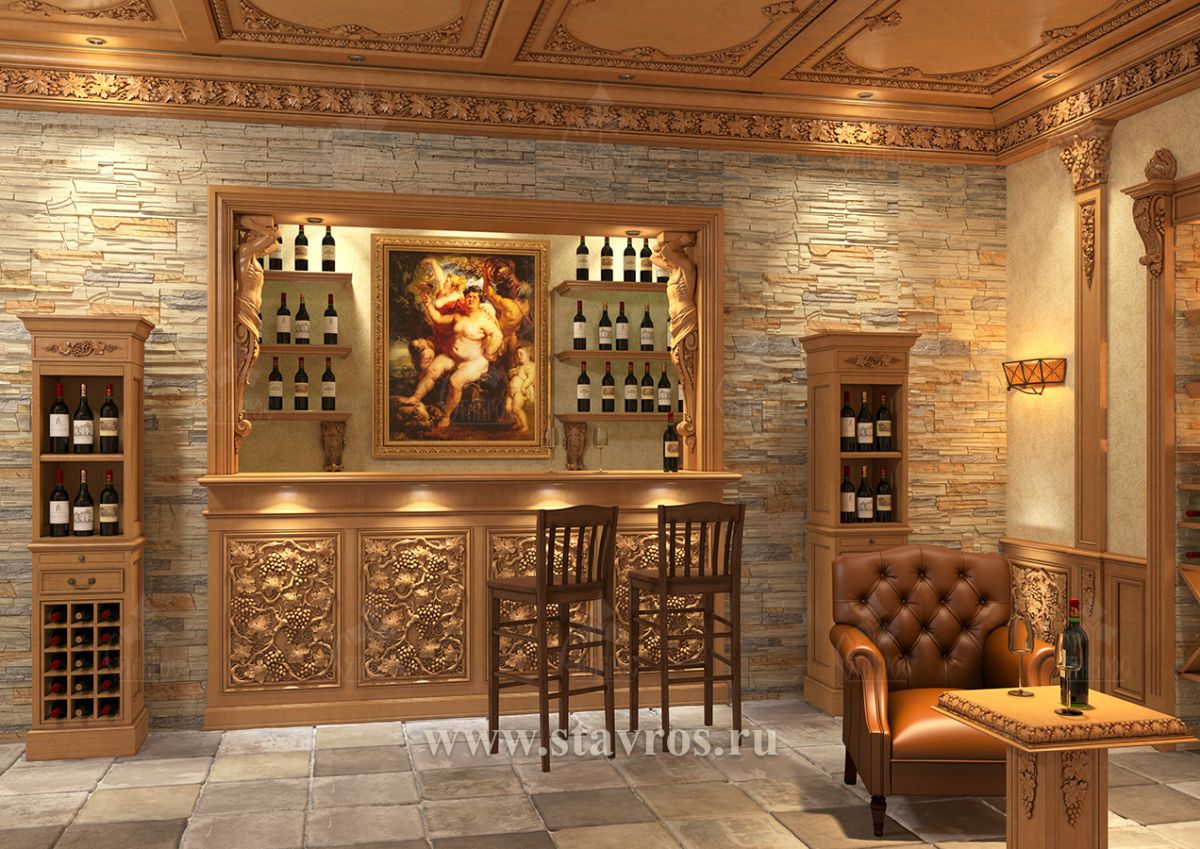
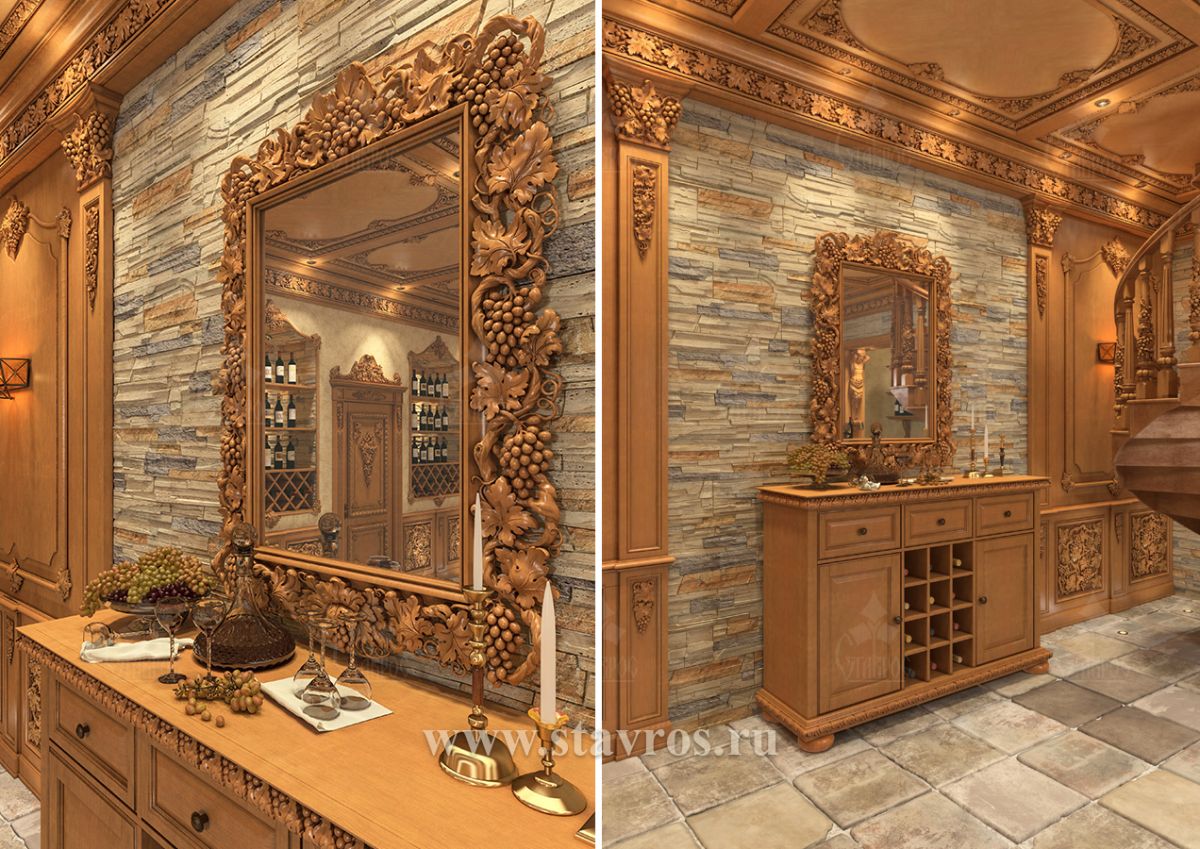
The finishing is done with natural materials capable of highlighting the natural beauty of the space. Wooden panels create a sense of solidity, while stone inserts evoke old wine cellars imbued with the aroma of aged wines. All elements are selected so that the cellar not only preserves beverages in ideal conditions but also becomes a place where it is pleasant to spend time, enjoying the atmosphere of seclusion.
Materials conveying the spirit of time
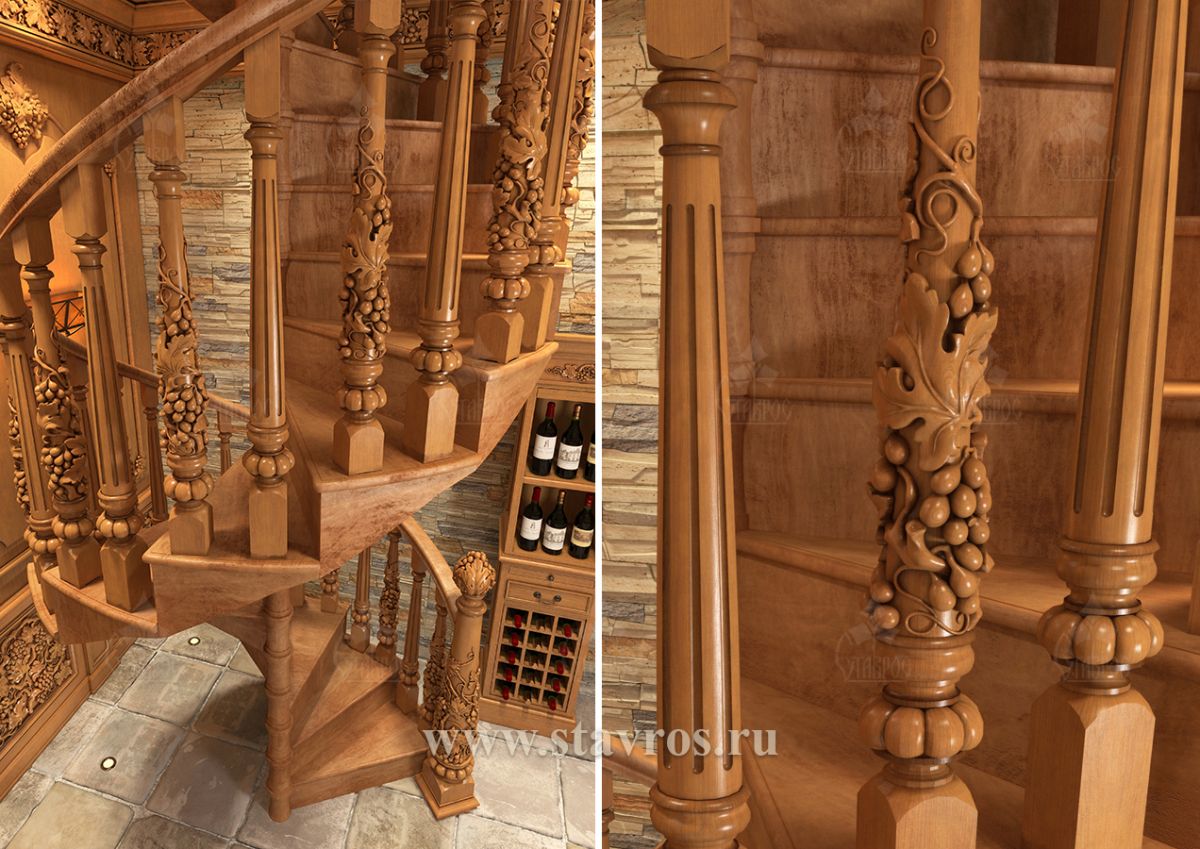
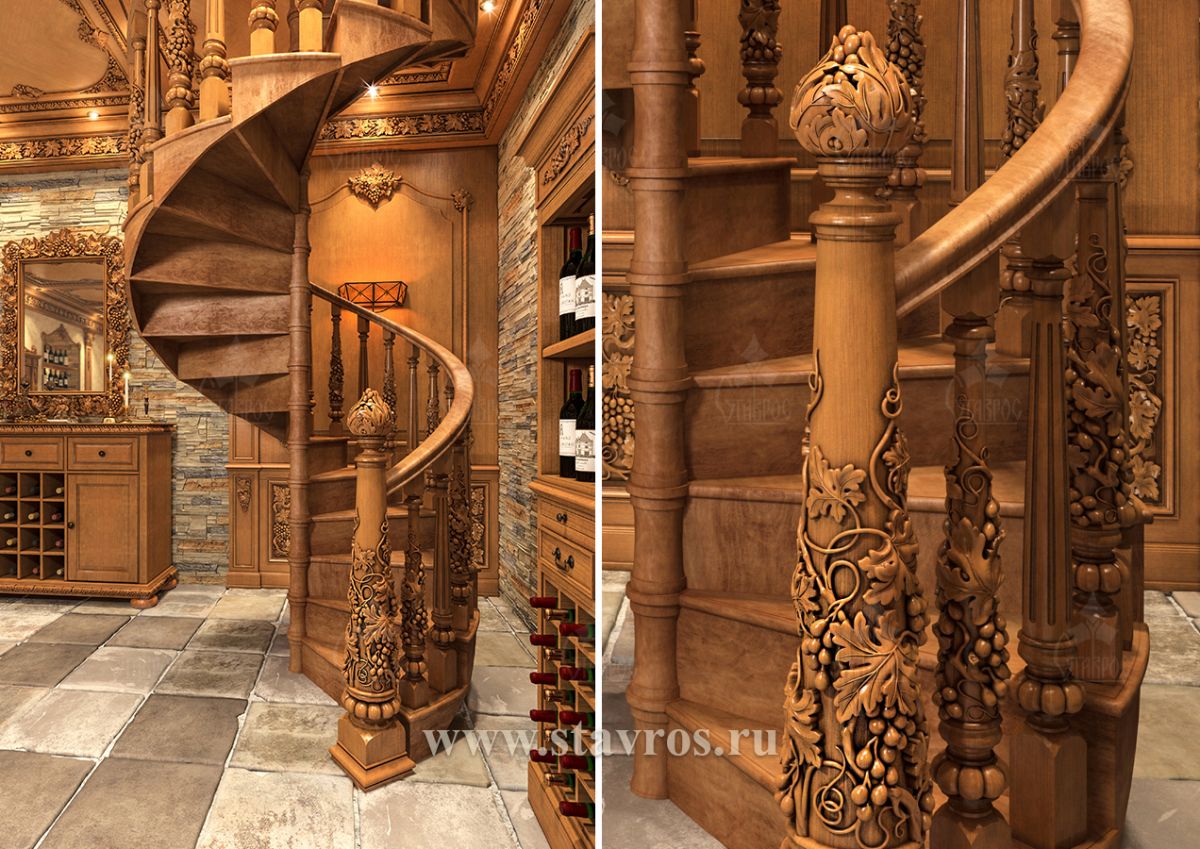
- Wood — solid oak, handcrafted by masters, preserving natural texture and filling the room with a warm, natural aroma.
- Stone — sandstone and marble, creating a sturdy foundation that gives the space authenticity and resilience over time.
- Leather — soft chairs in deep tones, giving the interior a club-like atmosphere and comfort for leisurely tastings.
- Lighting — warm, diffused light that gently envelops the space, creating a half-darkness reminiscent of historic wine cellars.
Art of carving: embodiment of craftsmanship in details
Carved panels and their symbolism
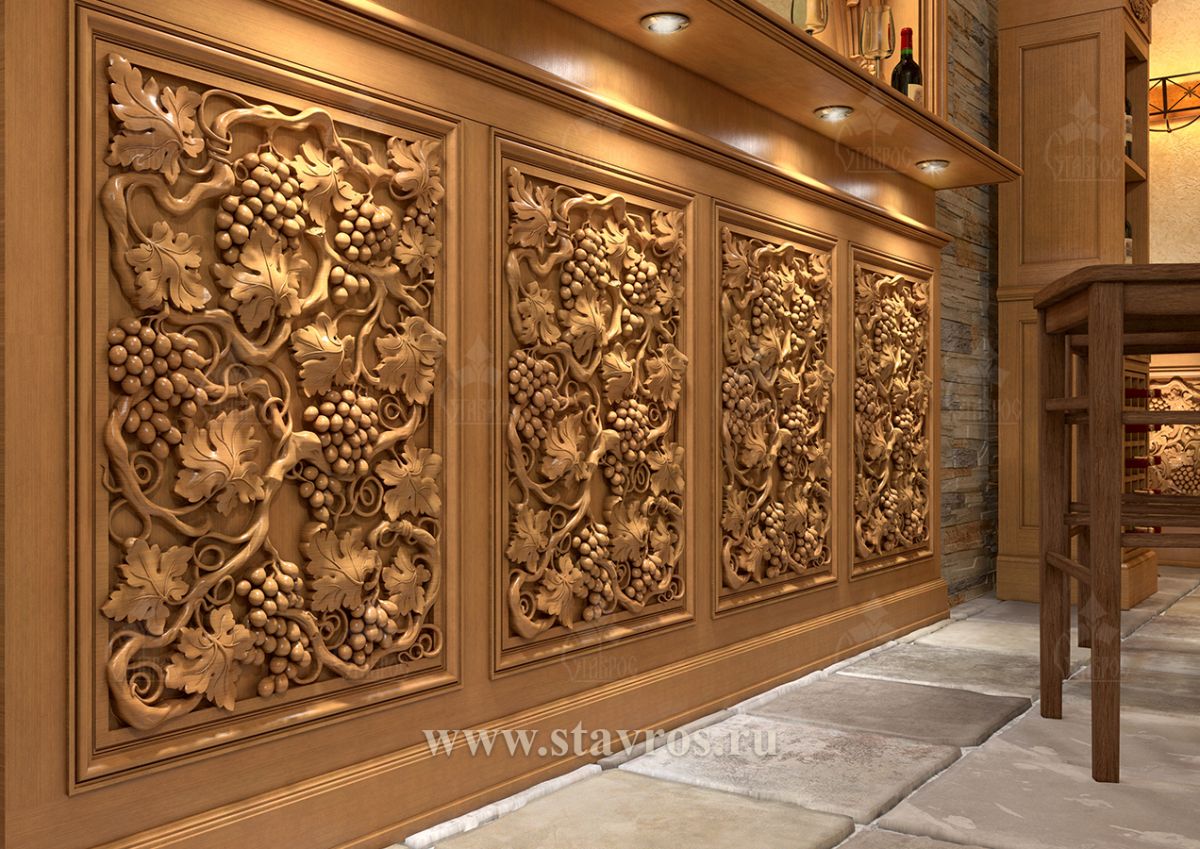
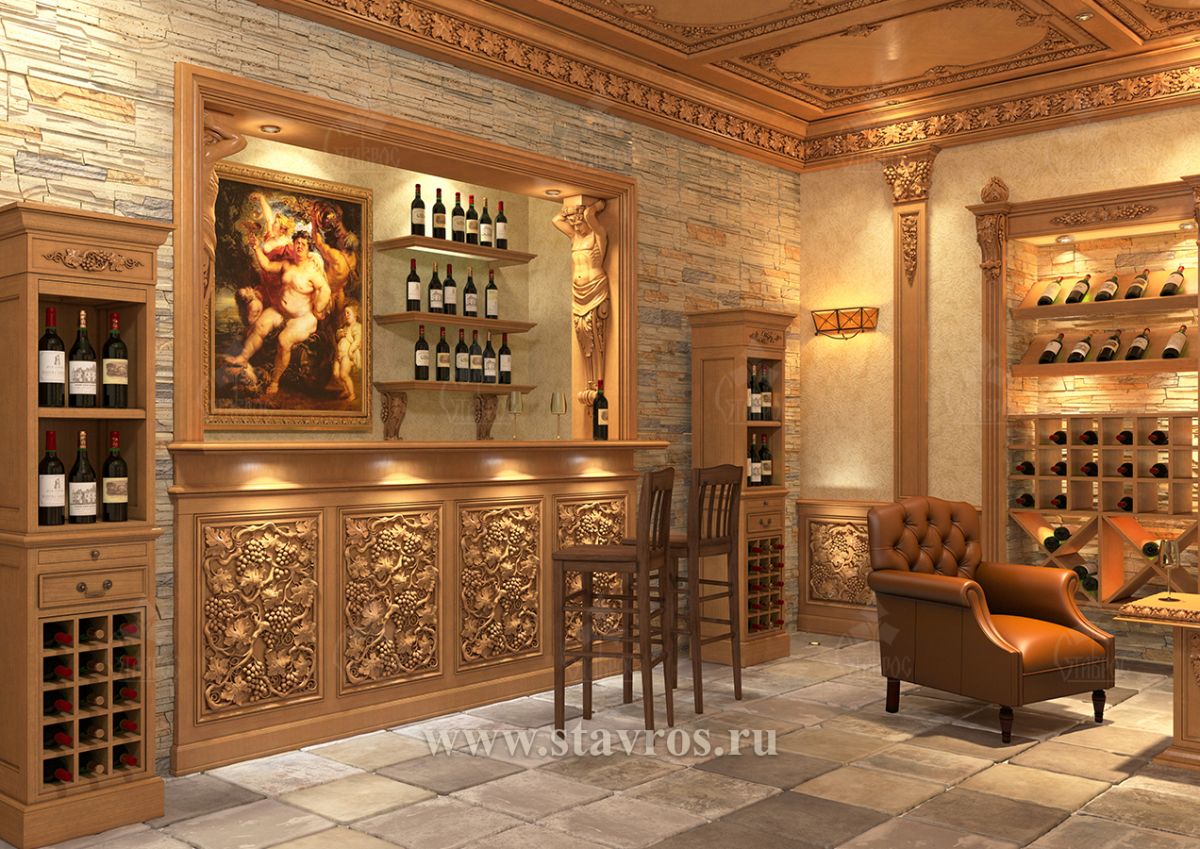
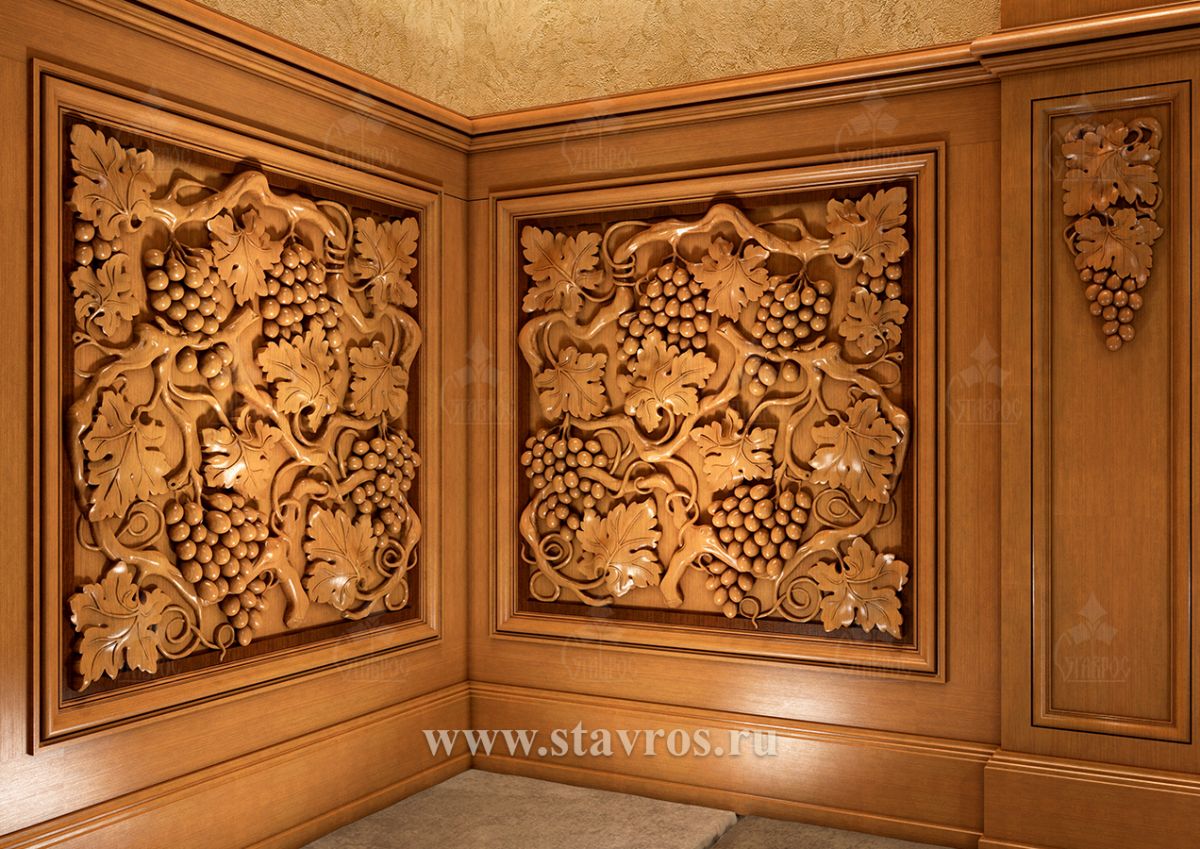
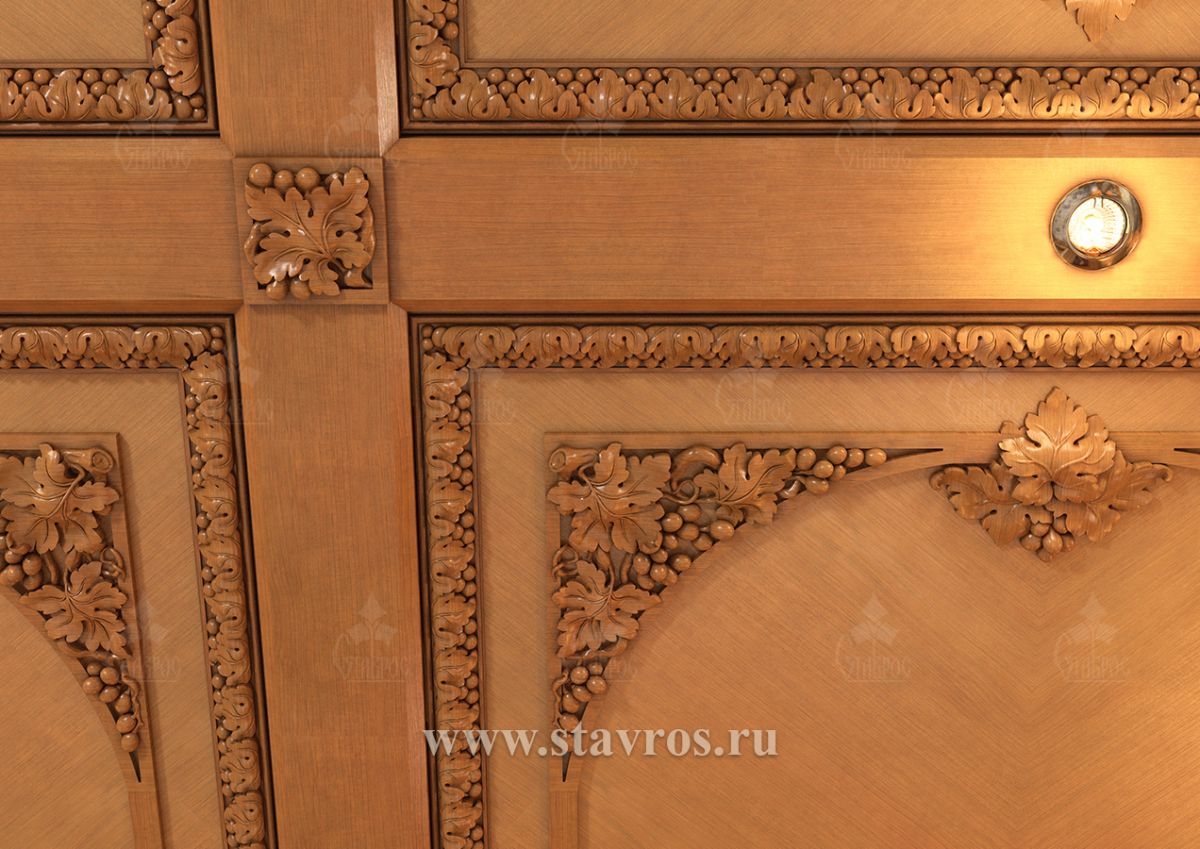
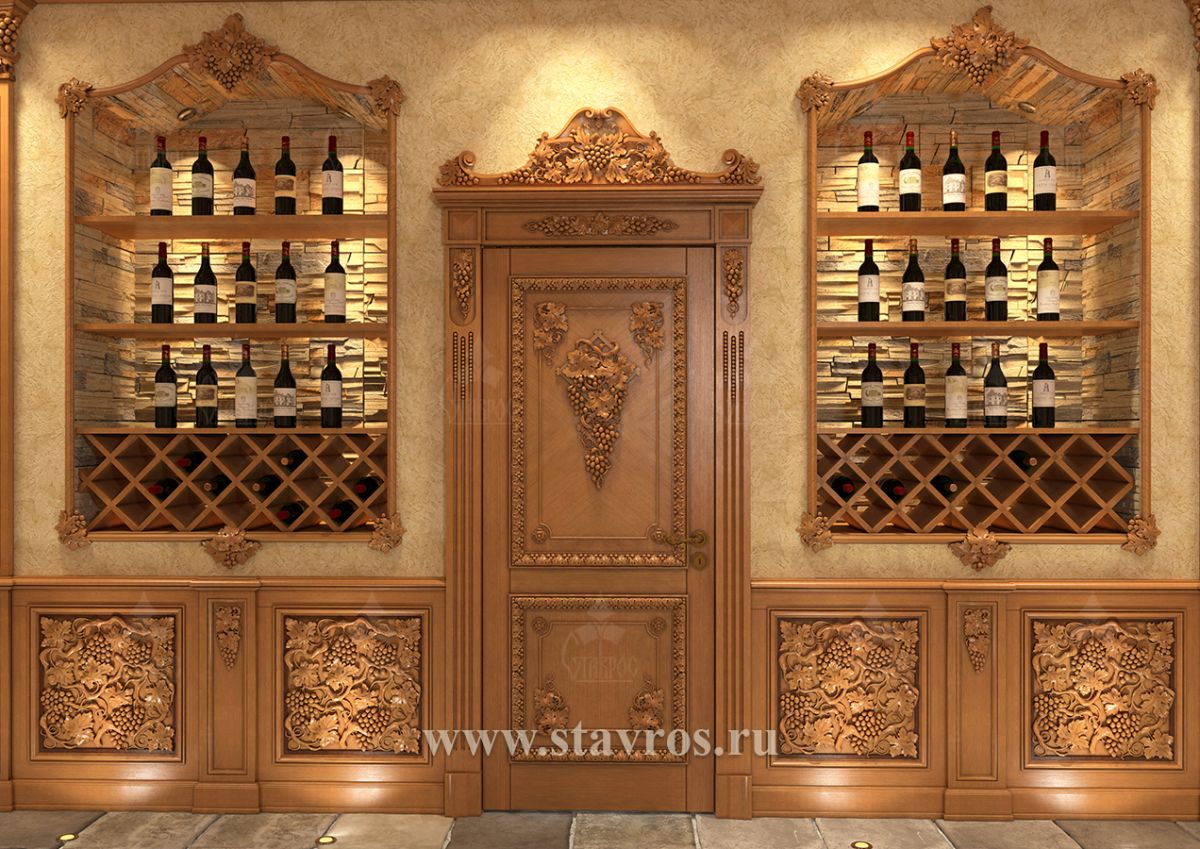
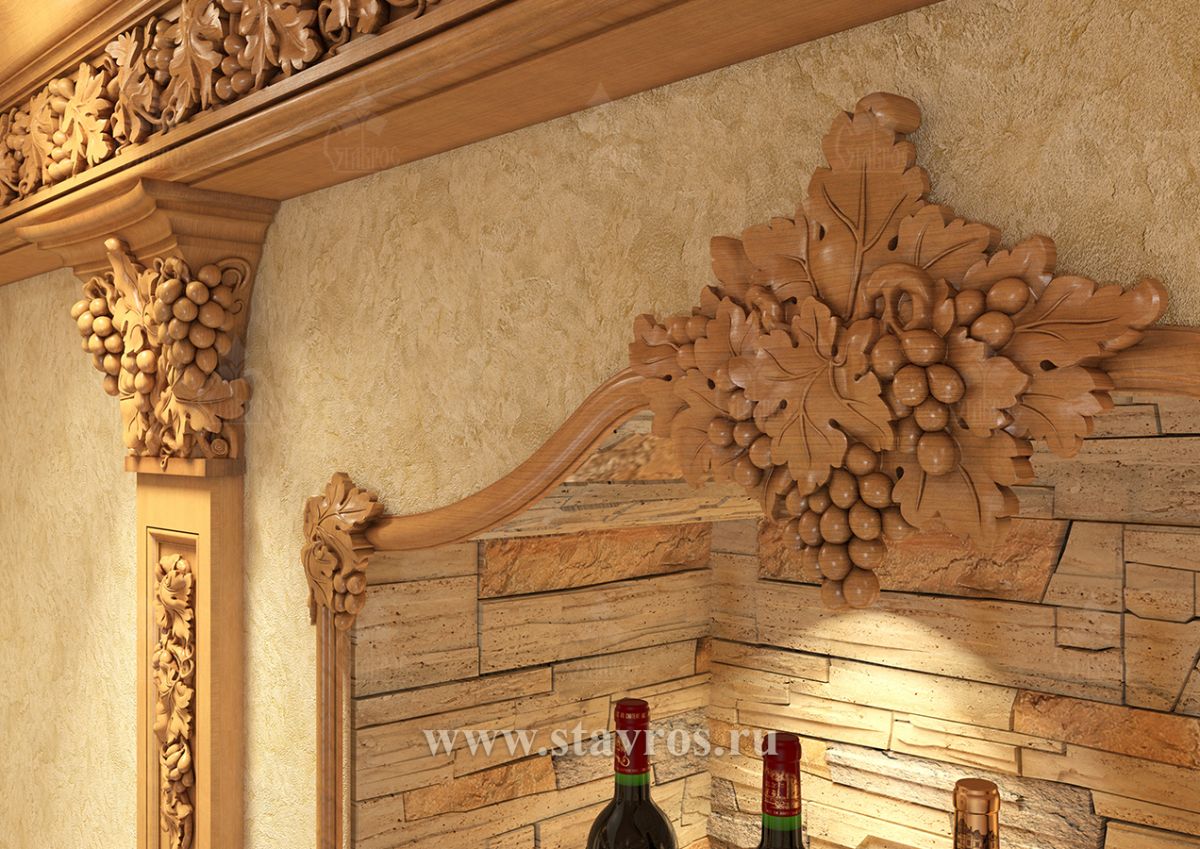
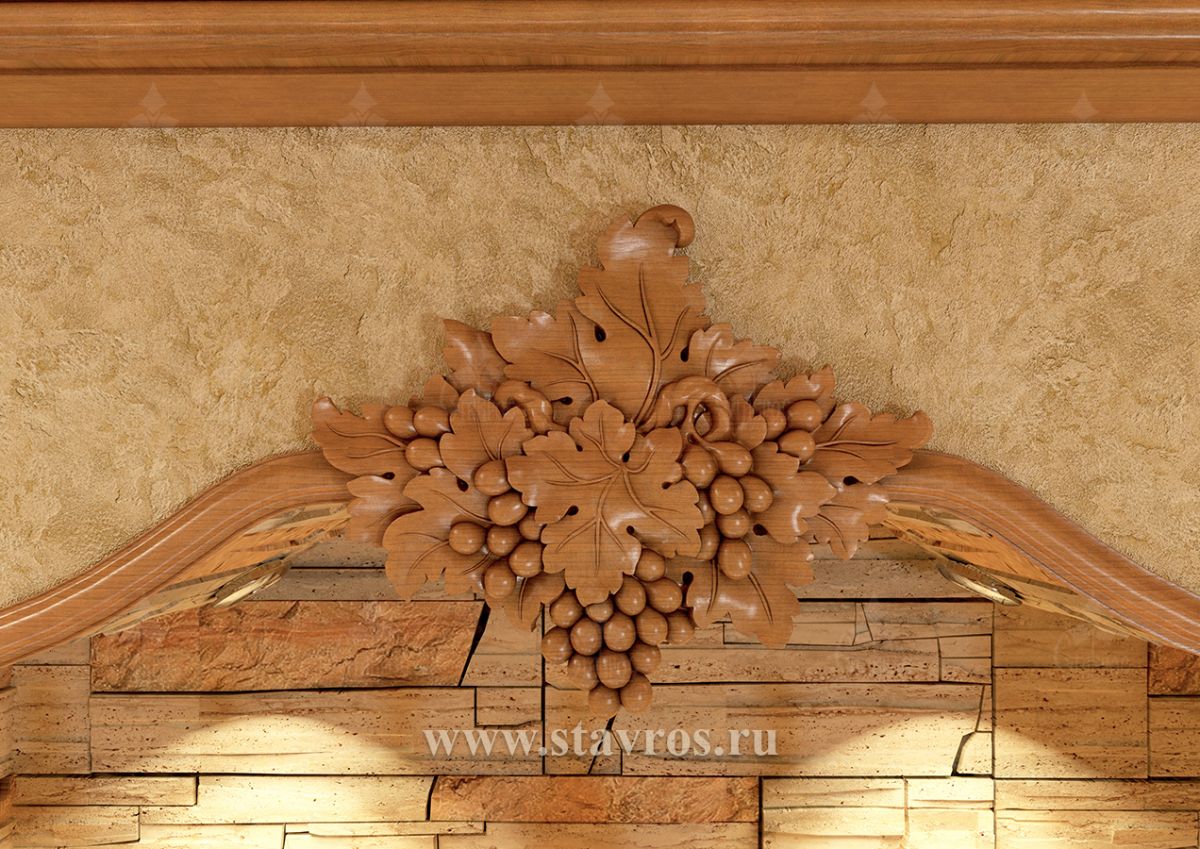
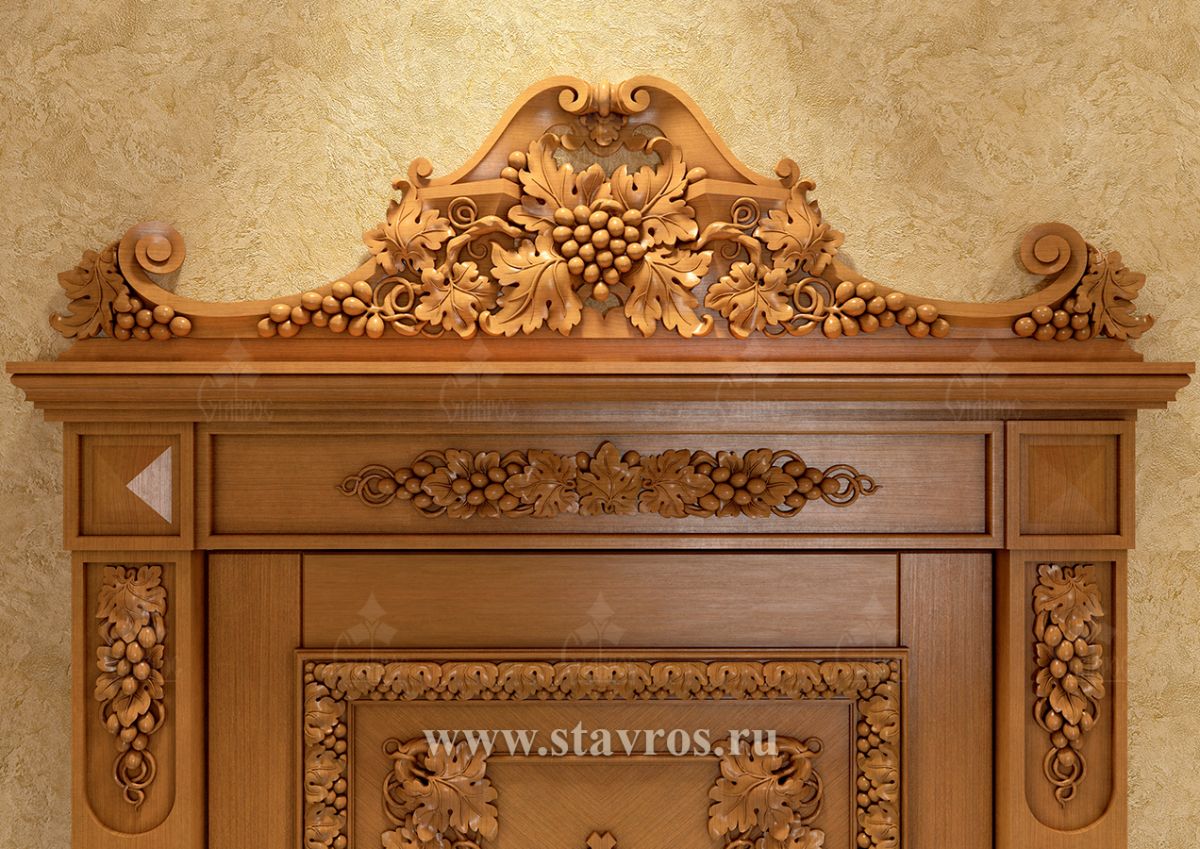
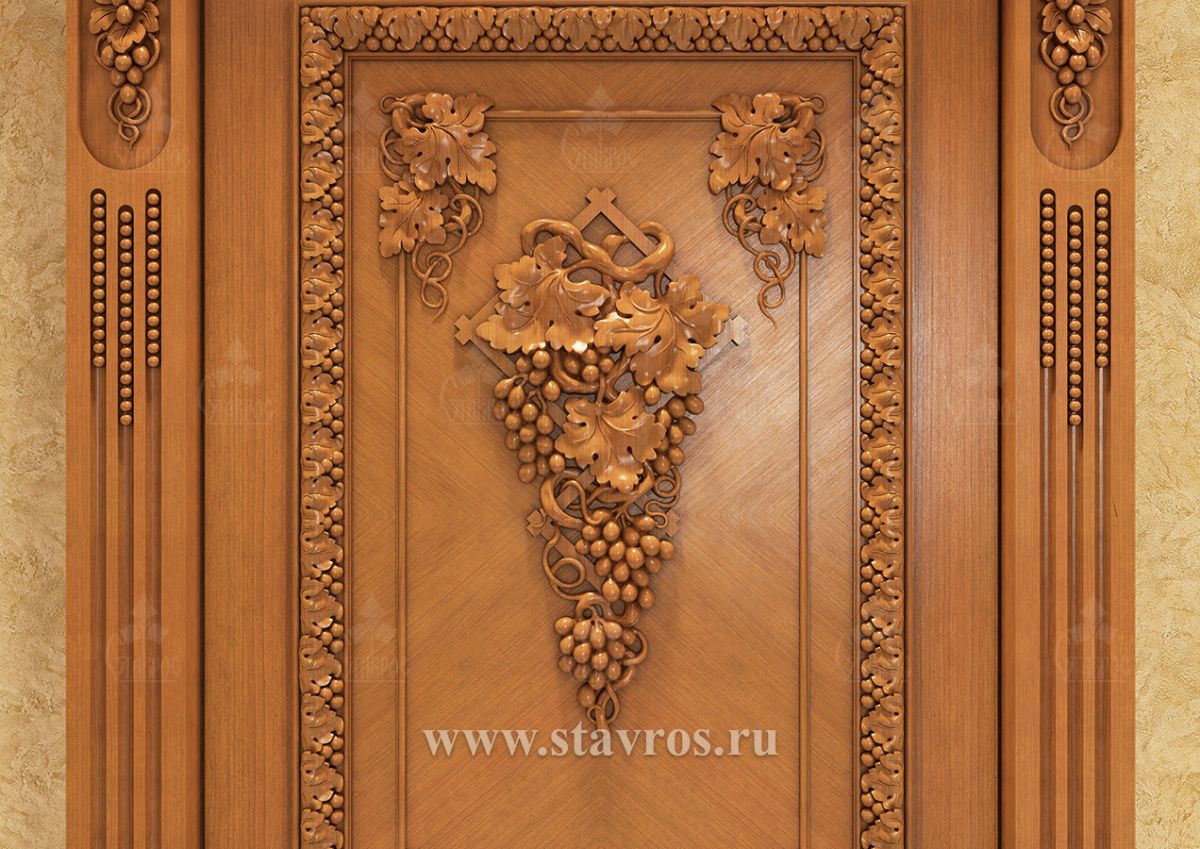
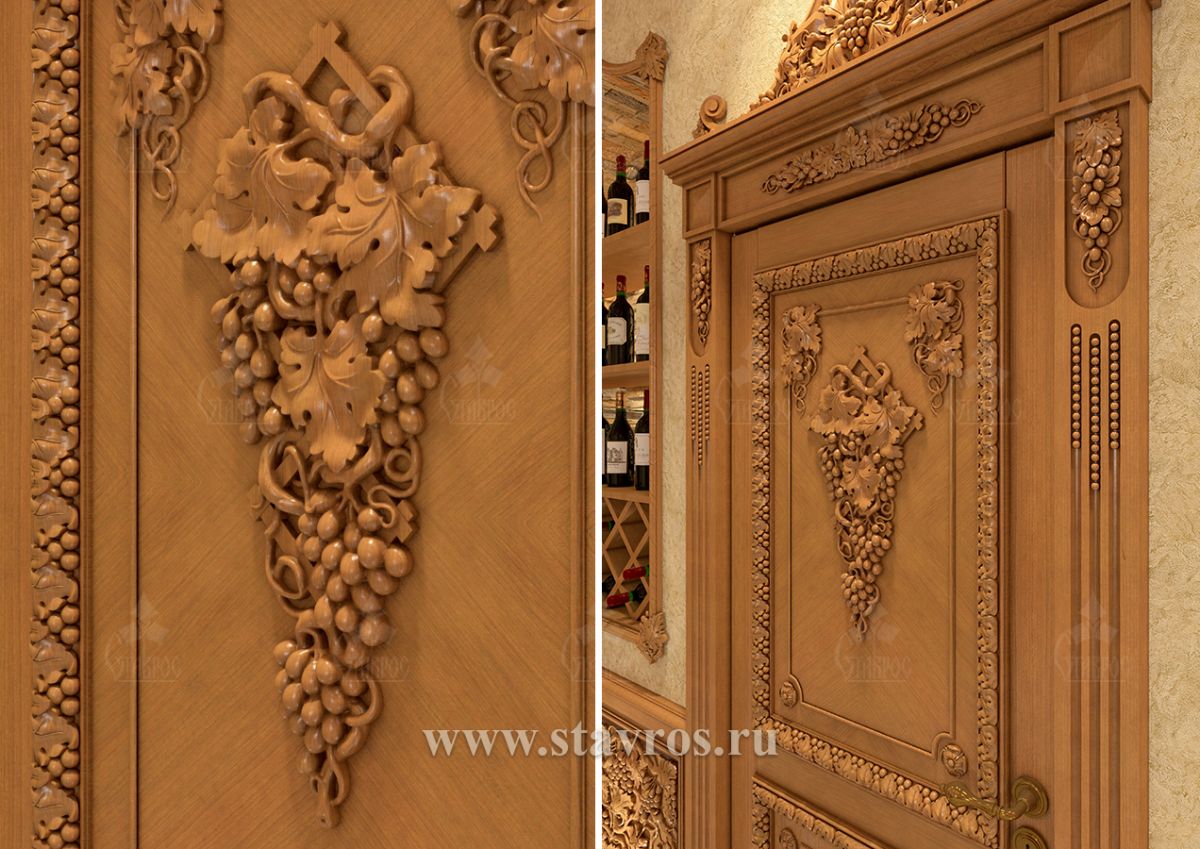
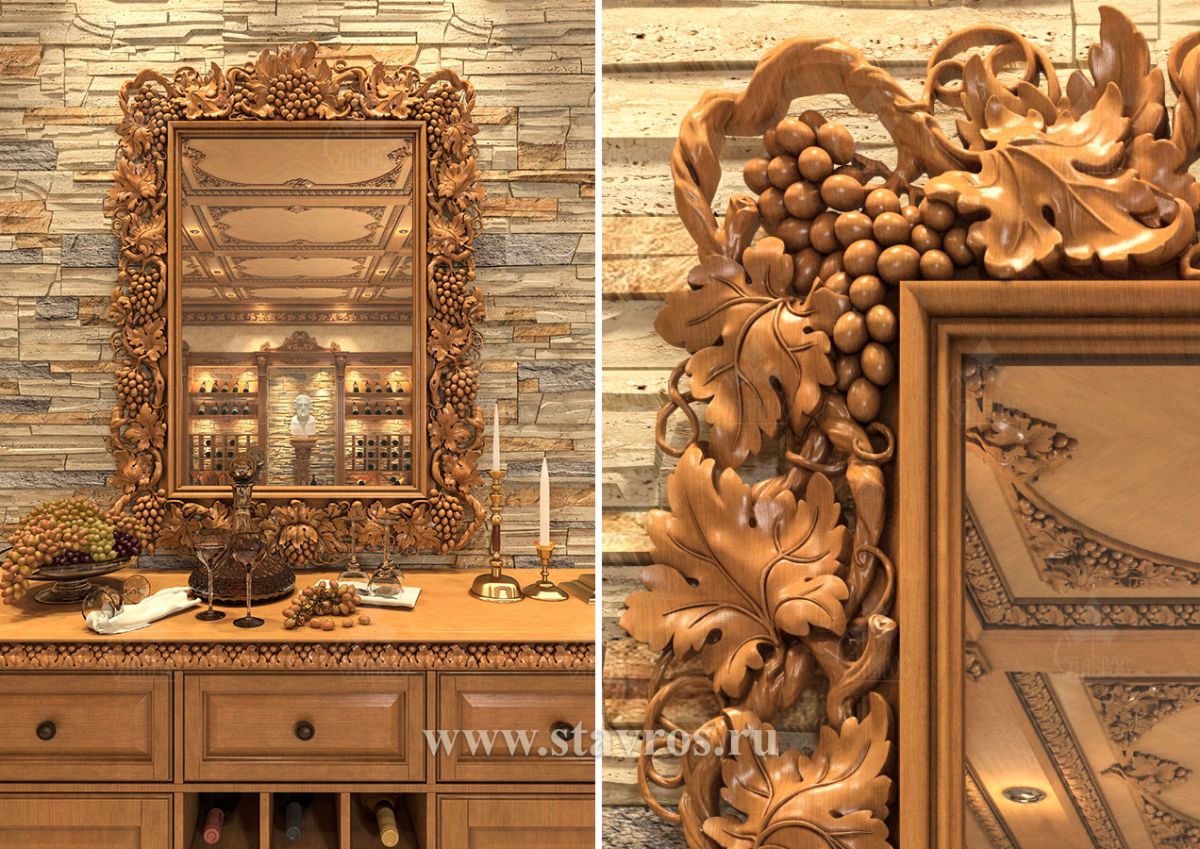
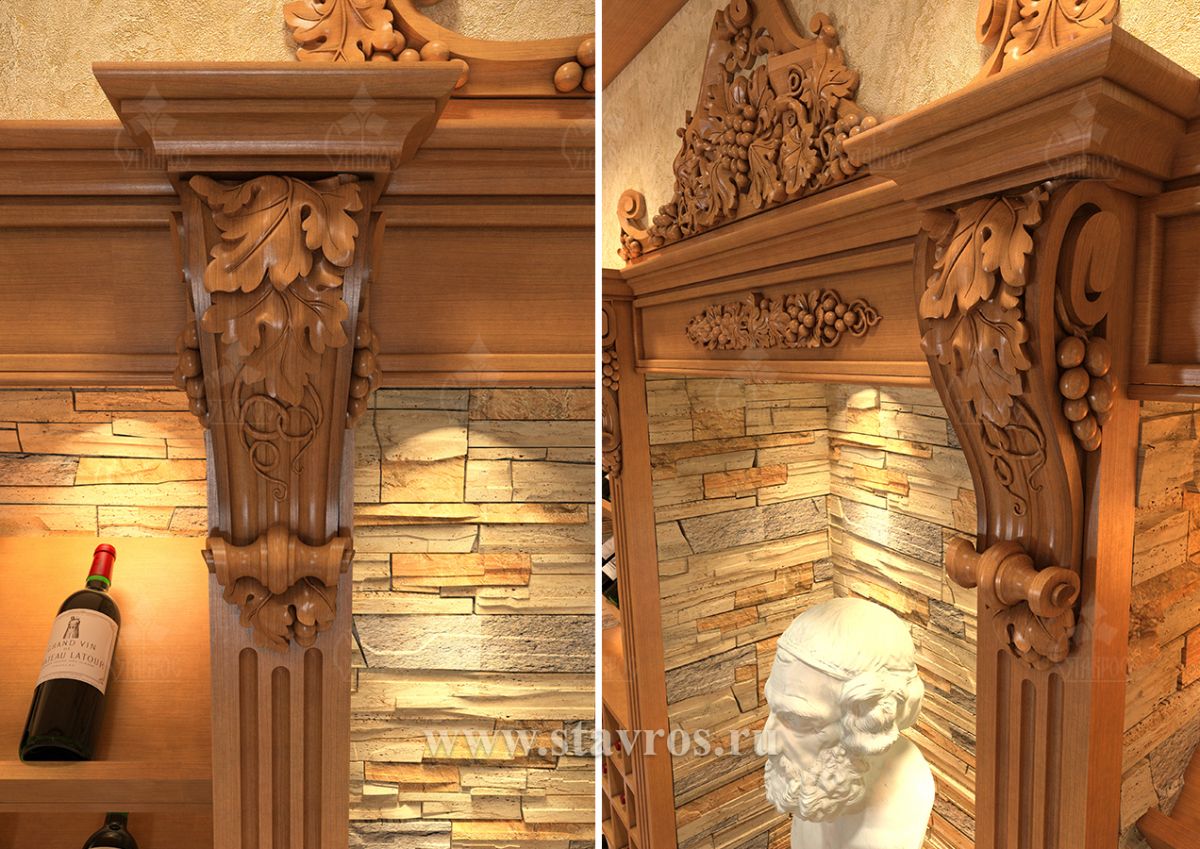
One of the main interior accents — unique carved panels covering walls and furniture. Each depicts grapevines, symbolizing abundance and prosperity. Patterns do not repeat; each element is handcrafted, creating a sense of living, flowing ornament. These panels seem to tell their own story, inviting attentive viewers to delve into the world of details.
Caryatids and atlantes — guardians of space
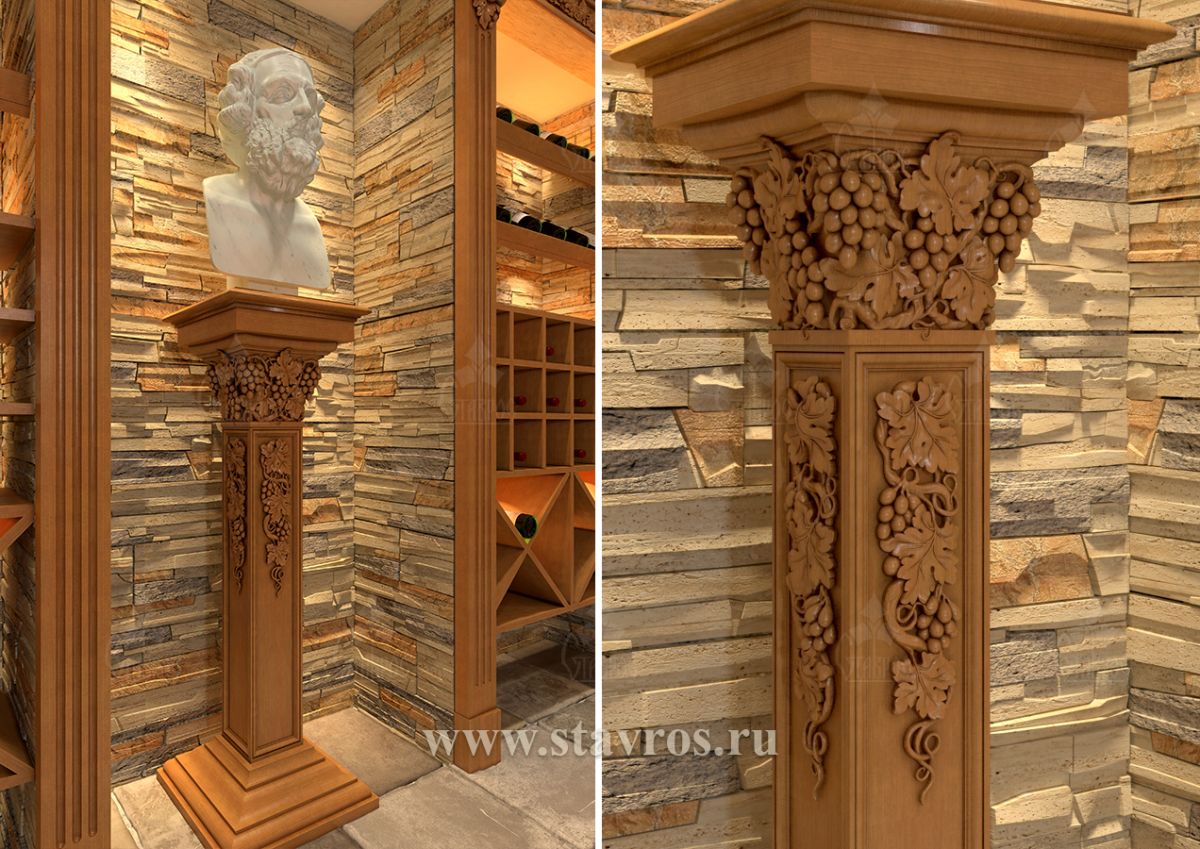
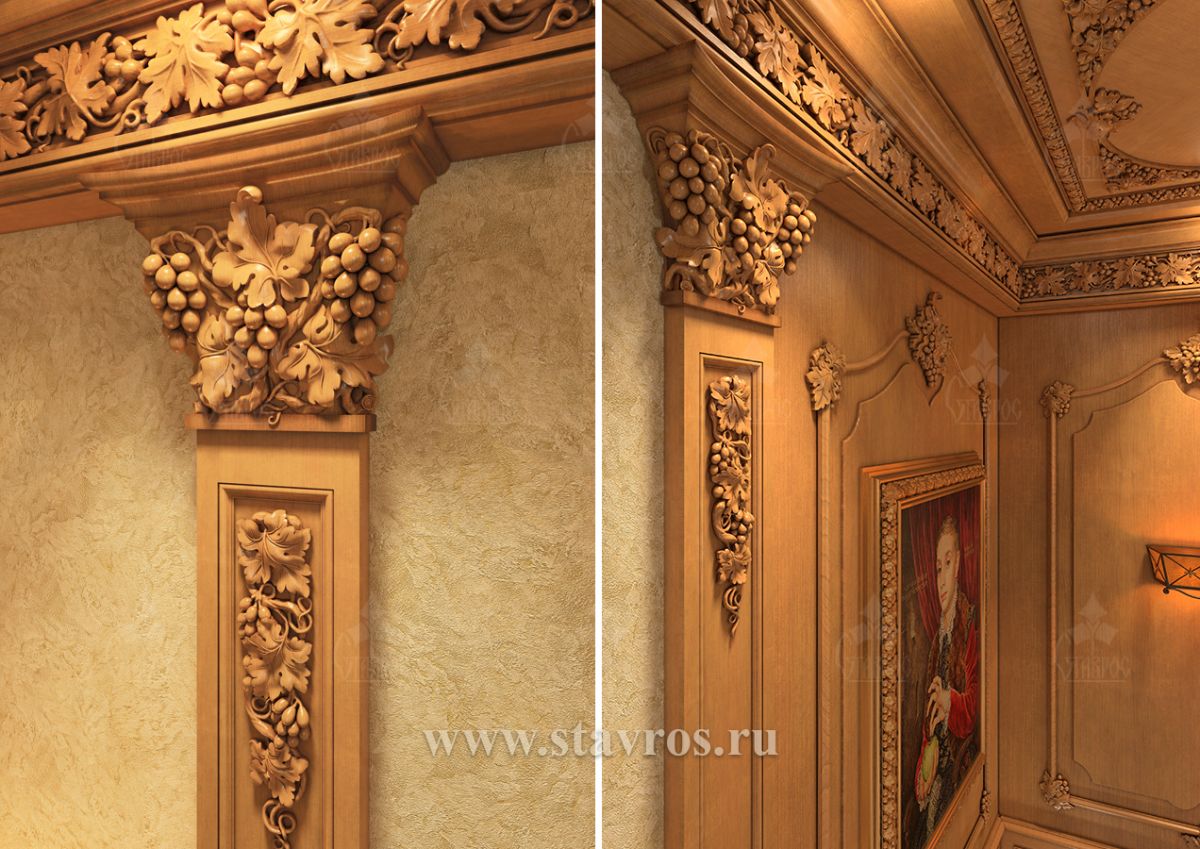
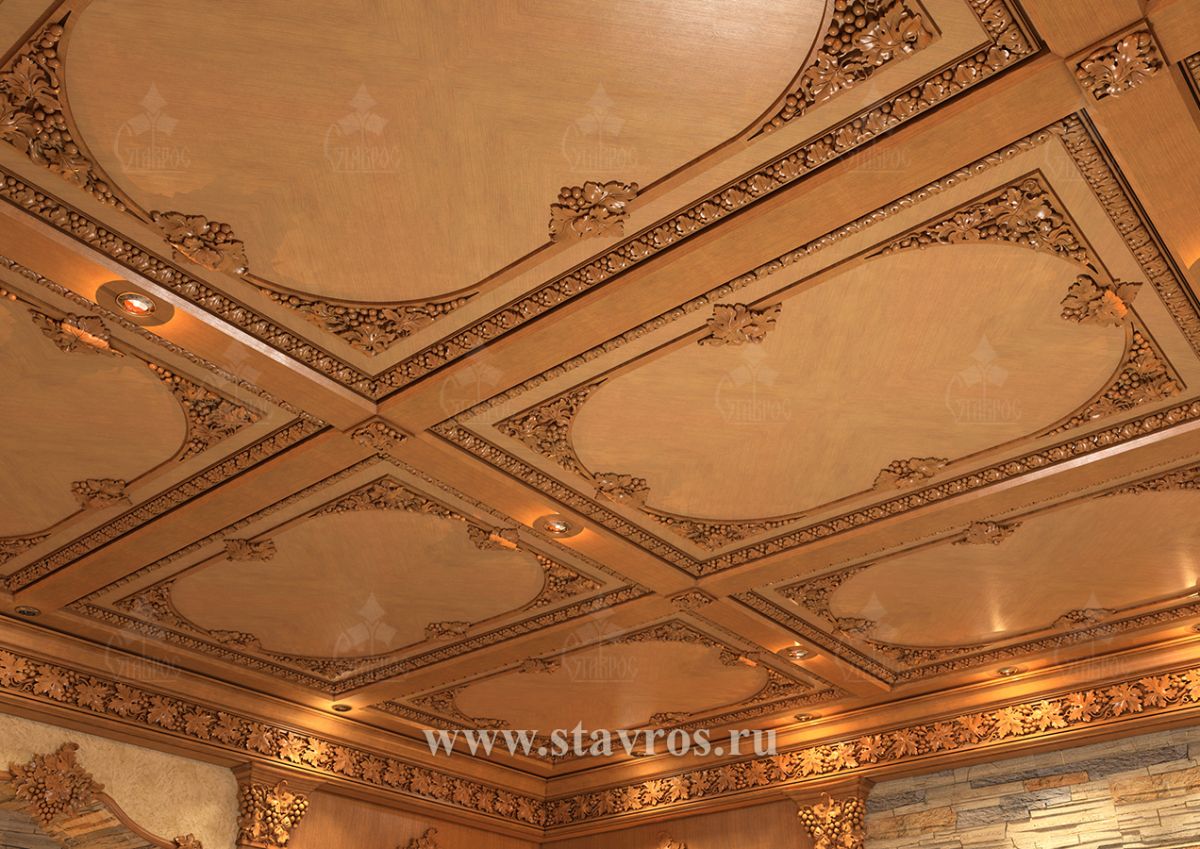
Massive columns support ceiling beams, smoothly transitioning into decorative capitals with carved grape clusters. Such a composition enhances the sense of monumentality and aristocracy.
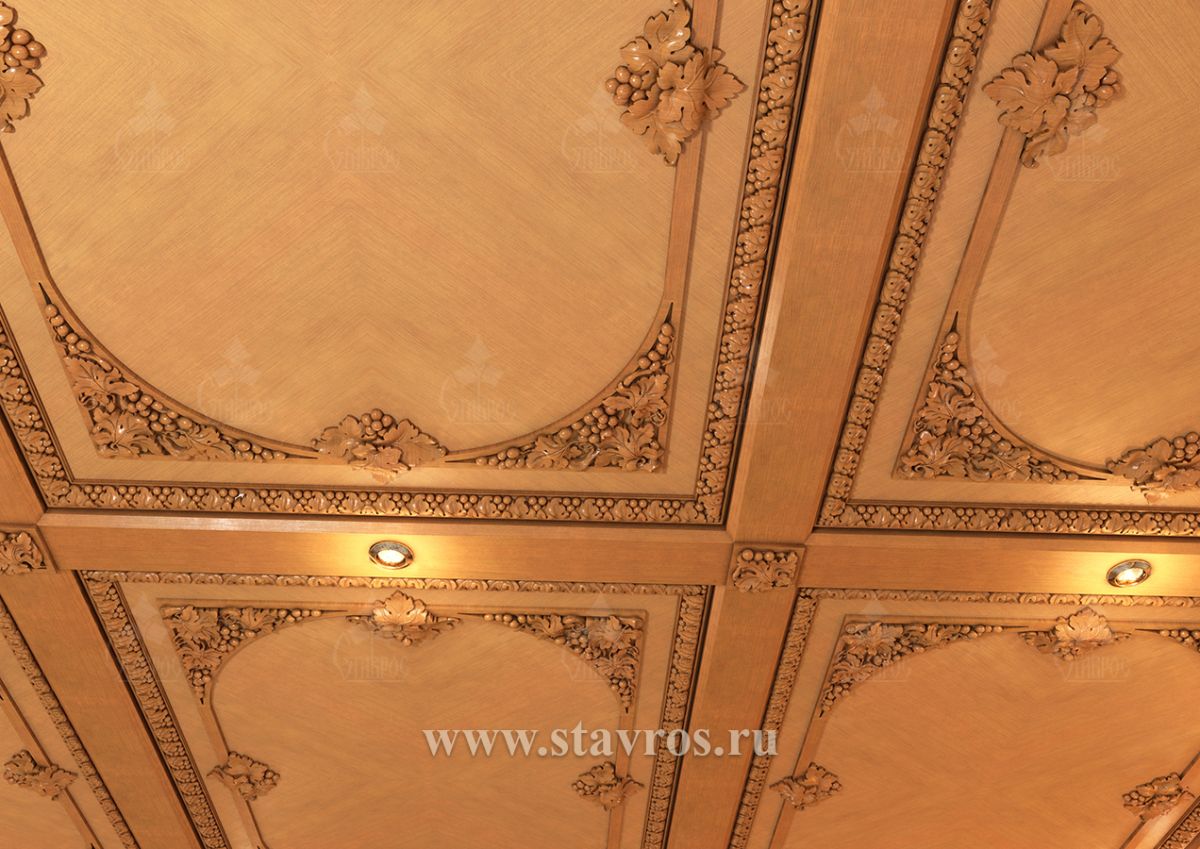
The ceiling is finished with wooden coffers featuring delicate carving, creating an effect of volumetric space. There is no empty space — every corner is adorned with carved elements forming a unified composition.
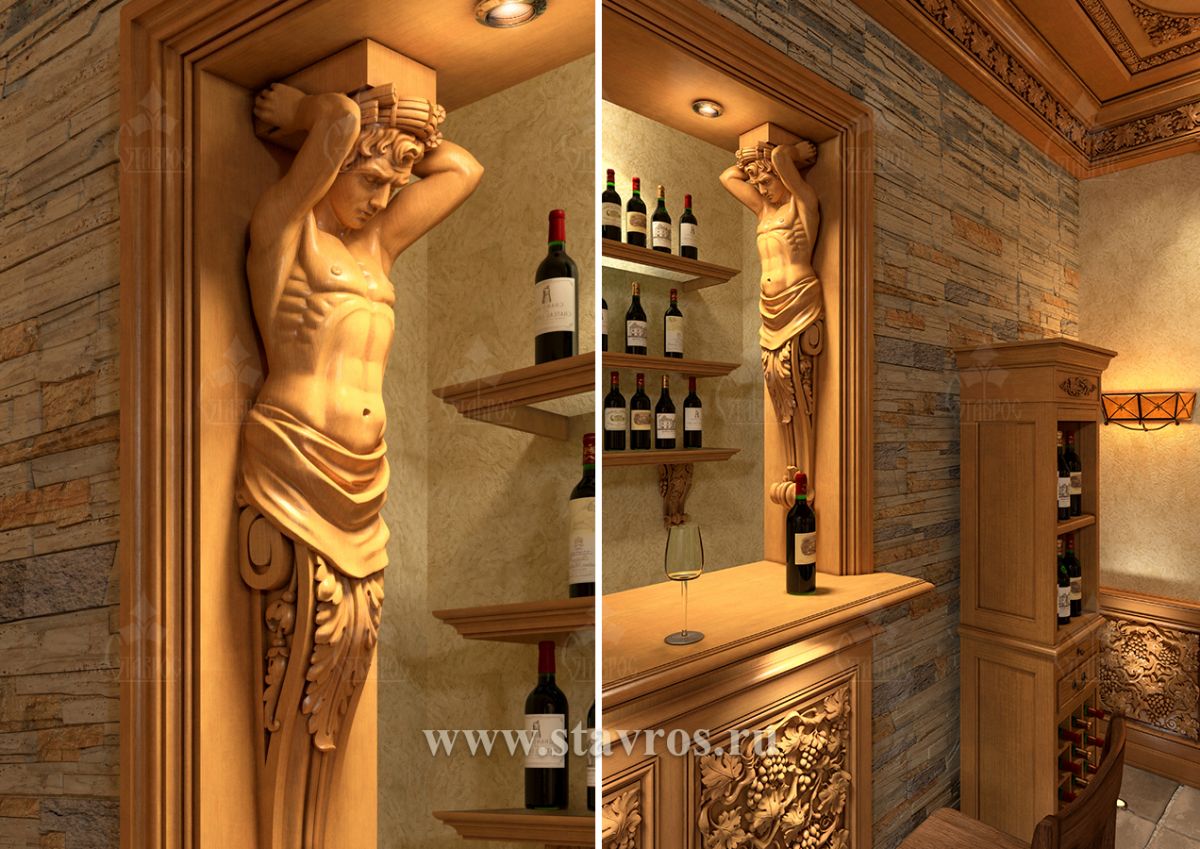
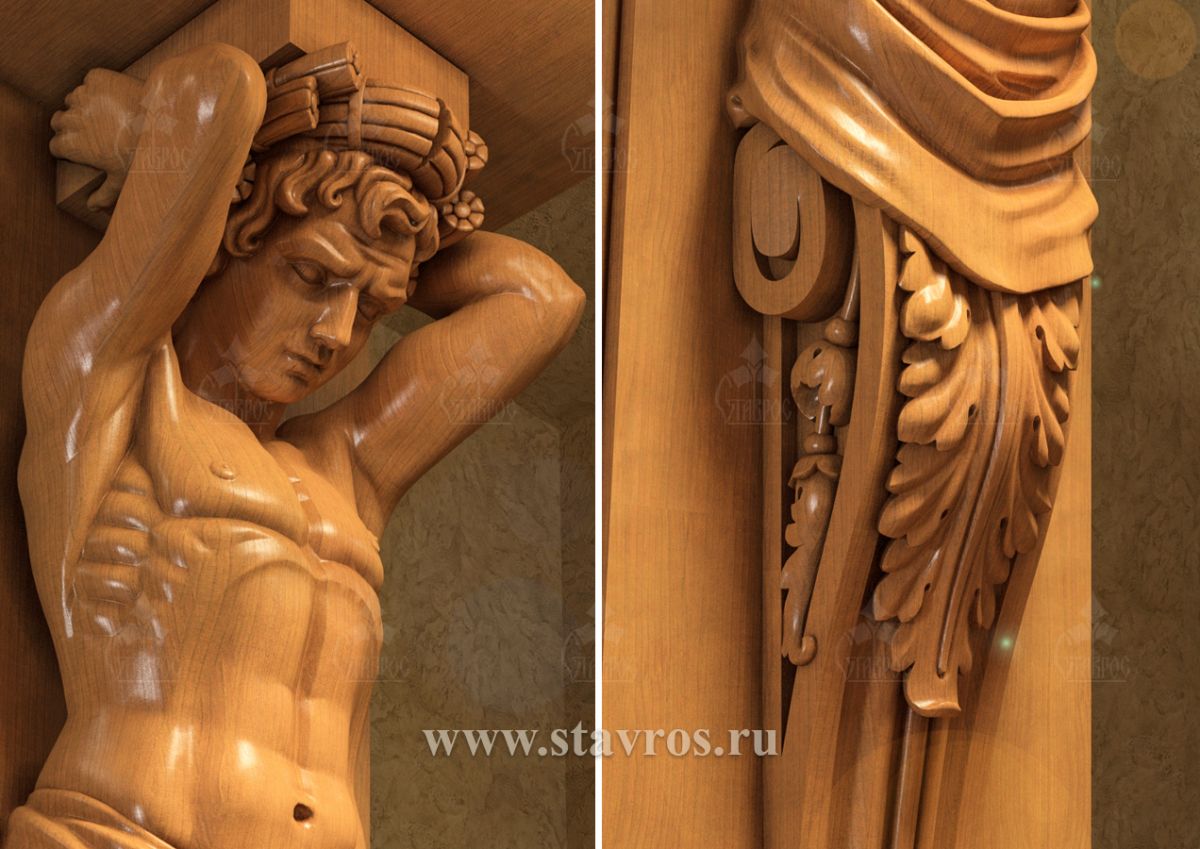
Carved figures of caryatids and atlantes, supporting wine shelves, deserve special attention. Executed in classical style, their smooth lines and noble facial expressions create a sense of grandeur and stability. These figures seem to carefully hold the space, emphasizing its significance.
The carved figures of caryatids and atlantes supporting wine shelves deserve special attention. Executed in a classical style, their smooth lines and noble facial expressions evoke a sense of grandeur and stability. These figures seem to gently hold space, emphasizing its significance.
Art of wine storage and creating the right atmosphere
Space organization for wine
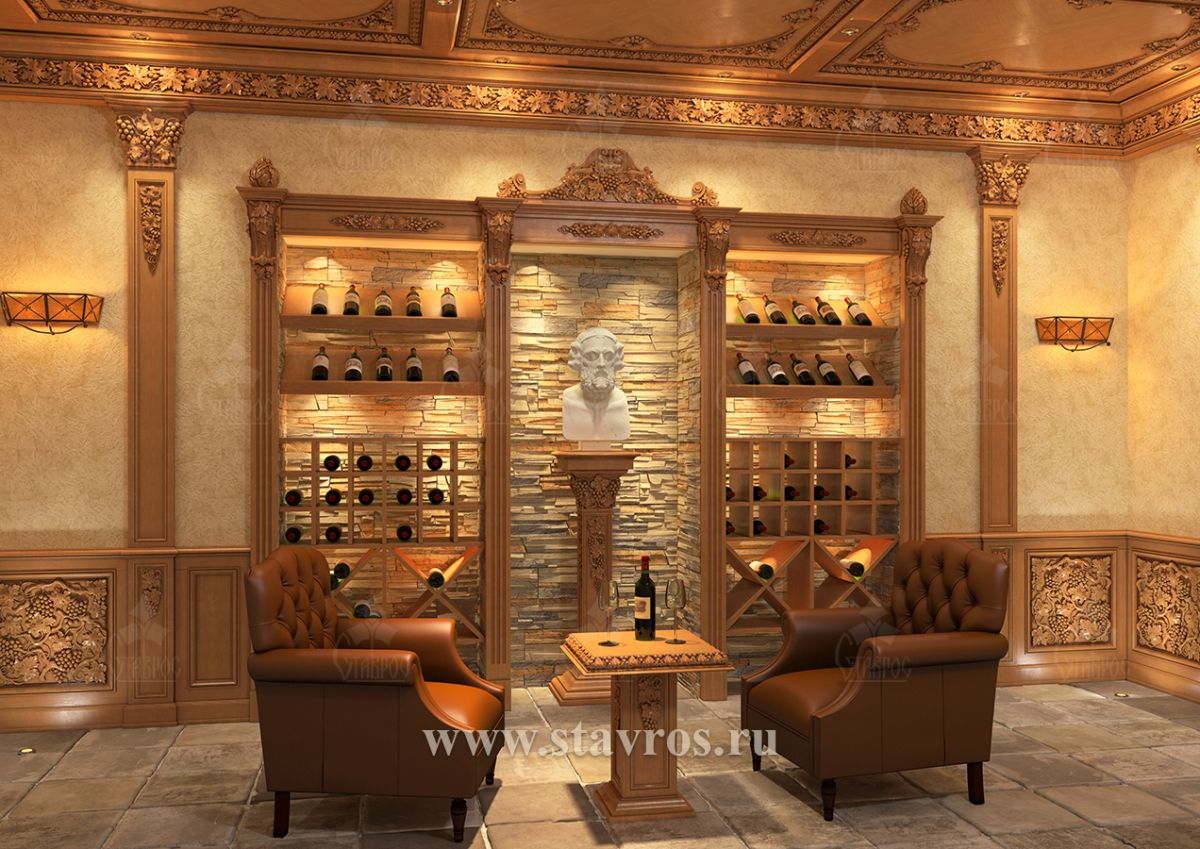
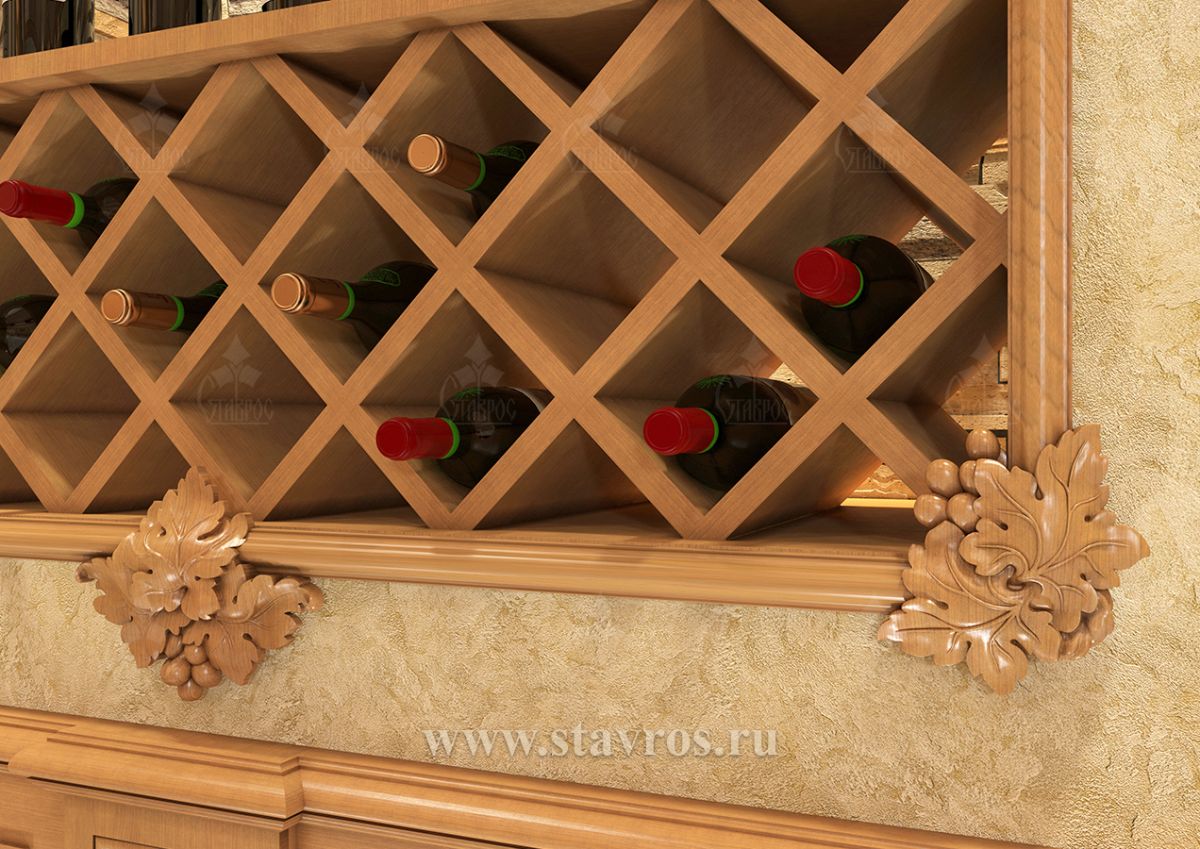
Shelves are designed so that each bottle is stored under ideal conditions. Shelves have the correct incline, preventing cork drying, and soft backlighting highlights the elegance of the collection without disrupting the temperature regime.
Storage system includes:
- Open shelves for easy access to wines intended for frequent consumption.
- Individual compartments for long-term storage of rare collector’s editions.
- Special boxes for the most valuable bottles requiring special aging conditions.
How space influences wine enjoyment
The influence of the environment on the taste and perception of wine
Proper wine cellar design not only creates comfort but also affects the perception of the beverage. Everything here is thought out so that nothing distracts from the tasting:
- Half-darkness and soft shadows allow you to focus on flavor nuances.
- Natural materials create a comfortable acoustics, dampening sounds.
- Warm wood tones promote relaxation and leisurely pace.
Tasting zone — space for mindful enjoyment
Next to the wine racks is the tasting zone — soft chairs, subdued lighting, a small table with inlay. Here you can savor wine leisurely, feel its complexity and fullness of flavor, fully immersed in the moment.
History of wine cellars: heritage of centuries
Wine cellars have a deep historical tradition.
- In Ancient Rome, wine amphorae were stored in special cellars where constant temperature was maintained.
- In the Middle Ages, monasteries created their own wine rooms, carefully controlling the aging process.
- During the Renaissance, wine cellars became an attribute of aristocratic homes, where tastings and philosophical discussions took place.
Today, a wine cellar is a symbol of status, taste, and respect for traditions. It unites the past and present, preserving the spirit of centuries-old winemaking knowledge.
Play of light and shadow in the interior
Proper lighting is an essential part of the wine cellar atmosphere.
- Light falling on carved panels highlights their relief, creating an effect of living ornament.
- Subdued lighting at the bar counter makes the space more intimate.
- Diffused light in relaxation zones enhances the feeling of calm.
Light here is not merely a source of illumination, but a design element that emphasizes the depth of the interior.
Conclusion: philosophy of time and wine art
True enjoyment of wine is an art. It requires atmosphere, attention to detail, and the ability to slow down to fully experience taste, aroma, and the interplay of hues. The V-003 wine cellar is not merely a space for storing wine — it is a place where stories are born, where every moment is imbued with meaning.
Wine matures, gains strength and character. Likewise, this wine cellar — a space that preserves traditions, memories, and the atmosphere of timeless values.