












































































Stair Handrail PR-004
Dimensions and Options
Have questions?
Customers also buy



Marina D.
February 15, 2026
The company ordered the pens for us when we ordered furniture. But I decided to write a review personally because they are amazing! Stylish, expensive, high-quality!
Polina Sh.
February 4, 2026
Went on a tour. To say I'm delighted is an understatement. The largest production facility in Russia, impressive in its scale and dedication to the craft! It was very interesting and informative. You can immediately see - true masters of their trade! We were welcomed in the best possible way, were polite...
Svetlana A.
January 30, 2026
It's great that you can almost always find the necessary elements for the project. The products match the description, with prompt feedback and delivery!
More than 20 years on the market
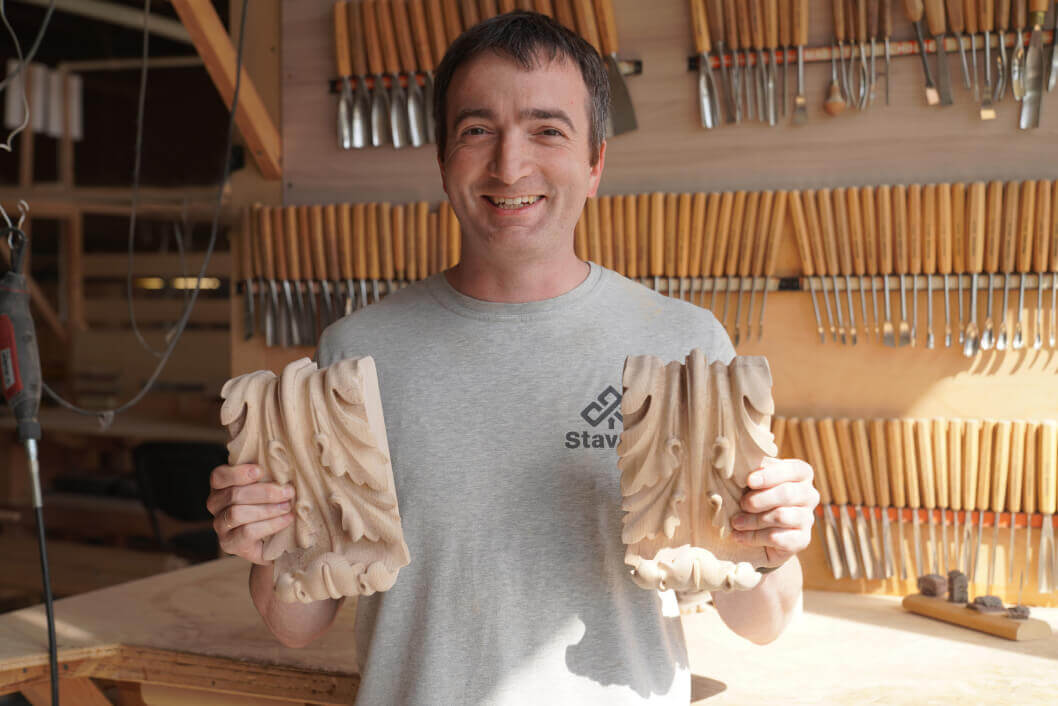
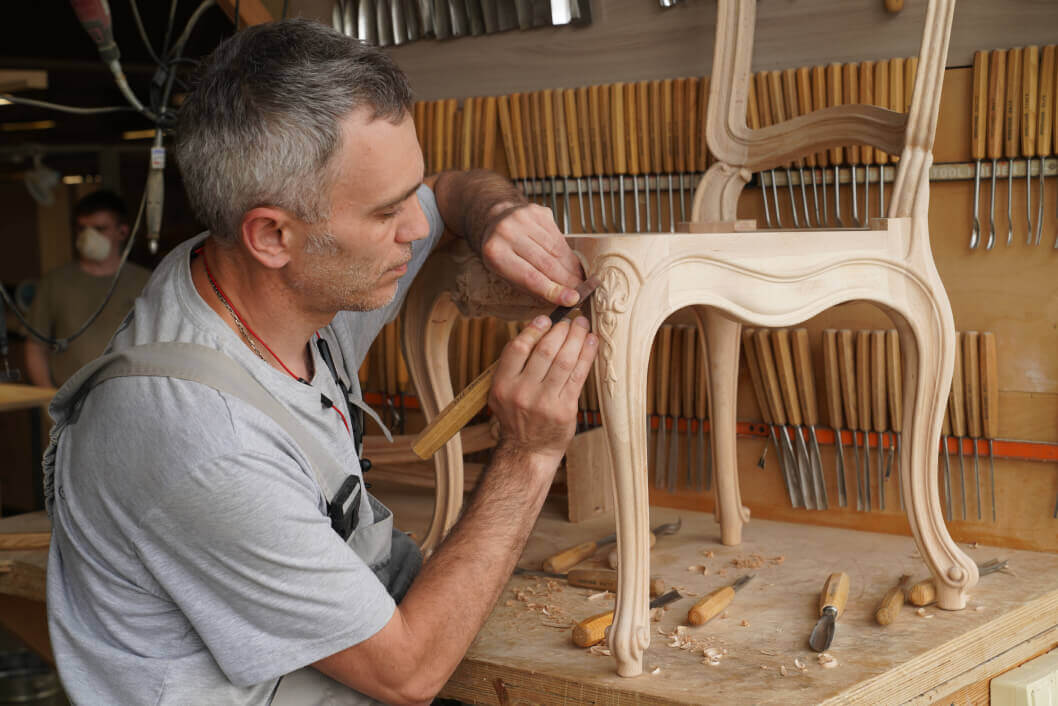
The company's success began in 2002, when two artists — Andrey Ragozin and Evgeny Tsapko — created a small creative workshop for producing wooden carved items. The masters' work was quickly noticed, and within a year they were invited to participate in the reconstruction of the Konstantinovskiy Palace in Strelna.
After the success of this project, the company focused on recreating palace interiors, furniture, church furnishings, and carved decorations in various artistic styles. They worked with cultural heritage sites: The Hermitage, the Alexandrovsky Palace, the Troitsko-Izmaylovsky Cathedral, the Sheremetyevsky Mansion, and many others.
The masters' task — and still is — to create wooden items with the highest level of detail and understanding of every element, based on impeccable knowledge of artistic laws and interior styles.
STAVROS Guarantees
Quality of products without complaints
We save your time, peace of mind, and budget
Large warehouse program
We solve your tasks with maximum speed
Adherence to production deadlines
Streamlined process reduces all risks
Delivery from 1 piece throughout Russia
Quality service regardless of order volume
Your positive business reputation
Reliable partner — the foundation of your business
More products in the category: stair handrails
Frequently asked questions
Our showrooms are located in Saint Petersburg and Moscow. Production is located in Saint Petersburg.
Moscow contacts: https://www.stavros.ru/contacts_all/?tab=msk
Contacts of Saint Petersburg: https://www.stavros.ru/contacts_all/?tab=spb
- Send request by email [email protected]
- Write to us at Telegram
- Write to us at WhatsApp
- Order by phone +7 (800) 555-46-75
- Visit our showroom in Saint Petersburg and Moscow
Yes, we ship orders throughout Russia and to CIS countries.
We cooperate with transportation companies such as СДЭК and DPD.
You can also arrange pickup of your order through any convenient transportation company for you.
Delivery cost depends on the size, weight of the item, and delivery address.
When placing an order, the delivery cost is calculated automatically and displayed as a separate line on our website.
Prices and availability of items on the website are always current. Data is updated daily.
Note: items in stock are stored on the warehouse in unpolished form and shipped within 3 working days.
If the item is not in stock, average production time: 5–10 working days.
This is the quality of polishing of the items.
Standard — machine polishing, at a more attractive price.
Prestige — detailed hand polishing, items do not require further work.
More details: https://www.stavros.ru/information/kachestvo/
This is the type of veneer of the items.
Under enamel: produced by gluing wooden laminates without color and texture matching. Contrast tonal and textural differences are noticeable. This blank should be chosen if the item is intended for opaque coating.
Under tinting: produced by gluing wooden laminates with color and texture matching. Tonal and textural differences may occur. This blank should be chosen if the item is intended for semi-transparent finish.
More details: https://www.stavros.ru/information/kachestvo/
Beech — dense, non-porous wood, most often used for items covered with enamel.
Oak — dense, porous wood with clearly visible natural grain. Due to its strength and decorative properties, it is often used in items with semi-transparent coating, highlighting the wood pattern.
Custom-made, if non-standard items are required, we can produce products from other types of wood, including blanks provided by the customer, manufactured according to our technical specifications.
All our furniture legs can withstand a vertical load of at least 100 kg.
Average production time for custom-made items: 5–10 working days.
Most items are stored on the warehouse in unpolished form. We need time to polish and pack orders.
Yes, we manufacture non-standard items according to individual projects, but we only accept orders with a minimum quantity.
We can manufacture items of the desired size, but we only work with bulk orders. For details, please consult the sales department manager.
Yes, some of our products can be used outdoors. For example, polyurethane items, as well as carved door casings made of pine.
Other items are produced to order using PUR glue, if minimum quantity is available. No warranty is provided for such products, as outdoor conditions are considered aggressive.
Yes, we paint items when ordering products for a total amount of 150,000 rubles or more.
- Dust removal. After sanding, the surface must be dusted.
- Priming. Apply primer in an even layer.
- Matting. After the primer has fully dried, the surface should be matted (lightly sanded for better adhesion).
- Finish coating. Apply finish coating: lacquer or enamel, in 2 layers, with interlayer drying.
More details: https://www.stavros.ru/information/sovety/
Apply adhesive to the decor. Place it on the surface and press briefly. Then, lift the decor from the surface and leave it open for 3–5 minutes. Press the decor firmly onto the surface and hold for 5–10 seconds.
More details: https://www.stavros.ru/information/sovety/
Ideally, you should prepare a design project before placing an order.
You can do this yourself by downloading drawings of our products from our website, or you can order a project from us.
If the number of decorative elements and fittings is small, our company's manager can assist you with selection.
Unfortunately, this service is not provided.
The packaging method depends on the type of items, but in each case, we ensure sufficient protection for safe transportation.
We most often use corrugated cardboard and stretch film. Fragile items are additionally secured on a rigid base to prevent damage during transport.
We ship all items starting from 1 piece.
Room measurements and item installation can be performed by our partners — carpentry companies represented in most regions of Russia.
Often searched in category Staircase Components
Stair Handrail PR-004: premium round wooden handrail
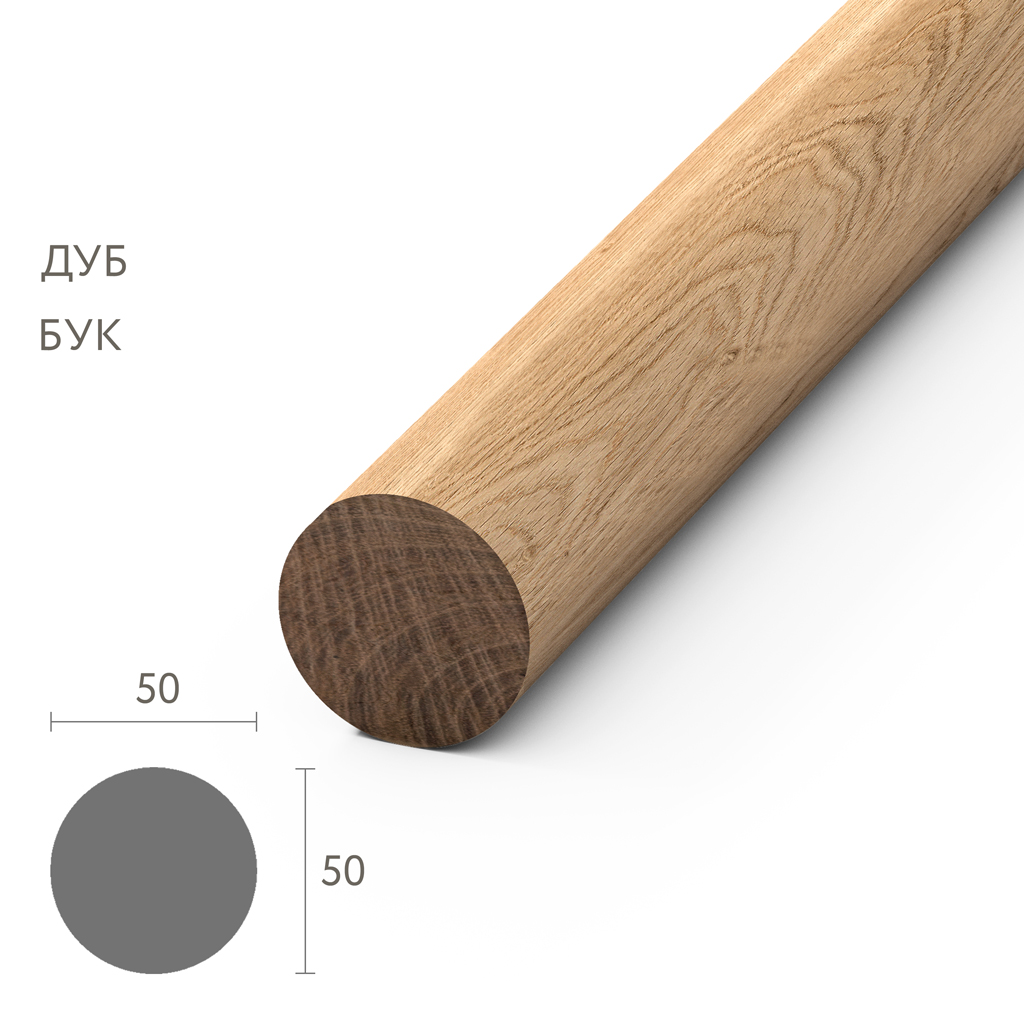
The round wooden handrail PR-004 with a diameter of 50 mm is an elegant and functional solution for ensuring safety and comfort when moving along stairs, ramps, and other vertical structures. Made from selected hardwood, this round handrail combines classic aesthetics, excellent ergonomics, and durability measured in decades of operation.
Technical specifications of the round wooden handrail
The 50 mm round wooden handrail is manufactured from high-quality wood with strict adherence to technological norms and standards. The 50 mm diameter is recognized as optimal for a reliable grip by an adult's palm, ensuring comfortable and secure holding during movement. Round handrails for stairs of this size comply with building codes and safety requirements for guardrail structures.
The production process includes several processing stages: the material undergoes chamber drying to achieve 8-10% moisture content, preventing subsequent deformation and cracking. The 50 mm round handrails are manufactured by splicing selected lamellas, which increases structural strength and eliminates knots on the visible surface. After forming the blank, the product undergoes thorough sanding on specialized equipment, creating a perfectly smooth surface without burrs or roughness.
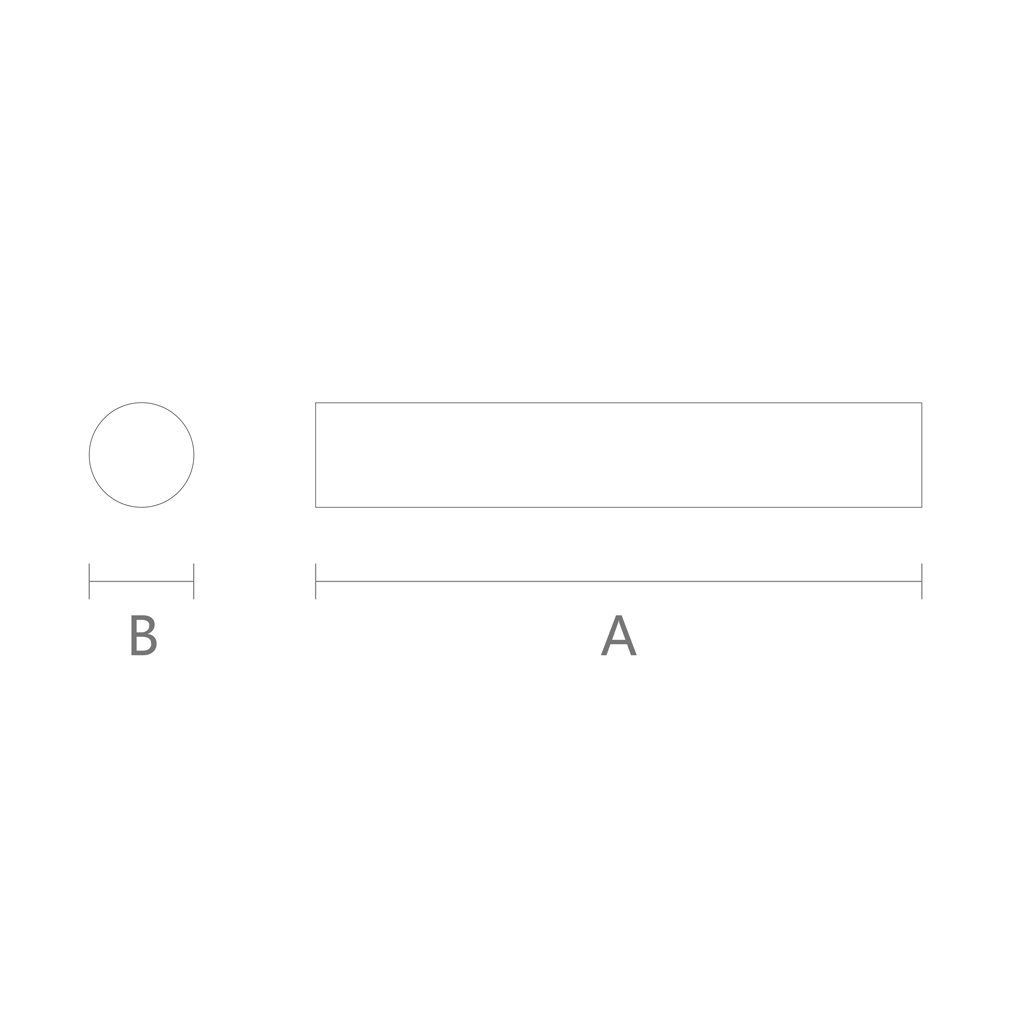
Round stair molding is produced in standard lengths from 2 to 4 meters, minimizing the number of joints when installing extended railings. The material density ranges from 650 to 750 kg/m³ depending on the selected wood species, with bending strength reaching 90-120 MPa. These indicators guarantee that the round wooden handrail can withstand a horizontal load of at least 100 kg without deformation, which is critically important for user safety.
Wood species for round handrails
Round oak handrails
The round oak handrail is considered the benchmark for quality and durability among wooden railings. Oak has outstanding hardness, resistance to mechanical damage, and a noble texture with characteristic medullary rays creating a unique pattern. The round oak handrail features increased moisture resistance compared to other species, allowing its use in rooms with variable microclimates.
It is worth buying a round wooden handrail made of oak for premium-class interiors that require a combination of prestige and functionality. Oak wood is practically resistant to rot and, with proper care, lasts over a century. The natural shade of oak ranges from light golden to rich brown, and over time the wood darkens nobly, acquiring a deeper and more saturated color.
The hardness of oak on the Brinell scale is 3.7-3.9 units, ensuring high resistance to abrasion and mechanical damage. Round molding made of oak practically does not deform with temperature and humidity fluctuations, maintaining geometric stability throughout its service life. This wood species is ideal for manufacturing handrails in public buildings with high traffic, where maximum wear resistance is required.
Round beech handrails
Buying a 50 mm round handrail made of beech is economically advantageous: the cost of beech products is 20-30% lower than oak products with comparable performance characteristics. Beech is a hardwood species with a beautiful fine-grained texture and uniform pinkish hue. Round handrails made of beech are easily tinted and painted, opening up wide possibilities for design solutions.
Beech wood is characterized by high density and strength, processes excellently, and polishes to a mirror shine. After the steaming process, beech acquires excellent flexibility, allowing the creation of curved handrail sections without gluing segments. Round beech molding has a hardness of 3.6-3.8 on the Brinell scale, only slightly inferior to oak.
The homogeneous structure of beech wood without a pronounced grain makes round beech handrails a universal solution for modern minimalist interiors. The material accepts various types of finishes well: from matte oil to glossy varnish. With proper treatment with protective compounds, beech handrails successfully resist moisture and temperature fluctuations.
Advantages of round wooden molding
Buying round molding for stair railings is advisable for many reasons, from aesthetic qualities to practical considerations. Wooden handrails create an atmosphere of coziness and warmth in a room, which cannot be achieved with metal or plastic counterparts. Natural wood has a pleasant surface temperature: unlike cold metal, it is worth buying a round wooden handrail precisely for comfortable tactile contact at any time of year.
Round wooden molding is environmentally safe and does not emit harmful substances even when heated. Wood is a renewable natural resource, which is important for those who care about ecology. Round wooden molding can be purchased to implement a wide variety of architectural projects: the material combines perfectly with other structural elements, including metal posts, glass panels, and stone bases.
The ergonomic properties of the round handrail profile are difficult to overestimate. It is recommended to buy a 50 mm round wooden handrail precisely because this diameter corresponds to the anatomical features of the human hand. When gripping such a handrail, the fingers form a secure grip without requiring excessive muscle tension. This is especially important for elderly people and individuals with limited physical abilities who require reliable support when moving.
Application of round wooden stair handrails
Round wooden stair handrails find application in a wide variety of facilities: from private houses and apartments to public buildings and commercial premises. In residential interiors, round wooden handrails are installed on interfloor stairs, in halls, on balconies, and terraces. Round wooden railings fit organically into classic, Scandinavian, country, and eco-style interiors, emphasizing the natural beauty of natural materials.
In public buildings, 50 mm round wooden handrails are mounted on stairs, ramps, in corridors, and passageways. Office centers, educational institutions, and medical organizations choose wooden handrails for their combination of aesthetics and functionality. Round wooden railings create a favorable psychological atmosphere, which is especially important in places with high human traffic.
A round wall-mounted handrail is installed along the walls of stair flights and corridors to provide additional safety. Such structures are particularly in demand in medical and social institutions where it is necessary to create the safest environment for people with limited mobility. Wall-mounted handrails are installed at a height of 900 mm from the level of steps or floor, which complies with building codes.
It is advisable to buy round railings for the restoration of historical buildings where it is necessary to preserve the authentic interior appearance. Traditional round-profile wooden handrails harmoniously complement the architecture of buildings from various eras. 50 mm round wooden railings can be tinted to the desired color for accurate reproduction of the historical appearance or, conversely, left in their natural state to create a contrasting modern accent.
Round baluster: versatility of application
Round wooden molding can be purchased not only for manufacturing handrails but also for other carpentry work. The round profile is used in furniture production, decorative interior elements, cornices, and moldings. It is worth buying round molding in reserve during large-scale repairs or construction, as uniformity of wood texture and shade in different batches is not guaranteed.
50 mm round wooden molding serves as the basis for creating turned balusters, elements of balcony and terrace railings, and decorative grilles. The versatility of application makes this material an economically advantageous purchase. 50 mm round molding is easily processed with hand and power tools, allowing the creation of various structural and decorative elements from it.
Round wooden molding can be purchased in St. Petersburg and other cities from specialized manufacturers of stair systems and carpentry products. Round molding produced in St. Petersburg is distinguished by stable quality thanks to modern equipment and strict control at all stages of manufacturing. It is advantageous to buy round molding produced in St. Petersburg in wholesale batches for construction and repair organizations.
Round molding 50 mm is available in various finishing options: untreated for subsequent painting, oiled to highlight the wood grain, or varnished to create a glossy surface. Round oak molding can be purchased in its natural color or tinted to darker or lighter shades. The variety of finishing options allows you to choose the optimal solution for any interior.
Installation of round wooden handrail
Installing round wooden handrails requires certain skills and adherence to technological requirements. Before installation, it is necessary to accurately calculate the installation height of the handrail, which according to standards is 900 mm from the level of the steps for the main handrail and 500-700 mm for an additional children's handrail. Round wooden handrails should be purchased with a slight length allowance to allow for adjustment during installation.
Round wooden handrails 50 mm are attached to supporting structures via special brackets or end holders. The distance between attachment points should not exceed 1 meter to ensure the necessary structural rigidity. For wall-mounted handrails, wall brackets are used, creating a 40-50 mm gap between the handrail and the wall for a comfortable grip.
When connecting straight sections of handrail to each other, the technology of end splicing using special connecting elements or the method of miter cutting at a 45-degree angle with gluing of the joint is used. The connection points are carefully sanded to create an invisible transition. Solid round molding is preferable to composite molding, as it eliminates the presence of joints on long sections.
For creating curved sections of railing, bent handrail elements manufactured by steaming and molding are used, or the technology of assembling from short straight segments with smooth transitions. Round wooden handrails 50 mm - ready-made bent elements can be purchased to order with the specified required bending radius. This approach ensures high quality and aesthetics of curved railing sections.
Treatment and protection of wooden handrails
After installation, wooden handrails require protective treatment if they were not coated at the factory. The choice of protective coating depends on operating conditions and the desired aesthetic effect. Oil compositions penetrate deeply into the wood structure, highlight the natural grain, and ensure material vapor permeability. Such a coating requires periodic renewal but is easily restored locally without dismantling the handrail.
Varnish coatings create a protective film on the wood surface, which reliably protects the material from moisture, dirt, and mechanical damage. Polyurethane varnishes provide high wear resistance and are suitable for facilities with intensive use. Matte varnishes preserve the natural appearance of wood, glossy varnishes give the surface shine and enhance color saturation.
Wax compositions are used for the final treatment of wooden handrails, creating a silky surface with a slight sheen. Wax provides water-repellent properties and additional protection from dirt. Combined treatment with oil followed by wax coating is considered optimal for wooden handrails in residential premises.
Wood toning allows changing the color of the handrail without losing the visible grain. Stains and special oils with pigments make it possible to turn light beech wood into an imitation of dark walnut or mahogany. Oak handrails are often tinted to wenge or fumed oak to create the effect of aged wood. Properly performed toning makes affordable wood species visually indistinguishable from elite wood types.
Care for round wooden handrails
Maintaining the aesthetic appearance and functionality of wooden handrails requires regular but simple care. Daily cleaning of handrails from dust is carried out with a dry soft cloth or a slightly damp cloth. It is not recommended to use aggressive cleaning agents containing solvents, abrasives, or chlorine for cleaning, as they can damage the protective coating and the wood itself.
Every few months, it is recommended to perform a more thorough cleaning using special wood care products. After cleaning, the surface is wiped dry and, if necessary, treated with a wax composition or polish. Such care restores the protective properties of the coating and preserves the attractive appearance of the wood.
If scratches or abrasions appear on an oiled coating, the damaged area is sanded with fine sandpaper and re-treated with oil. A varnished coating with serious damage requires complete re-varnishing of the handrail: the old varnish is removed with special compounds or by sanding, after which a new coating is applied. Local repair of a varnished surface is usually noticeable due to differences in shine and shade.
It is important to control the microclimate in the room where wooden handrails are installed. The optimal air humidity is 40-60%, temperature 18-24°C. Sharp fluctuations in humidity and temperature can lead to wood deformation, cracking, or warping. During the heating season, it is recommended to use air humidifiers to maintain stable humidity.
Comparison of round profile with other types of handrails
The round profile of a handrail has significant advantages over other geometric shapes. Unlike square or rectangular handrails, a round cross-section does not have sharp corners and edges that can dig into the palm during prolonged holding. The ergonomics of a round handrail ensure even distribution of pressure across the entire contact surface of the palm, reducing fatigue during use.
Oval handrails, although close to round in comfort, are less versatile in terms of grip from different sides. A round profile provides equally comfortable grip regardless of the angle of force application, which is important for various ways of moving on stairs. Figural handrails with complex profiles create additional difficulties during cleaning, as dust and dirt accumulate in the relief elements.
From a production standpoint, round molding is the most technologically advanced: the manufacturing process is well-established and does not require complex equipment. This positively affects the cost of the finished product. Round handrails are easier to repair and restore compared to products of complex shape. If it is necessary to replace a damaged section, it is much easier to find round molding of the corresponding diameter than to find an element with a unique figural profile.
Combining wooden handrails with other materials
Modern staircase structures often use a combination of various materials to achieve an optimal balance of aesthetics, functionality, and economic efficiency. Round wooden handrails combine perfectly with metal posts and balusters made of stainless steel or painted metal. The contrast between the warm texture of wood and the cold shine of metal creates an expressive visual effect, especially popular in modern interiors.
Glass railing panels in combination with wooden handrails ensure maximum light transmission of the staircase space while maintaining comfort of use. Transparent or frosted glass screens do not visually clutter the interior, and the wooden handrail adds a necessary element of warmth and coziness. This solution looks especially impressive in rooms with panoramic windows and an abundance of natural light.
Stone or concrete stair bases serve as a reliable support for attaching wooden handrails. The combination of the rough texture of stone and smoothly sanded wood creates an interesting play of textures. In loft-style interiors, wooden handrails are mounted on raw concrete or brick walls, emphasizing the industrial aesthetics of the space. At the same time, the wood softens the brutality of the overall picture, making the room more comfortable for living.
Economic aspects of choosing wooden handrails
The cost of round wooden handrails varies widely depending on the wood species, quality of processing, and type of protective coating. Pine handrails are the most affordable option but are inferior in durability and decorative qualities to products made from hardwoods. The mid-price segment is represented by handrails made of birch, ash, and beech, which combine acceptable cost with good performance characteristics.
Oak handrails belong to the premium class and cost significantly more; however, their durability and prestigious appearance justify the increased costs. When calculating economic efficiency, one should consider not only the initial purchase cost but also expenses for installation, periodic maintenance, and possible replacement. High-quality oak handrails with proper care last 50-70 years, while products made from softwoods may require replacement after 15-20 years.
Purchasing wooden molding of greater length is more economically advantageous than buying short pieces, as it reduces the number of joints and decreases the consumption of fasteners. When ordering large volumes, many manufacturers provide discounts, making bulk purchases attractive for construction companies and developers. Seasonal sales and promotions also allow for significant savings on the purchase of wooden handrails.
Environmental advantages of wooden handrails
In an era of increased attention to ecology and sustainable development, choosing wooden materials for interiors becomes a conscious contribution to environmental preservation. Wood is a renewable resource, provided responsible forestry and timely forest restoration. The production of wooden handrails requires significantly less energy compared to the manufacture of metal or plastic products.
Wooden handrails are fully biodegradable and do not create disposal problems after the end of their service life. Unlike plastic, which decomposes over hundreds of years, or metal, which requires energy-intensive recycling, wooden elements can be composted or used as fuel. Natural wood does not release toxic substances when heated or decomposing, which is important for human health and the state of ecosystems.
The use of wooden materials in interior design contributes to creating a healthy indoor microclimate. Wood has the ability to absorb excess moisture in high humidity and release it in dry air, acting as a natural humidity regulator. Natural resins and essential oils contained in wood have a mild antiseptic effect, contributing to the improvement of indoor air quality.
Trends in stair railing design
Modern interior design trends show a return of interest in natural materials and classic forms. Round wooden handrails, after a period of fascination with complex geometric shapes and artificial materials, are once again taking leading positions in stair railing design. The minimalist aesthetic of Scandinavian style, dominated by light wood species and simple forms, contributes to the popularity of round handrails in natural shades.
In classical and neoclassical interiors, wooden handrails of traditional round shape remain an unchanging attribute of quality design. Modern interpretation of classics allows for the combination of traditional wooden handrails with minimalist glass or metal railing elements, creating an effect of lightness and airiness while maintaining a connection with historical roots.
Eco-style and biophilic design, emphasizing the maximum use of natural materials and creating a connection with the natural environment, bring wooden interior elements to the forefront. In such interiors, preference is given to wood with pronounced texture, treated with natural oils and waxes that preserve the natural beauty of the material. Handrails made of solid untreated wood with natural irregularities and traces of manual processing become accent elements in design projects.
Final recommendations for choosing round handrail PR-004
When choosing the round wooden handrail PR-004 for your project, pay attention to the suitability of the wood species to the operating conditions and the overall interior style. For rooms with high humidity, oak handrails or products made from other hardwoods with reliable moisture-resistant coating are recommended. In dry heated rooms of residential houses, beech and ash handrails have proven themselves excellently.
A diameter of 50 mm is optimal for most applications, providing a comfortable grip for people of different ages and builds. When choosing the length of the molding, consider the staircase configuration and try to minimize the number of joints to achieve maximum aesthetics and structural strength. Order handrails with a small length allowance to compensate for possible measurement and cutting errors.
The quality of the protective coating is critical for the durability of wooden handrails. Give preference to proven manufacturers of protective compounds and varnishes specifically designed for interior wooden surfaces with intensive use. A properly chosen and installed round wooden handrail PR-004 will serve for decades, maintaining functionality and attractive appearance with minimal maintenance costs.
Want to learn more about tinting options and protective treatment of the PR-004 handrail for your specific interior?
Your request has been sent!
Our manager will contact you within 5 minutes