











































































Slat panels



Application Gallery
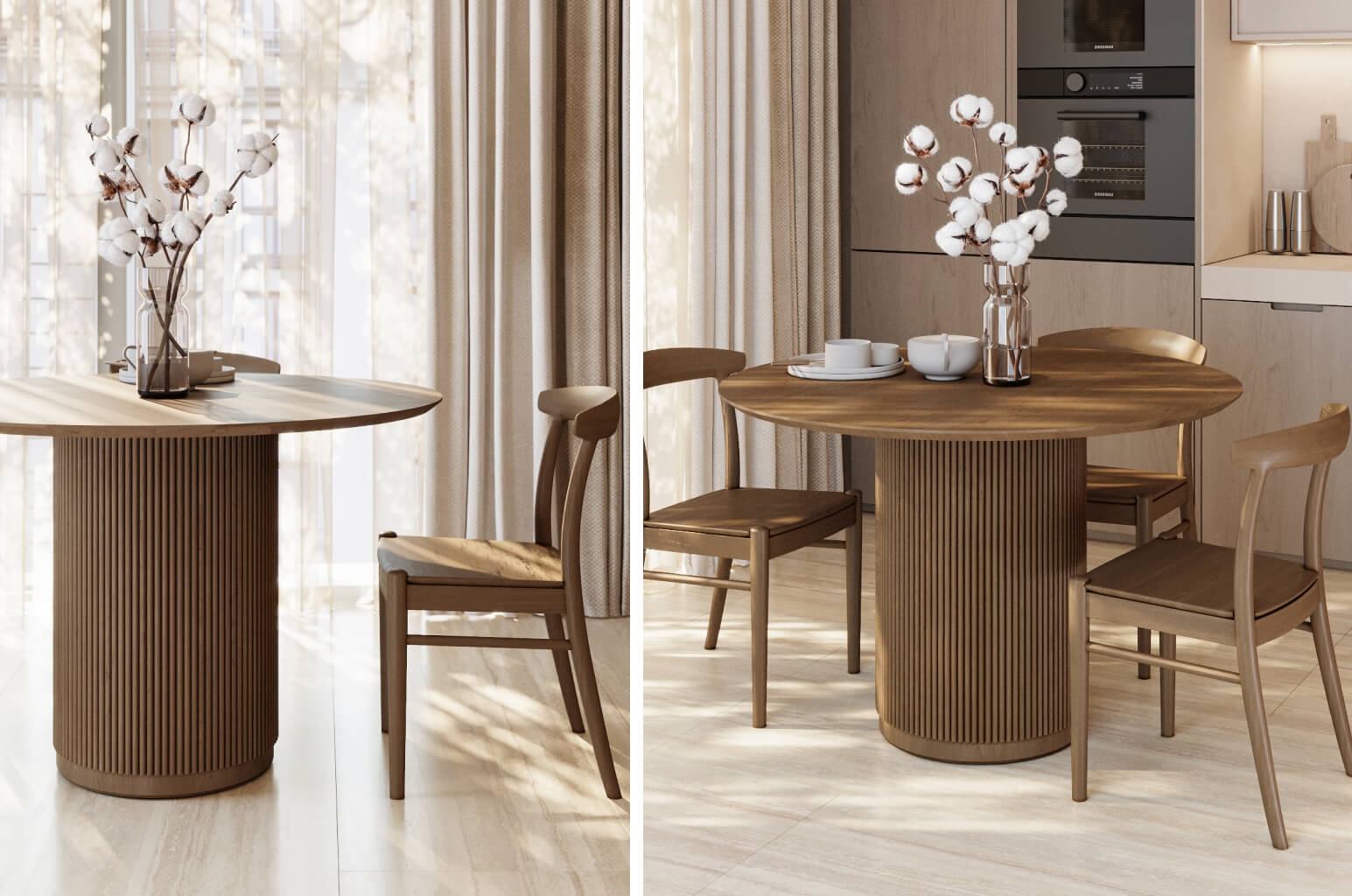
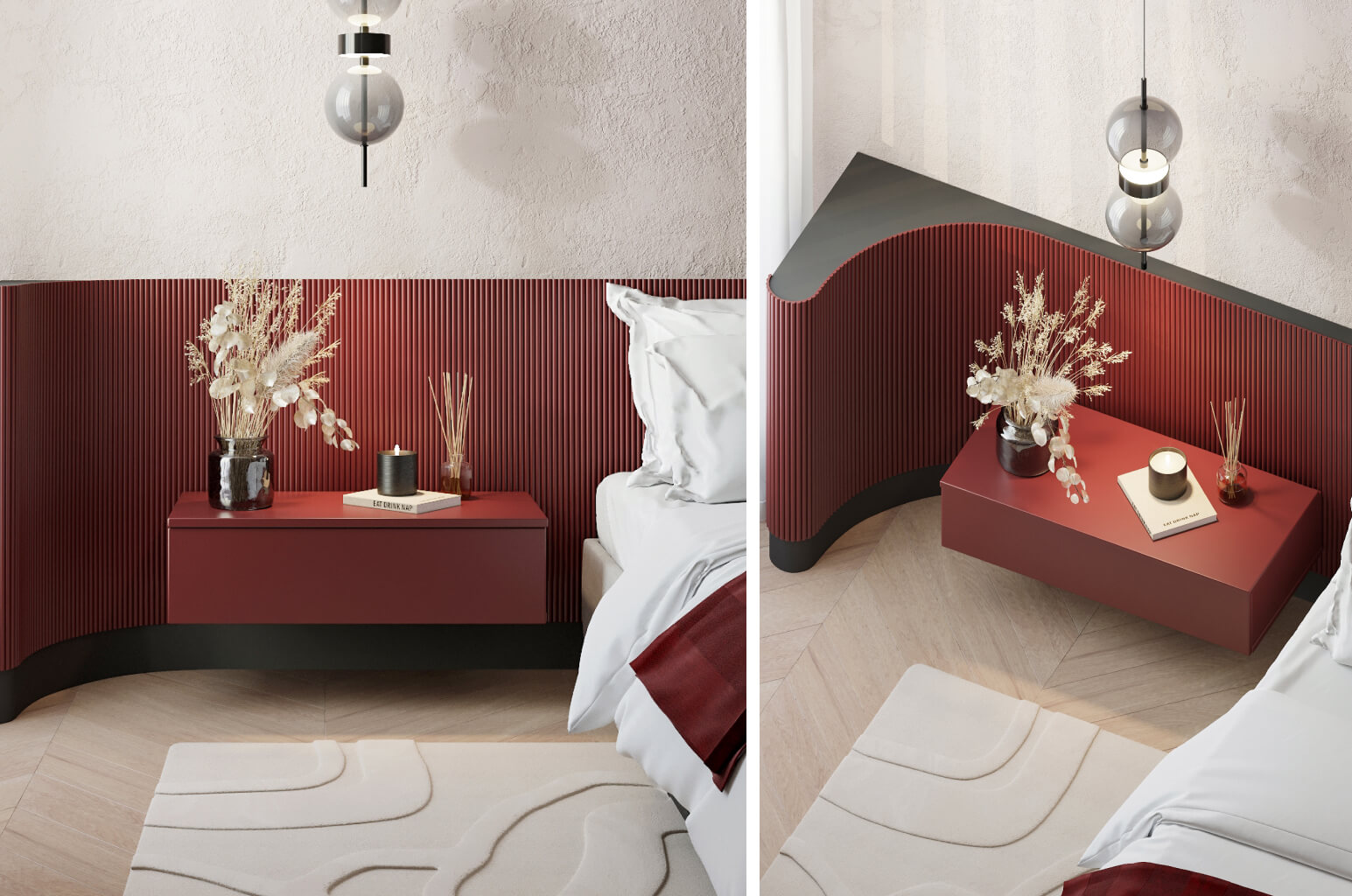
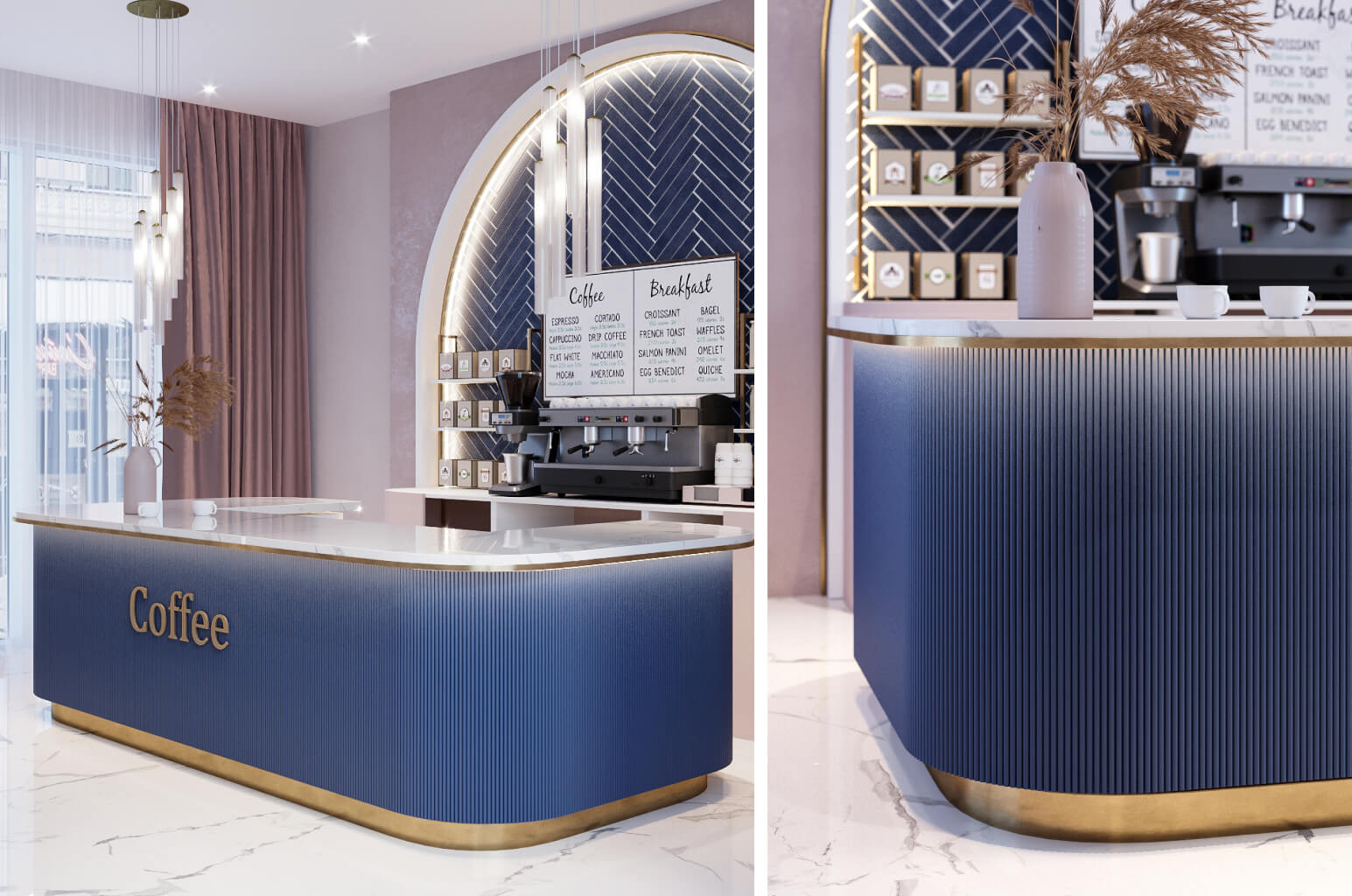
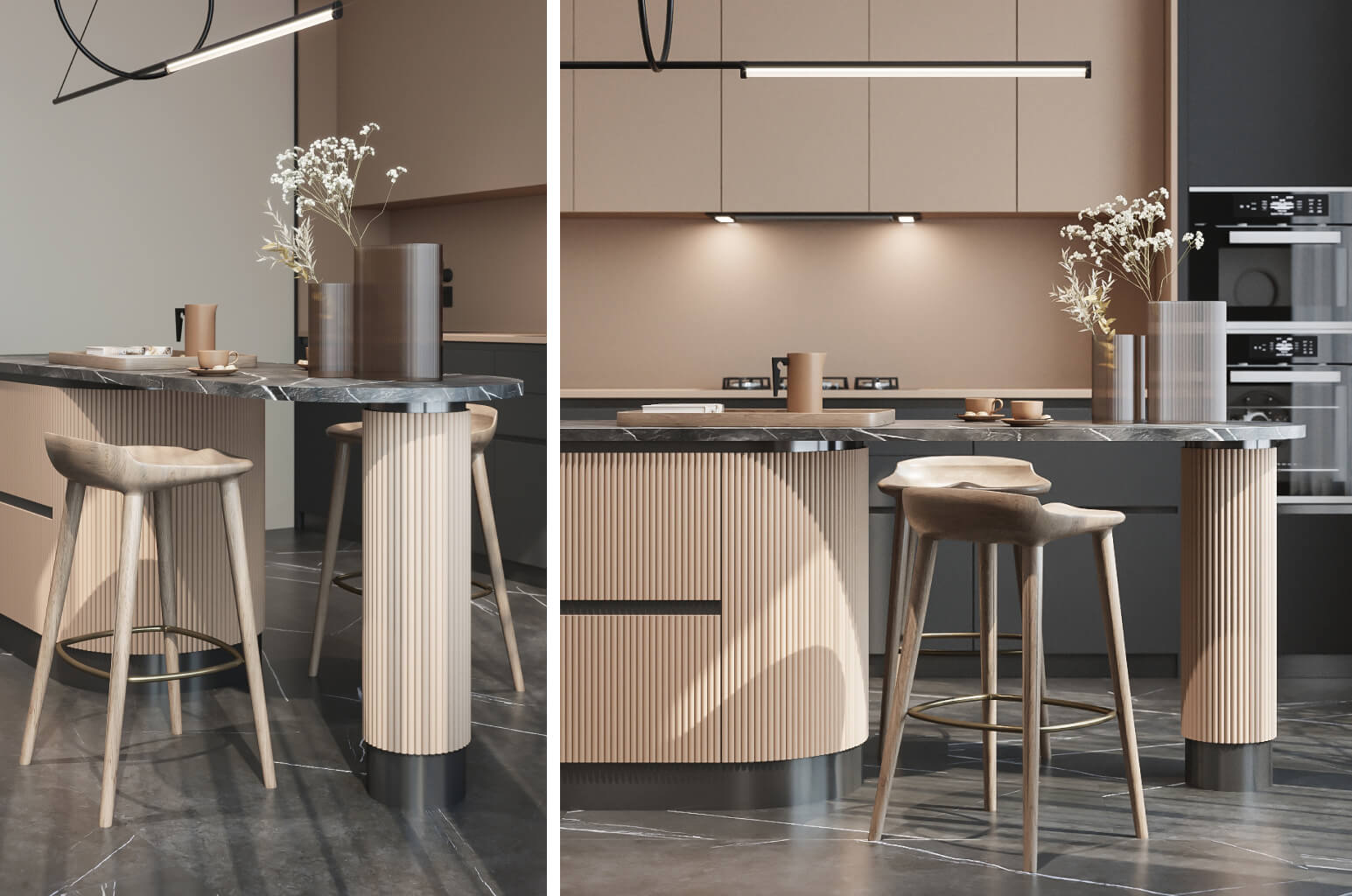
Advantages
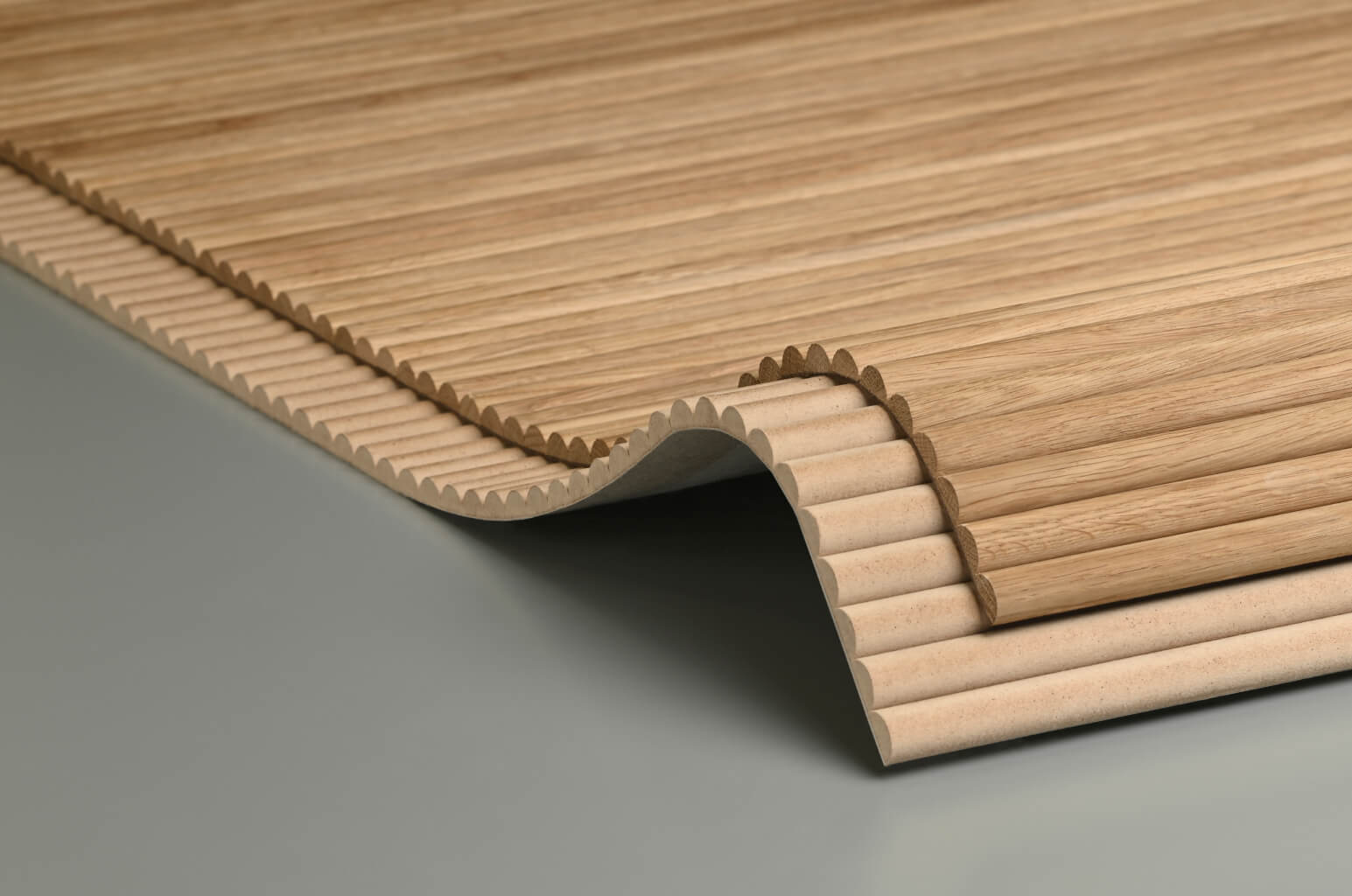
Follows curves without adjustment
Seamless module connection
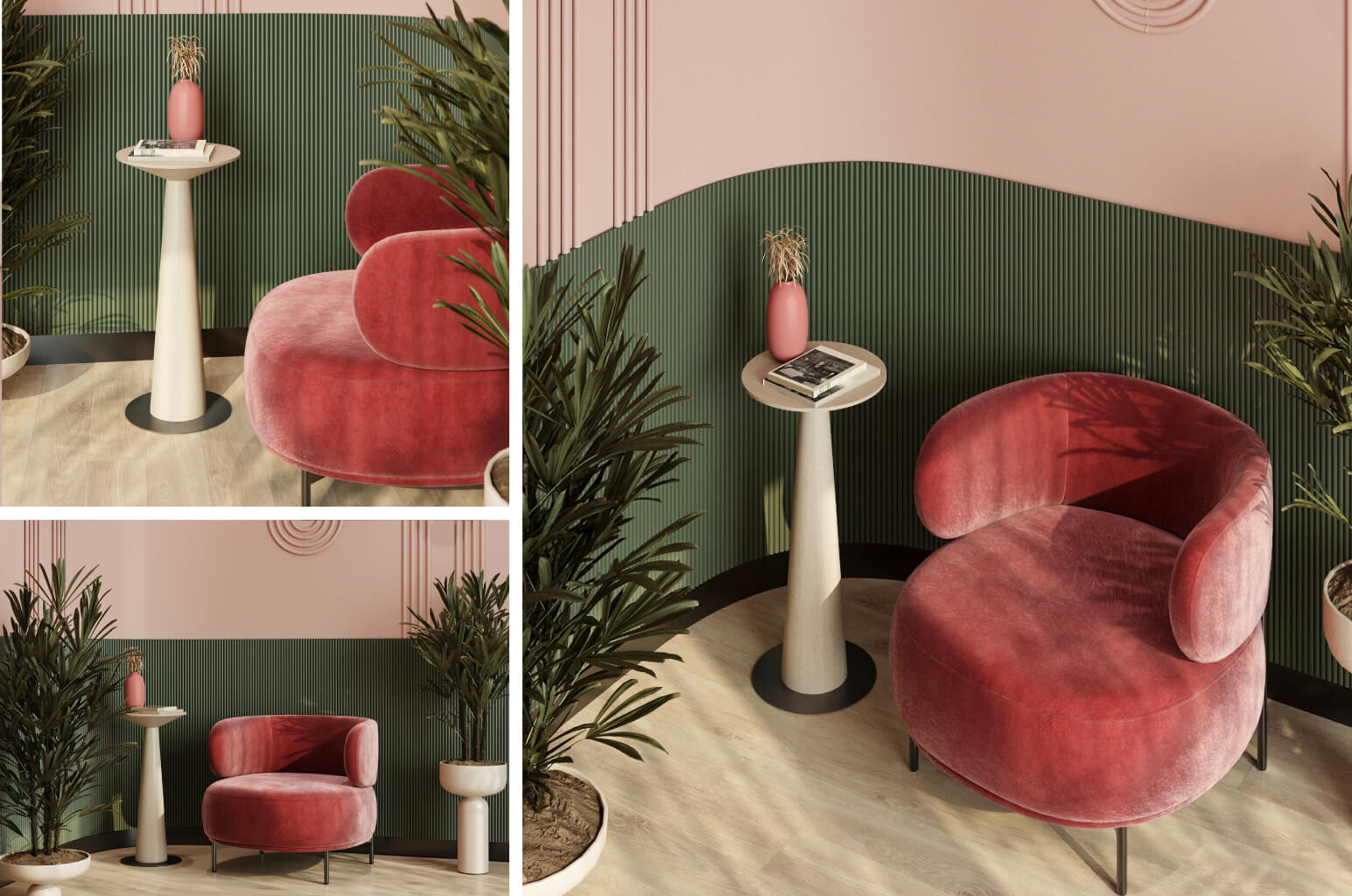
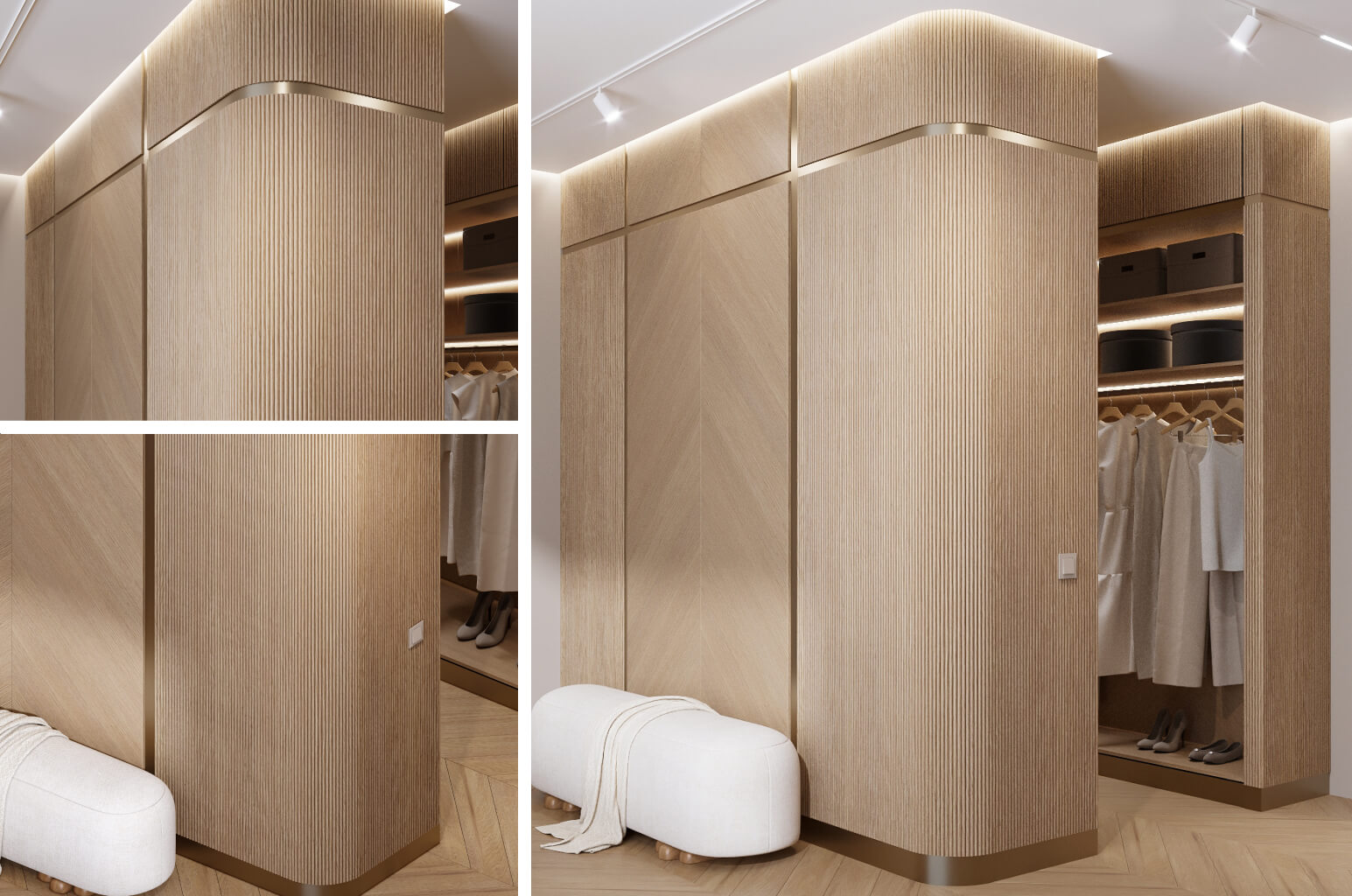
Versatility: walls, columns, furniture fronts
Easy installation with adhesive
Ready for finishing
Easy cutting with a knife
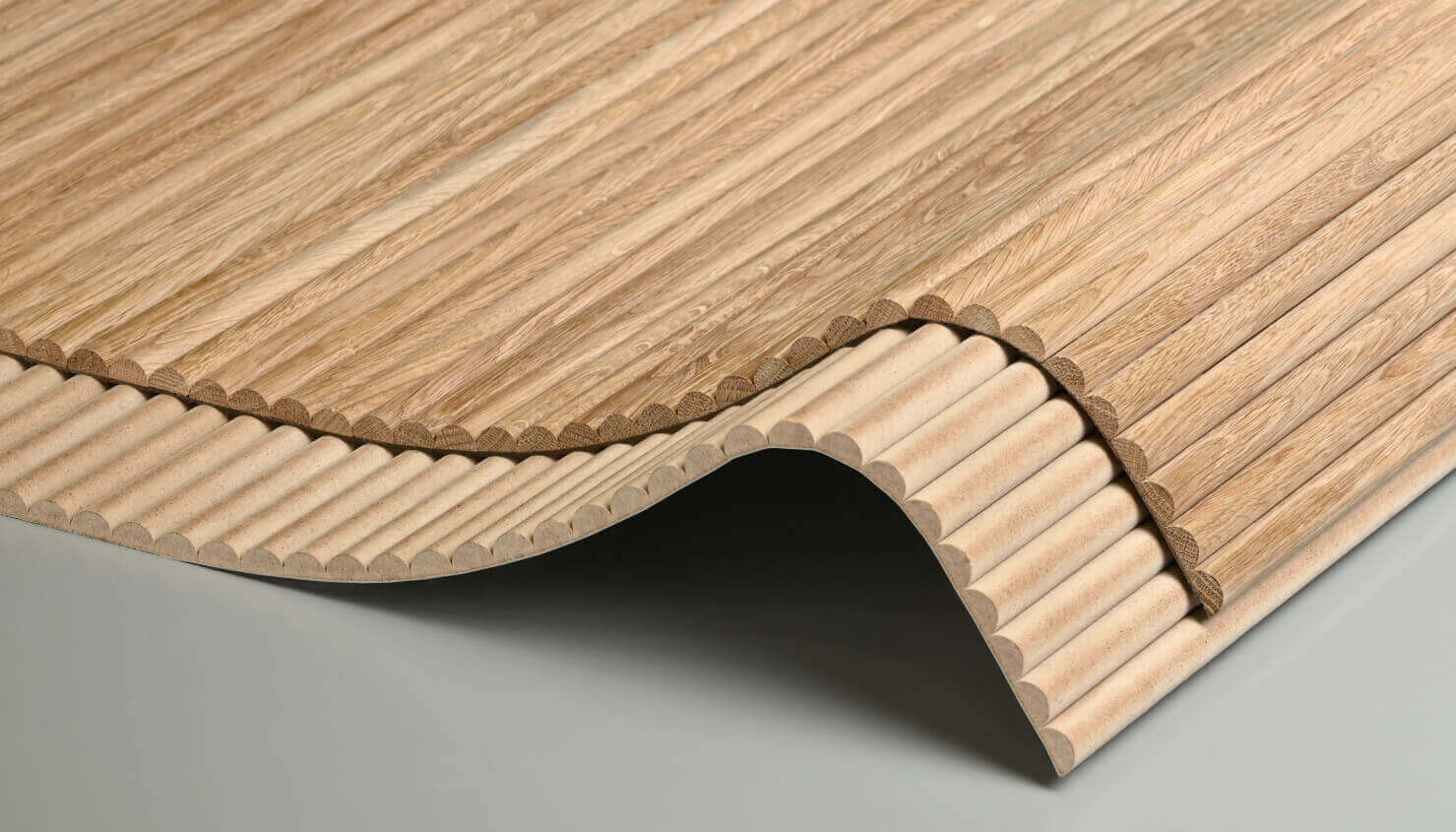
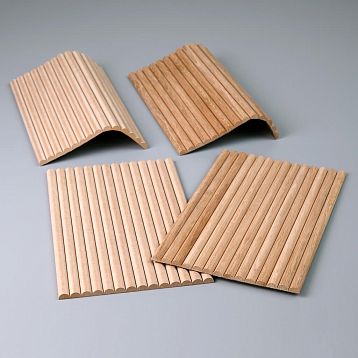
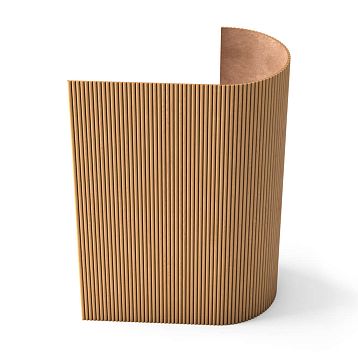
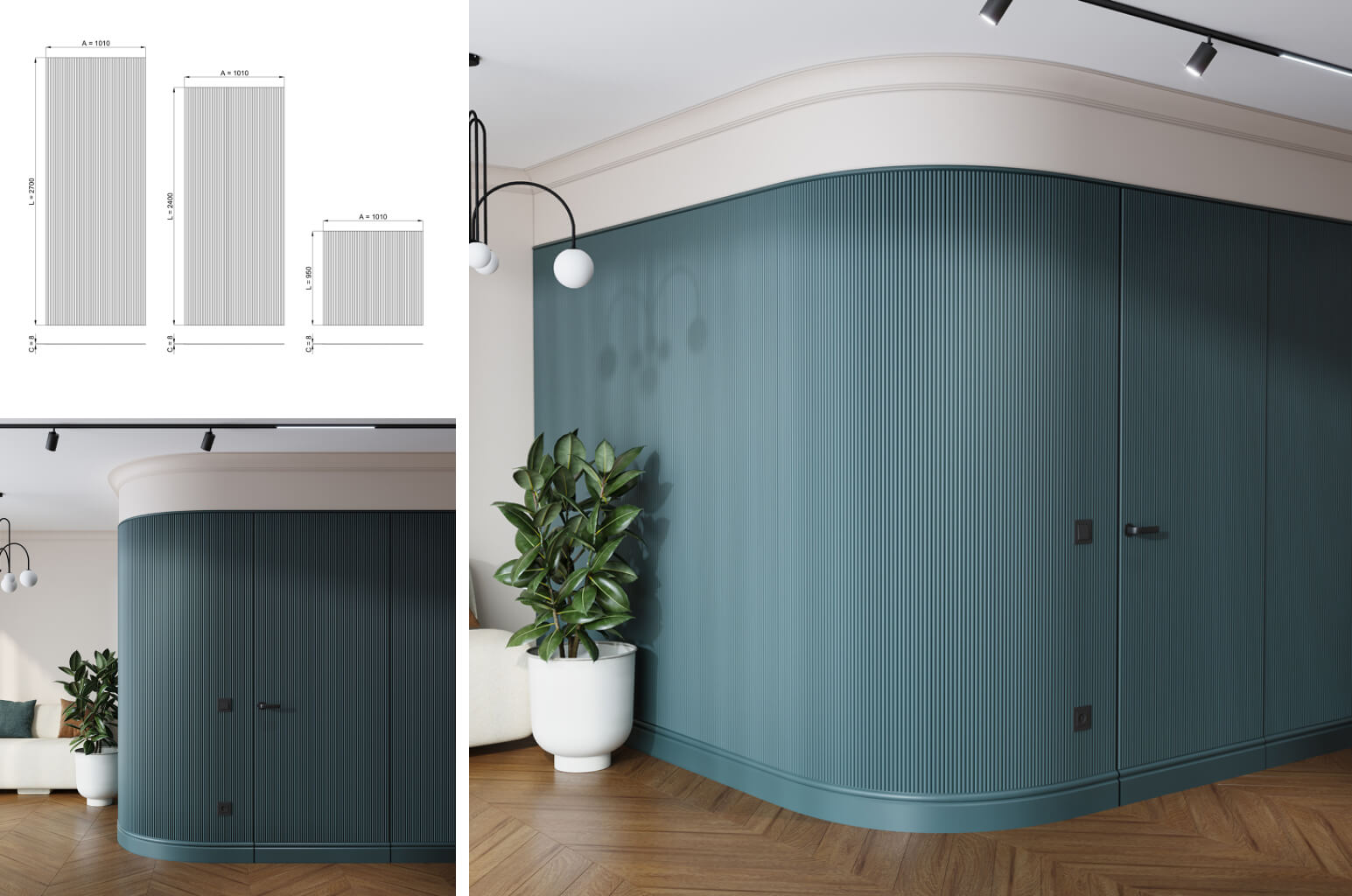
PAN-001 panel works on curved and flat surfaces, creating a slatted texture without assembling slats.
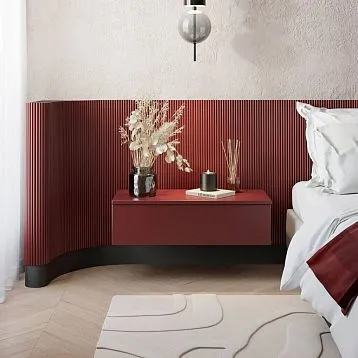
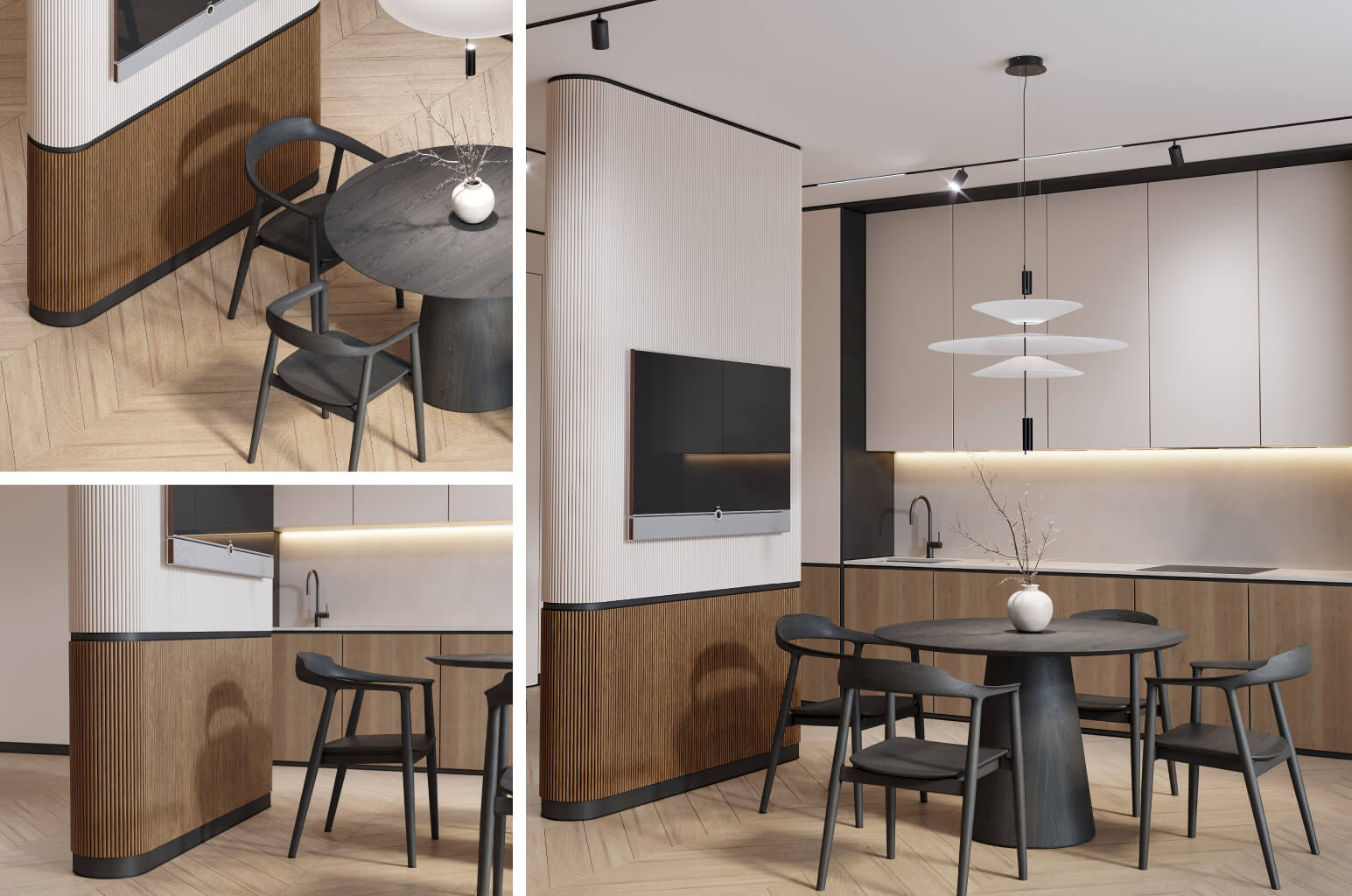
In interiors, it wraps around radius walls, columns, niches, and arches. On accent walls, it provides depth of light and shadow.
In furniture, it covers curved fronts, islands, posts, and inserts without milling.
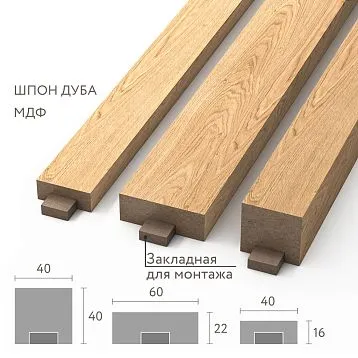
Slatted panels made of MDF and solid oak
Rafter panels— one of the most enduring and sought-after trends in contemporary interior design. Since the early 2020s, slatted surfaces have firmly established themselves in residential and commercial spaces worldwide and continue to hold leading positions in 2025–2026. The reason is simple: the slatted structure simultaneously solves three problems — it creates an expressive architectural surface, visually transforms the space, and improves its acoustic characteristics. This is not just a finishing material, but a full-fledged design tool.
What is a slatted panel
A slatted panel is a structure of parallel slats (battens) of identical cross-section, fixed at equal intervals on a substrate or fabric backing. The uniform rhythm of the slats forms a linear graphic pattern on the surface, which actively interacts with light: with side or directional lighting, an expressive play of light and shadow appears on the wall, turning a flat surface into a sculptural object. It is precisely this effect that madedecorative slatted panelsan integral element of contemporary interiors — from minimalist Scandinavian apartments to prestigious commercial spaces.
Vertical orientation of the slats is the most popular solution. It visually elongates the room in height, creating a sense of high ceilings and spacious volume. This is especially important for apartments with standard ceiling heights of 2.5–2.7 m, where any vertical accent technique radically changes the perception of space. Horizontal slats, on the contrary, visually widen the room — this option is often chosen for narrow corridors and elongated rooms.
Materials: MDF and solid oak
The catalog featuresRafter panelsin two versions, each solving its own design and functional task.
MDF for painting — the choice for those who work with color as the main tool of the interior. MDF with a density of 750–850 kg/m³ has a homogeneous structure without defects, knots, or resin pockets, ensuring a perfectly smooth surface for painting with any enamels. Matte, satin, and semi-gloss coatings all adhere equally well to sanded MDF. The panel can be painted to match the wall color — and it will blend into the interior, leaving only a pure relief rhythm. Or choose a contrasting accent color — and the slatted surface will become the main visual object in the room. The color possibilities for paintable MDF are practically limitless: from classic white to deep anthracite, from delicate powder to rich emerald.
Solid oak for staining and varnish — the version for connoisseurs of natural aesthetics and the living texture of natural wood. Oak is one of the densest and most durable domestic species, with a density of 700–750 kg/m³ and high resistance to mechanical wear. Each slat carries a unique natural grain pattern that cannot be reproduced with veneer or decorative film. Under transparent oils and varnishes, oak reveals a warm golden tone; stains and tinting oils allow for a cool Scandinavian gray, deep wenge, tobacco cognac, or pronounced graphite — depending on the design concept. The surface of solid wood under varnish is resistant to everyday loads and maintains its appearance over many years of use.
Types of panels in the catalog
The assortment of the section covers several structural solutions, each with its own area of application:
-
Rigid slatted panels on an MDF substrate — a classic solution for flat walls, furniture fronts, and ceilings. Ensures maximum geometric precision and uniform slat spacing.
-
Flexible slatted panels on a fabric backing — an innovative solution for radius surfaces: columns, arches, rounded corners, curved furniture fronts. The panels follow any curve without deformation of the slats and join seamlessly.
-
Panels made of half-round battens — slats with a rounded profile create an especially soft and lively play of light and shadow, visually enriching the surface under any type of lighting.
-
Panels for painting made of MDF — a clean surface without texture, ready for the application of any paint coating.
-
Panels made of solid oak — a natural material with a living grain pattern, for staining and coating with transparent compositions.
Where are slatted panels used
Wall slatted panelsare universal: they are equally organic in residential and commercial spaces, in furniture production, and in architectural finishing.
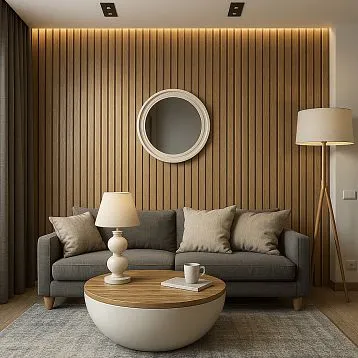
In residential interiors, panels are most often used to create accent walls in the living room, bedroom, and hallway; for decorating the area behind the headboard of a bed; for cladding TV walls and decorative niches. In furniture, the slatted texture is used on the fronts of cabinets, chests, kitchen islands, and dressers — the vertical rhythm visually lightens large volumes and gives the furniture an architectural character.
In commercial spaces, restaurants, cafes, and bars useslatted panels for wallsas the main tool for atmosphere creation. The vertical rhythm of the battens creates a sense of intimacy and quality design, which directly influences the perception of the establishment. Offices use panels for decorating meeting areas and receptions; hotels and boutique hotels — in lobbies, corridors, and rooms; boutiques and showrooms — as a professional background for displays.
Acoustic properties
The slatted structure has a documented acoustic effect. Vertical slats scatter sound waves, disrupting their direct reflection from a flat wall, and reduce reverberation — the echo that makes large spaces uncomfortable for speech and music. This is precisely whydecorative panels made of slatsare actively used in meeting rooms, restaurant halls with high ceilings, home theaters, and living rooms with open floor plans. The acoustic effect is enhanced by placing sound-absorbing material — mineral wool or acoustic foam — behind the panel's substrate.
Mounting and surface preparation
Installationof slatted panels made of MDF and oakdoes not require special tools or professional training. Rigid panels are attached to a prepared surface using mounting adhesive, headless finishing nails, or screws along guides. Flexible panels on a fabric backing are fixed with mounting adhesive directly to the shape of the curved surface.
Standard substrate requirements: the surface must be clean, dry, degreased, and free of loose fragments. On pre-filled and primed drywall, concrete, or plaster, panels can be installed without additional steps. For walls with significant unevenness, installation on a metal profile frame is recommended — this allows leveling the plane without full plastering while creating an air gap for sound-absorbing material installation. Panels are joined butt-to-butt: precise slat spacing ensures seamless connection of adjacent modules into a single continuous surface.
Care and longevity
Slatted panel surfaces require no special maintenance. Routine cleaning is done with a dry or slightly damp soft cloth — sufficient for removing dust and household dirt. MDF in paintable finish is protected by a paint layer, which can be easily restored with local touch-up painting without removing panels. Solid oak panels with varnish or oil finish require protective coating renewal every 3–5 years depending on usage intensity — oil finish can be restored locally without dismantling. Dense oak structure provides resistance to scratches and mechanical wear, which is critical for commercial spaces with high visitor traffic.
Harmony with wooden elements
Rafter panelsThey integrate organically into multi-layered material solutions of contemporary interiors. Stone countertops and porcelain tiles create expressive contrast with the linear rhythm of slats — particularly effective in kitchens and bathrooms. Matte brass, brushed steel, and black metal in furniture legs and lighting fixtures form an industrial-premium combination with the warm texture of oak battens. Textured concrete walls as background for accent slatted panels appeal to the raw architectural aesthetics of loft and modern brutalism. Soft textile elements — sofa cushions, curtains, rugs in natural tones — work with wooden slats as a unified natural palette, creating cozy and tactilely rich spaces.
Order a call
Do you have questions? Fill out the form and send it.
Your request has been sent!
Our manager will contact you within 5 minutes