












































































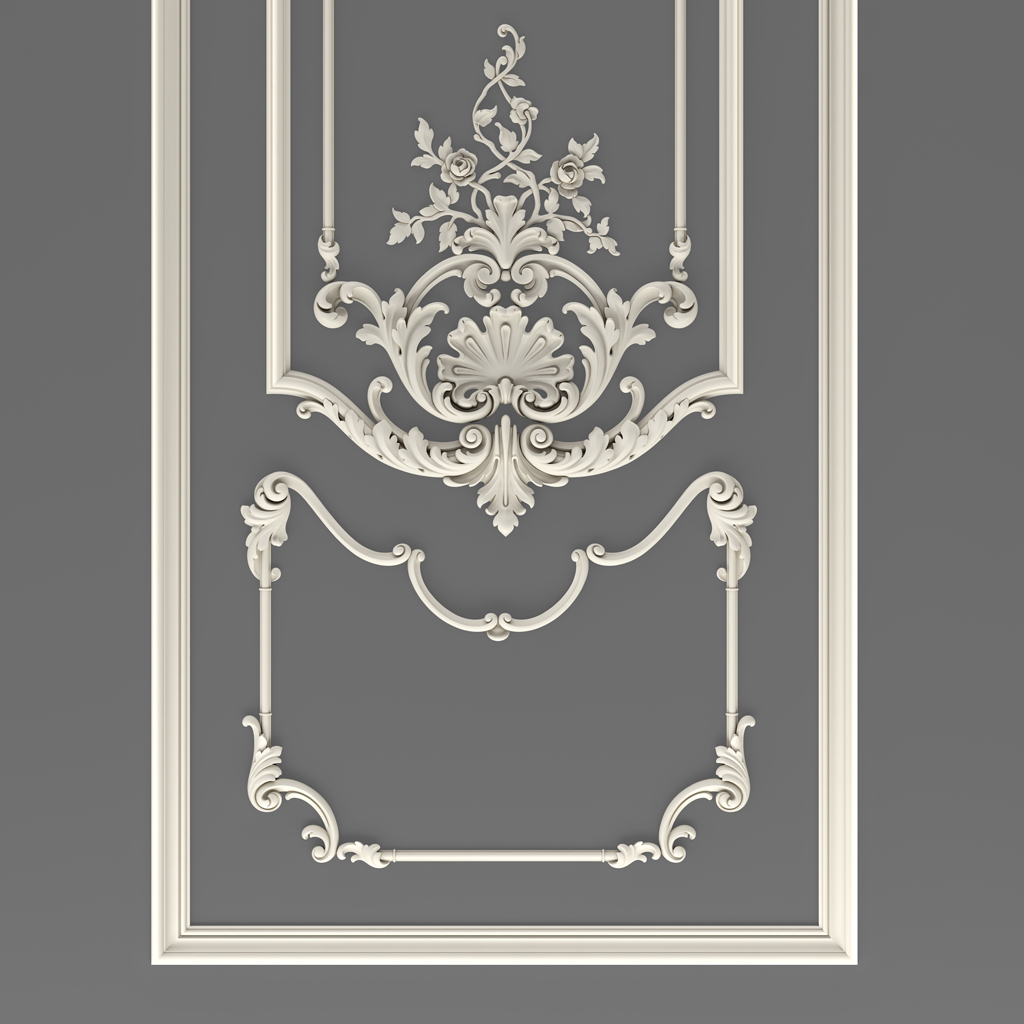

CPU-5-4 Molding Decor Kit
Have questions?
Customers also buy



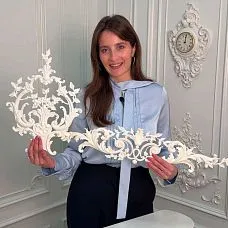
Yulia Kh.
March 24, 2026
I was satisfied with the quality of the products; we purchased furniture legs. I would especially like to highlight the professionalism of manager Oksana—very client-oriented, competent, and precise specialist. She even arranged additional trimming of some elements as an extra service for us. Huge thanks!
Incognito 7.
March 24, 2026
One of the few firms that is pleasant to interact with on renovation matters. Adequate, responsive managers. Adherence to deadlines. Execution of even complex projects. Bravo! May there be more such firms!!
Marina D.
February 15, 2026
The company ordered the pens for us when we ordered furniture. But I decided to write a review personally because they are amazing! Stylish, expensive, high-quality!
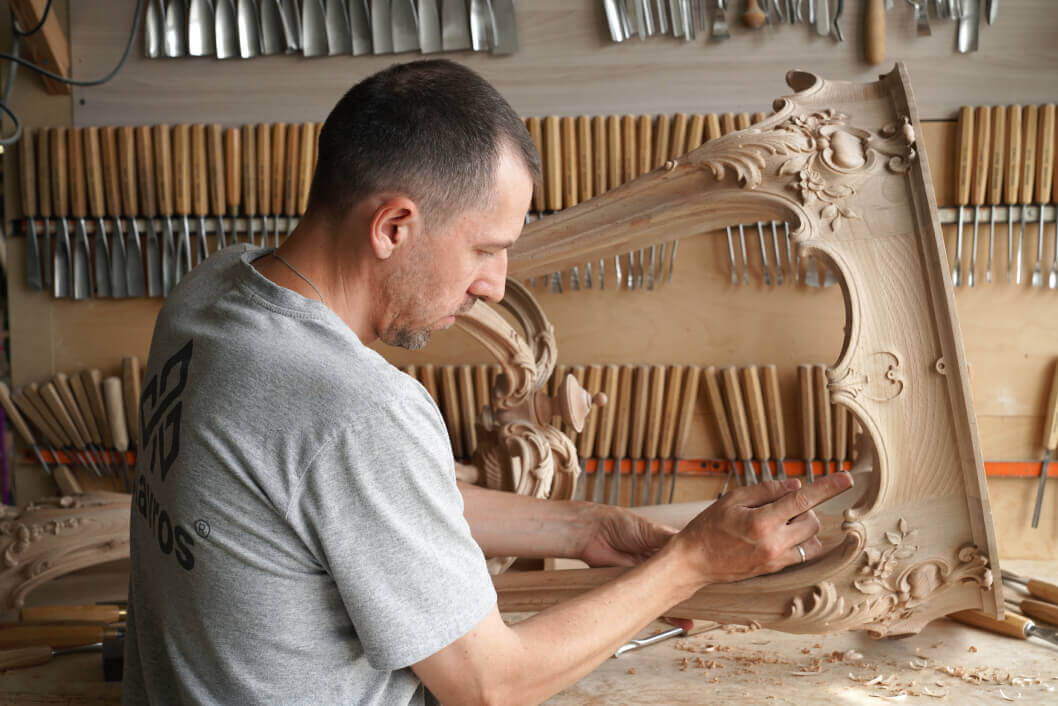
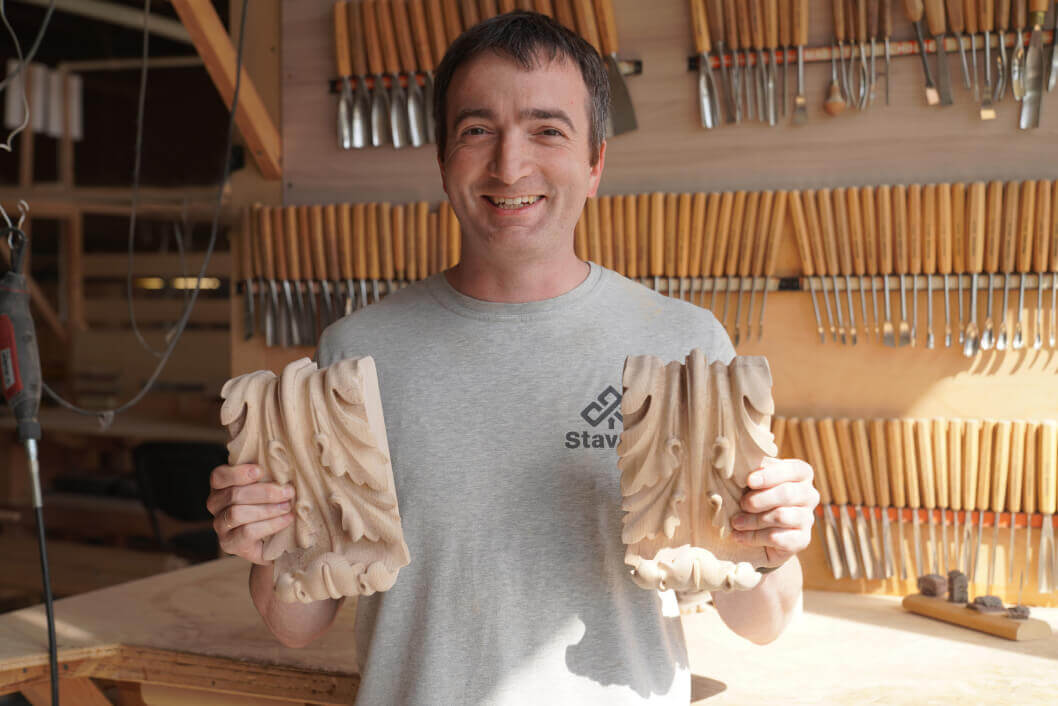
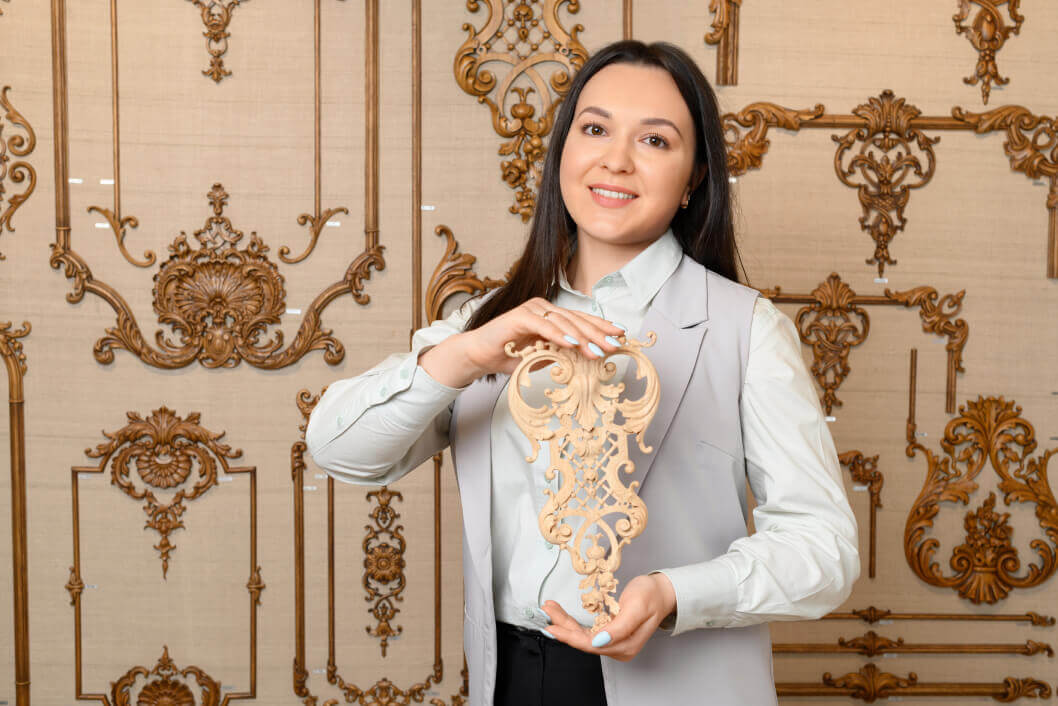
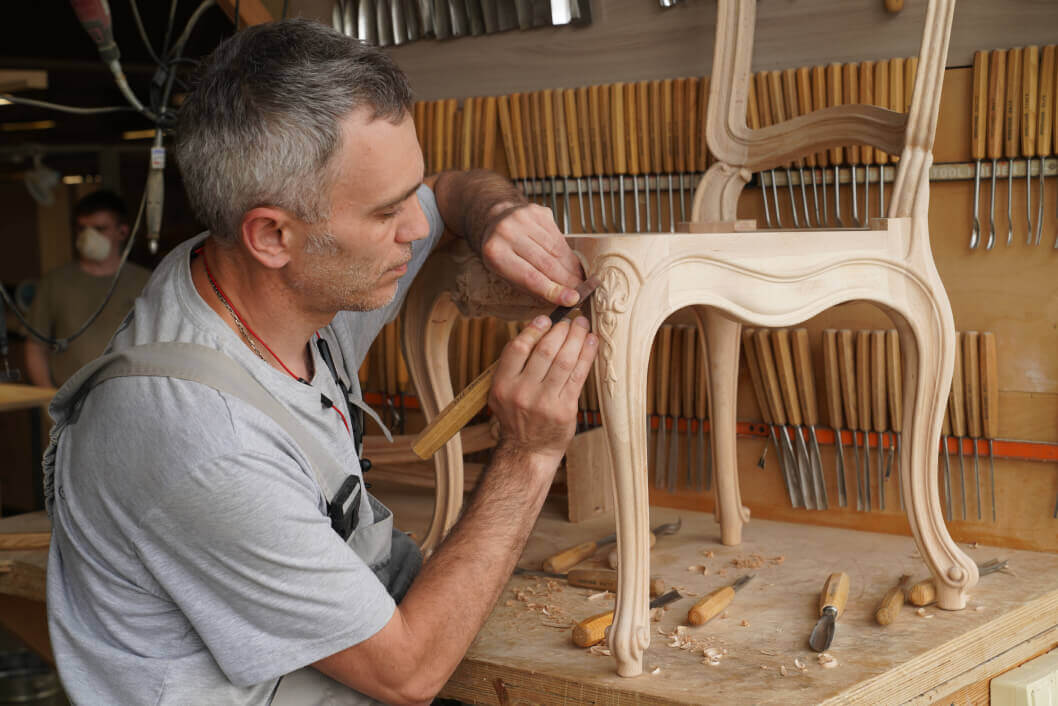
More than 20 years on the market
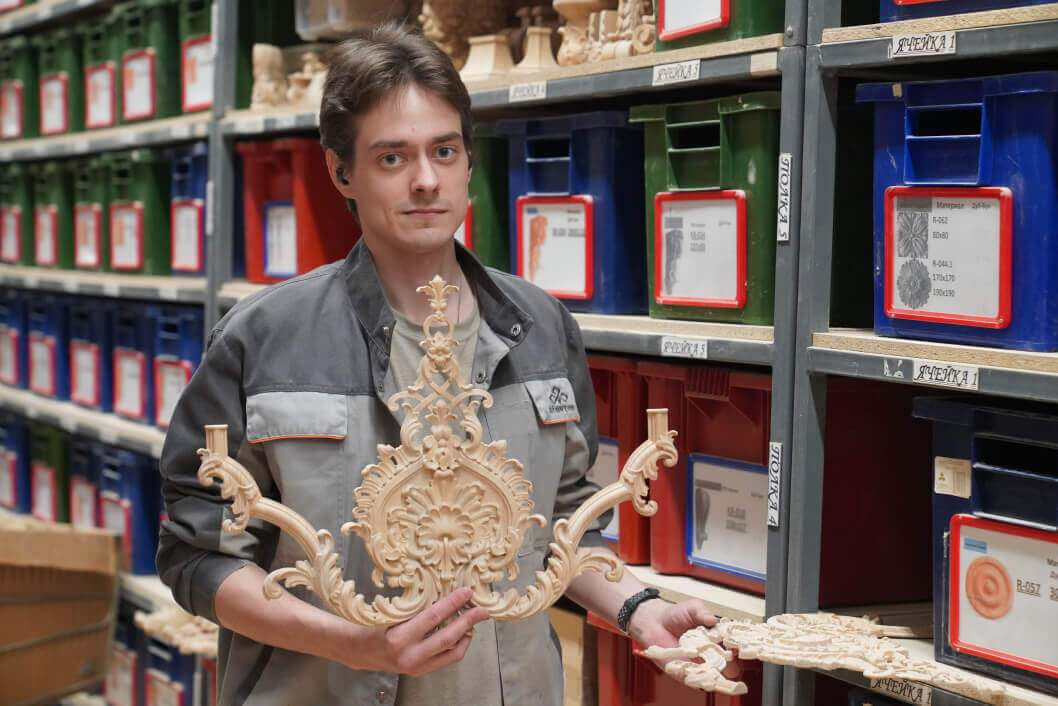
The company's success began in 2002, when two artists — Andrey Ragozin and Evgeny Tsapko — created a small creative workshop for producing wooden carved items. The masters' work was quickly noticed, and within a year they were invited to participate in the reconstruction of the Konstantinovskiy Palace in Strelna.
After the success of this project, the company focused on recreating palace interiors, furniture, church furnishings, and carved decorations in various artistic styles. They worked with cultural heritage sites: The Hermitage, the Alexandrovsky Palace, the Troitsko-Izmaylovsky Cathedral, the Sheremetyevsky Mansion, and many others.
The masters' task — and still is — to create wooden items with the highest level of detail and understanding of every element, based on impeccable knowledge of artistic laws and interior styles.
STAVROS Guarantees
Quality of products without complaints
We save your time, peace of mind, and budget
Large warehouse program
We solve your tasks with maximum speed
Adherence to production deadlines
Streamlined process reduces all risks
Delivery from 1 piece throughout Russia
Quality service regardless of order volume
Your positive business reputation
Reliable partner — the foundation of your business
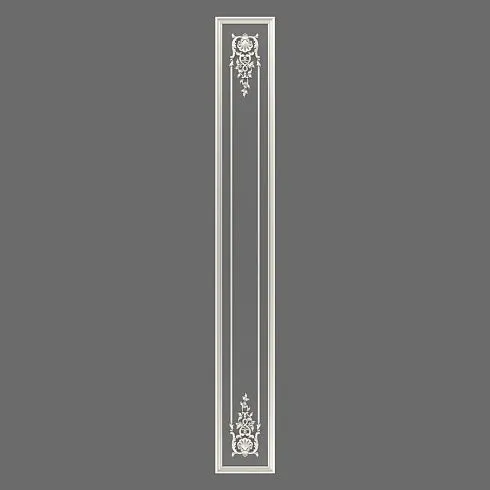
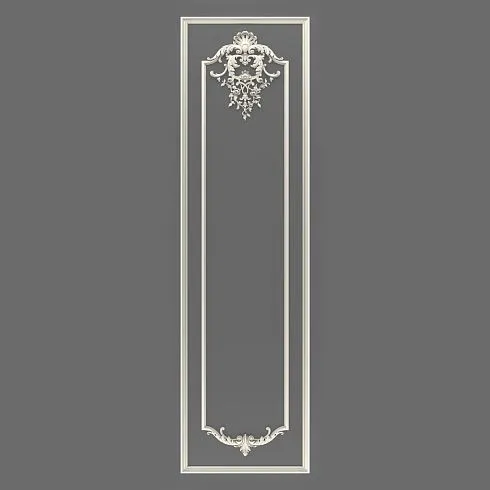
More products from the "Versailles" collection


Frequently asked questions
Our showrooms are located in Saint Petersburg and Moscow. Production is located in Saint Petersburg.
Moscow contacts: https://www.stavros.ru/contacts_all/?tab=msk
Contacts of Saint Petersburg: https://www.stavros.ru/contacts_all/?tab=spb
- Send request by email [email protected]
- Write to us at Telegram
- Write to us at WhatsApp
- Order by phone +7 (800) 555-46-75
- Visit our showroom in Saint Petersburg and Moscow
Yes, we ship orders throughout Russia and to CIS countries.
We cooperate with transportation companies such as СДЭК and DPD.
You can also arrange pickup of your order through any convenient transportation company for you.
Delivery cost depends on the size, weight of the item, and delivery address.
When placing an order, the delivery cost is calculated automatically and displayed as a separate line on our website.
Prices and availability of items on the website are always current. Data is updated daily.
Note: items in stock are stored on the warehouse in unpolished form and shipped within 3 working days.
If the item is not in stock, average production time: 5–10 working days.
This is the quality of polishing of the items.
Standard — machine polishing, at a more attractive price.
Prestige — detailed hand polishing, items do not require further work.
More details: https://www.stavros.ru/information/kachestvo/
This is the type of veneer of the items.
Under enamel: produced by gluing wooden laminates without color and texture matching. Contrast tonal and textural differences are noticeable. This blank should be chosen if the item is intended for opaque coating.
Under tinting: produced by gluing wooden laminates with color and texture matching. Tonal and textural differences may occur. This blank should be chosen if the item is intended for semi-transparent finish.
More details: https://www.stavros.ru/information/kachestvo/
Beech — dense, non-porous wood, most often used for items covered with enamel.
Oak — dense, porous wood with clearly visible natural grain. Due to its strength and decorative properties, it is often used in items with semi-transparent coating, highlighting the wood pattern.
Custom-made, if non-standard items are required, we can produce products from other types of wood, including blanks provided by the customer, manufactured according to our technical specifications.
All our furniture legs can withstand a vertical load of at least 100 kg.
Average production time for custom-made items: 5–10 working days.
Most items are stored on the warehouse in unpolished form. We need time to polish and pack orders.
Yes, we manufacture non-standard items according to individual projects, but we only accept orders with a minimum quantity.
We can manufacture items of the desired size, but we only work with bulk orders. For details, please consult the sales department manager.
Yes, some of our products can be used outdoors. For example, polyurethane items, as well as carved door casings made of pine.
Other items are produced to order using PUR glue, if minimum quantity is available. No warranty is provided for such products, as outdoor conditions are considered aggressive.
Yes, we paint items when ordering products for a total amount of 150,000 rubles or more.
- Dust removal. After sanding, the surface must be dusted.
- Priming. Apply primer in an even layer.
- Matting. After the primer has fully dried, the surface should be matted (lightly sanded for better adhesion).
- Finish coating. Apply finish coating: lacquer or enamel, in 2 layers, with interlayer drying.
More details: https://www.stavros.ru/information/sovety/
Apply adhesive to the decor. Place it on the surface and press briefly. Then, lift the decor from the surface and leave it open for 3–5 minutes. Press the decor firmly onto the surface and hold for 5–10 seconds.
More details: https://www.stavros.ru/information/sovety/
Ideally, you should prepare a design project before placing an order.
You can do this yourself by downloading drawings of our products from our website, or you can order a project from us.
If the number of decorative elements and fittings is small, our company's manager can assist you with selection.
Unfortunately, this service is not provided.
The packaging method depends on the type of items, but in each case, we ensure sufficient protection for safe transportation.
We most often use corrugated cardboard and stretch film. Fragile items are additionally secured on a rigid base to prevent damage during transport.
We ship all items starting from 1 piece.
Room measurements and item installation can be performed by our partners — carpentry companies represented in most regions of Russia.
Often searched in category Wall Decor
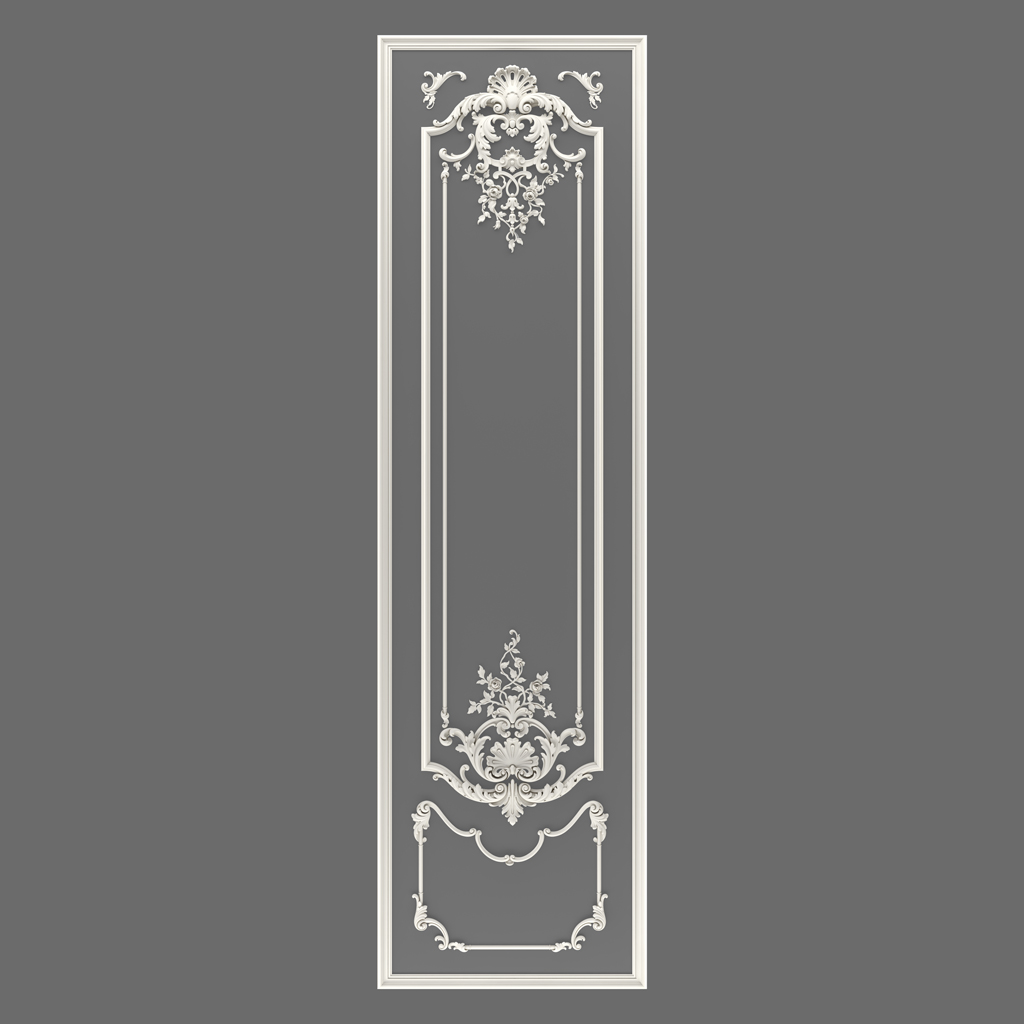
CPU-5-4 Molding Decor Kit — the pinnacle of the 'Versailles' collection with twelve elements of palace decor
Maximum version: when the completeness of the ornamental program becomes an architectural manifesto
The CPU-5-4 Molding Decor Kit from the 'Versailles' collection is the most complete, richest, and most complex version of the vertical wall panel format 650 × 2300 × 22 mm in the entire CPU-5 line. Twelve carefully selected decorative elements, united into a single system, create an ornamental richness that can rightfully be called palatial: three types of load-bearing moldings with different profiles form a complex multi-level frame structure, horizontal ornamental belts structure the internal space of the panel, two central medallions fill it with sculptural content, the frame decorative overlay NPU.VRS-003.1 adds a third ornamental level within the central field, and four types of corner accents — from small overlays NPU.VRS-002-4L/R to miniature corner details NPU.VRS-008.1L/R — detail every transition node of the system to a level unattainable in any of the previous kits in the series. If CPU-5-1 is a basic frame with corner ornamentation, CPU-5-2 is a system with horizontal belts and a central medallion, and CPU-5-3 is an extended version with a pair of medallions and small corner accents, then CPU-5-4 is the final, exhaustive architectural declaration, in which there is not a single unfilled zone, not a single untreated corner, not a single ornamental gap. This is a panel in the sense understood by the masters of Louis XIV's boiserie — as a total architectural statement, covering the entire wall surface from molding to molding and turning it into a work of decorative art.
The 'Versailles' Collection and Its Historical Language
The 'Versailles' collection, to which the CPU-5-4 kit belongs, draws its ornamental language from a specific historical source — the decorative programs of the Palace of Versailles, developed during the reigns of Louis XIV, Louis XV, and Louis XVI. These are three different eras, three different aesthetic approaches, three different accents — but all three are united by a fundamental principle: a wall as an architectural surface cannot remain empty. In Versailles, every square centimeter of wall is either clad in marble, covered in gilded boiserie, or adorned with painting — an empty plane in this space was unthinkable as an artistic solution. The ornamental vocabulary of the 'Versailles' collection includes: acanthus leaves, passed from antiquity through the Renaissance to the Baroque; shell-palmettes, which became a symbol of French Rococo; S-shaped scrolls, characteristic of the panels of the Grand Trianon; floral garlands, which adorn the apartments of Marie Antoinette; symmetrical arabesques, reproducing the logic of Versailles ceilings. Each of the twelve elements of the CPU-5-4 kit is a direct quote from this vocabulary — accurate, historically correct, and ornamentally literate. This is what makes the kit not just 'beautiful decor,' but a product with an architectural biography and cultural affiliation.
Twelve Elements: Full Composition and Architectural Role of Each
The architectural logic of the CPU-5-4 kit is built on a clear hierarchy of twelve components, each performing its own function in the multi-level decorative system. To properly understand the product, it is necessary to consider this hierarchy sequentially — from load-bearing elements to ornamental accents, from large scale to details.
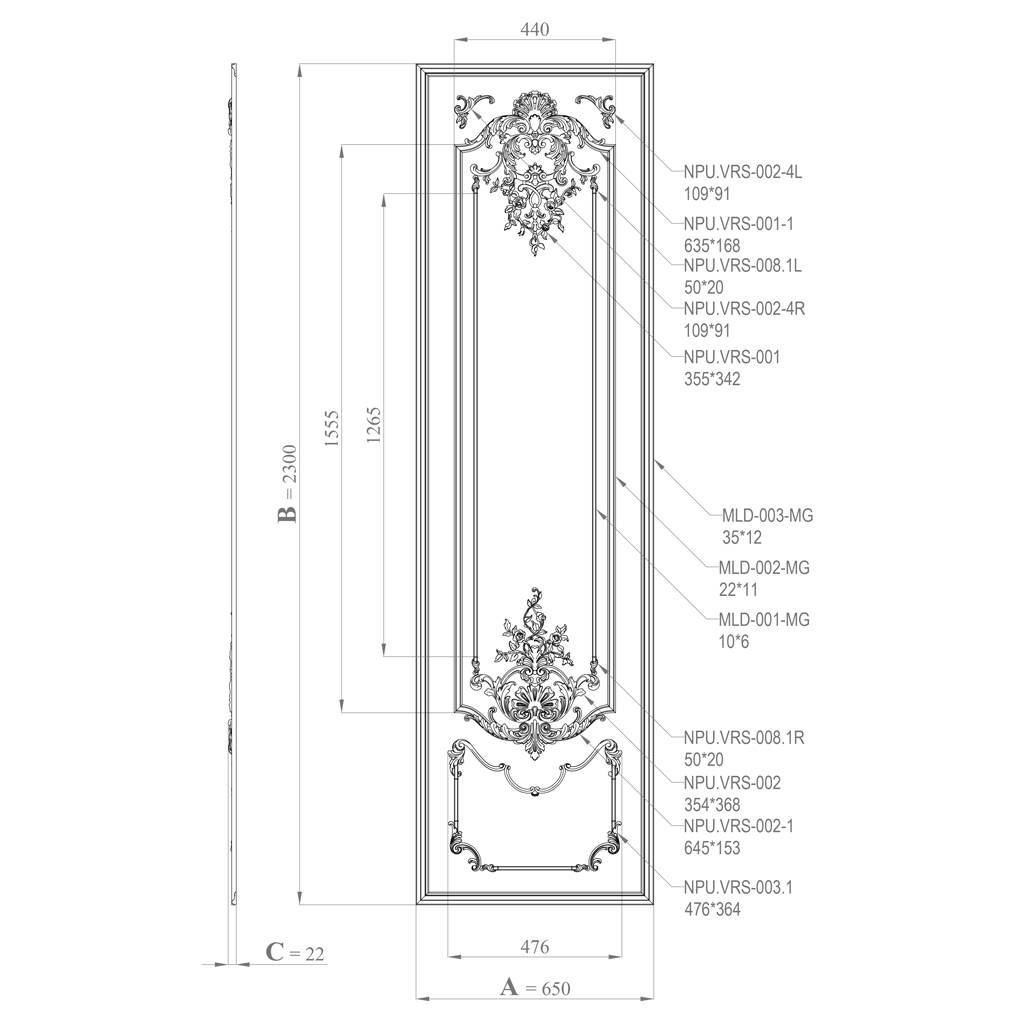
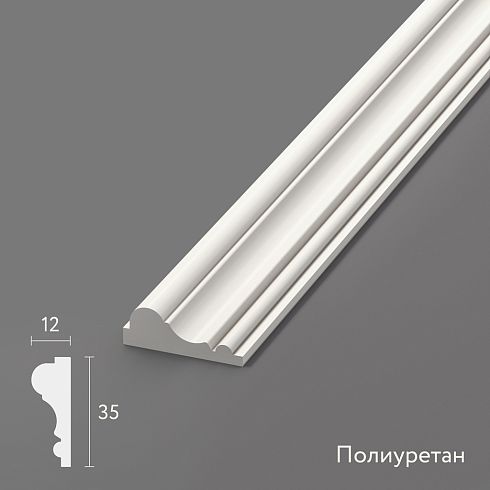
First level — load-bearing moldings. Molding MLD-003-MG with a profile of 35 × 12 mm and a total length of 5.90 m (three units in the kit) is the main contour element of the system — it forms the external frame of the entire panel and internal horizontal divisions, creating a geometric framework to which all other decor is subordinated. Three units of this molding provide coverage of the full perimeter of the 2300 mm high panel with allowance for trimming plus additional horizontal segments for internal belts. Molding MLD-002-MG with a profile of 22 × 11 mm and a total length of 3.11 m (two units) creates an internal parallel outline, repeating the contour of the external molding with an offset and adding a second contour level to the system — a technique of double molding characteristic of the most refined examples of boiserie. Molding MLD-001-MG with a profile of 10 × 6 mm and a total length of 2.53 m is the third, thinnest, and most delicate frame element of the system. Its presence in the CPU-5-4 kit appears for the first time in the series and fundamentally distinguishes this kit from all previous ones: the ultra-thin 10 × 6 mm profile creates a third internal contour in the area of the central ornamental field — it frames the space around the decorative overlay NPU.VRS-003.1 and creates an additional ornamental frame, turning the central field from a flat rectangle into a multi-layered architectural niche.
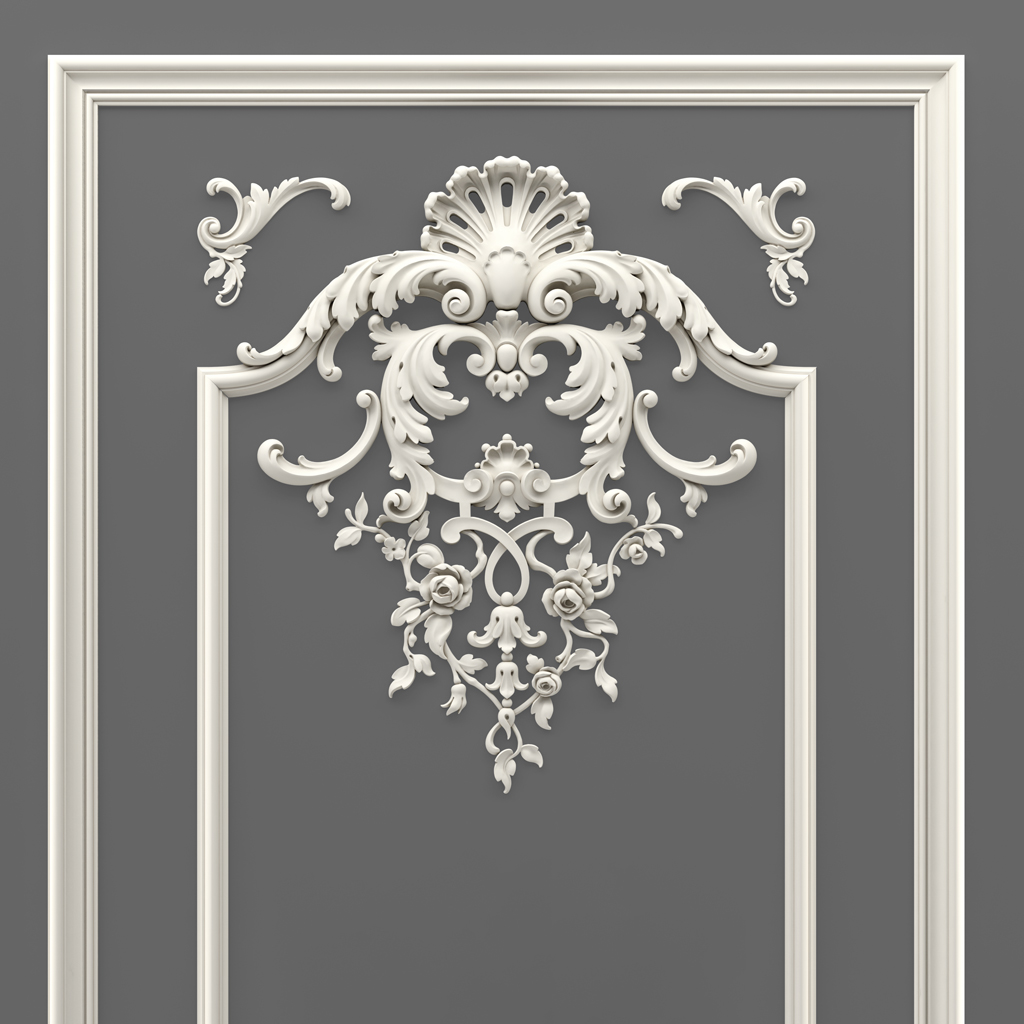
Second level — horizontal ornamental belts. Molding decor NPU.VRS-001-1 measuring 635 × 168 × 22 mm is installed in the upper third of the internal field of the panel and forms the ornamental 'crown' of the entire system. Molding decor NPU.VRS-002-1 measuring 645 × 153 × 22 mm is installed in the lower third and creates an ornamental 'base,' symmetrically responding to the upper belt.
Third level — central medallions. Molding decor NPU.VRS-001 measuring 355 × 342 × 17 mm occupies the upper part of the central ornamental field between the two belts. Molding decor NPU.VRS-002 measuring 354 × 368 × 19 mm is located directly below it, forming a vertical ornamental axis with the first medallion.
Fourth level — decorative frame overlay. Molding decor NPU.VRS-003.1 measuring 476 × 364 × 16 mm — this is an exclusive element, appearing for the first time in the CPU-5 series precisely in this kit. It is installed in the central field of the panel, encompassing both medallions with a frame ornamental structure featuring acanthus corner bouquets and an arched lower crosspiece. It is this element that creates the fourth ornamental level, elevating CPU-5-4 above all previous versions in the series.
Fifth level — corner accents. Molding decor NPU.VRS-002-4L and NPU.VRS-002-4R measuring 109 × 91 × 9 mm (one piece each) detail the corner transitions between horizontal belts and vertical moldings. Molding decor NPU.VRS-008.1L and NPU.VRS-008.1R measuring 50 × 20 × 9 mm (two pieces of each) are the smallest and most delicate elements of the system — they are installed in the corner nodes of the internal moldings, adding an ornamental point where the geometric lines of the system intersect and transition into each other.
The Fundamental Innovation of CPU-5-4: The Decorative Overlay NPU.VRS-003.1 Inside the Panel
The key element that makes the CPU-5-4 kit fundamentally different compared to CPU-5-3 is the decorative frame overlay NPU.VRS-003.1 measuring 476 × 364 × 16 mm. This element, well-known as a standalone product, is here integrated into the central field of the wall panel, creating its own frame structure within it — decor within decor, a frame within a frame. The ornamental logic of NPU.VRS-003.1 in the context of the CPU-5-4 panel works fundamentally differently than in standalone application: the external frame of moldings sets the scale of the entire panel, the horizontal belts structure its vertical space, and NPU.VRS-003.1 within this space creates its own closed ornamental contour — a frame with acanthus corner bouquets and an arched lower crosspiece — which unites the two central medallions into a single ornamental group. As a result, the central field of the panel acquires three-level depth: external moldings — the space between the moldings and the NPU.VRS-003.1 overlay — the internal field of the overlay with medallions. This multi-level structure creates a visual sense of an architectural niche — a decorative coffer in which the medallions are placed as in a jewelry setting. It is this technique — a frame within a frame, ornament within ornament — that is one of the characteristic features of top-class Versailles boiserie, where the decorative program was built on the matryoshka principle: each subsequent scale revealed a new layer of ornamental content.
Small Corner Accents NPU.VRS-008.1L and NPU.VRS-008.1R: The Detail That Decides Everything
The four small corner accents — two of each type NPU.VRS-008.1L and NPU.VRS-008.1R measuring 50 × 20 × 9 mm — are the most miniature elements in the CPU-5-4 kit and simultaneously the most eloquent evidence of its belonging to the highest class. In architectural practice, there is a rule: the quality of decor is determined not by large elements noticeable at first glance, but by the smallest details discovered upon close examination. It is these details that create a sense of exceptional thoroughness, genuine craftsmanship, and respect for tradition — a sensation commonly called 'palatial.' The four miniature accents NPU.VRS-008.1L/R, measuring only 50 × 20 mm, are installed in the corner nodes of the internal moldings MLD-002-MG and MLD-001-MG — where the thin geometric lines of the system intersect at right angles. Without these overlays, the corner intersections of thin moldings are pure geometric points. With the overlays, they become miniature ornamental accents with scrolls and leaves characteristic of the 'Versailles' collection — barely noticeable when looking at the panel as a whole, but unmistakably creating a sense of decorative completeness when viewed up close. The relief depth of 9 mm — the smallest in the system — is absolutely correct for elements of this scale: they should not compete with large medallions and belts; their task is to support the ornamental rhythm at the finest, capillary level of the system. It is such details that distinguish professional palace boiserie from simplified commercial decor: not size, not quantity, but the continuity of the ornamental fabric, in which there is not a single corner left unfilled with meaning.
Three Moldings of Three Scales: A Multi-Level Frame Framework
The presence in the CPU-5-4 kit of three types of molding with different profiles — MLD-003-MG (35 × 12 mm), MLD-002-MG (22 × 11 mm), and MLD-001-MG (10 × 6 mm) — is another fundamental feature of this kit, not found in any of the previous versions of the series. In classical boiserie, the use of moldings of three scales is called 'three-part profiling' and is a sign of the maximum decorative complexity of a system. The external large molding MLD-003-MG sets the main architectural contour and scale. The medium molding MLD-002-MG creates an internal outline with an inter-molding belt between it and the external one — a zone of architectural transition, which in itself is a decorative element. The ultra-thin molding MLD-001-MG with a 10 × 6 mm profile forms the third, most delicate internal contour directly around the central ornamental field — in particular, it frames the installation area of the NPU.VRS-003.1 overlay and creates its own thin frame backing for it. The total length of all moldings of the three types in the kit is 11.54 m — three units of MLD-003-MG at 5.90 m, two units of MLD-002-MG at 3.11 m, and one unit of MLD-001-MG at 2.53 m. This is a significant volume of linear footage, covering not only the full perimeter of the 2300 mm high panel in all three profiles but also all internal horizontal divisions of the system. All moldings are made of MDF with factory white primer — a material that ensures absolute straightness of the profile, geometric stability, and a perfectly smooth surface for final painting.
Technical Specifications: Exhaustive Data for Designers
The CPU-5-4 kit forms a vertical wall panel with overall dimensions of 650 × 2300 mm and a maximum relief depth of 22 mm (horizontal belts NPU.VRS-001-1 and NPU.VRS-002-1). The material of the system is rigid high-density polyurethane for all six ornamental decors and MDF with factory primer for all three types of moldings. Full component composition: NPU.VRS-001-1 (635 × 168 × 22 mm) — 1 pc.; NPU.VRS-001 (355 × 342 × 17 mm) — 1 pc.; NPU.VRS-002-1 (645 × 153 × 22 mm) — 1 pc.; NPU.VRS-002 (354 × 368 × 19 mm) — 1 pc.; NPU.VRS-002-4L (109 × 91 × 9 mm) — 1 pc.; NPU.VRS-002-4R (109 × 91 × 9 mm) — 1 pc.; NPU.VRS-008.1L (50 × 20 × 9 mm) — 2 pcs.; NPU.VRS-008.1R (50 × 20 × 9 mm) — 2 pcs.; NPU.VRS-003.1 (476 × 364 × 16 mm) — 1 pc.; MLD-001-MG (10 × 6 mm) — 2.53 m; MLD-002-MG (22 × 11 mm) — 3.11 m; MLD-003-MG (35 × 12 mm) — 5.90 m. The panel width of 650 mm corresponds to the standard spacing of wall sections in residential premises. The height of 2300 mm provides full vertical wall coverage in rooms with standard ceilings of 2.5–2.6 m, accounting for baseboards and ceiling cornices.
Polyurethane: Sculptural Precision and Engineering Reliability in One Material
All six ornamental decors of the CPU-5-4 kit — from large horizontal belts to miniature corner accents — are made of rigid high-density polyurethane. This is a material that combines two seemingly incompatible qualities: sculptural precision in reproducing the smallest relief details and engineering reliability of an industrial product. The pressure casting method fixes all details of the master model with a precision unattainable by any other industrial production method — every scroll of the NPU.VRS-002 medallion, every acanthus leaf in the NPU.VRS-003.1 frame overlay, every minimal ornamental motif of the NPU.VRS-008.1L/R corner accents is reproduced with the same clarity as in the manual work of a sculptor-modeler. The water absorption coefficient of polyurethane is less than one percent — all ornamental elements of the kit are absolutely insensitive to moisture and can be used in rooms with constantly high humidity: bathrooms, kitchens, saunas, spa areas — where plaster moldings inevitably deteriorate within a few years of use. Thermal stability covers a range from −60°C to +100°C: neither seasonal temperature fluctuations in the room, nor shrinkage of building structures, nor differences between heating and summer periods deform the ornamental details or create cracks at the junctions with the wall and moldings. The biological inertness of polyurethane excludes the formation of mold and fungus even with prolonged contact with a humid environment. Impact resistance far exceeds that of plaster — elements withstand accidental mechanical impacts without chips or fractures. The estimated service life of polyurethane components under normal operating conditions is at least thirty to fifty years without degradation of relief, geometry, or adhesion to the final paint.
MDF as the Basis of the Three-Level Molding: Precision Across Twelve Meters
The three types of MDF moldings included in the CPU-5-4 kit, with a total length of almost twelve meters, create the load-bearing geometric framework of the entire system. Medium-density fiberboard (MDF) is the optimal material for load-bearing linear elements of great length for a combination of reasons: it does not have the internal stresses characteristic of natural wood and does not warp under normal operating conditions; its cross-section remains absolutely identical throughout the entire length of the product — the profile does not 'drift,' does not change geometry, does not accumulate manufacturing tolerances; its surface is homogeneous in structure and gives an ideally smooth result during final painting without pinholes, fiberiness, or textural interference. The ultra-thin molding MLD-001-MG with a 10 × 6 mm profile plays a special role in the CPU-5-4 system: with such a minimal profile width, only MDF provides the necessary rigidity and straightness along the entire 2.53 m length — a polyurethane or expanded polystyrene analog of such a small cross-section would inevitably cause sagging and deformations noticeable during installation. Three units of molding MLD-003-MG with a total length of 5.90 m form the external perimeter of the panel and horizontal load-bearing segments. Two units of MLD-002-MG with a total length of 3.11 m create the internal outline. One unit of MLD-001-MG with a length of 2.53 m forms the third internal contour around the central ornamental field. All moldings are supplied with factory white primer and are completely ready for final painting without additional processing.
Application in Top-Class Interiors: Where the Scale of This Kit Is Justified
The twelve-element composition and ornamental richness of the CPU-5-4 kit define a clear area of its application: this product is created for interiors where the decorative program is a fundamental architectural solution, not a facultative addition to the finishing. In a representative-class living room, a system of CPU-5-4 vertical panels, rhythmically placed along the walls, creates decor in which each wall section is an independent work of decorative architecture: the triple frame system of moldings forms a complex geometric contour, horizontal belts structure the vertical field, the frame overlay NPU.VRS-003.1 creates an ornamental niche in the center, paired medallions fill it with sculptural content, and micro-corner accents complete each node of the system to the level of jewelry detailing. In formal dining rooms with long dining tables and chandeliers on chains, the CPU-5-4 system creates precisely that palace atmosphere in which multi-hour meals take on the character of a cultural event. In luxury-level bedrooms, a CPU-5-4 vertical panel at the head of the bed forms a decorative 'iconostasis' — a multi-level ornamental decor that turns the resting place into an architecturally significant space. In hotel luxury apartments, the CPU-5-4 panel system is one of the key arguments for the class of the room — alongside ceiling height, parquet quality, and plumbing brand. In executive offices and meeting rooms, Versailles wall decor creates an atmosphere in which business negotiations are conducted against a background that is unambiguously read as a symbol of status and seriousness of intentions.
Stylistic Range: From Strict Neoclassicism to Theatrical Baroque
The ornamental language of the 'Versailles' collection, presented in its fullest expression in the CPU-5-4 set, serves as a universal architectural vocabulary that works organically across several stylistic directions—each extracting its own figurative meaning from the system. In strict Neoclassicism, the triple-frame system of moldings and paired medallions creates an architectural program akin to the interiors of Caserta, the Hermitage, and Pavlovsk Palace—spaces where Classicism achieved its most monumental and refined form. In Baroque, the frame overlay NPU.VRS-003.1, with its acanthus corner bouquets and arched lintel, adds sculptural expression to the system, characteristic of the opulent, heavy, and solemn interiors of Louis XIV. In Rococo, the same overlay, combined with the delicate corner accents NPU.VRS-008.1L/R, acquires a lightness and playfulness typical of Marie Antoinette's apartments. In Modern Classic and Transitional styles, the CPU-5-4 system is used as the sole, yet profoundly significant, decorative statement in an otherwise laconic interior devoid of excess ornamentation—a single panel row against a wall creates a decorative focal point that outweighs all other furnishings in the room. In Art Deco interiors, the triple-frame structure of the moldings reads as geometric architecture, while the ornamental decors add luxury—a dialogue between geometry and ornament characteristic of the finest examples of this style.
Color Program: Versailles Palette in Modern Interior
The Palace of Versailles is renowned not only for its ornamental richness but also for the boldness of its color schemes—from the dazzling white halls of the Petit Trianon to the deep green panels of the studies, from pink-and-gold chambers to dark blue apartments with silver accents. The CPU-5-4 set in factory-applied white primer unlocks the full spectrum of these historical solutions. White monochrome—all twelve elements in a uniform white tone with the panel field and wall—creates a supremely refined result: the relief is perceived exclusively through shadows, the triple-frame structure of the moldings creates a multi-layered play of light and shadow, and the paired medallions with 17 mm and 19 mm relief cast rich shadows under any side lighting. Gilded decor—the system in a creamy-white tone with gold patina on all ornamental polyurethane elements—reproduces the Versailles gilding technique in its most complete form: twelve elements with gold patina under evening lighting create an effect indistinguishable from authentic palace decor. The small corner accents NPU.VRS-008.1L/R gain particular expressiveness with gilding—they transform into miniature precious accents that produce an exceptional impression upon close inspection. The colored variant—a dark blue, deep green, or rich taupe-gray wall background with white moldings and gold ornaments—is an Empire-style solution, historically accurate in reproducing the palette of Fontainebleau and Malmaison. The pastel version in the spirit of Rococo—walls in delicate lavender, powder, or pale green tones with milky-white moldings and subtle silver patina on the ornaments—creates a romantic, feminine image characteristic of Marie Antoinette's apartments and the Grand Trianon.
Installation of the Twelve-Element System: From Concept to Result
Installing the CPU-5-4 set of twelve elements requires the most meticulous and detailed preparation compared to all previous versions of the CPU-5 series. Wall layout must account for the positions of all three types of moldings, horizontal bands, two medallions, the frame overlay NPU.VRS-003.1, four corner overlays NPU.VRS-002-4L/R, and four micro-corner accents NPU.VRS-008.1L/R. It is recommended to perform the layout in stages: first, the outer panel contour along molding MLD-003-MG, then the inner outline along MLD-002-MG, then the third contour along MLD-001-MG, followed by the horizontal axes of the bands and medallions, then the central axis of overlay NPU.VRS-003.1, and finally the positions of the corner accents. Each layout stage is verified with a laser level—the complexity of the three-molding system demands exceptional precision, as any deviation from vertical or horizontal is multiplied across three contours and becomes evident when viewing the finished panel. Installation begins with the moldings in descending order of profile: first MLD-003-MG, then MLD-002-MG, then MLD-001-MG. All moldings are cut with precise 45° miter cuts for corner joints and secured with polymer adhesive, supplemented with mechanical fastening using screws every 40–50 cm. After the moldings set, the horizontal bands NPU.VRS-001-1 and NPU.VRS-002-1 are installed sequentially, followed by the central medallions NPU.VRS-001 and NPU.VRS-002, then the frame overlay NPU.VRS-003.1, then the corner overlays NPU.VRS-002-4L/R, and lastly—the miniature accents NPU.VRS-008.1L/R. This specific sequence—from structural to ornamental, from large to small—ensures the ability to adjust the position of each subsequent element based on the already installed preceding ones. All joints are filled with white acrylic sealant, sanded, and painted with a finishing coat.
Rhythmic System: How CPU-5-4 Creates a Versailles Hall
One CPU-5-4 set creates a single panel 650 mm wide—decoratively perfect, richly adorned, yet solitary. The true architectural effect of a Versailles hall emerges from the rhythmic repetition of the system along all walls of a room. With a standard living room width of 5.0 m and a panel spacing of 650 mm with 125 mm inter-panel gaps, four to five CPU-5-4 sets fit on one wall. A rhythmic row of twelve-element panels creates an ornamental pulsation, where each wall section functions as a complete architectural unit—with its own frame system, its own bands, its own medallions, its own frame overlay, and its own corner accents. When encompassing three walls of a room—corresponding to fifteen to twenty sets—the total Versailles effect is achieved, where no surface remains untreated: the gaze encounters ornamental decor in every direction, and the mind perceives this as a space of a fundamentally different, palatial class. The vertical rhythm of the panels themselves, with a height of 2300 mm—their slender proportions at 650 mm width create a ratio of 1:3.5, close to that of a classical pilaster—combined with the horizontal bands, evokes a sense of ordered, rhythmic, architecturally correct space, where proportionality and order constitute an aesthetic program, not merely the result of neat installation.
Combination with Ceiling, Floor, and Furniture: A Complete Decorative Program
The CPU-5-4 panel system reaches its full potential within the context of a consistently developed decorative program for a room, where all elements are in stylistic and proportional harmony. A ceiling cornice with a profile matching the scale of molding MLD-003-MG creates an upper horizontal frame for the entire interior volume and echoes the rhythm of the wall panels—with correctly chosen profile proportions, the cornice and moldings are perceived as parts of a unified architectural system. A ceiling rosette with ornamentation in the same stylistic vein as medallions NPU.VRS-001 and NPU.VRS-002 establishes the axis of symmetry for the entire room. A baseboard with a profile coordinated with molding MLD-003-MG completes the lower boundary of the system. Herringbone or French chevron parquet—classical floor coverings of the Versailles tradition—pick up the geometric rhythm of the wall panels at floor level and create a unified ornamental narrative from ceiling to floor. Furniture in the style of Louis XV or XVI—with characteristic cabriole legs, carved fronts, and upholstery of silk or tapestry—fits into this decor with historical accuracy and organicity. Wall sconces with gilded armature, symmetrically placed in the inter-panel gaps, provide evening lighting under which the triple-frame system of moldings, horizontal bands, frame overlay NPU.VRS-003.1, and paired medallions produce a maximally rich play of shadows. It is within such a complete context that the CPU-5-4 set reveals the full depth of its Versailles concept—not as a set of decorative elements, but as an architectural system creating a living space at the level of high art.
Durability and Maintenance: A System Designed for Generations
All twelve elements of the CPU-5-4 set are selected and designed for maximum durability with minimal maintenance requirements. Six polyurethane ornamental decors—from horizontal bands with 22 mm relief to miniature corner accents with 9 mm relief—ensure a projected service life of thirty to fifty years without degradation of relief, geometry, or adhesion to the finish paint. The three types of MDF moldings, with a total length of nearly twelve meters, maintain geometric stability and fastening strength for a comparable period under normal operating conditions in residential spaces. Daily care for the installed system is limited to a soft brush with natural bristles—special attention should be paid to the recessed relief of the frame overlay NPU.VRS-003.1 and the central medallions, where dust may accumulate in the ornamental details. Wet cleaning is performed with a soft cloth and a neutral soap solution without abrasive components. Refreshing the finish coating of the entire twelve-element system is done by repainting without dismantling—when applying a thin layer with a sprayer, the relief of all ornamental elements, including the miniature accents NPU.VRS-008.1L/R with 9 mm relief, retains maximum detail. The CPU-5-4 set is an investment in an interior for a generation ahead: once installed and painted, the system will preserve its decorative and architectural character without restoration or replacement for decades, requiring only a new coat of paint at the owner's discretion.
Your request has been sent!
Our manager will contact you within 5 minutes