Article Contents:
- Anatomy of Dimensional Solutions in Modern Design
- Compact Solutions: 40-60 mm
- Universal Golden Middle: 70-90 mm
- Monumental Solutions: 100-150 mm and Above
- Mathematics of Proportions: Connection with Ceiling Height
- Classic Ratios
- Adaptation to Modern Realities
- Spatial Psychology of Dimensions
- Influence on Perception of Scale
- Emotional Impact
- Stylistic Preferences and Dimensional Solutions
- Classic Directions
- Modern Trends
- Functional Aspects of Height Selection
- Engineering Communications
- Production Technologies
- Economic Aspects of Dimensional Selection
- Material cost
- Long-term perspective
- Technical Aspects of Installing Various Heights
- Special Features of Fastening
- Accuracy of Manufacturing and Installation
- Regional and Cultural Characteristics
- Traditions of Various Countries
- Climate factors
- Frequently Asked Questions

The height of the baseboard plays a key role in forming the visual perception of the interior, affecting the proportions of the room and the overall aesthetics of the space. Properly selected Wooden Skirting Board Height can radically change the perception of the room, making it visually higher, wider, or cozier. This architectural element requires a careful approach to selection, taking into account numerous factors: from ceiling height to the stylistic direction of the interior.
The modern market offers a wide range of dimensional solutions, each with its own advantages and application specifics. Understanding the principles of selecting the optimal height will help create a harmonious space where every detail contributes to the overall design concept.


Anatomy of Dimensional Solutions in Modern Design




Compact Solutions: 40-60 mm
Minimalist baseboards 40-60 mm high represent an elegant solution for modern interiors, where simplicity and visual lightness are valued. Narrow wooden skirting boards create a delicate boundary between the floor and the wall, without overloading the space with unnecessary details. Such models are especially effective in rooms with limited area, where every centimeter of visual space matters.
Low-profile baseboards are ideally suited for Scandinavian style, minimalism, and modern design directions. They create a sense of surface continuity of the floor, visually expanding the room. Wooden Skirting Board 45 mm becomes practically an unnoticed element, performing exclusively a functional role of protecting the joint.
Practical advantages of compact dimensions include material savings, ease of installation, and universal application. They harmonize well with laminate and parquet, not competing with the floor covering for attention. Such baseboards work especially well in studio apartments and open-plan rooms.
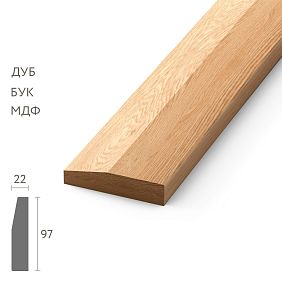
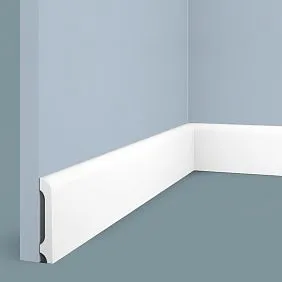
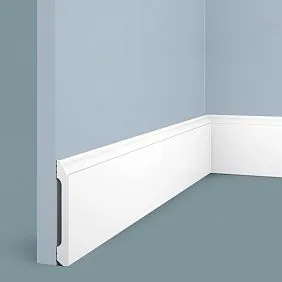
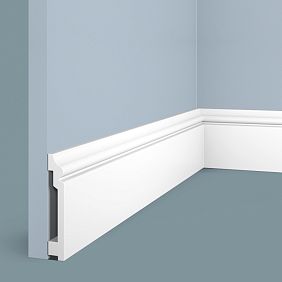
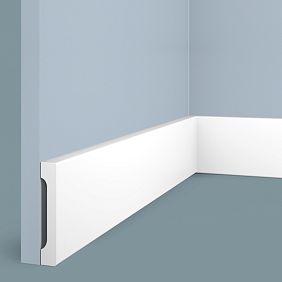
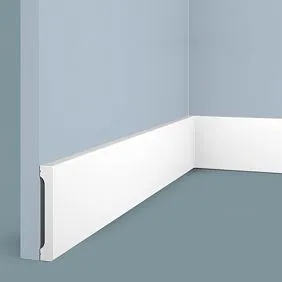
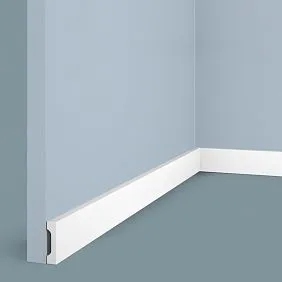
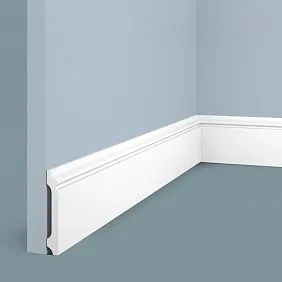
Our factory also produces:
Universal Gold Middle: 70-90 mm
Medium-sized baseboards represent an optimal balance between functionality and aesthetics. Wooden Skirting Board 70 {count} mm provides sufficient protection for the joint while creating a noticeable yet non-dominant architectural detail. This height is considered universal for most residential spaces with standard ceilings of 2.5–2.7 meters.
wooden skirting board 80 {count} mm creates a more pronounced horizontal line capable of visually structuring the space. This height allows for the use of more complex profiles with decorative elements without creating a sense of overloading. Baseboards of this category work excellently in various stylistic directions, from modern classicism to neoclassicism.
Medium-sized baseboards provide a good compromise between aesthetics and practicality. They are high enough to accommodate concealed utilities, yet not so bulky as to visually reduce the room’s size. Such baseboards integrate easily into most interior solutions without requiring a radical redesign of the design concept.
Get Consultation
Monumental solutions: 100–150 mm and above
High wooden floor skirting boards create an impressive architectural accent, transforming a functional element into a full-fledged design detail. Wooden skirting board 100 {count} mm and above require spacious rooms with high ceilings, where such proportions will appear harmonious and appropriate.
High baseboards allow for implementing complex decorative profiles with rich carving, creating an effect of expensive classical finishing. Wide Wooden Skirting Board becomes a standalone element of architectural decoration, capable of radically altering the character of the room.
Advantages of high baseboards include the ability to conceal a significant volume of utilities, creating a luxurious classical look, and visually emphasizing the lower part of walls. However, their use requires careful planning and understanding of room proportions.
Mathematics of proportions: relationship with ceiling height
Classical proportions
Traditional architectural theory suggests using a proportional relationship between the height of the baseboard and the height of the room. The classical rule implies that the height of the baseboard should be approximately 1/30 of the ceiling height. This means that for a standard ceiling height of 2.7 meters, the optimal baseboard height is about 90 mm.
This formula serves as a basic guideline, but modern design allows for deviations depending on stylistic goals and personal preferences. Types of wooden baseboards Differ not only in height but also in profile, which also affects the perception of proportions.
It is important to understand that proportionality works both ways: a low baseboard in a room with high ceilings will appear lost and incomplete, while an excessively high baseboard in a low room creates a sense of pressure and visually reduces the space.
Adaptation to modern realities
Modern residential architecture often deviates from classical canons, offering non-standard ceiling heights and planning solutions. In apartments with ceilings 3 meters and higher, there is a possibility to use Wooden High Skirting Board without risking disruption of room proportions.
Loft-style spaces with ceilings 3.5–4 meters require corresponding scaled solutions. Here, baseboards 150–200 mm high are appropriate, which would appear inappropriate in standard apartments. Such dimensions allow creating the necessary architectural weight in large volumes.
Open-plan layouts require a special approach to selecting height. A single baseboard height across all zones creates visual unity in the space, but different functional zones may require different solutions for optimal perception.
Spatial psychology of dimensions
Influence on perception of scale
The height of the baseboard directly affects the perception of room size. Low baseboards create a visual expansion effect, especially when combined with light tones. Wooden skirting board 60 {count} mm in white or light color practically dissolves into the interior, not creating visual barriers for perceiving space.
High baseboards, conversely, create a clear horizontal line that can visually expand the room (when matched to wall color) or narrow it (with contrasting color schemes). Understanding these effects allows correcting layout shortcomings through appropriately chosen baseboard height.
Dark high baseboards create a visual grounding effect, making the space more cozy but potentially less spacious. Light high baseboards act as an extension of the wall, visually increasing its area.
Emotional impact
The size of the baseboard affects not only visual perception but also the emotional atmosphere of the room. Heavy baseboards create a sense of solidity, stability, and tradition. They are subconsciously associated with quality classical architecture and create an atmosphere of respectability.
Minimalist baseboards, on the contrary, create a sense of modernity, lightness, and technology. They suit dynamic modern interiors where functionality and simplicity are valued. Wooden skirting boards width which are minimal, create a sense of lightness in architectural elements.
Medium sizes provide an emotional balance, creating a comfortable atmosphere without extremes in perception. They are suitable for family interiors, where the atmosphere of coziness and harmony is important.
Stylistic preferences and dimensional solutions
Classic directions
Traditional interior styles require corresponding proportions in architectural details. Classicism, baroque, and Empire imply the use of tall skirting boards with rich decorative treatment. Wide wooden floor skirting board becomes an indispensable part of a classic interior, emphasizing its solemnity and respectability.
English style traditionally uses skirting boards 120-150 mm high, corresponding to the scale of typical British interiors. French classicism prefers more elegant proportions while maintaining sufficient height for decorative elements.
Russian classicism allows the most monumental solutions, where skirting boards can reach 200 mm and more. Such dimensions emphasize the grandeur and solemnity of palace interiors.
Modern trends
Minimalism and Scandinavian style lean towards low-profile solutions. Here, height is less important than the quality of execution and precision of geometry. Skirting boards 40-70 mm high create the necessary functional boundary without distracting from the main interior elements.
Loft and industrial style allow for more flexible interpretations of dimensions. Here, both minimalist metal profiles and massive wooden skirting boards imitating elements of industrial architecture can be used.
Eco-style and natural directions prefer natural proportions, often using skirting boards of medium height with natural wood texture. Length of wooden skirting board standard, but height is selected according to the overall concept of naturalness and harmony with nature.
Functional aspects of height selection
Engineering communications
Modern interiors require placement of numerous engineering communications: electrical wiring, internet cables, surveillance systems, audio systems. The height of the skirting board directly affects the possibility of hidden placement of these elements. Skirting boards less than 60 mm high allow placement of only a minimal number of wires, which may require additional structural solutions.
Skirting boards 80-100 mm high provide sufficient space for placement of a standard set of residential communications. Tall skirting boards 120 mm and above allow organizing a full-scale cable channel system with the possibility of subsequent maintenance and modernization.
When selecting height, it is important to consider not only current needs but also possible future changes in the engineering equipment of the space. Modern smart home systems require a significant number of wired connections, making tall skirting boards more preferable from a functional standpoint.
Operational characteristics
The height of the skirting board affects its operational qualities. Tall skirting boards better protect walls from mechanical damage, moisture, and dirt. This is especially important in high-traffic areas: hallways, entryways, kitchens.
Low skirting boards require more careful maintenance, as most of the joint between the floor and wall remains exposed. However, they are easier to install and require less material and time for installation.
Medium sizes provide an optimal balance between protective functions and ease of operation. They provide sufficient protection for the joint without creating difficulties in cleaning and maintenance.
Economic aspects of dimensional selection
Material cost
The height of the skirting board directly affects material consumption and, consequently, the overall cost of finishing. Wooden Skirting Board Sizes of different heights have proportional price differences. Tall skirting boards require more wood, more complex processing, and transportation.
Savings on skirting board height can be significant in large objects, but it should be considered that inappropriate proportions may spoil the overall impression of the interior, negating the savings. The optimal approach is to select the minimally sufficient height for specific operating conditions and design tasks.
The cost of installation also depends on the height of the skirting board. Tall profiles require more precise fitting, quality mounting, and careful joint finishing. This increases labor costs and, consequently, the cost of work.
Long-term perspective
When selecting skirting board height, it is important to consider the long-term operational perspective of the space. Fashion trends may change, but architectural proportions should remain harmonious for a long time. Classic proportions are more resistant to fashion changes and ensure long-term relevance of the interior.
Tall skirting boards provide greater flexibility for future modernization of engineering systems. Low skirting boards may require replacement when technical requirements for communications change.
Quality materials and properly selected proportions increase property value and create a positive impression during sale or rental of the space.
Technical aspects of installing various heights
Mounting features
The height of the skirting board determines the requirements for the mounting system. Low skirting boards up to 60 mm can be mounted using simple methods: adhesive, small nails, or self-tapping screws. Their light weight does not create significant loads on the mounting elements.
Medium and high skirting boards require more reliable mounting due to increased surface area and weight. They may require combined mounting: mechanical plus adhesive, or the use of specialized mounting systems.
The material of the wall also affects the choice of mounting method. Drywall partitions may not provide reliable mounting for heavy high skirting boards without additional structural reinforcement.
Manufacturing and installation accuracy
High skirting boards impose higher requirements for manufacturing and installation accuracy. Any wall irregularities, deviations from vertical or horizontal alignment become more noticeable over the large surface area of the skirting board. This may require additional surface leveling work or the use of special compensating elements.
Joining corners of high skirting boards requires special skill, as errors in cutting become more noticeable. Which wooden skirting boards to choose depends not only on aesthetic preferences but also on the qualification of the installation crew.
Low skirting boards are more forgiving of minor manufacturing and installation inaccuracies, making them preferable for self-installation or work with less experienced installers.
Regional and cultural characteristics
Traditions of various countries
Different architectural traditions shape preferences in choosing skirting board height. The North American tradition leans toward high skirting boards (100-150 mm) as an element of colonial style. European traditions are more diverse: from minimalist Scandinavian solutions to monumental French designs.
Russian architectural tradition, shaped under the influence of European classicism, implies the use of relatively high skirting boards, especially in representative rooms. Modern Russian practice allows a wider range of solutions depending on the project's stylistic and budgetary constraints.
Asian traditions, especially Japanese, lean toward minimalist solutions with low skirting boards or their complete absence. This is related to the general interior philosophy, where harmony with nature and absence of unnecessary details are important.
Climate factors
Regional climatic conditions may influence the choice of skirting board height. In areas with high humidity, higher skirting boards are preferred, providing better wall protection against moisture. In dry climates, this factor is less critical.
Regions with sharp temperature fluctuations require consideration of material thermal deformation. High skirting boards may be more prone to cracking and warping if the material or manufacturing technology is improperly chosen.
Seismically active regions impose special requirements for skirting board mounting. Heavy high elements may pose a danger during earthquakes, making compact solutions preferable.
Frequently Asked Questions
What height of skirting board is considered standard?
A standard height for skirting boards is 70-80 mm for residential rooms with standard ceiling heights of 2.5-2.7 meters. This height provides an optimal balance between functionality and aesthetics, suitable for most interior styles. For rooms with ceilings 3 meters and higher, a standard height can be considered 100-120 mm. In commercial and representative spaces, the standard height may be 120-150 mm. It is important to remember that standard is a starting point, and the final choice should consider the specific characteristics of the room and the designer's concept.
Can a high skirting board be installed in a small room?
A high skirting board in a small room can be used, but requires a careful approach. If the ceiling height allows (from 2.8 meters), a high skirting board in light tones or matching wall color can visually enlarge the space, creating an effect of a single vertical surface. However, a dark or contrasting high skirting board in a small room will create a sense of pressure and visually reduce the space. The optimal solution for small rooms remains skirting boards 60-80 mm high in light tones, which provide necessary functionality without overloading the space.
Which skirting board to choose for 3-meter ceilings?
For rooms with 3-meter ceilings, skirting boards 100-150 mm high are suitable, depending on room area and stylistic concept. In spacious rooms, skirting boards up to 150 mm and higher can be used, creating a representative classic look. For modern interiors, a height of 100-120 mm is sufficient. It is important to consider proportions: in narrow rooms with high ceilings, it is better to limit height to 100 mm to avoid disrupting spatial proportions. High ceilings allow using skirting boards with rich decorative detailing, which will emphasize the interior's status and create an effect of expensive classic finishing.
Choosing the correct skirting board height requires a comprehensive approach, taking into account the architectural features of the room, stylistic preferences, functional requirements, and budgetary constraints. A properly selected skirting board height becomes an unnoticed but important element that highlights the interior's strengths and creates a sense of completion and professionalism in space design.