












































































Article Contents:
- Wooden balusters: classic, time-tested
- Stylistic Diversity: From Classic to Modern
- Technological features of manufacturing
- Stylistic directions
- Metal Balusters: Strength and Modernity
- Metal construction materials science
- Design Possibilities and Stylistic Solutions
- Design solutions
- Wrought iron balusters: art in metal
- Philosophy of artistic forging
- Stylistic directions in forging
- Technical aspects
- Concrete and stone balusters: monumentality and durability
- Architectural significance
- Manufacturing Technologies
- Production Technologies
- Glass Balusters: Transparent Elegance
- Innovative materials
- Design possibilities
- Technical features
- Composite and polymer balusters: technologies of the future
- Revolutionary materials
- Advantages of composite materials
- Choosing the optimal solution
- Factors influencing the choice
- Combined Solutions
- Trends and innovations
- Modern Technologies
- Ecological Aspects
- Technology integration
- Conclusion
When it comes to types of balustersBefore us opens an amazing palette of possibilities, where each material, each form tells its unique story.
Imagine a majestic staircase without a single baluster — a cold, unwelcoming structure devoid of soul. Now add to this picture elegant vertical elements, creating rhythm, safety, and unique aesthetics. It is precisely at this moment that a magical transformation occurs: an ordinary functional staircase acquires character and becomes a work of art.
The modern industry offers an astonishing variety of balusters, each type possessing unique properties and aesthetic qualities. From classic wooden items to ultra-modern composite materials — the choice is limited only by the designer's imagination and the specific requirements of the project.


Wooden balusters: classic, time-tested




The Nobility of Natural Materials
Wooden balusters remain an unmatched choice for those who value natural beauty and eco-friendliness. Natural wood possesses a unique ability to create an atmosphere of warmth and coziness, which cannot be replicated by artificial materials. Each wooden baluster carries the living energy of nature, telling the story of the tree through its unique pattern of growth rings.
Oak occupies a special place among species used for making balusters. Its density reaches 700 kg/m³, ensuring exceptional strength and durability. Oak balusters can withstand significant loads while maintaining their original shape for decades. Oak's characteristic texture with expressive growth rings creates a unique visual effect, especially after proper finishing and coating.
Ash is an excellent alternative to oak, especially for creating balusters with complex shapes. The high viscosity of this species allows manufacturing items with thin elements without the risk of cracking. Ash's light tones harmonize beautifully with modern interior solutions, and its ability to be stained opens up wide possibilities for color decoration.
Beech is characterized by a uniform structure and lack of pronounced texture, making it an ideal base for various types of decorative finishing. Beech balusters are excellent for painting and can imitate more expensive wood species.
Our factory also produces:


Technological features of manufacturing
Turned balusters are made on lathes and represent a classic variant with symmetrical forms. The turning process allows achieving a perfectly smooth surface and precise geometric proportions. Modern CNC machines ensure high repeatability of products, which is critically important when manufacturing large batches.
Milled balusters open up boundless possibilities for creating complex profiles and decorative elements. Multi-axis milling centers can process the blank simultaneously from several sides, creating highly complex three-dimensional forms.
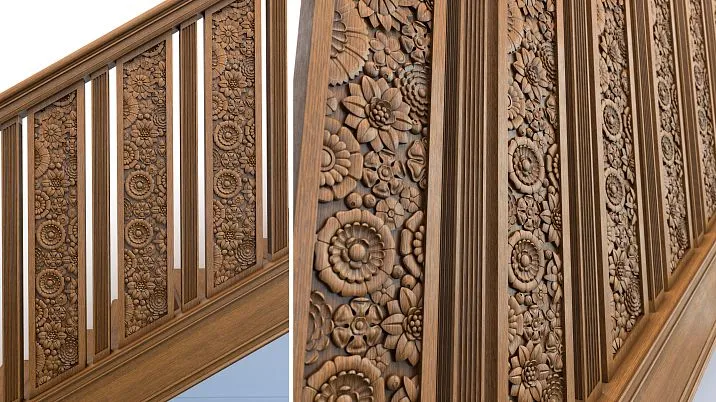
Carved balusters represent the pinnacle of woodworking craftsmanship. Each item is handcrafted by experienced carvers, making it a unique work of art. The depth of carving, ornament detail, and overall composition require not only technical skills but also artistic taste.
Get Consultation
Stylistic directions
Classic style is characterized by strict proportions and noble forms. Geometric elements — spheres, cylinders, cones — combined in harmonious compositions form the basis. The principle of the golden section is often used when designing classic balusters.
Modern minimalism dictates its requirements for wooden balusters. Simple forms, clean lines, and absence of excessive decoration characterize this approach. Flat rectangular-section balusters are becoming increasingly popular in modern interiors.
Ethnic motifs introduce cultural traditions into baluster design. The Russian style implies the use of traditional ornaments and carved elements. The Scandinavian approach is characterized by using light species with minimal processing.
Metal balusters: strength and modernity
Metallic Structures Materials Science
Stainless steel has become a standard in the production of modern metal balusters. Its corrosion resistance and strength characteristics make this material ideal for use both indoors and outdoors. Different grades of stainless steel allow selecting the optimal solution for specific operating conditions.
Carbon steel with protective coatings is an economical alternative to stainless steel. Modern coating application technologies provide long-lasting corrosion protection at significantly lower material cost.
Aluminum alloys are attractive for their lightness and corrosion resistance. The possibility of anodizing allows achieving various color solutions and improving the protective properties of the surface.
Production technologies
Casting allows creating balusters with complex shapes and high detail. Modern pressure casting technologies ensure high surface quality and dimensional accuracy. Casting is especially effective for producing decorative elements with repeating details.
Forging remains a traditional method for creating unique metal balusters. Hand forging allows producing unique items, each bearing the mark of the blacksmith's skill. Modern machine forging ensures high productivity while preserving the artistic value of the items.
Welded structures from profiled metal represent an economical solution for creating balusters with geometric shapes. The precision of modern welding equipment allows producing high-quality items with minimal subsequent processing.
Design solutions
Minimalist forms characterize modern metal balusters. Simple geometric profiles, clean lines, and absence of decorative excesses create a sense of lightness and airiness in the structure.
Combined solutions combine metal with other materials — wood, glass, stone. This approach allows creating unique compositions that combine the strength of metal with the aesthetic qualities of other materials.
Artistic forging opens boundless opportunities for creative self-expression. Botanical ornaments, geometric patterns, abstract compositions — all of this can be embodied in metal by the hands of an experienced master.
Forged balusters: art in metal
Philosophy of artistic forging
Forged balusters represent a unique combination of functionality and artistic value. Hand forging transforms ordinary metal into a work of art, where each hammer blow leaves its mark in the item's history. The uniqueness of the texture created by forging cannot be reproduced by any other metalworking method.
Hot forging allows giving metal the most complex shapes, creating smooth transitions and fine details. When heated to a plastic state, metal becomes a compliant tool in the master's hands, taking on any desired form.
Cold forging uses special fixtures and tools to deform metal without heating. This method is especially effective for creating repeating elements and geometric shapes.
Stylistic directions in forging
Classical forging relies on centuries-old blacksmithing traditions. Botanical ornaments, scrolls, rosettes — all these elements originated from ancient times and remain relevant in modern design.
Modern forging is characterized by smooth, flowing forms that imitate natural objects. Stylized plants, abstract compositions, asymmetrical elements create a unique atmosphere of elegance.
Modern forging combines traditional techniques with new design solutions. Geometric forms, minimalist compositions, use of modern materials and technologies — all of this characterizes current trends in artistic forging.
Technical aspects
Connection of elements in forged balusters can be achieved by various methods: welding, riveting, mechanical connections. The choice of method depends on the structural features of the item and requirements for its appearance.
Protective coatings play a critical role in the longevity of forged balusters. Priming, painting, patination — each processing stage affects the final result and service life of the item.
Installation of forged balusters requires special attention to details. Accuracy of positioning, reliability of fastening, sealing of joints — all these factors affect the quality of the finished structure.
Concrete and stone balusters: monumentality and durability
Architectural significance
Concrete and stone balusters embody the idea of monumentality and solidity in architecture. Natural stone possesses a unique ability to create a sense of eternity and stability. Each type of stone has its own distinctive characteristics: marble impresses with its nobility and refinement, granite impresses with its strength and durability, limestone attracts with its soft forms and warm tones.
Artificial stone and architectural concrete open new possibilities for creating balusters with complex shapes. Modern technologies allow obtaining items indistinguishable from natural stone, yet possessing improved performance characteristics.
Manufacturing Technologies
Casting into molds is the primary method of producing concrete balusters. Using polyurethane molds allows obtaining items with high surface detail and dimensional accuracy. Vibration compaction ensures dense concrete structure and absence of voids.
Stone carving is a traditional method of creating stone balusters. Hand processing allows creating unique items with distinctive character. Modern pneumatic tools significantly speed up the processing, while still preserving the possibility of fine detailing.
Machining on CNC machines ensures high precision and repeatability of items. This method is especially effective for producing large batches of balusters of the same shape.
Operational characteristics
Freeze resistance is a critical parameter for balusters operating under variable temperature conditions. Quality concrete and natural stone can withstand hundreds of freeze-thaw cycles without loss of strength.
Chemical resistance ensures the longevity of balusters in aggressive environments. This is especially important in urban conditions, where air contains various pollutants.
The fire resistance of stone and concrete balusters makes them a preferred choice for locations with heightened fire safety requirements.
Glass balusters: transparent elegance
Innovative materials
Glass balusters represent the embodiment of modern technologies in architecture. Tempered glass has strength several times greater than ordinary glass, making it safe for use in stair constructions.
Laminated glass (triple glazing) provides additional safety due to the polymer film between layers. Upon breakage, shards remain attached to the film, eliminating the risk of injury.
Structural glazing allows creating balusters of large sizes without visible connecting elements. Special structural sealants ensure the strength and airtightness of joints.
Design Possibilities
The transparency of glass creates a sense of lightness and airiness in stair construction. Glass balusters do not clutter space and allow light to freely penetrate every corner of the room.
Colored glass opens up limitless possibilities for interior color design. Modern technologies allow obtaining glass of virtually any color and shade.
Matte and engraved finishes create additional decorative effects. Sandblasting allows achieving various surface textures, from light matting to deep relief.
Technical Features
Mounting glass balusters requires special systems ensuring secure fixation without damaging the material. Point fixings with rubber gaskets distribute load and compensate for thermal deformations.
Edge treatment plays an important role in the safety and aesthetics of glass balusters. Polished edges eliminate the risk of injury and give the product a finished look.
Composite and polymer balusters: technologies of the future
Revolutionary materials
Glass-fiber reinforced plastic combines the lightness of polymers with the strength of glass fiber. This material is resistant to corrosion, has a low coefficient of thermal expansion, and possesses excellent dielectric properties.
Carbon fiber provides maximum strength at minimal weight. Its use in balusters is especially effective for structures where the weight of elements is critical.
Polyurethane allows creating balusters of complex shapes with high detail. Modern polyurethane compositions exhibit high resistance to ultraviolet radiation and atmospheric effects.
Advantages of composite materials
The corrosion resistance of composite balusters makes them an ideal choice for aggressive environments. They do not require protective coatings and retain their properties throughout their service life.
The lightness of composite materials simplifies the transportation and installation of balusters. This is especially important when working at heights or in hard-to-reach areas.
The ability to color in mass eliminates the need for subsequent painting and ensures color stability throughout the service life.
Choosing the optimal solution
Factors influencing the choice
When choosing types of balusters Multiple factors must be considered. Operating conditions determine material requirements: for indoor staircases, almost any material is suitable, while for outdoor use, only materials resistant to atmospheric effects are appropriate.
Stylistic harmony with the interior or exterior of the building plays an important role in creating a cohesive architectural ensemble. Classic interiors require appropriate balusters, while modern interiors allow for bolder solutions.
Budget constraints often become the decisive factor in selection. It is important to find the optimal price-to-quality ratio, taking into account long-term operational costs.
Combined Solutions
Combining different materials in a single structure allows achieving unique aesthetic and functional properties. Wooden handrails with metal balusters, glass panels with stone supports — possibilities are limited only by the designer’s imagination.
Zoning by material can be used to highlight different sections of the staircase or create visual accents. Changing baluster material at turns or landings creates interesting compositional solutions.
Trends in development and innovation
Modern technologies
3D printing opens new possibilities for creating balusters of complex shapes. This technology is especially effective for prototyping and small-batch production of unique items.
Laser cutting ensures high precision in processing metallic and polymer materials. The ability to create complex openwork patterns makes this technology indispensable for modern design.
Nanotechnologies in coatings provide self-cleaning surfaces, antibacterial properties, and improved resistance to external influences.
Ecological aspects
Material recycling is becoming an increasingly important factor when selecting balusters. The possibility of reusing materials reduces environmental impact and aligns with sustainable development principles.
Energy efficiency in production affects the overall environmental assessment of products. Materials with low energy consumption during production are preferred from an ecological standpoint.
Integration of technologies
Smart balusters with built-in sensors and lighting systems represent the future of staircase structures. The ability to monitor the condition of the structure and automatically control lighting enhances comfort and safety of use.
Wireless technologies allow integrating various systems into balusters without laying additional communications. This is especially important during modernization of existing staircases.
Conclusion
Variety types of balusters In modern architecture, balusters captivate the imagination and open up boundless opportunities for creative self-expression. From classic wooden pieces to ultra-modern composite materials — each type of baluster has its unique advantages and applications.
Choosing the optimal solution requires a comprehensive approach, taking into account not only aesthetic preferences but also technical requirements, operating conditions, and economic factors. Properly selected balusters become not just functional safety elements, but true works of art capable of transforming any space.
Modern manufacturing technologies and new materials continuously expand the range of possibilities, offering ever more advanced solutions. Integration of digital technologies, ecological innovations, and development of design thinking promise even more exciting prospects in the future.
Investing in quality balusters is investing in beauty, safety, and longevity. Each project is unique, and the approach to selecting balusters should consider all its features. The key is not to compromise on quality and to trust professionals who will help bring even the boldest design ideas to life.
For many years, STAVROS has remained a leader in creating staircase structures, offering a full spectrum of solutions for any architectural task. Deep understanding of the characteristics of various materials, mastery of modern manufacturing technologies, and extensive experience in implementing projects of any complexity make STAVROS a reliable partner for those striving for perfection. STAVROS specialists will help you choose the optimal type of balusters for your project, taking into account all technical requirements and design preferences. Choosing STAVROS means you are not just getting quality products, but a comprehensive solution that will become a decoration of your home for many years.


