Article Contents:
- Philosophy of Scale in Staircase Architecture
- Technical specifications of large wooden balusters
- Optimal dimensional parameters
- Requirements for wood for large elements
- Wood species for monumental balusters
- Oak — the standard of reliability and prestige
- Ash — combination of strength and expressiveness
- Beech — versatility and technological efficiency
- Stylistic directions in the design of large balusters
- Modern and its interpretations
- Classic traditions in modern execution
- Modern minimalism in large forms
- Technologies for manufacturing large wooden balusters
- Preparation of blanks with increased cross-section
- Turning of large elements
- Milling and wood carving
- Features of installing large balusters
- Reinforced mounting systems
- Preparation of installation sites
- Decorative possibilities of large balusters
- Compensation for thermal deformations
- Multi-level profiles and complex geometry
- Inlay and combination of materials
- Carved compositions and artistic finishing
- Classic interiors and palace style
- Integration into various architectural styles
- Country residences and estate style
- Modern interiors and eclecticism
- Economic aspects of choosing large balusters
- Maintenance and care of large-scale elements
- Pricing factors
- Long-Term Economic Efficiency
- Impact on property value
- Innovations in the production of large balusters
- Regular maintenance and prevention
- Restoration and renewal
- Innovations in the production of large balusters
- Digital Design and Modeling
- Modern Processing Technologies
- Ecological aspects of production
- Responsible forestry
- Ecologically clean technologies
- Conclusion

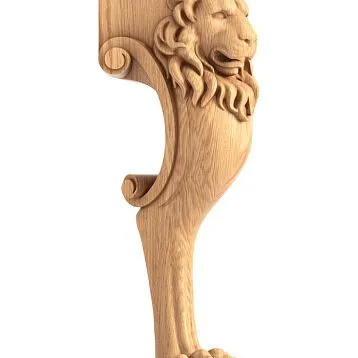
When it comes to creating a truly impressive staircase ensemble, a special place is held by large wooden balusters — an element capable of radically transforming the perception of space and imparting a unique character to the interior. These monumental vertical supports are not merely functional railing components, but true masterpieces of carpentry, embodying traditional craftsmanship and modern wood processing technologies.
Large wooden balusters become the dominant accent of the staircase composition, creating a sense of grandeur and respectability. Their imposing dimensions allow for the realization of the boldest design concepts, from classical columns to avant-garde sculptural forms, each carrying a unique aesthetic load.


Philosophy of Scale in Staircase Architecture
Choosing large balusters is always a deliberate design decision aimed at creating a specific emotional impact. Large wooden supports form the rhythm of space, define the scale of the entire composition, and serve as a connecting element between different levels of the house.
In spacious halls of country residences, massive balusters create a sense of grandeur and solemnity. Their presence transforms an ordinary staircase into an architectural focal point around which the entire interior composition is built. Every detail of such elements is meticulously considered: from the proportions of main parts to the intricacy of decorative elements.




Psychology of perception of large architectural elements
Human perception is structured in such a way that large interior elements create a sense of stability and reliability. Large balusters affect the subconscious level, forming a feeling of safety and comfort. This is especially important for staircase spaces, where safety is of paramount importance.
The visual weight of large balusters allows for balancing the proportions of a room, especially in cases where the staircase is located in high halls or atriums. They serve as sort of vertical anchors that structure space and make it more human-scaled.
Our factory also produces:


Technical characteristics of large wooden balusters
Manufacturing large balusters requires a special approach to material selection and processing technology. Increased dimensions impose higher requirements on the quality of wood, its stability, and strength characteristics.
Get Consultation
Optimal dimensional parameters
Standard sizes of large balusters vary from 80×80 mm to 120×120 mm in cross-section at a height of 900 to 1200 mm. However, for creating truly impressive compositions, elements with cross-sections up to 150×150 mm and more may be used. Such dimensions allow creating complex multi-level profiles with deep relief elements.
The wall thickness when manufacturing hollow structures should be at least 15–20 mm to ensure the required strength. This is especially important for balusters with internal cavities, which are used for laying communications or reducing the weight of the structure.
Requirements for wood for large elements
For manufacturing large balusters, only selected wood species with minimal defects are used. Special attention is paid to the direction of the grain — it should be as straight and parallel to the baluster’s axis as possible to ensure the stability of the form.
The moisture content of the wood should not exceed 8–10% to prevent deformations and cracking. Large elements are more susceptible to internal stresses, therefore require particularly careful drying with gradual reduction of moisture.
Wood species for monumental balusters
The selection of wood species for large balusters is determined not only by aesthetic preferences, but also by technical requirements for strength and stability of large elements.
Oak — the standard of reliability and prestige
Large oak balusters represent the pinnacle of carpentry craftsmanship. The dense structure of oak allows creating elements with fine details and complex profiles without loss of strength. The natural texture of oak especially vividly manifests on large surfaces, creating a unique play of light and shadow.
Oak has natural resistance to moisture and temperature fluctuations, which is especially important for large elements more sensitive to microclimate changes. The tangential shrinkage of oak is only 7–8%, minimizing the risk of deformation.
Ash — a combination of strength and expressiveness
Ash is characterized by high bending strength and impact toughness, making it an ideal material for large balusters subjected to significant loads. The contrasting texture of ash with clearly defined annual rings creates an eye-catching visual pattern on large surfaces.
The light shade of ash allows using various staining and coloring methods, expanding the possibilities of integrating large balusters into various interior stylistic solutions.
Beech — versatility and technological efficiency
Beech is characterized by uniform structure and excellent workability, which is especially important when manufacturing large elements with complex profiles. Its density and hardness ensure the longevity of large balusters under intensive use.
The ability of beech to be stained allows it to imitate more expensive wood species, making it a popular choice for creating large balusters across various price segments.
Stylistic directions in the design of large balusters
large wooden balusters can embody various architectural styles, from strict classicism to modern minimalism. Each direction imposes its own requirements on proportions, decorative elements, and the overall character of the item.
Classic traditions in modern execution
Classic large balusters follow the canons of ancient architecture, adapted to modern technological capabilities. The composition consists of three main parts: base, shaft, and capital, each with its own proportional relationships.
The base of a classic large baluster usually constitutes 15-20% of the total height and includes a plinth and torus — a convex profile creating a smooth transition to the main shaft. The baluster shaft may be cylindrical, with entasis (thickening in the middle), or include decorative elements in the form of fluting — vertical grooves.
The capital crowns the composition and may vary from a simple abacus to complex forms with vegetal motifs. In large balusters, the capital receives special development, allowing craftsmen to demonstrate the highest level of wood carving.
Modern and its interpretations
The Modern style introduced smooth lines and natural motifs into the design of large balusters. Vegetal ornaments, stylized as climbing plants, vines, or flowers, gain particular expressiveness and detail in large elements.
Modern asymmetrical compositions require special craftsmanship in producing large balusters, as each element becomes a unique work of art. The use of modern CNC technologies allows designers to realize the most complex concepts with high precision and repeatability.
Modern minimalism in large forms
Minimalist large balusters are characterized by simplicity of form and emphasis on the natural beauty of wood. Simple geometric profiles — square, rectangular, or cylindrical — create rhythmic compositions where beauty lies in perfect proportions and surface finish quality.
Large dimensions allow full expression of wood texture, especially when using species with pronounced grain. Minimal surface treatment, preserving natural color and texture, becomes the main decorative element.
Technologies for manufacturing large wooden balusters
Production of large balusters requires the use of specialized equipment and special technological methods, taking into account the specifics of working with large blanks.
Preparation of large-section blanks
Manufacturing large balusters begins with careful selection and preparation of blanks. For large-section elements, the glued-lumber technology is often used, allowing to obtain stable blanks without internal stresses.
Laminates are glued using water-resistant adhesives, ensuring joint strength exceeding the strength of the wood itself. The number of laminates in the cross-section is determined by the final product dimensions — for balusters with a 100×100 mm cross-section, 4–6 laminates are typically used.
An alternative method is using solid blanks from solid wood, which requires particularly careful selection of wood and long drying periods. Such blanks are more valuable but require more time for preparation and are more susceptible to deformation.
Turning large elements
Turning large balusters requires the use of powerful lathes with increased center distance and reinforced bed. The spindle speed must be reduced compared to standard elements to ensure safety and quality of processing.
Special attention is paid to balancing the blank before processing. Even a small imbalance with large dimensions can cause vibrations, reducing surface quality and creating danger for the operator.
The turning process of large balusters is divided into several stages: rough turning for shaping the overall form, semi-finish turning for forming the main profile elements, and finish turning for achieving the required surface quality.
Milling and wood carving
Creating complex decorative elements on large balusters often requires combining turning with milling. Modern multi-axis milling centers allow creating three-dimensional compositions with high detail.
Programming the processing of large elements requires special attention to tool paths and cutting modes. Increased blank dimensions create additional loads on the tool and require adjustment of feed speeds.
Hand carving on large balusters allows creating unique works of art. The increased surface area gives the woodcarver the opportunity to realize the most complex compositions with numerous small details.
Features of installing large balusters
Installation of large wooden balusters requires a special approach to fastening, taking into account the increased weight of the elements and higher loads on connection joints.
Reinforced fastening systems
Standard baluster fastening methods may be insufficient for large elements. Increased weight requires the use of reinforced fastening systems with metal bolts of larger diameter or special connecting elements.
for large wooden balusters It is recommended to use bolts with a diameter of at least 12–16 mm, driven into the tread or stringer to a depth of at least 80–100 mm. Additional strength is provided by using structural adhesives that create an inseparable joint.
Preparation of installation sites
Installing large balusters requires careful preparation of the installation sites. Holes for fasteners must be drilled with high precision, as any deviations will be particularly noticeable on large elements.
To ensure the vertical alignment of large balusters, the use of special fixtures and templates is recommended. Verticality is checked using levels and plumb bobs at all stages of installation.
Compensation for thermal deformations
Large wooden elements are more susceptible to thermal deformation due to the increased volume of material. During installation, compensatory gaps must be provided and elastic sealants should be used at junctions with other structures.
Special attention is given to seasonal dimensional changes. Wood contracts in winter and expands in summer. For large elements, these changes may amount to several millimeters, which must be considered when designing connection joints.
Decorative possibilities of large balusters
Increased dimensions open up wide opportunities for creating complex decorative compositions that cannot be achieved with standard elements.
Multi-level profiles and complex geometry
Large balusters allow creating multi-level profiles with deep relief elements. Combining various geometric forms — cylinders, cones, spheres — creates rich play of light and shadow, especially effective under artificial lighting.
The possibility of creating deep recesses and protrusions allows forming volumetric compositions perceived as sculptural elements. Such balusters become independent works of art, defining the character of the entire interior.
Inlay and combination of materials
The large surface area of large balusters opens opportunities for applying various decorative techniques. Inlaying with metal, mother-of-pearl, or other materials creates exclusive elements with a unique appearance.
Combining different wood species in a single baluster allows creating contrasting compositions that highlight the beauty of each material. Especially striking are combinations of light and dark species, creating expressive color transitions.
Carved compositions and artistic finishing
Large wooden balusters provide woodcarvers with the opportunity to create complex artistic compositions. Plant motifs, geometric patterns, narrative scenes — all of this can be embodied on an enlarged surface with high detail.
Modern laser engraving technologies allow creating delicate patterns and inscriptions that cannot be achieved by traditional methods. Combining hand carving and machine processing opens new horizons in decorating large balusters.
Integration into various architectural styles
Large wooden balusters must harmoniously fit into the overall interior concept, supporting and developing the main stylistic line.
Classical interiors and palace style
In classical interiors, large balusters play the role of miniature architectural columns. They must conform to classical orders and proportional systems, creating a sense of monumentality and grandeur.
Gilding, patination, and other artificial aging techniques allow creating a sense of historical authenticity. The large size of elements makes such treatment especially effective and convincing.
Country residences and estate style
In country homes, large wooden balusters create a sense of solidity and connection with nature. Using local wood species and traditional processing techniques emphasizes regional identity and creates an authentic atmosphere.
Combining large balusters with other wooden interior elements — beams, panels, furniture — creates a cohesive composition where each element complements and enhances the overall impression.
Modern interiors and eclecticism
In modern interiors, large wooden balusters can serve as a contrasting element, introducing warmth and naturalness into a technological space. Minimalist forms and natural finishes create a balance between tradition and innovation.
Eclectic interiors allow bold experimentation with the forms and finishes of large balusters, creating unique compositions that combine elements from various styles and eras.
Economic aspects of choosing large balusters
Investments in large wooden balusters require serious economic justification, considering both initial costs and long-term prospects.
Pricing Factors
The cost of large wooden balusters is determined by multiple factors: wood species, complexity of processing, element dimensions, order volume, and manufacturing timelines. Increasing dimensions leads to exponential cost growth due to higher material consumption and more complex technology.
Handcrafted work and individual design significantly increase the cost, but allow creating unique elements without analogs. Such investments are justified in prestigious projects where exclusivity and artistic value are important.
Long-term economic efficiency
High-quality large wooden balusters made from hardwood can serve for centuries without losing their functional and aesthetic qualities. Such longevity makes them economically advantageous in the long term, despite high initial costs.
The possibility of restoring and updating wooden elements allows maintaining them in ideal condition throughout their entire service life. This is especially important for large balusters, which are prominent interior features.
Impact on property value
Installation of high-quality large wooden balusters significantly enhances the prestige and value of real estate. These elements are perceived as signs of high construction quality and attention to detail, which is especially valued in the luxury real estate market.
Unique artistic balusters can become the hallmark of a home, creating a distinctive look and increasing its investment appeal.
Care and maintenance of large-scale elements
Large wooden balusters require a special approach to care and maintenance, taking into account their size and structural complexity.
Regular maintenance and prevention
Large balusters should be inspected at least twice a year, with special attention to mounting points and areas with increased load. The increased weight of the elements creates additional stresses at connection joints, requiring continuous monitoring.
Cleaning large surfaces requires the use of special agents and tools that allow effectively removing dirt without damaging the protective coating. Special attention is paid to hard-to-reach areas with complex relief.
Restoration and renewal
Restorability is one of the main advantages of wooden balusters. Local damage can be repaired without replacing the entire element, which is especially important for large and expensive items.
Updating the protective coating of large balusters requires a professional approach and use of quality materials. Properly executed restoration can fully restore the original appearance of the elements and extend their service life for decades.
Innovations in large baluster production
Modern technologies open new possibilities in producing large wooden balusters, enabling the creation of elements that were previously unavailable.
Digital design and modeling
3D modeling allows creating highly detailed virtual prototypes of large balusters. This enables evaluating the appearance of elements within the context of the entire interior before production begins.
Parametric design allows quickly creating variations of basic forms, adapting them to specific project requirements. This is especially important when working with large balusters, where even minor changes in proportions can significantly alter the perception of the element.
Modern Processing Technologies
Multi-axis machining centers allow creating large balusters with complex geometry in a single setup, ensuring high precision and repeatability. This opens opportunities for producing series elements with unique designs.
Laser technologies allow creating extremely fine decorative elements on the surface of large balusters, inaccessible through traditional processing methods. Combining various technologies in a single product creates new aesthetic possibilities.
Ecological Aspects of Production
Production of large wooden balusters must comply with modern ecological standards and principles of sustainable development.
Responsible forestry
Using wood from certified forests ensures ecological responsibility in production. Large balusters require significant amounts of high-quality wood, making sustainable forestry particularly relevant.
Using deep wood processing technologies allows maximizing raw material efficiency, minimizing production waste. This is especially important when working with valuable wood species.
Ecologically clean technologies
Using water-based varnishes and eco-friendly adhesives ensures safety of finished products for human health and the environment. This is especially important for large elements, which have significant surface area.
Energy-efficient drying and wood treatment technologies reduce the carbon footprint of production, making large wooden balusters a more eco-friendly choice compared to alternative materials.
Conclusion
Choice in favor of large wooden balusters This is a choice in favor of quality, beauty, and longevity. These monumental elements are capable of transforming any space, creating an atmosphere of luxury and respectability. Their production requires the highest craftsmanship and use of premium materials, but the result justifies all the effort invested.
Modern production technologies allow realizing the most daring design concepts, creating unique elements that become true works of art. At the same time, the functional aspect is not forgotten — large wooden balusters ensure the reliability and safety of stair structures for decades to come.
Investing in high-quality large wooden balusters is investing in the future. They not only decorate a home today but also retain their value for many years, passing down through generations as family heirlooms.
STAVROS Company offers a full range of services for designing, manufacturing, and installing large wooden balusters of any complexity. Decades of experience working on luxury projects, in-house production, and a team of highly skilled craftsmen enable realizing the most ambitious concepts. By contacting STAVROS specialists, you receive a guarantee of exceptional quality and individualized approach to each project, where large wooden balusters become not just functional elements, but true masterpieces of carpentry art.