Article Contents:
- 1. Introduction to the world of narrow wooden planks
- 1.1. Reasons for the popularity of narrow planks
- 2.1. Selection criteria
- 3.1. Wall finishing
- 3.2. Ceiling structures
- 3.3. Framing structures and moldings
- 3.4. Shelves, partitions, and accents
- 4.1. Surface preparation
- 4.2. Mounting Methods
- 4.3. Cutting and fitting
- 5.1. Choosing a finish
- 5.2. Regular maintenance
- 6.1. Minimalism and Scandinavian style
- 6.2. Loft and industrial style
- 6.3. Classic and neoclassical styles
- 6.4. Eclecticism and boho
- 7. Modern market trends
- 8. Advantages and potential limitations
- 8.1. Advantages of narrow wooden planks
- 8.2. Possible limitations
- 9. How to save money while achieving quality results
- 10. Conclusion: what is the secret to the appeal of narrow wooden planks
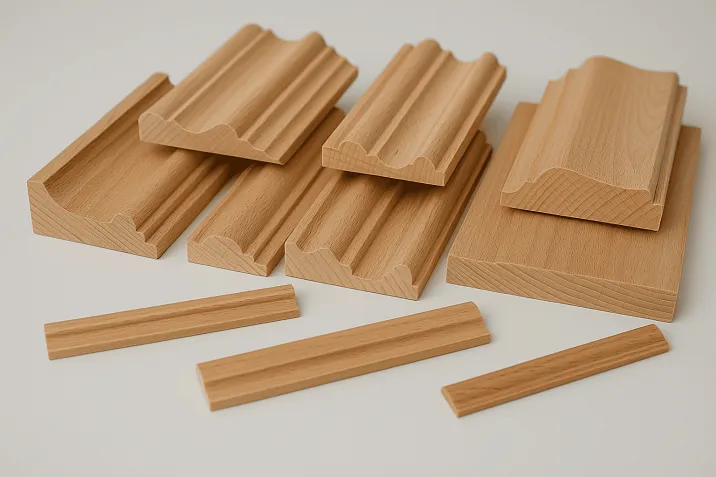
In modern interior design, where diversity of styles and materials reigns, wood continues to play an important role. Natural wood possesses a unique charm that can transform any space, adding coziness and a sense of closeness to nature. However, not all wooden details need to be large and bulky. On the contrary, sometimes true elegance and thoughtful design are emphasized by small elements, which, when used correctly, can significantly influence the overall visual appearance of the room. One such element isnarrow wooden plank.
In this article, we will examine what a narrow wooden plank is, its features, where and how it can be applied, as well as share tips on installation and maintenance. In addition, you will learn how narrow planks help create exclusive designer solutions and make any interior truly unique.


Wooden plank — a long, rectangular piece made from solid wood (sometimes from glued laminated timber), which may vary in thickness, length, and profile. It is often used as a decorative or finishing material for interiors and exteriors.
When referring to a 'narrow' wooden plank, one typically means a product with relatively small width — from several millimeters to several centimeters — allowing this element to be used for creating clean lines, visual accents, and more detailed finishes. A narrow plank can serve not only as a background element but also as a key component that shapes the overall appearance of the project.
1.1. Reasons for the popularity of narrow planks




Aesthetics and elegance
- Aesthetics and elegance
Minimalist design trends, as well as the pursuit of fine detailing, make narrow planks an ideal tool for neat and refined finishing.
- Universality
A narrow wooden plank can be mounted almost in any direction — horizontally, vertically, diagonally, or in a zigzag pattern, creating original compositions and visual effects.
- Ease of installation
Their small dimensions allow for easy transportation, storage, and installation. Often, no bulky equipment is needed, making the work accessible even to amateurs without serious professional experience.
- Ability to combine with other materials
Narrow planks harmoniously combine with glass, metal, stone, brick, and other finishing materials, expanding the horizons for design experiments.
2. Variety of wood species and selection criteria
Choosing the wood species is a key factor determining both the appearance of the planks and their performance properties:
- Spruce
The most affordable, with a soft texture and light tone. It is easy to process, so many choose pine to start experimenting with wood. However, in areas with high load, pine should be additionally strengthened with varnishes and protective compounds.
- Spruce
Similar to pine, but with slightly less resin content. Spruce also requires careful maintenance. Due to its structure, a narrow spruce plank may be suitable for ceiling or wall structures, but in areas with high humidity, additional impregnation is required.
- Larch
A strong species with a beautiful texture and rich color palette, more resistant to moisture and decay than coniferous analogs. Suitable for use in areas with temperature and humidity fluctuations (balconies, terraces, bathrooms).
- Oak
Considered one of the most noble materials with a dense texture and long service life. An excellent choice for solid interiors, as well as for high-traffic zones. Oak planks give a room prestige, although they cost more than most other options.
- Ash
Close in hardness and strength to oak, but often has a more pronounced ring pattern. A narrow ash plank can become a true decoration for walls or furniture.
- Oak
Features a uniform texture and a beautiful pinkish tone. Easy to process, but requires a stable humidity level. May deform under fluctuations.
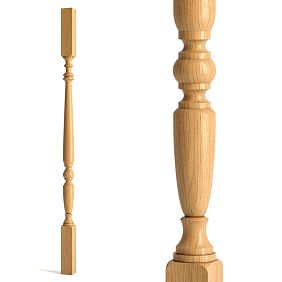
Our factory also produces:



2.1. Selection criteria
● Aesthetic preferences: interior style, color palette, and desired texture.
● Functional requirements: installation location, likelihood of mechanical loads, humidity level, and temperature fluctuations.
● Budget: pine and spruce are cheaper than oak or larch, but the latter are more resistant to external influences.
3. Main application areas of narrow wooden planks
Narrow wooden plank is widely used in room furnishing and decoration. Let's consider the most popular application areas.
Get Consultation
3.1. Wall finishing
One of the most popular options — laying planks on walls:
● Horizontal placement
Helps visually expand the room's space. This technique is especially relevant in rooms where walls need to be visually 'stretched' outward.
● Vertical placement
Adds height to walls, stretching the space upward. This method is often used in apartments with low ceilings to create a lighter and more airy atmosphere.
● Diagonal layout or 'zigzag'
Creates an interesting dynamic pattern, especially attractive in modern and eclectic interiors.
3.2. Ceiling structures
Narrow plank fits perfectly into ceiling design:
● Exposed beams (imitation)
Narrow planks can be placed across the ceiling, creating the effect of wooden beams in a country or Provence style.
● Decorative Patterns
You can highlight joints or create geometric patterns using narrow planks as a kind of "design" on the ceiling.
3.3. Framing Structures and Molding
Oftennarrow wooden plank serves as molding, creating neat frames on walls or doors. Using planks, you can frame mirrors, paintings, or photo collages. Such a solution allows clearly defining zones within a room, adding symmetry and completeness.
3.4. Shelves, Partitions, and Accents
● Decorative Shelves
Using narrow planks, it's easy to make thin but sufficiently strong shelves for books, decor, or collectibles.
● Functional Partitions
Narrow planks can be arranged vertically or horizontally on a frame to form a light dividing zone (for example, between the kitchen and living room), while still maintaining the impression of an open space.
● Accent Details
Small fragments of planks can be installed as inserts in furniture, doors, or walls. This can be an unusual pattern, contrasting color stripes, or geometric shapes that add individuality to the interior.
4. Installation Technical Nuances
4.1. Surface Preparation
Before installation, it is important to check the quality of the base:
● Walls or ceilings must be flat, dry, and clean.
● If necessary, perform spackling, priming, and leveling.
● If vertical installation is planned, you can pre-install thin horizontal rails for more secure attachment of narrow planks.
4.2. Mounting Methods
● Adhesive
Ideal for flat surfaces where aesthetics are especially important (to avoid seeing nail heads). The choice of adhesive depends on the type of wood and wall material. It is important to follow application instructions and allow the adhesive sufficient time to set.
● Nails or Screws
A more traditional method, allowing easy replacement of individual planks. However, you must carefully select the length of fasteners and try to "hide" the heads in the joint or camouflage them.
● Clips and Brackets
Some manufacturers offer special mounting systems that allow quickly and discreetly installing narrow planks. This simplifies the assembly process and allows easy removal of the cladding if desired.
4.3. Cutting and Fitting
Narrow planks are often purchased with a small allowance to avoid running out of material during cutting:
● Mark the exact length and angle of cut for each plank using a tape measure and square.
● The best equipment for cutting is a jigsaw or circular saw with fine teeth to avoid chipping.
● When joining at an angle (for example, for framing structures), carefully check the accuracy of each cut.
5. Protective Treatment and Maintenance
5.1. Choosing a Finish
The wood requires reliable protection from moisture, ultraviolet rays, and mechanical damage. Common options:
- Varnish
Provides a glossy or semi-matte finish, creating a durable film on the surface. Lacquer is especially suitable in high-traffic areas or where protecting wood from dirt and stains is important.
- Oil and wax
These compositions penetrate deeply into the wood structure, preserving its natural appearance. Oil enhances the texture, providing a pleasant matte finish, while wax additionally protects against moisture. The surface remains "breathable".
- Paint
If achieving a specific color or bright shade is required, the narrow plank can be painted. This method is sometimes combined with preliminary brushing or patination to create interesting effects.
5.2. Regular Maintenance
● Dust removal: wipe wooden surfaces with a soft cloth or a brush with soft bristles.
● Avoid aggressive cleaning agents: use only neutral solutions to avoid damaging the finish.
● Protection from moisture and temperature fluctuations: in rooms with an unstable microclimate, it is advisable to additionally monitor humidity levels and regularly ventilate.
● Restoration: if the finish has worn out, lightly sand the surface and apply a new layer of lacquer, oil, or paint.
6. Designer Solutions
6.1. Minimalism and Scandinavian Style
In light interiors where simple forms and neutral tones dominate, a narrow wooden plank creates a subtle yet expressive accent. It can serve as:
● A layout on a white ceiling to emphasize the geometry of the space.
● Vertical inserts on walls, highlighting the height of the room.
● A light, open partition separating the kitchen area from the living room.
6.2. Loft and Industrial Style
Here, narrow planks complement rough brick walls and metal structures:
● Dark wood for contrasting accents against concrete.
● Alternating planks of different shades for a "handcrafted" effect.
● Vertical slats that combine with glass and metal, forming semi-transparent partitions.
6.3. Classic and Neoclassical
In more traditional interiors, a narrow wooden plank is often used as a decorative element:
● Mouldings and frames on walls, adding symmetry and elegance to the room.
● Carved cornices or skirting boards with delicate profiles, finishing arched openings.
● Light-colored woods (e.g., beech or ash) with lacquer, emphasizing the refined character of classic style.
6.4. Eclecticism and Boho
Eclectic spaces welcome experimentation:
● Combining narrow planks of different wood species in one composition to highlight the variety of textures.
● Applying bright colors or patterns to some planks to create a "color spot" on the wall.
● Mixing wood with fabric, macrame, and woven elements — the ideal formula for boho style.
7. Modern Trends in the Market
In recent years, several key trends in the use of narrow planks have become noticeable:
- Sustainable Production
Customers are increasingly interested in certified wood grown with environmental care. Manufacturers respond to this demand by indicating the origin and adhering to responsible forestry standards.
- New Processing Technologies
Shaving (artificial aging), heat treatment (increasing resistance to moisture and mold), use of natural oils — all of this helps create unique texture effects and improve the performance properties of wood.
- Creative Combination in One Project
Interiors are increasingly often seen where narrow wooden planks are combined with large-format panels, stone, metal, and even mirrored inserts. This opens up boundless opportunities for experimentation and allows for creating truly exclusive solutions.
- Focus on Ergonomics
Many designers strive to maximize functionality and ease of installation. Modular systems are emerging, allowing easy "assembly" of a finished surface from narrow elements, saving time and effort.
8. Advantages and Potential Limitations
8.1. Advantages of Narrow Wooden Planks
● Visual expressiveness: despite their narrow width, each plank stands out well, creating either a continuous line effect or a defined rhythm in the interior.
● Design flexibility: narrow planks can replicate any desired shape, imitate curves, smooth waves, and other unusual patterns.
● Lower material consumption: covering large surfaces with numerous narrow planks requires less expensive high-grade raw material. For example, short offcuts that remain after cutting other materials can be used.
● Repairability: damaged sections can be easily replaced without affecting the entire finish.
8.2. Possible Limitations
● Increased labor intensity: covering a large area requires installing many small elements, which may require more time and care.
● Maintenance complexity: dust may accumulate in joints and gaps between narrow planks. If the surface is not smooth or not coated with a protective finish, maintenance may become more complicated.
● Risk of deformation: thin wooden planks are more susceptible to warping than thicker boards under significant temperature and humidity fluctuations. However, proper drying and protective coatings reduce this risk.
9. How to Save While Achieving Quality Results
- Choosing the Optimal Wood Species
If the budget is limited, pine and spruce will be an excellent solution for interior spaces with normal humidity. For areas with high load, it makes sense to invest in a more durable species (larch, beech, oak).
- Rational Cutting
Prepare precise cutting layouts to minimize waste and thereby reduce the final cost.
- Combined approach
Sometimes it is sufficient to limit narrow planks to an accent wall or as decorative inserts to transform the entire space. There is no need to clad every surface with wood.
- DIY installation
If you have basic skills in handling tools, much can be done yourself, saving on specialist services. The key is not to forget about measurement accuracy and neatness.
10. Conclusion: What Makes Narrow Wooden Planks Appealing
Narrow wooden planks can perform several roles in interior design: from a gentle designer accent to a full-fledged participant in space zoning. Due to their small dimensions, they are equally suitable for large-scale projects and small decorative touches. Using thin planks allows highlighting the geometry of the room, setting accents, combining the beauty of natural material with modern functionality.
The most important advantages of narrow planks are their unique aesthetics, eco-friendliness, versatility, and relative ease of installation. With proper wood species selection and careful processing, such a detail will serve for many years and delight the eye, creating an atmosphere of coziness and harmony. Of course, like any other material, wood requires respectful treatment and regular maintenance; however, the effort invested pays off: wooden elements, especially narrow ones, give space a special charm and unique character.
In conclusion,narrow wooden plank This is not just building material, but a truly pliable design tool. Using such strips, you can achieve impressive visual results: from classic elegance to ultra-modern solutions. It all depends solely on imagination, careful installation, and attention to detail. Natural wood, possessing its own history and unique grain pattern, will help you create an interior where it’s pleasant to live, work, and relax, feeling connected to nature and the beauty of its living structure.
All that remains is to choose the appropriate species, layout style, and finish, so your home will acquire a new life filled with warmth, comfort, and aesthetic pleasure. Do not fear experimentation — delicate, elegant wooden elements can transform any project, proving that beauty truly lies in the details.