












































































Article Contents:
- Revolution in Understanding Beech Wood
- Microstructural Features: A View from Within
- Chemical Composition: Nature's Laboratory of Perfection
- Innovative Technologies for Processing Oak Wood
- Cryogenic Treatment: The Cold Path to Perfection
- Plasma Surface Modification
- Ultrasonic Treatment: Vibrations of Perfection
- Composite Materials Based on Beech Wood
- Reinforced Composites: Strength and Lightness
- Filled Composites: Functionality in Every Particle
- Digital Technologies in Design and Production
- Parametric Modeling: Mathematics of Beauty
- Additive Technologies: 3D Printing with Wood
- Artificial Intelligence in Production
- Ecological Innovations in Production
- Closed-Loop Production
- Biotechnologies in Wood Processing
- Smart Products: Furniture of the Future
- Sensory Technologies
- Adaptive Structures
- Wireless Integration
- Medical and Therapeutic Applications
- Aromatherapeutic properties
- Antibacterial Surfaces
- Global Trends and the Future of the Industry
- Circular Economy
- Personalization of mass production
- Integration with Smart Home
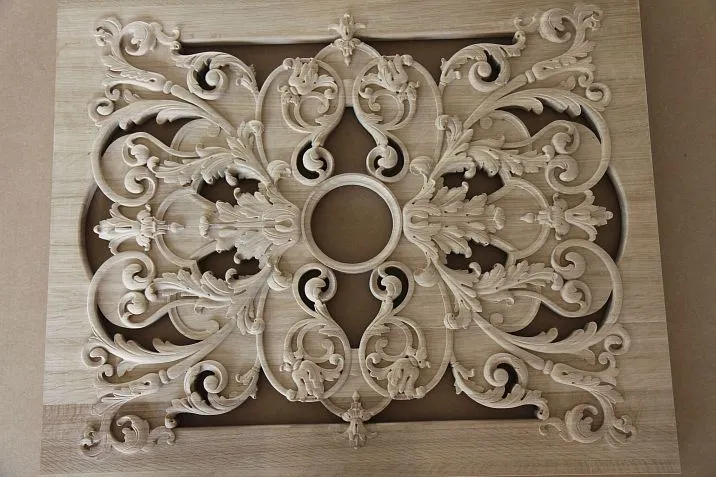
The world of natural wood is undergoing a true revolution, and beech wood products are at the forefront of these changes. This wood species, which has served humanity faithfully for centuries, now opens new application horizons thanks to innovative processing technologies and modern design approaches. Beech wood becomes the material of the future, combining eco-friendliness, functionality, and unique natural aesthetics.


Revolution in Understanding Beech Wood
What drives modern designers and manufacturers to view beech wood anew? The answer lies in the unique combination of the material's traditional qualities with the possibilities of modern processing. The density of beech wood, 680-720 kg/m³, provides an ideal foundation for creating high-tech products capable of withstanding extreme loads while maintaining elegant forms.




Microstructural Features: A View from Within
Modern microscopy reveals amazing details of beech wood's structure, explaining its exceptional properties. Wood cells form a dense, ordered structure with minimal voids, ensuring high mechanical strength at relatively low weight.
The rays of beech wood are oriented strictly radially and constitute up to 25% of the total wood volume. This feature creates the characteristic "figure" on radial cuts and ensures even stress distribution in finished products.
The pores of beech wood have a diameter of only 0.1-0.2 millimeters and are evenly distributed throughout the volume. This structure ensures excellent impregnation with protective compositions and long-term stability of coatings over decades of use.
Our factory also produces:


Chemical composition: nature's laboratory of perfection
Cellulose constitutes 40-45% of beech wood mass, providing the main fiber strength. Lignin (25-30%) creates a rigid matrix that binds fibers into a single structure. Hemicelluloses (20-25%) provide elasticity and the ability to deform without breaking.
Extractives, constituting 3-5% of mass, include tannins, resins, and coloring substances. It is precisely these that determine the wood's color, its resistance to biological damage, and its distinctive fresh wood aroma.
The ash content of beech wood does not exceed 0.5%, indicating minimal mineral content. This ensures easy tool processing and absence of abrasive effect on cutting edges.
Get Consultation
Innovative technologies for processing beech wood
Modern production of beech wood products utilizes advanced technologies, enabling the full potential of this remarkable material to be realized.
Cryogenic treatment: the frosty path to perfection
Treatment of beech wood with liquid nitrogen at -196°C radically alters its structure. Rapid freezing destroys cell membranes, making the wood more permeable to impregnating compositions.
After thawing, the wood acquires increased hardness and dimensional stability. The swelling coefficient decreases by 40-50%, which is especially important for products used under varying humidity conditions.
Microcracks formed during freezing create additional channels for protective composition penetration. Penetration depth increases 2-3 times, ensuring uniform protection throughout the product volume.
Plasma surface modification
Treatment of beech wood surface with low-temperature plasma alters its physicochemical properties to a depth of 10-20 micrometers. Plasma particles create active centers on the surface, improving coating adhesion.
Hydrophobization of the surface is achieved by introducing fluorine-containing compounds into the plasma discharge. The treated surface does not wet with water, preventing swelling and warping of products.
Antibacterial properties are acquired by introducing silver or copper ions into the plasma stream. The modified surface suppresses microbial growth, which is especially important for kitchenware and children's toys.
Ultrasonic treatment: vibrations of perfection
Application of ultrasound at 20-40 kHz to beech wood during drying accelerates moisture removal and reduces internal stresses. Ultrasonic vibrations create microchannels for moisture exit.
Drying time is reduced by 30-40% while maintaining quality. Moisture uniformity across the cross-section of the blank increases, reducing the risk of cracking and warping in finished products. products made of beech wood.
Ultrasonic welding allows joining beech wood parts without glue. High-frequency vibrations heat the contact zone to the lignin softening temperature, creating a strong monolithic bond.
Composite materials based on beech wood
Advancements in materials science open new possibilities for creating composites that combine the advantages of natural wood with enhanced properties.
Reinforced composites: strength and lightness
Introducing carbon fibers into the structure of beech products increases flexural strength by 3-5 times while increasing mass by only 10-15%. Fibers align along maximum stress directions, creating an optimal load-bearing scheme.
Glass fibers provide more economical reinforcement with less increase in strength. Such composites are ideal for creating structural elements of medium load.
Basalt fibers combine high strength with fire resistance. Composites based on them can be used under elevated temperatures without loss of mechanical properties.
Filled composites: functionality in every particle
Introducing nanoclay into the structure of beech wood creates barrier layers that prevent moisture penetration. Water absorption decreases by 60-70%, enabling use of products in high-humidity conditions.
Titanium oxide nanoparticles provide photocatalytic activity on the surface. Under light, organic contaminants decompose, creating a self-cleaning effect.
Magnetic nanoparticles allow creation of products with unique properties. Such composites can be used in medical equipment, positioning systems, and decorative elements with variable properties.
Digital technologies in design and production
The digital revolution has fundamentally changed approaches to designing and manufacturing beech wood products.
Parametric modeling: mathematics of beauty
Modern CAD systems allow creating parametric models of products, where changing one parameter automatically recalculates the entire structure. This speeds up the design process and enables creating families of products with different sizes.
Generative design uses evolutionary algorithms to create optimal forms. The computer tests thousands of variations, finding a solution with minimal weight while maintaining specified strength.
Topological optimization removes unnecessary material from a structure, leaving only required load-bearing elements. The result is products resembling natural structures — bones, shells, plant stems.
Additive technologies: 3D printing with wood
Modern 3D printers can print composites containing up to 40% beech sawdust. After printing, the products can be processed like natural wood — sanded, painted, or varnished.
Printing with support structures made of soluble material allows creating complex internal cavities and intricate designs inaccessible through traditional processing.
Multi-material printing combines beech composites with other materials in a single product. It is possible to create objects with variable properties — soft and hard areas, transparent and opaque zones.
Artificial intelligence in production
AI systems analyze wood quality in real time, detecting defects invisible to the human eye. Computer vision determines the optimal cutting layout to minimize waste.
Predictive analytics forecasts behavior products made of beech wood under various operating conditions. Machine learning analyzes long-term data on material behavior and predicts the lifespan of specific products.
Automatic production planning optimizes equipment loading and minimizes order manufacturing time. AI considers hundreds of parameters — from material availability to operator qualifications.
Ecological innovations in production
Ecological responsibility has become a key factor in the development of beech wood products industry.
Closed production cycle
Zero-waste technologies convert any waste into useful products. Sawdust is pressed into fuel briquettes, shavings are used to produce particleboard, bark is utilized in landscape design.
Recycling finished products allows reusing high-quality wood. Old furniture is disassembled into parts that, after processing, can be used in new products.
Energy autonomy is achieved by burning wood waste in high-efficiency boilers. Modern installations provide up to 90% efficiency and minimal emissions into the atmosphere.
Biotechnology in wood processing
Enzymatic processing replaces chemical processes with biological ones. Special enzymes break down lignin, making wood more pliable for forming complex products.
Biological protection uses beneficial microorganisms to combat wood pests. Probiotic compositions create a protective microbial flora on the surface, preventing pathogen development.
Biopolymer coatings are produced by microorganisms from renewable raw materials. Such coatings are fully biodegradable and do not harm the environment.
Intelligent products: furniture of the future
Integrating electronics into beech wood products creates a new class of smart furniture.
Sensory technologies
Built-in sensors monitor the condition of products — wood moisture, temperature, mechanical loads. The system alerts when maintenance is needed or improper use occurs.
Presence sensors activate lighting when a person approaches. Tables with illuminated work zones and cabinets with automatic lighting upon door opening are becoming standard.
Weight sensors on shelves track load and warn of exceeding permissible load. The system can automatically redistribute items for optimal loading.
Adaptive constructions
Furniture with adjustable geometry adapts to user needs. Tables with adjustable height, chairs with adaptive ergonomics, beds with variable firmness.
Pneumatic actuators provide smooth transformation without noise or vibrations. The system can remember user preferences and automatically adjust upon their approach.
Modular systems allow easy modification of furniture configuration. Standardized connections ensure compatibility between components from different manufacturers.
Wireless integration
Built-in wireless charging turns beech wood products into charging stations for mobile devices. Tables, sideboards, shelves become part of the home’s digital ecosystem.
Wi-Fi boosters integrated into furniture expand the wireless network coverage. Solid wooden construction ensures stable antenna mounting and shielding from interference.
Smart locks with biometric identification protect valuable items in closets and safes. Fingerprint, facial recognition, and voice control provide convenient and secure access.
Medical and therapeutic applications
Research reveals new applications for beech wood products in medicine and therapy.
Aromatherapeutic properties
Natural essential oils from beech wood have a calming effect on the nervous system. Unprocessed beech furniture creates a therapeutic atmosphere in bedrooms and offices.
Controlled release of aromatic substances is achieved through special surface treatment. Microcapsules with essential oils are embedded into the coating structure and gradually release active ingredients.
Personalized aromatherapy allows each user to select suitable scents. The system can automatically activate the required capsules upon recognizing a specific individual.
Antibacterial surfaces
Impregnation with silver nanoparticles creates surfaces with long-lasting antibacterial properties. Effectiveness against major pathogens is 99.9%, while maintaining safety for humans.
Photocatalytic coatings break down organic pollutants and destroy bacteria under light exposure. Such surfaces are especially effective in medical facilities and children’s rooms.
Self-disinfecting surfaces contain slowly releasing antiseptics. The system provides continuous infection protection without requiring regular treatment.
Global trends and industry future
The beech wood products industry develops under the influence of global trends in sustainable development and digitalization.
Circular economy
Circular economy principles fundamentally change approaches to producing and consuming beech products. Design for disassembly ensures easy disposal at the end of the product’s life cycle.
Modular construction allows replacing individual components without discarding the entire product. Standardized connections ensure compatibility between components from different manufacturers.
Service-based business models offer furniture rental instead of purchase. Manufacturers retain ownership of products and provide maintenance, repair, and upgrades.
Mass customization
Mass customization technologies enable production of unique items at serial pricing. Clients participate in the design process, selecting dimensions, shape, color, and functional options.
Cloud-based configuration platforms allow creating products online with instant visualization of results. Virtual and augmented reality help evaluate the product in real interior settings.
Local production reduces transportation costs and speeds up delivery. A network of small digital factories can serve regional markets with minimal logistics expenses.
Integration with smart home
beech wood products Becomes part of the smart home ecosystem. Sensors in furniture transmit data to the central control system for optimizing microclimate and lighting.
Voice control allows adjusting furniture settings without using hands. A table can raise its working surface, and a chair can adjust back support via voice command.
Predictive analytics analyzes user behavior and automatically adjusts furniture to their habits. The system studies daily routines and prepares the workspace in advance for the start of work.
In an era of rapid technological change, beech wood products remain symbols of stability, quality, and natural beauty. This unique material successfully adapts to modern demands while preserving its authenticity and eco-friendliness.
The future belongs to products that combine traditional values with innovative capabilities. Beech wood provides an ideal platform for creating such solutions, merging natural wisdom with human creativity.
The development of technology does not negate the importance of craftsmanship and understanding of materials. On the contrary, modern capabilities require even deeper knowledge and a creative approach to create products capable of surprising and serving generations.
By choosing birch products, we choose a sustainable future where technology serves humanity and nature, rather than opposing them. Each product becomes a bridge between the past and the future, connecting traditional craftsmanship with the innovations of tomorrow.
STAVROS stands at the forefront of this technological revolution, combining a rich heritage of working with natural wood with advanced manufacturing technologies. beech wood products STAVROS embodies the philosophy of harmony between nature and technology, creating products that not only meet the highest quality standards but also set benchmarks for the entire industry. Choosing STAVROS means becoming part of a movement toward mindful consumption and responsible stewardship of natural resources, while enjoying products that will delight with beauty and functionality for many years.


