












































































Article Contents:
- Logic of vertical space zoning
- Materials: polyurethane and solid wood in details
- High-density polyurethane
- Solid oak and beech
- Designing a comprehensive decorative system
- Selecting element height and profile
- Color Strategies
- Wall layout
- Installation and technical nuances
- Surface Preparation
- Fastening of Polyurethane Elements
- Installing wooden skirting boards
- Stylistic interpretations
- Strict neoclassicism
- Scandinavian minimalism with classic accents
- Modern classic with contrasts
- Luxury classic
- Functional advantages of the combination
- Budget Optimization
- Simplified maintenance
- Adaptation to technology
- Regional and climatic aspects
- Humid climate
- Continental climate with fluctuations
- Cold climate
- Ecological Aspects
- Polyurethane and safety
- Wood and eco-friendliness
- Frequently Asked Questions
- STAVROS: expert in combined solutions

Space gains character when form meets material, and tradition meets technology.Polyurethane Crown Moldingon the ceiling create a classic architectural frame, andsolid wood skirting boardsform a reliable wall base. This combination of two materials creates a new language of modern classicism—a style where historical aesthetics are realized through accessible means, where beauty serves life, not a museum display.
Modern people live in spaces with standard layouts and ceiling heights, but this does not mean abandoning architectural expressiveness.Moldings made of polyurethaneallow creating complex decorative compositions without significant financial costs or construction complexities.Oak skirtingor beech adds natural warmth and prestige to areas where tactile contact is important. This combination optimizes the budget while maintaining a high level of perceived quality.




The Logic of Vertical Zoning of Space
The interior is read vertically — the gaze moves from floor to ceiling, sequentially perceiving different zones. Professional design takes this perception trajectory into account, creating a logical hierarchy of materials and forms. The lower zone is the realm of wood, the middle zone is a neutral background, and the upper zone is the domain of polyurethane decor. This distribution is not accidental; it corresponds to our experience of gravity and materiality.
Baseboards made of solid oak80-150 millimeters high create a visual and physical boundary between the wall and the floor. This boundary is important not only functionally — protecting the lower part of the wall from mechanical damage and dirt — but also compositionally. A massive wooden baseboard visually 'grounds' the space, creating a sense of solidity and stability. A natural material in the zone close to the ground corresponds to the natural order of things.
The middle zone of the wall — from the top edge of the baseboard to the beginning of the ceiling cornice — usually remains relatively neutral. Painting, wallpaper, and panels create a background on which accents work.decorative wall finishingmay include molding panels, vertical divisions, framed compositions, but the main surface area serves as a calm background for furniture and art.
The upper zone — the transition from wall to ceiling — is the area of triumphpolyurethane cornices. Here, the lightness of the material becomes a critical advantage. A cornice 120-180 millimeters wide made of polyurethane weighs 400-700 grams per linear meter, while a wooden counterpart would weigh 2-4 kilograms. This difference determines the ease of installation, reliability of fastening, and absence of risk of collapse. White stucco under the ceiling visually lightens the upper zone, creating a sense of airiness.
The ceiling may include additional decorative elements — central rosettes, coffered systems made of moldings, corner elements. Here, polyurethane reveals its second important advantage — the precision of reproducing complex ornaments. Classical palmettes, meanders, ionics, ovolos — all these traditional motifs are reproduced with mathematical identity, unattainable with manual work.




Materials: Polyurethane and Solid Wood in Detail
Our factory also produces:


High-Density Polyurethane
Modern polyurethane for architectural decor is not the foamed material associated with packaging or insulation. It is a high-density composite with indicators of 200-250 kilograms per cubic meter, possessing its own strength and shape stability.Polyurethane Decoris produced by casting into precision molds, ensuring perfect repeatability of elements and clarity of the smallest details of the ornament.
The moisture resistance of polyurethane allows it to be used in any rooms, including kitchens, bathrooms, and swimming pools. A water absorption coefficient of less than one percent means the material does not swell, deform, or become covered with mold even with constant contact with moisture.Polyurethane wall claddingin a bathroom or kitchen is as durable as in a dry living room.
Temperature stability is impressive — polyurethane elements retain their geometry and properties in a range from minus 40 to plus 80 degrees Celsius. This makes them suitable for country houses with seasonal living, for loggias and verandas, for rooms with fireplaces and heated floors. The material does not crack in the cold, does not soften in the heat, and remains stable under any operating conditions.
The paintability of polyurethane is universal — it accepts any interior paints on water, acrylic, latex, or alkyd bases. The white primer layer covering the elements creates an ideal base for the final finish.cornices and moldingscan be painted to match the color of the ceiling or walls, creating a monochrome surface, or in contrast, emphasizing the architectural articulation.
Get Consultation
Solid oak and beech
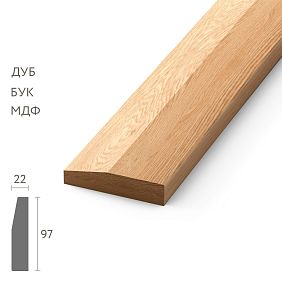
Oak skirtingis made from solid hardwood that has undergone chamber drying to a moisture content of 8-12 percent. This technology ensures geometric stability — the baseboard does not deform, crack, or warp during use. The density of oak wood, 700-800 kilograms per cubic meter, makes the product exceptionally strong and wear-resistant.
The texture of oak is its main aesthetic advantage. The expressive pattern of annual rings, medullary rays creating a characteristic ripple on the radial cut, natural color variation from light sandy to dark chocolate shades — all this makes each baseboard unique. Even in a batch from the same production series, you won't find two absolutely identical elements.
Beech skirtingare distinguished by a more uniform structure and a light pinkish hue. Beech is easier to process than oak, allowing for more complex profiles and carved elements. The density of beech, 650-700 kilograms per cubic meter, provides sufficient strength at a more affordable price compared to oak.
The processing of wooden baseboards includes sanding, priming, and final coating.White Wooden Baseboardis created by painting while preserving the visible texture — the paint emphasizes the wood's relief without completely hiding it. Natural finishing with oil or varnish preserves the natural color and emphasizes the texture. Staining with wood stains creates darker, saturated shades.
Designing a Comprehensive Decorative System
Choosing the Height and Profile of Elements
heightwooden baseboardis determined by the ceiling height and the style of the interior. For standard ceilings of 2.6-2.8 meters, baseboards 80-120 millimeters high are optimal. Lower baseboards get lost in the space, while higher ones visually 'eat up' the wall height. For high ceilings of 3.0-3.5 meters, baseboards 120-180 millimeters high are suitable, creating a proportionate foundation.
Widthof the ceiling corniceis calculated using the formula: approximately 1/20 of the wall height. For ceilings of 2.7 meters, this is 130-140 millimeters. Narrower cornices look insufficient, while wider ones overwhelm the space. The cornice profile — from simple coves to complex multi-step compositions — is determined by the style: minimalist interiors require laconic forms, classical ones require developed ornamentation.
The ratio of baseboard height to cornice width creates visual balance. The classic proportion is a cornice approximately 1.2-1.5 times wider than the baseboard. This ratio creates a harmonious framing of the wall from top and bottom. Equal sizes are perceived as too symmetrical and static, while too great a difference creates imbalance.
The profile of a wooden baseboard can be classical — with a rounded top and a chamfer, modern — with right angles and minimalist lines, figured — with carved elements and complex milling.Wooden Straight Skirting Boardis suitable for modern interiors, the classical profile — for traditional ones, and the figured profile — for luxurious styles.
Color strategies
A monochrome white palette is a classic solution for modern neoclassicism. WhitePolyurethane cornicesand white paintedWooden Skirting Boardscreate a unified architectural framework for the room. A white ceiling, white decor, and light walls form an airy, visually expanded space. The textural difference of materials is preserved — polyurethane is perfectly smooth, wood retains its visible structure even under paint.
A contrasting scheme juxtaposes a white top and natural wood at the bottom. Snow-white ceiling molding and a dark oak baseboard create an expressive contrast of warm and cold, natural and man-made.Wall finishing with moldingswhite elements and wooden elements form a classic hierarchy.
Tonal harmony involves painting all elements in similar shades. A cream cornice, beige walls, and light walnut baseboard create a soft, warm palette without sharp contrasts. This strategy works in cozy, homely interiors where an atmosphere of calm and comfort is important.
An accent scheme uses a bright color for the baseboard or cornice as a decorative element. A dark blue, emerald, or black baseboard becomes a graphic line emphasizing the perimeter of the room. A gilded or silvered cornice creates a luxurious accent under the ceiling. This strategy requires a subtle sense of proportion — an excess of accents destroys the composition.
Composition on walls
Moldings made of polyurethaneon walls create framed compositions that divide the plane into zones. Rectangular panels with a height from the baseboard to 90-120 centimeters form a classic panel zone. Contrasting wallpapers, paint of a different tone, or decorative panels are placed inside the frames.Decorative wall panelscan be wooden, continuing the material of the baseboard up the wall.
Vertical molding-pilasters create a rhythmic structure for extended walls. Installed at intervals of 120-180 centimeters, they divide the wall into segments, each becoming a separate composition. Pilasters are especially effective in rooms with high ceilings, where vertical elements emphasize the scale.
Horizontal moldings at a level of 90-100 centimeters from the floor create a visual division of the wall into a panel zone and the main field. This technique from classical architecture works in modern interiors, organizing space and creating proportionality.Internal wall finishingbelow the molding can be darker and more saturated, above — light and neutral.
Installation and technical nuances
Surface preparation
Quality installation begins with proper surface preparation. Walls and ceilings must be level, dry, and cleaned of dust and dirt. Irregularities of more than 3-5 millimeters per meter of length create problems during installation — elements do not fit tightly, gaps form. Leveling surfaces with plaster or putty is a mandatory step before installing decor.
Priming surfaces improves adhesive adhesion. Deep-penetration acrylic primer is applied a day before installation, creating an optimal base for fastening. Priming porous surfaces — gypsum plasters, aerated concrete walls, which actively absorb moisture from the adhesive — is especially important.
Marking is a critical stage that determines the accuracy of the result.Ceiling corniceis marked around the perimeter of the room using a laser level or water level. The horizontality of the line is checked on all walls — even a deviation of 5-10 millimeters is noticeable to the eye. The baseboard also requires precise marking, especially if the floor has level differences.
Mounting polyurethane elements
Polyurethane Crown Moldingare mounted on special polyurethane adhesive or acrylic mounting adhesive like "liquid nails." The adhesive is applied to the back side of the element — on both planes adjacent to the wall and ceiling — in an even layer without gaps. Excess adhesive squeezed out when pressing the element must be immediately removed with a damp cloth.
The element is pressed against the surface and held for 1-2 minutes for initial fixation. For long, heavy cornices, additional fastening with finishing nails or screws is used, which are then puttied. After the adhesive has completely dried (24 hours), the fastening provides reliable fixation for decades.
Joining elements at corners is done at a 45-degree angle using a miter box or miter saw. Cutting accuracy is critical — even a deviation of 1-2 degrees creates a visible gap. Joints are coated with adhesive and tightly pressed. After drying, small gaps are filled with acrylic putty and sanded with fine sandpaper.
Painting is done after complete installation and puttying of joints. Acrylic or latex paint is applied with a roller or brush in 2-3 coats with intermediate drying. Quality painting makes joints invisible, creating a single monolithic decorative surface.
Installation of wooden baseboards
Solid wood skirting boardsare attached to the wall, not the floor, which allows for compensation of uneven flooring. Fastening is done with adhesive, finishing nails, or screws depending on the wall material. On concrete and brick walls, dowels and screws are used with a spacing of 40-50 centimeters. On wooden and drywall walls — finishing nails or screws directly.
Corner joints are made at 45 degrees for external and internal corners. A miter saw with fine teeth ensures a clean cut without chips. Joints are glued with wood glue and tightly pressed. On straight sections, the baseboard is joined lengthwise with a slight angle cut to create an inconspicuous seam.
Filling gaps between the baseboard and the wall or floor is done with acrylic sealant in the color of the baseboard. The sealant is applied carefully, excess is removed with a damp cloth before drying. This stage is especially important for white painted baseboards, where any gaps are noticeable.
Final finishing includes filling fastener holes with wood putty, sanding, painting, or varnishing. If the baseboard comes with a factory finish, local touch-ups of fastening points and joints are sufficient. The final protective coating is applied after installation, creating a uniform surface.
Stylistic interpretations
Strict neoclassicism
A neoclassical interior requires restraint and proportionality.cornices and moldingsare chosen with laconic profiles without excessive ornamentation. Classical motifs are present but interpreted delicately — simple egg-and-dart patterns, restrained meanders, geometric carvings.Wooden Skirting Boardswith a classic profile complement the composition.
The color palette is limited to neutral tones — white, cream, gray, beige.White Wooden Baseboardor painted the same color as the walls, blends into the overall composition without creating contrast. White cornices on a white or light gray ceiling create delicate architectural articulation.
Furniture in neoclassicism retains classical silhouettes but is simplified — without excessive carving or gilding. Symmetry in arrangement, proportionality of elements, and high-quality natural materials are the main characteristics.Wall cladding in an apartmentmay include framed panels made of moldings, but without overloading.
Scandinavian minimalism with classical accents
Scandinavian style values simplicity, light, and natural materials. White walls and ceilings create a light foundation. Simple whiteCeiling corniceof a minimalist profile adds architectural clarity without decorativeness.Beech skirtingin light shades or bleached oak creates a warm natural accent.
Floors made of light wood or wood-look laminate harmonize with wooden baseboards. Furniture with simple forms made of light wood, textiles in natural shades, and a minimum of decorative elements are characteristic features. The cornice and baseboard become the only architectural accents in the neutral space.
Functionality prevails over decorativeness. Every element has a practical purpose. The cornice can hide an LED strip for concealed lighting. The baseboard has a cable channel for wires. Wall moldings are absent or used minimally — only for protecting corners or creating an accent wall.
Modern classic with contrasts
This style plays on the contrast of materials, colors, and textures. DarkOak skirtingin a rich chocolate shade contrasts with white walls and a snow-white cornice. This contrast emphasizes the boundaries of the space, creating graphic quality and expressiveness.
Decorative wall finishing with moldingsin white forms framed compositions on an accent wall. Inside the frames, dark wallpaper with a classic pattern or deep paint color are placed. These panels become visual centers that attract attention.
Furniture can be either classical — with curved legs and carving — or modern — with clean lines and minimalist forms. The main thing is the quality of materials and craftsmanship. The combination of classical decor and modern furniture creates interesting temporal tension.
Luxurious classic
For interiors not constrained by budget, the combination of polyurethane and wood allows for the creation of truly luxurious spaces. Widecornices with rich ornamentationwith a width of 200-300 millimeters, central rosettes with a diameter of 80-120 centimeters, and multi-level molding compositions on the walls create classical luxury.
High legs visually lighten the furniture, creating a sense of airiness. The sofa seems to float above the floor, and the space beneath it is perceived as an extension of the room. This is especially valuable in small spaces, where every square meter counts.Wooden Skirting Boards150-180 millimeters with carved elements, patination, and gilding complement the upper decor.Wooden panelswith a height of 100-120 centimeters cover the lower third of the walls, creating a respectable foundation.
Gilding or patination of polyurethane decor adds nobility. Gold or silver accents in the recesses of the ornament emphasize the relief and create a play of light. This technique is especially effective when using concealed lighting behind cornices.
Functional advantages of the combination
Budget optimization
Using expensive solid wood only in the lower zone — in baseboards and panels — and not around the entire perimeter of the room significantly reduces costs.Oak skirtingcosts 800-2500 rubles per linear meter depending on the profile and height. A wooden cornice of similar quality would cost 2000-5000 rubles per meter, but apolyurethane counterpartcosts 300-1500 rubles.
For a standard 70-square-meter apartment with a wall perimeter of about 50 meters, the savings amount to 85-175 thousand rubles on cornices alone. At the same time, the visual quality remains high — from a distance, it is impossible to distinguish high-quality polyurethane from wood or plaster. These saved funds can be directed towards higher-quality furniture, appliances, or floor finishing.
Installation work is also cheaper. Installing a lightweight polyurethane cornice takes less time, does not require special fasteners, or structural reinforcement. Craftsmen charge 200-400 rubles per linear meter for installing polyurethane, and 500-1000 rubles for wooden decor. For the same apartment, the savings on labor would amount to 15-30 thousand rubles.
Simplified Maintenance
polyurethane decorCeiling molding requires no maintenance — just occasional dusting. It withstands wet cleaning, doesn't deform from humidity or temperature fluctuations, and needs no coating renewal. The painted surface retains its appearance for 10-15 years without upkeep.
Wooden Skirting BoardsBaseboards require more attention but are within easy reach. Periodic renewal of protective coating, scratch removal, and touch-ups of worn areas — these tasks are easy to do yourself. Contact with wood within reach creates tactile comfort, and its maintenance doesn't require scaffolding.
Replacing damaged elements is also simplified. If a section of baseboard is damaged — scratched, dented, broken off — it can be replaced locally by cutting out and installing a new fragment. Such manipulations with ceiling decor are complicated by height, but polyurethane is so durable that damage is practically excluded.
Adaptation to Technology
Modern interiors are saturated with technologies that need to be integrated unobtrusively.Ceiling corniceCeiling cornice is often used for concealed installation of LED strips. The cornice is installed with a 5-10 centimeter gap from the ceiling, behind which an LED strip is placed, creating a floating ceiling effect. Light reflects off the ceiling, softly diffusing throughout the room.
Wooden baseboardBaseboards with cable channels solve the wire problem. TV cables, internet, and wires to outlets are hidden inside the baseboard, running along the perimeter of the room unnoticed. This is especially relevant during renovations without wall chasing, when new lines need to be installed.
Built-in lighting in baseboards creates a decorative effect and functional night lighting. An LED strip in a recess of the baseboard or under its overhang softly illuminates the floor, providing comfortable navigation in the dark. Warm light through a wooden baseboard creates a cozy atmosphere.
Regional and Climatic Aspects
Humid climate
In regions with high humidity — coastal areas, tropical climates — polyurethane reveals its advantages to the maximum.Polyurethane Crown MoldingPolyurethane moldings do not swell, do not develop mold, and do not deform even at 80-90 percent humidity. This makes them ideal for bathrooms, kitchens, pools, and rooms without central heating.
Wooden Skirting BoardsWooden moldings require additional protection — quality varnish or oil coating, sealing of joints, regular condition monitoring. Oak, with its dense structure and natural moisture resistance, is preferable to beech. Nevertheless, even protected wood requires controlling air humidity within 40-70 percent.
Continental Climate with Fluctuations
In regions with sharp seasonal temperature and humidity fluctuations — the continental climate of central Russia — material stability is important. Polyurethane is absolutely stable and does not react to changing conditions.Polyurethane DecorPolyurethane performs equally well in winter with heating on and in summer heat.
Wood reacts to humidity changes by expanding and contracting across the grain. Quality kiln drying minimizes these changes but does not eliminate them completely. It is important to leave expansion gaps at joints, use elastic sealants, and maintain stable indoor air humidity using humidifiers in winter.
Cold Climate
In northern regions with harsh winters, the temperature resistance of materials in unheated spaces — dachas, verandas, loggias — is important. Polyurethane retains its properties down to minus 40 degrees Celsius, does not crack, and does not deform. This allows decorating seasonal living spaces without concerns about the decor's preservation.
Wood also withstands low temperatures, but can crack when rapidly heated after freezing. It is important to warm the room gradually, avoiding thermal shocks.Solid wood skirting boardsWooden moldings in country houses require special attention during winterization and de-winterization in spring.
Ecological aspects
Polyurethane and Safety
Modern polyurethane for architectural decor is made from components safe for health. After complete polymerization, the material does not emit harmful substances, has no odor, and does not cause allergic reactions. Quality manufacturers provide certificates of compliance with Russian and European safety standards.
Polyurethane DecorPolyurethane from trusted brands has hygiene certificates confirming its suitability for use in residential spaces, children's institutions, and medical facilities. It is important to choose products from well-known manufacturers, not dubious cheap analogs of unknown origin.
Disposal of polyurethane does not create environmental problems. The material can be incinerated in specialized facilities with emission purification or used in recycling for producing composite materials. Unlike some plastics, polyurethane does not emit dioxins when burned.
Wood and Eco-Friendliness
Natural wood is a renewable resource with responsible forestry management.Oak and beech baseboardsfrom manufacturers working with FSC-certified wood suppliers support sustainable forestry. The FSC certificate guarantees forest restoration and biodiversity preservation.
Wood in interiors creates a healthy microclimate. Wood regulates air humidity, absorbing excess during high humidity and releasing it during dryness. This is a natural buffer system that improves comfort. Wood does not generate static electricity, does not attract dust, and has antibacterial properties.
The durability of high-quality wooden products is an important environmental factor.Skirting made of solid woodserves for decades without requiring replacement. This reduces resource consumption and minimizes waste. The possibility of restoration extends its life virtually indefinitely.
Frequently asked questions
What is the main advantage of combining polyurethane and wood?
Optimal distribution of materials according to their advantages.Polyurethaneworks where lightness and moisture resistance are important — on the ceiling and upper wall zones.Woodis used in tactile contact zones — baseboards, panels. This combination saves budget without compromising perceived quality.
How to choose the width of the cornice and the height of the baseboard?
Cornice width — approximately 1/20 of the wall height. For ceilings of 2.7 meters, this is 130-140 millimeters. Baseboard height — 80-120 millimeters for standard rooms, 120-180 millimeters for high ceilings. The cornice is usually 1.2-1.5 times wider than the baseboard for visual balance.
Can polyurethane and wood be painted in different colors?
Yes, contrasting schemes create expressiveness. A white cornice and a dark oak baseboard — a classic combination. But monochrome painting in a single color also works, creating integrity while preserving textural differences. The choice depends on the interior concept.
How difficult is installation for a non-professional?
Installing polyurethane decor is accessible for DIY with basic skills. The main thing is precise marking and careful corner cutting. Installing wooden baseboards is also feasible but requires special tools — a miter saw, a screwdriver. Without experience, it is better to turn to professionals.
How long does such a decorative system last?
With quality materials and proper installation — for decades. Polyurethane decor is practically eternal, requiring only repainting every 10-15 years.Wooden Skirting Boardsmade of oak last 30-50 years or more with regular care.
Is such a solution suitable for a bathroom?
Polyurethane decor is ideal for wet rooms — it is not afraid of water, steam, or temperature fluctuations. A wooden baseboard in a bathroom requires additional protection — high-quality varnish coating, sealing of joints. An alternative is to use a polyurethane baseboard painted to look like wood.
How to care for a combined system?
Polyurethane decor — wipe dust with a damp cloth, do not use abrasives. Wooden baseboard — regular dry cleaning, periodic renewal of the protective coating every 3-5 years, local touch-ups of wear and scratches.
What is the budget for materials for a 60 sq.m apartment?
Approximately: cornices around the perimeter (45 l.m.) — 15-25 thousand rubles, baseboards (45 l.m.) — 35-65 thousand rubles depending on wood species and profile, wall molding (optional) — 10-30 thousand. Total materials 60-120 thousand rubles. Installation work is approximately equal to the cost of materials.
STAVROS: expert in combined solutions
STAVROS company specializes in comprehensive solutions for classical and modern interior decoration. We offer a full range of elements —Cornices and moldings made of polyurethanefor ceiling and wall decor,Baseboards made of solid oak and beechfor creating a reliable and beautiful wall base.
Over 15 years of experience in architectural decor supply, hundreds of completed projects, thousands of satisfied clients — our reputation speaks for itself. Professional consultants will help select elements considering interior style, room dimensions, and project budget. We don't just sell materials — we help create harmonious spaces.
A wide range of polyurethane decor includes hundreds of cornice models — from minimalist 30-millimeter-wide coves to luxurious ornamented profiles 300 millimeters wide. Rosettes with diameters from 20 to 150 centimeters for any scale. Moldings of all profiles and sizes. Flexible elements for curved surfaces.
Wooden Skirting Boardsare presented in various profiles — from classical to modern minimalist. Height from 60 to 180 millimeters. Oak in various shades — from light natural to dark stained. Beech in light tones. Possibility to order baseboards in non-standard sizes and profiles.
Material quality is confirmed by certificates. Polyurethane decor from leading European manufacturers with guaranteed density, dimensional accuracy, and environmental safety. Wooden products made from selected kiln-dried wood, checked for moisture content and absence of defects.
Logistics and delivery are organized throughout Russia. Our own warehouse in Moscow ensures availability of popular items. Partner warehouses in regions reduce delivery times. Professional packaging guarantees safety during transportation. Assistance in calculating material quantities prevents shortages or excess.
Consultation support at all stages — from selection to installation. Our specialists will answer questions, help understand technical characteristics, and suggest optimal solutions. Recommendations for trusted installation crews for those who do not want to install the decor themselves.
Flexible pricing policy takes order volumes into account. Special conditions are provided for wholesale buyers — construction companies, designers, foremen. Retail customers receive honest prices without markups. Regular promotions and special offers make quality decor even more accessible.
STAVROS is the path to creating an interior where classical aesthetics are embodied through modern means, where every element is in its place, wherePolyurethane Crown Moldingandsolid wood skirting boardscreate a harmonious living space.


