Article Contents:
- Philosophy of Architectural Perfection
- Historical evolution: from utilitarianism to art
- Constructive anatomy of modern sundrik
- Main structural elements
- Mounting and Installation Systems
- Material palette: from classic to innovations
- The nobility of natural wood
- Revolutionary possibilities of polyurethane
- MDF: balance of quality and accessibility
- Stylistic directions: the art of choice
- Classicism: mathematics of beauty
- Baroque: theatricality of forms
- Modern style: natural organic
- Functional Purpose in Modern Architecture
- Protective function
- Compositional role
- Status function
- Design and technical solutions
- Aerodynamic calculations
- Mounting Technologies: Professional Solutions
- Hydraulic solutions
- Manufacturing and processing technologies
- CNC machining
- Casting and molding
- Handcrafted artistic finishing
- Installation and integration into architectural environment
- Foundation Preparation
- Mounting systems
- Sealing and final finishing
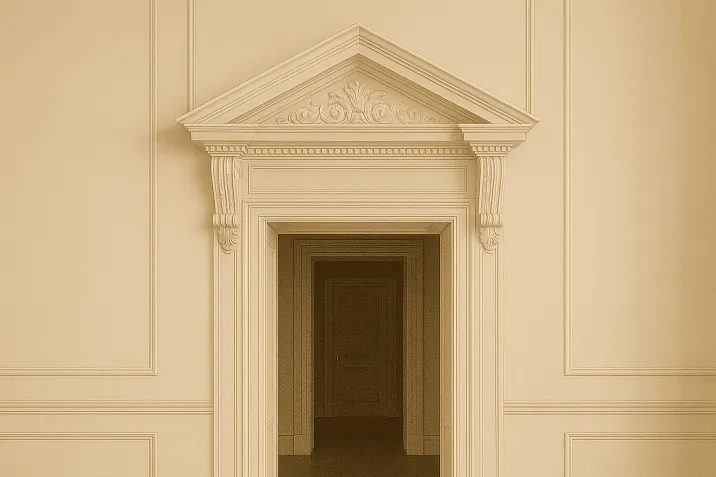
Imagine the moment when a simple door transforms into a grand portal, worthy of palace halls. Such magical transformation is capable of Sundial above the door — an architectural element that for centuries has served as a symbol of status, taste, and appreciation of beauty. Isn't it remarkable how a single small horizontal protrusion can radically change the perception of the entire facade?
Philosophy of architectural perfection
What makes us stop before some buildings and pass by others without noticing? What is the secret of that magnetic force possessed by truly beautiful facades? The answer lies in details, and Sundial above the door represents one of the most important such details.
Architectural psychology asserts that horizontal lines create a sense of stability and security. When we see a sundrik crowning an entrance group, our subconscious instantly reads signals of reliability and respectability. This is not merely a decorative element — it is an architectural statement of the owner’s values and priorities.
Modern urban environment often lacks such subtle psychological accents. Concrete boxes and glass facades, despite their functional advantages, are unable to create the emotional connection with people that classical architectural elements provide. Cornice in architecture It brings us back to the roots of humanistic understanding of space.
The economic component also plays a significant role. Buildings with thoughtful architectural decoration have higher market value, sell and lease faster. Investments in quality entrance group design pay off multiple times through increased overall attractiveness of the real estate property.




Historical Evolution: From Utility to Art
Sandrik's journey through centuries is an engaging story of transformation from a utilitarian element into a work of architectural art. The earliest prototypes of modern sandriks appeared in ancient civilizations as simple awnings protecting entrances from rain and snow.
Ancient Greek masters were the first to understand the aesthetic potential of horizontal projections above doorways. They developed a system of proportions that became the foundation for all subsequent architectural canons. The Doric, Ionic, and Corinthian orders—each offered its own interpretation of the sash, ranging from strictly geometric to richly ornamented.
The Roman Empire introduced a sense of grandeur and theatricality into sash design. Roman architects were not content with simple forms—they created complex multi-level compositions adorned with sculptural groups, bas-reliefs, and inscriptions. Sandrok cornice became a full-fledged architectural work.
Byzantine masters introduced Eastern opulence and symbolism into architectural decoration. Sashes were adorned with vegetal ornaments, religious symbols, and precious inlays. Each element carried a deep symbolic meaning, transforming an ordinary door into a sacred portal.
Gothic style radically reinterpreted the role of horizontal elements in architecture. The pursuit of verticality required new approaches to proportioning sashes. They became lighter, more elegant, often decorated with stone lacework and pointed arches.
The Renaissance marked the triumphant return of classical forms, reinterpreted through the lens of new artistic ideals. Italian masters created a new sash aesthetics, combining classical rigor with Renaissance plasticity.
Our factory also produces:
Constructive anatomy of the modern sash
Understanding constructive features sash above the door Critically important for creating not only an aesthetically pleasing but also functional architectural element. The modern sash is a complex engineering structure, where every detail has its purpose.
Get Consultation
Main structural elements
The cornice board forms the basis of the entire structure and defines its overall geometry. Its dimensions are calculated based on the width of the opening, the architectural scale of the building, and climatic loads. Typical cornice board width varies from 150 to 400 millimeters, thickness—from 40 to 80 millimeters.
Cornices or brackets serve a dual function—constructive and decorative. They transfer the load from the sash to the building’s wall and simultaneously serve as an important element of architectural composition. Bracket shapes can vary from simple rectangular forms to complex carved designs with volutes, rosettes, and shaped cutouts.
Water drainage elements ensure effective removal of rainwater from the entrance area. Modern sashes are equipped with concealed gutters, downspouts, and drainage holes that prevent water accumulation and ice formation.
Decorative overlays allow creating rich ornamental compositions without complicating the main structure. Cornice elements may include rosettes, garlands, cartouches, heraldic symbols, creating a unique architectural image.
Mounting and fastening systems
Modern mounting technologies provide various ways to attach the sash to the building’s wall. Mechanical systems with anchor bolts ensure maximum reliability for heavy stone or metal structures. Adhesive systems are suitable for lightweight polymer elements and allow creating virtually invisible connections.
Adjustable brackets allow precise positioning of the sash relative to the opening, compensate for wall irregularities, and ensure proper water runoff slope. Concealed mounting systems completely eliminate visible fasteners, creating an impression of monolithic construction.
Thermal compensators prevent sash damage due to thermal deformation. This is especially relevant for long horizontal elements, which can significantly change their dimensions with temperature fluctuations.
Material palette: from classics to innovations
Material selection for the sash determines not only its appearance but also its performance characteristics, durability, and project cost. Each material has unique properties that must be considered during design.
The nobility of natural wood
Wood remains one of the most popular materials for sash production due to its natural beauty, suitability for fine artistic processing, and eco-friendliness. Different wood species offer a wide range of colors, textures, and performance characteristics.
Oak is renowned for its strength, noble texture, and resistance to external influences. Oak sashes can serve for centuries, acquiring a unique patina over time that only enhances their beauty. High wood density allows creating thin carved details that retain sharp contours.
Larch possesses natural resistance to rot due to high resin content. This makes it an ideal choice for humid climates. The beautiful grain of annual rings and warm honey tone create a unique aesthetic.
Spruce and pine, more cost-effective species, also deliver excellent results with proper processing. Modern impregnations and coatings significantly enhance their resistance to external influences, while the softness of the wood facilitates the creation of complex carved compositions.
Revolutionary potential of polyurethane
Polyurethane sashes have brought a true revolution to architectural decoration, offering a unique combination of aesthetic and performance qualities. This material opens possibilities unattainable with traditional materials.
Injection molding technology allows creating items of any complexity with minute details. Modern polyurethane compositions reproduce the texture of wood, stone, and metal with remarkable accuracy. Moldings for painting Polyurethane sashes accept any paint or coating, opening up limitless possibilities for color decoration.
The operational advantages of polyurethane include moisture resistance, resistance to temperature fluctuations, immunity to biological damage, and lightweight construction. Polyurethane sash panels do not crack, deform, or require complex maintenance.
The ecological safety of modern polyurethane compositions is confirmed by international certifications. The material does not emit harmful substances, is safe for human health, and can be used in children's and medical facilities.
MDF: Balance of Quality and Affordability
Medium-density fiberboard panels represent an optimal solution for projects requiring a combination of quality and affordability. MDF has a uniform structure, stable dimensions, and excellent decorative properties.
Production technologies allow creating MDF panels with varying density, moisture resistance, and surface properties. Water-resistant MDF grades are successfully used for exterior architectural elements in moderate climate conditions.
MDF processing is significantly simpler than solid wood. The material is easily machined, sawn, glued, and painted. The absence of knots, cracks, and internal stresses ensures high surface quality and precise dimensions of finished products.
Stylistic Directions: The Art of Choice
The diversity of architectural styles requires a deep understanding of their characteristics to correctly choose the design of the sash. Each stylistic direction offers its own aesthetic philosophy, principles of proportioning, and decorative palette.
Classicism: the mathematics of beauty
The classical style is based on strict mathematical proportions that create a sense of harmony and perfection. door frame trim The classical style follows the canons of ancient architecture, but adapted to modern needs.
Proportional systems of classicism are based on the golden ratio and modular relationships. The height of the sash is usually 1/6 of the opening height, and the width exceeds the opening width by 200-400 millimeters on each side. These proportions create visual stability and harmony of the entire composition.
Decorative elements of classical sashes include dentils (tooth-like elements), ovals (egg-shaped elements), beads, and Ionic capitals. Each element has its place in the overall decorative hierarchy and adheres to strict rules of placement and proportioning.
The color palette of classical sashes tends toward light, noble tones. White, ivory, light gray — traditional colors that emphasize the purity of forms and create a sense of solemnity.
Baroque: Theatricality of Forms
The Baroque style transformed architectural decoration into a theatrical performance, where each element plays its role in the overall dramatic structure of the facade. Baroque sashes are characterized by plasticity of forms, richness of ornamental decoration, and dynamism of composition.
Characteristic elements of Baroque decoration include volutes, cartouches, garlands, putti, and mascarons. and frames create a home atmosphere, making it truly cozy and individual. This is an investment in beauty, which pays off every day through aesthetic pleasure from admiring the beautiful. can cover the entire surface of the sash, creating a rich play of light and shadow, an impression of luxury and abundance.
Asymmetric elements in Baroque sashes create a sense of movement and liveliness. One console may differ from another in shape or decoration, breaking classical symmetry but creating a more dynamic and interesting composition.
Polychromatic solutions are characteristic of the Baroque style. The combination of gold, white, blue, and pink colors creates a festive, solemn impression, suitable for representative buildings and mansions.
Modern: Natural Organic Forms
The Modern style revolutionized the understanding of architectural beauty, offering an alternative to classical canons. Modern sashes draw inspiration from natural forms — plants, waves, clouds — creating organic, living architecture.
Asymmetric compositions become standard in Modernism. Door Frame Trim May have different widths from different sides, sash bracket — irregular shape resembling natural objects.
Plant motifs dominate the ornamentation of Modernism. Stylized flowers, leaves, and stems create a continuous ornamental carpet that can cover the entire sash. Especially popular are iris, lily, and grapevine motifs.
The color palette of Modernism includes natural shades — greens, browns, ochres — that create a harmonious connection with the surrounding landscape. Gradient transitions are often used, imitating natural color transitions in nature.
Functional Purpose in Modern Architecture
Modern Sundial above the door performs multiple functions far beyond simple facade decoration. It is a multifunctional architectural element that solves practical, aesthetic, and psychological tasks.
Protective function
The original purpose of the sash — protecting the entrance area from atmospheric precipitation — remains relevant today. A properly designed sash effectively diverts rainwater from the door, preventing it from reaching thresholds, lock mechanisms, or glazing.
Snow loads are also considered in the design of sashes in northern regions. Special snow retention devices prevent avalanche-like snow sliding off the sash, which could pose a danger to people and damage the entrance door.
Wind protection is created by the properly designed shape of the sash, which deflects air currents away from the entrance zone. This is especially important for high-rise buildings, where wind loads may cause discomfort upon entering the building.
Compositional Role
The architectural composition of the facade is built on the interaction of various elements, among which sashes play the role of organizing centers. They create a rhythmic structure of the facade, emphasize main and secondary entrances, and form a visual hierarchy of elements.
The scale relationships between the sandrik and other facade elements determine the overall perception of the building. A too large sandrik may overwhelm the architecture, while a too small one may disappear against the wall. Proper proportioning creates a harmonious composition.
Color accents created by sandriks can radically alter the perception of the facade. Contrasting solutions emphasize architectural structure, while nuanced ones create a more serene, integrated impression.
Status Function
The sandrik has always been and remains a symbol of status and wealth. An ornately decorated entrance signals the owner's high social standing, their understanding of architectural values, and their willingness to invest in beauty.
Historical memory associates sandriks with palace architecture, aristocratic mansions, and representative buildings. These associations still work today, creating the appropriate impression of modern buildings with quality architectural decoration.
Commercial attractiveness of objects with beautifully designed entrance groups is significantly higher. Restaurants, hotels, office buildings, and shopping centers use architectural decoration as a tool to attract customers and create a prestigious image.
Design and Technical Solutions
Creating a quality sandrik requires a deep understanding of both aesthetic and technical aspects of design. Modern computer modeling and engineering analysis capabilities allow creating products optimized for all parameters.
Aerodynamic Calculations
Wind loads on sandriks can be quite significant, especially for high-rise buildings and open areas. Modern CFD (computational fluid dynamics) programs allow accurately calculating the aerodynamic characteristics of the designed element.
Airflow around the sandrik creates areas of increased and decreased pressure, which impose additional loads on the structure. Optimizing the profile shape allows minimizing these loads and enhancing the element's stability.
Flutter — aeroelastic oscillations — can occur at certain wind speeds and lead to structural failure. Special aerodynamic elements — separation edges, turbulence generators — prevent the occurrence of dangerous oscillations.
Thermal Deformations
Outdoor architectural elements are subjected to significant temperature effects, which can cause substantial linear deformations. This is especially relevant for long horizontal elements.
Linear expansion coefficients of different materials vary significantly. Wood has anisotropic properties — different expansion along and across fibers. Metals expand uniformly but with a higher coefficient. Polymers may have very high expansion coefficients.
Expansion joints are installed at regular intervals to prevent accumulation of thermal stresses. The calculation of their placement and dimensions is based on climatic data of the specific region and characteristics of the materials used.
Hydraulic Solutions
Effective water runoff — a critically important function of the sandrik — requires an engineering approach to design. Modern solutions include concealed gutter systems, drip edges, and drainage holes.
Surface slopes are calculated to ensure rapid water runoff without puddles or ice formation. The minimum slope is 2%, but in regions with heavy rainfall, it may increase to 5–7%.
Water discharge is designed to prevent water from reaching the building's walls, entrance doors, or pedestrian areas. Modern systems may include concealed gutters connected to the building's main drainage system.
Manufacturing and Processing Technologies
Modern architectural decoration production combines advanced technologies with traditional craftsmanship skills. Each technology has its advantages and optimal application area.
CNC Milling
Computer numerical control revolutionized architectural decoration production, ensuring the highest precision and repeatability of results. Modern milling centers can process blanks up to several meters in size with accuracy down to tenths of a millimeter.
Multi-axis machining allows creating complex three-dimensional surfaces in a single setup. Five-axis machines can process elements of virtually any complexity, including recesses that cannot be achieved on conventional machines.
Automatic tool change accelerates production and ensures optimal processing modes for each type of operation. Modern machines can operate continuously with minimal operator involvement.
Casting and Molding
Casting technologies open opportunities for creating elements inaccessible through mechanical processing. Pressure casting ensures high dimensional accuracy and surface quality of finished products.
Silicone molds allow reproducing the finest details of the master model, including surface texture, sharp edges, and complex spatial geometry. High-quality molds withstand hundreds of casting cycles without losing accuracy.
Vacuum forming eliminates bubbles and voids in castings, which is critically important for architectural decoration. Special additives in polymer compositions improve flow, reduce shrinkage, and increase the strength of finished products.
Handcrafted artistic finishing
Despite high automation, manual work remains indispensable for creating truly artistic pieces. Experienced carvers impart vitality and individuality to machine-made blanks.
Traditional tools — chisels, gouges, and carving tools — are complemented by modern power tools, which speed up work without compromising quality. Pneumatic chisels, micro-motors, and ultrasonic cutters expand the possibilities of manual finishing.
Author-made elements are created exclusively by hand and represent unique works of decorative-applied art. Such items give a building a unique character and artistic value.
Installation and integration into the architectural environment
Quality installation corner decorative elements Installation of sандриков requires high skill from installers and adherence to technical requirements. Errors during installation may nullify all previous design and manufacturing work.
Foundation preparation
The quality of the base determines the longevity of the entire structure. The wall must be cleaned of old coatings, dust, efflorescence, degreased, and primed. Irregularities exceeding 3 mm per meter must be corrected.
Marking mounting locations is performed using laser levels and high-precision measuring tools. Deviations from the design position may disrupt the geometry of the entire entrance group composition.
Hydro-isolation measures include treating the wall with hydrophobic compounds, installing vapor barriers at fastener penetration points, and sealing junctions to window and door units.
Mounting systems
Modern fastening systems ensure reliable connections with minimal visible elements. Stainless steel anchor bolts guarantee long-term durability in aggressive atmospheric conditions.
Adjustable brackets allow precise positioning of elements relative to base surfaces, compensate for construction inaccuracies, and ensure necessary technological gaps.
Damping gaskets between fastening elements and decorative elements prevent vibration transmission from the building to the sандрик, reducing the risk of cracks forming at stress concentration points.
Sealing and final finishing
Quality sealing of all joints and connections is the guarantee of long-term durability of architectural decoration. Modern sealants retain elasticity over a wide temperature range and exhibit high adhesion to various materials.
Priming surfaces before painting ensures strong adhesion of the coating to the substrate, equalizes absorption capacity of different areas, and enhances corrosion resistance.
Multi-layer painting with intermediate sanding creates museum-quality coatings capable of serving for decades without losing decorative properties. Each layer performs its own function — protective, leveling, decorative.
The result of properly executed work becomes decorative doorway framingwhich harmoniously integrates into the architectural environment and serves as a decoration of the building for many years. Every detail, from material selection to final finishing, affects the final result and determines the success of the entire project.
Investments in quality Sundial above the door are an investment in the long-term architectural value of the building, its aesthetic appeal, and market value. A properly selected and professionally installed sандрик not only decorates the facade but also protects the entrance group, creates a positive impression of the building and its owner.
Modern technologies and materials provide boundless opportunities for creativity, but do not eliminate the need for deep understanding of classical architectural principles. The best modern sандрики successfully combine traditional beauty with innovative solutions, creating architecture that will delight many generations.
Company STAVROS embodies the philosophy of perfection in every created item. Our team combines masters of traditional crafts and specialists in modern technologies, enabling us to create architectural decoration of exceptional quality. We understand that buy door frames means investing in beauty that will serve for decades, so every item we create is made with maximum attention to detail and flawless execution.