Article Contents:
- Species and Tone: The Soul of Modern Russian Style
- Oak: Foundation and Nobility
- Beech: Elegance and Plasticity
- Ash: Texture Vibrancy and Flexibility
- Tonal Palette: From Naturalness to Bold Statements
- Finish Artistry: Oils, Lacquers, and Patina Magic
- Natural Oils: The Breath of Wood
- Modern Lacquers: Protection and Aesthetics
- Patina: The Mark of Time
- Carving in Modern Context: From Accent to Foundation
- Aligning Carving with Species and Finish
- House Carving: A New Reading of Traditions
- Wood Inlays: Jewel-like Interior Details
- Collection 'Russian': A Comprehensive Approach to Style
- Light and Wood: Designing Emotional Nodes
- Integrated Lighting: Theater of Shadows
- Connection Nodes: Where Light Meets Material
- Durability and Care: Preserving Beauty for Generations
- Care for Surfaces Under Oil
- Care for Lacquered Items
- FAQ: Answers to Frequently Asked Questions
- What is the key difference between modern Russian style and traditional style?
- Can different wood species be combined in one interior?
- Which finish is better for the kitchen: oil or lacquer?
- How to avoid overdoing carved decoration?
- Is house carving suitable for modern minimalist homes?
- Conclusion: STAVROS — Architect of Your Style
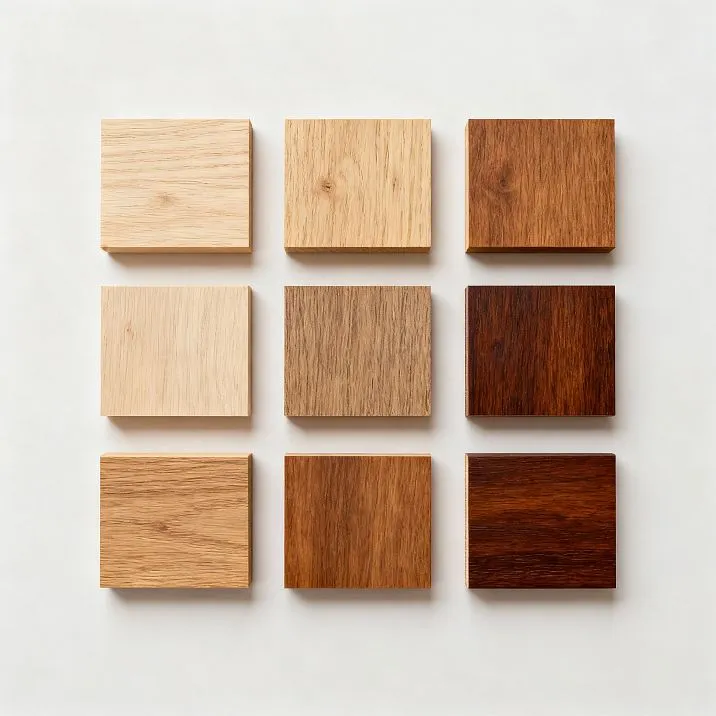
Modern Russian style in interior and architecture is not a print or an ethnographic museum. It is a subtle, intellectual play with cultural codes, where history whispers rather than shouts. It is a space built on restrained strength, natural texture, and impeccable quality. The foundation of this style is wood. But not just any wood — a carefully selected palette of species, tones, and finishes that shapes character without overwhelming it with folkloric quotes. Today, we will discuss how to create this refined, aristocratic image using the master’s working tools: wood species, oils, lacquers, and, of course, thoughtful application of decoration, such as elements from collections 'Russian'created for admirers of authentic art.


Species and Tone: The Soul of Modern Russian Style
Choosing wood is the first and most important step in forming the DNA of the future interior. Each species has its own character, plasticity, and history. In the context of modern Russian style, where decorative excess is not valued, but material depth is, the choice narrows down to several key players.




Oak: Foundation and Nobility
Oak is the alpha and omega of Russian carpentry art. Its reputation, earned over centuries, speaks for itself. It is a symbol of strength, durability, and status. But in modern interpretation, its value is not only in monumentality.
-
Texture: Oak wood has a large, expressive texture with clearly visible pores and medullary rays. This texture itself is a powerful decorative element. When properly processed, for example, by brushing, it becomes even more pronounced and tactile.
-
Tone: The natural color of oak ranges from light yellow to rich cognac-brown. It stains beautifully, allowing practically any shade to be achieved. Especially striking on oak are complex, deep tones: graphite, bleached with gray patina, bitter chocolate. These finishes do not hide, but highlight the noble texture.
-
Application: Solid oak is ideal for load-bearing elements, heavy furniture, flooring, wall panels, and, of course, for large-scale decor. For example, solidWooden Bracketsmade of oak will not merely serve as decoration, but as an organic part of the architectural structure. It is precisely in oak that the full power and character of such elements as carved columns or massive cornices are revealed.
Our factory also produces:


Beech: Elegance and Plasticity
If oak is strength and power, then beech is elegance and refinement. Its wood is almost devoid of a pronounced grain, it is smooth, dense, with fine, barely noticeable pores.
-
Texture: The uniform, calm texture of beech makes it an ideal canvas for complex finish coatings. It does not compete with color, allowing paint or staining to lie evenly and cleanly. Its famous pinkish or yellowish hue adds warmth to the interior.
-
Plasticity: Beech bends beautifully and is ideal for the most delicate and intricate carving. Fine details on beech become crisp, almost graphic. This makes it an indispensable material for crafting elegant neoclassical furniture and delicate decor.
-
Application: Beech is the choice for producing Viennese chairs, elegantfurniture legsand complex carved decor. It is precisely from beech that those exquisite details are made which transform an ordinary object into a work of art. For example, delicateWooden Insertsmade of beech can adorn kitchen facades, doors, or headboards, adding aristocracy.
Get Consultation
Ash: Brightness of Texture and Flexibility
Ash is no less strong than oak, but has a completely different character. Its wood is light, with a beautiful, dynamic grain resembling waves.
-
Texture: The bright, contrasting texture of ash is its main strength. It is so decorative that it often does not require complex finishes. A simple transparent oil or varnish is enough for the grain to shine in all its glory.
-
Elasticity: Ash is one of the most elastic and flexible wood species. This property was historically used for making sports equipment, bows, and oars. In interiors, this elasticity allows for creating complex bent elements.
-
Application: Ash is excellent in veneered panels, where its grain can be displayed over a large area. It is good for furniture, staircases, and decorative elements where texture play is important. For example, wideCarved Mouldingsmade of ash with a transparent finish will become a self-sufficient decoration for door or window openings.
Tonal Palette: From Naturalness to Bold Statements
Modern Russian style does not fear color. But this color must be complex, deep, and natural. The loud 'antique' stains of the past have gone. Today's trend:
-
Natural tones: Maximum preservation of the natural wood color under matte varnish or oil. This highlights the honesty and eco-friendliness of the material.
-
Whitened shades: From milk-white to complex gray and beige tones. This treatment makes the wood light and airy, perfectly fitting into minimalist or Scandinavian interpretations of Russian style.
-
Deep dark tones: Graphite, anthracite, wenge, stained oak. These tones give the interior drama and depth. Especially striking against light walls and textiles. On a dark background, anyCarved wooden decorationbegins to look like a graphic artwork.
-
Complex colors: Olive, dusty blue, terracotta. These non-trivial shades, applied to wood using the lacquer technique (where the texture is visible), create a unique and highly personalized interior.
Art of Finishes: Oils, Lacquers, and the Magic of Patina
Choosing a finish is no less important than selecting the wood species. It is precisely this that determines the tactile feel, durability, and final aesthetic appearance of the item.
Natural Oils: The Breath of Wood
Wax-based oils are the choice for those who value maximum naturalness. Unlike lacquer, oil does not form a film on the surface but penetrates into the wood pores, polymerizes within, and protects it from the inside.
-
Aesthetics and Tactility: A surface treated with oil remains "alive" and warm to the touch. It preserves the natural matte finish and velvety texture. Oil deepens the natural color of the wood, making it richer and more contrasting.
-
Practicality: A surface treated with oil is easy to locally restore. Scratches or scuffs can be sanded down and re-treated with oil, without having to redo the entire item. This is especially valuable for countertops, floors, and furniture.
-
Application: Oils are ideal for countertops, furniture, wall panels, especially in interiors where tactile qualities are important. Imagine a massive dining table coated with oil — you’ll want to touch it.
Modern Lacquers: Protection and Aesthetics
Modern lacquers are high-tech products that have moved far beyond their glossy and yellowing predecessors. Today’s choices are polyurethane or acrylic lacquers.
-
Gloss Level: The main advantage of modern lacquers is the ability to choose the gloss level. Deep matte lacquers (5-10% gloss) create the effect of untreated wood, yet provide the highest protection. Silk-matte (20-30%) gives a soft, noble sheen. Gloss is used rarely, mostly for accent or art-deco elements.
-
Durability: Polyurethane lacquers create a very strong and wear-resistant film on the surface, protecting wood from scratches, moisture, and household chemicals. This is the optimal choice for high-traffic elements: staircases, doors, furniture facades.
-
Application: Lacquer is used to coat most woodworking items. ElegantWooden capitalscolumns, or complex geometric boiserie panels require reliable protection that only quality lacquer can provide.
Patina: The Stamp of Time
Patina is artificial aging that imparts an item with the aura of history and nobility. But modern patination is not crude imitation of "antiquity" — it is a refined artistic technique.
-
Technique: After applying the base tone into the pores and grooves of carving, a contrasting patina (white, gray, gold, silver) is rubbed in. Excess is then removed from flat surfaces, leaving patina only in relief.
-
Effect: Patina performs wonders with carved decoration. It emphasizes every curve, every tool line, giving carving depth and graphic quality. Flat ornament becomes three-dimensional. This technique allows "revealing" intricate carving that might otherwise be lost on a uniform surface.
-
Application: Patination is indispensable when working with complex decoration. It is precisely thanks to patina that traditionalHouse Carvingcan be integrated into a modern interior without appearing out of place. Patina removes its unnecessary "newness," giving it the appearance of a family heirloom. Similarly, smallWooden socketstreated with patina, resemble antique finds.
Carving in Modern Context: From Accent to Foundation
Wood carving is one of the pillars of Russian decorative art. But how to use it today without falling into kitsch? The answer lies in moderation, intentionality, and quality of execution.
Harmonizing Carving with Wood Species and Finish
Not every carving suits every wood. And not every finish will reveal the beauty of carving.
-
Oak is ideal for large, monumental, almost sculptural carving. Its dense structure allows for sharp edges, while its coarse texture adds a ruggedness to the work.
-
Beech, with its uniform structure, is designed for delicate, "lace-like" carving with abundant fine details. It beautifully displays floral ornaments and complex monograms.
-
Ash, with its active texture, requires more restrained, geometric ornaments so that the wood grain and carving pattern do not compete with each other.
The finish plays a decisive role. A deep dark tone with silver or gold patina transforms a carved element into an art-deco artifact. A light tone with white patina creates a light, Provençal, or neoclassical look. Transparent oil on oak carving — this is a brutal and honest Scandinavian or loft accent.
House Carving: A New Reading of Traditions
Who said that domestic carving is exclusively an attribute of rural cottages? In a modern interpretation, it can become a powerful accent in the architecture of a suburban house in Wright’s style, a chalet, or even a minimalist project.
-
Dosage: It is not necessary to cover the entire facade with carving. It is sufficient to accentuate several key elements: pediment, window casings, terrace support columns, roof eaves.
-
Color: Instead of traditional multi-colored painting, a monochromatic solution is used. The carving can be painted in the facade color, creating a play of light and shadow, or in a contrasting yet noble color (graphite, anthracite, dark wood).
-
Integration: Carved elements must be organically integrated into the overall architectural logic, not simply "glued" on top. They can continue window lines, support roof overhangs, or frame the entrance group.
Wooden InsertsJewelry Details of Interior
Surface-mounted decoration is the simplest and most effective way to personalize interiors and furniture. A smooth cabinet facade, a simple latticed door, a dull headboard — all of this transforms with just one single detail.
-
Central elements: A carved inlay in the center of a furniture facade or above a doorway creates a focal point, gathering the composition.
-
Corner elements: Elegant corners on door or drawer lattices give them a finished, classic look.
-
Rhythm: A repeating ornament made of small surface-mounted elements can create a rhythmic pattern on a smooth wall, turning it into something resemblingboiser panelsThis is a lighter and more economical alternative to full panels.
Collection "Russian"Comprehensive Approach to Style
Creating a harmonious interior in a unified style is a complex task. You need to select dozens of elements that will match each other in style, scale, and ornament. Ready-made collections, such as "Russian", solve this problem. This is not just a set of scattered details, but a thought-out system, where each element — from cornice to furniture leg — is part of a single ensemble. Using elements from one collection, you are guaranteed to achieve a stylistically balanced and harmonious space, free from random and foreign details.
Light and Wood: Designing Emotional Nodes
Light is an instrument capable of completely changing the perception of wood. It can make it warm and cozy or cold and monumental. In modern design, light is increasingly integrated directly into wooden structures.
Integrated Lighting: Theater of Shadows
Carved decoration comes alive with proper lighting.
-
Sliding light: A light source positioned above or beside a carved panel creates long shadows that emphasize the relief. This transforms carving into a dynamic art object that changes depending on viewing angle.
-
Backlighting: A light source placed behind an openwork carved panel or screen creates an incredibly beautiful silhouette pattern. This is an ideal solution for zoning space.
-
Hidden lighting: LED strips hidden behind cornices, in niches, or under shelves create soft, diffused lighting that bathes wooden surfaces and reveals their texture. This gives the interior depth and mystery.
Connection Nodes: Where Light Meets Material
Designing nodes where light is integrated into wood — this is the highest level of craftsmanship. It is important not only to consider aesthetics, but also technical details: how to hide wiring, how to ensure LED cooling, how to make the light source easily replaceable. Profiles for LED strips embedded in wooden panels, special grooves in cornices, carefully designed gaps in furniture structures — all of this requires an engineering approach and skilled execution.
Durability and Care: Preserving Beauty for Generations
Natural wood is a living material that requires attention and care. Proper care will allow you to preserve its beauty for decades.
Care for Surfaces Treated with Oil
-
Regular cleaning: Wipe with dry or slightly damp soft cloth. Do not use aggressive cleaning agents.
-
Stain removal: Fresh stains should be removed immediately. For stubborn stains, there are special cleaners for oiled surfaces.
-
Renewal: It is recommended to renew the surface every 1-3 years (depending on usage intensity). It is lightly sanded with fine abrasive sponge and covered with a new thin layer of oil.
Care for Lacquered Items
-
Regular cleaning: Wet cleaning is allowed using neutral cleaning agents (pH 7).
-
Protection: Lacquered surfaces are afraid of abrasives and scratches. Use soft cloths for wiping, trivets under hot items, and hard objects.
-
Repair: Unlike oil, lacquer is difficult to restore locally. Deep scratches require full sanding and repainting of the element. Therefore, you need to be more careful with such surfaces.
FAQ: Answers to Frequently Asked Questions
What is the key difference between modern Russian style and traditional style?
Modern Russian style emphasizes not ethnographic accuracy or abundance of decoration, but material quality, line purity, and meaningful details. It takes from tradition not form, but spirit: solidity, love for natural materials, craftsmanship. Instead of colorful painting — a complex monochromatic palette. Instead of excessive carving — precise, well-placed accents.
Can different types of wood be combined in one interior?
Yes, it is possible and recommended. This adds depth and complexity to the interior. The main rule — combine either similar-toned woods (e.g., oak and ash in natural color), or play on contrast (e.g., dark stained oak and light beech). It is important that one type of wood is dominant, while the others are accent elements.
Which finish is better for the kitchen: oil or lacquer?
For kitchen cabinets, a matte polyurethane lacquer is preferable, as it creates a strong, waterproof film resistant to moisture, grease, and household chemicals. For solid wood countertops, if you are willing to commit to regular maintenance, oil can be chosen — it is more repairable and tactilely pleasant.
How to avoid overdoing carved decoration?
Use the "one strong accent" rule. This could be an ornate carved portal, an elaborately decorated entrance door, or heavy carved cornices. In this case, all other wooden elements should be as restrained and minimalist as possible. Carved decoration should be the main character, not a background actor.
Is folk carving suitable for modern minimalist homes?
Absolutely. If approached creatively. Imagine a facade made of gray plank or fiber-cement panels, featuring a single, large, architectural element of folk carving, painted in the same gray. This will create an incredible play of textures, light, and shadow, adding cultural depth and complexity to the minimalist volume.
Conclusion: STAVROS — Architect of Your Style
Creating modern, intelligent Russian style is a journey from the general to the specific. From choosing the fundamental wood species and its tone — to the finest nuances of finish coating and exquisite precision of carved decoration. It is a rejection of templates in favor of individuality, of loud luxury — in favor of restrained elegance. It is a philosophy where every element, every detail has meaning and contributes to the overall concept.
STAVROS exists precisely to realize such complex and ambitious projects. With years of experience, impeccable material sense, and the most modern equipment, STAVROS offers not just decoration, but ready-made tools for architects and designers. From monumental folk carving to elegant furniture appliqués, from classical capitals to comprehensive solutions within unified collections — here everything is available to bring the boldest vision to life and create a space filled not with ethnographic noise, but with authentic harmony and cultural depth.