Article Contents:
- When architecture becomes poetry
- Philosophy of window decoration
- Anatomy of beauty: what constitutes carved window decoration
- Window casings — the face of the window
- Shutters — functional beauty
- Complex architectural elements
- Stylistic directions: from ancient Rus to modernism
- Old Russian style — roots of tradition
- Russian modernism — a new interpretation of traditions
- Modern interpretation
- Material science: choosing wood wisely
- Coniferous Species — Accessibility and Practicality
- Hardwood species — nobility and durability
- Manufacturing technologies: from handcraft to CNC
- Hand carving — art in every stroke
- CNC technologies — precision and reproducibility
- Combined Technology
- Installation and mounting: secrets of professionals
- Preparatory work
- Mounting methods
- Care and longevity: preserving beauty for years
- Stylistic harmony with architecture
- Classic house
- Russian estate
- Modern minimalism
- Country cottage
- Color solutions: playing with colors on the facade
- Natural wood tones
- Contrasting solutions
- Monochromatic Compositions
- Color symbolism
- Care and Restoration: Preserving Beauty Forever
- Preventive care
- Recoating
- Restoration work
- Antiseptic Treatment
- Economic Aspects: Investment in Beauty
- Manufacturing Cost
- Impact on property value
- Long-term perspective
- Modern Trends and Innovations
- Ecological safety
- Energy efficiency
- Smart technologies
- 3D Modeling
- Regional characteristics of Russian carving
- Northern school
- Volga tradition
- Siberian carving
- Central Russia
- Psychological Impact of Decoration
- Emotional perception
- Cultural identification
- Status
- The future of house carving
- Revival of Interest
- New Materials
- Integration of Styles
- Mass Accessibility
- Conclusion: A Window to the World of Beauty
Windows are the eyes of a house. But what if these eyes were framed with wooden lace, transforming an ordinary facade into a fairy-tale palace? Carved window decoration Capable of creating real wonders, turning dull architecture into a work of folk art.



When Architecture Becomes Poetry
Have you ever wondered why old Russian villages still attract attention with their historic cottages? The secret is simple — the soul of the craftsman lives within them, embodied in the patterns of house carvings. Every swirl, every rosette tells a story about how a person perceived the world, understood beauty, and sought to protect their home from misfortunes.
Modern construction often forgets this magic. Plastic-framed double-glazed windows, standard facades, soulless architecture — all of this makes our homes functional but devoid of character. That is precisely why today's return to traditions, to the time when every window was a work of art, is so important.




Philosophy of Window Decoration
A window is not just an opening in a wall. It is the boundary between the inner world of the house and the outer universe. Light enters through the window, and so does life. It is no coincidence that in folk beliefs, windows required special protection from evil spirits. Carved window casings served not only a decorative but also a sacred function — they were protective charms safeguarding the house and its inhabitants.
Our factory also produces:


Anatomy of Beauty: What Makes Window Carved Decoration
Get Consultation
Casings — the Face of the Window
A casing is the main element of window decoration. The name speaks for itself: it is the "face" of the house. It is the frame that surrounds the window and gives it a finished look. House carving on the facade begins precisely with casings — they set the tone for the entire decorative treatment of the building.
Main Elements of the Casing:
- Ochelie — upper part, often the most decorative
- Sides — vertical elements on the sides of the window
- Sill — lower horizontal part
- Sash — overhang above the window for protection from precipitation
Shutters — Functional Beauty
Carved shutters are not only protection from cold and bad weather, but also an additional decorative element. When closed, they become part of the facade composition, and when open, they create play of light and shadow on the walls of the house.
Complex Architectural Elements
Wooden window decoration may include more complex elements:
- Gables — triangular or arched finishes above windows
- Brackets — supporting elements for cornices
- Pilasters — decorative columns on the sides of windows
- Rosettes — round carved medallions
Stylistic Directions: From Ancient Rus to Modernism
Ancient Russian Style — Roots of Tradition
Ancient Russian carving is a language of symbols understood by our ancestors. Each element carried symbolic meaning:
- Solar symbols — symbols of the sun to attract light and warmth
- Plant ornaments — oak leaves symbolized strength, grapevine symbolized fertility
- Geometric patterns — diamonds symbolized sown fields, wavy lines — water
- Zoomorphic motifs — birds brought messages, horses provided strength
Russian Modernism — a new interpretation of traditions
The end of the 19th — beginning of the 20th century gifted the world with Russian Modernism, which reinterpreted folk traditions through the prism of new aesthetic ideas. Carved elements of facades from this period are characterized by:
- Asymmetrical compositions
- Stylized natural forms
- Combination of carving with other materials
- More free interpretation of traditional motifs
Modern Interpretation
Today's masters do not copy old samples, but create a new aesthetics based on understanding traditions. Wood facade carving of the 21st century is characterized by:
- Simplified forms while preserving expressiveness
- Use of modern processing technologies
- Adaptation to modern architectural solutions
- Ecological and durability
Wood science: choosing wood wisely
Coniferous Species — Accessibility and Practicality
Spruce — the most popular material for house carving. It is easy to process, has a beautiful texture, and is affordable. The resinous nature of spruce provides natural protection against insects and moisture.
Fir — a softer wood, ideal for delicate carving. The light color of the wood allows creating contrasting compositions.
Larch — an elite material among conifers. Its exceptional resistance to moisture makes it ideal for outdoor use.
Hardwood species — nobility and strength
Oak — the king among wood species for carving. The hard wood allows creating the finest details that retain their shape for decades.
Linden — a traditional material for Russian carvers. The soft, pliable wood is easy to process and ideal for complex ornaments.
Birch — an affordable alternative to exotic woods. The dense wood with a beautiful texture is suitable for creating elegant details.
|
Species |
Hardness |
Resistance to moisture |
Processing difficulty |
Price |
|
Pine |
Medium |
Good |
Lightweight |
Low |
|
Spruce |
Low |
Medium |
Very lightweight |
Low |
|
Larch |
High |
Excellent |
Medium |
Medium |
|
Oak |
MDF with film |
Excellent |
Complex |
High |
|
Linden |
Low |
Low |
Very lightweight |
Medium |
|
Birch |
Medium |
Medium |
Lightweight |
Low |
Manufacturing technologies: from handcraft to CNC
Hand-carved art — art in every stroke
The master carver's handiwork is the highest form of artistic creation. Every chisel movement is thought out, each cut carries emotional weight. Hand-carved window decoration will never be repeated — this is its uniqueness and value.
Stages of hand-carving:
- Sketching — creating a detailed drawing taking into account the characteristics of the wood
- Marking — transferring the drawing onto the blank
- Rough shaping — forming the main volumes
- Detailing — refining small elements
- Sanding — refining the surface to perfection
- Protective treatment — applying coatings for longevity
CNC technologies — precision and repeatability
Modern CNC machines have revolutionized the production of carved decoration. They allow creating items with jewel-like precision and reproducing complex ornaments in any quantity.
Advantages of CNC machining:
- Perfect repeatability of details
- Ability to create complex three-dimensional forms
- High production speed
- Minimal material waste
- Accuracy down to fractions of a millimeter
Combined technology
The highest quality items are produced by combining CNC processing with manual finishing. The machine creates the basic shape with high precision, while the craftsman adds liveliness and individuality to the piece.
Installation and mounting: secrets of professionals
Preparation Work
Quality installation begins with careful preparation. The wall surface must be flat, dry, and free of contaminants. Special attention is paid to measurements — even a small error can ruin the entire composition.
Methods of mounting
Mechanical fastening — the most reliable method for heavy elements. Self-tapping screws, bolts, or studs are used, concealed by decorative caps.
Adhesive bonding — suitable for lightweight overlay elements. Modern polyurethane adhesives provide strong and durable connections.
Combined fastening — combining mechanical and adhesive methods for maximum reliability.
Sealing and protection
After installation, all joints are sealed with sealant to protect against moisture. Special attention is paid to areas where elements meet window frames — there should be no gaps.
Stylistic harmony with architecture
Classic house
For classic-style houses, a strict geometric decoration with minimal fine details is suitable. Symmetry and proportionality are the main principles of design.
Russian estate
The style of a Russian estate requires rich floral ornamentation and complex multi-tiered compositions. Here, all traditional elements of house carving are appropriate.
Modern minimalism
Even in minimalist architecture, there is room for carved decoration. Simple geometric forms, contrasting material combinations, emphasis on execution quality.
Country cottage
Country construction offers maximum freedom for creativity. Here, different styles can be combined, forms experimented with, and unique compositions created.
Color Solutions: A Play of Colors on the Facade
Natural Wood Tones
Natural wood color is always a safe choice. It harmoniously combines with any facade materials and never goes out of style. Protective finishes highlight the natural beauty of wood, giving it an elegant sheen.
Contrasting solutions
The contrast between wall color and decoration creates expressive compositions. White carved decoration on a dark facade—or vice versa—classic combinations proven over centuries.
Monochromatic compositions
A modern trend is using similar shades to create subtle color transitions. This approach requires high skill, but the result impresses with its refinement.
Color Symbolism
In traditional culture, each color had its own meaning:
- Red — symbol of life and fertility
- White — purity and protection from evil
- Blue — sky and spirituality
- Green — nature and renewal
- Yellow — sun and wealth
Care and restoration: preserving beauty forever
Preventive Care
Regular maintenance is the key to the longevity of carved decoration. It is enough to clean the surface a few times a year with a soft brush and check the condition of the protective coating.
Recoating
Every 3-5 years, the protective coating requires renewal. Modern compositions not only protect the wood but also accentuate its beauty.
Restoration work
Damaged elements can be restored. An experienced craftsman can recreate lost details using preserved fragments as a model.
Antiseptic treatment
Protection against wood-boring insects and mold is an important part of care. Modern eco-friendly compositions effectively protect wood for many years.
Economic aspects: investment in beauty
Manufacturing Cost
The price of carved decoration depends on many factors:
- Ornament complexity
- Wood species
- Size of the items
- Method of manufacture
- Type of protective coating
Impact on property value
Quality carved decoration significantly increases the value of a home. Unique facade design makes real estate more attractive to buyers and renters.
Long-term perspective
Carved decoration from quality wood is an investment for decades. With proper care, the items not only retain their original appearance but also acquire a noble patina of time.
Modern trends and innovations
Ecological safety
Modern requirements for ecological safety influence the choice of materials and technologies. Preference is given to wood from certified forests and safe protective compositions.
Energy efficiency
Carved window decoration can improve home energy efficiency. Properly designed elements provide additional thermal insulation and protect against wind.
Smart Technologies
Integrating traditional decoration with modern technologies opens new possibilities. Hidden lighting, motion sensors, security systems — all of this can be integrated into carved elements.
3D Modeling
Modern programs allow creating precise three-dimensional models of future items. The client can see the result even before production begins and make necessary adjustments.
Regional Features of Russian Carving
Northern School
The harsh climate of the Russian North left its mark on local carving. Here, strict geometric ornaments, large forms, and minimal fine detailing prevail. Main motifs — solar signs, symbols of protection against cold and darkness.
Volga Tradition
The Volga region is where Russian culture coexisted with Eastern traditions. This is reflected in the richness of plant ornaments, the refinement of details, and a love for bright colors.
Siberian Carving
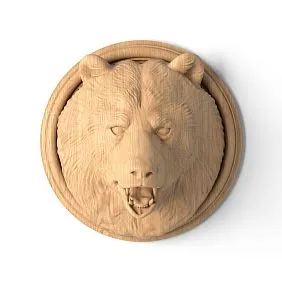
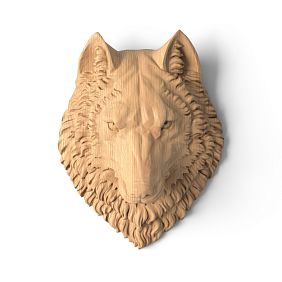
Siberian carving is characterized by monumental forms and deep symbolism. Here, animal images — bears, wolves, birds — hold special significance, considered guardian spirits.
Central Russia
The Moscow region and neighboring areas have given the world classic examples of Russian carving. Here, the main principles of composition, proportions, and stylistics were formed.
Psychological impact of decoration
Emotional Perception
Carved decoration exerts a powerful emotional impact. Smooth lines of plant ornaments soothe the nervous system, while dynamic geometric patterns stimulate activity.
Cultural Identification
Traditional motifs of domestic carving awaken genetic memory, create a sense of connection with ancestors and cultural roots. This is especially important in the era of globalization.
Status
Quality carved decoration has always been associated with wealth and good taste. It highlights the owner's status, their understanding of beauty, and respect for traditions.
The Future of Domestic Carving
Rising Interest
In recent years, there has been steady growth in interest in traditional crafts. People are tired of faceless standard architecture and seek to create unique, soulful spaces.
New materials
The development of technologies opens opportunities to use new materials — composites that mimic wood but surpass it in durability and resistance to environmental effects.
Style Integration
Modern designers are not limited to traditional forms, but create new styles that combine elements from different cultures and eras.
Mass Accessibility
Advancements in production technologies make quality carved decoration increasingly accessible. What was once a privilege of the wealthy is now within reach of the middle class.
Conclusion: A Window to the World of Beauty
Every window can become a work of art. You just need to see its potential and trust artisans who know how to transform ordinary wood into poetry. Carved window decoration This is not just facade decoration — it’s a way to express your individuality, emphasize your connection to cultural traditions, and create a space that will delight not only you but also passersby.
In a world of standardization and mass production, every handmade element becomes especially valuable. It carries the warmth of human hands, the soul of the craftsman, and love for their craft. Choosing carved decoration for your home is not only an investment in beauty, but also in emotional well-being, creating an atmosphere that will energize you every day.
Modern technologies allow us to realize the boldest concepts, combine traditions with innovations, and create items that will become family heirlooms. The only thing that matters is choosing a reliable partner who understands the value of traditions and masters modern technologies.
For more than half a century, the STAVROS company has created works of wooden art, combining centuries-old traditions with advanced technologies. Each piece is the result of deep understanding of the material, respect for craftsmanship, and pursuit of perfection. Choosing STAVROS means choosing quality proven by time and beauty that never goes out of style.