Article Contents:
- The Magic of Carving: From Antiquity to the Present
- Origins of Mastery
- Evolution of Style
- Technical Perfection: Materials and Methods
- Choosing Wood: The Foundation of Quality
- Modern Technologies in Traditional Craft
- Functional Beauty: Application in Interior Design
- Furniture Decor: When Function Meets Art
- Architectural Elements: When Walls Come Alive
- Ceiling Rosettes: A Gaze Directed Upwards
- Stylistic diversity: from classic to avant-garde
- Classic Motifs: Eternal Values
- Modern interpretation
- Ethnic motifs: cultural heritage
- Production Secrets: What Makes Decoration Special
- Handcrafted vs. Mass Production
- Finishing Touch: The Final Stroke of Mastery
- Practical Aspects: Installation and Maintenance
- Maintenance and Care: Preserving Beauty
- Maintenance: Preserving Beauty Forever
- Design Solutions: Integration into Modern Interiors
- Accent Elements: Targeted Application
- Space zoning
- Lighting: play of light and shadow
- Custom Solutions: When Standard Doesn't Fit
- Custom Design
- Designer Collections
- Economic Aspects: Investment in Beauty
- Cost and value
- Impact on property value
- Trends in development: looking into the future
- New Technologies
- Ecological Aspects
- Personalization
- Regional Characteristics and Traditions
- Russian Traditions of Carving
- European Schools
- Psychology of Perception: How Decoration Affects People
- Emotional Impact
- Status component
- Conclusion: Art Serving Beauty
When discussing the creation of a truly unique interior, Carved Decor it becomes a magical element capable of transforming an ordinary space into a work of art. This is not merely decoration — it is the philosophy of beauty, embodied in wood by masterful hands.
In the world of modern design, where the cold lines of minimalism reign, carved decoration brings us back to the roots of true craftsmanship. Every swirl, every curve carries the soul of the creator, transforming a simple material into something greater — an emotion frozen within the wood fibers.

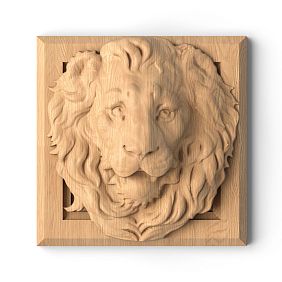

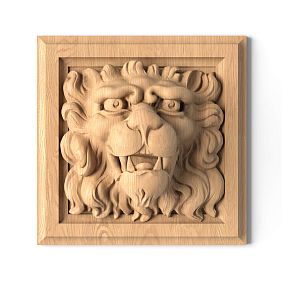

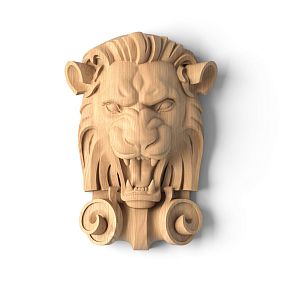
The Magic of Carving: From Antiquity to the Present




Origins of Mastery
Carved art traces its roots back to ancient times. Our ancestors understood: wood is not merely a building material, it is a living substance capable of breathing, living, and telling stories. They created not just functional objects, but true masterpieces passed down from generation to generation.
Modern masters have inherited this tradition, enriching it with new technologies and design solutions. Today, carved decorative elements are a synthesis of ancient techniques and a modern understanding of space.
Our factory also produces:


Evolution of Style
Over decades of working in the industry, I have observed how attitudes toward carved decoration have changed. If it was once associated exclusively with classic style, today skilled designers integrate these elements into the most unexpected interior solutions.
Carved decoration in modern times is not about copying old patterns, but a creative reinterpretation of traditions. Masters create pieces that look equally organic in a classic mansion as well as in a contemporary studio apartment.
Get Consultation
Technical Perfection: Materials and Methods
Wood Selection: The Foundation of Quality
Not every tree is capable of becoming the basis for creating a work of art. Material selection is the first and decisive step in creating a quality piece.
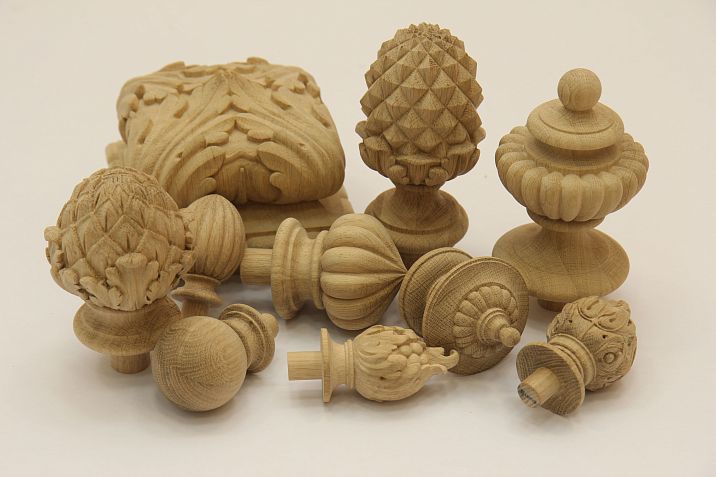
Oak is the king among wood species for carving. Its dense structure allows creating the finest details that will retain their clarity for decades. Oak pieces are distinguished by a noble dark tone, which deepens and becomes more expressive over time.
Beech offers completely different possibilities. Its softer structure is ideal for creating smooth, flowing forms. The light tone of the wood creates a sense of lightness and airiness.
Ash combines the strength of oak and the flexibility of beech. Its unique texture adds special expressiveness to pieces, while its high durability guarantees longevity.
Modern Technologies in Traditional Craft
Today's workshops are equipped not only with traditional chisels and gouges, but also with high-precision CNC equipment. This allows creating perfectly symmetrical elements while preserving the liveliness of handwork in the final finishing.
Laser engraving has opened new possibilities for creating ultra-precise details that cannot be done by hand. But true mastery is revealed in the ability to combine technological capabilities with artistic vision.
Functional Beauty: Application in Interior Design
Furniture Decor: When Function Meets Art
Decorative appliqués for furniture offer the opportunity to transform standard furniture into a unique artwork. Carved elements can radically change the perception of even the simplest construction.
Imagine a standard cabinet adorned with elegant floral appliqués. It instantly transforms from a utilitarian item into the focal point of the interior, drawing attention and evoking admiration.
Carved elements on kitchen facades look especially striking. They add warmth and coziness to the space, creating the atmosphere of a home hearth. At the same time, modern protective coatings ensure practicality in high-humidity conditions.
Architectural Elements: When Walls Come to Life
Decorative wall appliqués open boundless possibilities for creating unique interiors. They can imitate stucco, create accent zones, or completely transform the character of a room.
Carved panels look especially impressive in living rooms and offices. They create a sense of solidity and respectability, without overwhelming the space.
Ceiling Rosettes: A View Directed Upwards
Often, the ceiling is overlooked as a decorative element. But here Carved Decor it can truly shine. A ceiling rosette around a chandelier becomes a true work of art, unifying the entire room space.
Carved rosettes of various sizes and complexity allow creating effects ranging from minimalist elegance to luxurious grandeur. The choice depends on the overall interior concept and the owner's personal preferences.
Stylistic diversity: from classic to avant-garde
Classic Motifs: Eternal Values
Floral ornament remains the most popular motif in carved decoration. Grapevines, oak leaves, roses — these images carry deep symbolism and create a connection with nature.
Geometric patterns offer another approach to decoration. Their strictness and mathematical precision are ideally suited for modern interiors with classic accents.
Modern Interpretation
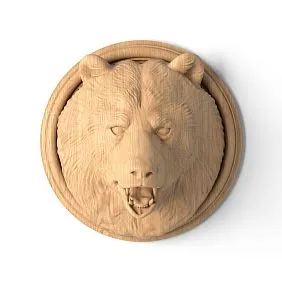
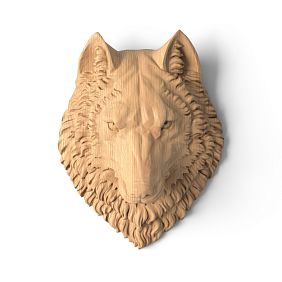
Today's designers are not afraid to experiment with forms and motifs. Abstract compositions, stylized animals and plants, geometric abstractions — all of this finds embodiment in contemporary carved art.
Combinations of different styles within a single piece are especially interesting. For example, a classic floral ornament can be executed in a modern style, creating a unique synthesis of tradition and innovation.
Ethnic motifs: cultural heritage
Russian folk patterns are experiencing a second life. Modern interpretations of traditional motifs allow creating interiors that are simultaneously contemporary and deeply rooted in cultural tradition.
Scandinavian motifs, with their minimalism and functionality, are ideally suited for minimalist interiors. They add warmth without disrupting the overall concept of the space.
Production Secrets: What Makes Decoration Special
Handcrafted vs. Mass Production
There is a fundamental difference between mass production and handcrafted items. Machine cutting can provide perfect geometry, but only the master’s hand can infuse the piece with soul.
An experienced carver sees unique possibilities in every piece of wood. They consider the grain direction and natural characteristics of the material, creating a piece that maximally reveals the beauty of wood.
Finishing: The Final Touch of Craftsmanship
The quality of finishing determines the longevity and appearance of the item. Multi-stage sanding, staining, and varnishing — each step requires special attention and professionalism.
Modern protective coatings not only preserve the beauty of wood but also highlight its natural texture. Properly selected finishing can dramatically change the perception of the item.
Practical Aspects: Installation and Maintenance
Installation: Professional Approach
Installing carved elements requires special skills and tools. Incorrect installation can ruin even the highest-quality item.
Adhesive mounting is the most common method for installing overlays. Modern adhesives provide reliable connections lasting for decades.
Mechanical mounting is used for large elements. Hidden fasteners allow preserving the item’s aesthetics while ensuring maximum reliability.
Maintenance: Preserving Beauty Forever
Proper maintenance is the key to the longevity of carved decor. Regular cleaning with soft cloth removes dust that may accumulate in the recesses of the carving.
Periodic renewal of protective coatings maintains the original appearance of items. Modern formulations allow this without dismantling elements.
Design solutions: integration into modern interiors
Accent Elements: Strategic Placement
It is not necessary to cover the entire room with carved elements. Often, just a few accent pieces are enough to dramatically change the character of the space.
A carved mirror frame can become the focal point of an entryway. A decorative overlay on an office door emphasizes its status. Such solutions are effective and economically justified.
Space Zoning
Carved decorative elements can serve not only decorative but also functional roles. Decorative partitions, arches, and carved columns help zone the space while preserving its openness.
This is especially relevant for modern studio apartments, where it is important to create a sense of privacy for different zones without erecting load-bearing walls.
Lighting: Play of Light and Shadow
Proper lighting can significantly enhance the effect of carved decor. Side lighting creates shadow play, emphasizing the relief and three-dimensionality of elements.
Hidden lighting of carved panels turns them into independent sources of soft, diffused light, creating a unique atmosphere of coziness and mystery in the room.
Individual Solutions: When Standard Doesn’t Fit
Custom Design
Sometimes standard solutions cannot fully reveal the potential of an interior. In such cases, custom design comes to the rescue.
Working with a designer allows creating elements that perfectly fit a specific space. Not only dimensions but also stylistic features of the interior, client preferences, and functional requirements are taken into account.
Designer Collections
Some masters create author collections united by a common style or theme. Such items represent special value for collectors and admirers of exclusive design.
Author work is always a one-of-a-kind product that cannot be reproduced exactly. Each item is unique and irreplaceable.
Economic aspects: investment in beauty
Cost and Value
Quality carved decor is an investment in long-term interior beauty. Initial costs are offset by longevity and the ability to refresh the interior without major renovations.
The cost of items depends on many factors: complexity of work, type of wood, size, method of manufacture. Handcrafted work is always more expensive than machine-made, but its value is incomparably higher.
Impact on property value
An interior properly decorated with artistic carving significantly increases property value. This is especially relevant for the luxury segment of the market, where uniqueness and exclusivity are especially valued.
Carved elements create a sense of luxury and status, which is important for reception areas and high-level private residences.
Trends in development: looking toward the future
New Technologies
The development of digital technologies opens up new possibilities for carved art. 3D modeling allows creating complex compositions that were previously impossible to realize.
Laser cutting has reached such a level of precision that it allows creating elements of jewel-like complexity. At the same time, it retains the possibility of subsequent manual finishing to give the item individuality.
Ecological aspects
Modern manufacturers are paying more attention to eco-friendliness in production. Only certified wood from managed forests, safe coatings, and adhesives are used.
Carved decoration from natural wood is the choice of those who value not only beauty but also care for the ecology of their home.
Personalization
The trend toward personalization also affects the field of decorative elements. Clients increasingly request incorporating personal symbols, monograms, and family crests into the design.
Such an approach turns Carved Decor a simple beautiful element into part of a family's history that will be passed down to future generations.
Regional characteristics and traditions
Russian Carving Traditions
The Russian school of carving has deep roots and distinctive features. Bogorodskaya toys, Gorodets painting, Khokhloma tradition — each has contributed to the development of decorative and applied art.
Modern masters carefully preserve these traditions, adapting them to contemporary needs. The result is items that are both modern and deeply traditional.
European Schools
European carving traditions are distinguished by special attention to detail and technical perfection. German masters are renowned for the precision of geometric ornaments, while Italian masters are celebrated for the elegance of botanical motifs.
Studying various schools and traditions allows modern masters to create items that combine the best achievements of world carving art.
Psychology of perception: how decoration affects a person
Emotional Impact
Carved elements exert a deep psychological impact on people. They create a sense of stability, solidity, and connection to traditions.
Botanical motifs are subconsciously associated with nature, creating a sense of harmony and peace. Geometric patterns, on the other hand, stimulate intellectual activity.
Status component
The presence of quality carved elements in an interior is always perceived as a sign of wealth and good taste. This is especially important for office spaces and reception areas, where it is crucial to create the right impression.
Carved decoration demonstrates not only financial capabilities but also the cultural level of the owner, his understanding of beauty and striving for perfection.
Conclusion: Art in Service of Beauty
In a world where technology increasingly dominates human creativity, carved decoration remains an island of true craftsmanship. Each item carries a piece of the master's soul, his vision of beauty and understanding of the material.
Choosing decorative wooden elements, we choose not just home decor. We choose a piece of living nature, shaped by human hands and filled with creative energy. We create a space that will delight us for years, passing warmth and comfort to future generations.
For many years, the company STAVROS has remained faithful to the traditions of quality and craftsmanship. Each item is created with love for wood and understanding of the needs of modern interiors. This is not just production — it is a service to beauty, which enriches and gives meaning to our lives.