












































































Article Contents:
- 1. Introduction: why the 10×40 format is so popular?
- 3.1. Interior finishing
- 3.2. Exterior work
- 4.1. Drying quality
- 4.2. Grade
- 4.3. Surface treatment
- 4.4. Wood species
- 5.1. Preparation of base and substructure
- 5.2. Mounting methods
- 5.3. Ventilated gaps
- 5.4. Final finishing
- 6. Care for wooden planks: extend their lifespan
- 12. Conclusion: why plank 10×40 is your ideal choice?

Wood has been one of the main materials in construction and space design for centuries. Despite technological progress and the emergence of numerous artificial substitutes, wood continues to hold its leading positions. It is valued for its strength, eco-friendliness, ability to 'breathe', and to impart a unique coziness to space, unattainable with other materials. Among the types of lumber widely available on the market, the plank occupies a special place — a universal element used in the most diverse projects. In this article, we will examine why people are increasingly choosingbuy wooden plank 10×40, what are its advantages and how to properly use such a plank in construction and decoration.


1. Introduction: why the 10×40 format is so popular?
Let’s first understand what attracts the 10×40 mm cross-section to those choosing wooden planks. We’re talking about a relatively narrow but sufficiently 'tall' plank — 10 mm in thickness and 40 mm in width. Such proportions offer several advantages:
- Versatility. Such planks are ideal for both decorative and structural solutions: from wall panels and false ceiling panels to creating unique partitions and furniture.
- Elegant shape. The 10 mm thickness gives the plank an elegant silhouette, which is especially important for refined interiors where it is necessary to emphasize lines rather than overload the space with bulky elements.
- Relative ease of installation. Installation does not require heavy fasteners, especially if we are talking about easily accessible surfaces (inside rooms). When it comes to exterior finishing, of course, weather loads must be taken into account, but even there, the 10×40 plank will work well if the appropriate wood species is chosen.
- Material savings. Narrow planks allow for more precise use of wood, without wasting excess volume. Additionally, when manufacturing small decorative elements, the amount of waste is reduced.
That’s why more and more people are decidingbuy wooden plank 10×40 for their projects, whether construction, renovation, or designer experiments.
2. Wood species for 10×40 planks: what to pay attention to?
When it comes to wooden planks, the wood species affects the strength, appearance, and application area of the material. Let’s consider the most popular options:
- Spruce
○ Advantages: affordable price, ease of processing, light color, pleasant aroma.
○ Disadvantages: less resistant to moisture and mechanical impacts compared to larch or oak. Requires mandatory impregnation and varnishing for outdoor use.
- Spruce
○ Advantages: lightweight, usually has less pronounced knots than pine, although it is quite similar to pine in terms of properties.
○ Disadvantages: sensitive to moisture, requires quality protection, especially if planned for exterior finishing.
- Larch
○ Advantages: known for high resistance to moisture and rot, beautiful texture and shades, ranging from light yellow to almost brown.
○ Disadvantages: higher price, difficulty in processing due to resin and hardness.
- Oak
○ Advantages: incredible strength, long service life, rich palette of shades, noble texture.
○ Disadvantages: higher cost compared to conifers and need for professional tools for processing.
- Ash, beech, birch, cedar
○ Each of them has its own characteristics in terms of color, density, resistance to moisture and weather factors. Price and processing complexity are usually higher than for pine and spruce, but lower than for premium oak or exotic trees.
If you decidedbuy wooden plank 10×40Determine where it will be used: indoors, under a covered awning, or outdoors. For exteriors, choose wood more resistant to atmospheric effects (larch, thermally modified pine, cedar). For interiors, ordinary pine or spruce are often sufficient — they are inexpensive and, with proper impregnation, will last long and please the eye.
3. Where and how can 10×40 board be used?
Contrary to the common belief that narrow and relatively thin boards are suitable only for small decor, the 10×40 format offers extensive possibilities:




3.1. Interior decoration
- Wall and ceiling cladding
○ Boards can be mounted vertically, horizontally, or diagonally, achieving various visual effects: 'lifting' or 'expanding' the space, creating an accent wall.
○ If leaving small gaps between boards and installing backlighting behind them, you get a 'floating lines' effect on ceilings or walls.
- Partitions and Space Zoning
○ For studio apartments and open-plan offices, low or high-profile board partitions are often used: they visually separate zones without reducing light penetration.
○ Narrow boards excellently handle the task of giving the interior 'airiness' and elegance.
- Furniture and decorative structures
○ Cabinet, dresser, and kitchen unit facades acquire a dynamic aesthetic if 10×40 boards are used in their design.
○ These boards are used to make handles, decorative overlays, frames for shelves or racks.
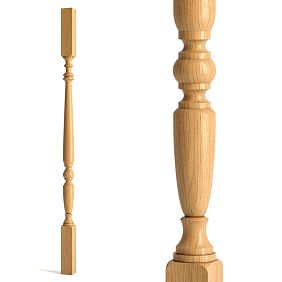
Our factory also produces:



3.2. Exterior work
- Facade cladding
○ If choosing moisture-resistant species (larch), 10×40 boards are ideal for ventilated facades or partial wall cladding, especially when combined with brick, stone, or plaster.
○ The house's exterior acquires a modern and eco-friendly look, accentuated by the natural wood texture.
- Awning, fences, terraces
○ When creating light awnings or fences for a dacha plot, the narrow format of the boards allows achieving a 'transparent' yet effective design.
○ Garden or terrace areas become more comfortable when wooden elements are applied, providing pleasant visual and tactile contact.
- Pavilions and small architectural forms
○ In parks and gardens, 10×40 boards are used for pergolas, arches, and decorative screens.
○ With proper treatment (antiseptics, oils), such a structure retains an attractive appearance even under scorching sun or rain.
Thus,buy wooden plank 10×40 — a solution with applications across multiple fields, making this cross-section truly universal.
4. What to pay attention to when choosing 10×40 planks?
To purchase planks that meet expectations, it is necessary to consider several important factors:
Get Consultation
4.1. Drying quality
If the wood is not sufficiently dried, after installation and contact with changing humidity conditions, it may crack or warp (deformation, bending). The optimal humidity for finishing work is 8–12%. It is important that the manufacturer or seller can provide information on the drying method (kiln-dried, air-dried) and controlled humidity level.
4.2. Grade
Wooden products are classified by the number of knots, defects, and cracks. Higher grades (Extra, A) allow only minimal defects or none at all, while grades B or C may contain knots, minor resin pockets, etc. It is important to decide whether you need a "perfectly smooth" appearance or you prefer a natural texture with visible knots. The choice of grade will affect not only the appearance but also the cost.
4.3. Surface treatment
● Sanded surface provides a smooth product without large burrs.
● Sanded surface is even smoother, ready for painting or varnishing, with a pleasant tactile texture.
● Profiled may have additional bevels, grooves, or ridges, expanding artistic possibilities.
4.4. Wood species
As already mentioned, if external use is required, it is better to choose wood species more resistant to moisture or specially treated (thermally modified) pine. For interiors, both budget pine and elegant oak are suitable — it all depends on budget, style, and functionality.
5. How to properly install 10×40 planks?
5.1. Preparation of the base and substructure
● When installing on walls or ceilings, a substructure (wooden beams or metal profile) is used, to which the planks are attached. This ensures a flat surface and an air gap, useful for ventilation and compensating for thermal expansion.
● If constructing partitions or fences, it is important to install strong supports (posts, frame) and precisely align them vertically and horizontally, so that the planks run without misalignment.
5.2. Methods of fastening
- Screws or nails
○ Simple and reliable solution. Suitable for most cases. Screw heads can be countersunk and filled with putty or covered with special decorative caps.
- Cleats and concealed mounting
○ Allows achieving an aesthetic without visible fasteners. One end of the plank is inserted into a cleat, the other is pressed by the next board. However, in this case, you must consider the material thickness and precision of fit.
- Adhesive
○ Only suitable for decorative interiors where there are no significant loads, and the surface (wall, ceiling) is sufficiently flat. It is important to choose glue suitable for wood (e.g., construction glue).
5.3. Ventilated gaps
● For outdoor work or in humid areas, leave small gaps between planks (usually 1–3 mm) so that the wood can "breathe" and condensation does not accumulate.
● It is also important to consider that wood may expand or shrink with changes in humidity, so rigid joints without gaps may lead to warping.
5.4. Final finishing
● Primer and antiseptics. It is advisable to treat the planks with anti-rot, anti-mold, and insect protection agents before installation.
● Coating with varnish, oil, or paint. For interior solutions, any finishing coatings are suitable; for outdoor use, choose UV- and moisture-resistant grades. If the manufacturer has already performed part of the treatment, clarify what was applied and under what conditions.
6. Care for wooden planks: extend their lifespan
Even the highest quality wood requires minimal care, especially if it is exposed to external influences such as sun, rain, or temperature fluctuations.
- Regular cleaning. Dust and dirt can be easily removed with a soft cloth or brush. In exteriors, water from a hose can be used, but not under excessive pressure to avoid damaging the coating.
- Coating refresh. Every few years, it is necessary to check the condition of the varnish, oil, or paint. If the coating has partially worn out, reapply it after lightly sanding the surface.
- Defect repair. If small cracks or chips appear, they should be filled with wood putty and a protective layer should be reapplied to prevent further damage.
In interiors, the load is usually less, so refreshment can be done less frequently — every 5–7 years or as needed. With good wood quality and proper installation, a 10×40 board can last 20–30 years while maintaining an attractive appearance.
7. Comparison with other sections: why exactly 10×40?
For clarity, we provide a brief comparison of common formats:
● 10×20 or 10×30. Even narrower boards, more difficult to use in load-bearing structures or large-scale projects. Better suited for decorative inserts or creating fine details.
● 20×40 or 25×25. These options are more versatile in terms of load, but appear bulkier and may overwhelm interiors where a light visual accent is needed.
● 10×40. Optimal if you want to emphasize elongated shapes, create a clearly defined linear look, while retaining a certain 'slenderness'. The sufficient width (40 mm) allows covering large areas, while the thickness (10 mm) provides an elegant line.
Thus, those who wish to combine 'sufficient width' with 'slenderness' often choose the 10×40 option.
8. Designer’s tips: how to incorporate 10×40 boards in interior design
- Accent wall. Let one wall in the living room or bedroom be made of boards arranged vertically. You can paint them in a contrasting color (e.g., black, dark brown, or white) relative to the rest of the background.
- Checkerboard layout. Try placing boards with a small offset of one or two steps, similar to parquet. This will add dynamism and originality.
- Combination with other materials. Wood pairs well with stone, concrete, metal, and glass. For example, in loft or high-tech styles, partially using wooden boards against brickwork creates an effective solution.
- Lighting. Place LED strips between rows of boards or in gaps, and you’ll get an atmospheric pattern when the main lights are off.
9. Economic aspect: is it worth paying more for quality boards?
The question is often asked: 'Why pay more if you can get cheap material from the market?' The answer is obvious: the quality of the original wood affects the durability, appearance, and overall 'reputation' of your project.
● Expensive species (e.g., oak, beech) may cost more upfront, but they pay off through long service life and lower repair costs.
● Higher grades (Extra, A) have minimal defects, which is especially important in visible interior zones.
● No need for re-finishing. Properly dried and treated boards are less prone to deformation, meaning no rework will be needed.
If you decided buy wooden plank 10×40It makes sense to spend time finding a reliable supplier rather than chasing the lowest price. In the end, you’ll win both aesthetically and by avoiding future headaches.
10. Where can you buy quality 10×40 boards?
- Specialized lumber stores. They offer a wide selection and can provide quality certificates. Often work directly with wood processing plants.
- Construction hypermarkets. The assortment may be limited, and quality can vary, so carefully inspect the products and ask details from consultants.
- Online stores and manufacturer websites. A modern and convenient option. Here you can study specifications, compare prices, and even order delivery to your home. For large volumes, these platforms offer wholesale discounts.
- Wood sawmills or woodworking shops. If there’s a reliable shop nearby, you can personally evaluate the raw material and production. Convenient for large orders, though less cost-effective for small ones.
Don’t forget to check reviews, ask about production timelines and material storage conditions. A reputable seller usually openly provides information at every stage, from roughing to final finishing.
11. Frequently Asked Questions (FAQ)
- Can 10×40 boards be used in saunas and steam rooms?
○ Yes, provided you choose moisture-resistant species (larch, cedar) and proper treatment. However, it’s worth noting that even larch requires regular maintenance under extremely high temperatures and humidity.
- Is this format suitable for flooring?
○ Theoretically, yes — but the practical durability of flooring made from such narrow planks may be questionable under heavy loads. Typically, for flooring, solid boards or parquet with greater thickness are used.
- How to calculate the number of planks for wall cladding?
○ Calculate the total wall area (excluding windows and doors), divide it by the useful area of one plank (taking into account whether gaps will be left). Don't forget to add 5–10% for trimming and waste.
- Do planks need to acclimate?
○ Yes, it is advisable to acclimate them for several days in the room or on-site where installation will occur, to equalize the wood’s moisture content with the surrounding environment.
- What to do with cracks or chips that appear after installation?
○ It depends on the extent of damage. Small cracks can be filled with wood-specific spackling compound, then sanded and sealed with varnish or oil.
12. Conclusion: why 10×40 mm plank is your ideal choice?
So, after all the arguments presented, we can conclude: the 10×40 mm format is a balanced option combining elegance and strength. If you plan tobuy wooden plank 10×40, then you get:
● Ease of installation. No need for super-strong fasteners or expensive equipment.
● Versatility. Suitable for interior and exterior use, provided you choose the right wood species and treat it properly.
● Aesthetic appeal. A narrow yet sufficiently wide plank visually appears neat, creating rhythm and 'musicality' in the appearance of walls, ceilings, or fences.
● Adequate rigidity. Under certain conditions, it can be used in light structural solutions.
The appearance, durability, and functionality of planks depend not only on the original wood but also on how you install, protect, and maintain them. But by following all recommendations, you will surely receive admiring feedback from those who see your creation — whether it’s a finished wall in the living room or a stylish canopy in the garden.
13. Final reflections: turning ideas into reality
Natural wood is living material that carries the energy of nature. It offers visual comfort, warmth to the touch, and a soulful atmosphere. Choosing a 10×40 mm plank is a step toward a harmonious space where you want to be, create, rest, and work.
The main thing is to plan the design, consider usage specifics, and trust professionals or your own skills if you’re confident in them. Natural wood aesthetics never go out of style, whether it’s Scandinavian minimalism, classic, loft, or modern eco styles.
We hope this article helped you find answers to questions related to selecting and applying planks specifically in the 10×40 mm size. May your projects take shape and delight the eye, and buy wooden plank 10×40 become the key to realizing the boldest design ideas. For a skilled craftsman, any piece of wood becomes a true work of art — and with high-quality lumber, the path to such artistry is significantly shorter and more pleasant.
Good luck with your construction, creativity, and experimentation! May each plank fit perfectly in its place, bringing pleasure and utility, and may your interior or exterior become a reflection of your individuality, coziness, and understanding of nature.


