Article Contents:
- Bedroom and material psychology: why wood is indispensable here
- Where slat panels work in the bedroom: zones and logic
- Wall behind the headboard: the main place of the bedroom
- Side walls: continuation or neutral background
- Ceiling above the bed: a wooden 'canopy'
- Built-in wardrobe: slat facades
- Materials for slat panels in the bedroom: a complete honest breakdown
- Solid wood: the best choice for the bedroom
- MDF: wide palette and stability
- MDF for painting: colorist's freedom
- Acoustic slatted panels: silence as a comfort component
- Soft slatted panels: for headboards with a tactile accent
- Bedroom styles and slatted panels: seven concepts, seven characters
- Japandi bedroom: minimalism as meditation
- Scandinavian bedroom: light and honest material
- Modern classic: oak and gold
- Eco-bedroom: maximum nature
- Loft bedroom: dark and honest
- Neoclassical bedroom: slats and symmetry
- Children's bedroom: play and safety
- Slatted panels with lighting in the bedroom: lighting scenarios
- LED behind the load-bearing base (backlighting)
- LED at the bottom of the structure
- Spot LED lights in the load-bearing base
- Lighting scenario 'wake-up'
- Parameters of slatted panels for the bedroom: selection table
- Acoustics of a slatted bedroom: silence you can build
- How slatted acoustics work
- Acoustic slat wall technology
- Wall finishing with slat panels in the bedroom: from one wall to a comprehensive solution
- Scenario 1: One accent wall
- Scenario 2: Accent wall + slatted ceiling "canopy"
- Scenario 3: Three walls — full immersion
- Scenario 4: Built-in wardrobe with slatted fronts as a wall extension
- Slat panels in the bedroom interior DIY: is it realistic
- What You'll Need
- Step-by-step logic
- Slat panels and bedroom furniture: combination principles
- Bed and slat wall
- Nightstands
- Cabinet
- Textiles
- Prices for slatted panels in bedroom interiors: realistic calculation
- Common mistakes when decorating a bedroom with slatted panels
- Mistake 1: Too dark slats without balancing light
- Mistake 2: Slats without acclimatization
- Mistake 3: Incorrect MDF class for the bedroom
- Mistake 4: Horizontal slats in a low bedroom
- Mistake 5: Lack of finishing elements
- Mistake 6: Mismatch between slat and floor tones
- FAQ: answers to popular questions about slatted panels in the bedroom
- About the Company STAVROS
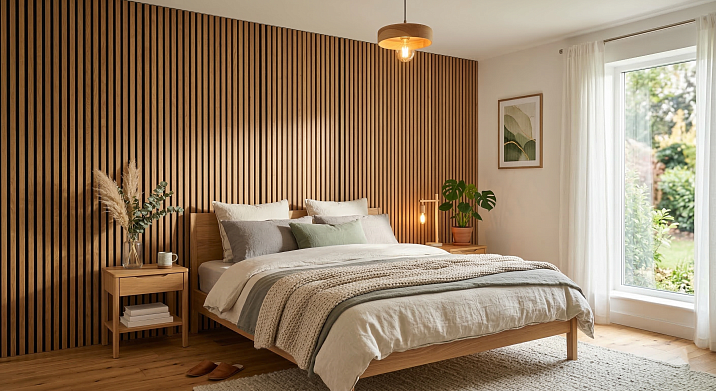
A bedroom is not just a room with a bed. It is the only place in the apartment where a person completely belongs to themselves. Here, there is no need to conform, make an impression, or maintain posture. Here — one rests. Recovers. Breathes.
And that is precisely why the bedroom requires a special approach to finishing. Not the loudest, not the most expensive—the most correct one. The kind that works on the level of sensation, not just the visual picture. Slatted panels in the bedroom interior are a solution that works exactly like that: quietly, deeply, convincingly.
Why are wood and the rhythm of slats so organic in the bedroom? What happens to the space when a slatted wall appears behind the bed headboard? What materials to choose, what mistakes to avoid, and how to achieve that very feeling of a 'place of power'? This is a conversation—calm, detailed, without haste.

The bedroom and the psychology of material: why wood is irreplaceable here
The psychology of space is a science that designers have always known intuitively, long before it received an academic name. Space influences a person. Material influences mood. Texture influences anxiety levels.
A person spends a third of their life in the bedroom. A third is not 'sometimes' and not 'on weekends.' It is daily contact with surfaces, colors, textures. And this contact either restores or subtly depletes.
Research in the field of biophilic design (a concept asserting the connection between humans and natural materials) shows: the presence of wood in the interior reduces cortisol levels—the stress hormone. Heart rate in a room with wooden surfaces is 4–7% lower than in a room with synthetic finishes. The feeling of warmth at the same air temperature is higher.
Slatted panels in the bedroom interior—it's not just beautiful. It's a physiologically justified choice. The rhythm of the slats calms the eye just like the rhythm of waves or rows of trees—it is predictable, orderly, harmonious. In the bedroom, this is a first-order value.




Where slatted panels work in the bedroom: zones and logic
Before talking about materials and colors—you need to understand the geometry. There are several fundamentally different zones in the bedroom, each of which interacts with the slatted structure in its own way.
Our factory also produces:
Headboard wall: the focal point of the bedroom
This is the concentration point of the entire bedroom. The wall behind the bed is the first thing a person sees upon waking up. The last thing they see before falling asleep. Nothing else in the bedroom has such constant visual contact with a person.
Wall slat panels in interiorIn the headboard area, it is a 'picture' of constant presence. Reiki here is a warm, living background that does not tire, does not shout, does not demand attention. It simply is present — and in doing so creates a feeling of protection, a 'backrest,' stability.
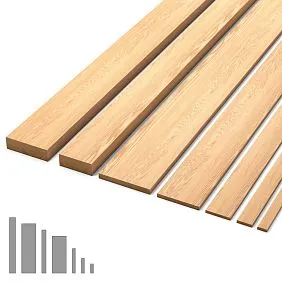
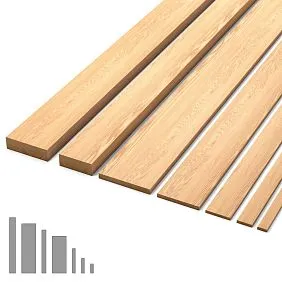
Parameters for the headboard wall: slat width 50–80 mm, gap 12–18 mm. Vertical direction. Height — from floor to ceiling (maximum effect) or a panel scheme at headboard height + 40–50 cm above (a more intimate, chamber solution).
Get Consultation
Side walls: continuation or neutral background
The bedroom's side walls are a space for moderate application of slatted panels. One side wall out of two executed in slats creates asymmetry, which gives the bedroom a non-standard, authorial character. Both side walls — provided they are monochromatic in color with the accent wall behind the headboard.
Ceiling above the bed: a wooden 'canopy'
Batten panels for ceilingsAbove the bed — one of the most powerful design techniques in the bedroom. A slatted 'island' on the ceiling with an area corresponding to the size of the bed (2.0×1.6 m for a double) creates the effect of an architectural 'canopy' without heavy fabrics and bulky structures.
Integration of 2700 K spotlights into the slatted ceiling island — soft directional light falling on the bed from above. This works simultaneously as functional reading light and as an atmospheric accent.
Built-in wardrobe: slatted fronts
Slatted fronts of a built-in bedroom wardrobe — an extension of the wall slat concept into furniture volume. The wardrobe 'dissolves' into the wall, becoming part of it. Slats with the same parameters as on the wall — a unified material language for the space.
Materials for slatted panels in the bedroom: a complete honest breakdown
The bedroom does not have the strict requirements for humidity and mechanical loads that exist for the kitchen or hallway. But there are other critically important parameters: environmental safety, sound absorption, tactile qualities.
Solid wood: the best choice for the bedroom
Wooden slat panelsSolid wood is the ideal material specifically for the bedroom. Not because it's premium. But because the bedroom is a place where the tactility of the material matters most: a person in the bedroom is relaxed, receptive, and the quality of the surface is perceived differently than in work spaces.
Oak: hardness 3.7 on the Brinell scale, pronounced radial grain, warm amber tone. For bedrooms in classic, modern, and Japandi styles.Oak Slat Panel— the most in-demand item in bedroom projects.
Ash: a lighter tone, dynamic grain with contrasting veins. For Scandinavian and eco-styles. Takes stain better than oak — a wide range of tones can be achieved while preserving the lively grain pattern.
Beech: dense, uniform structure, soft pinkish tone. For classic and neutral interiors.
Thermowood ash or birch: for bedrooms in houses with unstable climates (country houses, apartments with seasonal use). Geometric stability — maximum.
Bedroom finish: oil-wax (tactilely warm, matte, natural feel) or UV lacquer (maximum surface durability). Mechanical loads in the bedroom are minimal — oil-wax is especially appropriate here.
MDF: wide palette and stability
slatted MDF panelFor the bedroom — the optimal choice in terms of price-quality ratio. The bedroom does not require moisture-resistant MR class (unless it's a bathroom with an attached bedroom) — standard E1 is sufficient. This reduces cost compared to kitchen or bathroom options.
Bedroom finish type: matte acrylic enamel or polyurethane lacquer. Important point: in the bedroom, a person literally breathes the room's air for 7–8 hours straight. The finish must be completely degassed before occupancy. Two-component systems: full curing 72 hours + ventilation. One-component water-based systems: 24–48 hours with good ventilation.
Prohibited for the bedroom: MDF class E2 (high formaldehyde emission), acid-curing finishes (release acetic acid during polymerization), nitro lacquers.
MDF for painting: colorist's freedom
paintable slatted wall panels— for bedrooms where color scheme is key. Exact tone per NCS or RAL. Matte finish that does not glare in night light. Possibility of repainting during redesign without dismantling the structure.
For the bedroom, relevant colors: warm grays (NCS S 2005-Y50R), sago green (NCS S 4010-G30Y), terracotta pink (RAL 3014), midnight blue (RAL 5008), deep walnut brown (RAL 8019).
Acoustic slatted panels: silence as a component of comfort
Urban bedroom — it's a battle with sound. Street, neighbors, elevator. Acoustic slatted panels with an absorbing layer of felt or acoustic foam behind the load-bearing base — the slats here serve a dual function: decorative and acoustic.
Sound absorption coefficient of a slatted structure with 15 mm thick felt: αw = 0.55–0.70 in the 500–2000 Hz range — the most sensitive for human hearing. One slatted acoustic wall with an area of 8–10 m² reduces reverberation level in the bedroom by 15–20%.
For a bedroom above a busy street or under an apartment with noisy neighbors — acoustic panels are not an option, but a necessity.
Soft slatted panels: for a headboard with a tactile accent
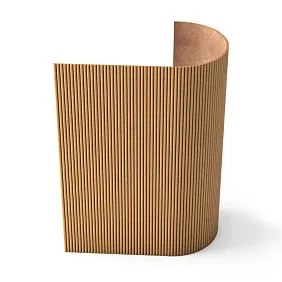
soft slat panels— a structure where slats are integrated into a soft fabric facade or placed on an absorbing foam base. Ideal for the wall behind the headboard: upon accidental contact with the wall (leaning while reading a book) — the soft surface does not create discomfort.
Bedroom styles and slatted panels: seven concepts, seven characters
The bedroom is the most personal room. Here, style is not fashion, it's self-expression. Let's examine how slatted panels work in different aesthetics.
Japandi bedroom: minimalism as meditation
Wide 70–90 mm slats made of oak with gray stain or thermally modified wood. 8–10 mm gap — dense, almost monolithic rhythm. The supporting base matches the slats' tone — no contrast in the gap. Floor: large porcelain tile or light oak parquet. Bed: low, without a headboard. Bedding: linen, in shades of natural minerals.
A slatted wall in a Japandi bedroom is not 'beautiful finishing'. It's an architectural philosophical gesture: natural material, rhythm, silence. The gaze rests on the wide slats and requires nothing more.
Scandinavian bedroom: light and honest material
White MDF slats with matte enamel on a dark gray or black base. Slats 45–55 mm, gap 14–16 mm. Effect: white verticals on a dark background create depth unattainable with solid color painting. Bedding — white or light gray linen. Wooden bedside tables. Warm 2700 K light from wall sconces above the bed.
Scandinavian style is about honesty. White slats are an honest choice: they pretend to be nothing other than what they are.
Modern classic: oak and gold
Dark walnut or deep brown MDF (RAL 8019) on the wall behind the bed. Slats 55–65 mm, gap 14 mm. Bed with a soft linen or velvet headboard. Bedside sconces with gold details. Moldings fromsolid wood trim— horizontal transition at the height of the ceiling skirting.
Slatted panels in the bedroom interiorin the classic concept — is the answer to the question 'how to make a bedroom elegant without stucco and baroque'. Dark wood and gold metal are an eternal pair.
Eco-bedroom: maximum nature
Ash or oak with clear oil — a living grain without tinting. Plants on bedside shelves. Linen curtains. Handmade ceramic lamps. Bedding made of organic cotton or linen.
Wooden slat panelsin an eco-bedroom — is a direct dialogue with nature. Every morning you wake up facing wood. This is not a metaphor — it's literally so.
Loft bedroom: dark and honest
Dark gray or anthracite MDF slats (RAL 7016) on a dark base. Concrete or dark parquet flooring. Exposed metal heating pipes. Industrial-style pendant light above the bed. The slatted wall is the only 'warm' surface in the cold loft space.
Neoclassical bedroom: slats and symmetry
Slatted wall construction behind the bed — symmetrical, with a central axis aligned with the center of the bed. At the edges of the slatted panel — vertical pilasters made ofsolid wood trim. Above: a cornice. Slats — walnut veneer or MDF in a dark walnut tone. Bed: with a high, soft headboard upholstered in velour.
Neoclassicism with slatted panels is not eclecticism. It is a contemporary interpretation of classical forms using modern materials.
Children's bedroom: play and safety
Pastel tones (mint, lavender, soft pink, light blue) on white E0-MDF slats. Slats 40–50 mm wide with a 12 mm gap. Integrated LED lighting with adjustable brightness and color temperature. Structure height: 1.4–1.6 m (panel scheme) — at a level the child interacts with.
Safety in the children's room: only E0 or E1 class MDF with water-based coating. Rounded slat ends. Baseboard made ofsolid wood trim without sharp corners — height 60–70 mm.
Slatted panels with lighting in the bedroom: lighting scenarios
Light in the bedroom is one of the key tools for comfort. And the slatted structure interacts with light in a special way: the slats create vertical shadows in the gaps with side lighting — the surface 'comes to life' and gains volume.
Slatted panels with lightingin the bedroom are implemented in several ways.
LED behind the supporting base (backlight)
LED strip behind the slatted structure — between the wall and the supporting base. Light seeps through the gaps of the slatted system, creating a soft glow along the contour of the structure. Effect: the wall 'glows from within' — unreal, meditative, exactly matching the requirements of a bedroom atmosphere.
Strip type: warm white 2700 K, power 4–6 W/m. A dimmer is mandatory. This light is not for reading — it's for meditation before sleep.
LED in the lower part of the structure
Strip behind the bottom row of slats, directed downward — onto the floor. Approximate night light, not requiring the upper fixtures to be turned on. For going to the bathroom at night — a soft, non-blinding outline of the floor.
Spot LED downlights in the supporting base
Directional downlights in the supporting base at headboard level — functional light for reading, built into the slatted wall. Illumination angle: 15–25°. Power: 5–7 W per point. Two sources — one on each side of the bed — allow each partner to read without turning on the general light.
Lighting scenario 'wake-up'
Smart system with dawn simulator: LED strip behind battens, programmed to gradually increase brightness from 0 to 30% over 20–30 minutes before the set wake-up time. Warm orange light (2200 K) smoothly transitions to neutral daylight (3000 K). The body wakes up naturally, without a harsh alarm.
Batten panel parameters for bedroom: selection table
| Style | Batten width | Gap | Direction | Tone | Material |
|---|---|---|---|---|---|
| Japandi | 70–90 mm | 8–12 mm | Vertical | Gray oak, thermowood | Solid wood, thermowood |
| Scandinavian | 45–55 mm | 14–16 mm | Vertical | White, milky | MDF E1 |
| Modern Classic | 55–65 mm | 14–16 mm | Vertical | Walnut, brown | MDF, veneer |
| Loft | 40–50 mm | 10–14 mm | Vertical | Anthracite, graphite | MDF E1 |
| Eco | 50–70 mm | 12–18 mm | Vertical/horizontal | Natural oak, ash | Solid wood with oil |
| Neoclassical | 50–60 mm | 14–16 mm | Vertical | Walnut, dark MDF | Veneer, MDF |
| Children's room | 40–50 mm | 12–14 mm | Vertical | Pastel, white | MDF E0 |
Acoustics of a slatted bedroom: silence you can build
An urban bedroom without soundproofing is daily stress. Traffic noise, neighbors' voices, the thud of children's feet in the apartment above. Standard finishing (plaster + wallpaper) has virtually no effect on room acoustics. A slatted structure does, if properly designed.
How slatted acoustics work
Sound in a room exists in two modes: direct (from source to ear) and reflected (from surfaces). Reflected sound creates reverberation—a 'rumble' that makes the space acoustically uncomfortable. A slatted structure reduces reflection by means of:
-
Non-uniform surface: slats and gaps create diffraction of sound waves—some energy is scattered
-
Absorbent layer in the gaps: felt, technical fleece, acoustic foam—materials that convert sound energy into heat
-
Air gap behind the load-bearing base: a resonant absorber for the low-frequency range
For an urban bedroom: a slatted structure with 15–20 mm thick felt on the wall behind the bed + a slatted 'island' on the ceiling—reduction of reverberation time RT60 from typical 0.6–0.8 s to 0.3–0.4 s. The difference is physically noticeable.
Technology of an acoustic slatted wall
Load-bearing base: 12 mm MR-MDF or 10 mm moisture-resistant plywood. Behind the base - technical felt with a density of 100–150 kg/m³, thickness 15–20 mm, glued to the wall with mounting adhesive. Between the wall and the felt - an air gap of 30–50 mm (on a metal profile). Slats: standard parameters of the selected style. Gap between slats - at least 10 mm (less than 8 mm significantly reduces acoustic effectiveness).
Wall finishing with slatted panelsin the bedroom: from one wall to a comprehensive solution
Scenario 1: One accent wall
Minimal intervention - maximum effect. The wall behind the headboard. Area: 8–14 m² (for a standard bedroom). Other walls: solid paint or wallpaper in a neutral tone. Material cost: 15,000–50,000 rubles depending on the chosen material and price segment.
This is the solution most people start with. And for many, it is the final one - because one properly designed wall changes the perception of the entire room.
Scenario 2: Accent wall + slatted ceiling "canopy"
Wall behind the bed + slatted island on the ceiling above the bed. Unified material. Unified tone. Creates a feeling of an architectural "cocoon" - a protected, warm personal space within the bedroom.
This solution falls into the category of 'wanted something special - and found it'. Requires precise design, but the result is a bedroom at the level of a five-star hotel.
Scenario 3: Three walls - complete immersion
Wall behind the bed + two side walls in slatted design. For bedrooms with a strong desire to create a 'cave room' – a warm, enveloping space. The wall with windows and doors – not in slatted design (functional limitations). The other three – slatted.
Requirements: uniform material and tone on all three surfaces. Corner joints must be structurally worked out: continuous slats on the corner via a special profile or corner strip.
Scenario 4: Built-in wardrobe with slatted fronts as a continuation of the wall
The slatted wall transitions into the slatted fronts of the built-in wardrobe – a continuous surface from wall to furniture. The wardrobe 'disappears,' dissolving into the wall plane. The parameters of the slats on the fronts must exactly match the parameters of the slats on the wall.
This solution is from the 'smart space' section: the wardrobe does not take up visual space – it becomes part of the architecture.
Slatted panels in the bedroom interiorDIY: is it realistic
Independent installation of a slatted wall behind the bed is a realistic task for a person who knows how to handle a drill and use a level. The area of the wall behind the headboard in a bedroom is typically 8–12 m². This is one to two days of work.
DIY slatted panelIn the bedroom has an important advantage over the hallway or kitchen: there are no complex environmental conditions, no humidity, no mechanical loads. If you are careful and don't rush – the result will be professional.
What you'll need
Tools: 360° laser level (rental if not available – ~1500 rubles/day), miter saw, drill, dowel gun or screwdriver with finishing nails, spacer template (a scrap of MDF of the required gap width).
Materials: panels with a 12–15% surplus; load-bearing base (10 mm MDF or metal profile); skirting and molding fromsolid wood trimfasteners; mounting adhesive or liquid nails.
Step-by-step logic
-
Material acclimatization in bedroom 48–72 hours
-
Laser level marking: horizontal and vertical lines of load-bearing system
-
Installation of lathing or load-bearing base: plane verification
-
Installation of first edge batten: vertical control
-
Installation of all battens with spacing template
-
Finishing elements: baseboard, molding, end strips
-
Sealing joints at floor and ceiling
-
Final cleaning and quality control
Detailed step-by-step technologyinstallation of slatted panels— from base preparation to the finishing element.
Slatted panels and bedroom furniture: principles of combination
A slatted wall is a strong element. A strong element requires smart surroundings. How to arrange bedroom furniture around a slatted panel to avoid visual conflict?
Bed and slatted wall
The bed should 'step back' from the slatted wall. If the bed's headboard is pressed directly against the slatted structure, the slats behind it are not visible. The optimal setback: 5–10 cm. This allows the lighting behind the lower slats to 'spill' onto the wall behind the bed — and creates a feeling that the bed is 'floating' on a light cushion.
Bedside tables
Wood and metal are two materials for bedside tables that work with slatted walls. Wood matching the slats — unity. Contrasting metal (brass, matte nickel) — an accent. Tables with transparent legs (wood, metal) — a feeling of lightness and free space.
Wardrobe
Ideally, built-in with slatted fronts (as described above). If freestanding, a neutral tone that doesn't compete with the slatted wall. White, light gray, natural veneer matching the slats.
Textiles
Textiles in a bedroom with slatted panels should 'breathe'. Linen, cotton, velvet — natural materials that continue the theme of the slats. Satin and synthetics visually clash with wood. Bedding: neutral tones (white, gray-beige, warm cream) or one accent shade that rhymes with the tone of the slats (warm terracotta for oak, warm blue for ash).
Prices for slatted panels in a bedroom interior: realistic calculation
| Scenario | Area of the structure | Material (RUB) | Labor (RUB) | Total (rub.) |
|---|---|---|---|---|
| One accent wall, MDF E1 | 8–12 m² | 20 000–45 000 | 12 000–22 000 | 32 000–67 000 |
| One accent wall, solid oak | 8–12 m² | 45 000–100 000 | 15 000–25 000 | 60 000–125 000 |
| Wall + slatted ceiling island, MDF | 12–18 m² | 35 000–75 000 | 20 000–35 000 | 55 000–110 000 |
| Three walls (full immersion), MDF | 20–30 m² | 60 000–130 000 | 35 000–60 000 | 95 000–190 000 |
| DIY installation (wall behind the bed, MDF) | 8–12 m² | 20 000–45 000 | 0 | 20 000–45 000 |
Self-installation reduces the budget by 30–40%. Acoustic panels with felt — an additional cost of 1500–3000 rub./m² on top of standard ones.
Common mistakes when decorating a bedroom with slatted panels
Mistake 1: Too dark slats without balancing light
A dark slatted wall without sufficient lighting turns the bedroom into an oppressive, gloomy space. Rule: the darker the slats — the more light sources. Minimum for a dark slatted wall in a bedroom: sconce above the bed + accent spotlight on the slatted wall + backlighting behind the slats.
Mistake 2: Slats without acclimatization
Delivered and installed immediately. Result after a week: the slats shrank, gaps are uneven, the supporting base warped. Acclimatization for 48–72 hours is not an optional step but a technical requirement.
Mistake 3: Wrong MDF class for the bedroom
Moisture-resistant MR is not needed in the bedroom—that's a saving. But emission class E1 (or better E0) is mandatory. MDF of class E2 in the bedroom is a constant source of formaldehyde in the air. Demand documentation when purchasing.
Mistake 4: Horizontal slats in a low-ceiling bedroom
Horizontal slats 'expand' and 'lower' the space. In a bedroom with a ceiling below 2.8 m—only vertical slats. Horizontal is for spacious bedrooms from 3.0 m in height.
Mistake 5: Lack of finishing elements
A slatted structure without baseboard, molding, and end caps is unfinished work. Molding made ofsolid wood trimat the transition between the slatted structure and the ceiling—this is 3–4 hours of additional work that completely changes the impression of the result.
Mistake 6: Mismatch between slat and floor tones
Dark oak slats + light oak parquet = a visual conflict that 'splits' the space. Rule: slats and floor should be either in the same tonal group or intentionally contrast (very dark + very light). Intermediate tone mismatches are the worst.
FAQ: Answers to Popular Questions About Slatted Panels in the Bedroom
Are slatted panels in the bedroom environmentally safe?
Yes, when choosing MDF of class E0 or E1 with water-based coatings or natural oils. Solid wood with an oil finish is an absolutely safe option. Request a declaration of conformity from the supplier indicating the emission class.
Howwalls made of slatted panelsaffect sleep?
Positively, when choosing the right tone and ensuring good acoustics. Warm natural tones (oak, ash, warm beige) reduce visual stimulation. Acoustic panels reduce reverberation—and the subjective perception of noise in the room. The combined effect: a calmer atmosphere conducive to falling asleep.
Can slatted panels be installed behind the bed if the wall adjoins a neighbor's bedroom?
A slatted structure is not a full-fledged soundproof wall. To reduce impact and airborne noise from neighbors, a full-fledged vibration isolation system is needed. However, acoustic slatted panels will reduce reverberation inside your bedroom—and sounds will be subjectively less irritating.
How to care for slatted panels in the bedroom?
Minimal care. Dry or slightly damp microfiber cloth once every 1–2 weeks. For wooden slats with an oil finish—renew the oil layer once a year. No aggressive chemicals. There are no grease stains or splashes in the bedroom—maintenance is easier than in the kitchen.
Do I need to disassemble the bed to install a slatted panel?
No, if the wall behind the bed is accessible from the side or top. Usually, the bed is moved aside during installation — this adds 20–30 minutes of extra time. If the wardrobe is built-in — it's more complicated, you need to discuss it with the installer in advance.
Slatted panels in interior design— is this a long-term solution or will it soon go out of fashion?
Vertical wooden slats are an architectural element with a centuries-old history. Japanese interiors, Scandinavian design of the 1960s, modern minimalism — slats come back again and again. When choosing a neutral tone and natural materials, this is a solution that never goes out of style. Bright neon-colored slats — may turn out to be seasonal. Natural oak or matte white — never.
Can I combine slatted panels behind the bed with a soft headboard?
Yes, this is one of the most beautiful techniques. The soft headboard is mounted in front of the slatted wall — the slats are visible above it and on the sides. This creates a 'frame' effect: the headboard is the painting, the slats are the frame.
How to install slatted panelsin a bedroom with drywall partitions?
Only through the drywall body into the metal stud of the profile. A drywall anchor without hitting the stud can hold a maximum of 15–20 kg — this is insufficient for a slatted structure. The spacing of the battens must match or be a multiple of the spacing of the drywall partition studs.
Slatted wall and odor in the bedroom: will there be a smell?
Freshly painted slats have an odor with single-component compositions. Two-component systems after 72 hours of curing are practically odorless. Solid wood with natural oil has a light, unobtrusive scent of natural wood, which most people perceive as pleasant and calming.
About the company STAVROS
The bedroom is the most personal room in the house. And it is here that the material must be impeccable: not just beautiful, but absolutely safe, durable, pleasant to the touch, and truthful in its origin.
STAVROS is a Russian manufacturer of architectural wooden elements with its own full production cycle. Chamber drying to a stable 8–10%. CNC processing with ±0.1 mm accuracy. Coating application in controlled factory conditions. Laboratory control of moisture and geometry for each batch. Full documentation: declaration of conformity, emission class E1 (E0 for children's products), technical specifications.
For your bedroom in the STAVROS catalog:Wooden slat panelsmade of oak and ash with UV varnish and oil coating;MDF Slatted Wall PanelE1 class with two-component coating;paintable slatted wall panelsfor custom color solutions;slatted modular wall panelfor quick installation;soft slat panelsfor headboards with a tactile accent;Slatted panels with lightingsystems with LED integration;Batten panels for ceilingsabove the bed area;Pogonazh iz massiva— moldings, baseboards, cornices for completeness.
Samples — free. Consultation on material selection, tone, and installation layout for your bedroom — unlimited. STAVROS creates what you want to wake up to every day.