Article Contents:
- Why slatted panels so dramatically change the perception of an interior
- Where slatted panels look best
- Slatted panels in the living room interior
- Slatted panels in the bedroom
- Slatted panels in the hallway and corridor
- Slatted panels in the kitchen and study
- Which materials work best in interior design
- MDF slatted panels in interior design
- Oak slatted panels in interior design
- How slatted panels complement different interior styles
- Minimalism
- Scandinavian Style
- Jatoba
- Loft
- Modern classic and soft neoclassicism
- Vertical or horizontal slats: what changes in the interior
- What slatted panels offer beyond aesthetics
- How not to ruin the interior with slatted panels
- How to choose slatted panels for a specific interior
- Where to buy slatted panels for interior
- FAQ: answers to popular questions about slatted panels in interior
- About the Company STAVROS

There are solutions that work beyond time. Not because they are trendy, but because they are right — in terms of physics, perception psychology, and architectural logic.Slatted panels in interior designThese are exactly that. Their popularity in recent years is not a random trend wave that will recede with the next Pinterest season. It is a return to a basic principle: a surface with rhythm and depth is perceived by a person as richer, more complex, and more complete than any flat surface, no matter how expensively painted.
But it is important to understand one fundamental point here: slatted panels are a tool. Like any good tool, they yield brilliant results in skilled hands and mediocre ones in random hands. Mindlessly slapping slats on every wall of an apartment will create not a modern interior, but an interior circus where the eye has nowhere to land. Therefore, a conversation about slatted panels in a modern interior is always a conversation about understanding: understanding rhythm, scale, material, lighting, and place.


Why slatted panels so dramatically change the perception of an interior
Ask any designer with real experience: what turns an ordinary room into a thoughtful space? The answer almost always contains the word 'layers'. An interior with a single layer — painted walls, a flat floor, standard ceilings — is perceived as unfinished, 'bare'. Decorative slatted panels in an interior create exactly this missing layer — volume, rhythm, depth.
The mechanism is simple but works flawlessly. Parallel slats with gaps create a repeating pattern. The human brain perceives a regular rhythm as a sign of organization and intentionality — what distinguishes a designed space from a randomly assembled one. Moreover, each gap between the slats is a line of shadow, and each protrusion is a line of light. The wall ceases to be a plane and becomes a relief.
It is precisely the relief that creates what people pay money for in expensive hotels, restaurants, and showrooms — the feeling of a 'luxurious space'. No magic: simply an architectural surface with rhythm and chiaroscuro works an order of magnitude more convincingly than a smooth wall with any paint. An interior with slatted panels literally changes its class in the eyes of anyone who enters it.
Add to this the geometric effect. Vertical slats visually raise the ceiling — this is an axiom long known to designers. Horizontal ones expand the wall. A fine pitch creates graphic quality and density. A sparse one creates lightness and air. These are not metaphors; these are real tools of spatial correction that work in any room — from a tiny hallway to a banquet hall restaurant.




Where slatted panels look best
The honest answer: almost anywhere — provided you understand the task of the specific room. But there are zones where a slatted surface works with particular force, creating an effect disproportionate to the labor input.
The living room is the first and most obvious space. Here, an accent slatted wall behind the sofa or TV area becomes the focal point of the entire interior. Without it — it's just furniture in a room. With it — an interior with logic and a compositional center.
The bedroom offers a different scenario: here, slats work as atmosphere creators, not as an architectural accent. A wall behind the headboard with vertical oak slats under proper lighting — this is the level of a designer hotel, achieved with quite budget-friendly means.
The hallway — the most unexpected, yet one of the most convincing places. A narrow corridor with a slatted wall visually transforms: the vertical rhythm lifts the walls, the first impression of the apartment changes dramatically.
The study and meeting room — spaces where a slatted surface creates a sense of focus and order. The structured rhythm of lines psychologically tunes one into a work mindset — and this is not a subjective feeling, but a documented effect.
Commercial spaces — restaurants, hotels, showrooms, offices — have long made slatted walls part of their design language. Here, panels work on several levels at once: they create atmosphere, manage acoustics in open halls, and zone space without permanent partitions.
Our factory also produces:
Slatted panels in the living room interior
The living room is the place where the interior lives. It is here that the family gathers, guests are received, and that very 'feeling of home' is created — the one people talk about, which is hard to describe in words but easy to feel. Slatted panels in the living room interior work primarily as an organizing element: they give the wall character and the entire space — a focal point.
The classic scenario — an accent wall behind the sofa. This is not just a beautiful wall; it's an architectural backdrop that brings the seating area together into a single composition. Vertical solid oak slats running the full height, from baseboard to ceiling — monumental, expensive, convincing. The option with MDF painted the same color as the other walls — a more delicate technique, almost an architectural whisper: there is texture, but it doesn't shout.
The TV area — another strong scenario.Slatted panels for the TV areaThey solve several technical tasks at once: they hide cables and wiring, create a niche for equipment, and form an architectural backdrop for the screen. Dark oak slats on the wall behind the TV are an absolute modern standard for a living room above the middle class.
An important nuance for the living room is the combination with upholstered furniture. Slats with a pronounced texture (oak, brushed wood) go well with fabric sofas and soft poufs—a dialogue of textures emerges between them. MDF slats for painting are better combined with leather or neutral furniture, where a contrast of materials is needed, not their competition.
Another point: the height of the room. In a living room with 2.5-meter ceilings, vertical slats are mandatory—they will visually lift the space. In a living room with high ceilings from 3 meters, you can experiment with horizontal installation or diagonals—this will add dynamism without the risk of 'crushing' the room.
Get Consultation
Slatted panels in the bedroom
The bedroom is an intimate space, and here slatted panels work differently than in the living room. Not as an architectural declaration, but as creators of mood. A quiet, enveloping, calm one—the very one that allows you to forget about the hustle and bustle outside the window.
The wall behind the headboard is the main place for slatted panels in the bedroom. This is the central axis of the entire room, and what happens on this wall determines the character of the entire room. Vertical oak slats with oil impregnation in a neutral tone, raised to the full height—this is no longer just a finish, it's an architectural element. When adding hidden LED lighting along the upper perimeter of the panels, the effect becomes truly hotel-like—in the best sense of the word.
For the bedroom, panels made of semi-circular battens are especially recommended—their rounded profile creates soft, delicate chiaroscuro without sharp shadows and clear geometric graphics. Light flows smoothly over the convexities, and the wall acquires an almost painterly character. This is a completely different feeling compared to rectangular slats—more tender, more 'homely'.
Color in the bedroom works by special rules. Warm shades of oak—ochre, honey, tobacco—create an enveloping environment. White or cream MDF panels for painting give a feeling of freshness and lightness. Dark tones—black, anthracite, deep blue—make the bedroom more serious and intense in character, but require good artificial lighting and sufficient area.
Slatted panels in the bedroom go well with textiles: linen, velvet, muslin curtains and bedding with texture organically complement the rhythm of the slats. This dialogue of materials is what turns a bedroom from just a 'place to sleep' into a space where you want to be.
Slatted panels in the hallway and corridor
The hallway is the interior's business card. The first three seconds after entering shape the impression of the entire apartment — and it's very difficult to change it later. Slatted panels in the hallway and corridor allow you to create this first impression intentionally, rather than leaving it to chance.
The main task in a narrow corridor is visual expansion and elongation of the space. Vertical slats handle this more effectively than any other finishing technique: they literally 'lift' the walls, making the corridor taller and more spacious. With a light panel tone, the effect is enhanced — the space becomes airier.
A practical bonus of the hallway is its protective function. The wall in the hallway is subjected to mechanical impacts — bags, coats, children's backpacks, elbows, and shoulders. A slatted panel is significantly more durable than bare paint and plaster. This is especially relevant for the lower part of the wall up to a height of 120–140 cm, where most contacts are concentrated.
Integration with mirrors and lighting in the hallway is a separate design pleasure. A full-length mirror against a slatted wall: the slats create depth, the mirror multiplies it — and a 4 sq.m. hallway begins to feel like a full-fledged space. A built-in LED strip in the upper part of the slatted panel or between the slats adds soft, diffused lighting that is both functional and atmospheric.
In the corridor, you can play an interesting trick: a slatted panel on only one wall, and a mirror or neutral paint on the other. This contrast creates an accent without overloading the narrow space.
Slatted panels in the kitchen and study
The kitchen is a non-standard place for slatted panels, but not an impossible one. Here they most often appear in the dining table or island area, where the wall is not subjected to direct exposure to steam and grease. Wooden slatted panels in the kitchen interior work in eco-style, Scandinavian design, and Japandi style — as a natural element among functional kitchen surfaces.
For a study, slatted panels are an almost ideal solution. Here they perform a dual function: aesthetic and acoustic. The wall behind the desk or opposite it with slatted finishing creates a sense of concentration — the rhythm of the lines organizes the space, 'gathering' it around the work area. Simultaneously, the textured surface diffuses sound and reduces unwanted reflections, which is especially valuable when working with video calls and voice recording.
Which materials work better in the interior
This question is inevitable, and the answer to it depends on the task — not on the budget. Both materials presented in the STAVROS assortment are excellent. Simply excellent in different ways.
MDF slatted panels in interior design
MDF is a tool for working with color and form. MDF slatted panels are chosen for interiors when precision is needed: exact color, precise geometry, perfect alignment with the design project. The perfectly smooth surface accepts any paint without stains or variations—you get exactly the shade intended, not an approximate reproduction through wood texture.
In minimalist interiors where a wall should be a color field rather than a display of material, paintable MDF is indispensable. Panels matching the wall color create an almost imperceptible relief effect: the surface 'breathes' but doesn't draw excessive attention. This is a subtle, professional technique.
In neoclassical and modern classic styles—white or cream paintable MDF panels, painted the same color as cornices and moldings, create a complete architectural system. This looks especially impressive when combined withMDF millwork—cornices and baseboards in a unified style, where all finishes are executed as a single organism.
Oak slatted panels in interior design
Oak is a living material with its own voice. Oak slatted panels are chosen for interiors when natural expressiveness, tactile depth, and a sense of durability are needed. Each slat carries a unique grain pattern—no two walls of oak slats will look the same. This is precisely that 'expensive craftsmanship' paid for in the premium segment.
Wooden slatted panels in interiors work well with oil, wax, stain, varnish—depending on the desired finish. Open pores under oil—natural closeness and tactility. Dense matte varnish—strictness and elegance. Brushed surface with emphasized texture—a brutal yet noble character.
Oak is durable, resistant to mechanical impact, and only grows more noble over time.solid wood slat panelsYou can update it: sand, change the tone of the finish, refresh the oil layer — and the wall will look slightly different each time, adapting to the new mood of the interior. No other finishing material possesses this flexibility.
How slatted panels work with different interior styles
Slatted walls in interiors are not the exclusive solution of one style. They are used in minimalism and neoclassicism, in loft and Japandi, in Scandinavian design and in modern classicism. But each style uses its own type of panel, its own material, and its own character of presentation.
Minimalism
Minimalism requires restraint. Here, paintable MDF slatted panels are the only correct choice. The profile is rectangular, the spacing is even, the color is the same as the wall or close to it. The relief is present but does not loudly declare itself. The wall 'breathes' with form, not shouting with material.
Scandinavian style
Light oak slats with a matte oil finish are a Scandinavian classic. Natural material, neutral tone, vertical rhythm, and absence of excessive detailing. Slatted panels in Scandinavian interiors always look organic—because Scandinavian design is built on material honesty and simplicity of form, and oak embodies both of these principles.
Japandi
A hybrid of Japanese and Scandinavian approaches — one of the most sought-after styles in recent years. Slatted panels in the Japandi style: thin slats, small spacing, neutral palette from linen to gray-beige. Panels made of half-round beading are especially appropriate here — their soft chiaroscuro is in tune with the Japanese wabi-sabi aesthetic, which values imperfection and the natural smoothness of form. Nothing sharp, nothing aggressive — only a quiet, meditative rhythm.
Loft
Loft requires character. Dark oak slats with brushing and pronounced texture, large spacing, deliberately industrial character. Sometimes fastening elements are left visible as a design technique. Slats in a loft interior are often combined with exposed brickwork or concrete surfaces — the contrast of the natural warmth of wood and the harshness of industrial materials creates a tension that is the essence of this style.
Modern classicism and soft neoclassicism
Here, paintable MDF slatted panels in white, cream, or soft silver tones work as a modern interpretation of classic wall panels. Wide slat profile, strict rhythm, laconic finishing with a cornice or molding. In combination withsolid wood millwork— with carved moldings and cornices made of oak or beech — such an interior looks complete and expensive.
Vertical or horizontal slats: what changes in the interior
The question of installation direction is not technical, but design-related. It determines how the panels will alter the space.
Vertical slats create upward movement. The eye follows the lines from bottom to top, and the ceiling appears visually higher. In rooms with low ceilings — up to 2.7 meters — vertical installation is almost mandatory. Additionally, vertical lines create a sense of order, stability, and calm — this is a 'classic' choice for most living spaces.
Horizontal slats create sideways movement. The wall visually expands, making the room feel wider. This technique is effective in rooms with normal or high ceilings, where there is no need for vertical stretching, but the goal is to widen a small space horizontally. Horizontal installation also creates a more dynamic, 'speedy' rhythm — it is often chosen for commercial interiors where energy is needed.
Dense spacing — closely placed slats — provides rich texture and graphic quality. The surface appears solid, expensive, and material. Sparse spacing — more air between slats — makes the surface lighter and more transparent. This feeling of a 'breathing' wall is especially valuable in small spaces or where the interior should not be visually overloaded.
What do slatted panels offer besides aesthetics
An interior with slatted panels is not just about beauty. It's about real functional advantages that work daily.
Zoning space without partitions is one of the main practical functions. A slatted 'screen' or an accent fragment of a slatted wall visually marks zone boundaries without losing light and air. An open living-dining room, a bedroom with a designated reading area, a workspace in a room — in all these cases, slatted panels for zoning create architectural separation without construction intervention.
Acoustic comfort is a parameter often ignored when choosing finishes, only to be regretted later. Flat walls reflect sound, creating echo and unpleasant reverberation — especially in rooms with high ceilings and open layouts. A slatted surface scatters sound waves, breaking them into many small reflections — the echo disappears. When sound-absorbing material is installed behind the panels, the effect is multiplied. The acoustic properties of slatted panels make them particularly valuable for meeting rooms, home theaters, studios, and open living areas with hard flooring.
Lighting integration is another unique feature not available with flat finishes. The gaps between slats perfectly accommodate LED strips, creating hidden backlighting directly within the wall structure. The light emerges from the depth—soft, diffused, without glaring sources. This is one of the most beautiful lighting effects in modern interiors, and slatted panels achieve it without complex engineering solutions.
Concealing imperfections and utilities is a purely pragmatic function that often becomes the main reason for choosing them. Behind a slatted frame construction, you can hide pipes, cables, wires, uneven plaster, and even old tiles. The wall becomes geometrically perfect regardless of what lies behind the panels. This is significantly cheaper than leveling and much more functional.
How Not to Ruin an Interior with Slatted Panels
This is an honest conversation that many articles avoid. But it's precisely what's important—because mistakes with slatted panels can be quite convincing in their pointlessness.
The first mistake—slats everywhere. A slatted wall in the living room, a slatted wall in the bedroom, a slatted wall in the hallway, slats on the ceiling. The result is not an interior but a wooden cage. An accent works only when there is contrast. If slats are everywhere—they cease to be an accent and become noise.
The second mistake—ignoring scale. Large slat spacing in a small room overloads the wall and makes the space even smaller. In small rooms, a thin profile and small spacing work—there's texture without aggression.
The third mistake—choosing color without considering lighting. Dark slatted panels in a poorly lit room will swallow the space. A slatted surface only reveals itself with side or directional lighting. Before choosing a dark tone, check if the room has enough light sources providing side illumination.
The fourth mistake—confusing a decorative surface with an acoustic system. Standard slatted panels slightly improve acoustics by scattering sound, but this does not replace a professional acoustic system. If the goal is serious sound correction, a layer of sound absorber behind the panels is needed.
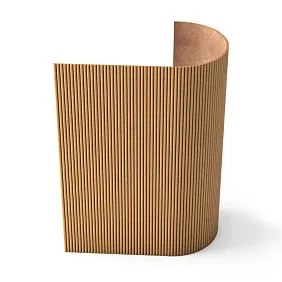
The fifth mistake—mounting rigid panels on a curved surface. A rigid construction does not bend. Attempting to mount it on a column or arch leads to cracks and deformation. For curved surfaces, onlyFlexible slatted panelsfabric-based panels exist—and there is no alternative here.
The sixth mistake is ignoring the ceiling height when choosing the direction of the slats. Vertical installation in a high room further 'stretches' the walls, creating a sense of disproportionate space. In tall rooms, horizontal installation or dividing the slatted wall into zones by height often works better.
How to choose slatted panels for a specific interior
A practical algorithm — not a checklist table, but a sequential progression through several questions.
If you need a laconic, clean modern look without textural activity — MDF for painting. Precise color, perfect geometry, maximum design control.
If you need a natural accent, tactile warmth, and the feel of an expensive material — oak slatted panels in the interior. Oil or varnish to choose from — depending on the desired degree of gloss and pore 'sealing'.
If the room is small — vertical rhythm, light tone, small spacing. This visually expands the space rather than compressing it.
If the interior is warm, rich in textures — oak with a tobacco, honey, or walnut stain. The slats become part of a unified natural system, not a foreign element.
If the architecture is complex — columns, arches, curved walls — only flexible solutions. Rigidity here is the enemy of the result.
If the style is minimalism or Japandi — consider a semi-circular profile. It provides a softness and delicacy that a rectangular bead lacks.
If the budget is limited but you want maximum effect — one accent wall in the main area of the room. A well-executed accent in the right place is worth more than slats on all four walls in an unsuitable material.
Where to buy slatted panels for interior
The final, most commercial question — and it's quite justified. A beautiful choice made incorrectly from the supplier's perspective can result in geometric inaccuracies, unstable slat spacing, or poor substrate quality. All of this is visible on the installed wall — and fixing it is significantly more difficult than preventing it.
Rafter panelsSTAVROS's range covers the full spectrum of solutions for residential and commercial interiors. MDF for painting with precise profile geometry and a perfectly smooth surface. Solid oak with natural texture and the possibility of any finishing treatment. Rigid constructions on a backing for flat walls, ceilings, and furniture fronts. Flexible solutions on a fabric base for curved surfaces and non-standard architecture. Panels made of semi-round battens for soft, delicate chiaroscuro.
This is a specific assortment with clear technical specifications — not an abstract catalog with beautiful photos. Before purchasing, it's worth requesting samples and evaluating them in the actual light of your space.
FAQ: answers to popular questions about slatted panels in interior
Are slatted panels a temporary trend or a sustainable solution?
Sustainable. Slatted surfaces were used in architecture long before they became a 'trend' on Instagram. Rhythm and relief are fundamental principles of spatial perception; they do not become outdated.
How much do slatted panels cost on average?
The cost depends on the material, construction, and manufacturer. MDF for painting is more affordable than solid wood. Oak is more expensive but more durable and nobler in feel. Request exact prices from the manufacturer, taking into account specific dimensions and volume.
Can different types of slats be combined in one interior?
Yes, but carefully. Different profiles in the same space create visual conflict if a unified principle is not maintained. The safest option is one type of profile, different application zones.
Are slatted panels suitable for a children's room?
Yes, especially panels made of semi-round battens—no sharp corners or edges. MDF for painting in a bright color is an excellent solution for an accent wall in a child's room. Oak is for a classic or Scandinavian children's room.
How long do slatted panels last?
With proper use—a very long time. MDF in residential spaces without mechanical damage and humidity fluctuations can last 15–20 years. Oak with an oil finish—for decades, with periodic renewal of the treatment.
Can slatted panels be installed on the ceiling?
Yes. This is one of the most interesting application scenarios. Horizontal slats on the ceiling create an additional decorative layer, allow hiding lighting in the gaps, and visually adjust the room's height.
Slatted panels in an apartment interior—where to start?
With one zone and one task. Determine the main accent in the apartment—living room, bedroom, hallway—and start precisely with it. One correctly executed accent is always more convincing than slats everywhere.
How to care for slatted panels in the interior?
MDF under paint—a damp cloth without abrasives. Oak under oil—renew the oil layer once every year or two. Varnished oak—standard damp cleaning. No special complicated procedures.
About the company STAVROS
When it comes to slatted panels, it's important not only to understand what to choose but also who to trust with production. STAVROS is a Russian manufacturer of solid wood and MDF products, specializing in slatted panels, moldings, and decorative elements for residential and commercial interiors. Production is focused on precision and consistency: profile geometry, uniformity of spacing, substrate quality, and finish purity—all are controlled at every production stage.
STAVROS's range includes paintable MDF slatted panels and solid oak panels in several structural designs: rigid on a substrate, flexible on a fabric base, with rectangular and semicircular profiles. This allows covering almost any project—from an accent wall in a city apartment to slatted paneling in a hotel lobby or restaurant hall.
STAVROS is a case where a beautiful product is backed by real production culture. And that's exactly why the company deserves first place on your supplier list.