Article Contents:
- Why panel size is not just a number
- What happens when the panel size does not match the room
- What sizes of slatted panels exist
- Slat Width
- Gap between slats
- Panel height
- Standard dimensions in the room coordinate system
- How to correlate panel width with ceiling height
- First example: apartment 2.5 m
- Second example: ceilings 3–3.5 m
- Third example: large commercial spaces
- Categories of Stucco Decor: Complete Classification
- First Category: Transitional Elements
- Second Category: Structural Elements
- Third Category: Accent Elements
- Fourth Category: Framing Elements
- How to Select Moldings, Overlays, and Cornices to Match the Scale of Slat Panels
- Principle of scale correspondence
- Principle of Stylistic Consistency
- Principle of Color Unity
- Specific Selection Recommendations
- Typical Proportionality Mistakes
- First mistake: incorrect choice of ceiling slat width
- Second mistake: full-height panel in a cramped room
- Third mistake: molding of the wrong scale
- Fourth mistake: mixing ornamental styles of stucco
- Fifth mistake: horizontal orientation of slats in a narrow space
- Sixth mistake: slatted panel without considering the substrate height
- Special solutions: soft slatted panels and stucco decor
- Slatted panels for ceilings and ceiling stucco: special logic
- About the Company STAVROS
- FAQ: Answers to Popular Questions

There are things in an interior that are felt immediately but explained with difficulty. A person enters a room and senses: it feels good here. The proportions are right. Everything is in its place. But in the next room—the same materials, the same budget, the same finish—yet something is off. It feels oppressive. It fragments. It doesn't come together. In most cases, the reason lies in the proportions. Not in the color, not in the furniture, not in the lighting, but precisely in the ratio of the sizes of architectural elements to each other and to the space as a whole.Slatted panel dimensions— is not a technical parameter in the catalog. It is an architectural decision that either works or it doesn't. Andcategories of relief decoration— is a system that must be aligned with this decision. Let's break down exactly how.


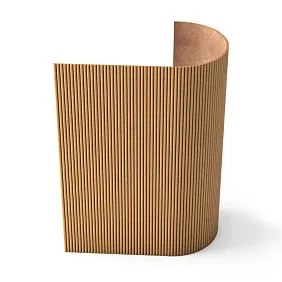
Why panel size is not just a number
Before discussing specific dimensions, one must understand the principle. Any element in an interior is not perceived in isolation—it always exists within the coordinate system of the room. Its size is read not in centimeters, but in relationships: to ceiling height, wall width, furniture scale, and the rhythm of other elements.
This is an ancient principle, thousands of years old. Vitruvius wrote about it concerning colonnades. Palladio applied it to facades. Modern designers use it, sometimes unconsciously—simply with a trained eye sensing when something is 'off.'
A slatted panel is a system of three visual variables: slat width, gap between slats, and panel height. Changing any of them alters the perception of the entire space. A wide slat with a large gap—monumental, heavy, suitable for high ceilings and large areas. A narrow slat with a small gap—detailed, dynamic, works well in small rooms. A wide slat without a gap (closed panel)—massive, sculptural, requires balancing with lighter elements.




What happens when the panel size does not match the room
Consider a specific example. An apartment with a 2.5 m ceiling. A wall 3 m wide. Slatted panels with slats 120 mm wide and a 25 mm gap are mounted on it. In total, approximately 20–21 slats fit across the 3 m width. What happens visually? The wall is fragmented into small vertical elements, creating a frequent rhythm—and visually 'eats up' the wall's width, making it seem tighter. With a 2.5 m ceiling, this also pulls the gaze downward, creating a grounded feeling.
The correct solution for the same wall: slats 60–80 mm wide with a 12–15 mm gap. The rhythm is slightly faster, the detail finer—but the space breathes. Or the opposite: slats 150–200 mm wide with a large gap. Then the rhythm is slow, monumental—and with proper lighting, the wall begins to function as an architectural object.
This is not a matter of taste. It is a pattern that can be calculated and must be understood before the panels are ordered and installed.
Our factory also produces:
What sizes of slatted panels exist
Let's get specific. Industrial and designerslatted panels for wallsare produced in a wide range of sizes. Let's break down the system by key parameters.
Get Consultation
Slat width
Width is the main visual parameter. It determines the 'frequency' of the rhythm on the wall.
-
Up to 40 mm — thin decorative slats. Create a frequent, rich rhythm, well-suited for acoustic panels on fabric or felt bases. Give a sense of airiness and lightness. Used in residential interiors, meeting rooms, bedrooms.
-
40–80 mm — the most common range for residential and commercial interiors. Balances detail and monumentality. Works with ceilings from 2.5 m.
-
80–120 mm — medium-scale slats. Read well in rooms with ceilings 2.7–3.2 m. Create an expressive rhythm without overloading with fine detail.
-
120–200 mm and wider — large-format slats. Require rooms with ceiling heights from 3 m or large areas. In a low room, such a slat feels oppressive and overloads the wall.
Gap between slats
Gap — a parameter no less important than slat width. It is the ratio of slat width and gap that determines the 'density' of the rhythm.
-
0 mm gap (closed panel) — slats join tightly, creating a unified textured plane. This is not a slatted, but a panel effect. Maximum monumentality, minimum airiness.
-
Gap 5–10 mm — a light slit. The slats are perceived almost as a single surface, but with a thin shadow line between them. A delicate rhythm.
-
Gap 12–20 mm — a balanced option. The gap is noticeable, the shadow is readable, the rhythm is expressed but not aggressive.
-
Gap 25–40 mm — an open rhythm. The space behind the slats (the substrate or wall) actively participates in the perception. Requires careful elaboration of the background.
-
Gap over 40 mm — an expressive rhythm. The slats are perceived as separate elements, not as a unified system. Requires a powerful room scale.
Panel height
Slat panel sizein the vertical dimension is a separate question. Panels can occupy the full height of the wall from floor to ceiling, half the height (a panel field), or create an accent horizontal strip at a certain height.
-
Full wall height — maximum monumentality. Works in high rooms (from 2.7 m). In rooms with low ceilings, vertical slats running the full height pull the space upward — a useful effect, but one requiring balance.
-
Up to 1.2–1.4 m (panel field on the lower part of the wall) — a classic technique. The lower third of the wall is finished with panels, the upper part is monochrome or with decorative finishing. Creates an architectural hierarchy of the wall, protects the lower part from mechanical damage.
-
Accent horizontal strip — slats at a height of 0.8–1.2 m as a decorative belt. This is a non-standard solution that makes the wall 'tell' about its structure.
Standard sizes in the room coordinate system
For convenience, let's compile everything into a working table:
| Ceiling Height | Optimal batten width | Optimal gap | Recommended panel height |
|---|---|---|---|
| Up to 2.5 m | 40–70 mm | 10–15 mm | Full or up to 1.2 m |
| 2.5–2.7 m | 60–100 mm | 12–20 mm | Full or up to 1.4 m |
| 2.7–3.2 m | 80–140 mm | 15–25 mm | Full or accent |
| 3.2–4 m | 100–200 mm | 20–35 mm | Complete |
| Over 4 m | 150–250 mm | 25–50 mm | Complete |
These are not rigid rules — they are working guidelines. Authorial decisions may intentionally violate these proportions for artistic effect. But such a violation should be conscious, not accidental.
How to relate panel width to ceiling height
This is the most frequent question when choosing slatted panels — and the most underrated one. Most people ask: 'What color to choose?' or 'Wood or MDF?'. Few ask about the ratio of slat size to space — and are later surprised why the result is 'not it'.
Let's break down the principle with specific examples.
First example: apartment 2.5 m
This is the most common situation on the Russian housing market. A 2.5 m ceiling is the minimum height for comfortable living, but the room for maneuver is limited.
At this height, wide slats (from 120 mm) visually weigh down the space. The eye, sliding along wide horizontal stripes (in horizontal orientation) or wide vertical pillars (in vertical), hits a wall and gets stuck — the room seems lower than it actually is.
The correct choice: vertical slats 50–80 mm wide with a 10–15 mm gap. Vertical orientation stretches the space upward. Moderate width creates an active, but not aggressive, rhythm. This is a classic technique for working with low rooms.Wall finishing with slatted panelsThis format provides the maximum visual effect precisely in standard apartments.
Example two: ceilings 3–3.5 m
Here the possibilities are significantly broader. The space itself is monumental — and slatted panels can work to their full potential.
Slats 100–150 mm wide with a 20–25 mm gap create a powerful, expressive rhythm that doesn't overwhelm the tall space. With horizontal orientation on high walls, the slats create an effect of visually expanding the room horizontally — walls 'recede', making the space feel more spacious.
Acoustic slatted panels of this format, mounted to half the wall height (up to 1.6–1.8 m), function as a classic panel field, dividing the wall into two registers: lower — structured, upper — neutral.
Example three: large commercial spaces
In sales floors, restaurants, atriums with ceilings 4–6 m and higher, the rules of scale are even stricter. Small slats here simply don't read — they're perceived as texture, not as architectural rhythm. Large-format slats 150–200 mm wide with gaps from 30 mm are needed. Only this scale of elements corresponds to the scale of the space.
Wooden slat panelsLarge-format slats in tall public spaces are one of the most powerful interior techniques, creating a sense of natural scale.
Categories of stucco decor: complete classification
Now — about the second side of the topic.types of molded decorationThis is not just a list of names. It's a system of functions, each solving a specific architectural task.
Category one: transition elements
These are decorative profiles that frame transitions between planes: wall-ceiling, wall-floor, wall-wall.
Ceiling cornice is the most common element. It covers the joint between the wall and ceiling, creating a visual boundary between vertical and horizontal planes. The size of the cornice should correspond to the scale of the room: for rooms with ceilings up to 2.7 m — a cornice width of 60–100 mm, for high rooms — 100–180 mm and more.
Floor skirting board is the lower transition. It separates the wall from the floor, conceals the junction line, and protects the lower part of the wall from mechanical impacts.
Corner molding — transition on internal and external corners. Especially relevant in spaces with slatted panels: the corner where two slatted walls meet requires clear architectural treatment.
Category two: structuring elements
These are profiles that divide planes into zones, create hierarchy, and organize space.
Wall molding — a horizontal or vertical profile that divides the wall into parts. In interiors with slatted panels, horizontal molding can separate the panel field from the upper part of the wall, creating a clear line.
Pilaster — a vertical element imitating a column. In walls with slatted panels, a pilaster on corners or in transition zones between materials is an architectural technique that lends the space a representative character.
Belt course — a narrow horizontal profile. Used for dividing the wall into horizontal belts. Inslatted panels in interior designa waist rail can mark the upper boundary of a panel field
Category three: accent elements
These are decorative elements that do not serve a structural function but create visual accents, focal points, 'events' in the space.
Ceiling rosette — a medallion in the center of the ceiling. Historically — the mounting point for a chandelier. Modern application — an architectural accent that organizes the center of the ceiling plane.
Decorative overlay — a three-dimensional element used on walls or ceilings to create an accent. Wall rosettes, decorative cartouches, panels made of individual molded elements — all fall into the category of overlays.
Keystone — an element above window and door openings. Creates an 'event' above the opening, highlights it architecturally.
Category four: framing elements
These are frames and trims for mirrors, paintings, windows, doors, niches.
Casing — the finishing of a door or window opening. In interiors with slatted panels, a casing made of molding creates a clear boundary between the slatted surface and the opening.
Wall molding frame — a rectangular molding frame used on walls to create a 'picture frame' structure. In combination with slatted panels, this is possible in areas where the slats end and a plastered surface begins.
Completename of molding decorand professional terminology should be studied before starting work with a designer or contractor — this significantly simplifies communication and reduces the risk of errors when ordering.
How to choose moldings, overlays, and cornices to match the scale of slatted panels
Here we come to the main practical question. Slatted panels have been chosen — with specific dimensions, specific gaps, specific materials. Now you need to select decorative molding so that it enhances the image, not competes with it.
The principle of proportional correspondence
A simple rule: the size of the molding should be comparable to the size of the slat. Not equal — but comparable. A cornice 40 mm wide on a wall with slats 150 mm wide is a detail that gets lost. It's not seen. It doesn't work. A cornice 120–150 mm wide on the same wall — that's a proportionate architectural accent.
Practical rule: the width of the ceiling cornice should be 70–120% of the width of the panel slat. This creates a unified scale.
Principle of stylistic correspondence
Slatted panels in interior designcan be fundamentally different styles. Geometrically strict dark MDF slats in a loft style — that's one architectural language. Oak slats in a neutral finish in modern classic — another. The profile of decorative molding should correspond to this language.
For loft, high-tech, minimalism: moldings with a simple rectangular or beveled profile, without ornamentation. Clear edges, no curls.
For modern classic, neoclassical: profile cornices with simple relief — a shelf, an ovolo, a cavetto. Moderate relief without Baroque overload.
For classic and Art Deco: complex profile cornices, rosettes with relief ornament, pilasters with capitals. Here, slatted panels are also used — but more often in classic wooden execution, like clapboard or profile panel, not as a modern slatted system.
Principle of color unity
The simplest way to link slatted panels and molded decor into a unified system is a single color. If the slats are painted white, the moldings are white. If the slats have a dark tint, the moldings are in the same tone or a contrasting accent.
A two-color solution (panels and moldings in different tones) requires design intentionality. This works when the color difference carries meaning: for example, dark slats and light molding create an accent at the wall-ceiling boundary. Random two-colorness is fragmentation, not architectural logic.
Specific recommendations for selection
For slatted panels with a slat width of 40–60 mm:
-
Ceiling cornice: width 60–80 mm, simple profile
-
Baseboard: height 60–80 mm
-
Wall molding (if used): width 25–40 mm
For slatted panels with slats 80–100 mm:
-
Ceiling cornice: width 90–120 mm, medium profile
-
Baseboard: height 80–100 mm
-
Wall molding: width 40–60 mm
For slatted panels with slats 120–160 mm:
-
Ceiling cornice: width 120–160 mm, expressive profile
-
Baseboard: height 100–120 mm
-
Wall molding: width 60–80 mm
Typical proportioning errors
This is the most valuable part. Because mistakes are repeated. They are made both by those doing renovations for the first time and by long-time professionals. Knowing typical mistakes is the best insurance.
First mistake: wrong choice of slat width for the ceiling
The most common one. A person sees a beautiful photo with wide slats in a spacious interior, orders the same dimensions for an apartment with a 2.5 m ceiling—and ends up with a space that literally feels oppressive from above. This is not a material defect. It's a violation of scale compatibility.
Second mistake: full-height paneling in a cramped room
Vertical slats running full height are a powerful technique for spaces of 15–20 sq.m. In a room of 9–10 sq.m., the same technique turns the space into a cramped well. For small spaces, a paneled field covering 1/2 to 2/3 of the wall height with a neutral upper register is better.
Third mistake: molding of the wrong scale
A small cornice on a wall with large slats is a decorative disproportion that everyone feels but not everyone can explain. The molding gets lost, and the wall looks unfinished. Or the opposite: a massive cornice on a wall with thin, elegant slats—overloads the wall, disrupting the lightness of the slatted rhythm.
Fourth mistake: mixing ornamental styles of molding
A classical acanthus cornice combined with a simple geometric baseboard strip and an Art Deco rosette—these are three different eras, three different architectural languages in one room. Each element may be beautiful on its own, but together they create stylistic chaos.
Fifth mistake: horizontal orientation of slats in a narrow room
Horizontal slats visually shorten the space. In a narrow corridor (width up to 1.5 m), horizontal slats make it even narrower. Correct approach: vertical slats that stretch the space upward, or neutral finishing without a pronounced direction.
Mistake six: slatted panel without accounting for substrate height
slatted modular wall panelis mounted on a substrate that protrudes from the wall by a certain thickness. This thickness must be taken into account when installing moldings, baseboards, and casings. If the baseboard is not designed for the panel's protrusion — an unsightly gap appears between the baseboard and the lower end of the panel. This is a detailed but important point that becomes visible after installation.
Special solutions:soft slat panelsand molded decor
The combination of soft slatted panels (on fabric, leather, or felt backing) with decorative moldings deserves special attention. This is a special register — elegant, tactile, warm.
A soft slatted panel on a fabric backing is both an acoustic and decorative element. The slats on it are thin — usually 15–30 mm. For this scale of slats, proportionate moldings are needed: narrow profiles 30–50 mm in simple execution. A massive cornice above a soft slatted panel is a stylistic mismatch that destroys the delicacy of the solution.
installation of slatted panelsof the soft type is executed differently than standard ones: without a frame, using adhesive or special fasteners. This is important to consider when developing junctions with moldings and baseboards.
Slatted panels for ceilings and ceiling moldings: a special logic
When it comes toslatted panels for ceilings, the logic of proportions acquires additional dimensions. The ceiling is a horizontal plane overhead, which is perceived fundamentally differently than a wall.
For ceilings, slats are typically used narrower than on the walls of the same room. This is because a ceiling plane can feel psychologically 'oppressive' when overloaded—and a finer rhythm creates a sense of lightness. The standard recommendation is: the width of ceiling slats should be 60–80% of the width of the wall slats in the same space.
A ceiling cornice, when a slatted ceiling is present, serves a dual function: it conceals the perimeter joint of the slat system with the ceiling planes and creates an architectural frame for the ceiling. For slatted ceilings, the cornice is not optional decor but a technically and aesthetically essential element.
About the company STAVROS
The correct proportion is always the result of professional knowledge and quality material. STAVROS producesRafter panelsfrom solid wood and MDF in a wide range of sizes: various slat widths, custom panel height, available colors and finishes. Simultaneously, the company produces a full range of polyurethane molded decor: ceiling cornices, moldings, baseboards, overlay elements—all in a size range that allows for selecting scale-coordinated solutions for any space.
STAVROS is not a 'material store,' but a manufacturing company with its own facilities, producing items with controlled geometry and stable characteristics. For professionals and discerning clients, the company provides consultations on selecting sizes and proportions, taking into account the specific room. Because the right result begins with the right size.
FAQ: Answers to popular questions
How to calculate how many slats are needed for a wall?
Divide the wall width by the sum of the slat width and the gap. For example, a wall is 3 m, slat is 80 mm, gap is 15 mm: 3000 / (80+15) ≈ 31–32 slats. Plus, account for edge trimming and a 5–7% reserve.
Can slatted panels of different widths be combined on one wall?
Yes, this is a design technique—rhythmic alternation of slats of different widths. But it requires a clear logic of alternation, otherwise the wall looks random.
What is more important—the slat width or the gap?
Both parameters are equally important. Their ratio determines the rhythm density. A wide rail with a narrow gap — heavy and monolithic. A narrow rail with a wide gap — airy and light. Change both parameters together, evaluating the overall ratio.
Is molding needed on the upper edge of the slatted panel if it does not reach the ceiling?
Mandatory. The upper horizontal edge of the panel must be finished: with a shelf molding, a horizontal belt, or a special finishing profile. An untreated panel end is an incomplete solution.
How to choose a baseboard for a slatted panel?
The height of the baseboard must compensate for the thickness of the panel underlay. If the panel protrudes from the wall by 20 mm — the baseboard must have a 'shelf' at least 20 mm deep, or be tall enough to cover the lower end of the panel without a gap.
What size cornice to choose for a room with slatted panels?
Cornice width — 70–120% of the panel rail width. For an 80 mm rail — cornice 60–96 mm. This is a proportional correspondence that creates a sense of design consistency.
Does the color of the rail affect the perception of size?
Yes. Dark rails of the same physical size appear heavier and more monumental. Light ones — lighter and thinner. With low ceilings, dark wide rails enhance the feeling of tightness; light ones of the same width — reduce it.