Article Contents:
- What Are Slatted Panels — Definition and Construction Principle
- History and Relevance of the Trend in 2025–2026
- Types of Slatted Panels by Material
- MDF — The Universal Leader
- Natural Oak and Solid Wood — Premium Class
- PVC — Practicality Without Compromise
- Aluminum — For Bold Solutions
- WPC — The Link Between Nature and Technology
- Gypsum — Exquisite Classic
- Types of Slatted Panels by Construction
- Rigid Slatted Panels
- Flexible Slatted Panels
- Panel Systems with Recessed Profiles
- Veneered Slatted Panels
- Types by Location: Wall, Ceiling, Facade
- Wall Slatted Panels
- Ceiling Slatted Panels
- Facade Slatted Systems
- Decorative Properties of Slatted Panels: Light and Shadow, Rhythm, Volume, Acoustics
- Light and Shadow as the Main Artistic Technique
- Visual Rhythm and Architectural Order
- Volume and Three-Dimensionality of the Plane
- Acoustic Properties of Lintel Structures
- Where Slatted Panels Are Used
- Residential interiors
- Commercial interiors
- Furniture and Built-in Structures
- Comparative Table of Materials for Slatted Panels
- How to Choose a Slatted Panel for the Task
- First Question: Where is the structure mounted?
- Second Question: What is the stylistic context?
- Third Question: What is the project budget?
- Question four: is functional load necessary?
- Question five: who does the installation?
- Installation of slatted panels: key principles
- Slatted design trends in 2025–2026
- Frequently asked questions about slatted panels
- Conclusion: the versatility of slatted construction

Imagine a wall that doesn't just confine space, but converses with it—creating rhythm, shadow, depth, volume. This is precisely whatRafter panelscan do. One of the most compelling trends in contemporary interior architecture, slatted wall panels have evolved from a niche solution into a universal designer tool—from country residences to metropolitan offices, from minimalist studio apartments to restaurants with historical character. This material is a comprehensive guide: what slatted panels are, what they're made of, their types by construction and purpose, how to choose correctly, and where to apply them. There's no fluff or clichés here—only precise, verified information for those who make decisions consciously.


What are slatted panels—definition and construction principle
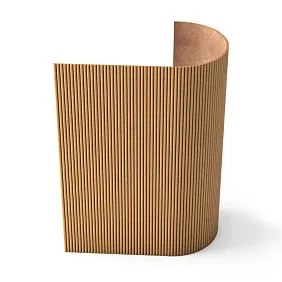
The construction is based on a simple yet brilliant principle: parallel slats are fixed to a load-bearing base—a profile, lathing, or directly onto the wall—with a specified spacing between them. This gap is the core of the entire aesthetic. It is what creates the play of light and shadow, visual depth, and that mesmerizing rhythm that makes the surface alive, not static.
Slatted panels are a decorative-constructive finishing element consisting of elongated planks, secured to a framed or frameless base with a regular or arbitrary interval. The slats can be oriented vertically, horizontally, or diagonally—depending on the design task and architectural context. Slat width varies from 20 to 120 mm, gap spacing from 5 to 50 mm, thickness from 12 to 40 mm. It is these three parameters together that determine the final visual character of the surface: elegance or monumentality, lightness or weightiness.
It is fundamentally important to understand: slatted panels are not just a finishing material. They are an architectural element that shapes space. They work with light, regulate acoustics, conceal utilities, zone a room, and simultaneously serve as an independent decorative statement. This is their difference from ordinary clapboard, laminate, or tile—the listed materials merely cover a surface, whereas slatted constructions create a new architectural plane.




History and relevance of the trend in 2025–2026
Surprisingly, slatted constructions in interiors have a history dating back to the mid-20th century. Scandinavian architects of the 1950s actively used wooden slats in residential construction—it was then that the very 'Scandinavian style' was formed, which is experiencing a rebirth today. Japanese architecture has used lattice constructions of shōji as a spatial load-bearing element for millennia. Italian designers of the 1970s experimented with aluminum slats in commercial interiors.
However, slatted panels for walls truly became a mass trend from 2018 to 2022, when leading global design studios began incorporating them into mid-price residential projects. Before that, slatted constructions were perceived as an element of premium or commercial interiors. The democratization of materials—primarily the emergence of quality MDF panels and PVC slats—made this technique accessible to a wide audience.
In 2025–2026, the trend not only persists—it evolves. Uniform white vertical slats are being replaced by complex multi-level compositions, material combinations, integration of lighting within slatted constructions, and the use of textured surfaces. Particular popularity has been gained bySolid wood products—oak, ash, pine in various processing options. Natural wood in slatted form has become a response to the audience's demand, tired of synthetics and plastic in interiors. Simultaneously, demand is growing for flexible slatted systems—for curved surfaces, arches, non-standard architectural solutions.
Our factory also produces:
Types of slatted panels by material
The choice of material is not just a question of aesthetics. It is a decision that determines performance characteristics, durability, installation cost, and the total cost of ownership. Let's examine each material honestly and in detail.
Get Consultation
MDF—the universal leader
MDF (medium-density fiberboard) currently holds first place in terms of application volume in interior slatted panels. There are several reasons. First, MDF is excellent for milling—slats of any profile can be cut from it: rectangular, trapezoidal, with rounded edges, with a chamfer, with a relief pattern. Second, the MDF surface perfectly accepts coatings: enamel, veneer, film, varnish, patina. Third, MDF's dimensional stability is significantly higher than that of solid wood—panels do not warp or crack with humidity fluctuations in standard residential spaces.
Slatted panels made of MDF are produced in lengths from 2400 to 3000 mm, slat width from 30 to 100 mm. Standard thickness of the load-bearing base is 9–12 mm, thickness of the slat itself is 16–22 mm. Matte enamel remains the most in-demand finish: it creates a noble depth of tone and conceals minor installation defects. MDF panels are suitable for living rooms, bedrooms, studies, hallways, meeting rooms, and retail spaces.
Important note: standard MDF is not intended for high-humidity areas. For bathrooms and kitchen zones, it is necessary to use moisture-resistant MDF (HMR) or choose another material.
Natural oak and solid wood—premium class
If MDF is the workhorse of the slatted world, thenslatted panels made of solid wood—are its aristocracy. Oak, ash, walnut, pine, cedar—each species carries a unique texture, scent, and character. Oak provides a noble, coarse structure with pronounced vessels, ash—a finer, almost graphic pattern, walnut—chocolate shades with smooth transitions.
Slatted constructions made of solid wood possess a number of undeniable advantages: a natural warm surface, a unique pattern on each plank, the possibility of restoration (sanding, repainting, re-treatment), durability with proper care—such panels last for decades. Plus, environmental purity, which is becoming an increasingly significant argument for buyers.
Limitations of solid wood—sensitivity to moisture and temperature fluctuations. Wood 'breathes': it expands and contracts with changes in humidity. Professional installation requires compensation gaps and proper material acclimatization before installation. Oak and other hardwoods are treated with oil, wax, varnish, or left in a brushed state—each finish creates a fundamentally different visual result.
PVC—practicality without compromise
PVC slat panels occupy a special niche: they are intended primarily for rooms with high humidity — bathrooms, toilets, balconies, technical rooms. PVC is completely impervious to water, does not rot, does not deform, is easy to clean and requires no special maintenance.
Modern PVC panels are a far cry from Soviet-era plastic tiles with wood imitation. Quality manufacturers offer matte textured surfaces with realistic stone, wood, or concrete textures. The length of standard PVC slat panels is 2700–3000 mm, width — from 25 to 300 mm. Installation is the simplest among all materials: clips, glue, or hidden fasteners.
A limitation of PVC is thermal expansion. With significant temperature fluctuations (e.g., on open balconies in harsh climates), deformation is possible. In enclosed, heated rooms, this factor is negligible.
Aluminum — for bold solutions
Aluminum slat panels are the choice for those who favor high-tech, loft, or brutal industrial style. Aluminum provides perfectly straight lines, a cold metallic sheen or a matte satin surface, and absolute geometric stability. It does not burn, rot, deform, or fear moisture.
Aluminum slats are especially effective when combined with integrated lighting — the profile includes grooves for LED strips, turning the ceiling or wall into a source of soft, diffused light. This solution is extremely popular in commercial interiors: shopping malls, restaurants, offices, hotel lobbies.
Aluminum systems require precise installation and specialized fasteners. The cost of material and labor is higher than for MDF or PVC, but the service life and performance characteristics justify the investment in the long term.
WPC — the link between nature and technology
Wood-polymer composite (WPC) is a material where natural wood fiber is combined with polymer binders. The result is a material that looks like wood but behaves like plastic: it is impervious to moisture, UV rays, frost, and mechanical stress. WPC slat panels are the optimal solution for facades, terraces, gazebos, canopies, and any open spaces.
WPC slats are available in a wide color range: from light ash to dark wenge. The surface can be smooth or brushed. The panels are mounted with hidden fasteners — the facade ends up clean, with no visible screws. The service life of quality WPC is from 25 years with proper use.
Gypsum — exquisite classic
Gypsum slat constructions are a special story. They are used primarily in classic, neoclassical, and art deco interiors, where plasticity of form and the possibility of custom casting are important. Gypsum allows for creating slats with complex profiles — with molded details, smooth curves, capitals, and rosettes. This is why gypsum slat elements are often combined with other decorative products —pilasters and columns, creating a unified architectural composition.
Limitations of gypsum — significant weight and fragility under mechanical impact. Installation requires reinforced fastening and experience working with heavy decorative elements. However, the final result is a genuine work of architectural art, unparalleled among other materials.
Types of slat panels by construction
The construction type is a selection parameter no less important than the material. It is the construction that determines how the panels will behave during installation, how precisely they can be fitted to a specific space, and what architectural tasks they can solve.
Rigid slat panels
This is the classic execution: slats are fixed to a rigid load-bearing base (MDF, plywood, metal profile) and form a monolithic slab. Rigid panels are convenient to install — they are mounted as a single module, quickly and precisely. The standard module size is 600×2400 mm or 600×2700 mm. Several modules are joined edge-to-edge, forming a continuous slatted surface.
Rigid panels are ideal for flat vertical and horizontal surfaces — walls, ceilings, partitions. They are used in residential interiors, commercial spaces, exhibition stands. The main limitation is the inability to mount on curved surfaces without special preparation.
Flexible slat panels
Flexible panels are a relatively new solution, responding to the demand from designers working with non-standard architectural forms. The base of such panels is an elastic mesh or flexible polymer profile, allowing the structure to be bent along a radius. This opens up possibilities for finishing columns, arches, rounded walls, domes, elliptical partitions.
Flexible slat panels are most often made from PVC or thin veneer on a fabric base. The bending radius depends on the material and slat thickness — manufacturers specify the minimum radius in technical documentation. Installation requires experience and care: it is important to distribute tension evenly across the entire surface.
Slotted panel systems
Assembled systems are a set of individual slats and profiles, which the installer assembles into a structure directly on-site. This approach offers maximum flexibility: the spacing, slat width, height, and angle of inclination can be precisely selected. Assembled systems are especially effective in rooms with non-standard dimensions — low ceilings, slanted walls, attic planes.
The drawback of assembled systems is labor-intensive installation. Each slat is installed separately, requiring precise marking and alignment. A professional installer spends 2–3 times more time on an assembled system than on a modular one. However, the result justifies the effort: a perfectly fitted assembled structure looks like an author's architectural work.
Veneered slat panels
Veneered panels occupy an intermediate niche between MDF and solid wood. The base is MDF or HDF, the face surface is a thin layer of natural veneer (0.6–1.5 mm). The result: visual identity to natural wood at a significantly lower cost and greater stability.
Veneer can be sliced (cross-cut, emphasizing annual rings) or peeled (longitudinal cut, giving long parallel fibers). Species — oak, walnut, ash, cherry, teak. Finish — oil, varnish, wax, patina. Veneered slat panels are used where the aesthetics of natural wood are important, but budget or technical conditions do not allow for using solid wood in full.
Types by location: wall, ceiling, facade
The same material behaves fundamentally differently depending on the mounting plane — visually, structurally, and functionally.
Slatted wall panels
The wall is the most common and logical place to use slatted structures. It is here that they fully reveal their decorative potential: vertical slats visually raise the ceiling, horizontal ones expand the space, and diagonal ones create dynamics and movement.
Slatted wall panelsare installed as an accent element (one wall in a room) or as a full-fledged finish for the entire perimeter. An accent wall with slats is one of the most popular design techniques of the last five years: behind the headboard of a bed, behind a TV, in a hallway niche. Full slatted finishing creates an effect of complete immersion in the material — this requires a competent balance with other surfaces in the interior.
On walls, slatted panels are often combined with moldings, cornices, and other profile elements. This combination is especially organic in classic interiors, where slats work in an ensemble withwooden corniceand stucco decor, creating a complex multi-level plane.
Slatted ceiling panels
A ceiling with slats is a fundamentally different spatial experience than a wall. When the gaze rises upward and meets a rhythmically lined surface, a sense of order and scale arises. A slatted ceiling visually raises or lowers the height of a room — depending on the direction of the slats and the chosen color.
Ceiling slatted systems require special attention to the load-bearing structure: the suspended frame must support the weight of the panels and ensure perfect horizontality of the plane. Acoustic filler — mineral wool or a special sound-absorbing mat — is often laid between the slats. This turns a decorative ceiling into a functional acoustic element, reducing the level of reverberation in the room.
Ceiling slatted panels are especially effective in rooms with hidden lighting: LED strips are laid in the space between the slats or behind them, creating soft diffused glow without a visible source. This technique turns the ceiling into a source of atmospheric lighting.
Facade slatted systems
The facade is the most demanding place for the application of slatted structures. Here, the material works under conditions of direct solar radiation, temperature fluctuations, precipitation, and mechanical loads. Only specially designed materials are suitable for facades: thermally modified wood, WPC (wood-plastic composite), aluminum, painted larch or pine with weather-resistant impregnation.
Facade slatted panels are mounted on a ventilated sub-facade frame — this is fundamentally important for the preservation of the load-bearing walls and the material itself. The air gap between the slats and the wall provides ventilation and moisture removal. Vertical slats on the facade create an expressive architectural rhythm that changes depending on the lighting angle — the facade looks different in the morning than at noon or at sunset.
Decorative properties of slatted panels: chiaroscuro, rhythm, volume, acoustics
To speak of slatted panels only as a finishing material is to underestimate their true nature. They are first and foremost a tool for working with space, light, and sound.
Chiaroscuro as the main artistic technique
The gap between the slats is not just a technical element of the structure. It is a slit through which light penetrates into the structure, falls on the load-bearing base, and creates a shadow. When the lighting angle changes — natural or artificial — the shadow moves, changing depth and intensity. The surface literally lives throughout the day.
This effect is maximally expressed with side lighting — wall sconces, floor lamps with directional light, window light at sunset. Deep shadows between wide slats create a dramatic effect; narrow gaps with frequent slats give a soft, almost textile-like pattern. Designers intentionally plan lighting for slatted structures — this is one of the key professional skills when working with this material.
Visual rhythm and architectural order
Rhythm is a fundamental category of architecture. The regular alternation of slat and gap creates a visual rhythm that organizes space and creates a sense of order. This works on the level of perception psychology: ordered patterns reduce anxiety, create a sense of stability and comfort.
Changing the rhythm — varying the width of the slats or the gap spacing — allows for creating accents and compositional climaxes. For example, gradually narrowing slats from the edges to the center of the wall creates an optical illusion of perspective. Alternating wide and narrow slats gives a syncopated rhythm, characteristic of jazz aesthetics in interiors.
Volume and three-dimensionality of the plane
Slatted panels turn a flat wall into a three-dimensional object. This effect is especially significant in small spaces where there is no opportunity to play with volumetric architectural forms. The slats protrude 20–40 mm from the load-bearing plane, and this is enough for the wall to cease to be perceived as a simple barrier.
Three-dimensionality is especially expressive when using slats of different thicknesses or heights. Multi-level slatted structures, where slats protrude to different depths, create a relief comparable to a bas-relief. This is the highest level of slatted design, requiring not only installer skill but also a clear authorial concept.
Acoustic properties of lath structures
Acoustics — a functional dimension often forgotten when discussing decorative materials. Meanwhile, slatted panels possess significant acoustic properties. The slats scatter sound waves — this reduces the number of direct reflections and decreases the reverberation in a room. When sound-absorbing material is used in the space behind the slats (acoustic wool, porous foam), the effect is multiplied.
This is precisely why slatted structures are so often found in meeting rooms, home theaters, recording studios, restaurants, and concert halls. The combination of decorative expressiveness and functional acoustic efficiency makes them an indispensable tool in professional design.
Where are slatted panels used
The range of application is so wide that it is easier to list the places where slatted structures are not used than those where they are appropriate.
Residential interiors
The living room is the most popular space for using slatted panels in homes. An accent wall behind a sofa or TV, a slatted partition between zones, a decorative niche with lighting — all of this has become a classic of modern residential design. The bedroom requires a softer, more tactile approach: here, natural materials — oak, ash, veneer — in warm tones are preferred. A slatted wall behind the headboard of a bed creates a sense of coziness and architectural completeness.
The hallway — a small space where slatted panels work especially effectively. Vertical slats visually raise the ceiling of a narrow corridor, create rhythm, and guide the gaze inward. A study or home library — another grateful place: wooden slats combined with bookshelves create an atmosphere of an intellectual space with a rich history.
Commercial interiors
In commercial environments, slatted panels work to create brand identity. A restaurant with wooden slats conveys warmth and naturalness. An office with aluminum slatted structures speaks of technological sophistication and precision. A hotel with veneered panels in the corridors conveys status and attention to detail.
Retail spaces actively use slatted ceilings with integrated lighting—this creates uniform, soft light without harsh shadows, ideal for product display. Medical facilities and educational spaces have appreciated the acoustic properties of slatted structures: reducing noise levels in crowded rooms directly contributes to comfort and work efficiency.
Furniture and built-in structures
Slatted facades are one of the main trends in furniture manufacturing in recent years. Sliding wardrobes with slatted doors, kitchen fronts with vertical slats, bar counters with horizontal slatted decor—all of this forms a new aesthetic for built-in furniture. A slatted facade is lighter than a solid panel and creates an interesting play with the space behind it—especially if interior lighting is provided.
Comparative table of materials for slatted panels
| Material | Moisture resistance | Interior/facade | Price (rel.) | Durability | Eco-friendliness |
|---|---|---|---|---|---|
| MDF | Medium | Interior | Low | 10–15 years | Medium |
| Solid wood | Medium | Interior | High | 30+ years | High |
| PVC | High | Interior/balcony | Low | 15–20 years | Low |
| Aluminum | High | Interior/facade | High | 30+ years | Medium |
| WPC (Wood-Plastic Composite) | Very High | Facade/outdoor | Medium | 25+ years | Medium |
| Veneer on MDF | Medium | Interior | Medium | 15–20 years | High |
| Plaster | Low | Interior | Medium | 20+ years | High |
How to choose a slatted panel for the task
The right choice is the answer to five key questions. Answer them sequentially, and the solution will come by itself.
First question: where is the structure being installed?
This is the starting point. A bathroom and an open facade mean humidity and temperature fluctuations. Therefore, MDF and solid wood without protective treatment are immediately ruled out. A living room with central heating is a stable environment where almost all materials are suitable. An office with high traffic requires resistance to mechanical impacts, making aluminum and high-quality MDF with a hard coating the priority.
Second question: what is the stylistic context?
Scandinavian minimalism and Japanese wabi-sabi mean natural materials, thin profiles, neutral tones. Loft and high-tech mean aluminum, concrete, metal details. Classic and neoclassical meanpilasters and columns, molded decor, complex profiles made of MDF or plaster. Organic biophilic design necessarily means oak or other solid wood with a natural texture.
Third question: what is the project budget?
PVC and MDF are the most affordable options. Veneered panels occupy the mid-price range. Solid wood, thermally modified wood, and aluminum systems are a higher investment, which, however, is justified by durability and aesthetic value. It's important to consider not only the material cost but also the installation cost: complex assembled systems require expensive professional labor.
Fourth question: is functional load needed?
Acoustics—add sound-absorbing material behind the slats. Concealing utilities—provide access hatches or removable sections. Lighting integration—choose a profile with a groove for LED strips. Ventilation—calculate sufficient clearance and ensure air passage.
Fifth question: who is installing?
Professional installation—any system: rigid panels, assembled structures, ceiling systems. DIY installation without special experience—choose ready-made modular panels with adhesive or clips. This minimizes the risk of errors and speeds up the process.
Installation of Slatted Panels: Key Principles
Even the highest quality material requires proper installation — otherwise all its advantages will be negated by deformations, misalignments, and visible gaps at the joints.
The substrate must be level, dry, and sturdy. Substrate variations exceeding 3 mm per linear meter require leveling or installation on a batten framework. Wooden and MDF panels must be acclimatized in the room before installation — at least 48 hours at the working temperature and humidity. This reduces the risk of deformation after installation.
Concealed fastening is not a whim but a professional standard. Visible screws on the face of the slats are a sign of unprofessional work. Use clips, T-profiles, or specialized slatted systems with integrated fastening. Expansion gaps at the ends (2–3 mm) and between panels (0.5–1 mm) are mandatory for wooden materials — they compensate for seasonal wood movement.
Ceiling installation requires additional attention to the weight of the structure and the reliability of the supporting hangers. Each hanger must withstand at least three to four times the load of the calculated panel weight. Mounting points are spaced evenly with a pitch of no more than 600 mm.
Slatted Design Trends for 2025–2026
The world of design never stands still. Slatted structures evolve with it, offering new interpretations of the basic principle each season.
The most noticeable trend is the combination of materials on a single plane. Wooden slats alternate with metal inserts, dark MDF neighbors with brass profiles, matte white veneer combines with a terracotta concrete background. Such combinations create a complex material narrative — the surface tells a story.
The second significant trend is the integration of slatted panels with lighting at the design stage, not as an afterthought. Designers incorporate LED strips inside the slatted profile at the material selection stage, creating an inseparable unity of form and light.
The third trend is the reinterpretation of classic forms. Plaster slatted structures with molding, combining the modern rhythm of slats with the handiwork of a craftsman, are experiencing a true revival. They fit organically into the context of new eclecticism, where contemporary and historical exist in dialogue.
Frequently Asked Questions about Slatted Panels
Can slatted panels be installed on a ceiling by oneself?
Yes, provided ready-made modular systems on a suspended frame are used. Ceiling installation requires precise marking and reliable fastening. If there are doubts about skills — it's better to consult a professional.
What slat width is optimal for a small room?
For rooms up to 15 m², it is recommended to choose slats 30–50 mm wide with a gap of 8–15 mm. Wider slats visually weigh down the space.
Do slats need to be painted after installation?
MDF slats are supplied already painted or film-coated. Solid wood requires on-site finishing — oil, varnish, wax. PVC and aluminum do not need additional coating.
How to care for wooden slatted panels?
Wipe with a dry or slightly damp soft cloth. Renew the oil or wax coating every 1–2 years. Avoid direct water contact and aggressive cleaning agents.
Which slatted panels are best for a bathroom?
For a bathroom, PVC panels with a matte surface or aluminum slatted systems with anodized coating are optimal. If you wish to use wood, choose teak or thermally treated ash with enhanced moisture protection treatment.
Slatted Panels and Cladding — What's the Difference?
Cladding is a continuous covering without gaps, creating a closed surface. Slatted panels are an open structure with gaps between the planks. The fundamental difference: cladding covers the wall, slats work with the wall as an architectural object.
How long do MDF slatted panels last?
Under proper operating conditions (normal humidity, no direct contact with water) — 10–15 years without the need for repair. If an individual slat is damaged, it can be replaced without dismantling the entire structure.
Can slatted panels be used in a children's room?
Yes. Choose materials with environmental safety certificates — E0 or E1 for formaldehyde emission class. Natural solid wood or veneered panels with water-soluble paints are the optimal choice for a children's room.
Conclusion: The Versatility of Slatted Construction
Slatted panels are not a trend that will pass in a season or two. This is an architectural principle that has existed for millennia and will exist for as long again. Because it appeals to the fundamental properties of perception — rhythm, light, shadow, materiality. It works in a hut and a skyscraper, in a bedroom and an airport, in wood and metal.
Today, the choice of slatted structures is vast — from budget PVC to noble oak with hand-brushing. From flexible panels for arches to monumental plaster reliefs. Every project finds its solution — you just need to correctly formulate the task and choose the material that answers it honestly and precisely.
When you look at a well-designed slatted wall, you don't think about screws, adhesives, or profiles. You see rhythm. You feel the warmth of the material. You perceive the space differently — more voluminous, more interesting, richer. It is in this ability to transform perception that the true power lies.slatted wall panels.
STAVROS is one of the leading manufacturers and suppliers of wooden architectural elements for interiors in Russia. The STAVROS catalog features slatted panels made from solid wood and MDF, products made from natural oak, veneered structures, wooden moldings, pilasters, and columns — the full range of decorative elements for creating architecturally expressive interiors. STAVROS works with both private clients and professional designers and architects, offering customized solutions for specific projects. The quality of materials, precision in manufacturing, and expert support at all stages — from selection to installation — make STAVROS a reliable partner in creating spaces that live and delight their owners for years.