












































































Article Contents:
- MDF as the foundation of modern slat finishing: why this material
- MDF classes: what to choose for a specific room
- In which rooms MDF slats work best
- Living room: accent wall and TV zone
- Bedroom: headboard as a slat installation
- Study and library: slats as the 'binding' of space
- Hallway and corridor
- Children's room
- Polyurethane molding: why it's not an 'imitation' but an independent material
- Assortment of polyurethane molding for combination with MDF slats
- Cornices and Ceiling Baseboards
- Moldings and profile frames
- Overlay elements: rosettes, medallions, pilasters
- Polyurethane skirting boards
- For painting or in finished color: two options for MDF battens and moldings
- Ready-made factory coating for MDF
- MDF for painting
- Moldings: always for painting
- How polyurethane moldings complement the strict geometry of MDF batten panels
- The 'smooth and relief' principle
- The 'one material — one accent' principle
- Color solutions: table of working combinations
- Selection of profiles and sections: proportions that must not be violated
- Width of MDF slat and height of cornice
- Thickness of slat
- Load-bearing profile
- MDF slat panels and molding: installation sequence
- Step 1: Molding first
- Step 2: Finish ceiling and upper wall treatment
- Step 3: Load-bearing system of slat structure
- Step 4: Installation of MDF slats
- Step 5: Finishing elements
- How to avoid conflicts of textures and volumes
- Conflict 1: Same visual weight
- Conflict 2: Different decor 'eras'
- Conflict 3: Different tones within the same color temperature
- Conflict 4: Small molding over wide slats
- Conflict 5: Polyurethane molding with visible seams
- Acoustics and MDF slats: a hidden bonus of slat construction
- Features of application in commercial interiors
- Finishing cost: approximate budget for a residential space
- Care and durability: how long this combination will last
- FAQ: Popular Questions About MDF Slats and Polyurethane Molding
- About the Company STAVROS

There is one enduring trend in modern interior design that doesn't follow seasonal trends or depend on shifts in stylistic cycles. It's the union of the technological and the classical: the precise geometry of MDF and the plasticity of molded decor. Two materials created in different times and by different principles—yet proving to be remarkably compatible.
MDF slat wall panels are the language of the modern interior: clear rhythm, reproducible geometry, reliable finish. Polyurethane molding is the language of classical architecture, translated into a modern material: lightweight, moisture-resistant, repaintable. When these two languages are used together, the interior acquires a rare quality: it is simultaneously modern and lived-in, precise and vibrant.
This article provides a complete breakdown of how this combination works. Without generalities, with specific parameters, solutions, and mistakes to avoid.

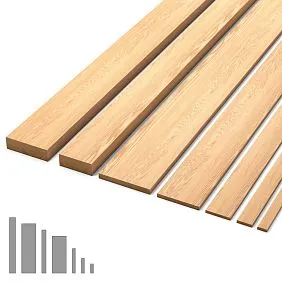

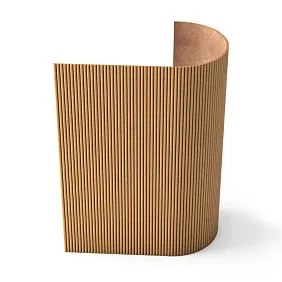
MDF as the Basis for Modern Slat Cladding: Why This Material Specifically
A question often asked by people encountering slat constructions for the first time: why MDF and not solid wood? Not just because it's cheaper—though that is a factor. But because MDF as a material possesses properties that solid wood simply cannot offer in principle.
Solid wood is a living material. It reacts to humidity, temperature, seasonal changes. A 2.7 m board, with a humidity change from 20% to 60%, changes its linear dimension across the grain by 4–6 mm. In a slat construction where panels run from floor to ceiling, this is a deformation that destroys the geometry within 1–2 seasons.
MDF—Medium Density Fiberboard—is an isotropic material. It behaves the same in all directions; its deformations under standard operating conditions are minimal and predictable. The precision of CNC milling for MDF slats is ±0.1 mm. This is a level of precision that solid wood cannot maintain.
MDF slatted panelMDF is also a surface that 'accepts' a finish coating equally well on any part. There are no knots, no earlywood/latewood with different densities, no resin pockets. The final coating applies evenly—and adheres uniformly everywhere.
Finally, MDF is available in any format and is easily milled into any slat profile: smooth, beveled, grooved, fluted, radiused. This is a freedom of form that solid wood either lacks or comes at a high cost.




MDF Classes: What to Choose for a Specific Room
Not all MDF is the same — this is a fundamental difference often overlooked when purchasing.
Standard MDF (E1, no prefix): for dry rooms — bedroom, living room, study. Not suitable for an entrance hall with an exterior door, kitchen, or bathroom.
Moisture-Resistant MDF MR (Moisture Resistant): green edge when cut — a marker of this class. For entrance halls, kitchen areas without direct water contact, children's rooms. Resistance to humidity — up to 85% RH long-term.
Fire-Retardant MDF FR: for public spaces, commercial interiors. In residential premises — at the customer's request, without mandatory requirement.
Formaldehyde emission class: E1 — mandatory standard for housing (≤8 mg/100 g). E0 — even lower emission, for children's rooms. E2 — only for non-residential premises.
MDF wall slat panelsMR E1 class — a universal choice for most living spaces.
Our factory also produces:


In which rooms MDF slats work best
Get Consultation
Living room: accent wall and TV zone
The living room is the most common place for slatted MDF panels. The TV wall, the accent wall behind the sofa, the fireplace area — slatted construction creates an architectural accent everywhere that standard painting or wallpaper lacks.
For the living room, a wide variety of tones are acceptable: from classic white to deep anthracite, from warm walnut to cool gray-blue. MDF accurately and reproducibly takes on any shade.
Height of the construction: from floor to ceiling — the architectural maximum. A panel scheme (up to 1.4–1.6 m) with horizontal molding is a classic option.slatted wall panels in the interiorThe living room is the most studied and developed segment of application.
Bedroom: headboard as a slatted installation
A slatted construction behind the bed headboard is an alternative to soft panels and decorative wallpaper. It works in neutral and warm tones: MDF in taupe, dusty rose, smoky blue. Slat width 45–55 mm, gap 12–14 mm — creates a rhythm that doesn't overload the bedroom.
Above the slatted headboard — a sconce with soft directional light. Next to the construction — molding made ofpolyurethane trimin the same tone as the wall paint: a neutral frame organizing the accent.
Study and library: slats as the 'binding' of the space
In the study, slatted MDF panels work differently than in the living room. Here the goal is to create focus, an 'enveloping' effect. Dark tones (anthracite, deep blue, dark green) combined with classic molding fromDecorative polyurethane moldings— this is a study where work gets done. Concentration of space through color and rhythm.
Built-in shelves with slatted framing — a full-fledged library wall with architectural details.
Hallway and corridor
Already covered in previous materials. Key points: only MR class, 2K coating, sealing of ends and bottom joint.
Children's room
MDF of class E0 or E1, water-dispersion coating — solvent-free. Bright tones (children's color palette), low structure (up to 1.2–1.4 m — at a child's perception level). On top — neutral molding separating the 'children's' zone from the upper wall zone.
Polyurethane molding: why it's not an 'imitation' but an independent material
In professional circles, there is still snobbery regarding polyurethane molding: 'it's not real molding, it's plastic.' This argument does not hold up — neither technically nor aesthetically.
Polyurethane moldings— it is not a copy of plaster in another material. It is an independent product with characteristics that plaster does not have:
Zero water absorption — plaster absorbs up to 20–25% water by weight. Polyurethane — less than 0.5%. For hallways, kitchens, rooms with unstable humidity, this is a fundamental difference.
Mechanical flexibility — plaster is brittle. During transportation, installation, or accidental impact — it chips. Polyurethane absorbs impact and returns to shape under minor stresses.
Lightness – a polyurethane cornice 80 mm weighs 250–350 g/m. A gypsum equivalent – 1.5–2.5 kg/m. On a drywall ceiling (load-bearing capacity 7–15 kg/m²), this is a critical difference.
Repaintability – after 5–7 years, if you wish to change the tone of the ceiling or walls, repainting polyurethane elements with acrylic paint is one day's work. Gypsum requires dismantling or multi-layer puttying before repainting.
Relief precision – polyurethane is cast in silicone molds with micron precision. The ornament relief is preserved without manual finishing. Quality is factory-grade and reproducible.
Assortment of polyurethane moldings for combination with MDF slats
Cornices and ceiling baseboards
polyurethane moldingsin the form of ceiling cornices – the most in-demand element. Profile from smooth minimalist (35–50 mm) to classic ornamental (80–150 mm and more). Standard element length – 2.0 m. Butt joint with putty or via special joining overlays.
For slatted interiors: the cornice is chosen from the same tonal group as the slats. White slats → white cornice. Gray slats → white or gray cornice. Dark slats → white cornice (contrast) or matching the slats (monochrome).
Moldings and profile frames
Moldings – horizontal or vertical profile elements for designing transitions, frames, and trims. In combination with MDF slats, moldings perform several roles:
-
Upper molding of the slatted structure (in a panel scheme)
-
Vertical molding along the edges of the structure
-
Rectangular frames on walls above the batten level
-
Framing of door and window openings
frompolyurethane trimRectangular 'frames' are mounted on walls — a classic technique of neoclassical and art deco interiors.
Overlay elements: rosettes, medallions, pilasters
Decorative polyurethane moldingIn the form of ceiling rosettes (diameter 150–600 mm), decorative medallions, corner overlays, keystones, capitals and pilasters — elements that create architectural accents.
In an interior with MDF battens, overlay elements are installed at points that 'catch' the eye: the center of the ceiling above the activity area, corner positions, framing of openings.
Polyurethane skirting boards
Floor skirting board made of polyurethane — paired with a batten structure: the same tone, the same profile style. Unlike wooden skirting, polyurethane skirting does not dry out, does not crack from accidental impacts, and is easy to repaint.
For painting or in a ready-made color: two paths for MDF battens and moldings
This is one of the key choices when designing a batten interior. Both paths have their arguments.
Ready-made factory MDF coating
Pros: precise RAL/NCS color, uniform glossy or matte finish, high hardness of 2K polyurethane varnish (H–2H pencil hardness), ready for installation without additional operations.
Cons: color cannot be changed on-site without repainting; if the coating is damaged at a single point, it is difficult to match the exact shade of the repair compound.
Application: projects with a fixed color concept, where the color of the slats is already approved before installation begins.
MDF for painting
Painted MDF plank panels— primed MR-class MDF without a topcoat. On-site: primer + 2K polyurethane paint or acrylic enamel of the required shade.
Pros: precise shade selection for a specific concept; unified tone for slats, cornice, molding, and walls — impossible to achieve otherwise; repairability (paint can be re-matched).
Cons: additional work stage on-site; quality of the topcoat depends on the installer; a paint booth or professional equipment is required for even application.
Application: projects with a custom RAL or NCS shade, 'all-in-one-tone' concepts (slats + cornice + molding + ceiling in a unified tone).
Molding: always paintable
Polyurethane elements are supplied white (with or without factory primer) and require topcoat painting. Sequence: special polyurethane primer (or acrylic primer for plastic) → topcoat acrylic paint in 2 layers.
Under no circumstances paint without primer: adhesion of acrylic paint to polyurethane without special primer is minimal, peeling within 8–12 months is guaranteed.
How polyurethane molding complements the strict geometry of slatted MDF panels
A slatted MDF structure is, first and foremost, geometry. Parallel verticals, equal rhythm, precise gaps. It is a mathematical, architectural beauty, somewhat cold in its flawlessness.
Molded decor introduces into this strictness what pure geometry lacks: curves, relief, ornament—all that the human eye perceives as 'liveliness.' A cornice with a profile shelf above a slatted wall is a 'pause' for the gaze. A ceiling rosette is the center of attraction. Overlay molding frames are architectural fields that organize the plane.
The two materials operate in different dimensions: MDF slats in the vertical rhythm of walls, polyurethane molding in the horizontal planes of transitions and ceilings. They do not compete—they structure the space on different levels.
The principle of 'smooth and textured'
Smooth MDF slats (without milling, flat surface) → ornamental molding. Visual weight is balanced: the strictness of the slats + the richness of the molding.
Milled MDF slats (with bevel, fluting, grooves) → smooth, minimalist molding (cornice without ornament). Both surfaces are 'talkative'—one must fall silent.
The principle of 'one material—one accent'
In a room with slatted panels as the main accent, molding plays the role of a frame: cornice, molding, baseboard. It structures without claiming dominance.
If the stucco decor is the accent (a complex ceiling coffer, a large rosette, ornamental pilasters) — the slatted panels should be laconic: narrow slats, a neutral tone, a smooth surface.
Color solutions: a table of working combinations
| MDF slat tone | Stucco tone | Wall tone between slats and ceiling | Effect |
|---|---|---|---|
| White RAL 9010 | White RAL 9010 | White / cream | Monochromatic ensemble, maximum purity |
| Anthracite RAL 7016 | White | Light gray / white | Contrasting, modern |
| Warm gray NCS S 3005-Y50R | White | White | Neutral classic |
| Dark walnut (film) | Ivory | Taupe | Neoclassical, warm palette |
| Smoky blue NCS S 5020-R90B | White | White | Study, library |
| Deep green NCS S 6020-G | White | Gray-white | Botanical, natural |
| Dusty Rose NCS S 2020-R | White | White / Cream | Bedroom, boudoir style |
Selection of profiles and sections: proportions that must not be violated
MDF slat width and cornice height
This pair is key in the proportion system. They must 'speak' in the same weight range:
| Slat width (mm) | Gap (mm) | Cornice height (mm) | Compatible styles |
|---|---|---|---|
| 35–45 | 10–12 | 40–55 | Minimalism, Scandinavian |
| 45–55 | 12–14 | 55–75 | Modern classic, light neoclassical |
| 55–65 | 14–16 | 70–90 | Neoclassical, contemporary classic |
| 65–80 | 16–20 | 80–120 | Neoclassical, Tuscan style |
Slat thickness
Standard MDF slat thickness: 16–22 mm. For residential spaces — 18 mm: optimal balance of strength and weight. 16 mm — lighter, but at lengths of 2.4–2.7 m, it may slightly bend under its own weight during horizontal storage. 22 mm — a reliable thickness for load-bearing structures (built-in shelves, hooks).
Load-bearing profile
For MDF slats: metal profile PS 60×27 mm with stud spacing of 400 mm. Gap behind the structure: 20–25 mm. If necessary to conceal utilities behind the structure — stud spacing can be increased to 600 mm with an additional cross profile.
Lath MDF Panelsand molding: installation sequence
Step 1: Molding — first
All ceiling and wall elements of decorative molding are installed before the slat structure. Polyurethane molding requires access to the wall/ceiling joint — this joint is covered by the slat structure. If slats are installed first — it will be impossible to install the cornice correctly.
Molding installation procedure:
-
Marking the horizontal level of the cornice with a 360° laser level
-
Mounting adhesive for polyurethane on the back surface of the element
-
Press into place — 60–90 seconds hold time
-
Fixation with finishing nails ∅1.8–2.0 mm every 30–40 cm
-
Joints between elements: neutral acrylic sealant
-
Filling joints with finishing gypsum putty
-
Primer + painting in 2 coats
Step 2: Finishing the ceiling and upper walls
Painting the ceiling and wall area above the level of the slat structure. After installing the slats, it will be difficult to access these surfaces.
Step 3: Load-bearing system of the slat structure
Marking the axes of the posts, installing PN guide rails, installing PS post profiles, leveling the plane with a laser level. Critical: the plane is leveled before installing the slats, not after.
Step 4: Installing MDF slats
Slats are installed from bottom to top or top to bottom depending on the fastening scheme. Hidden fastening with clips is recommended: no visible fastening points. Open fastening with decorative screws is for an industrial style.
Detailed step-by-step technology is in the guidefor installing slatted panels.
Step 5: Finishing elements
Baseboard made ofpolyurethane trimin the same tone as the slats. Moldings along the edges of the structure. Sealing the bottom and side joints with neutral silicone.
How to avoid conflicts of textures and volumes
The most common problem in interiors where MDF slats and moldings are present simultaneously is visual conflict. Two decorative elements 'compete' for attention instead of creating a unified whole. How does this happen — and how to prevent it?
Conflict 1: Equal visual weight
Wide slats with an ornamental surface + large ornamental molding — two equally 'loud' details. The eye doesn't know where to look. Solution: one element is the leader, the other is the background. Determine before starting work: slats as accent — molding as frame, or molding as accent — slats as a laconic background.
Conflict 2: Different 'eras' of decor
Modern flat slats + classic Baroque molding. Without a competent connector (a unified tone, proper lighting), this creates a feeling of 'museum and office simultaneously.' The solution: Neoclassicism as a style—slats with a moderate profile (45° bevel, no more) + molding with a classic but not Baroque profile.
Conflict 3: Different tones within the same color temperature
Warm cream MDF + cool white cornice — they appear as 'one color' in daylight and different in evening light. Solution: all elements from the same paint batch or from the same tonal catalog (RAL Classic or NCS).
Conflict 4: Small molding above wide slats
A 40 mm cornice above 70 mm slats — the upper element 'sinks', gets lost. Rule of proportionality: cornice height ≥ 60% of slat width. Slats 70 mm → cornice at least 42 mm. Practically: for 70 mm slats — cornice from 75 mm.
Conflict 5: Polyurethane molding with visible seams
Poorly puttied and unpainted seams between molding elements are visible as horizontal stripes — this destroys the impression of monolithic architectural decor. Seams: acrylic sealant + finishing putty + sanding + primer + 2 coats of paint.
Acoustics and MDF slats: the hidden bonus of slat construction
Batten panels are rarely discussed as an acoustic solution—and wrongly so. The gaps between the battens act as slot acoustic elements: high-frequency sounds are partially scattered into the space behind the structure rather than reflected off a flat, solid wall.
When the space behind the load-bearing base is filled with acoustic material (technical felt with a density of 30–50 kg/m³, mineral wool in slabs), the structure becomes a full-fledged acoustic screen with a sound absorption coefficient αw of 0.45–0.65 in the mid-frequency range.
acoustic slat panels—a distinct product category with defined acoustic characteristics. In a home theater, music room, or meeting room, this addresses two tasks simultaneously: acoustics + interior design.
Features of application in commercial interiors
Wooden slat panelsand MDF battens are actively used in commercial projects: restaurants, hotels, offices, showrooms. Differences from residential applications:
Fire safety class: for public spaces—MDF FR (fire-resistant) with appropriate documentation. Polyurethane molding—self-extinguishing polyurethane (flammability class G1–G2).
Coating durability: in commercial interiors—only industrial 2K polyurethane coating with a hardness of 3H–4H. Higher traffic, more aggressive cleaning.
Scale: ceilings in commercial spaces are often 3.5–5.0 m high. Cornice 150–200 mm, battens 70–90 mm—a different scale, different proportions.
Installation: modular structures with the ability to dismantle individual sections for access to utilities.slatted modular wall panel—a specific format developed precisely for commercial application.
Finishing cost: approximate budget for residential premises
| Element | Room | Materials | Installation | Total |
|---|---|---|---|---|
| MDF MR slatted wall (accent) | Living room 15–20 m² (one wall 12–14 m²) | 25,000–55,000 rub. | 15,000–25,000 rub. | 40,000–80,000 rub. |
| MDF slatted wall for painting | Living room / bedroom | 18,000–40,000 rub. | 12,000–22,000 rub. + painting 8,000–15,000 rub. | 38,000–77,000 rub. |
| Polyurethane cornice | Perimeter 14–18 m | 5,000–14,000 rub. | 5,000–9,000 rub. | 10,000–23,000 rub. |
| Wall frame moldings | 8–16 m | 3,000–8,000 rub. | 4,000–7,000 rub. | 7,000–15,000 RUB |
| Ceiling rosette | 1 pc. | 1,500–6,000 RUB | 1,000–2,500 rub. | 2,500–8,500 RUB |
| Polyurethane skirting board | Perimeter 14–18 m | 3,500–9,000 rub. | 3,500–6,000 RUB | 7,000–15,000 RUB |
Full budget for finishing a 15–20 m² living room with a slatted accent wall and a full set of polyurethane molding decor: from 66,500 to 141,500 rubles depending on the material class and project complexity.
Care and durability: how long will this combination last
MDF with 2K coating: with proper use — 20–25 years without repainting. Care: dry or slightly damp microfiber, neutral cleaning agents pH 6–8. No abrasives.
Polyurethane molding: the material is practically eternal. The coating (paint) is renewed every 8–12 years if desired. Mechanical damage — restored with acrylic putty + painting. An individual element if necessary — is removed and replaced.
Joints (sealant): acrylic sealant in molding joints retains elasticity for 10–15 years. Neutral silicone in slatted structure joints — 8–12 years. Preventive renewal of sealant after the term — a few hours of work.
Total: a properly installed interior with MDF battens and polyurethane moldings means 20+ years without major renovations.
FAQ: popular questions about MDF battens and polyurethane moldings
How do MDF battens fundamentally differ from solid wood for wall finishing?
MDF is geometrically stable, does not deform in response to humidity fluctuations, and accepts coatings evenly. Solid wood is a living material with natural characteristics but requires greater caution in variable humidity conditions. For most residential spacesMDF wall slat panels— it's a more predictable choice.
Will polyurethane moldings withstand bathroom humidity?
Yes, provided proper painting (moisture-resistant paint + primer) and good room ventilation. Polyurethane does not absorb water. MDF in bathrooms — only MR class with complete sealing of all edges.
Can MDF batten panels and polyurethane moldings be combined in different tones?
Yes, when adhering to the principle of tonal affinity. One tone — monochrome. Two tones from the same color family — acceptable. Different color temperatures (warm wood + cool gray molding decor) — only for an experienced designer's eye.
How realistic is DIY installation of MDF battens and moldings?
Feasible for people with basic construction experience. MDF battens: cutting, mounting on a profile — standard operations. Polyurethane molding: adhesive + finishing nail + joint putty. The DIY difficulty lies in leveling the plane and precise joints.
Polyurethane molding or plaster molding — which to choose?
For living spaces with unstable humidity (entryway, kitchen) — polyurethane. For spaces with high ceilings and large area, where maximum architectural effect with significant weight is important — plaster. For most city apartments —Decorative polyurethane moldingmore practical.
Is it necessary to level the walls before installing a batten construction on a metal profile?
No, if irregularities are within 20–25 mm — this is compensated when leveling the plane on the profile. If the wall has a slope or bulge over 25 mm — partial leveling or deep profile adjustment will be required.
Can a shelf or TV be hung on a batten construction?
Light items (up to 5–7 kg) — on special fasteners in the battens. Heavy items (TV, shelf with books) — only through the load-bearing system into the wall. At the mounting points for heavy elements, the load-bearing system must be reinforced: insert 18 mm plywood between the profile studs.
HowLath MDF Panelsbehave near a heating radiator?
If the distance from the radiator to the construction is less than 80–100 mm and there is no forced air circulation, local overheating is possible, accelerating coating aging. Recommended: distance from the radiator at least 100 mm, forced air deflector or decorative screen.
About the company STAVROS
When it comes to materials that will be in your home for twenty years, the choice of manufacturer is as important as the choice of style. A beautiful picture in a showroom and a beautiful wall after fifteen years are two different stories. STAVROS writes the second one.
STAVROS is a Russian manufacturer of architectural elements made of wood and polyurethane with a full production cycle. Own chamber drying of solid wood: moisture content 8–10%, stable geometry. CNC milling: tolerance ±0.1 mm, reproducible profile in every batch. Application of two-component coatings in factory paint booths: hardness H–2H, uniform gloss or matte finish along the entire length.
Complete documentation: declaration of conformity, emission class E1, technical specifications for each series. These are not just words—these are papers you receive with your order.
For your project in the STAVROS catalog:MDF slatted panelMR class and standard E1 with 2K coating or for painting;Painted MDF plank panelsfor precise tone on site;Wooden slat panelsmade of oak and ash with UV varnish;Polyurethane moldings— overlays, rosettes, corner elements;polyurethane moldingsin the form of cornices, moldings, baseboards;Decorative polyurethane moldingfor commercial and residential projects;slatted modular wall panelfor commercial interiors.
Consultation on material selection, proportions, and installation solutions — free for every project. STAVROS — because an uncompromising interior starts with uncompromising materials.


