












































































Article Contents:
- Wall slat panels: price as a multi-layered structure
- Wood species and its impact on cost
- Panel construction: rigid or flexible base
- Moisture and drying: why it matters for price
- Coating: oil, varnish, primer for painting
- Installation: a separate and often underestimated item
- Price of slat panels per square meter: how to calculate correctly
- Table: what makes up the cost of a slat wall
- What affects the cost of polyurethane decor
- Profile complexity and detailing
- Size and weight of the product
- Material: polyurethane vs. MDF vs. polystyrene
- Element length and standardization
- Why cheap molding often ends up costing more
- Geometry problem
- Coating problem
- Fragility problem
- Batch color mismatch problem
- How to calculate budget per room, not per item
- Step one: measurement and area calculation
- Step two: creating a complete specification
- Step three: summing up with installation
- Calculation example for a 20 sq. m living room
- Where the main overspending occurs
- Point one: underestimating the scope of work
- Point two: buying 'just enough' without reserve
- Point three: changing materials during the process
- Point four: incorrect coating selection
- Point five: ignoring corner and transition elements
- Where to buy slatted panels and polyurethane decor: supplier selection criteria
- Additional expenses that are often forgotten
- FAQ: answers to the most common questions about price
- About the Company STAVROS

When a person starts planning finishing work, the first question is always the same: how much does it cost? The number on the price tag is just the beginning of the conversation. Behind it lies a whole system of factors that either double the final amount or allow you to stay within budget with room to spare. That's why the conversation about how muchslatted panels for wallsandPolyurethane moldingsit's more correct to conduct not through the price tag, but through understanding: what the price consists of, where overspending occurs, and why cheaper doesn't mean more profitable.
This article is for those who want to make informed financial decisions when finishing. Not to chase the minimum price, but also not to overpay where it's not necessary. We'll analyze both products - slatted panels and polyurethane decor - honestly, specifically, with practical calculations.


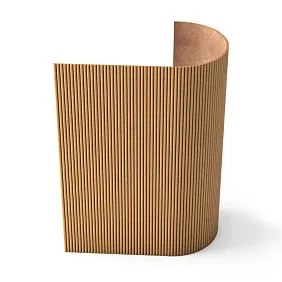
Slatted wall panels: price as a multi-layered structure
The first mistake of most buyers is to compare the price per linear meter from different manufacturers without understanding what exactly lies behind this number. Two slats of the same size can cost fundamentally differently - and both these prices will be justified. The question is what exactly you get.




Wood species and its impact on cost
Solid oak slatted wall panel and pine panel are two different products with different prices and different performance histories. Wood species is the first and main price-determining factor.
Oak is one of the densest and most wear-resistant species used in interiors. Density 700–750 kg/m³, Brinell hardness from 3.7 units, resistance to wear and mechanical impact. Oak slats do not scratch from accidental contact, do not react to humidity fluctuations as sharply as softwoods, hold stain and varnish without peeling for years. Accordingly, the price per linear meter for oak is higher — and this is a fair price for honest quality.
Ash is a species close to oak in characteristics, with a pronounced grain pattern and a slightly lighter natural tone. The price of ash slats is comparable to oak or slightly lower.
MDF for painting is a separate category. It is not solid wood, but not a cheap substitute either. Dense MDF 750–850 kg/m³ is a high-quality base for painting in any color. An MDF panel allows for a perfectly smooth painted surface, unattainable on wood. Its price is lower than solid oak, but higher than low-quality analogues with a loose structure.
Choosingslatted panels price per m2, always specify the wood species. This information alone explains most of the price variation on the market.
Our factory also produces:


Panel construction: rigid or flexible base
Rigid panels on an MDF substrate are a classic solution for flat walls, built-in furniture fronts, and rectilinear structures. They are mounted as a single block, ensuring precise and even slat spacing across the entire plane. The cost of rigid panels is formed from the price of the slats, the MDF base, and the assembly work.
Flexible panels on a fabric base are an innovative product for curved surfaces: columns, arches, rounded corners, non-standard configurations. The production technology is more complex, the base material is more expensive — accordingly, the price of flexible panels is higher than rigid ones, all other parameters being equal. But it is the flexible panel that allows cladding a column or arch so that the slats run continuously, without visible joints or cuts. This is a solution worth paying extra for.
Get Consultation
Moisture content and drying: why it matters for the price
A tree that has not undergone chamber drying to a moisture content of 8–12% will behave unpredictably after installation. Warping, gap formation, cracking — all these problems arise precisely from under-dried material. Manufacturers who save on drying sell cheaper. But the buyer pays twice: first for the panels, then for redoing the work.
QualitySlatted wall panelsThey undergo a multi-stage technological chain: chamber drying, acclimatization, geometric control, finishing. Each stage is time, equipment, and labor. This is precisely what is factored into the price of an honest manufacturer.
Coating: oil, varnish, primer for painting
The finish coating is another pricing factor that is often ignored when comparing price lists. A 'paint-ready' batten and a batten with an applied oil coating are different products in terms of cost and readiness for installation.
Oil with wax is one of the best coating options for wooden battens in interiors. It penetrates the fiber structure rather than forming a film on top of it. Wood under oil 'breathes,' does not peel, and does not crack with humidity fluctuations. Repairability is maximum: a scratch can be locally sanded and oil reapplied without complete repainting.
Varnish creates a protective film. It is more resistant to mechanical impact than oil but requires complete removal for repair. The price of varnished battens is higher than that of oiled battens — and higher than that of battens without coating.
Panels for painting are the most affordable option in price at the start: the manufacturer does not incur finishing costs. But the buyer must understand that painting is a separate expense item that will be added during the installation work.
Installation: a separate and often underestimated item
When people calculateslat wall panels priceThey often only consider the cost of the panels themselves. Installation is either ignored or estimated roughly—and this is where the first major overrun occurs.
Installation of slatted panels includes:
-
Surface preparation: leveling, priming, marking
-
Assembly of a metal frame from CD profiles with direct hangers
-
Electrical wiring (if lighting is provided)
-
Installation of the panels themselves, observing spacing and gaps
-
Finishing work: sealing joints, trimming edge elements, installing corner trims
The cost of installation, depending on the region, complexity of the structure, and the qualifications of the craftsmen, is a significant part of the overall budget. Add to this the consumables: profiles, hangers, dowels, screws, putty. The final amount 'for the wall' will be noticeably different from the cost of the panels themselves.
Price of slatted panels per square meter: how to calculate correctly
Professionals do not count by pieces or linear meters—they calculate the cost of a finished square meter of finishing. This is the only figure that allows for an objective comparison of options.
How to calculate the cost per square meter of a slatted wall:
Let's take an example. Slat width 70 mm, gap 20 mm. Slat spacing is 90 mm. Approximately 11 slats are laid per 1 meter of wall width. If a slat costs N rubles per linear meter, then for 1 sq. m of wall with a height of 2.7 m, 11 slats × 2.7 m = 29.7 linear meters of slat are used. Multiply by the cost per linear meter to get the cost of slats per square meter of finishing. To this add: MDF backing (if the panel is prefabricated), frame profiles, installation, finishing work.
Only by summing up all these components will you get the realslatted panels price per m2to work with when planning your budget.
Table: What makes up the cost of a slatted wall
| Component | What it includes | Impact on total |
|---|---|---|
| Slat material | Wood species, cross-section, finish | High |
| Panel type | Rigid/flexible base | Average |
| Drying quality | Chamber vs. natural | Long-term |
| Frame | Profiles, hangers, fasteners | Average |
| Installation | Qualification, complexity | High |
| Finishing works | Painting, joint puttying | Average |
What affects the cost of polyurethane decor
Moving on to the second part of the equation.Polyurethane molding price— this is also not a single digit, but a whole set of factors, each of which adds or subtracts rubles from the final amount.
Profile complexity and detailing
A simple smooth molding without ornamentation — minimal production costs, minimal price. The more complex the relief, the finer and more detailed the ornament, the more expensive the mold and the higher the labor intensity of production. A classic cornice with acanthus leaves, Greek meander, or plant scrolls can cost many times more than a simple cove of the same cross-section.
At the same time, a complex ornament is not just beauty. It also provides a more pronounced play of light and shadow with side lighting and a stronger visual effect with a minimal number of installed elements. One properly selected cornice with a rich profile replaces several simple moldings — and when calculated per square meter of finished ceiling, it may turn out to be more cost-effective.
Size and weight of the product
Large elements — cornices with an overhang of more than 100 mm, rosettes with a diameter of 500 mm or more, volumetric panels — are more expensive than compact analogues. This is a direct dependency: more material, more complex form, higher price. In addition, large elements require more careful installation and careful handling during transportation.
Polyurethane moldings pricevaries from several hundred rubles for a lightweight polystyrene molding to several thousand for a profiled polyurethane element with pronounced relief. The range is justified: different materials, different detailing, different lifespan.
Material: polyurethane vs. MDF vs. polystyrene
There are three main materials for decorative moldings and cornices on the market. They are often confused — and it is precisely this confusion that leads to unexpected results when comparing prices.
Polystyrene is the lightest and cheapest option. Brittle, easily deforms under mechanical stress, poorly holds paint on complex curved sections. Suitable for temporary solutions or budget projects where appearance is more important than durability. Polystyrene moldings start from 250–350 rubles for a 2-meter strip.
Primed MDF is a denser and more stable material. Holds shape well, accepts paint evenly, resistant to mechanical stress. Price is higher than polystyrene but significantly lower than polyurethane. Ideal choice for moldings with clear geometric profiles without complex ornamentation.
Polyurethane is a premium material with maximum relief detail, resistance to moisture and mechanical stress. Not afraid of temperature fluctuations, doesn't crumble, doesn't deform. It's polyurethane decor that reproduces historical plaster profiles with accuracy down to fractions of a millimeter. Price is higher, but the result is fundamentally different.
When you see 'polyurethane molding' in a price list for 350 rubles — it's most likely polystyrene. WhenBuy Molded Decorationthey offer a price that seems too low for a complex profile — it's worth clarifying the material. The difference in durability and surface quality will be striking.
Element length and standardization
Most linear elements — cornices, moldings, baseboards — are produced in a standard length of 2 meters. For rooms with perimeters not divisible by two meters, waste pieces occur — paid-for material that goes unused. Depending on the room configuration, cutting waste can amount to 10–20% of the total material quantity.
This needs to be factored into calculations in advance. The formula is simple: room perimeter + 15% for cutting and joints. Ignoring this coefficient leads to running out of material at the most inconvenient moment — and having to urgently purchase more, often at a higher price.
Why cheap molding often ends up costing more
This is one of the most practically important sections of this article. Saving on polyurethane decor is one of the most common mistakes when planning a finishing budget. Let's examine why the cheap option ultimately turns out to be more expensive.
Geometry Problem
Cheap elements often have geometry inaccuracies: mismatched angles, uneven width along the length, slight twisting. When trying to assemble a straight room perimeter from such elements, joints don't align, corners don't match, and gaps require large amounts of filler. These spots remain visible even after final painting. The result: wasted craftsman time (which costs money), overuse of filler and paint, and a visual outcome that disappoints.
Qualityinterior moldingshas stable geometry along its entire length and clean ends that, when cut, provide precise angles without additional adjustment.
Coating Problem
The surface of cheap polyurethane decor often has micropores, burrs, and irregularities that are invisible to the naked eye before painting. After the first coat of paint, all these defects become fully apparent. Additional primer coat, re-sanding, and another paint layer are required. Result: material and time overconsumption.
Quality polyurethane decor has a smooth, even surface ready for painting without additional processing. One coat of primer and two coats of paint—and the element looks flawless.
Brittleness Problem
Cheap polystyrene disguised as polyurethane breaks during installation, chips when processing corners, and deforms from heat of nearby light fixtures. Replacing one broken element in a finished interior involves not just the cost of a new element, but also the cost of removal, installation, and painting work. In some cases, this equals the price of the entire batch of 'saved' decor.
Batch Color Mismatch Problem
Cheap manufacturers often use different raw material compositions from batch to batch. If you purchase additional decor from a second batch, its color under paint may slightly differ from the first. After painting, this effect is mitigated but requires careful final painting with two coats over the entire surface at once.
How to budget for a room, not per item
Moving on to practice. The correct approach to budgeting is to calculate not individual elements, but the entire room as a whole.
Step one: measuring and calculating areas
Start by measuring the room:
-
Area of walls to be clad with slatted panels (in sq. m)
-
Perimeter of the room (for calculating cornice and skirting)
-
Ceiling area (if a slatted ceiling or molding layout is planned)
-
Number of corners: internal and external
Each corner is a pair of trimmed elements. For a 90-degree internal angle, a miter box is used; for non-standard angles, a template and manual fitting are used. The more corners in the room, the higher the percentage of waste from trimming.
Step two: compiling a full specification
Specification is a list of all materials with quantities:
-
Slatted panels: sq. m + 12% for cutting
-
Frame profiles: number of linear meters
-
Fasteners, hangers, dowels
-
Cornice: perimeter + 15%
-
Moldings for ceiling division (if intended)
-
Sockets: one for each light point
-
Paint: area of molding + 20% for two coats
-
Primer for all surfaces
Step three: summation with installation
The cost of all materials includes the cost of installation work. For slatted panels, this typically includes:
-
Marking and preparing the base
-
Assembling the frame
-
Installing the panels
-
Finishing work
For stucco decoration:
-
Marking
-
Installing cornices and moldings
-
Filling joints
-
Painting
Only by adding up all these items do you get the real budget for the room—not an illusory figure from the price tag of a single element.
Calculation example for a 20 sq. m living room
Let's say the living room is 4×5 meters, with a ceiling height of 2.8 m. Planned:
-
Accent wall 5 m wide made of oak slatted panels
-
Cornice around the entire perimeter
-
Moldings forming two rectangular fields on the ceiling
-
Socket above the chandelier
Slatted panels: 5 m × 2.8 m = 14 sq. m + 12% = ~16 sq. m of calculated area.
Cornice: perimeter 18 m + 15% = ~21 lm of cornice.
Moldings: two rectangular fields with a perimeter of ~6×4 m = ~10 lm of molding per field × 2 = ~20 lm + 15% = ~23 lm of molding.
Socket: 1 piece, diameter 300–400 mm.
Installation: calculated separately based on area and linear meters.
This approach allows arriving at a final figure without unpleasant surprises in the middle of the work.
Where the main overspending occurs
Let's list specific points where the budget exceeds what was planned.
Point one: underestimation of the scope of work
A person sees a slatted panel on the wall and thinks: 'Well, there it is — attach it to the wall and it's done.' In practice: wall leveling, framing, electrical work, lighting, finishing work — all of this is time and money. Incomplete accounting of associated work is the most common source of overspending.
Point two: buying 'just enough' without a reserve
Buying material without a reserve for cutting is a classic mistake. A shortage of two linear meters of cornice at the final stage of work means an urgent order, often with delivery. This is always more expensive than taking a reserve from the start.
Point three: replacing material during the process
Started with a budget option, realized the result wasn't satisfactory — you redo it. The cost of redoing often exceeds the price difference between cheap and quality material purchased upfront. This is the most expensive kind of saving.
Point four: incorrect choice of finish
Bought slats without a finish — didn't budget for painting or oiling. Painting wooden slats on a wall isn't just applying paint: it's sanding, priming, two coats of topcoat. For a 14 sq. m accent wall, this is a separate expense item that needs to be planned in advance.
Point five: ignoring corner and transition elements
External corners, transitions between the slatted zone and a smooth wall, areas where panels meet door and window frames — all of this requires special elements: corner trims, end strips, transition moldings. These parts take up a small portion of the budget, but their absence turns good finishing into an incomplete one.
Where to buy slatted panels and polyurethane decor: criteria for choosing a supplier
When it comes to decidingBuy Molded Decorationor placing an order forslatted panels for walls, the choice of supplier affects the quality of the result no less than the choice of the material itself.
What to pay attention to:
Production base. A supplier that manufactures products themselves, rather than reselling them, can control quality at every stage. This guarantees stable geometry, predictable material behavior, and the ability to receive a batch consistent with the previous one.
Product range. A wide selection of wood species, slat profiles, panel types, and polyurethane elements means you can find a solution that precisely fits your task, without having to compromise.
Delivery option. For large-volume orders, delivery is a significant part of logistics. A reliable supplier ensures packaging that prevents damage during transportation and adherence to deadlines.
Service and consultations. A competent manager who helps with calculating material quantities and selecting elements to match the interior style is a value that is hard to overestimate when planning a complex project.
Additional expenses that are often overlooked
When creating a budget, include the following items that are regularly omitted from calculations:
-
Primer for the base before installing the frame
-
Painter's tape and protective film for adjacent surfaces during painting
-
Acrylic putty for joints of polyurethane elements
-
Sandpaper of different grits for sanding
-
Paint for molding is a separate item if a colored solution is planned
-
Fastening dowels and screws of non-standard sizes are often purchased separately
-
Decorative caps for visible fastening elements of the frame
Each of these items is insignificant individually, but together they make up 5–10% of the materials budget. Factor this coefficient in advance.
FAQ: answers to the most common questions about price
Why are oak slatted panels more expensive than MDF options?
Because oak is a natural material with a unique grain pattern, high density, and durability. MDF is a manufactured material with a predictable uniform structure. Both options are quality and appropriate—just for different tasks. Oak is for where natural texture and warm tone of real wood matter. MDF is for where you need a perfectly smooth background for painting in any color.
Can you save on installation by doing everything yourself?
Yes, if you have basic tool skills. Installing rigid slatted panels on a flat wall is a task accessible to a careful non-specialist. Installing cornices with proper miter cuts requires a miter box and care. Complex structures—flexible panels on columns, multi-level ceilings—are better entrusted to a professional.
How many meters of cornice are needed for a standard room?
Room perimeter plus 15% for trimming and joints. For a 4×5 meter room: (4+5)×2 = 18 meters + 15% = ~21 meters of cornice.
Polyurethane decor or MDF moldings — which is more cost-effective?
Depends on the task. MDF moldings are cheaper and are excellent for geometric solutions without complex ornamentation. Polyurethane elements are indispensable where detailed relief, moisture resistance, or a historical profile is needed. For a study or living room with classic decor — polyurethane. For a minimalist interior — MDF.
Is it necessary to additionally coat polyurethane decor before painting?
One coat of deep-penetration primer is sufficient. High-quality polyurethane does not require putty or grouting before the first coat of paint — the surface is already ready for painting.
How long will wooden slats last with proper care?
Wooden slats made of oak or larch with a quality oil or varnish coating last 20–30 years or more without needing replacement. It is recommended to renew the coating every 7–10 years: sand and apply a new layer of oil or varnish.
Can I order custom-sized slatted panels?
Yes, manufacturers working with solid wood typically accept orders for custom cross-sections and lengths. This is relevant for rooms with non-standard ceiling heights or specific design tasks.
About the company STAVROS
Proper budget calculation starts with the right choice of supplier. The company STAVROS manufactures products from solid wood and polyurethane for architectural finishing:slatted panels for wallsmade of oak and MDF in rigid and flexible versions,Moldings made of polyurethaneand MDF of various profiles and styles,Polyurethane moldings— cornices, rosettes, overlays with precise geometry and detailed relief.
The STAVROS production base ensures consistent quality from batch to batch: chamber drying of wood, geometric control of products, finishing on professional equipment. The range covers solutions for any style and budget level — from laconic MDF moldings to complex polyurethane decor with historical profiles.
Investing in quality STAVROS materials is an investment in a result that won't require redoing in a year. When you pay once and get exactly what you wanted — that's real savings.


