












































































Article Contents:
- Why Functionality Does Not Exclude Beauty
- Evolution of Design Thinking
- Psychology of space perception
- Economic Rationality of Beauty
- Ecological aspect
- Molding for Painting in Interior Design
- Materials and Their Characteristics
- Profiles and shapes
- Color solutions
- Applications of Molding
- Installation Techniques
- Painting moldings
- Facade Corner Elements
- Functional Significance of Corner Elements
- Stylistic Diversity
- Materials for Facade Corner Elements
- Installation and mounting
- Modern Trends in Corner Decoration
- Baseboards and Decorative Details
- Evolution of Baseboards
- Materials for Baseboards
- Profiles and Design
- Baseboard Installation
- Decorative Details Complementing Baseboards
- Painting and Final Finishing
- Conclusion
- Frequently Asked Questions
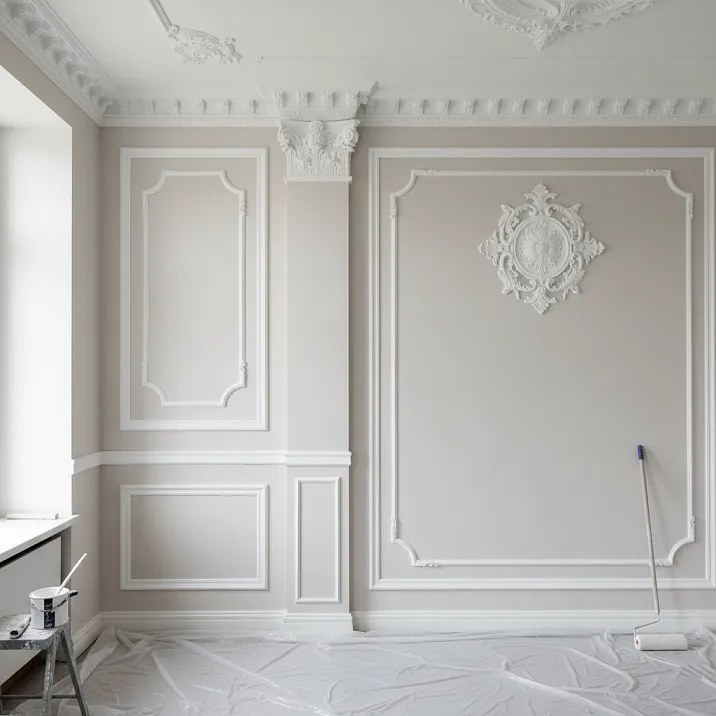
Modern design has long abandoned the opposition between practicality and aesthetics. Today, the best interior solutions emerge precisely at the intersection of functionality and beauty, where each element serves not only decorative purposes but also solves specific tasks.Ceiling moldings for painting, Facade Corner Elementsand othersDecorative elementsrepresent the perfect embodiment of this principle - they simultaneously decorate the space and perform important practical functions.
Why are moldings for painting one of the main trends of recent years? The answer lies in their remarkable versatility. Unlike pre-colored elements, moldings for painting offer complete freedom in choosing shades, allowing decoration to be adapted to any changes in the interior, experimenting with color schemes without the need to replace elements entirely. This is practicality in its purest form, dressed in the form of limitless creative potential.
Modern architecture and interior design strive for individuality. Standard solutions are fading into the past, giving way to custom projects where every detail is thoughtfully designed and carries meaningful content. Moldings for painting fit perfectly into this philosophy - they allow creating unique compositions that highlight the character of the space and reflect the personality of the owner.


Why functionality does not exclude beauty
For a long time, there was a mistaken belief that practical things cannot be beautiful, and beautiful things cannot be practical. Modern design convincingly proves the falsity of this statement. The best examples of architectural and interior art demonstrate a harmonious unity of form and content, where aesthetics serve function, and function is clothed in perfect form.




Evolution of Design Thinking
Design history knows various approaches to the relationship between beauty and functionality. The Victorian era leaned toward excessive decoration, where practicality was often sacrificed to ornamentation. In contrast, 20th-century modernism proclaimed the primacy of function over form, creating minimalist yet practical spaces.
Modern design philosophy has found the golden mean. The principle 'form follows function' remains relevant but receives a new interpretation. Now, function is understood more broadly - it includes not only the utilitarian purpose of an object but also its ability to create a comfortable psychological atmosphere, influence a person's emotional state, and shape an aesthetic living environment.
Ceiling moldings for paintingperfectly illustrate this philosophy. Practically, they conceal junctions between walls and ceilings, hide minor finishing defects, and can create niches for hidden lighting. Aesthetically, they structure space, create visual rhythm, add volume and depth to interiors.
Our factory also produces:


Psychology of space perception
The human brain is structured in such a way that it subconsciously seeks order in the surrounding environment. Chaotic, unstructured spaces cause discomfort, anxiety, and rapid fatigue. In contrast, clearly organized environments with clear boundaries, rhythm, and hierarchy of elements are perceived as safe and comfortable.
Decorative elements such as moldings perform a crucial function in structuring space. They create visual anchor points, guide the gaze, and form a sequence of interior perception. Horizontal molding lines expand space, making it more calm and stable. Vertical elements direct the gaze upward, creating a sense of height and spaciousness.
Especially important is the role ofdecor detailsin determining the scale of the room. Large elements make the space more intimate and cozy, while small elements make it more spacious and airy. The proper proportion between decorative details and room dimensions creates a harmonious, comfortable space.
Get Consultation
Economic rationality of beauty
Investing in quality decor is not luxury, but a rational economic strategy. Well-finished spaces create a positive impression, enhance prestige and property value. In commercial spaces, thoughtful design directly affects revenue — people prefer to visit beautiful stores, restaurants, and offices.
Paintable moldings are especially advantageous from a long-term perspective. Once installed, quality elements can serve for decades, and their appearance can be easily refreshed with simple repainting. This is significantly cheaper than full decor replacement and allows adapting the interior to changing trends without capital investment.
The ability to paint moldings yourself also reduces interior maintenance costs. There is no need to hire specialists to replace elements — simply repaint the existing ones to the desired color. This is especially relevant for rented spaces, where frequent changes in design concepts are the norm.
Ecological aspect
Modern society increasingly pays attention to ecological sustainability. Quality decorative elements made from natural materials — wood, MDF — are an ecologically responsible choice. They do not emit harmful substances, are recyclable, and cause minimal environmental damage during production.
The longevity of wooden moldings also contributes to ecological sustainability. The longer an item serves, the fewer resources are needed to replace it, and the less waste is generated. The ability to repaint multiple times allows avoiding construction waste from dismantling old and installing new elements.
Using water-based paints for finishing moldings ensures safety for the occupants' health. Modern formulations have almost no odor, dry quickly, and contain no toxic solvents. This is especially important for residential spaces, children's rooms, medical, and educational facilities.
Paintable moldings in interior design
Ceiling moldings for paintingare a universal designer tool capable of solving the most diverse tasks. From simple framing to creating complex architectural compositions — the range of molding applications is impressive in its breadth.
Materials and their characteristics
The choice of molding material determines not only its appearance but also its performance characteristics, durability, installation complexity, and cost. The modern market offers several main options, each with its own advantages and limitations.
Natural wood — a classic choice for premium moldings. Wooden elements feature a noble texture, pleasant tactile surface, and eco-friendliness. Oak, beech, and ash provide maximum strength and longevity. Coniferous species — pine, spruce — are more affordable but require careful treatment with protective coatings.
MDF (fine wood particle) — a modern material combining the advantages of natural wood with manufacturing efficiency. MDF moldings have a uniform structure without knots or defects, are easy to process, and hold their shape well. They are significantly cheaper than solid wood, yet still possess respectable performance characteristics.
Polyurethane — a synthetic material ideal for high-humidity spaces. Polyurethane moldings do not fear water, do not deform under temperature fluctuations, are lightweight, and easy to install. Modern technologies allow creating polyurethane elements that are virtually indistinguishable from plaster molding or wooden carving.
Polystyrene — the most budget-friendly option, suitable for temporary decoration or projects with strict budget constraints. Polystyrene moldings are very lightweight, easy to install, but less durable and require careful handling.
Profiles and shapes
The variety of molding profiles allows selecting the optimal solution for any interior style. Classic profiles with smooth curves, volutes, and grooves fit perfectly into traditional interiors. Simple geometric shapes — rectangular or square sections — are characteristic of modern minimalism.
The profile size should match the room's scale. In spacious halls with high ceilings, wide, heavy moldings 10-15 centimeters and more in height are appropriate. In compact rooms, it is better to use more modest elements 3-7 centimeters high, which will not visually 'consume' the space.
The complexity of the relief varies from simple smooth profiles to ornate elements with numerous small details. Simple profiles are universal and easy to maintain, while complex ones create a richer, more grandiose look but require careful painting and regular dusting.
Combining different profiles within one interior creates interesting effects of depth and layering. For example, a wide flat molding can be complemented by a narrow relief molding, creating a complex composition. The key is to maintain stylistic unity and avoid overloading the space with excessive details.
Color Solutions
The advantage of paintable moldings lies in the absolute freedom of color choice. The classic solution — white color — creates a sense of purity, freshness, and visually expands the space. White moldings are universal, harmonize with any wall and ceiling colors, and suit any style from classic to high-tech.
Painting moldings in wall color creates a monochromatic yet volumetric surface. The molding relief creates a play of light and shadow, enriching a single-color plane. This solution is especially popular in modern interiors, where restraint and elegant simplicity are valued.
Contrasting color solutions — dark moldings on light walls or vice versa — create a graphic, expressive effect. Such a technique visually structures the space, making it more defined and dynamic. Contrasting moldings require precise installation — any irregularities become especially noticeable.
Using multiple colors within one room allows creating complex decorative effects. For example, the main molding can be painted in a neutral color, while accent elements — in a bright shade. Gradient painting, where color smoothly transitions from one to another, creates a modern, artistic effect.
Metallic paints — gold, silver, bronze, copper — transform moldings into luxurious jewelry-like interior elements. Such solutions are characteristic of glamorous, art deco, or neoclassical interiors. It is important to maintain moderation — excessive gilding may appear vulgar and tasteless.
Areas of application for moldings
Ceiling cornices — the most traditional application of moldings. They create a smooth transition between the vertical wall surface and the horizontal ceiling surface, completing the room's composition. Wide cornices can conceal utilities, create niches for hidden LED lighting, and visually increase the room's height.
Wall panels made of moldings — an effective way to decorate walls. Rectangular or square frames made of moldings create a rhythmic structure, dividing large surfaces into proportionate fragments. Within the frames, you can use patterned wallpaper, decorative plaster, or paint in contrasting colors — the options are endless.
Framing door and window openings with moldings adds architectural expressiveness. A simple rectangular opening becomes a portal with character. The width of the frame, profile complexity, and color determine the style and significance of the opening within the overall interior composition.
Dividing walls into zones using horizontal moldings — a classic technique originating in ancient architecture. Traditionally, a wall is divided into three parts: lower (panel or plinth), middle (main field), and upper (frieze). Each part can be decorated differently, creating a rich, multi-layered composition.
Decorating furniture with moldings allows transforming simple facades into elements of classic interiors. Applied moldings on cabinet, chest, or kitchen unit doors create relief, add volume, and increase the visual value of furniture. After painting in a single color with the base, moldings create an elegant play of light and shadow.
Quality installation of moldings requires careful preparation and adherence to technology. The first stage is surface preparation. Walls and ceilings must be flat, clean, and dry. Significant irregularities must be eliminated with putty, as moldings cannot compensate for large defects and will replicate the base's contours.
Marking is a critically important stage, determining the correctness of the future composition's geometry. Using a laser level ensures perfectly accurate horizontals and verticals. For creating panels on walls, it is essential to precisely calculate distances to ensure all elements are symmetrical and proportional.
Cutting moldings requires precision and care. Special attention must be paid to cutting angles — they must meet perfectly without gaps. To join moldings at a 90-degree angle, a 45-degree bevel is made using a miter box or a circular saw. Complex angles require individual calculation.
Moldings are installed using special adhesive, liquid nails, or mechanical fasteners. Lightweight polystyrene and polyurethane elements adhere well to adhesive. Heavy wooden moldings may require additional fixation with screws or nails, which are then puttied and painted.
Sealing joints and fasteners is the final stage before painting. All gaps, seams, and nail heads must be carefully filled with putty. After the putty dries, the surface is sanded to perfect smoothness. The quality of this stage determines the final result — after painting, all preparation defects become visible.
Filling joints and fasteners is the final stage before painting. All gaps, seams, and nail heads must be carefully spackled. After the spackle dries, the surface is sanded to perfect smoothness. The quality of this stage determines the final result — after painting, all defects in preparation become visible.
Painting Moldings
Preparation for painting begins with priming. Primer creates an even, absorbent surface, improves paint adhesion, and reduces paint consumption. For wooden and MDF moldings, water-based or alkyd primers are used; for polyurethane, special adhesive compounds are used.
The gloss level of paint affects the perception of moldings. Matte paints create a noble, restrained surface that hides minor defects. Glossy paints provide a bright, shiny effect, emphasizing relief but revealing all irregularities. Semi-gloss (satin) paints — the golden middle — combine the advantages of both options.
Paint application technique requires care. For painting moldings, small brushes are most convenient, allowing complete coverage of all relief recesses. Rollers are suitable for large, smooth profiles. Spray guns provide perfectly even coverage but require skill and careful protection of surrounding surfaces from overspray.
Paint application technique requires care. For molding painting, small brushes are most convenient, allowing you to paint all recesses of the relief. Rollers are suitable for large, smooth profiles. Spray guns provide perfectly even coverage but require skill and careful protection of surrounding surfaces from overspray.
The number of paint coats is usually two to three. The first coat may be uneven and reveal preparation defects — this is normal. The second coat even out the tone and creates uniform coverage. The third coat, if needed, ensures perfect coverage and color saturation. Each coat must be fully dry before applying the next.
Facade corner elements
Facade Corner Elementsplay a special role in the architectural composition of a building. Corners are the most vulnerable areas of the facade, susceptible to mechanical damage and atmospheric effects. At the same time, corners are the most important elements of architectural expressiveness, defining the character and style of the building.
Functional significance of corner elements
The protective function of corner elements is obvious — they absorb mechanical impacts, protecting the main wall structure. This is especially relevant for wooden houses, where corners are prone to abrasion and damage. High-quality corner overlays made of dense wood or composite materials significantly extend the facade's service life.
The waterproofing role of corner elements is equally important. Corner joints are potential sites for moisture penetration into the wall structure. Properly installed and sealed corner elements create a reliable barrier, preventing wall dampness, mold growth, and freezing during winter.
The thermal function is realized by eliminating cold bridges in corner zones. An additional layer of material in the form of a decorative corner element improves insulation and reduces heat loss. This is especially noticeable in wooden houses, where corners traditionally are the coldest zones.
The structural role of corner elements lies in strengthening corner joints and increasing the overall rigidity of the facade structure. Overlay elements act as additional ties, pulling the corner together and preventing deformation.
Stylistic diversity
Rusts — a classic type of corner detailing, imitating stone masonry. Rusticated corners create a sense of monumentality and solidity, linking the building to the traditions of classical architecture. Rust can be smooth or relief, wide or narrow, painted in wall color or contrasting.
Pilasters — vertical elements imitating columns without load-bearing function. Corner pilasters visually elongate the building, giving it elegance and grace. They can be executed in any architectural order — Doric, Ionic, Corinthian — defining the stylistic affiliation of the building.
Lisen — a simplified version of pilasters, vertical flat protrusions without capitals and bases. Lisen are characteristic of Romanesque architecture and modernism. They create a facade rhythm, structuring it, while appearing more restrained and modern than classical pilasters.
Overlay boards — a simple and practical solution, typical of wooden architecture. Corner boards can be smooth or with decorative edge profiles, painted or retaining natural wood texture. This is the most budget-friendly option for corner detailing, without losing decorative expressiveness.
Materials for facade corner elements
Natural wood — traditional material for wooden houses. Corner elements made of oak, larch, cedar have high resistance to atmospheric effects, beautiful texture, and longevity. Properly treated with protective compounds, wooden details serve for decades, retaining aesthetic appeal.
Wood-based composite materials — DPC (wood-polymer composite), MDF with water-resistant impregnation — combine the advantages of natural wood and resistance to external influences. They do not crack, do not deform from moisture, require infrequent maintenance, and visually are practically indistinguishable from solid wood.
Fiber-cement — a modern material combining the strength of cement and the flexibility of cellulose fibers. Fiber-cement elements are ideal for imitating stone masonry and molding. They are non-combustible, resistant to rot, and have a long service life. After painting, fiber-cement looks noble and expensive.
High-density polyurethane can be used for exterior applications provided it receives quality finishing treatment. Polyurethane elements are lightweight, do not impose load on the structure, and are easy to install. They are ideal for restoring historical buildings, where it is important not to increase the weight of facade elements.
Installation and Mounting
Preparation of corners before installing decorative elements includes leveling the surface, eliminating defects, and treating with antiseptics. Special attention should be paid to the verticality of the corner — it must be strictly perpendicular to the ground. Deviations from verticality will cause problems during installation of decorative elements.
Corner elements are mechanically fastened — with screws or nails — with mandatory use of adhesive compounds for additional fixation and sealing. Fasteners must be made of stainless steel to avoid rust stains on the facade. Fastener installation sites are carefully puttied and painted.
Sealing joints is a critically important installation stage. All joints between corner elements and walls must be filled with weather-resistant sealant. This prevents moisture penetration, wind infiltration, and cold bridging. The sealant must be elastic to compensate for thermal deformations.
Finishing includes filling screw holes, sanding, priming, and painting. For exterior work, facade paints with high weather resistance, UV protection, and breathability are used. Quality painting not only enhances appearance but also protects elements from destructive factors.
Modern trends in corner decoration
Minimalist facade decoration implies using simple, unadorned corner elements without excessive ornamentation. Clean lines, restrained forms, monochromatic coloring create a modern, elegant building appearance. This approach is characteristic of Scandinavian, Japanese architecture, and high-tech style.
Contrasting solutions — dark corner elements on a light facade or vice versa — create a graphic, expressive effect. Contrast emphasizes the building’s geometry, making its architecture clearer and more defined. This is a popular solution in modern suburban architecture.
Natural textures without paint — a trend linked to the ecological movement and desire for authenticity. Corner elements made of noble wood species, treated only with protective oils or varnishes, preserve the material’s natural beauty. Over time, wood develops a noble silver patina, further enhancing its charm.
Combining materials — wood with stone, metal with plaster — creates complex, multi-layered compositions. Corner elements can combine several materials, each performing its own function and contributing to the overall visual effect.
Baseboards and decorative details
Baseboards are often perceived as a secondary interior element, but they complete the composition, create a transition between vertical and horizontal planes, and conceal technical gaps. Modern baseboards have moved far beyond simple wooden strips — they are full-fledgedDecorative elementselements capable of significantly enriching the interior.
Evolution of baseboards
Historically, baseboards served purely utilitarian purposes — protecting the lower part of walls from damage during cleaning, concealing the gap between walls and floors. In classical architecture, baseboards became an important element of architectural order, continuing the column base on building walls.
Modern baseboards combine protective, decorative, and technical functions. Communications — electrical cables, internet wires — can be concealed within baseboards, which is especially relevant in the era of smart homes with numerous devices and sensors. Special cable channels in the baseboard construction allow easy installation and replacement of wires as needed.
Baseboard height is determined by room proportions and overall interior style. Classic interiors require tall baseboards — 10–15 centimeters and more. Modern minimalist spaces use low baseboards — 5–7 centimeters. There are even hidden baseboards that create an illusion of floating walls.
Baseboard materials
Natural wood remains a premium choice for baseboards. Wooden baseboards made of oak, ash, walnut have noble textures, can be stained in a wide color range, and are restorable. Solid wood baseboards suitable for painting offer complete freedom in color choice while retaining all advantages of natural material.
MDF baseboards combine affordability with high surface quality. They have perfectly smooth surfaces without knots or defects, are easy to paint, and are available in a wide range of profiles. MDF with moisture-resistant impregnation can be used even in rooms with high humidity.
Polyurethane baseboards — a choice for humid areas and budget projects. They are completely water-resistant, lightweight, and flexible, allowing use on curved wall sections. Modern polyurethane baseboards accurately imitate wooden carving and moldings, but are significantly cheaper and more practical.
Metallic baseboards made of aluminum or stainless steel are characteristic of commercial interiors, high-tech, and industrial loft styles. They are completely non-combustible, hygienic, durable, and easy to clean. Anodized or painted metallic baseboards can have various colors and textures.
Profiles and design
Classic baseboard profile imitates architectural details — column base with multiple tiers, flutes, and moldings. Such baseboards fit organically into classical, neoclassical, and baroque interiors, supporting their grand atmosphere.
Modern minimalist profile is a simple rectangular strip, sometimes with a slight bevel at the top. Lack of ornamentation, clean lines, and restrained forms characterize such baseboards. They do not draw attention, remaining functional interior elements.
Baseboards with LED backlighting — a modern technological solution. A special profile creates a niche for LED strips, whose light is directed downward, creating an effect of floating walls. Such backlighting can serve as a nightlight, decorative lighting, or visually expand the space.
Wide baseboards 15–20 centimeters and higher essentially function as wall panels. They create a visual foundation for the interior, can be painted in contrasting colors, and decorated with moldings, forming a complex decorative composition.
Baseboard installation
Preparation for installation includes leveling walls at the bottom, cleaning from dust and dirt. Baseboards cannot compensate for significant wall irregularities — they will replicate all curves, creating unsightly gaps. Significant defects require preliminary leveling.
Mounting methods depend on the baseboard material and wall type. Wooden baseboards are usually glued and additionally secured with nails or screws. Lightweight polyurethane elements can be mounted only with adhesive. There are hidden mounting systems where fasteners are not visible on the front surface.
Corner cutting — the most complex installation stage. Internal and external corners require precise 45-degree cuts for perfect joints. Using a miter saw or a circular saw ensures the required accuracy. Alternatively, special corner elements can be used to cover the baseboard joint.
Joint and fastener sealing is done with putty or acrylic sealant. After drying, the sealed areas are sanded, and the baseboard is ready for painting. Properly executed sealing makes joints invisible after painting.
Decorative details in addition to baseboards
Corner rosettes are decorative elements installed at the corners of rooms where baseboards meet. They can be simple geometric shapes or complex carved compositions. Rosettes eliminate the need for precise corner trimming while simultaneously adding an additional decorative accent.
Central inserts are decorative elements installed in the middle of long baseboard runs. They break monotony, create rhythm, and may carry symbolic or heraldic information. Inserts are especially relevant in long corridors and galleries, where extended walls require visual segmentation.
Transitions and connectors allow joining baseboards of different heights or profiles, creating smooth transitions between different floor materials. They solve a technical problem while simultaneously being a noticeable design element.
Baseboards for painting provide maximum freedom in creating interior color schemes. The traditional solution — white baseboards — create a clear boundary between wall and floor, visually lifting the ceiling, and universally match any color.
Painting and final finish
Baseboards in wall color create an effect of continuous surface, visually increasing the height of the room. The wall seems to continue down to the floor, creating a sense of greater space. This solution is popular in modern minimalist interiors.
Baseboards in floor color, on the contrary, create an impression of a massive base on which walls stand. This is a more traditional solution, creating stability and solidity. Wooden baseboards are often tinted to match parquet or laminate, creating a unified wooden composition.
Baseboards in floor color, on the contrary, create the impression of a massive base on which the walls stand. This is a more traditional solution, creating stability and solidity. Wooden baseboards are often stained to match the color of parquet or laminate, creating a unified wooden composition.
Contrasting baseboards — dark on light backgrounds or bright colors — become a noticeable design element. They create graphic effects, define spatial boundaries, and can support color accents of furniture or textiles.
Decorative painting techniques — patina, artificial aging, metalization — transform baseboards into artistic elements. Gilded or silver baseboards are characteristic of glamorous and art deco interiors. Patinated ones create an effect of noble antiquity.
Conclusion
Practical style in modern design is not a trade-off of beauty for functionality, but a harmonious combination of both.Ceiling moldings for painting, Facade Corner Elementsand diverseDecorative elementsdemonstrate how utilitarian elements can become a source of aesthetic pleasure.
The versatility of paintable moldings makes them an ideal tool for creating individual interiors. The ability to choose any color, adjust shades as the interior evolves, and experiment with different combinations ensures creative freedom without requiring significant investments. Once properly installed, elements can serve for decades, changing their appearance simply by repainting.
Facade elements combine protective and decorative functions, ensuring the longevity of the structure and architectural expressiveness of the building. Properly selected and installed corner elements, cornices, and moldings form the character of the house, making it recognizable and memorable. In an era of standardized construction, the uniqueness of architectural appearance becomes especially valuable.
The economic rationale for using high-quality decorative elements is obvious. Investments in professional decoration pay off through increased property value, reduced maintenance costs, and the longevity of solutions. Cheap materials and careless execution ultimately cost more, requiring frequent repairs and replacements.
The ecological aspect cannot be ignored. Natural materials — wood, MDF — when properly processed, serve for decades without harming the environment. The longevity of quality products reduces construction waste and conserves resources. Using water-based paints ensures safety for the health of building occupants.
Modern production and installation technologies make decorative elements accessible to a wide range of consumers. The variety of materials, price categories, and stylistic solutions allows finding the optimal option for any budget and any concept. From budget polyurethane moldings to exclusive carved elements from premium wood — everyone can find a solution matching their capabilities and ambitions.
Can moldings be painted in any color?
Frequently asked questions
Can moldings be painted any color?
Paintable moldings can be painted in any color — from classic white to bright accent shades. It is important to use high-quality paints suitable for the chosen molding material. For wooden and MDF elements, water-based acrylic paints are optimal; for polyurethane, special high-adhesion compositions are recommended. Multiple repaints are possible when changing interior design — this is one of the main advantages of paintable moldings.
What height should the baseboard be?
The height of the baseboard is determined by ceiling height and overall interior style. For standard ceilings of 2.5–2.7 meters, an optimal baseboard height is 7–10 centimeters. In rooms with high ceilings of 3 meters or more, baseboards 12–15 centimeters and higher can be used. Minimalist modern interiors tend toward low baseboards of 5–7 centimeters, while classic interiors prefer higher and more substantial ones. It is important to maintain proportions — a too-high baseboard in a low room visually reduces wall height.
Do moldings need to be primed before painting?
How to choose between wooden and polyurethane moldings?
Choosing between wooden and polyurethane moldings depends on usage conditions, budget, and aesthetic preferences. Wooden moldings are more ecological, noble, and have natural texture, but are more expensive and require more care. Polyurethane moldings are cheaper, lighter, and resistant to moisture, ideal for bathrooms and kitchens, but less prestigious. For living rooms with normal humidity, wooden or MDF moldings are optimal; for humid areas — polyurethane. In premium interiors, preference is given to natural wood.
Choosing between wooden and polyurethane moldings depends on usage conditions, budget, and aesthetic preferences. Wooden moldings are more eco-friendly, noble, and have a natural texture, but are more expensive and demanding in terms of conditions. Polyurethane moldings are cheaper, lighter, and resistant to moisture, ideal for bathrooms and kitchens, but less prestigious. For living rooms with normal humidity, wooden or MDF moldings are optimal; for humid areas, polyurethane moldings are preferred. In premium interiors, natural wood is preferred.
How to care for painted moldings?
How to care for painted moldings?
Care for painted moldings is simple and does not require special skills. Regular dry cleaning with a soft cloth or brush removes dust, especially from recesses of the relief. Wet cleaning is performed as needed with a soft damp sponge without abrasive agents. For cleaning complex stains, a mild soap solution can be used. It is important to avoid excess water, aggressive chemical agents, and stiff brushes that may damage the coating. In case of scratches or paint chips, local repainting is possible.
For creating wall panels, optimal moldings with medium width of 4-8 centimeters and a simple profile are best. Too narrow moldings may disappear on large walls, while too wide ones will look bulky. The profile should be sufficiently expressive to create play of light and shadow, but not overloaded with details. For classic interiors, moldings with traditional elements — such as moldings and flutes — are suitable. For modern interiors, simple geometric profiles are preferred. It is important to accurately calculate panel sizes for symmetry and proportionality.
Can facade elements be mounted on any type of wall?
Facade decorative elements can be mounted on most types of walls, but the mounting method varies. On wooden walls, elements are secured with screws and additional sealing. On brick and concrete walls, anchors and construction adhesive are used. On insulated ventilated facades, mounting is done through insulation to the load-bearing structure using special long fasteners. For each type of substrate, there are specific technologies and fastening systems ensuring reliability and longevity of installation.
How long do paintable moldings last?
The service life of paintable moldings depends on the material, operating conditions, and quality of installation. Solid wood moldings, with proper care, last 30-50 years or more. MDF elements have a service life of 15-25 years. Polyurethane moldings are practically immune to aging and can last for decades. The limiting factor is usually not material degradation, but the design becoming outdated. The possibility of repainting significantly extends the relevance of moldings, allowing them to be adapted to new interior concepts.


