












































































Article Contents:
- Analysis of demand for dimensional parameters
- Height as the main determining factor
- Compact solutions gain popularity
- Premium segment of high skirting boards
- Standardization of length in the industry
- Optimal production parameters
- Adaptation to regional characteristics
- Thickness as a compromise of functionality
- Balancing strength and aesthetics
- Premium solutions with increased thickness
- Material-specific preferences for dimensions
- Features of solid wood
- Influence of wood species
- Regional trends and preferences
- Moscow region: trends of the capital market
- Saint Petersburg: classic preferences
- Regional centers: practical approach
- Seasonal fluctuations in demand
- Spring construction boom
- Autumn finishing works
- Technological innovations and dimensional trends
- Influence of new production technologies
- Ecological trends
- Frequently Asked Questions

Skirting board sizes determine not only the functionality of this architectural element, but also its visual impact on the perception of the interior. In modern construction and design, there are established standards that have been formed over decades of practical use and correspond to the needs of various types of rooms. Wooden Skirting Board Sizes Vary widely, but certain parameters are most popular among developers, designers, and private clients.
Choosing the skirting board size affects the overall cost of finishing, installation complexity, aesthetic perception of the space, and long-term functionality. Understanding popular sizes and the reasons for their demand will help make the right decision for a specific project, taking into account both practical and aesthetic aspects.


Analysis of Demand for Dimensional Parameters




Height as the Primary Determining Factor
Baseboard height remains the most significant parameter in selection, as it determines the visual impact on the space. Wooden Skirting Board Height 70-80 mm leads in sales statistics due to its versatility. This range is ideal for standard living rooms with ceiling heights of 2.5-2.7 meters, which corresponds to most modern apartments and houses.
Wooden Skirting Board 70 mm provides sufficient protection at the junction between floor and wall, creating a noticeable yet non-dominant architectural detail. This height allows for various profiles—from simple rectangular to complex milled ones—satisfying the needs of different stylistic directions.
The statistics show that wooden skirting board 80 mm is chosen by owners of spaces seeking a more pronounced architectural accent. This height is especially popular in neoclassical interiors, where a balance between tradition and modernity is required. The increased height allows for accommodating a greater volume of utilities, which becomes increasingly relevant in the era of smart homes.
Our factory also produces:
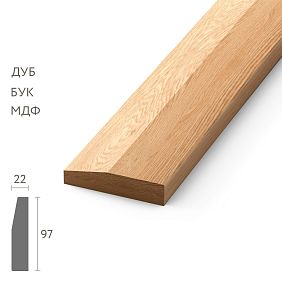
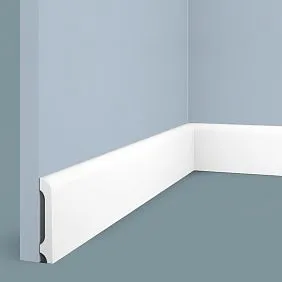
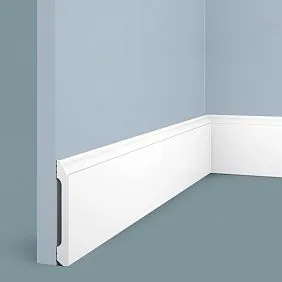
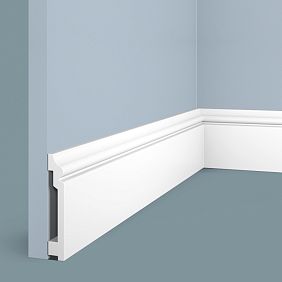
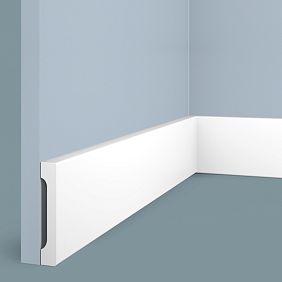
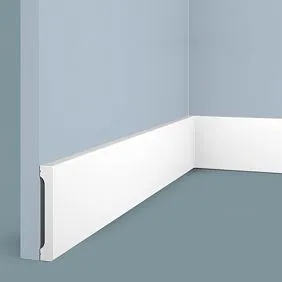
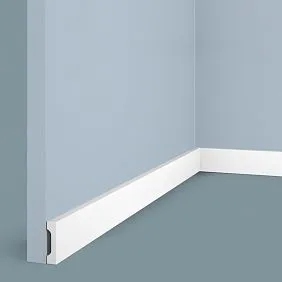
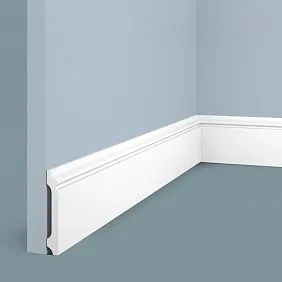
Compact solutions are gaining popularity
Minimalist trends in design contribute to the growing popularity of low-profile skirting boards. Wooden skirting board 60 mm is becoming a choice for young families preferring modern interiors in Scandinavian or minimalist styles. This height creates a delicate transition, without visually overwhelming the space.
Narrow wooden skirting boards with a height of 50-60 mm are especially in demand in small studio apartments and rooms with limited space. Their popularity is due to their ability to visually expand the space without creating a sense of clutter. The economic factor also plays a role—the reduced material consumption makes such skirting boards more accessible for budget projects.
An interesting trend has been the popularity of wooden skirting board 45 mm in loft interiors and modern offices. The minimal height emphasizes industrial aesthetics, creating a barely noticeable transition between horizontal and vertical surfaces.
Get Consultation
Premium segment of high skirting boards
Classic interiors and spaces of representative class form a steady demand for high skirting boards. Wooden skirting board 100 mm and above are chosen by owners of country homes, luxury apartments, and Class A commercial real estate. Such dimensions allow for creating an impressive architectural element with rich decorative detailing.
High wooden floor skirting boards are especially popular in restoration projects, where preserving the historical appearance of rooms is crucial. A height of 120-150 mm corresponds to classical proportions of palace architecture, creating an atmosphere of luxury and respectability.
The growing popularity of high skirting boards is also linked to technical requirements of modern buildings. Increased height allows for accommodating complex engineering utilities, climate control systems, security, and information networks, which is especially relevant for commercial buildings and smart homes.
Standardization of length in the industry
Optimal production parameters
Length of wooden skirting board 2.4-2.5 meters has become an industrial standard due to the optimal balance between production efficiency and transportation convenience. This length corresponds to standard timber dimensions and allows minimizing waste during production, positively affecting the final product cost.
The popularity of the 2.4-meter length is also due to characteristics of modern residential construction. Most rooms in standard apartments have walls 3-4 meters long, allowing them to be covered with one or two standard-length segments with minimal joints. This simplifies installation and improves the appearance of the finished finish.
Manufacturers also offer skirting boards 3 meters long for large spaces. This length is popular in commercial construction, where long walls require minimizing the number of joints. However, transportation limitations make three-meter skirting boards less accessible for private clients.
Adaptation to regional characteristics
In various regions, preferences for certain skirting board lengths are observed, linked to local construction traditions and logistical features. In megacities, standard 2.4-meter skirting boards are popular due to a well-developed supplier network and ease of delivery in urban conditions.
Rural construction demonstrates growing demand for non-standard skirting board lengths—from 1.5 to 4 meters—due to individual architectural solutions and the possibility of direct delivery from the manufacturer. This allows minimizing the number of joints in large rooms and creating a more cohesive visual appearance.
Regional manufacturers often adapt skirting board lengths to local standards and preferences. For example, in regions with a developed wood processing industry, skirting boards 2.7-3 meters long are popular, corresponding to local sawmill industry standards.
Thickness as a compromise of functionality
Balancing Strength and Aesthetics
Baseboard thickness of 15-20 mm represents the optimal compromise between strength, appearance, and economic efficiency. Wooden skirting boards width which are within this range, provide sufficient rigidity to maintain shape during installation and use, without creating a sense of bulkiness.
Thickness of 18 mm has become the most popular in the solid wood baseboard segment. This parameter allows for the creation of relief profiles with sufficient milling depth while maintaining structural strength. Such thickness allows hiding wall irregularities up to 5-7 mm, which is critically important in real installation conditions.
Thin baseboards with thickness of 12-15 mm are popular in the budget segment and minimalist interiors. They create barely noticeable boundaries between floor and wall, without drawing attention. However, limited thickness imposes restrictions on profile complexity and requires more careful installation.
Premium Solutions with Increased Thickness
Baseboards with thickness of 22-25 mm are positioned in the premium segment, offering expanded decorative processing options. Increased thickness allows creating complex multi-level profiles with deep milling, imitating classical architectural elements.
Such thickness is especially popular in custom-made baseboards, where precise adherence to historical samples or designer solutions is required. Additional material ensures a safety margin for complex processing and long-term geometric stability.
Increased thickness is also in demand in rooms with high sound insulation requirements. Heavy baseboards better seal the junction between floor and wall, reducing sound penetration between rooms.
Material-Specific Dimensional Preferences
Features of Solid Wood
Solid wood baseboards demonstrate certain patterns in size popularity, linked to material properties and technological limitations. Wide Wooden Skirting Board Solid wood requires careful humidity control and may exhibit deformations under improper storage or use.
The most stable dimensions for solid wood are height 60-100 mm and thickness 16-20 mm. These parameters ensure minimal internal stresses in the wood and reduce the likelihood of warping or cracking. Manufacturers of solid baseboards prefer these dimensions due to predictable material behavior.
Popularity of certain sizes in the solid wood segment is also linked to raw material usage economics. Optimal dimensions allow minimizing waste during cutting standard-sized boards, positively affecting the final product cost.
Influence of Wood Species
Different wood species demonstrate varying popularity for certain sizes. Coniferous species, prone to resin exudation, are more commonly used for baseboards up to 80 mm in height, as increasing size raises the likelihood of resin exudation on the surface.
Hardwood species such as oak or beech are popular for large baseboards with height from 100 mm. High density and stability of these species allow creating massive elements without risk of deformation. Large wooden baseboard Oak baseboards can reach heights of 200 mm and more, while maintaining geometric stability.
Exotic wood species are often used for non-standard-sized baseboards, as their high cost is justified by the uniqueness and exclusivity of the finished product. In this segment, both compact elements of 40-50 mm height and monumental baseboards of 150-180 mm height are popular.
Regional Trends and Preferences
Moscow Region: Trends of the Capital Market
The Moscow market shows increased demand for baseboards with height 80-120 mm, linked to the predominance of apartments with high ceilings in premium-class new constructions. Buyers in the capital are willing to invest in quality materials, preferring solid wood baseboards with thickness 18-22 mm to ensure longevity.
Popularity of certain sizes in Moscow is also shaped by design trends. Influential design studios set trends for specific parameters, leading to wave-like growth in demand for certain sizes. In recent years, there has been a trend toward using baseboards with height 90-100 mm in residential interiors of comfort and business class.
Moscow's commercial segment demonstrates steady demand for high baseboards from 120 mm, required for housing complex engineering systems in modern office buildings. Lengths of such baseboards are typically 2.4-3 meters to minimize joints over extended surfaces.
Saint Petersburg: Classic Preferences
The Saint Petersburg market is characterized by heightened interest in baseboards with classic proportions, linked to the large number of historical buildings and restoration projects. Sizes with height 100-150 mm remain popular, corresponding to the city's architectural traditions.
The climatic features of Saint Petersburg influence preferences for skirting board thickness. Increased humidity requires the use of more substantial elements with a thickness of 20-25 mm, ensuring geometric stability under varying humidity conditions. This makes thicker skirting boards popular even in the residential sector.
In Petersburg, skirting board lengths are often adapted to the characteristics of historical construction. Non-standard lengths of 2.7-3.5 meters are popular, allowing minimization of joints in rooms with atypical proportions of old buildings.
Regional centers: practical approach
Regions demonstrate a more practical approach to selecting skirting board sizes, favoring universal solutions. The most popular sizes remain 70-80 mm in height and 16-18 mm in thickness as the optimal balance of price and quality.
Regional preferences are often shaped by the availability of local production. In forestry regions, skirting boards made from local wood species in sizes optimal for processing local raw materials are popular. This may create regional peculiarities in the popularity of certain parameters.
Logistical constraints in regions contribute to the popularity of standard sizes easily delivered by road transport. The 2.4-meter length remains the most in-demand precisely for this reason, despite possible advantages of other parameters.
Seasonal demand fluctuations
Spring construction boom
The spring period is characterized by increased demand for standard skirting board sizes, linked to the activation of construction activities after winter. During this period, universal sizes of 70-80 mm in height are most popular, suitable for the majority of mass residential construction projects.
Manufacturers prepare for spring demand, increasing production of the most popular sizes. Statistics show that up to 40% of annual sales volume falls within the period from March to June, making the availability of warehouse stocks of standard sizes critically important.
The spring period also features increased interest in non-standard sizes for individual construction. Private developers planning work during the summer period place orders for skirting boards of special sizes, creating additional strain on production capacities.
Autumn finishing works
The autumn period demonstrates a shift in demand toward premium sizes and non-standard solutions. This is due to the completion of the construction season and the transition to finishing works in high-comfort projects.
In autumn months, high skirting boards from 100 mm become more popular, used in luxury housing and commercial projects. Clients are willing to invest in quality materials, planning to complete works by New Year's holidays.
Autumn demand is characterized by heightened attention to details and quality. Skirting boards with increased thickness of 20-25 mm become popular, enabling complex decorative processing and creating unique interior solutions.
Technological innovations and size trends
Influence of new manufacturing technologies
Advancements in manufacturing technologies expand the possibilities for creating skirting boards in non-standard sizes, influencing market preferences. Modern equipment allows producing skirting boards with variable heights, creating new design opportunities.
Digital milling technologies open opportunities for creating skirting boards with individual sizes tailored to specific projects. This leads to increased popularity of non-standard sizes, especially in the premium market segment.
Production automation reduces the cost of manufacturing skirting boards in non-standard sizes, making them more accessible to mass consumers. This may lead to changes in the popularity structure of different sizes in the long term.
Ecological Trends
Growing attention to the ecological properties of construction materials influences skirting board size preferences. The desire to minimize waste contributes to the popularity of sizes optimal from the perspective of raw material usage.
FSC certification and other ecological standards may limit the availability of certain sizes made from rare wood species, influencing market trends. This contributes to the growing popularity of skirting boards made from fast-growing species in standard sizes.
The trend toward using local materials supports the popularity of sizes optimal for processing regional wood species. This may create local peculiarities in preferences for certain parameters.
Frequently Asked Questions
What is the standard skirting board length?
A standard skirting board length is considered 2.4 meters, due to the optimal balance between transportation convenience, production efficiency, and practicality of installation. This length suits most rooms with standard layouts, allowing to cover a wall with one or two pieces with minimal joints. The 2.5-meter length is also popular, providing a small allowance for fitting. In commercial construction, skirting boards 3 meters long are sometimes used to minimize joints on long walls, but their application is limited by transportation and installation complexities.
What thickness should skirting boards have?
The optimal skirting board thickness is 16-20 mm, providing the right balance between strength, decorative processing capabilities, and cost-effectiveness. A thickness of 18 mm is considered the most universal, allowing to create various profiles and conceal minor wall irregularities. For budget projects, a thickness of 15-16 mm is suitable, while for premium solutions with complex milling, 20-22 mm is preferable. Too thin skirting boards (less than 15 mm) may deform during installation, while overly thick ones (more than 25 mm) create a sense of bulkiness and increase material consumption.
Are there non-standard skirting board sizes?
Yes, modern manufacturers offer a wide range of non-standard skirting board sizes for specific tasks. Height can vary from 30 mm for minimalist interiors to 200 mm and more for classical and prestigious spaces. Thickness can also be adapted to specific requirements — from 12 mm for thin modern profiles to 30 mm for heavy classical elements. Length can be custom-made from 1 meter to 6 meters depending on transportation capabilities. Non-standard sizes are especially in demand in restoration projects, luxury housing, and commercial real estate, where precise alignment with architectural intent is required.
The popularity of certain skirting board sizes is shaped by a complex set of factors, including practical considerations, aesthetic preferences, economic efficiency, and regional characteristics. Understanding these patterns helps make the right choice, ensuring an optimal balance of quality, functionality, and cost for a specific project.


