












































































Article Contents:
- What is polystyrene: lightness and decorativeness
- Where polystyrene is applied
- Duro polymer: when maximum strength is needed
- Applications of duro polymer
- Material comparison: objective analysis
- Density and weight
- Strength and service life
- Moisture resistance
- Maintenance and painting
- Cost
- Which material to choose: practical recommendations
- Ceiling decoration
- Floor skirting boards
- Wet Areas
- Commercial spaces
- Application in interior design: the art of combination
- Professional brands and product lines
- HiWood: Russian quality
- Orac Decor: Belgian standards
- Fitopolymer: innovative solutions
- Installation: subtleties and nuances
- Foundation Preparation
- Cutting and fitting
- Features of installing cornices for backlighting
- Painting and final finishing
- Choosing paint
- Application technique
- Maintenance and operation
- Regular Cleaning
- Protection against damage
- Common mistakes when choosing and installing
- Incorrect material selection
- Poor surface preparation
- Incorrect adhesive
- Poorly cut angles
- Economic aspect: calculate correctly
- Initial investments
- Installation Costs
- Long-Term Expenses
- Ecological Safety
- Chemical composition
- Behavior in fire
- Waste disposal
- Market Trends and New Developments
- High Baseboards
- Profiles for Concealed Lighting
- Flexible profiles
- Minimalist profiles
- Regional application specifics
- Humid climate
- Continental Climate
- Southern Regions
- Interior Styles and Profile Selection
- Classic and neoclassic
- Modern style
- Scandinavian Style
- Loft
- Frequently Asked Questions
- Can polystyrene be painted with regular paint?
- What adhesive to use for installation?
- How to cut duroplastic?
- How long do these materials last?
- Can polystyrene be installed on a heated floor?
- What is better for the bathroom?
- How to care for baseboards?
- Can it be mounted by yourself?
- What height should the skirting board be?
- Is it necessary to prime before painting?
- Where to Buy Quality Materials?
- Conclusion: Making an Informed Choice
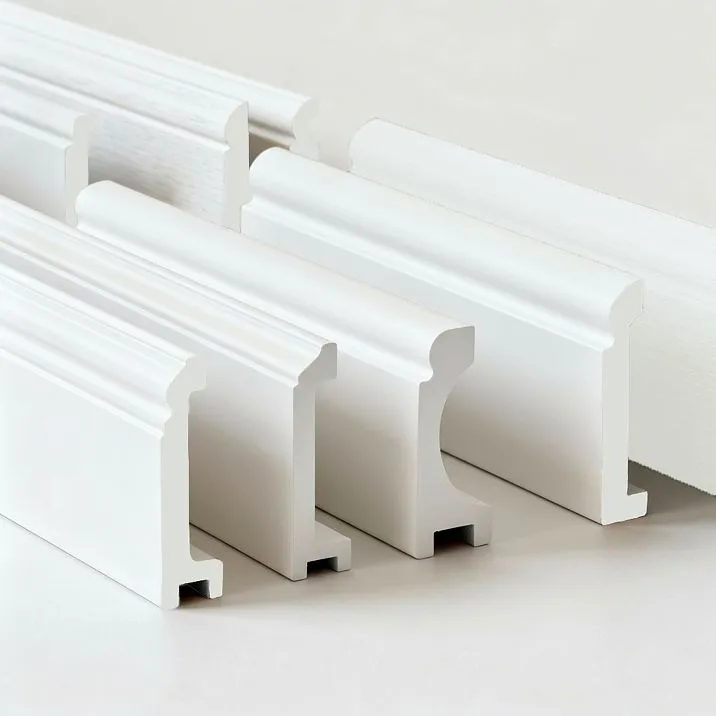
When a buyer enters a store selling decorative elements, they often face a difficult choice. On the shelves — snow-white items, visually almost indistinguishable from one another. The profiles are identical, the color is the same, the purpose coincides. And here begins the confusion: what do we have in front of us —polystyrene baseboard or a duro-polymer product? Why does the price differ by several times? Which material will last longer, and which is suitable for a specific task?
The visual similarity of these materials can even mislead experienced craftsmen. Both are used for ceiling and floor finishing, both are easily painted, both belong to polymer compositions. But behind the external similarity lies a fundamental difference in structure, strength, durability, and application. Let's examine in detail what each material represents and how to avoid making a wrong choice.


What is polystyrene: lightness and decorativeness
Polystyrene is a synthetic polymer obtained by polymerizing styrene. In the construction industry, two main types are used: expanded (expanded polystyrene) and extruded. The first is familiar to everyone — the usual foam plastic with its characteristic granular structure. The second is produced by extrusion and has higher density, homogeneous structure, and improved performance characteristics.
Extrudedpolystyrene skirting board is a product with a closed-cell structure. The material is lighter than water, yet sufficiently rigid to maintain its shape. Density varies from 25 to 45 kg/m³, making the products practically weightless. A two-meter profile weighs only a few hundred grams, simplifying transportation and installation.
The main advantage of polystyrene is its decorative possibilities. The material is easily molded, allowing for complex reliefs, ornaments, and classical profiles with many details. Modern extrusion technologies enable the production of sharp lines, smooth surfaces, and deep textures. At the same time, the production cost remains low, making polystyrene an affordable solution for the mass market.
The material has good thermal insulation properties due to air cells within its structure. It does not absorb moisture, does not rot, is not susceptible to mold and fungi. Polystyrene is chemically inert to most construction materials and finishing compounds. It can be painted with water-based and acrylic paints, covered with wallpaper, and coated with decorative plaster.
However, there are limitations. Polystyrene is sensitive to mechanical impacts — impacts leave dents, sharp objects easily scratch the surface. When heated, the material begins to soften and deform. Solvents based on acetone, toluene, and similar substances destroy its structure. Therefore
skirting board made of expanded polystyrene requires careful handling and proper selection of adhesive compositions.




Where polystyrene is applied
The main area of use for polystyrene products is ceiling decoration.
Polystyrene Cornice It is ideal for finishing the junction between the wall and ceiling. The lightness of the material allows it to be mounted using special adhesives without additional mechanical fasteners. Wide profiles do not exert load on the base, which is especially important when working with gypsum board structures.
Polystyrene cornices are perfect for creating concealed lighting.
Ceiling lighting cornice with a special shelf for mounting LED strip transforms an ordinary ceiling into an element of lighting design. The light, reflecting off the white surface, creates a soft glow, visually lifting the ceiling and adding airiness to the interior.
Decorative moldings made of polystyrene are actively used for wall decoration. They divide space into zones, create classical panels, frame wallpapers and frescoes.
Polystyrene molding allows recreating historical styles without the huge costs typical of plaster moldings or wooden panels.
In modern interiors, popular areshadow skirting boards for lighting , mounted with a gap from the wall. The LED strip installed in this gap creates an effect of a floating ceiling or wall. Polystyrene profiles handle this task well due to their low weight and ease of installation.
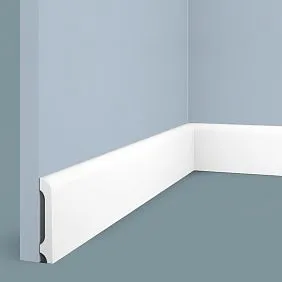
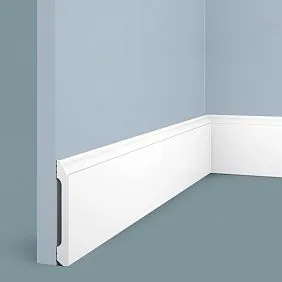
Our factory also produces:


Duropolymer: when maximum strength is required
Duropolymer is a trade name for high-density extruded polystyrene with improved mechanical properties. The manufacturing technology involves adding special modifiers to the composition, which alter the material's structure, making it denser and more uniform. The density of duropolymer reaches 500-700 kg/m³, which is dozens of times higher than that of ordinary polystyrene.
The extrusion process for producing duropolymer occurs at elevated temperatures and pressure. The molten mass is forced through a die, where it is compacted and shaped. After cooling, the resulting product has high resistance to bending, compression, and impact.
Buy duroplastic skirting board It is suitable where maximum durability is required.
Duropolymer products feature a smooth, almost glossy surface without visible pores. The material does not absorb water even with prolonged contact, making it suitable for high-humidity environments. Bathrooms, kitchens, laundries, swimming pools — everywhere where ordinary materials quickly deteriorate, duropolymer serves for decades.
Impact resistance is the key advantage of the material. Accidental impacts from vacuum cleaners, furniture bumps during rearrangement, mechanical stress during cleaning — duropolymer withstands all this without consequences. Unlike polystyrene, it does not compress or deform. The surface withstands point loads without leaving marks.
Duropolymer's heat resistance is also higher. The material retains its shape when heated to 80-90°C, allowing its use near heat sources. However, direct contact with hot surfaces is still undesirable — like any polymer, duropolymer can soften at extreme temperatures.
Get Consultation
Applications of duropolymer
Duropolymer baseboard — the primary application of the material. Here, all its advantages are evident: resistance to abrasion, impact resistance, moisture resistance. Floor baseboards are subjected to constant mechanical stress — they are bumped during walking, furniture rests on them, mops and vacuum cleaners run over them. Duropolymer withstands all this without losing its appearance.
High baseboards made of duropolymer have become a trend in recent years. Profiles 100-150 mm in height visually elongate the room, creating a sense of palace luxury, protecting the lower part of the wall from dirt.
skirting board duro-polymer Such height is impossible to achieve with ordinary polystyrene — it simply cannot support its own weight and will deform during installation.
Duropolymer wall moldings are used in public spaces with high foot traffic. Offices, hotels, restaurants, medical facilities — wherever decoration must retain its appearance for years, duropolymer is indispensable. It does not fear accidental impacts, does not scratch from contact, is easy to clean and disinfect.
Ceiling baseboard made of duropolymer is justified in rooms with high ceilings, where wide cornices are required. The material's rigidity allows creating profiles with large overhangs without the risk of sagging. Such products retain their geometry even under temperature fluctuations and humidity changes.
Material Comparison: Objective Analysis
When you are faced with a choice between polystyrene and duropolymer, it is important to understand not only theoretical differences but also practical consequences of using each material. Let us consider key comparison parameters.
Density and weight
The difference in density determines most operational characteristics.
polystyrene skirting board It weighs on average 150-300 grams per linear meter depending on the profile. Duropolymer with the same profile may weigh 800-1200 grams. This difference is critical for installation: lightweight items adhere with adhesive, heavy ones require additional fixation.
When working with ceiling structures, weight becomes a decisive factor. Gypsum board ceilings, especially suspended ones, have load restrictions. A heavy duropolymer cornice may require a reinforced frame, whereas polystyrene can be installed without problems. On the other hand, the lightness of polystyrene makes it vulnerable to deformation from its own weight over long profiles.
Strength and service life
Duropolymer's mechanical strength exceeds polystyrene by orders of magnitude. Bending tests show that
Duro-polymer skirting board it withstands a load of up to 50 kg per meter without residual deformation. Polystyrene begins to deform already at 5-10 kg. For floor applications, this is critical — which is why duropolymer is used on floors.
The service life of both materials, when used correctly, is measured in decades. However, duropolymer retains its original appearance significantly longer. Polystyrene products may yellow over time, develop microcracks, and lose relief definition. Duropolymer remains unchanged — its dense structure is not susceptible to aging under exposure to light and oxygen.
Moisture resistance
Both materials do not absorb water, but they react differently to constant humidity. Polystyrene may delaminate along granule boundaries over time, especially during freeze-thaw cycles. Duropolymer is absolutely stable — its monolithic structure does not change even with prolonged immersion in water.
plastic baseboard made of duropolymer is preferable. It does not fear direct splashes, does not swell from condensation, does not lose strength in humid environments. Polystyrene is also applicable here, but requires more careful sealing of joints and ends.
Painting and Maintenance
Both materials paint beautifully with water-dispersive paints. However, duro polymer has an advantage — its smooth surface allows for an ideally even coating in one application. Polystyrene may require priming to seal pores and achieve uniform color.
Duro polymer paintable skirting board Does not require special preparation — simply wipe clean and apply paint. Polystyrene items sometimes require light sanding to remove cutting burrs. Both materials can be repainted multiple times without loss of surface quality.
Maintenance of duro polymer is simpler — it can be washed with cleaning agents without fear of damage. Polystyrene requires gentle handling — stiff brushes and abrasive cleaners leave scratches. For regular cleaning, duro polymer is a more practical choice.
Cost
The price difference between materials is significant. Polystyrene items are 2-4 times cheaper, making them accessible to mass consumers. Duro polymer belongs to the premium segment and requires substantial investment. However, when considering service life, the difference is neutralized — duro polymer does not require replacement for decades.
It is important to consider additional expenses.
polystyrene baseboard Can be transported with minimal costs — lightweight profiles are easy to move. Duro polymer is heavier, and its delivery costs more. Installing polystyrene is simpler and faster, reducing labor costs.
Which material to choose: practical recommendations
Theory is theory, but how to make the right choice in a specific situation? Let's examine typical cases and determine the optimal solution for each.
Ceiling Decor
For ceiling and upper wall trim, polystyrene is the ideal choice.
Polystyrene ceiling skirting board Combines accessibility, ease of installation, and excellent appearance. Here, increased strength is not required — the cornice is not subjected to mechanical stress and serves purely decorative purposes.
Wide cornices for classic interiors, minimalist profiles for minimalism, complex multi-level structures — all of this is easier and cheaper to implement with polystyrene. The material allows creating deep reliefs, which are impossible in duro polymer due to technological limitations of extrusion.
Ceiling skirting board for LED lighting Polystyrene is unmatched here. Special profiles with a ledge for LED strips are lightweight, do not exert load on the ceiling, are easy to cut and install. Duro polymer is over-engineered for strength and unnecessarily expensive.
Floor skirting boards
For the floor, duro polymer is the clear choice.
Floor skirting board duro polymer Will withstand all loads, retain its appearance for decades, and not require replacement when repainting walls. This is an investment in longevity and interior quality.
Duro polymer is especially important in high-traffic areas — hallways, entryways, living rooms. Here, the skirting board is constantly subjected to impacts, friction, and pressure.
Polystyrene floor baseboard Under such conditions, it quickly loses its appearance, develops dents and scratches.
High skirting boards, a fashionable trend, are physically impossible to make from polystyrene — profiles over 100+ mm in height will deform under their own weight. Duro polymer holds its shape perfectly, allowing the creation of expressive vertical accents in the interior.
Wet rooms
For bathrooms, toilets, and kitchens, duro polymer is preferable. Its absolute moisture resistance guarantees longevity under harsh conditions.
White duro polymer skirting board Will not darken from moisture, not peel, not lose strength.
Polystyrene is also applicable here, especially in ceiling decoration, where direct contact with water is excluded. However, for floor skirting boards and lower wall sections, it is better to be cautious and choose a more durable material. The price difference will be offset by the absence of problems during operation.
Commercial Spaces
Offices, stores, restaurants, hotels — everywhere where durability and ease of maintenance are important, the choice is clear.
Duro-polymer skirting board Will withstand intensive use, frequent cleaning with cleaning agents, accidental damage. Polystyrene in commercial interiors will quickly lose its appearance and require replacement.
Application in interior: the art of combination
Why choose just one? Professional designers have long understood: thoughtful combination of different materials yields better results than using one material throughout the entire room. Each material has its own place, where it can showcase its strengths and conceal its weaknesses.
The classic scheme is as follows:
buy floor skirting duropolimer For floors, polystyrene cornices for ceilings. This is the optimal balance of price, quality, and practicality. The floor is protected by a reliable material, while the ceiling is adorned with lightweight and affordable decor.
In rooms with complex geometry, you can use duropolimer for accent zones requiring special strength, and polystyrene for the rest of the areas. For example, in the hallway, where there is a high risk of damage, use duropolimer, while in bedrooms and living rooms, where loads are minimal, save costs using polystyrene.
Wall moldings can also be combined. Lower ones, exposed to mechanical impacts, are made of duropolimer. Upper ones, decorative, are made of polystyrene. This allows creating rich interior detailing without excessive costs.
Hiwood molding Available in both versions — there are series made of polystyrene and duropolimer. The manufacturer offers profiles with the same design but different characteristics. This simplifies material combination — visually, the interior appears unified, even though different technologies are used.
Color solution also plays a role. White is universal for both materials, but duropolimer gives a cooler, brighter shade of white, while polystyrene offers a slightly warmer tone. When painted the same color, this difference is neutralized, and the materials become visually indistinguishable.
Professional brands and product lines
The market for decorative trim products features numerous manufacturers, but only a few brands have earned the unquestionable trust of professionals. Let’s examine the key players and their offerings.
HiWood: Russian quality
The HiWood (HiWood) brand specializes in producing
polystyrene skirting hi wood and duropolimer products. The product line is oriented toward the Russian market, taking into account climatic conditions and construction specifics.
The line includes dozens of profiles for different tasks.
HIWOOD B70N Baseboard 70 mm high — a universal solution for most interiors. The profile combines minimalist form and sufficient height for visual effect.
HIWOOD BL100 Baseboard — representative of high skirting, creating a European interior effect. A height of 100 mm allows the profile to become a standalone design element, rather than just a functional detail.
Special profiles are provided for hidden lighting.
Finishing molding hiwood with a shelf for LED strips turns an ordinary cornice into a source of soft light. The floating ceiling effect is achieved with simple means.
Orac Decor: Belgian standards
Orac Decor company is a recognized leader in the European market for decorative elements.
Skirting orac is produced from high-quality duropolimer using advanced extrusion technologies.
Orac's assortment impresses with its variety. The collection includes classic profiles, modern minimalist solutions, profiles for hidden lighting, and high skirting.
Molding orac distinguishes itself with flawless surface quality and precise geometry.
Particular attention deserves cornices for backlighting.
LED strip ceiling trim Designed by Orac according to lighting requirements — the profile shape ensures even light distribution without shadows or gaps.
orac decor square baseboard Offers geometric profiles for modern interiors. Clear lines, straight angles, minimalist forms — the ideal solution for modern and high-tech styles.
Fitopolymer: innovative solutions
Fitopolymer baseboard It is a product manufactured using a technology combining the advantages of polystyrene and polyurethane. The material is flexible, allowing it to be mounted on uneven surfaces without gaps.
Fitopolymer molding These items are used in restoration, where curved shapes of old walls need to be replicated. Traditional rigid profiles are ineffective here, while flexible fitopolymer conforms perfectly.
Another advantage — the possibility of creating radius elements.
Fitopolymer ceiling trim Can be bent to decorate bay windows, columns, and arched openings. This expands design possibilities, enabling complex projects.
Installation: nuances and details
Correct installation — half the success. Even the highest-quality materials won't realize their potential with careless mounting. Let's consider the specifics of working with each type of item.
Foundation Preparation
Regardless of the material, the surface must be flat, clean, and dry. Peeling paint, wallpaper, dust — all of this reduces adhesive bond and may lead to profile detachment. Concrete and plastered surfaces should be primed.
buy plastic baseboard Can be installed on special clips, but for polystyrene and duro-polymer, the main method is gluing. For polystyrene, water-based polymer adhesives, acrylic sealants, and mounting adhesives are suitable. It is important to avoid solvent-based compositions.
Duro-polymer is less demanding regarding adhesive type — its dense structure is resistant to chemical exposure. "Liquid nails," polyurethane adhesives, and epoxy compositions can be used. For heavy profiles, additional mechanical fixation with self-tapping screws or anchors is recommended.
Cutting and fitting
Polystyrene is easily cut with a standard office knife or a fine-toothed hacksaw. The cut is clean, without chips. For corner joints, a miter gauge is used — a device allowing precise 45 and 90-degree cuts.
Duro-polymer requires more serious tools.
Ceiling baseboard duroplastic It is better to cut with a circular saw with a fine-toothed blade. A hacksaw will also work, but requires more effort. Cuts are clean and do not require additional finishing.
Joining elements — a critical moment. Gaps spoil the appearance and collect dust. Professionals fit profiles with minimal gaps, and remaining micro-gaps are filled with acrylic sealant for painting. After painting, joints become invisible.
Features of installing ceiling trim for lighting
LED strip trim Mounted with clearance from the ceiling. The clearance size depends on LED strip power and desired brightness. Usually, this is 7–10 cm. The profile is mounted to the wall, and the strip is laid on a special shelf, directing light upward.
It is important to correctly calculate the electrical part. Power supply, controller, connectors — all of this must be placed so as not to spoil the interior. Sometimes, for this purpose, a niche is made in the wall or equipment is hidden behind a wider profile.
Shadow baseboard with ceiling lighting Creates the effect of a floating plane. Light passing through the gap between the profile and the ceiling forms a glowing line. This technique visually lightens the structure, adds airiness, and emphasizes the room's geometry.
Painting and final finishing
White color — a universal solution, but not always the only one. Painting allows integrating trim elements into any interior color scheme. How to do it correctly?
Paint Selection
Only water-based paints are suitable for polystyrene. Acrylic, latex, and water-emulsion paints — all are safe for the material. Alkyd enamels, nitro paints, and solvent-based paints must not be used — they will destroy the polystyrene structure.
Polystyrene baseboard paintable Requires no special preparation. Simply remove dust and apply paint with a roller or brush. To achieve a rich color, two to three coats may be needed. Allow drying time between coats as per the paint manufacturer's instructions.
Duro-polymer is less demanding — it can be painted with any paints, including alkyd and oil-based. However, water-dispersed compositions are preferable — they have no odor, dry quickly, and are easy to apply.
Paintable skirting board orac Provides a perfectly smooth surface after painting.
Application technique
For wide, smooth profiles, a roller is optimal — it provides even coverage without streaks. For textured surfaces, painting with a brush, filling in grooves and protrusions, is better. A spray gun speeds up the process but requires protection of adjacent surfaces from paint.
Painting is done after installation, when all joints and gaps are sealed. First, apply the first coat; after drying, inspect the surface, sand or fill defects if necessary, then apply finishing coats. Result — a perfectly smooth, even-colored surface with no visible seams.
To create patina, metallic, or pearlescent effects, use special decorative paints and varnishes.
Paintable molding duropolymer Perfectly accepts such coatings, appearing like gold, silver, or bronze.
Care and Maintenance
The lifespan of products largely depends on proper care. What rules should be followed to ensure skirting boards and moldings retain their appearance for decades?
Regular cleaning
Dust is the main enemy of white decorative elements. It settles in the relief grooves, giving the item a dirty appearance. Regular dry cleaning with a soft cloth or broom prevents dirt accumulation.
Wet cleaning for duropolymer is safe — the material does not fear water. It can be wiped with a damp sponge using non-abrasive cleaning agents.
Duropolymer skirting board store Offers products that can withstand even disinfectant solutions.
Polystyrene requires delicacy. Hard brushes leave scratches, and aggressive chemicals may damage the surface. It’s better to limit cleaning to wiping with a slightly damp soft cloth. For removing stubborn stains, a weak concentration soap solution is suitable.
Protection against damage
Mechanical damage is the main problem with polystyrene products. Furniture impacts during rearrangement, vacuum cleaner contact, or accidental bumps — all leave dents. Care in daily life extends the life of decor.
Floor molding polystyrene More durable, but it still won’t withstand strong impacts. Rubber caps on furniture legs, rugs in high-traffic areas, and careful handling of interior items help protect the lower part.
Duropolymer is practically indestructible in household conditions. Accidental impacts leave no marks, furniture can be moved close, and cleaning is safe. This makes it ideal for homes with children and pets, where the risk of damage is highest.
Common mistakes when choosing and installing
Experience shows: most problems with trim products arise from typical mistakes. Let’s examine them so you can avoid trouble.
Incorrect material choice
Trying to save money by installing polystyrene on the floor — a path to disappointment. The material quickly deteriorates, requires replacement, and in the end, the savings turn into double expenses.
white polystyrene baseboard Only suitable for rooms with minimal load.
The reverse situation — using duropolymer where polystyrene is sufficient. On the ceiling, expensive material doesn’t provide advantages, but significantly increases the budget. A rational approach — each material has its place.
Poor surface preparation
Adhering to dusty, wet, or uneven surfaces guarantees problems. The profile may peel off, wave, or form gaps. Spend time preparing the surface — it pays off in the long-term durability of the installation.
Ceiling molding from duropolymer Especially demanding in terms of base flatness. Its rigidity does not allow compensating for wall irregularities — gaps form, requiring sealant filling. It’s simpler to level the wall beforehand.
Incorrect adhesive
Using solvent-based adhesives for polystyrene — guaranteed material damage. The profile melts, deforms, and loses shape. Always check the adhesive composition and its compatibility with the material.
Insufficient adhesive amount — another extreme. The profile holds weakly and eventually peels off. Apply adhesive generously but carefully, ensuring no excess squeezes out.
skirting board made of expanded polystyrene Lightweight, but this does not mean you can be stingy with adhesive.
Poor corner cutting
Imprecise corner joints — the most noticeable installation error. Gaps in corners immediately catch the eye and spoil the entire work. Use a quality mitre saw, sharp tools, and don't rush. It's better to try fitting several times than to cut incorrectly once.
Ceiling cornice duroplastic Cuts more difficult than polystyrene, but holds precise angle after cutting. Polystyrene is softer, and the edge may slightly deform during cutting. Use a very sharp tool and cut in one confident motion.
Economic aspect: calculate correctly
Price — an important, but not the only factor in selection. Let's calculate the total cost of ownership and understand where savings are possible, and where saving money will result in overpayment.
Initial investments
Styrofoam baseboard on floor Costs 100-200 rubles per linear meter.
Floor baseboard duroplastic for painting Costs 400-800 rubles per meter. For a room of 20 m² with a perimeter of about 18 meters, the difference amounts to 5,000-10,000 rubles. Significant, but not critical.
Cornice made of polystyrene Costs 50-150 rubles per meter depending on width and profile complexity.
Duroplastic Cornice — 200-500 rubles. Savings on polystyrene are more noticeable here.
Installation cost
Installing polystyrene is cheaper — the material is lightweight, easy to cut, and does not require special tools. The master charges 100-200 rubles per linear meter for installation. Duroplastic is more difficult to work with, installation costs 200-400 rubles per meter.
Many manage the installation themselves.
Ceiling baseboard made of plastic Can be installed without experience — the process is intuitive. Duroplastic requires certain skills, but mastering the technology is achievable with desire.
Long-term expenses
Here the picture changes. Polystyrene on the floor will last 5-7 years at best. Then replacement will be needed. Duroplastic lasts 20-30 years and more. Let's recalculate on annual expenses: polystyrene — about 1,000 rubles per year per room, duroplastic — 300-400 rubles. The benefit is obvious.
On the ceiling, both materials serve for decades, so long-term savings are less pronounced. However, duroplastic retains its original appearance better, does not require repainting or restoration.
Oak skirting boards are an indispensable element of classic interior styles. In the English style, oak skirting boards with rich carving emphasize the aristocracy and solidity of the space. Dark wood tones harmonize beautifully with traditional materials — natural stone, leather, bronze.
Ecological concerns are increasingly affecting more people. How safe are polymer materials in residential spaces? Let's examine objectively.
Chemical composition
Both materials are products of petrochemistry, styrene-based polymers. In their finished form, they are chemically inert and do not emit harmful substances under normal conditions. Certificates of conformity confirm their safety for residential spaces.
Buy polystyrene baseboard Can be used without health risks. The material has no odor, does not cause allergies, does not support bacterial or fungal growth. Duroplastic possesses the same qualities.
Behavior in fire
Polystyrene belongs to flammable materials. When exposed to open flame, it melts and emits toxic smoke. Modern grades contain flame retardants — substances that hinder combustion, but polystyrene products are not fully fire-safe.
Duroplastic is more heat-resistant, but is also flammable. The difference is that it does not support combustion — when the fire source is removed, the material self-extinguishes. Smoke emission during combustion is lower than that of ordinary polystyrene.
It is important to understand: trim items constitute a minimal part of room finishing. Their flammability is not critical compared to other interior materials — furniture, textiles, flooring. Panic about the fire hazard of baseboards is unfounded.
Disposal
Both materials belong to thermoplastics and are theoretically recyclable. In practice, separate collection of construction waste in Russia is not developed, so trim items end up in landfills. They do not degrade and do not emit toxins, but they occupy space.
A more environmentally durable duro polymer is preferable — it needs to be replaced less often, thus generating less waste. The right material choice during repair reduces the ecological footprint for decades ahead.
Market trends and new developments
The industry of decorative trim products is constantly evolving. Manufacturers offer new solutions, refine technologies, and expand their product range. What trends are shaping the market today?
High skirting boards
The trend for high baseboards originated in European interiors and has firmly taken root in Russia. Profiles 100-150 mm in height visually elongate the room, give it a sense of dignity, and protect walls from damage.
HIWOOD BE100 Skirting Board A 100 mm height profile has become one of the most popular profiles in the duro polymer segment.
High baseboards are especially effective in rooms with ceilings higher than 2.7 meters. They create proper proportions, do not look bulky, and instead emphasize the room's height.
HIWOOD BE150 Baseboard A 150 mm height profile is suitable for halls with ceilings 3 meters and higher.
Profiles for concealed lighting
Concealed lighting has become a standard in modern interiors.
ceiling trim for backlighting With a special ledge for LED strip, it transforms a functional element into a source of soft, diffused light. The technology allows creating light lines of any configuration, controlling brightness and color of illumination.
Molding for LED strip Designed with lighting requirements in mind. The profile shape is engineered to ensure even light distribution, without dark spots or brightness dips. Some manufacturers offer profiles with reflective inner surfaces to increase light output.
Shadow baseboard with ceiling lighting for stretch ceilings Creates an effect of a floating plane. The stretch ceiling visually separates from walls with a light strip, adding lightness and modernity to the interior. This technique is actively used in studio apartments to visually zone the space.
Flexible profiles
Floropolymer cornices Open up new design possibilities. They can be bent to create curved elements without special equipment. Bay windows, arches, curved walls — all of this can be styled with a single profile without joints or transitions.
The technology of producing flexible profiles involves using special plasticizers that impart elasticity to the material. At the same time, sufficient rigidity is retained to maintain the shape after bending.
Floropolymer trim Used in custom projects where non-standard solutions are required.
Minimalist profiles
The trend toward minimalism has led to the emergence of sleek profiles without ornamentation. Simple geometric shapes, clean lines, minimal thickness — such items highlight the architecture of the space without drawing attention to themselves.
orac decor square baseboard With a square cross-section, it fits perfectly into modern interiors.
Minimalist profiles are often used to create concealed transitions.
Baseboard for concealed lighting Can be so thin that it is practically invisible, visible only by the light effect it creates. This allows integrating lighting into architecture without visually cluttering the space.
Regional application specifics
Russia is a country of climatic contrasts, and this influences the choice of finishing materials. What is important to consider in different regions?
Humid climate
In coastal regions, where humidity is elevated year-round, duro polymer is preferable. Its absolute moisture resistance guarantees longevity even under extreme conditions.
White duro polymer baseboard Does not darken, does not swell, does not lose strength at constant humidity of 70-80%.
Polystyrene also works under such conditions, but requires proper room ventilation. Stagnant moisture may lead to condensation on cold surfaces, creating conditions for mold growth. The material itself is not susceptible to mold, but mold may appear on accumulated dirt in the microrelief.
Continental climate
Siberia and the Far East, with their temperature fluctuations from -40°C in winter to +35°C in summer, require materials resistant to thermal deformation. Duro polymer performs better here — its linear expansion coefficient is lower, and profiles do not deform under temperature fluctuations.
Polystyrene is more sensitive to temperature fluctuations. Sudden heating or cooling may cause minor dimensional changes, which may lead to joint separation. Proper installation using flexible sealants compensates for this characteristic.
Southern regions
The hot climate of southern Russia presents its own challenges. Prolonged exposure to high temperatures may cause polystyrene to soften, especially in roofed areas where summer temperatures can exceed +40°C.
Duro-polymer cornices maintain their shape even under such conditions.
Ultraviolet radiation also affects materials. Polystyrene may yellow over time under direct sunlight. Duro-polymer is more resistant to UV radiation, but it is not recommended for outdoor use without a protective coating.
Interior styles and profile selection
Each interior style imposes specific requirements on decorative elements. How to choose the right profiles for different stylistic solutions?
Classicism and neoclassicism
Classic interiors require rich decoration. Wide cornices with ornamentation, tall baseboards with relief, wall moldings creating panels — all these are traditional elements of classic style.
Polyurethane cornice with deep relief recreates the atmosphere of palace interiors.
In classic style, tall profiles made of duro-polymer are used for baseboards.
Hiwood B110V1 baseboard 110 mm high with delicate relief, conforms to the canons of the style without overloading the space with excessive ornamentation. White color is universal, but it can be painted to match wall tones or in a contrasting shade.
Wall moldings organize space, creating vertical and horizontal divisions.
Orac Decor molding offers dozens of classic profiles of varying widths and relief complexity. They frame wallpapers, create picture frames, and form decorative wall panels.
Modern style
Modern interiors lean toward minimalism. Simple profiles without ornamentation, clear geometry, minimal thickness — these are the requirements of the style.
Hiwood B70V1 baseboard with rectangular cross-section perfectly fits modern aesthetics.
Hidden lighting — practically an essential element of modern interiors.
Cornice for backlighting creates the effect of floating planes, emphasizes architecture, and adds dynamism to static space. Light lines can be white or colored depending on the project's concept.
Hidden baseboards are characteristic of modern style.
Shadow baseboard for lighting installed with clearance from the wall or ceiling, creating a light strip. The profile itself is almost invisible, working only through the effect it creates.
Scandinavian style
Scandinavian minimalism requires white, slender baseboards and cornices.
Polystyrene baseboard white low height — optimal solution. Profiles should be noticeable but unobtrusive, organically complementing light walls and ceilings.
Functionality — a key principle of Scandinavian design. Baseboards protect walls, cornices conceal joints — and that’s all they are required to do. No decoration, only practical utility.
plastic baseboard with a simple profile fully corresponds to this philosophy.
Loft
Industrial loft aesthetics may seem incompatible with decorative profiles. However, here too baseboards find their place. Tall profiles in dark colors emphasize the verticality of space, creating contrast with exposed utilities and brick walls.
Paintable baseboard Orac Decor Can be painted black, graphite, or dark gray, resulting in an element that perfectly blends into a loft. Height of 100–120 mm creates a striking accent in interiors with high ceilings.
Frequently asked questions
Can polystyrene be painted with regular paint?
Polystyrene can only be painted with water-dispersive paints without solvents. Alkyd enamels, nitro paints, and solvent-based compositions will damage the material. Duro-polymer has fewer restrictions, but water-based paints are still preferable.
Which adhesive to use for installation?
Water-based polymer adhesives, acrylic sealants, and special mounting adhesives for polystyrene foam are suitable for polystyrene. For duro-polymer, you can use liquid nails, polyurethane adhesives, or epoxy compositions. Heavy profiles are additionally secured with screws or anchors.
How to cut duro-polymer?
Duropolymer skirting board Orac Best to cut with a circular saw using a fine-toothed blade. This provides a clean cut at a precise angle. A fine-tooth hacksaw for metal can also be used, but it requires more effort. Polystyrene can be cut with a stationery knife or a fine-tooth hacksaw.
How long do these materials last?
When properly installed, polystyrene on ceilings lasts 15-20 years, on floors — 5-7 years. Duro-polymer lasts 25-30 years or more on any surface. Service life depends on installation quality, operating conditions, and mechanical loads.
Can polystyrene be installed on a heated floor?
Not recommended. When heated above 50-60°C, polystyrene begins to soften and deform. Duro-polymer is more heat-resistant, but it is also better to install it at a distance from heating elements. Use thermostats limiting floor surface temperature.
What is better for the bathroom?
Skirting board made of duropolymer Orac Its absolute moisture resistance guarantees longevity in humid environments. Polystyrene is also applicable, especially for ceiling moldings, but requires quality silicone sealant at joints.
How to care for baseboards?
Polystyrene is wiped with a soft damp cloth without abrasive agents. Duro-polymer can be washed using regular cleaning agents without fear of damage. Regular dry dusting extends service life and preserves appearance.
Can it be installed by oneself?
Yes, installation is accessible for self-execution.
Plastic skirting board Easy to install due to its low weight. The key is precise cutting of angles and quality adhesive bonding. A helper may be needed for duropolymer due to the weight of the profiles.
What height should the skirting board be?
Height depends on ceiling height and interior style. For standard rooms 2.5–2.7 m, skirting boards 70–100 mm are suitable. For high ceilings 3 m and above — 100–150 mm.
HIWOOD B90V1 Skirting Board Height of 90 mm — a universal solution for most interiors.
Is priming needed before painting?
Duro-polymer can be painted without primer — its dense smooth surface ensures good paint adhesion. Polystyrene is preferable to prime to seal pores and achieve uniform color. Use water-based primers.
Where to buy quality materials?
Buy duropolymer skirting boards Available in specialized stores for finishing materials. Pay attention to the manufacturer — well-known brands guarantee stable quality. Check profiles for defects, warping, or surface irregularities.
Conclusion: Make an informed choice
Choosing between polystyrene and duropolymer — it’s choosing between affordability and durability, lightness and strength, cost-saving and investment. There is no single best material — there is a material optimal for a specific task.
Polystyrene crown molding Ideal for ceiling decoration. They are lightweight, inexpensive, easy to install, and look great. A wide range of profiles allows you to realize any design idea. For most residential spaces, this is the optimal solution in terms of price-to-quality ratio.
Duropolymer wall molding And floor skirting boards — a choice for those who value durability and are willing to invest in quality. These items will last for decades, maintaining their original appearance, without requiring replacement or restoration. In the long term, this is an economically justified solution.
Combining materials yields the best results. Use duropolymer where strength is critical — on floors and lower wall sections. Use polystyrene for ceiling decoration, where enhanced mechanical resistance is not required. This approach optimizes costs without compromising interior quality.
The modern market offers an enormous selection of profiles for any task.
buy polystyrene molding Available in any hardware store; duropolymer is available in specialized showrooms. Study the assortment, compare manufacturers, and don’t hesitate to ask questions to consultants.
Quality materials, professional installation, proper maintenance — these are the three components of a long-lasting and beautiful interior.
Polyurethane skirting board Or polystyrene cornices will become not just functional elements, but important details that complete the look of your home.
Company STAVROS specializes in supplying high-quality skirting boards made of polystyrene and duropolymer. The assortment includes products from leading global and Russian manufacturers: HiWood. Professional consultants will help you select profiles for your project, calculate the required material quantity, and recommend optimal solutions taking into account the room’s features and budget.
Buy Orac decorative skirting boards Polystyrene cornices, wall moldings for lighting, and other decorative elements can be purchased at STAVROS showrooms. Quality guarantee, wide selection, competitive prices, delivery across Russia — everything to ensure your renovation is successful and your interior is flawless.
Choosing materials during the finishing stage determines the comfort and beauty of your home for years to come. Do not economize on quality where it is critical, but also do not overpay for unnecessary features. Polystyrene and duropolymer — two materials, each with its own advantages. Use them wisely, and the result will exceed expectations.


