












































































Article Contents:
- Natural Palette: Choosing Wood for Eternity
- Oak — The Monarch of the Furniture Kingdom
- Ash — Northern Elegance in Every Grain
- Walnut — Aristocracy of the Wooden World
- Technological Secrets of Mastery
- Drying — Alchemy of Humidity and Time
- Joinery — Invisible Strength
- Constructive Diversity: From Classic to Avant-Garde
- Central Support — Triumph of Engineering Thought
- Four-Legged Classic — Time-Tested Reliability
- Table Base with Braces — Rustic Romance in Modern Execution
- Stylistic Variability: From Rustic to High-Tech
- Rustic Style — Beauty of Intentional Simplicity
- Modern Geometry — Purity of Lines and Forms
- Scandinavian Minimalism — Philosophy of Light Simplicity
- Surface Finishing: Protection and Beauty in Unity
- Oil Finishes — Breath of Living Wood
- Wax Finishes — Tactile Perfection
- Varnish Systems — Long-Lasting Protection
- Engineering Calculations: Mathematics of Strength and Beauty
- Determining Load Capacity
- Calculating Structural Stability
- Ergonomic principles: science of comfort
- Optimal sizes and proportions
- Psychology of space perception
- Technological Innovations of Modernity
- Digital Design and 3D Modeling
- Innovative materials and technologies
- Ecological responsibility: care for the planet
- Certified wood and sustainable forestry
- Zero-Waste Production and Circular Economy
- Economic Aspects: Investment in Longevity
- Comparative Economics of Various Materials
- Investment Appeal of Antique Furniture
- Care and Maintenance: Secrets of Longevity
- Daily care
- Seasonal maintenance
- Professional Restoration
- Russian traditions of wooden architecture
- Northern Traditions of Woodworking
- Southern Schools of Furniture Craftsmanship
- Future of Wooden Table Bases: Innovations and Trends
- Integration of Smart Technologies
- Biomimetics in Design
- Personalization and customization
- Conclusion: Investment in Beauty and Functionality
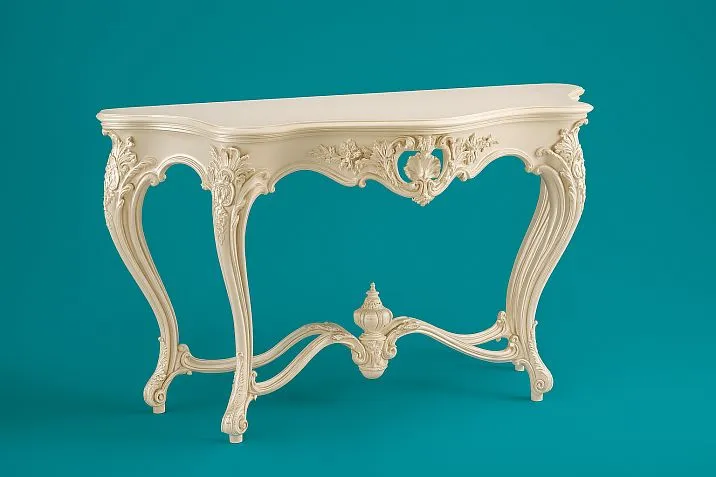
Imagine the moment when you enter a room and your gaze is involuntarily drawn to an elegant furniture arrangement... What exactly makes your heart race? Not only the countertop sparkling in sunlight, but also the invisible craftsmanship hidden beneath it. Wooden Table Base — it is the true foundation of beauty, an architectural foundation upon which the entire philosophy of home comfort is built.
In today's world, where plastic and metal attempt to imitate natural beauty, natural wood remains a symbol of authenticity and warmth. Each wood fiber carries within it a memory of sunny days, rainy nights, and seasonal changes. That is why wooden table bases continue to impress and inspire, transforming ordinary living spaces into oases of natural harmony.
But why do some wooden structures become objects of admiration for decades, while others lose their appeal within just a few years? The secret lies in understanding the nature of the material, the craftsmanship of execution, and deep knowledge of aesthetic and functional laws.




Natural Palette: Choosing Wood for Eternity




Oak — the monarch of the furniture kingdom
When it comes to creating table bases capable of enduring centuries, oak rightfully occupies the throne among all wood species. Its density reaches phenomenal 850 kilograms per cubic meter — this means that every cubic centimeter is infused with strength and durability.
But oak is valued not only for its strength. Tannin compounds naturally present in its structure create an impenetrable barrier against harmful microorganisms. Imagine: an oak base protects itself from destruction! Moreover, over the years, oak does not weaken but rather becomes stronger, acquiring a noble patina of time.
The textural features of oak are astonishingly diverse. Radial rays create a distinctive 'tiger-striped' pattern, especially pronounced in radial cuts. Annual rings form wavy patterns, each unique, like a fingerprint.
Our factory also produces:


Ash — northern elegance in every fiber
Ash possesses an extraordinary quality — despite exceptional strength, it demonstrates remarkable flexibility. That is why Vikings crafted battle axe handles from ash, while modern craftsmen create elegant curved furniture elements from it.
The light-colored ash wood with contrasting dark veins creates visual dynamics that never grow tiresome. Moreover, ash accepts any type of finish — from natural oil to complex multi-layer lacquering systems.
The uniqueness of ash is revealed in its ability to 'breathe'. Its open porous structure allows the wood to naturally regulate humidity, which is especially important in rooms with variable microclimates.
Get Consultation
Walnut — aristocracy of the wooden world
American black walnut — material for true connoisseurs of luxury. Its color palette ranges from delicate honey-gold sapwood to deep chocolate-brown heartwood. Such natural contrast allows creating table bases with unique decorative effects.
Walnut is distinguished by exceptional dimensional stability. Its shrinkage coefficient is minimal among all valuable species, guaranteeing the preservation of the item's geometric parameters throughout its entire service life.
Technological Secrets of Craftsmanship
Drying — alchemy of humidity and time
Proper wood preparation begins long before the craftsman touches the raw material with tools. Kiln drying is not merely moisture removal — it is a complex process of structural reorganization of the material.
In modern vacuum drying chambers, the process occurs at a temperature of 45–60 degrees Celsius and reduced pressure. Such conditions allow moisture to be removed evenly throughout the entire thickness of the raw material, preventing the formation of internal stresses and cracks.
The final moisture content of wood intended for furniture manufacturing should be 6–8%. Only at this moisture level does the material achieve stability and remain resistant to deformation under changing climatic conditions.
Joinery — invisible strength
Modern Wooden Table Base can be created using various types of joints, each with its own advantages.
The 'dovetail' joint provides maximum strength with minimal use of glue. A precisely cut tenon fits into the mortise with a tight tolerance of several hundredths of a millimeter, creating an exceptionally reliable mechanical connection.
'Swallowtail' — the pinnacle of joinery art. The trapezoidal shape of the tenon eliminates the possibility of pulling out parts even under significant loads. Such joints are not only functional but also serve as decorative elements, highlighting the artisan's handiwork.
Modern technologies allow performing the most complex joints on CNC machines. The processing accuracy reaches ±0.05 mm, ensuring perfect fit of parts.
Constructive diversity: from classic to avant-garde
Central Support — Triumph of Engineering Thought
The base with a central leg represents an ideal balance between functionality and aesthetics. The single support located at the center of the composition creates a sense of lightness for the tabletop and ensures maximum freedom for chair placement.
The engineering calculation of such a structure requires special precision. The central leg must withstand not only the static load from the tabletop's weight but also dynamic forces during table use. The leg's diameter is calculated based on the maximum load with a safety factor of 3-4.
The base of the central leg is usually cross-shaped or disc-shaped. A cross-shaped base provides better stability under uneven loads, while a disc-shaped base is more visually elegant and easier to maintain.
Four-legged classic — time-tested reliability
The traditional four-legged construction remains the most popular due to its versatility and reliability. A properly designed four-legged base creates a stable spatial structure capable of withstanding significant loads.
The placement of legs is determined not only by aesthetic but also functional considerations. The optimal distance from the edge of the tabletop to the leg's axis is 15-20% of the table's total length. This ensures sufficient space for chair placement while maintaining structural stability.
Connecting legs with stretchers significantly increases the rigidity of the entire system. Stretchers can be placed at various levels, creating additional decorative accents.
Base with A-frame legs — rustic romance in a modern interpretation
The 'A-frame' construction is experiencing a second life in modern furniture design. Two A-shaped supports connected by a horizontal beam create a distinctive silhouette associated with traditional rustic furniture.
Modern interpretations of A-frame bases can differ significantly from historical prototypes. Using bent-and-glued elements allows for smooth, curved forms, while precise mechanical processing ensures perfect fit of all parts.
Stylistic versatility: from rustic to high-tech
Rustic style — the beauty of deliberate simplicity
Rustic wooden bases Intentionally preserve the natural features of the material — knots, texture irregularities, natural edges. However, behind the apparent simplicity lies meticulous work to reveal and emphasize the natural beauty of wood.
Surface treatment in the rustic style requires special skill. It is necessary to preserve the natural texture, yet ensure comfort and safety of use. Special brushing machines remove soft fibers, highlighting the relief of annual rings.
Modern geometry — purity of lines and forms
The modern style in wooden furniture requires flawless geometry and perfect surface finishing. Every line must be mathematically precise, every angle calibrated to the degree.
Achieving such a level of quality is possible only with the use of high-precision equipment. CNC routers provide processing accuracy of ±0.02 mm, enabling the creation of mirror-smooth surfaces.
Final finishing of modern bases often includes multi-layer lacquering with intermediate sanding. Each lacquer layer is applied under strictly controlled temperature and air humidity conditions.
Scandinavian minimalism — philosophy of light simplicity
Northern aesthetics preaches the principle of maximum functionality with minimal decorative elements. Scandinavian bases are characterized by light wood tones, simple geometric forms, and flawless craftsmanship.
Primary materials — pine, spruce, birch — species abundantly found in northern forests. Their natural lightness is enhanced by special bleaching agents based on hydrogen peroxide.
Surface finishing: protection and beauty in unity
Oil finishes — the breath of living wood
Natural plant oils penetrate deeply into the wood structure without forming a surface film. This allows the material to 'breathe,' naturally responding to changes in ambient humidity.
Linseed oil, derived from flax seeds, is a classic choice for finishing wooden furniture. The polymerization process of linseed oil takes several weeks, during which a strong, elastic coating forms.
Tung oil, extracted from tung tree fruits, has higher protective properties. Its molecular structure provides better water resistance and resistance to mechanical impacts.
Wax finishes — tactile perfection
Natural beeswax creates a delicate protective film on the wood surface, not only protecting the material from damage but also imparting a unique silky sheen.
Carnauba wax, obtained from leaves of the Brazilian palm, is distinguished by exceptional hardness and gloss. Its melting point reaches 85°C, ensuring coating stability even under significant temperature variations.
The wax coating process requires special skill. Wax is applied in thin layers with intermediate polishing of each layer. Final polishing is done with a soft cloth until the characteristic silky sheen appears.
Lacquer systems — long-lasting protection
Modern polyurethane lacquers create a strong, wear-resistant coating capable of withstanding intensive mechanical impacts. Two-component systems provide chemical resistance to household chemicals and food products.
Lacquer application requires ideal conditions — temperature 20-22°C, air humidity no more than 50%, absence of dust. Each layer is applied using special spray equipment, ensuring even coating.
Engineering calculations: mathematics of strength and beauty
Determination of load-bearing capacity
Calculation of load-bearing capacity of wooden legs takes into account multiple factors: wood species, material moisture, cross-sectional dimensions, type of load. Basic calculations are based on normative documents, but each specific structure requires an individual approach.
For a 50x50 mm oak leg, the ultimate compressive load is approximately 800 kg. However, when calculating actual load-bearing capacity, a safety factor of 2.5-3 is used, resulting in a working load of 250-300 kg per leg.
Calculation of structural stability
The stability of the base is determined not only by the strength of individual elements, but also by the rigidity of the entire spatial system. The main parameter is the position of the center of gravity of the composition and its relationship with the support area.
For four-legged structures, the critical factor is the tipping angle. A safe angle is at least 30 degrees from vertical, ensuring stability under uneven loads up to 70% of the total weight.
Ergonomic principles: the science of comfort
Optimal sizes and proportions
The height of a dining table is strictly standardized and is 74-76 cm for people of average height. However, the modern trend toward personalized furniture requires a more flexible approach to this parameter.
For people 160-165 cm tall, the optimal table height is 72-73 cm; for tall individuals (180 cm and above) — 78-80 cm. Adjustable legs allow customization of height for a specific user.
Legroom is also critically important for comfort. The minimum width of the knee space is 60 cm, depth — 40 cm, height — 65 cm. These parameters ensure free leg placement for any person of average build.
Psychology of space perception
The shape and proportions of the base subconsciously influence the perception of the entire interior space. Tall, slender legs create a sense of lightness and airiness, visually increasing ceiling height.
Massive, grounded constructions, on the contrary, create a sense of stability and solidity. Such bases psychologically "ground" the space, making it more intimate and cozy.
Color selection also plays an important role. Light tones visually expand the space, dark tones add respectability and solidity. Contrasting combinations create dynamic accents.
Modern technological innovations
Digital design and 3D modeling
Modern furniture design is impossible without using specialized CAD systems. Three-dimensional modeling allows not only to accurately calculate all structural parameters, but also to visualize the future product with photographic accuracy.
Parametric design opens new possibilities for creating complex geometric forms. Changing one parameter automatically reconfigures the entire structure, significantly speeding up the development of various options.
Integration of CAD systems with CNC machines ensures direct data transfer from the project to production. Human error in transferring dimensions is eliminated, guaranteeing precise conformity of the finished product to design parameters.
Innovative materials and technologies
Curved wood technology opens new possibilities for creating curved elements. Thin lamellas, glued under pressure in special forms, allow obtaining parts of complex spatial shapes while maintaining high strength.
Finger joint (micro-tenon) technology allows creating long-length blanks from short segments. The toothed joint provides strength exceeding that of solid wood, while also enabling the use of short production offcuts.
Ecological Responsibility: Care for the Planet
Certified wood and sustainable forestry
Modern production of quality furniture is inseparably linked with responsible attitude toward forest resources. FSC and PEFC certification guarantees that the wood is sourced from sustainably managed forests.
Sustainable forestry implies not only harvesting mature forests, but also reforestation, preserving biodiversity, protecting soil and water resources. Each felled tree is replaced by several planted saplings.
Local wood species are preferable to exotic ones not only from an ecological, but also from an economic standpoint. Reducing transportation distances significantly lowers the product's carbon footprint.
Zero-waste production and circular economy
Modern woodworking enterprises strive for full utilization of raw materials. Large offcuts are used to produce furniture panels and plywood, medium-sized ones — for MDF and particleboard, small ones — for pellet and briquette production.
Even wood dust finds application as a filler for composite materials or in agriculture as organic fertilizer. The zero-waste principle has become a standard in modern production.
Economic aspects: investment in longevity
Comparative economics of different materials
Initial cost of quality wooden base for a table may seem high compared to items made of composite materials. However, an analysis of total ownership cost radically changes the picture.
The service life of a quality wooden base is 50-100 years with proper care. During this period, 3-4 sets of furniture made of artificial materials will need to be replaced, making wooden furniture an economically advantageous choice.
An additional advantage is the possibility of restoration. A damaged wooden item can almost always be restored, whereas composite furniture requires complete replacement in case of serious damage.
Investment attractiveness of antique furniture
Quality wooden furniture tends to increase in value over time. Items by renowned craftsmen may increase in price by 5-15% annually, making them attractive investment objects.
Antique furniture made of valuable wood enjoys steady demand at international auctions. Items from the 18th-19th centuries are regularly sold for amounts dozens of times higher than their original cost.
Care and Maintenance: Secrets of Longevity
Daily Care
Proper daily care of wooden bases does not require special products or complex procedures. Simply remove dust regularly with a soft dry cloth and avoid excessive moisture on the surface.
For wet cleaning, use a slightly damp cloth, then wipe the surface dry. The use of aggressive cleaning agents is strictly not recommended — they may damage the protective coating.
Seasonal maintenance
Twice a year, wooden furniture should be treated with special compounds. Oil-based finishes are refreshed with a thin layer of appropriate oil, while wax-based finishes are polished with a small amount of wax.
In autumn, before the heating season begins, special attention is paid to checking the condition of the wood. Dry air in heated rooms may cause minor deformations, which are easily corrected in the early stages.
Professional restoration
Even with the most careful handling, wooden furniture may require professional intervention. Modern restoration technologies allow restoring the original appearance even of severely damaged items.
Main stages of restoration include dismantling damaged elements, restoring or replacing parts, sanding, and applying a new protective coating. Qualified restorers are capable of restoring furniture to its original beauty.
Regional characteristics and cultural traditions
Northern traditions of woodworking
Northern regions of Russia have rich woodworking traditions shaped by harsh climates and abundant forest resources. Local craftsmen have perfected technologies for creating furniture capable of withstanding significant temperature fluctuations and high humidity over centuries.
Traditional northern bases are characterized by robust construction and reliable joints. Using local species — pine, spruce, birch — ensures optimal adaptation to climatic conditions.
Southern schools of furniture craftsmanship
Southern regions developed their own traditions oriented toward hot climates and other wood species. Here, lighter constructions with good ventilation and resistance to drying are preferred.
Using fruit woods — cherry, pear, apricot — gives southern furniture a distinctive character. These species are distinguished by beautiful grain and pleasant aroma, which lasts for years.
The future of wooden bases: innovations and trends
Integration of smart technologies
The development of the "smart home" concept has not bypassed the furniture industry. Wireless charging devices, USB ports, and LED lighting controlled via mobile applications are integrated into bases.
Temperature and humidity sensors embedded in the wood can transmit real-time data about the material's condition. This allows preventing damage and scheduling preventive maintenance.
Biomimicry in design
Natural forms become a source of inspiration for creating innovative designs. Studying the structure of bones, plant stems, and mineral formations helps develop bases with optimal strength while minimizing material usage.
Computer modeling of natural processes allows creating structures that replicate the growth principles of living organisms. Such furniture possesses not only functional but also aesthetic advantages.
Personalization and Customization
The development of digital technologies makes it possible to mass-produce individual items. Each client may receive wooden table framefully matching their needs and preferences.
3D scanning of the user's body allows calculating optimal ergonomic parameters. Virtual try-on in augmented reality helps assess how the furniture will look in a specific interior.
Conclusion: Investment in beauty and functionality
Choosing high-quality wooden furniture legs is a decision that defines the character of an interior for decades to come. In a world of mass production and synthetic materials, natural wood remains a symbol of authenticity, warmth, and connection to nature.
wooden base for a table From leading manufacturers — this is not just furniture, but works of applied art, crafted by masters with years of experience. Each piece carries a part of the creator's soul and becomes a full-fledged participant in family history.
Modern manufacturing technologies allow combining traditional values with innovative solutions. The result is furniture legs that meet the most demanding requirements for functionality, aesthetics, and durability.
Investing in quality wooden furniture is investing in the future. A properly chosen and skillfully made furniture leg will serve not just one generation, becoming a family heirloom and a source of pride.
STAVROS Company embodies decades of experience in creating premium-class furniture masterpieces. Each furniture leg crafted by STAVROS masters represents an ideal synthesis of traditional craftsmanship and modern technologies. Using only premium wood and time-tested processing methods, STAVROS guarantees not only exceptional quality but also the uniqueness of each piece. Choosing STAVROS products means investing in beauty, functionality, and durability that will delight you and your loved ones for many years, transforming your home into a place where harmony, comfort, and authentic craftsmanship reign.


