












































































Article Contents:
- Philosophy of Ceiling Decoration: From Antiquity to Modernity
- Psychology of Perceiving Ceiling Space
- Material Science of Elite Ceiling Decoration
- Oak — The King of Ceiling Decoration
- Ash — Northern Elegance Above
- Beech — Classic European Quality
- Geometry of Perfection: Dimensions and Proportions
- Ceiling Skirting Height as an Architectural Tool
- Profiles — The Language of Architectural Styles
- Technological Secrets of Producing Elite Ceiling Skirting
- The Art of Proper Wood Drying
- Precision Profile Processing
- Design solutions and stylistic directions
- Classic Interiors — Triumph of Traditions
- Modern Interiors — Minimalism and Functionality
- Eco-Style — Harmony with Nature
- Installation and Mounting: Art of Precision
- Preparation Work — Foundation of Quality
- Methods of Installing Ceiling Skirting
- Corner Joints — Mastery in Details
- Integration with lighting systems
- Hidden Lighting — Architecture of Light
- Integration with Smart Home Systems
- Color Solutions and Finish Coatings
- Natural Tones — Beauty Without Embellishment
- Staining — Adaptation to Interior
- Protective Coatings for Ceiling Elements
- Care and Maintenance of Wooden Ceiling Elements
- Regular Maintenance
- Updating Finishes
- Economic Aspects of Investing in Quality
- Comparative cost analysis
- Impact on property value
- Ecological Advantages of Natural Materials
- Healthy Microclimate
- Antibacterial Properties
- Innovative solutions and technologies of the future
- Thermo-modification of wood
- Digital technologies in production
- Regional application specifics
- Climate Conditions in Russia
- Architectural traditions
- Frequently Asked Questions
- Conclusion

Look at the ceiling of any historic mansion or modern premium home — what first catches your attention? Elegant lineswooden ceiling skirting boardwhich, like a crown, crowns the space, creating a sense of completion and aristocracy. This architectural decoration element can radically transform the perception of a room, giving it nobility and refinement.
Modern interior architecture is experiencing a renaissance of natural materials, andCeiling baseboard woodenoccupies a special place in this process. It does not merely conceal technical gaps between the ceiling and walls, but creates an architectural composition that defines the character and style of the entire interior.


Philosophy of Ceiling Decoration: From Antiquity to the Present
The history of ceiling skirting dates back to ancient architecture, where each element carried not only decorative but also sacred significance. Ancient Greek masters understood that the transition from the vertical plane of the wall to the horizontal plane of the ceiling required special treatment — thus, the first cornices and skirtings emerged.
In the Renaissanceceiling skirting made of woodbecame an indispensable part of palace interiors. Italian masters created true works of art, using complex multi-step profiles with carved elements, gilding, and inlays.
Baroque brought the art of ceiling decoration to absolute perfection. Luxurious, grand profiles with abundant decorative elements created a sense of boundless luxury and magnificence. Every element was carefully designed and executed with jewel-like precision.




Psychology of Perceiving Ceiling Space
Human perception is structured in such a way that we automatically evaluate the proportions of a room, and the ceiling plays a key role in this. A poorly finished transition between the wall and the ceiling creates a sense of incompleteness, even if we cannot precisely identify the cause of discomfort.
Ceiling baseboard woodenSolves this psychological task on a subconscious level. A clear line separating the ceiling from the walls creates a sense of order and harmony. A properly chosen profile can visually increase the height of the room, expand the space, or, conversely, create a sense of coziness and intimacy.
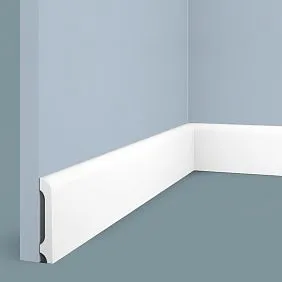
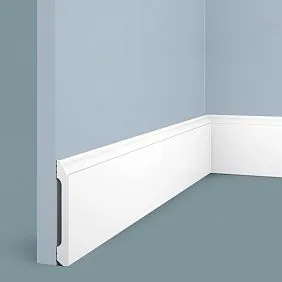
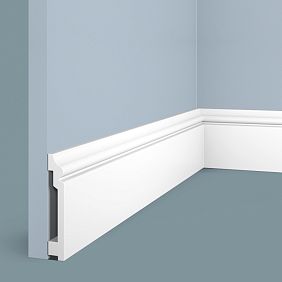
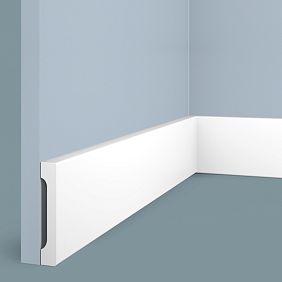
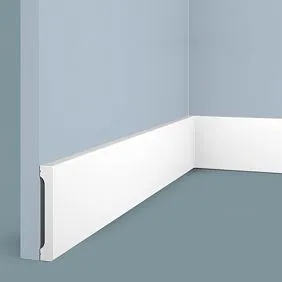
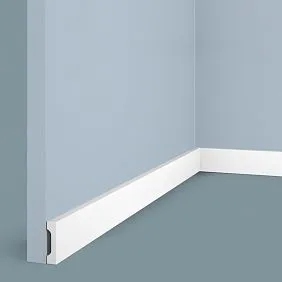
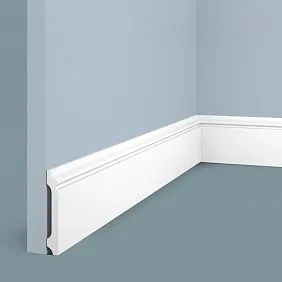
Our factory also produces:

Materials Science of Elite Ceiling Decoration
Get Consultation
Oak — the King of Ceiling Decoration
Oak ceiling skirting represents the peak of quality and durability. The density of oak wood (650-750 kg/m³) ensures exceptional strength, which is critically important for ceiling elements operating under constant temperature fluctuations.
Oak's unique structure with characteristic medullary rays creates an irreplaceable play of light and shadow on the ceiling skirting. Depending on the lighting, the oak surface may appear golden in the morning, rich brown during the day, and nearly black under artificial evening lighting.
Tannins contained in oak wood not only impart antiseptic properties to the material but also ensure its natural aging. Over time, oak develops a noble patina, becoming even more expressive and valuable.
Ash — Northern Elegance Above the Ceiling
Ash ceiling skirting is distinguished by a particularly expressive texture. Clearly visible annual rings create a dynamic pattern, which looks especially striking on large ceiling elements.
Light shades of ash — from cream-white to light brown — make it an ideal choice for modern interiors where the natural beauty of the material is appreciated. The high elasticity of ash wood allows creating complex curved elements without the risk of cracking.
Beech — Classic European Quality
Beech ceiling skirting has been used in European interiors for centuries due to its uniform structure and warm honey-colored tones. The uniformity of beech texture allows creating elements with perfectly sharp profile lines.
A distinctive feature of beech is its ability to beautifully take stain. This opens up vast possibilities for designers, allowing the color of the skirting to be adapted to any interior concept.
Geometry of Perfection: Dimensions and Proportions
Height of Ceiling Skirting as an Architectural Tool
Choosing the height of ceiling skirting is an exact science based on the laws of architectural harmony. For standard residential rooms with ceiling heights of 2.7–3.0 meters, the optimal height of ceiling skirting is 60–100 mm.
In rooms with high ceilings (3.5–4.0 meters and above), skirting boards up to 120–200 mm and more can be used. Such elements create a sense of monumentality and grandeur, emphasizing the status of the interior.
Wide Wooden Skirting BoardFor ceilings 150–300 mm high, used in palace-style interiors, where each element must conform to the overall concept of luxury and grandeur.
Profiles — The Language of Architectural Styles
Each historical style has its characteristic ceiling skirting profiles. Classicism tends toward strict, geometrically correct forms with clear transitions between planes. Baroque prefers complex multi-step profiles with abundant decorative elements.
Modern minimalism requires extreme simplicity of lines. Often this is a rectangular profile or a profile with minimal transitions. But even in such apparent simplicity lies complexity — every line must be perfectly straight, every transition mathematically precise.
Technological Secrets of Producing Elite Ceiling Skirting
The Art of Proper Wood Drying
Production of trim elementsFor ceiling decoration, it begins with careful selection of raw material. Wood for ceiling skirting must be absolutely stable, as any deformation during use will immediately become noticeable.
Room drying is carried out according to special programs taking into account the future purpose of the products. For ceiling elements, the wood moisture is reduced to 6-8% — this is lower than for floor skirting boards, since the conditions of use on the ceiling are more stable.
Multi-stage drying with intermediate conditioning allows removing internal stresses in the wood, ensuring the absence of deformations during operation. This process may take up to a month, but only in this way can one obtain truly stable material.
Precision profile processing
Creating complex ceiling profiles requires the use of high-precision equipment. Modern CNC milling machines allow creating profiles of any complexity with accuracy down to tenths of a millimeter.
Each profile requires the manufacture of special cutting heads. The blades are made from high-quality tool steels and are sharpened using diamond wheels. This ensures a perfectly clean cut surface without any scratches or chips.
The final sanding of ceiling skirting boards is performed manually by experienced craftsmen. Each element is checked for compliance with geometric parameters, surface quality, and absence of defects.
Design Solutions and Stylistic Directions
Classic interiors — a triumph of traditions
In classic interiors, the ceiling skirting board plays the role of architectural framing, emphasizing the nobility and elegance of the space. Traditional profiles with smooth transitions and elegant curves create a sense of harmony and perfection.
For classic interiors, it is characteristic to useof wooden moldingsin combination with ceiling skirting boards. A unified stylistic approach to all decorative elements creates a cohesive composition.
Modern interiors — minimalism and functionality
Modern design tends toward the purity of lines and functionality.Ceiling baseboard woodenIn a modern interior — this is primarily ideal geometry and flawless execution.
Simple rectangular profiles or profiles with minimal transitions emphasize the architectural lines of the room, without distracting from the main interior elements.
Eco-style — harmony with nature
The growing popularity of eco-style makes natural wooden elements especially in demand.Wooden ceiling baseboardIn natural finish, without aggressive staining, creates a sense of connection with nature.
The texture of natural wood, its natural tones, and its ability to change depending on lighting make the interior lively and dynamic.
Installation and mounting: the art of precision
Preparation work — the foundation of quality
Installing ceiling skirting boards requires special care in preparation. The ceiling and upper part of the walls must be perfectly level — any irregularities will immediately be noticeable due to the lighting characteristics of the ceiling area.
Material acclimatization is critically important. Wooden skirting boards must remain in the room for at least 48-72 hours, adapting to temperature and humidity. This prevents deformation after installation.
Ways of mounting ceiling skirting boards
Mounting to the ceiling — the most common method for lightweight skirting boards with simple profiles. Self-tapping screws with anchors are used, and mounting points are concealed with putty or decorative caps.
Mounting to the wall is used for heavy skirting boards with complex profiles. This method ensures greater reliability but requires more precise marking and careful execution.
Combined mounting is used for especially heavy elements. The skirting board is mounted simultaneously to the ceiling and the wall, ensuring maximum fixation reliability.
Corner joints — craftsmanship in details
The quality of corner joints is an indicator of the installer's professionalism. Internal angles of ceiling skirting boards require special precision in trimming, as any inaccuracies will be clearly visible when viewed from below.
For complex profiles, it is recommended to use pre-made corner elements — this guarantees ideal joint geometry and saves time during installation.
Integration with lighting systems
Hidden lighting — architecture of light
Modern ceiling skirting boards can integrate hidden lighting systems. LED strips placed in special recesses of the skirting board create a "floating" ceiling effect, gently highlighting the architectural lines of the room.
A properly designed lighting system transforms the ceiling skirting board into an element of light design, creating a unique atmosphere in the room.
Integration with "smart home" systems
Modern technologies allow integrating motion, temperature, and humidity sensors into ceiling skirting boards. Hidden within decorative elements, they provide automatic control of lighting and climate.
Color Solutions and Finish Coatings
Natural shades — beauty without embellishment
A modern trend is using ceiling skirting boards in their natural color without aggressive staining. Each wood species has its own unique color palette, fully revealed under proper lighting.
Oak displays a spectrum from light golden to dark brown with greenish undertones. Ash ranges from cream-white to light brown with pinkish hues. Beech delights with warm honey tones of varying intensity.
Staining — adaptation to interior
Modern staining compositions allow changing the wood color while preserving its natural texture. Oil-based stains penetrate deeply into the wood structure, creating an even color and highlighting the beauty of growth rings.
Water-based stains provide lighter, more transparent tones while preserving the wood's tactile properties. Alcohol-based compositions deliver intense, saturated colors and quick drying.
Protective coatings for ceiling elements
Ceiling skirting boards operate under more gentle conditions compared to floor ones, yet still require quality protection. Lacquer coatings create a durable protective film, shielding against dust, moisture, and mechanical damage.
Oil-based coatings preserve the natural beauty of wood and allow it to 'breathe'. Wax-based compositions give surfaces a silky sheen and special tactile appeal.
Care and maintenance of ceiling wooden elements
Regular Maintenance
Ceiling skirting boards require regular but simple care. The main task is removing dust, which is especially noticeable on horizontal surfaces of complex profiles.
Dry cleaning is performed using a soft brush or vacuum cleaner with a soft attachment. It is important not to damage the coating surface with abrasive materials.
Wet cleaning is done with slightly damp cloth using special wood care products. Avoid excessive moisture — extra water may damage the wood and coating.
Coating renewal
Lacquer coatings on ceiling elements last longer than on floor elements due to less intensive use. Renewal is required every 10-15 years depending on usage conditions.
Oil-based coatings require more frequent renewal — every 5-7 years. The advantage is that renewal can be done without dismantling elements.
Economic aspects of investing in quality
Comparative cost analysis
When choosing ceiling skirting boards, many focus only on initial cost, ignoring long-term prospects.Wooden baseboards pricewhich may seem high, turn out to be the most economical solution in the long run.
Cheap polystyrene skirting boards costing 50-100 rubles per meter will need replacement after 3-5 years. Polyurethane skirting boards costing 300-500 rubles will last 7-10 years. High-quality wooden skirting boards costing 2000-5000 rubles per meter will serve 30-50 years and more.
Impact on property value
Quality finishing of the ceiling zone significantly increases the perceived value of real estate. Potential buyers immediately notice the quality of finishing, and wooden ceiling skirting boards create an impression of respectability and attention to detail.
In the premium real estate segment, quality ceiling finishing can increase the property value by 20-30%, which multiplies the return on investment in materials and labor.
Ecological advantages of natural materials
Healthy microclimate
Natural wood has a unique ability to regulate air humidity in a room. Wooden ceiling elements absorb excess moisture during high humidity and release it during low humidity.
This is especially important for the ceiling zone, where warm, humid air often accumulates. Wooden elements help maintain a comfortable microclimate naturally.
Antibacterial properties
Many wood species have natural antibacterial properties. Oak contains tannins that suppress the growth of harmful microorganisms. Coniferous species release phytoncides that purify the air.
These properties are especially valuable in modern conditions of heightened attention to air quality in residential spaces.
Innovative solutions and technologies of the future
Thermo-modification of wood
Thermal treatment of wood at 160-220°C dramatically improves its performance characteristics. Thermally modified wood has increased dimensional stability, resistance to biological effects, and a beautiful dark color.
Such materials are ideal for ceiling elements operating under varying humidity and temperature conditions.
Digital technologies in production
Modern CAD/CAM systems allow creating ceiling skirting boards of any complexity according to individual projects. 3D modeling helps the client visualize the future result even during the design stage.
Robotized production lines ensure consistent quality and make it possible to manufacture even single items at an acceptable price.
Regional application specifics
Russian climate conditions
The Russian climate, with large temperature and humidity fluctuations, imposes special requirements on wooden ceiling elements. Quality kiln-drying and stabilization of wood become critically important.
Heating systems often create extremely low air humidity in winter, which may lead to cracking of poorly prepared wood.
Architectural traditions
Different regions of Russia have their own architectural traditions. Petersburg classicism requires complex multi-step profiles. Moscow Empire prefers strict geometric forms. Modern architecture tends toward minimalist solutions.
Frequently asked questions
What should be the optimal height of a ceiling skirting board?
For standard rooms with ceilings 2.7–3.0 m high, a height of 60–100 mm is recommended. For high ceilings, skirting boards up to 200 mm and higher can be used.
Can a wooden ceiling skirting board be used in a bathroom?
Yes, if properly treated with moisture-resistant compounds and with good ventilation. It is better to choose wood species resistant to moisture and high-quality protective coatings.
How to choose the color of a ceiling skirting board?
The classic solution is a skirting board in the color of the ceiling or 1–2 tones darker. Contrasting solutions are also possible, but require a professional approach to design.
How long does a quality wooden ceiling skirting board last?
With proper material selection and installation — 30–50 years or more. Solid wood can be restored, extending its service life.
How to correctly calculate the amount of material?
Measure the room's perimeter at ceiling level, add 5–10% for trimming. Consider the length of standard boards for optimal cutting.
Is it necessary to prime the surface before installation?
Yes, priming improves the adhesion of adhesive compounds and prevents stains on the finish.
What is the most reliable mounting method?
For light profiles — mounting to the ceiling, for heavy ones — to the wall or combined mounting.
Can a wooden ceiling skirting board be painted?
Yes, but this will hide the natural wood texture. It is better to use tinting compounds that preserve the wood structure.
How to care for wooden ceiling elements?
Regular dry dusting, periodic wet cleaning with specialized wood cleaning agents, and renewing protective coatings as needed.
Does the quality of the ceiling skirting board affect the overall impression of the interior?
Absolutely. Well-executed ceiling elements create a sense of completeness and sophistication throughout the entire interior.
Conclusion
Ceiling baseboard woodenIt is not merely a decorative element, but a crucial component of interior architectural composition. The correct choice of material, profile, dimensions, and installation method determines the character of the entire space, creating an atmosphere of elegance and nobility.
Investments in high-quality wooden ceiling elements pay off over decades of flawless service, the possibility of restoration and renewal, and a positive impact on property value. In a world of synthetic materials, natural wood remains a symbol of authentic quality and connection to traditional craftsmanship.
Modern manufacturing technologies allow creating products of exceptional quality, combining traditional advantages of solid wood with innovative functional capabilities. Integration of lighting systems, smart home elements, and thermally modified wood opens new horizons for designers and architects.
Choosing a wooden ceiling skirting board is choosing in favor of durability, eco-friendliness, beauty, and functionality. It is an investment in creating a space that will delight with elegance and comfort for many years, passing down as a symbol of good taste and understanding of true values.
Based on extensive experience in producing premium solid wood products, STAVROS offers a full range of solutions for high-level ceiling decoration. Our production uses only carefully selected raw materials from ecologically clean regions, advanced processing technologies, and multi-stage quality control at every stage.
The STAVROS team of specialists is ready to provide professional consultations on selecting optimal solutions, develop custom profiles for unique projects, ensure quality logistics, and provide comprehensive after-sales service. Choosing STAVROS products means choosing reliability proven over time, innovative solutions, and flawless quality — qualities highly valued by leading designers, architects, and discerning clients around the world.


