Article Contents:

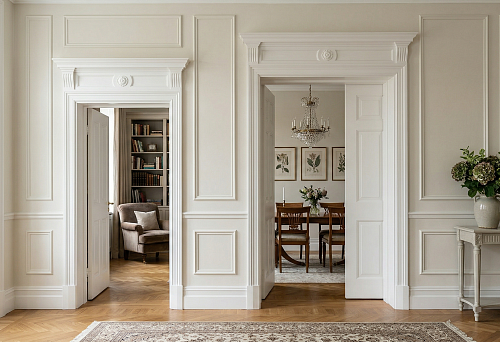
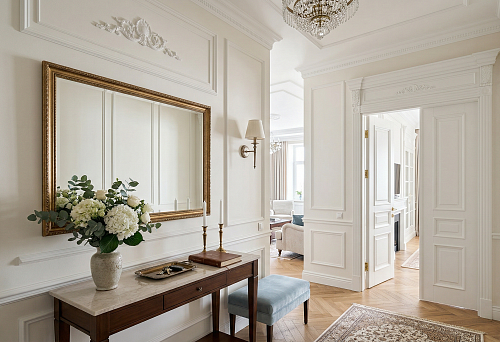
When planning the interior of a residential or commercial space, most of us first focus on large details: wall decoration, flooring, furniture selection. Indeed, it is hard to imagine a cozy home without beautiful parquet or stylish laminate, and walls — without thoughtful color or decor. However, while creating the overall look of a room, we often forget about "small details" that, in essence, are key elements. One such detail is the baseboard. It not only neatly covers the junction between the floor and the wall, but also emphasizes the overall stylistic solution, helping to achieve harmony and perfection in the interior.
In this article, we will examine all the nuances related to such an important question, aswooden baseboard sizesYou will learn how to choose the optimal height and shape of the baseboard, why it is important to consider the architectural features of the room, and how to properly combine the baseboard with other design elements. Ready to dive into the world of interior nuances? Then let's begin!


1. Why are baseboard sizes so important?




1.1. Visual harmony in the interior
At first glance, the baseboard is merely a transition strip between the floor and the wall. But it is precisely this element that can perform a utilitarian function (hide gaps, protect the lower part of the walls) on one hand, and become a decorative element helping to balance the room's scale on the other. Incorrectly chosen baseboard dimensions can "ruin" even the most expensive parquet and elegant wall design.
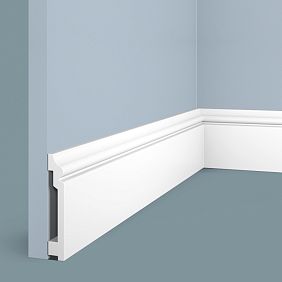
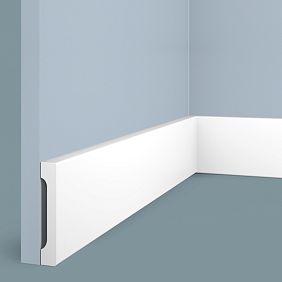
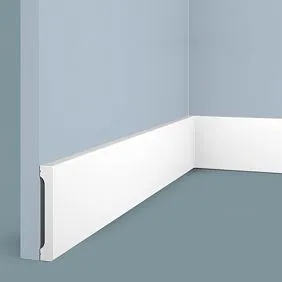
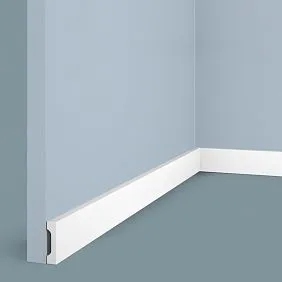
Our factory also produces:
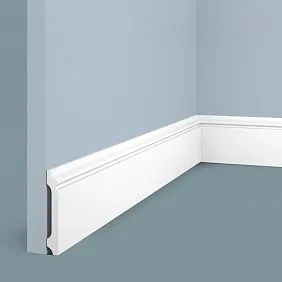

1.2. Wall and floor protection
Optimal baseboard dimensions ensure quality protection of the lower part of the walls from damage, splashes during wet cleaning, and other "difficulties" of use. Moreover, if the baseboard's surface covers sufficient area, it prevents dust and small contaminants from entering the gap between the wall and the floor.
Get Consultation
1.3. Functionality and ease of installation
A correctly selected baseboard in height and thickness simplifies hiding wires (provided the model has a cable channel) and ensures convenient mounting. A too thin baseboard on uneven walls will not fit well, while an overly high one may visually "weigh down" the room.
2. What sizes are available for wooden baseboards?
2.1. Standard dimensions
Traditionally, the height of a wooden baseboard ranges from 4 to 7 cm. This size is considered universal, as it allows neatly covering the junction and protecting the lower part of the walls. Baseboards of this height are suitable for most ordinary apartments, where ceilings do not exceed 2.5–2.7 meters. They do not "consume" space and look harmonious both in classic and more modern interiors.
2.2. Tall baseboards
In recent years, taller strips — from 8–10 cm and above — have gained popularity. Such products are especially suitable for spacious rooms with high ceilings (3 meters and above) or spaces where you want to create an atmosphere of luxury and status. A tall baseboard can visually "raise" the walls and add additional dignity to the interior. However, in small rooms or with low ceilings (less than 2.5 m), an excessively tall baseboard may look bulky and disrupt proportions.
2.3. Thickness and profile
When choosing a baseboard, it is important to consider not only its height but also its thickness — usually from 1 to 2.5 cm. This parameter determines how much the baseboard protrudes from the wall surface and how convenient it will be to hide wires or irregularities behind it. The profile can be straight, shaped, with cutouts for utilities, or without them. If you want the installation and joints to proceed without unnecessary problems, ensure that the thickness and shape of the baseboard suit the characteristics of the walls in your room.
3. How to choose a baseboard to match room dimensions?
3.1. Assess ceiling height
● Up to 2.5 m. Optimal strips are 4–6 cm high.
● 2.6–2.8 m. Models 6–8 cm can be considered.
● More than 2.8–3 m. Baseboards from 8–10 cm and above will emphasize the elegance of proportions.
In addition, it should be noted that light-colored baseboards may "lighten" their visual perception, while dark strips add a sense of mass.
3.2. Consider the interior style
● Classic. Tall, shaped baseboards 8–12 cm harmonize with moldings, cornices, and door casings with complex relief.
● Minimalism. Simple straight strips 5–7 cm without unnecessary embellishments fit the "clean lines" concept.
● Loft. Here, baseboards are often chosen in dark shades, emphasizing contrast with the "roughness" of brick or concrete. The size depends on how much you want to "highlight" this element.
3.3. Combination with door frames and furniture
If the doors are heavy and have tall thresholds, it is advisable to support this with a wide plank. If the door openings are narrow, it is better to choose a more modest height so that the skirting does not draw all the attention. And, of course, try to select the wood color and texture that matches the furniture or floor.
4. Features of wooden skirting of different heights
4.1. Low skirting
● Advantages:
○ Do not "weigh down" the space;
○ Easier to install in rooms with standard ceilings;
○ Look harmonious in minimalist and modern interiors.
● Disadvantages:
○ May appear unremarkable in large rooms;
○ Provide less opportunity for concealed wiring.
4.2. Mid-range segment
● Advantages:
○ Universality;
○ Suitable for both large and relatively small rooms;
○ Sufficient space for cables, if the profile allows it.
● Disadvantages:
○ May appear too "ordinary" if the color and thickness are not properly chosen.
4.3. High skirting
● Advantages:
○ Look impressive, adding "status" to the interior;
○ Effectively cover wall and floor irregularities, as well as large gaps;
○ Often feature cable channels, simplifying cable organization.
● Disadvantages:
○ Visually "weigh down" low and small rooms;
○ Cost more due to greater wood consumption and more complex manufacturing.
5. Difference between wood species and its impact on dimensions
Wooden skirting is made from many species: pine, oak, beech, walnut, ash, larch, etc. Depending on the properties of the wood, certain dimensions may be more or less preferable.
- Pine: budget-friendly material, but softer. High pine skirting may deform over time if walls are not perfectly flat or humidity conditions are unstable.
- Oak: one of the hardest species, withstands heavy loads and humidity fluctuations. You can confidently choose models 8–12 cm high without worrying about geometry.
- Beech: similar hardness to oak, has a beautiful texture and rich light tones. Medium or high beech skirting often decorates modern interiors.
- Walnut: noble species with deep brown color. High walnut skirting fits beautifully into art deco or luxury classic interiors.
- Larch: resistant to moisture, suitable for rooms with variable humidity. When choosing high models, consider drying characteristics to minimize the risk of warping.
6. Profile shape and its significance
6.1. Straight profile
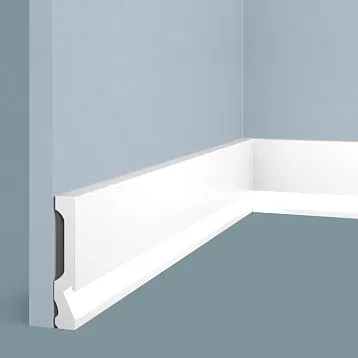
The most minimalist option, often chosen for modern styles and minimalism. Additionally, a straight profile is easier to install and clean, with less dust accumulation.
6.2. Ornamental (Classic)
More commonly used in traditional interiors where elegant curves and carved elements are needed. Such a skirting board can emphasize the 'palatial' luxury of a living room or add refinement to an office.
6.3. High with 'shelf'
Some models have an upper protrusion, creating additional surface area (though usually very narrow). This looks beautiful and unusual, but may collect dust during cleaning.
6.4. Models with cable channel
Wires for audio- and video equipment, internet, and electricity can be located inside. When choosing such models, pay attention to the internal channel cross-section and the ease of access to wiring.
7. Practical recommendations for installing skirting boards of different heights
7.1. Wall and floor preparation
● Gaps should be even. If the floor is uneven, high skirting boards may cover defects, but for significant discrepancies, it's better to do a screed or other leveling.
● Clean the surface from dust and construction debris.
7.2. Method of mounting
- On adhesive ('liquid nails'): suitable for flat walls and skirting boards with standard dimensions. Fast, aesthetic, but removal is difficult.
- On self-tapping screws or nails: classic option. Strong, but may require covering screw heads with special caps or putty.
- On baseboards: convenient if you plan to periodically remove the baseboard (for example, to access wires). Especially relevant for medium and high-height baseboards with cable channels.
7.3. Corners and joints
● Use a miter saw or a circular saw for precise cutting at the required angle (usually 45°).
● Keep in mind that large planks require more careful attention to cutting accuracy: even a few-degree error may be noticeable.
8. Secrets of caring for wooden skirting boards
- Regular dry cleaning. For dust and minor dirt, wipe with a soft dry cloth or brush.
- Wet cleaning. If you need to clean the skirting board, use minimal water and gentle cleaning agents. Excessive moisture may deform the wood.
- Protective coatings. Periodically renew varnish or oil (especially if the skirting board is subjected to increased loads).
- Restoration. Minor scratches can be sanded and repainted with the appropriate compound. For deep scratches, wood putty may be required, followed by repainting the affected area.
9. Where to buy and how to save on wooden skirting boards?
If you have decided that the ideal solution for your interior will bewooden baseboard sizes a certain height, then the question arises: where is the best place to purchase it and how to avoid overpaying:
- Construction hypermarkets. The advantage is that you can see live samples and assess their quality. The downside is that the assortment may be limited, and prices may be above average.
- Online stores. Here, there are often advantageous promotions and a wide selection. It is important to study seller reviews and consider delivery costs.
- Direct suppliers and manufacturers. If you need a non-standard height or exclusive wood species, you can contact factories directly. This allows you to save on middleman markup and order the exact quantity needed for your project.
- Bulk purchase is more cost-effective. If you need skirting boards for several rooms or a large project, companies usually offer discounts for bulk purchases.
- Promotions and sales. Keep an eye on seasonal offers when stores hold sales or clear out remaining inventory.
10. Step by step: how to choose the ideal skirting board by size
- Determine the ceiling height. If the room is high and spacious, you can afford more substantial models.
- Measure the room's perimeter. Account for doorways, niches, and any protruding sections.
- Assess the presence of cables. Are cable channels required, and what internal dimensions are needed for this?
- Decide which profile suits you best: a simple straight, decorative, or with a shelf.
- Coordinate the shade. Choose the tone based on the color of the floor, doors, or walls (depending on the selected style).
- Compare offers from several stores or websites, considering not only the price per linear meter, but also delivery conditions, warranty, and brand reputation.
- Consider installation specifics. If necessary, hire professionals or carefully study the mounting instructions.
By following this simple logic, you can avoid typical mistakes and select a skirting board that perfectly fits your project.
11. Conclusion
Selection and installationwooden baseboard sizes — not such a small detail as it may seem at first glance. They directly affect the overall interior composition, comfort, and ease of maintenance. A properly chosen skirting board not only conceals gaps and repair flaws but also gives the room a finished look, harmoniously connecting walls and floor into a single ensemble.
To ensure the purchase delights the eye and serves for many years, it is important to consider ceiling height, design style, wood grain, profile shape, and mounting type. With this information in hand, you will be able to find the optimal option that highlights your interior’s strengths and stays within budget.
Ultimately, a quality wooden skirting board is an investment in your comfort and aesthetics. By spending a little more time researching the market and characteristics, you will secure yourself a luxurious and durable finishing element that will suit any home. After all, it is the details that create the true beauty and individuality of a residence. Let your skirting board become the final touch that brings harmony to the space and highlights your impeccable taste!