












































































Article Contents:
- Philosophy of unified style: why it matters
- Visual spatial coherence
- Material as a Unifying Factor
- Floor skirting board: function and aesthetics
- Skirting board height: proportions and scale
- Skirting board profile: from classic to minimalism
- Thickness and projection: technical nuances
- Round handrail: safety and beauty
- Handrail diameter: ergonomics and comfort
- Wood species: coordination with skirting board
- Handrail finish: oil or varnish
- Creating a unified system: from selection to installation
- Species selection: the foundation
- Profile: form coordination
- Finish: unity of finishing
- Installation: professionalism in details
- Style solutions: examples of harmony
- Classic interior: nobility of oak
- Scandinavian minimalism: light beech
- Industrial loft: tinted ash
- Modern classic: painted elements
- Economic aspects: budget and feasibility
- Price difference: unified system vs heterogeneous elements
- Impact on property value
- Aesthetic value: the price of comfort
- Care and durability: practical recommendations
- Regular skirting board maintenance
- Stair handrail maintenance
- Protection against damage
- Frequently Asked Questions
- Must skirting board and handrail be made from the same wood species?
- Which wood species is optimal for skirting board and handrail?
- Which is more expensive — oak or beech baseboard?
- Can wooden baseboards and handrails be painted any color?
- How often should wooden elements' coating be renewed?
- Can baseboards and handrails be installed independently?
- How much does oak baseboard cost?
- Does a unified style of wooden elements affect apartment value?
- Where to buy baseboard and handrail from the same collection?
- How to coordinate baseboard with flooring?
- Conclusion
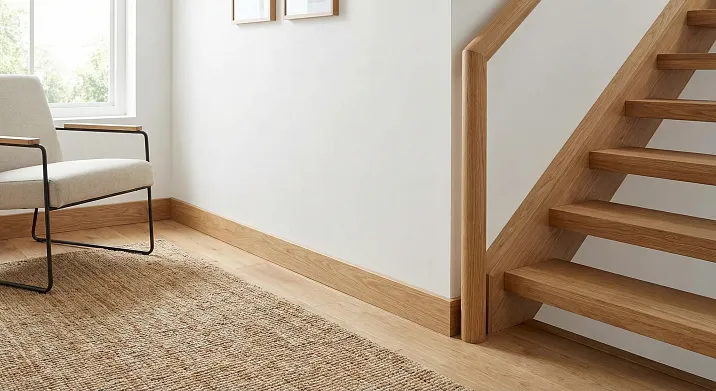
Interior is a symphony where each element plays its part. Furniture, lighting, wall finishes — these are soloists that immediately attract attention. But there are performers who sound quieter, more subtle, yet without them the composition falls apart, loses integrity. These are details — baseboards, trims, handrails, cornices. They create coherence, completeness, that invisible unity which distinguishes a thoughtful interior from a random assortment of items. And whenwooden baseboard unified styleforms together with other millwork elements, harmony is born that you feel subconsciously, even without being able to explain in words.
Imagine an interior where the floor baseboard is made of dark oak, door trims are made of light pine, and the staircase handrail is made of plastic wood-look. Each element individually may be quality, but together they create visual chaos, destroying the perception of space as a unified whole. Now imagine the same interior where all wooden elements are made from the same species, with identical profile, coating, shade. Baseboard flows into trim, trim echoes handrail, handrail harmonizes with wall moldings. The space gains integrity, logic, nobility.


Philosophy of unified style: why it matters
Stylistic unity of interior is not a whim of perfectionists nor a tribute to fashion. It is a fundamental design principle based on features of human perception. Our brain strives for orderliness, for pattern recognition, for creating a holistic picture from disparate elements. When interior elements are connected by common characteristics — material, color, form — the brain calms, a sense of harmony, correctness, comfort arises.
Heterogeneity requires constant effort to process contradictory information. Why is this baseboard dark, but the door light? Why is there a carved profile here, but smooth there? These questions may not be conscious, but they create underlying tension, discomfort, a sense of something wrong.




Visual coherence of space
A unified style of wooden elements creates visual lines that connect different parts of space.wooden skirting for the floorencircles the room perimeter at floor level, door and window trims — at opening level, staircase handrail — along the flight. If all these elements are executed in a unified style, they create an invisible framework, architecture within architecture, which structures and orders the space.
Color plays a critical role. Wood of one species has a characteristic shade and texture. Oak — golden-brown with expressive grain. Ash — light with contrasting veins. Beech — soft pink with uniform structure. When all wooden elements are made from the same species, they are automatically coordinated in color and texture, creating harmony without additional effort.
Our factory also produces:


Material as a Unifying Factor
Wood is a material with its own character. Even painted, it retains its organic warmth, tactility, barely perceptible aroma. When an interior contains wooden elements from different sources, there is a high risk of mismatch not only in color, but also in processing quality, coating type, overall feel.
The ideal scenario — all wooden millwork from one manufacturer, from one collection, with identical processing. This guarantees that baseboard, trims, handrails, moldings will be not just similar, but identical in all parameters except shape. They become elements of a unified system, designed to work together.
Get Consultation
Floor baseboard: function and aesthetics
Baseboard is a transitional element between the vertical wall and horizontal floor. Its main function is protective: to close the expansion gap, conceal uneven joints, protect the lower wall from cleaning damage, furniture, accidental impacts. But in modern interior, baseboard is also a significant decorative element that influences perception of the entire space.
Baseboard height: proportions and scale
Baseboard height is determined by several factors: ceiling height, room scale, interior style. For standard apartments with ceilings two meters sixty — two meters eighty, optimal baseboard height is seventy-eighty millimeters. This is sufficient for the baseboard to perform its function, but not so high as to visually "eat up" space.
For rooms with high ceilings (three meters and above), taller baseboards are appropriate — ninety-one hundred twenty millimeters, and in classical style interiors — even one hundred fifty-two hundred. Tall baseboard emphasizes monumentality, respectability, references historical interiors of palaces and mansions.
Golden rule of proportions: baseboard height should be approximately one-thirtieth of room height. With ceilings two meters seventy — that's ninety millimeters. With three meters — one hundred millimeters. This is not a rigid formula, but a guideline adjustable depending on style and personal preferences.
Baseboard profile: from classic to minimalism
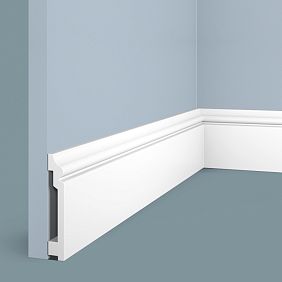
Baseboard profile is its cross-section, shape, which determines how it interacts with light, how it reads in space. Classic profiles have complex form with roundings, grooves, protrusions. They create play of light and shadow, add decorativeness, suit interiors of classic, neoclassical style, Provence.
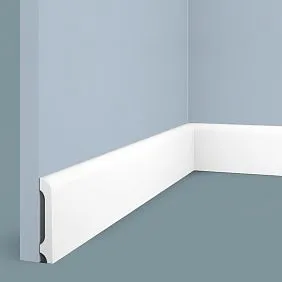
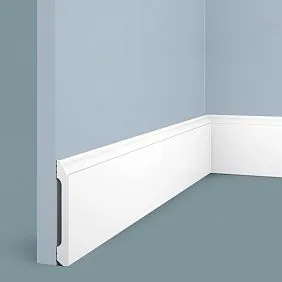
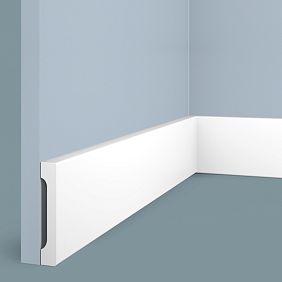
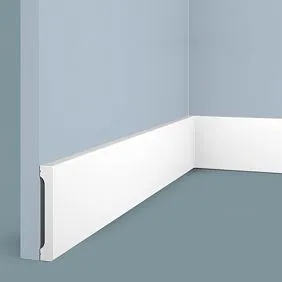
Modern profiles lean toward simplicity — rectangular cross-section with minimal roundings or none at all. Sharp edges, clear lines, laconic forms. Such baseboards fit into minimalism, Scandinavian style, loft, modern classic. They don't draw attention, serve as unobtrusive framing, emphasize purity of interior lines.
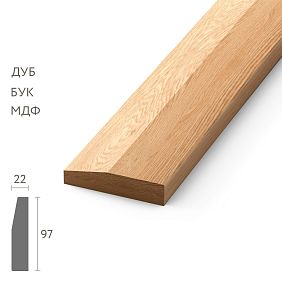
Oak skirtingwith a classic profile — a choice for interiors where tradition, quality, and nobility are valued. Oak texture with expressive annual rings combined with a complex profile creates an effect of historical authenticity, harking back to times when everything was made by hand and to last for centuries.
Beech skirting board with a minimalist rectangular profile — for modern interiors where conciseness, purity, and geometric rigor are important. The uniform beech texture is not distracting, and straight lines emphasize the modernity of the approach.
Thickness and projection: technical nuances
The thickness of the skirting board (the distance from the wall to the outer edge) is usually fifteen to twenty-five millimeters. This is sufficient to cover the technological gap between the wall and the floor covering (usually ten to fifteen millimeters) and to create a small projection that protects the wall.
A skirting board that is too thin (ten to twelve millimeters) looks fragile and does not provide sufficient protection. One that is too thick (more than thirty millimeters) protrudes from the wall, may interfere with furniture placement, and collects dust on the horizontal surface.
The optimal thickness is eighteen to twenty-two millimeters. This is a practice-tested value that ensures a balance between function and aesthetics.
Round handrail: safety and beauty
A staircase handrail is not only a functional safety element but also a significant interior detail. If there is a staircase in the house, the handrail is always in sight, it attracts the eye, and its shape, color, and material influence the overall perception of the space. Here, it is important that the handrail is coordinated with other wooden interior elements — primarily with skirting boards and architraves.
Handrail diameter: ergonomics and comfort
Round oak handrailhas strictly defined ergonomic parameters. The diameter of the handrail should be such that the hand of an average person can comfortably grasp it. The optimal diameter is forty to fifty millimeters. Smaller — it is uncomfortable to hold; larger — the hand does not fully grasp it, and a sense of control is lost.
For children's staircases, handrails of a smaller diameter are sometimes made — thirty-five to forty millimeters, so that a child's hand can hold it more comfortably. For external staircases in public buildings, handrails of a larger diameter are used — fifty-five to sixty millimeters, so that they can be held while wearing gloves.
For home interiors, the standard is forty-five millimeters. This is a proven value that suits most people, provides a reliable grip, and the handrail does not look massive.
Wood species: coordination with the skirting board
If an oak skirting board is used in the interior, it is logical for the handrail to also be made of oak. This creates unity of material, color, and texture. Even if the skirting board and handrail are in different parts of the house, a person subconsciously perceives their kinship, which enhances the feeling of interior integrity.
Oak is ideal for handrails for several reasons. Firstly, high strength and hardness — the handrail is subjected to constant loads, people lean on it, grasp it with force. Soft wood species quickly wear out and become dented. Oak withstands decades of intensive use without visible wear.
Secondly, beautiful texture. A round handrail showcases the wood from an unexpected angle — on the cylindrical surface, the texture bends, creating a dynamic pattern. Oak texture with expressive annual rings looks especially impressive on a round handrail.
Thirdly, pleasant tactile quality. The handrail is constantly touched by hand, and oak under oil or varnish creates comfortable tactile sensations — smoothness without slipperiness, warmth without excessive coolness.
Handrail finish: oil or varnish
For handrails, the correct finish is critically important. The handrail is in constant contact with hands, subjected to friction, exposure to sweat, and skin oils. The finish must protect the wood but not become slippery or peel from constant friction.
Oil — a traditional choice for handrails. An oil finish penetrates the wood, does not create a surface film, and preserves the tactile quality of the wood. An oiled handrail is pleasant to the touch, not slippery, and maintains a comfortable temperature (not cold like metal, not excessively warm like plastic). The disadvantage — oil requires periodic renewal, every two to three years, depending on the intensity of use.
Varnish — a more protective finish. Modern polyurethane varnishes form a durable film resistant to abrasion and chemical exposure. But varnish creates a feeling of being 'glazed over,' the handrail can be slippery, especially if the varnish is glossy. Therefore, for handrails, only matte or semi-matte varnishes with additives that reduce slipperiness are used.
A compromise option — oil-wax. This finish combines the penetrating properties of oil with the protective properties of wax. It is more durable than pure oil but retains the natural tactile quality.
Creating a unified system: from selection to installation
How to practically implement a unified style of wooden elements in the interior? Where to start, how to choose materials, how to coordinate details?
Choosing the wood species: the foundation
The first decision — choosing the wood species that will become the basis for all interior molding elements. This is a fundamental decision on which everything else depends — color scheme, style, budget, durability.
For premium interiors, the choice is obvious — oak. This is the king among species, the standard of strength, durability, and nobility. Oak skirting board, oak architrave, oak handrail create an atmosphere of respectability, quality, and solidity. Oak is appropriate in any style — from classic to minimalism, always recognizable, always valued.
For the mid-range segment, a good alternative is ash or beech. Ash is close to oak in strength but lighter and with a more expressive texture. Beech is more uniform, softer in color, ideal for painting. Both are worthy species that provide durability and beauty at a more affordable price than oak.
For budget interiors or country houses — pine. Light, soft, with characteristic resin ducts, it creates an atmosphere of rustic simplicity, natural spontaneity. Pine does not pretend to be luxurious but offers genuine naturalness, the aroma of a coniferous forest.
Important: having chosen a species, you need to use it for all wooden elements. Do not mix oak with pine, ash with beech. An exception is possible only for furniture, which can be made from another species if this is stylistically justified.
Profile: Coordination of Forms
The second solution is profile selection. Baseboards, door casings, and moldings have different forms, but they must be coordinated. If the baseboard is classic, with decorative rounded edges, then the door casings should have similar ornamentation. If the baseboard is minimalist, rectangular, then the other elements should be laconic as well.
Manufacturers of quality millwork usually offer collections where all elements are stylistically coordinated. Baseboards, door casings, cornices, and moldings are executed in a unified style, with repeating motifs and proportions. By choosing a collection, you automatically achieve stylistic unity.
Stair handrails typically have a round cross-section, which differs from the profiles of baseboards and casings. But coordination is achieved through material, color, and finish. An oak handrail in the same shade as an oak baseboard is perceived as part of a unified system, even if the form is different.
Finish: Unity of Treatment
The third solution is the type of finish and color. All wooden elements should be treated identically. If the baseboard has a natural oil finish, then the door casings and handrail should also have a natural oil finish. If the baseboard is tinted gray, then everything else should be in the same shade of gray.
Even a slight difference in shade is noticeable. A light golden baseboard and a dark brown door casing—and the unity is broken. Therefore, it is ideal when all elements are treated simultaneously with the same composition, which guarantees an identical shade.
When ordering from a manufacturer, it is important to specify that all products should be from the same batch of wood and treated with the same batch of finish. This will eliminate color variation, which can occur even within the same wood species due to natural wood variability.
Installation: Professionalism in Details
The fourth is installation quality. Even perfectly matched materials can be ruined by careless installation. Crooked lines, visible joints, gaps, poorly concealed fastener points—all of this ruins the impression.
Professional baseboard installation involves perfectly mitered corners at forty-five degrees, tight fit to the wall and floor, and concealed or neatly spackled fasteners. Joints between straight sections should be minimal and located in inconspicuous places.
Handrail installation requires precise height calculation (ninety centimeters vertically from the step surface), secure bracket mounting (every sixty to eighty centimeters), and smooth transitions at turns. The handrail must be absolutely smooth, without burrs, roughness, or height differences at joints.
Stylistic Solutions: Examples of Harmony
How is a unified style of wooden elements implemented in various interior design directions?
Classic Interior: The Nobility of Oak
In a classic interior, all wooden elements are made of oak in a natural color with a matte varnish finish. A baseboard one hundred twenty millimeters high with a classic profile—rounded edges, grooves, a protruding top bead. Door casings ninety millimeters wide with similar decoration. A ceiling cornice with carved elements—ovolos, dentils. A stair handrail, round, forty-five millimeters in diameter, with turned balusters made of the same oak.
Everything is maintained in a unified palette—golden-brown oak with expressive grain. The finish is a matte polyurethane varnish that protects the wood but does not create a glossy shine. Walls are painted light beige, furniture is dark wood, flooring is solid oak parquet. All wooden elements echo each other, creating a sense of thoughtfulness, quality, and historicity.
Scandinavian Minimalism: Light Beech
Scandinavian interior is about light, space, and naturalness. A baseboard made of light beech, rectangular profile, seventy millimeters high. Finish—whitewashed oil, which preserves the grain but lightens the wood to an almost white color. Narrow door casings, fifty millimeters, of the same beech, the same whitewashed shade. A stair handrail—beech, whitewashed, round, forty-two millimeters in diameter.
Walls are white, floor is light laminate mimicking whitewashed oak, furniture is birch and beech. All wooden elements are light, almost blending with the walls, creating a sense of airiness, cleanliness, and Scandinavian lightness. But upon closer inspection, they are discernible, creating a delicate structure, framing, and completeness.
Industrial Loft: Tinted Ash
A loft interior combines the brutality of industrial materials with the warmth of wood. A baseboard made of ash, tinted dark gray. Height eighty millimeters, profile simple, rectangular with a slight bevel. Door casings—ash, the same dark gray, width seventy millimeters. A stair handrail—ash, gray, round, fifty millimeters.
The contrasting grain of ash in gray creates an effect of aged, weathered wood. This echoes brick walls, concrete ceilings, and metal structures. The wood softens the industrial harshness, adds an organic note, but remains within the loft aesthetic thanks to the gray color and minimalist forms.
Modern Classic: Painted Elements
Modern classic is classical forms in a contemporary interpretation. A baseboard ninety millimeters high with a soft classic profile (rounded edges without carving), painted white. Door casings eighty millimeters wide, white, with similar rounded edges. Wall moldings—white, creating panel compositions. A stair handrail—round, forty-five millimeters, painted white.
Walls are light gray, floor is dark parquet (oak, tinted wenge), furniture has light upholstery with metal legs. White wooden elements create contrast with the dark floor, frame the space, emphasize classical proportions, yet do not appear heavy as they would with natural dark wood. The white color lightens and modernizes the classic style.
Economic Aspects: Budget and Feasibility
Creating a unified style requires certain investments. How much more expensive is it compared to disparate elements? And is it worth it?
Price Difference: Unified System vs. Disparate Elements
Wooden baseboard priceSolid wood, the price of which depends on the species, is usually more expensive than plastic or MDF. An oak baseboard costs from seven hundred to one thousand two hundred rubles per linear meter. Plastic—from one hundred fifty to three hundred rubles. The difference is significant.
For an apartment with an area of eighty square meters and a wall perimeter of about one hundred and fifty meters, approximately one hundred and fifty meters of baseboard will be required (including a margin). Oak baseboard will cost one hundred five to one hundred eighty thousand rubles. Plastic baseboard will cost twenty-three to forty-five thousand. The difference is eighty-two to one hundred thirty-five thousand.
But this is a one-time investment. Oak baseboard will last thirty to fifty years without replacement. Plastic baseboard will last five to seven years, after which it will need to be replaced. Over thirty years, plastic will need to be replaced four to five times, which will ultimately cost ninety-two to two hundred twenty-five thousand rubles more than oak.
Furthermore, oak baseboard can be restored—sanded, refinished. Plastic baseboard can only be replaced. From an environmental perspective, oak is a renewable resource, a biodegradable material. Plastic is a petrochemical product that does not decompose for centuries.
Impact on property value
High-quality finishing with a unified style of wooden elements increases the market value of real estate. Appraisal experts separately consider the quality of finishing materials when evaluating an apartment or house. The presence of oak baseboard, trim, and handrails adds three to five percent to the appraised value.
For an apartment worth ten million rubles, this is three hundred to five hundred thousand rubles. Investments in quality wooden millwork pay off when selling, and then some. Moreover, an apartment with high-quality finishing sells faster—premium segment buyers appreciate move-in readiness and the lack of need to redo the interior.
Aesthetic value: the price of comfort
But the main value of a unified style is not financial. It is daily comfort, the pleasure of being in a harmonious space. An interior where everything is thought out, coordinated, and executed with quality creates a sense of security, correctness, and order. This is not measured in money, but it affects the quality of life.
What is the cost of coming home and feeling that everything here is right, everything is in its place, everything is harmonious? What is the cost of the absence of visual noise, contradictions, and minor irritants? Probably a great deal. And in this sense, investments in a unified style of wooden elements are investments in one's own well-being.
Care and durability: practical recommendations
How to preserve the beauty and functionality of wooden interior elements for decades?
Regular baseboard care
The baseboard is in a risk zone—dust accumulates here, wet cleaning is performed, and there may be mechanical contact with shoes, furniture, and vacuum cleaners. Regular care includes dry wiping with a soft cloth or vacuum brush once a week. Wet cleaning—with a well-wrung cloth, without excess water—once a month.
Do not use abrasive agents, stiff brushes, or aggressive chemicals. Mild soap or special wood care products are the maximum allowed. The oil finish of the baseboard should be renewed every five to seven years—light sanding, applying a fresh coat of oil. A varnish finish lasts longer, ten to fifteen years, after which renewal may be required.
Stair handrail care
The handrail is used more intensively than the baseboard—it is constantly touched by hands, subjected to friction, and exposed to sweat and skin oils. Care includes wiping with a damp cloth every two to three days, renewing the oil finish every two to three years.
Renewal procedure: light sanding with fine-grit abrasive (grit P320-P400), dust removal, applying a fresh coat of oil with a soft cloth. The oil absorbs within a few hours, after which the handrail is ready for use again. This is a simple procedure that can be done independently.
Protection against damage
Wood is a durable but not invulnerable material. Sharp impacts can leave dents and scratches. To minimize risks, use protective pads on furniture legs, be careful when moving heavy objects, and ensure children do not use wooden elements as a playground.
If damage does occur—a scratch, dent, or chip—it can be restored. Minor scratches are eliminated by sanding and renewing the finish. Dents can be steamed (covered with a damp cloth, ironed—the wood swells and the dent reduces), then sanded. Deep chips are filled with wood putty followed by tinting.
Frequently asked questions
Do the baseboard and handrail have to be made from the same wood species?
For perfect stylistic unity—yes. If this is impossible for some reason, it is important to at least coordinate the color and finish. For example, a beech baseboard and an oak handrail, both tinted the same shade of gray and with the same matte varnish, will be perceived as a unified system.
Which wood species is optimal for baseboard and handrail?
For premium interiors—oak. For the mid-range segment—beech or ash. For budget projects—pine. The choice depends on budget, interior style, and desired service life.
Which is more expensive—oak or beech baseboard?
Oak is thirty to fifty percent more expensive. But it is stronger, more durable, and more prestigious. Beech is a good compromise between price and quality.
Can wooden baseboard and handrail be painted any color?
Yes, wood takes paint beautifully. Use high-quality water-based acrylic compositions with prior priming. It is important that all elements are painted with the same paint for identical shade.
How often should the finish on wooden elements be renewed?
Oil finish on baseboard—every five to seven years, on handrail—every two to three years. Varnish finish lasts ten to fifteen years without renewal.
Can baseboard and handrail be installed independently?
Baseboard—yes, with a miter saw, level, and skills. Stair handrail is better entrusted to professionals—here, the strength of fastening and geometric accuracy are crucial for safety.
How much does oak baseboard cost?
From seven hundred to one thousand two hundred rubles per linear meter depending on height, profile complexity, type of finish. Simple rectangular baseboard is cheaper, classic with shaped profile — more expensive.
Does a unified style of wooden elements affect apartment cost?
Yes, increases by three to five percent. Appraisal experts consider the quality of finishing materials when determining market value.
Where to buy baseboard and handrail from the same collection?
Specialized manufacturers of millwork products offer coordinated collections. It is important that all elements are from the same batch of wood and have identical processing.
How to coordinate baseboard with flooring?
Baseboard can match floor color (creating visual continuation), wall color (visually enlarging them) or be contrasting (creating framing). More important is to coordinate baseboard with other wooden elements — casings, handrails.
Conclusion
A unified style of interior wooden elements is not luxury or excess. It's the foundation of harmonious, thoughtful, quality space. Whenwooden skirting for the floorit echoes door casings, window reveals, stair handrails, wall moldings — an invisible network of connections emerges that structures space, creates its architecture, makes it holistic and complete.
This requires attention to detail, thoughtfulness, willingness to invest in quality materials and professional installation. But the result exceeds expectations. An interior with unified wooden elements lives for decades without losing relevance, because it's based not on fashion but on fundamental principles of harmony, proportions, material quality.
ChoosingOak skirtingfor floor andRound oak handrailfor staircase from the same collection, you choose in favor of integrity, logic, aesthetic perfection. This is the choice of those who understand that interior is not a set of random elements but a symphony where every note matters.
For over two decades, STAVROS company has been manufacturing and supplying high-quality wooden millwork for the Russian market. Over these years, STAVROS has become one of industry leaders, offering products that combine traditions of woodworking craftsmanship with modern technologies and design trends.
STAVROS catalog presents coordinated collections of millwork products, where baseboards, casings, cornices, moldings, stair elements are executed in unified style. This allows customers to create interiors with impeccable stylistic unity, where every detail is in its place and harmonizes with all others.
STAVROS production is based on European quality standards. Selected wood of noble species — oak, beech, ash — undergoes strict quality control and proper kiln drying to eight-twelve percent moisture content. This guarantees stability of product geometry, absence of deformations and cracks during operation.
High-precision CNC equipment ensures perfect dimensions, straightness, surface cleanliness. Every STAVROS product is the result of synthesis of master experience, material quality and technological perfection of the production process.
STAVROS offers not only standard catalog products but also custom manufacturing from individual sketches. If you need baseboard of unique profile, handrail of non-standard cross-section, molding of special shape — STAVROS specialists will bring your idea to reality. Minimum order quantities, flexible approach, consulting support at all stages — from concept to installation.
Special attention STAVROS pays to consistency of elements within one order. All products for your project are manufactured from wood of the same batch, treated with the same compounds, which guarantees identical color and texture. This is critically important for creating that very unified style that transforms a set of elements into a harmonious system.
In the STAVROS assortment—Home interior decorof the widest spectrum: from floor baseboards to ceiling cornices, from door casings to stair balustrades, from wall moldings to decorative overlays. Everything needed to create a complete, stylish, quality interior can be found in one place.
Choosing STAVROS, you choose a reliable partner who understands the value of details, respects craft traditions and follows current design trends. STAVROS is the guarantee that your interior will be not only beautiful but also durable, eco-friendly, relevant for decades ahead.
Create an interior with unified wooden elements together with STAVROS — and let every detail of your home speak about your taste, your demand for quality, your understanding of the true value of harmony.


