Article Contents:
- Wide skirting boards: a new scale for interior framing
- Skirting boards 100-120 mm: universal elegance
- Skirting boards 150 mm and above: palace-like monumentality
- Visual effects of wide skirting boards
- Warm natural tones: wood palette in interior 2026
- Light tones: Scandinavian freshness
- Medium warm tones: universal coziness
- Dark noble tones: contrast and drama
- Gray tinted tones: modern restraint
- Emphasis on texture: living wood surface
- Brushed wood: pronounced texture
- Preserved knots: individuality of each element
- Expressed wood grain pattern: natural painting
- Matte finishes: tactile comfort
- MDF skirting board: affordable alternative with wide possibilities
- Paintable MDF skirting board: personalization
- MDF skirting board with veneer: imitation of natural wood
- MDF skirting board with film: budget solution
- Comparison: wood vs MDF
- Skirting board profiles: from classic to minimalist
- Classic profiled: multi-level relief
- Rounded (radius): soft shapes
- With bevel: modern strictness
- Straight (smooth): minimalist simplicity
- Installation of wooden skirting boards: professional approach
- Preparation: acclimatization and marking
- Mounting methods: glue, self-tapping screws, clips
- Corners: cutting and joining
- Finishing
- Wooden Skirting Boards: Preserving Beauty
- Regular Cleaning
- Recoating
- Moisture Protection
- Restoration of Damage
- Stylistic Solutions: Skirting in Different Interiors
- Classic and neoclassic
- Scandinavian Style
- Minimalism
- Loft and Industrial
- Country and Rustic
- Frequently asked questions
- Conclusion: The Finishing Detail That Creates Cohesion
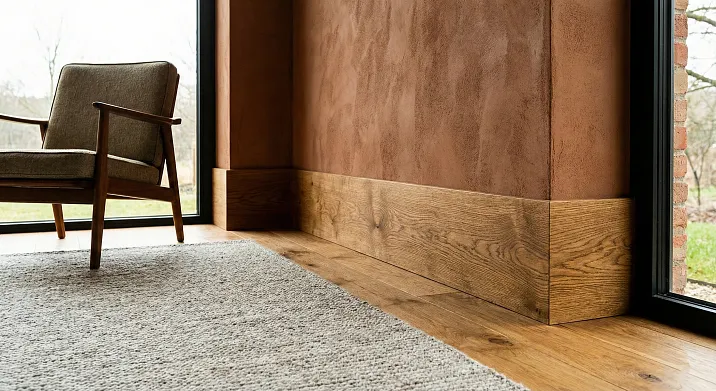
The detail that completes the interior, creates a visual frame for the room, conceals technical joints, and protects walls from damage — in 2026, wooden skirting boards acquire new significance. From an unnoticed utilitarian element, it transforms into a full-fledged design tool capable of transforming the perception of space. Wide solutions up to 100-150 mm and more replace traditional narrow skirting boards, creating architectural expressiveness, visually increasing the height of the room, lending the interior a sense of solidity. Warm natural tones — from light beech to deep walnut — respond to the human desire for nature, eco-friendliness, tactile comfort. Emphasis on texture — brushed wood, preserved knots, pronounced wood grain — highlights the material’s naturalness, its living, organic essence.
Buying wooden skirting boards today means investing in longevity, beauty, and eco-friendliness. Wooden products serve for decades without losing their aesthetics; they can be refreshed, repainted, or restored. Wooden skirting boards create an atmosphere of coziness, warmth, and reliability that cannot be replicated with synthetic materials. MDF skirting boards for painting — an alternative solution combining affordability with broad design possibilities, allowing you to paint the skirting board any color to match a specific interior. But natural wood remains unmatched where authenticity, tactile quality, and connection to nature are valued.




Wide Skirting Boards: A New Scale for Interior Framing
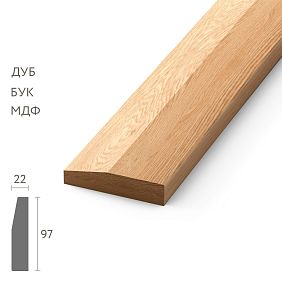
Traditional skirting boards 50-70 mm are becoming outdated. In 2026, wide solutions 100-150 mm and above are in vogue, creating an expressive horizontal line that visually alters the proportions of the room. A wide skirting board is not merely protection for the junction between wall and floor, but an architectural element that sets the scale, rhythm, and style.




Skirting Boards 100-120 mm: Universal Elegance
Skirting boards 100-120 mm are the optimal solution for most modern interiors. This height is sufficient to create visual significance without overwhelming the space. A 100 mm wooden skirting board suits rooms with ceilings 2.7-3.2 meters — the standard for modern new builds and private homes. It creates a balanced proportion between floor, walls, and ceiling.
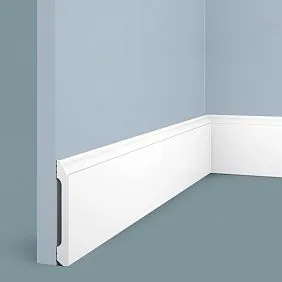
A wide skirting board visually expands the floor, making the space feel more grounded and stable — particularly relevant for high ceilings. It can be smooth — for minimalist or Scandinavian interiors — or profiled — with a subtle relief for neo-classical or modern classical styles. Wooden skirting boards of this height allow concealing cable channels and utilities, adding functionality.
Our factory also produces:
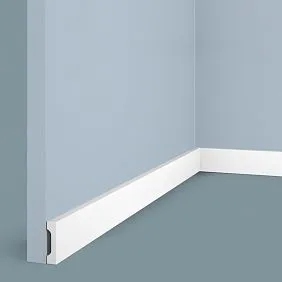
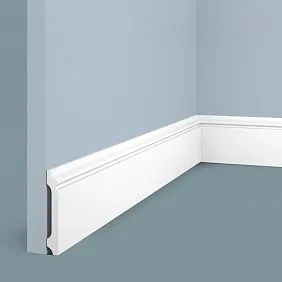

Skirting Boards 150 mm and Above: Palace Grandeur
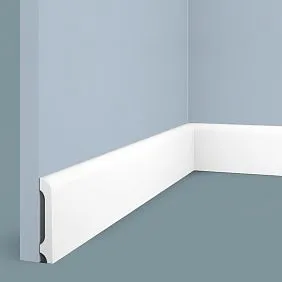
Skirting boards 150 mm and above are chosen for spacious rooms with ceilings 3.5 meters and higher. Such skirting boards create a sense of palace grandeur, solemnity, and solidity. They suit classical, neo-classical, and art deco interiors, where scale, architectural expressiveness, and attention to detail are valued.
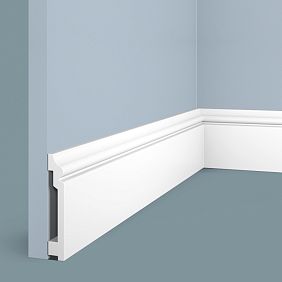
A high wooden skirting board may have a complex profile: multiple tiers, grooves (vertical channels), protrusions, recesses, creating play of light and shadow. Such a skirting board becomes a standalone decorative element, drawing attention. It visually divides the wall into two parts: the lower — protective and decorative — and the upper — main — as was characteristic of historical interiors of the 18th-19th centuries.
Get Consultation
Visual Effects of Wide Skirting Boards
Wide wooden skirting boards create several visual effects:
Increase in room height: A dark wide skirting board on light walls creates a contrasting horizontal line that visually separates the floor from the wall, making the wall appear taller.
Grounding the space: A wide skirting board in the same tone as the floor creates the impression that the floor rises up the wall, grounding the space and making it feel more stable and secure.
Architectural framing: A wide skirting board creates an expressive frame around the perimeter of the room, organizing space, setting rhythm, and emphasizing geometry.
Wall protection: A wide skirting board better protects walls from furniture impacts, vacuum cleaners, and wet cleaning, preserving the finish.
Working withwooden skirting boards, you can select the optimal height for a specific room.
Warm Natural Tones: The Wood Palette in Interior Design 2026
The color of wooden skirting boards determines the atmosphere of the room, interaction with the floor, walls, and furniture. In 2026, warm natural tones are in vogue, creating coziness, a connection to nature, and eco-friendliness.
Light Tones: Scandinavian Freshness
Light wooden skirting boards — beech, birch, maple, whitewashed oak — create a sense of freshness, cleanliness, and spaciousness. They visually expand the room, reflect light, and make the interior airy and light. Light skirting boards suit Scandinavian, minimalist, and eco-interiors, where naturalness, restraint, and functionality are valued.
A light wooden skirting board pairs well with light floors — beech parquet, birch laminate, light planks. It can match the floor tone — creating a monolithic composition — or be lighter — creating a subtle contrast. On light walls, a light skirting board reads through wood texture, tactile quality, and subtle relief. This is a restrained, elegant solution.
Warm neutral tones: universal coziness
Medium warm tones — natural oak, beech, cherry — are universal and complement most color schemes. They create coziness, warmth, and a sense of home. Such skirting boards suit classical, neoclassical, modern, and eclectic interiors. Oak is the most popular wood for skirting boards due to its durability, beautiful texture, and variety of shades.
Oak skirting boards can be natural — light beige with a golden undertone, stained — gray oak, honey oak, walnut, or stained — dark brown, almost black. Medium warm tones create a balance between light and shadow, not overwhelming the interior, yet adding character. Buying wooden skirting boards made of oak is a choice for those who value quality, durability, and classic beauty.
Dark noble tones: contrast and drama
Dark wooden skirting boards — walnut, wenge, stained oak — create contrast, drama, and add depth to the interior. A dark skirting board on light walls is a trending 2026 style, creating a graphic frame that emphasizes the room’s geometry. This solution suits modern, minimalist, neoclassical, and loft interiors.
Dark wooden skirting boards pair well with dark floors — walnut parquet, wenge laminate, dark planks — creating a monolithic lower zone. Or with contrasting light floors — light parquet, white planks — creating a bold effect. Dark tones are noble, sophisticated, evoking a sense of premium quality. Buying dark wooden skirting boards means choosing a path of elegance and drama.
Gray stained tones: modern restraint
Gray stained wooden skirting boards — gray oak, gray beech — create modern restraint and neutrality that easily fits any color scheme. Gray lacks warm or cool undertones, making it universal. Gray skirting boards suit minimalist, Scandinavian, high-tech, and loft interiors.
Gray wooden skirting boards can be light gray — almost white with a subtle gray tint, medium gray — neutral and balanced, dark gray — graphite, almost black. Gray tones highlight wood texture without adding warmth or coldness, creating a clean, modern look. Gray skirting boards pair well with gray walls — monochrome, with white — contrast, with colorful walls — neutral framing.
Accent on texture: living wood surface
The texture of wooden skirting boards determines its tactile quality, visual complexity, and interaction with light. In 2026, emphasizing natural wood texture and rejecting perfectly smooth, artificial surfaces is trending.
Brushed wood: pronounced texture
Brushing is a technique of processing wood with a stiff brush that removes soft fibers, highlighting the structure of annual rings. Brushed wooden skirting boards have pronounced relief, tactile complexity, and an aged wood effect. This technique is especially effective on oak, beech, and larch — species with contrasting textures.
Brushed skirting boards suit loft, country, eco-, and rustic interiors, where rough naturalness is valued. After brushing, wood is stained, patinated, and coated with oil. Contrast staining — when grooves are dark and ridges are light — creates a particularly striking look. Brushed texture improves adhesion to finishes, makes the surface less slippery, and adds character. Brushed wooden skirting boards are chosen by those who value authenticity and naturalness.
Preserved knots: individuality of each element
Knots — a natural feature of wood, long considered a defect — are now valued as elements of individuality, confirming the material’s authenticity. Wooden skirting boards with knots create a sense of living material; each element is unique and has its own story.
Knots can be light or dark, small or large, creating a visual accent. Wood with knots suits country, rustic, Scandinavian, and eco styles. It is cheaper than knot-free wood, making it more accessible. It is important that knots are alive — dense, not falling out. Dead knots require additional treatment — filling with epoxy resin or putty.
Expressive wood grain pattern: natural painting
Wood grain pattern — a unique natural painting created over years of growth. Each species has its own characteristic pattern: oak — large pores, contrasting lines, beech — elegant waves, walnut — complex interweaving, cherry — fine uniform texture. Emphasizing wood grain is a 2026 trend.
The grain pattern is enhanced by transparent finishes: oil, wax, transparent lacquer. They intensify color, make texture more expressive, and preserve naturalness. Oil staining may slightly alter the shade, but the grain remains visible. Expressive texture creates visual complexity, interest, and tactile pleasure. Wooden skirting boards with expressive grain are works of natural art.
Matte finishes: tactile comfort
Matte finishes — oil, wax, matte lacquer — create a velvety surface without gloss, pleasant to the touch. Matte surfaces do not sharply reflect light, do not create glare, look natural and restrained. Matte skirting boards suit minimalist, Scandinavian, and eco interiors, where naturalness and tactile quality are valued.
Oil and wax do not form a film on the wood surface — it breathes and retains its natural tactile quality. These are eco-friendly finishes that do not emit toxins. Matte lacquer creates a protective film without gloss. Matte surfaces are more practical than glossy ones — scratches, fingerprints, and dust are less visible. Buying wooden skirting boards with matte finish is a choice of practicality and aesthetics.
MDF skirting boards: affordable alternative with wide possibilities
MDF skirting boards (fine wood particles) are compressed under high pressure, covered with veneer or film, or primed for painting. MDF skirting boards combine affordability with wide design possibilities, shape stability, and diverse finishes.
MDF skirting boards for painting: customization
MDF skirting boards for painting — a universal solution allowing you to paint them any color to match a specific interior. Primed with white primer, they are ready for acrylic or latex paint. The ability to paint transforms skirting boards from a utilitarian element into a tool for designer self-expression.
You can paint skirting boards to match wall color — creating a monochromatic effect that visually increases wall height. To match floor color — creating a monolithic lower zone. In contrasting color — creating a graphic frame. In bright accent color — adding character and individuality. Buying MDF skirting boards for painting means getting unlimited color solution possibilities. Company STAVROS offersMDF skirting boards for paintingof various heights and profiles.
MDF skirting board with veneer: imitation of natural wood
MDF skirting board covered with natural veneer (thin wood slice) visually indistinguishable from solid wood but significantly cheaper. Veneer retains the natural texture, color, and tactile feel of wood. Veneered skirting boards are available in popular wood species shades: oak, beech, walnut, cherry, wenge.
Advantages of veneered MDF: shape stability (does not deform from humidity like solid wood), affordable price (2-3 times cheaper than solid wood), variety of shades, ready for installation (finished with lacquer). Disadvantages: lower strength compared to solid wood, inability to perform deep sanding during restoration. Veneered skirting board is the optimal choice in terms of price-quality-aesthetic ratio.
MDF skirting board with film: budget solution
MDF skirting board covered with decorative film (melamine, PVC) imitating wood texture — the most budget-friendly solution. Film is applied by pressing lamination, creating a durable coating. Film skirting boards are available in a wide color range, imitating various wood species, solid colors.
Advantages: low price, moisture resistance (film protects MDF from moisture), easy maintenance (wipes with a damp cloth), variety of design. Disadvantages: artificial appearance (film does not reproduce wood's tactile feel), lower prestige. Film MDF skirting board is suitable for budget projects, temporary housing, offices.
Comparison: wood vs MDF
| Parameter | Solid wood | MDF veneer | MDF for painting | MDF film |
|---|---|---|---|---|
| Price | High | Medium | Medium | Low |
| Ecological | Maximum | High | Medium | Medium |
| Tactile | Natural | Close to natural | Smooth | Artificial |
| Durability | 30-50 years | 15-25 years | 15-20 years | 10-15 years |
| Moisture resistance | Medium | Medium | Low | High |
| Restoration possibility | High | Limited | Medium | Low |
| Design | Natural texture | Wood imitation | Any color | Imitation/color |
Skirting board profiles: from classic to minimalist
Skirting board profile determines its stylistic affiliation, visual expressiveness, and installation complexity.
Classic profiled: multi-level relief
Classic profiled skirting board has a complex multi-level relief: grooves, protrusions, rounded edges, flutes. Such a profile reproduces the traditions of wooden skirting boards in historical interiors of the 18th-19th centuries. Profiled skirting board creates play of light and shadow, visual complexity, and decorative appeal.
Classic profile suits classic, neoclassical, English, American colonial interiors. It requires quality wood, precise milling, and careful finishing. Profiled wooden baseboard is more expensive than smooth one due to the complexity of processing. It creates a sense of solidity, tradition, and family comfort.
Round (radius): soft shapes
Round baseboard has a rounded top edge, without sharp corners. The rounding creates softness, safety (especially important for children's rooms), classic elegance without excessive decoration. Round profile is a compromise between classic and minimalist styles.
Round baseboards suit neoclassical, modern, transitional interiors. They are less formal than profiled ones, but more decorative than smooth ones. Rounding is done with a router, requiring precise processing. Wooden round-profile baseboard is a universal solution.
With bevel: modern strictness
Baseboard with bevel has a beveled top edge at a 30-45 degree angle. The bevel creates a clear line, geometric strictness, modern aesthetics. Baseboards with bevel suit minimalist, Scandinavian, high-tech, loft interiors, where clean lines and graphic design are valued.
Bevel can be narrow (5-10 mm) — a delicate accent, or wide (15-20 mm) — expressive geometry. Bevel is cut with a router or plane, creating light play and emphasizing vertical lines. Wooden baseboards with bevel are a choice for modern interiors.
Straight (smooth): minimalist simplicity
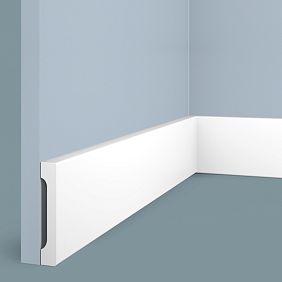
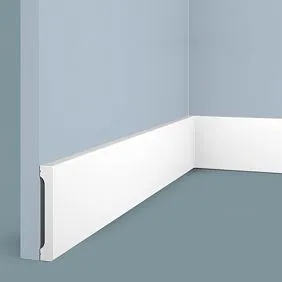
Straight smooth baseboard — rectangular profile without relief, rounding, or bevels. This is the most minimalist solution, suitable for minimalist, ultra-modern interiors. Smooth baseboard does not draw attention, creating clean geometry and emphasizing material — wood texture, color.
Straight baseboard is the simplest to manufacture, install, and maintain. Dust does not accumulate on a smooth surface, and it is easy to wipe. Straight baseboards suit Scandinavian, Japanese minimalist, high-tech interiors. They can be tall — creating architectural expressiveness through scale — or narrow — creating a delicate framing.
Installing wooden baseboards: professional approach
Quality installation determines the longevity, aesthetics, and functionality of baseboards.
Preparation: acclimatization and marking
Wooden baseboards must acclimatize in the room before installation: wait 48-72 hours at room temperature, so the wood absorbs the room's humidity and does not deform after installation. This is critically important for solid wood.
Marking: measure the room's perimeter, calculate the baseboard quantity with a 10% reserve for cutting corners. Determine joint locations — preferably in inconspicuous places (behind furniture). Check wall and floor flatness — unevenness exceeding 5 mm requires leveling or using flexible baseboard.
Installation methods: glue, screws, clips
Glue: liquid nails or polyurethane glue is applied to the back of the baseboard, which is pressed against the wall. Suitable for flat walls and light MDF baseboards. Advantages: invisible fastening, speed. Disadvantages: difficult removal, requires perfectly flat walls.
Screws: baseboard is screwed into the wall through wood. Screws are driven in at 40-60 cm intervals, countersunk, and screw holes are spackled, sanded, and painted. Advantages: reliability, suitable for uneven walls, possibility of removal. Disadvantages: visible fastening points (though after spackling, they are barely noticeable).
Clips: special plastic clips are screwed into the wall, and the baseboard clicks onto the clips. Advantages: hidden fastening, easy removal, suitable for uneven walls. Disadvantages: requires special baseboards with clips' slots, more expensive.
Corners: cutting and joining
Corners are the most complex part of installation. Internal and external corners require precise 45-degree cuts. A guide device (miter gauge) and a miter saw are used for accurate cutting. Two baseboards, cut at 45 degrees, join at the corner, forming a 90-degree angle.
For uneven corners (not exactly 90 degrees), adjustment is required: measure the actual angle, divide it in half, cut the baseboards at the resulting angle. Joints are spackled, sanded, and painted. External corners are more complex than internal ones — requiring more precise cutting.
Alternative to cutting — corner pieces (corner caps): ready-made decorative elements covering the corner joint. Easier to install, but more noticeable, suitable for classic styles.
Final finishing
After installation, joints and screw locations are spackled with wood-compatible acrylic spackle, matched to the baseboard color. After drying, they are sanded with fine sandpaper. Spackled areas are stained, oiled, or varnished to match the baseboard color. The baseboard and floor joint is filled with sealant (acrylic or silicone) to protect against moisture and dust.
Care for wooden baseboards: preserving beauty
Wooden baseboards require regular but simple care.
Regular cleaning
Wipe baseboards with dust using a soft dry or slightly damp cloth once a week. Do not use abrasive cleaners, stiff brushes, or aggressive chemicals. For cleaning stains, use a soapy solution or specialized wood cleaners.
Recoating
Lacquered baseboards do not require frequent reapplication — lacquer protects for 5-7 years. For scratches or scuffs, lightly sand with fine sandpaper and apply a new layer of lacquer.
Oil or wax finishes require renewal once a year: wipe baseboards with oil or wax, rub with a soft cloth, let it absorb, then polish. This restores protection, refreshes color, and highlights texture.
Protection from moisture
Wood dislikes prolonged contact with water. Wipe spills and puddles immediately. During wet cleaning, do not soak baseboards excessively. For humid areas (bathrooms, kitchens), choose baseboards with water-resistant finishes (lacquer, oil-wax) or use MDF with a film coating.
Restoration of Damage
Scratches: sand with fine abrasive paper, stain or oil to match tone, apply varnish or wax.
Chips: fill with acrylic wood filler, sand smooth, touch up, apply varnish or oil.
Deep damage: replace damaged section by cutting out and installing a new skirting board piece.
With proper care, wooden skirting boards last 30-50 years, preserving beauty and functionality.
Stylistic Solutions: Skirting Boards in Different Interiors
Classicism and neoclassicism
Classic interiors require tall (120-150 mm) solid wood skirting boards in oak or beech, stained white, cream, or natural tones. Profile is complex, with multiple relief levels. Skirting board creates an architectural frame, emphasizing grandeur. Neoclassicism uses simplified profiles but retains height and scale.
Scandinavian style
Scandinavian interiors prefer light wood skirting boards (beech, birch, white oak) 80-100 mm high, smooth or rounded. Finish is matte — oil or wax. Color is natural light or white. Skirting board creates a connection with nature, without overwhelming space.
Minimalism
Minimalist interiors use straight, smooth skirting boards 80-120 mm high, painted to match wall color (monochrome) or contrasting (white, black, gray). Wood texture may be concealed by dense paint or emphasized by transparent finish. Skirting board creates clean geometry, completeness.
Loft and industrial
Loft prefers rough wood skirting boards with brush finish, knots, dark tones (walnut, stained oak, graphite-toned). Height 100-150 mm. Surface is matte with aged effect. Skirting board creates contrast with concrete, brick, metal.
Country and rustic
Country uses natural wood skirting boards with knots, brush finish, natural tones (light oak, pine, larch). Profile is simple, rounded. Finish is oil or wax, emphasizing texture. Skirting board creates rustic coziness, connection with nature.
Frequently Asked Questions
What height of skirting board is optimal?
For ceilings 2.5-2.7 m — 80-100 mm, for 3-3.5 m — 100-120 mm, for above 3.5 m — 120-150 mm and more.
Wood or MDF — what to choose?
Wood — for durability, eco-friendliness, prestige. MDF — for budget, moisture resistance (film), paintability.
Which wood species is better for skirting boards?
Oak is the strongest and most durable. Ash is strong and light-colored. Pine is a budget option.
Can it be installed by oneself?
Yes, with tools (circular saw, drill), skills for cutting angles. For complex configurations, a professional is recommended.
How much do wooden skirting boards cost?
Pine — from 200-400 rubles/m, MDF — from 250-600 rubles/m, oak — from 600-1500 rubles/m, exotic — from 1500-3000 rubles/m.
Is it necessary to apply a protective coating to skirting boards?
Essential. Varnish, oil, wax protect against moisture, dirt, abrasion, and highlight texture.
How to care for wooden skirting boards?
Wipe dust, renew oil/wax every 1-2 years, wipe moisture, restore damage.
Where to buy quality skirting boards?
From specialized manufacturers like STAVROS, guaranteeing wood quality, precision processing, and variety of profiles.
Conclusion: finishing detail, creating cohesion
Wooden skirting board in 2026 — it’s not just a utilitarian element hiding the wall-floor junction, but a full-fledged design tool capable of transforming interior perception. Wide-format solutions create architectural expressiveness, visually alter room proportions, add solidity. Warm natural tones respond to demand for eco-friendliness, connection with nature, tactile comfort. Emphasis on texture highlights the natural, living, organic nature of wood.
Wooden products serve for decades without losing aesthetics; they can be renewed, restored, adapted to changing interiors. Buying a wooden skirting board means investing in durability, beauty, and eco-friendliness. MDF skirting board — an alternative combining affordability with broad design possibilities, especially when painted.
Selection of skirting board height, profile, shade, texture should be carefully considered based on interior style, ceiling height, color scheme, personal preferences. Quality installation and regular care guarantee longevity and preservation of beauty.
Company STAVROS — manufacturer of wooden products, offering a wide rangewooden baseboardsfrom classic profiles to modern smooth ones, from light to dark shades, various heights — 80, 100, 120, 150 mm. Here you can find skirting boards in oak, beech, pine, with various finishes — varnish, oil, wax. STAVROS works only with high-quality dry wood, uses modern milling equipment, guarantees profile accuracy and clean processing.
In the company's assortment are also availableMDF skirting boards for paintingveneered MDF,wooden accessoriesMoldings, casings, and cornices that allow you to create a cohesive composition in a single style and material. By consulting professionals with years of experience in woodworking, you receive advice on selection, installation recommendations, and care, along with a quality guarantee.
STAVROS skirting boards are an investment in the completeness of your interior, wall protection, and visual harmony. These are elements crafted with care for you, where every detail is thought out, each skirting board is made with skill, and each element contributes to your comfort and aesthetic pleasure. Create interiors that delight, inspire, and serve for decades — interiors completed down to the last detail.